Skip to content
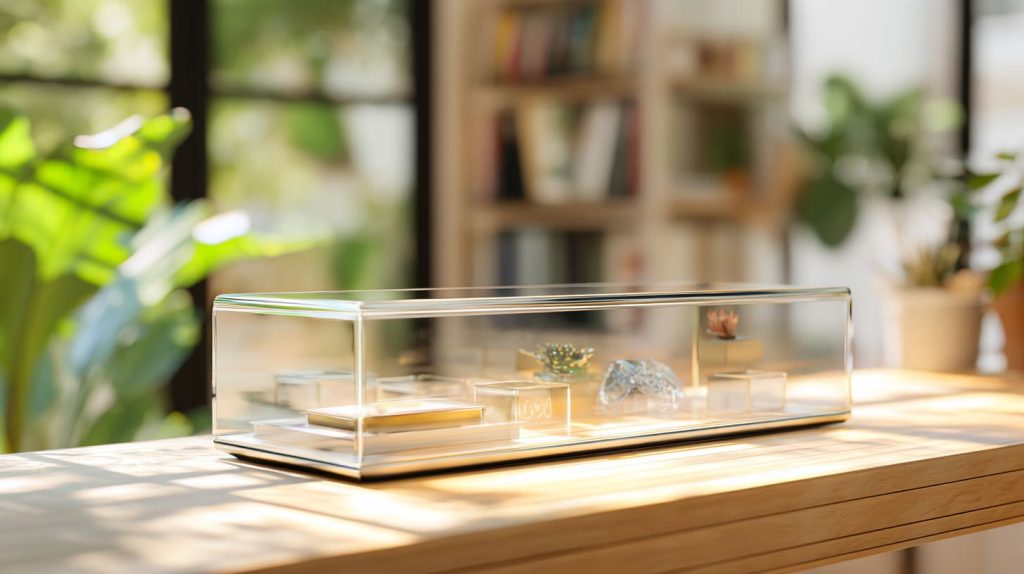
Display cases are one of those things people think are simple—until they are not. I have seen beautiful collectibles look awkward, cramped, or strangely cheap just because the case size was wrong. Not the material. Not the lighting. Just the size.
Over the years working with acrylic displays, I learned that size is not a technical detail. It is a design decision. It shapes how people feel when they look at an object. It also shapes how safe that object stays over time.
Why display case size matters for collectibles
A display case does more than protect. It frames value. Too small, and the object feels trapped. Too large, and it feels lost. The right size creates calm. It lets the eye rest.
Common mistakes collectors make when choosing case size
I often see people measure only height. Depth is ignored. Clearance is guessed. Shelves are added later and steal space. These are small choices, but they stack up fast.
Who this guide is for: serious collectors, buyers, and designers
I am writing this for people like Jacky. Buyers who have handled many samples. Designers who care how things age. People who know that “almost right” is not right.
This is where I usually pause and ask myself one thing: will this case still feel right after the excitement of the first week is gone?
Now, before size decisions, we need to talk about what actually goes inside these cases.
What types of collectibles need display cases?
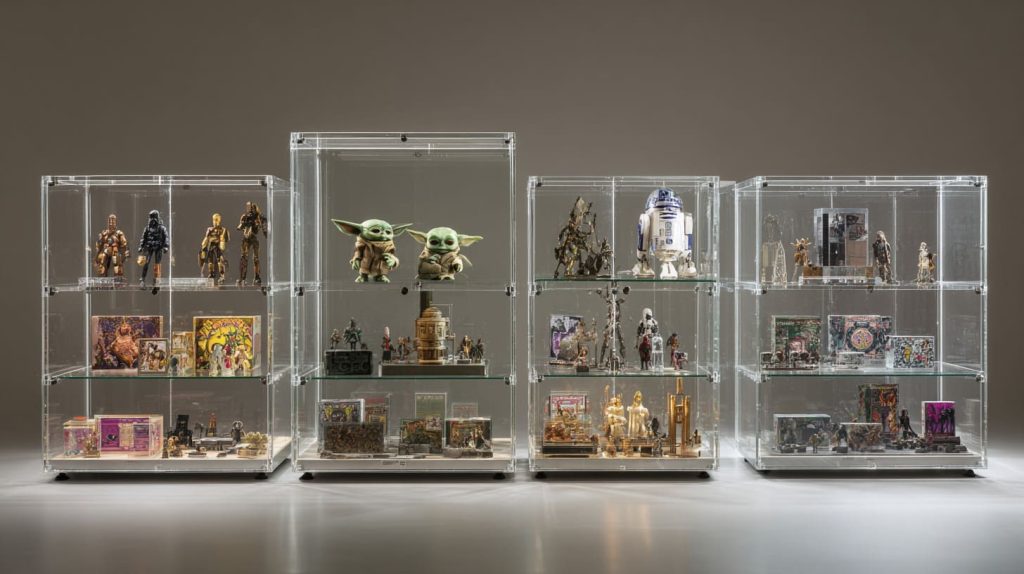
Not all collectibles behave the same. Some demand space. Some punish mistakes. Treating them equally is where problems begin.
Small collectibles (coins, cards, mini figures)
Small items need control. Too much empty space makes them feel cheap. Tight spacing gives focus.
Medium collectibles (action figures, models, souvenirs)
These need breathing room. Arms, accessories, and poses change how much space feels right.
Large collectibles (statues, helmets, sports memorabilia)
Large items create weight, visually and physically. The case must support that presence without looking bulky.
Fragile vs durable collectibles and how size choice differs
Fragile items need safety gaps. Durable ones can live closer to edges. Mixing these is risky.
| Collectible Type | Size Sensitivity | Risk if Too Small | Risk if Too Large |
|---|---|---|---|
| Coins | High | Scratches | Looks empty |
| Action figures | Medium | Bent parts | Weak presence |
| Statues | Very high | Impact damage | Structural stress |
What I have learned the hard way is that fragile items punish size mistakes much faster than durable ones.
Once you know what you are displaying, measurement becomes the next quiet trap.
How do you measure collectibles correctly before choosing a display case?
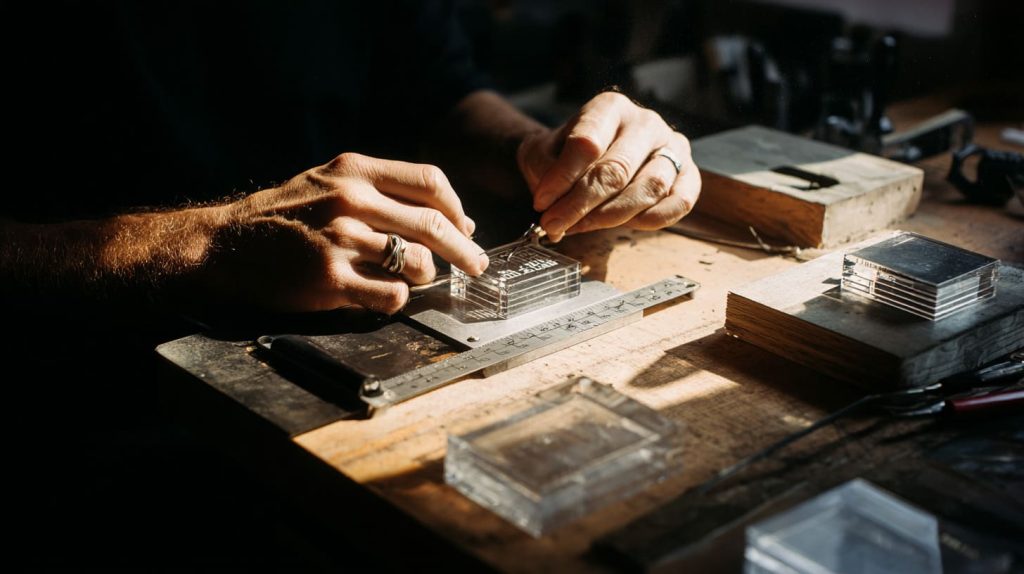
Measurement sounds boring. It is not. It is where most regrets start.
Measuring height, width, and depth accurately
I always measure from the widest and tallest point, not the base. Accessories count.
Allowing clearance for airflow and visual balance
A few extra millimeters change everything. Airflow matters more than people expect.
Measuring irregular or non-standard shapes
Curves lie. Angles steal space. I use cardboard mockups when shapes get strange.
Considering future additions or set expansions
Collectors grow. Displays should allow that.
| Measurement Area | What to Include | Common Oversight |
|---|---|---|
| Height | Full pose | Raised bases |
| Width | Outstretched parts | Side accessories |
| Depth | Front projection | Back cables |
I never trust a single measurement; I check the object from how it lives, not how it sits on paper.
Once measured, the real question becomes how much extra space is enough.
How much extra space should a display case have?
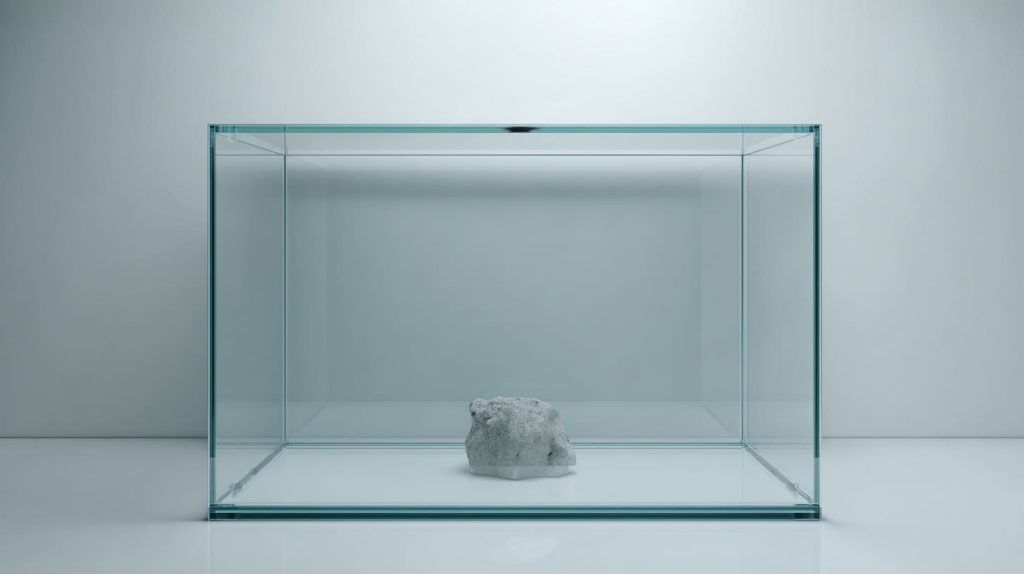
Extra space is emotional. It decides calm or tension.
Minimum clearance for safety and protection
This is about impact, not looks.
Ideal clearance for visual presentation
This is about breathing room.
Avoiding oversized cases that look empty
Empty space kills value faster than scratches.
Avoiding tight fits that risk damage
Tight fits age badly.
| Clearance Type | Recommended Range |
|---|---|
| Safety gap | 5–10 mm |
| Visual gap | 10–25 mm |
I often choose slightly smaller than safe-large because emptiness is harder to fix than tightness.
Spacing affects safety, but it also shapes how we perceive value.
How does display case size affect visual presentation?

Presentation is silent storytelling.
Proportion and scale in display design
Proportion tells the brain what matters.
How spacing influences perceived value
Luxury breathes. Cheap things crowd.
Single-item display vs multi-item display layouts
One hero needs space. Groups need rhythm.
Vertical vs horizontal display orientation
Vertical adds drama. Horizontal adds calm.
| Layout Style | Best Use Case |
|---|---|
| Single center | High-value items |
| Grid | Series collections |
| Vertical stack | Limited spaces |
I realized this by asking myself whether my eyes stop naturally or keep searching for balance.
Once presentation is set, shelves quietly take over the conversation.
What role does shelf spacing play inside a display case?

Shelves steal space. Always.
Adjustable shelves vs fixed shelves
Adjustable saves future pain.
Shelf height planning for mixed collectibles
Mixed heights need planning, not hope.
Weight limits and spacing considerations
Thicker shelves reduce usable height.
Shelf thickness and usable internal height
Every millimeter matters.
| Shelf Type | Flexibility | Space Loss |
|---|---|---|
| Adjustable | High | Medium |
| Fixed | Low | Low |
I always think about shelves as obstacles first, supports second.
Where the case lives changes everything again.
How does display location influence display case size?
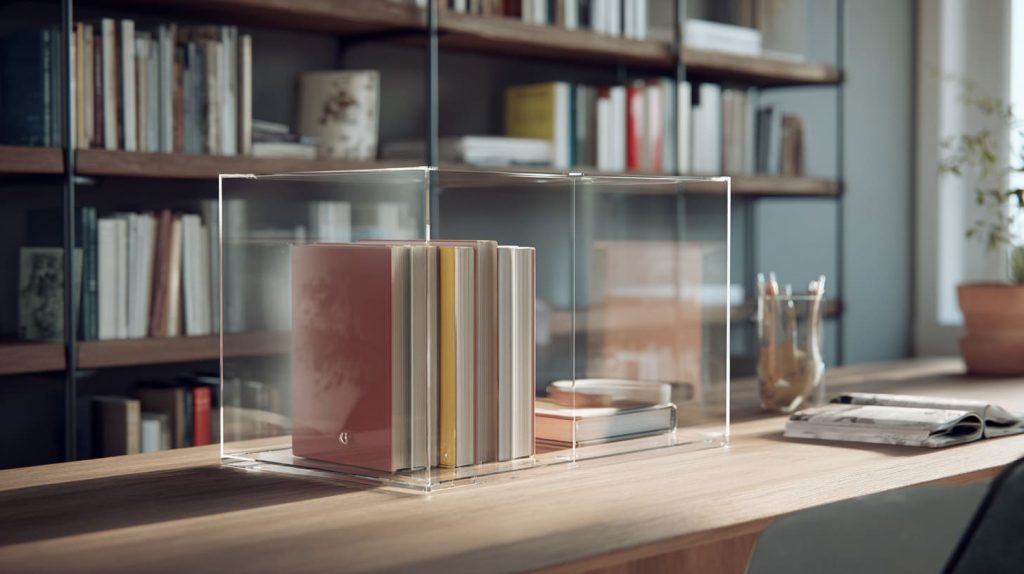
Location decides limits before design does.
Display cases for shelves, desks, and countertops
Depth is the enemy here.
Floor-standing display cases and footprint planning
Stability matters more than height.
Wall-mounted display cases and depth limits
Walls hate weight.
Space planning for home vs retail environments
Retail forgives bulk. Homes do not.
I imagine walking past the case daily—if it feels in the way, the size is wrong.
Material choice then quietly reshapes internal space.
What materials affect size decisions for display cases?
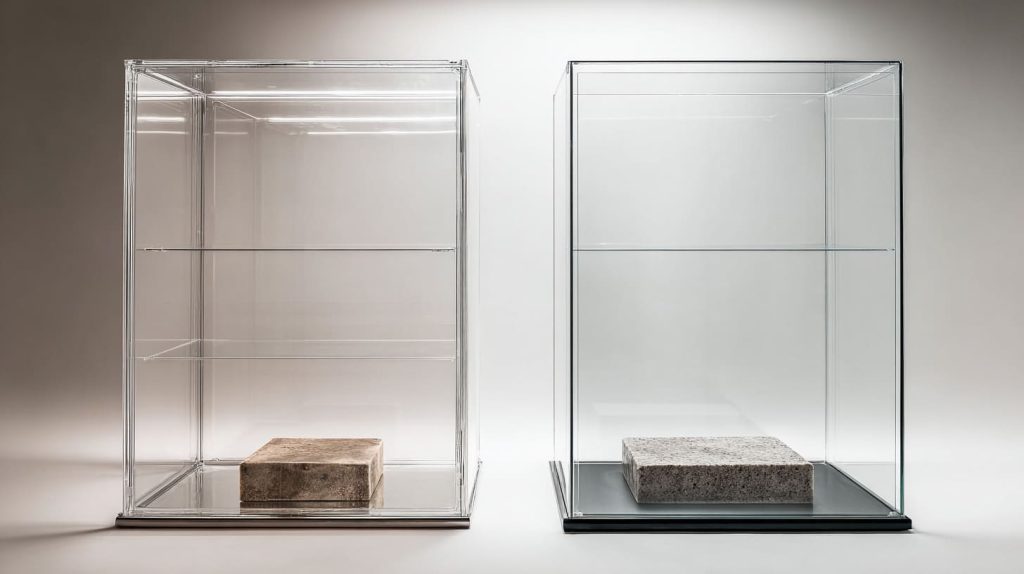
Material eats space.
Acrylic thickness and internal usable space
Thicker walls shrink interiors.
Glass vs acrylic: size and safety implications
Glass needs more structure. Acrylic forgives.
Framed vs frameless designs and space loss
Frames steal clean lines.
Structural strength considerations for larger cases
Bigger cases need thicker walls.
| Material | Safety | Usable Space |
|---|---|---|
| Acrylic | High | High |
| Glass | Medium | Lower |
I often trade a few millimeters of space to gain long-term safety.
This leads to the standard vs custom question.
Should you choose a custom-size display case or a standard size?

This is not just about cost.
Limitations of standard-size display cases
They fit averages, not collections.
Benefits of custom-sized display cases for collectibles
Custom fits intention.
Cost vs precision trade-offs
Precision saves regret.
When custom sizing is the better long-term choice
Long-term collections deserve it.
I decide this by asking how painful replacement would feel in two years.
Sealing choices then start affecting size again.
How do dust protection and sealing affect size selection?
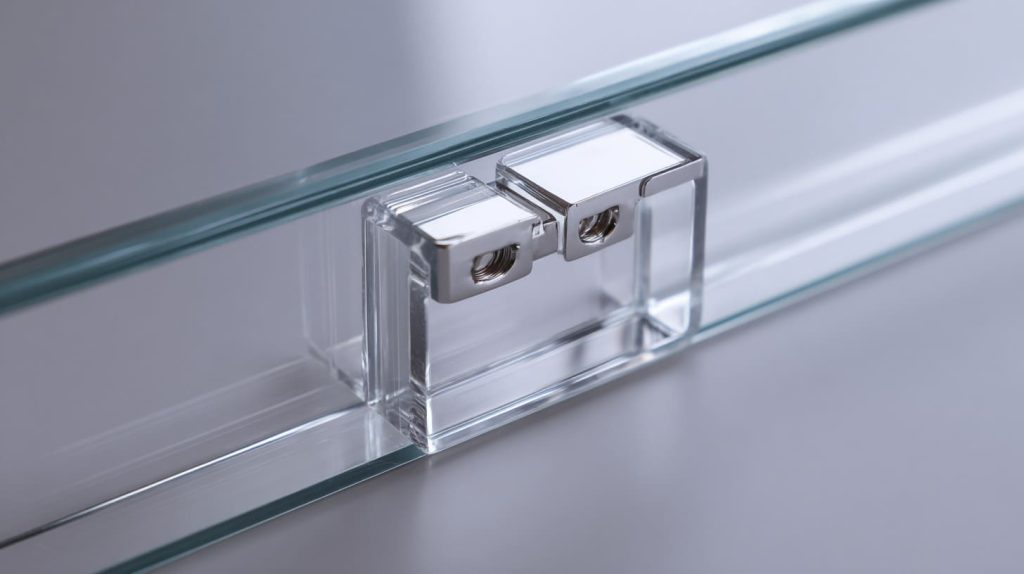
Dust adds thickness.
Clearance needed for doors and lids
Doors swing. Space disappears.
Magnetic closures, hinges, and overlap space
Hardware eats room.
Fully sealed vs partially open designs
Seals need overlap.
Maintenance access and usability considerations
Hands need room too.
| Seal Type | Space Impact |
|---|---|
| Magnetic | Medium |
| Hinged | High |
| Open | Low |
I think about how often I will open the case, not how clean it looks on day one.
Lighting brings one more layer of complexity.
How does lighting impact display case size?

Light needs room to behave.
Space needed for LED strips or spotlights
Hidden lights need channels.
Heat management and ventilation space
Heat hates tight spaces.
Hidden lighting channels and internal dimensions
Channels reduce usable height.
Avoiding glare and shadow with proper spacing
Distance softens light.
I test lighting with mockups because drawings never tell the full story.
Growth planning comes last, but matters most.
How do you size a display case for long-term collection growth?
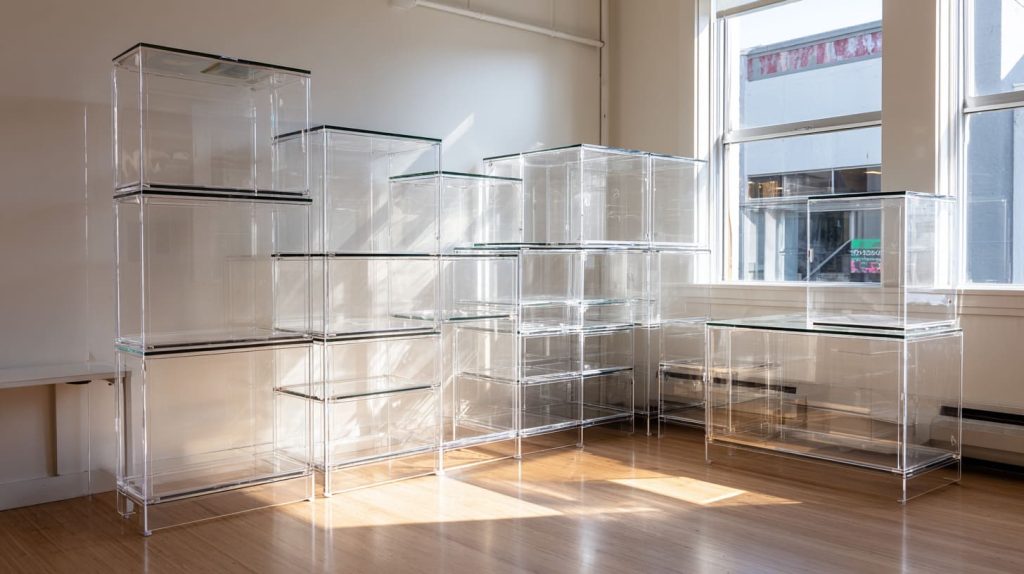
Collections evolve.
Planning for future collectibles
Leave room for change.
Modular and expandable display systems
Modules reduce regret.
Stackable display cases and alignment
Alignment saves space.
Avoiding the need for frequent replacements
Replacement is the real cost.
I think about future frustration more than current satisfaction.
Practical examples help ground all this thinking.
Common sizing scenarios and recommendations
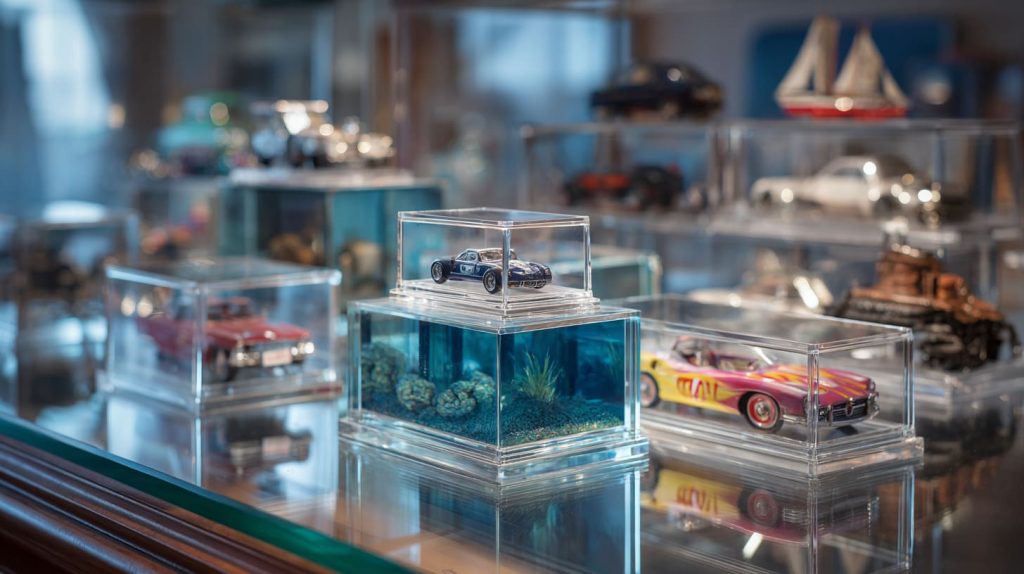
Patterns repeat across projects.
Display case size for action figures
Allow pose changes.
Display case size for model cars and scale models
Depth matters more than height.
Display case size for luxury items and limited editions
Space equals value.
Display case size for retail or exhibition use
Visibility beats compactness.
| Scenario | Key Focus |
|---|---|
| Action figures | Pose clearance |
| Model cars | Depth |
| Luxury items | Visual space |
I rely on past mistakes here more than any guideline.
Conclusion
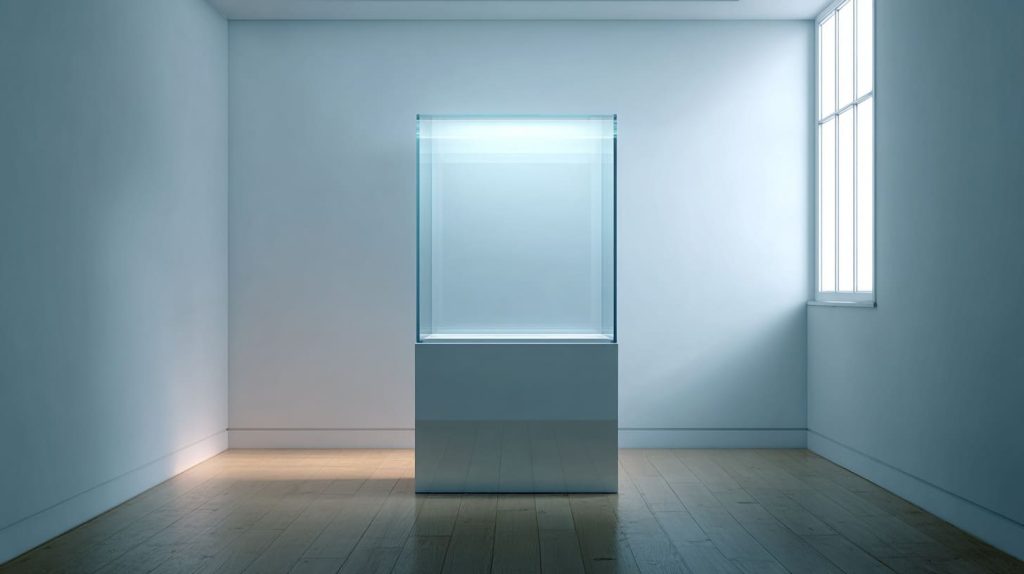
Choosing the right display case size is not about rules. It is about judgment. I think this way because I have seen how small decisions create long-term regret or quiet satisfaction. I care about size because it affects safety, value, and daily experience.
I come to these views after years of watching real projects age. Some age well. Some do not.
If you are planning a serious display and want it done right the first time, talk to people who build these cases every day. At Feilong Acrylic, this kind of thinking is what we do best. Let’s talk before the case locks your mistake inside.