Skip to content
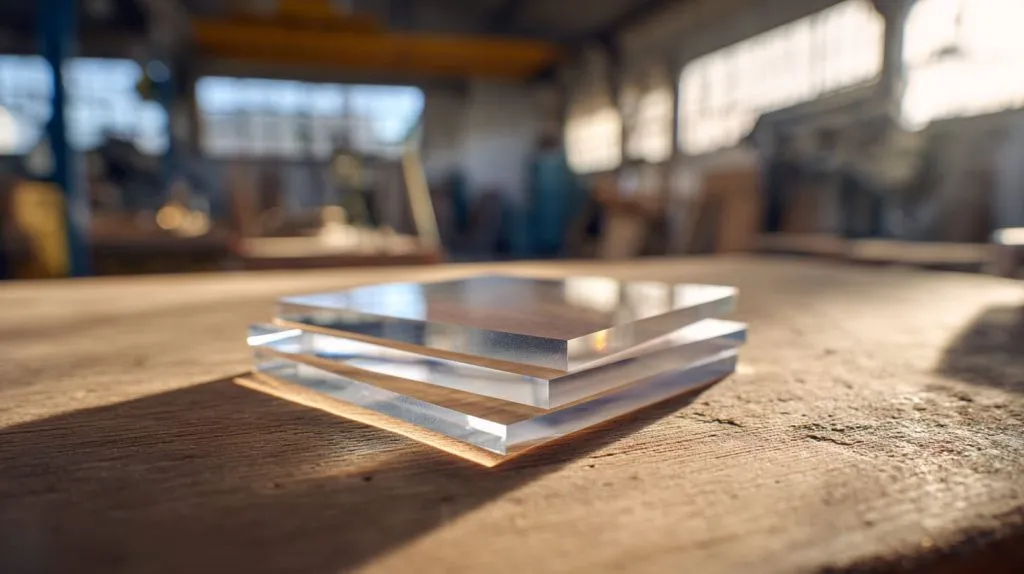
Acrylic sheet names can feel simple until a buyer orders the wrong finish. Then light, glare, color, and cost all start arguing at the same table.
OP3, P95, and P99 acrylic sheets are special acrylic sheet types. OP3 is used for UV protection, P95 is used for soft light diffusion, and P99 is used for non-glare viewing, especially in framing and display applications.
I do not treat these names as small product codes anymore. In custom acrylic work, one small code can change the whole result. A display can look premium. A light box can look cheap. A frame can protect artwork—or slowly let it fade.
What Do OP3, P95, and P99 Mean in Acrylic Sheet Classification?
These names are not random letters. They usually describe what the sheet is designed to do.
OP3 usually means UV-filtering acrylic. P95 usually means acrylic with a matte finish on one side. P99 usually means non-glare acrylic, often with a light matte surface for better viewing under light.
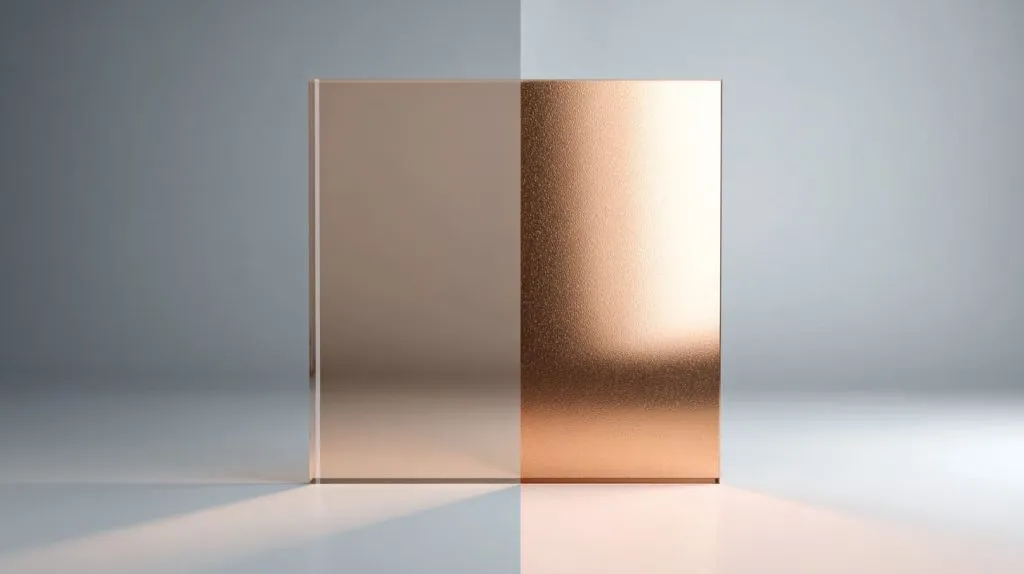
I have seen buyers mix these names because all three can look “special” on a quotation sheet. But they solve different problems.
OP3 is about protection.
P95 is about diffusion and surface softness.
P99 is about glare control and viewing comfort.
That sounds clean, but real projects are rarely clean. A buyer may ask for “anti-glare acrylic” when he really needs a lighting diffuser. Another buyer may ask for “frosted acrylic” when he actually needs artwork protection.
That small confusion can create a very real problem.
A simple way to remember them
| Acrylic type | Main idea | Common feeling | Typical buyer concern |
|---|---|---|---|
| OP3 | UV protection | Clear and protective | Will the artwork fade? |
| P95 | One-side matte surface | Soft, frosted, diffused | Will LED dots show? |
| P99 | Non-glare viewing | Clearer view with less reflection | Will light reflection disturb viewing? |
The detail I care about most at the beginning is not the name itself. I care about the job the sheet must do, because a correct name with the wrong purpose still gives a bad product.
What Is OP3 Acrylic and Where Is It Commonly Used?
OP3 acrylic looks like a simple clear sheet at first. But its value is not only in what you see.
OP3 acrylic is a UV-filtering acrylic sheet used to protect artwork, photos, documents, and display items from harmful light exposure. It is common in museums, galleries, picture framing, and premium display covers.
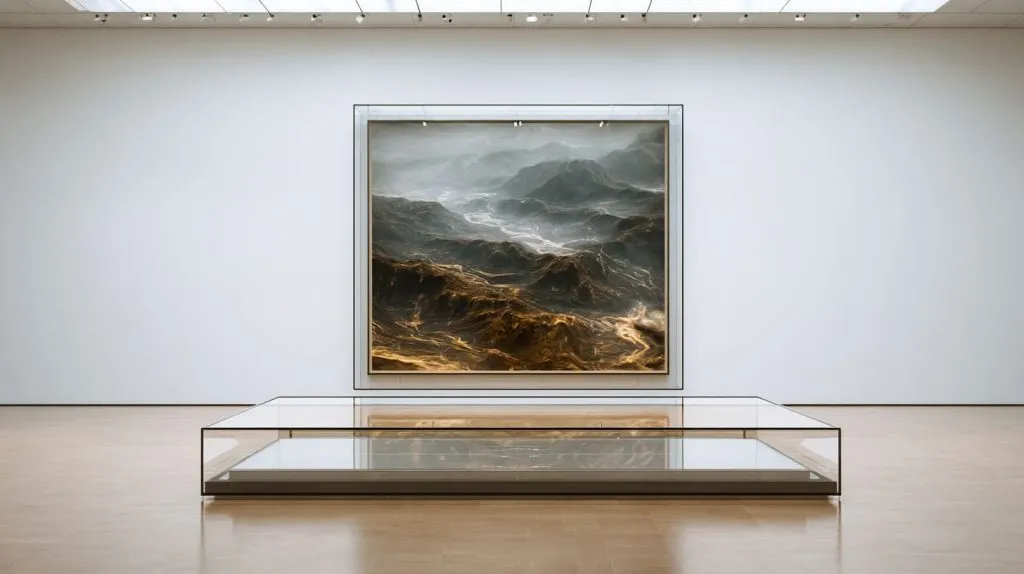
I usually explain OP3 like this: it is not chosen because someone wants a fancy texture. It is chosen because someone wants to protect something valuable.
Acrylic already has a nice advantage over glass. It is lighter. It is safer to handle. It is harder to break during transport. But OP3 adds another layer of purpose. It helps reduce UV damage.
That matters a lot when the display object has emotional or commercial value.
Common OP3 applications
| Application | Why OP3 is used |
|---|---|
| Picture frames | Helps protect photos and prints |
| Museum display covers | Protects valuable objects from light damage |
| Gallery glazing | Gives clear viewing with UV protection |
| Retail display covers | Protects premium goods under strong store lighting |
| Certificate frames | Helps slow fading and aging |
| Acrylic shadow boxes | Protects collectibles and keeps the display clean |
OP3 is not always the cheapest choice. That is the point.
A normal clear acrylic sheet can work for simple covers. But if the customer is displaying signed artwork, rare photos, old paper, or high-value products, the lower price may become a false saving.
Where OP3 is not the first choice
OP3 is not my first pick when the main goal is hiding LED dots. It is also not my first pick when the buyer wants a frosted surface. OP3 is more about UV protection than diffusion.
The mistake I try to avoid is using OP3 as a “premium clear acrylic” without asking what it must protect. If there is no UV concern, I may suggest standard clear acrylic instead and keep the budget under control.
What Is P95 Acrylic Sheet and Why Is It Popular for Lighting Applications?
P95 acrylic has a gentle matte surface that changes how light behaves.
P95 acrylic sheet usually has a matte finish on one side and a glossy finish on the other side. It is popular for lighting because it softens light, reduces glare, and helps create a smoother illuminated surface.
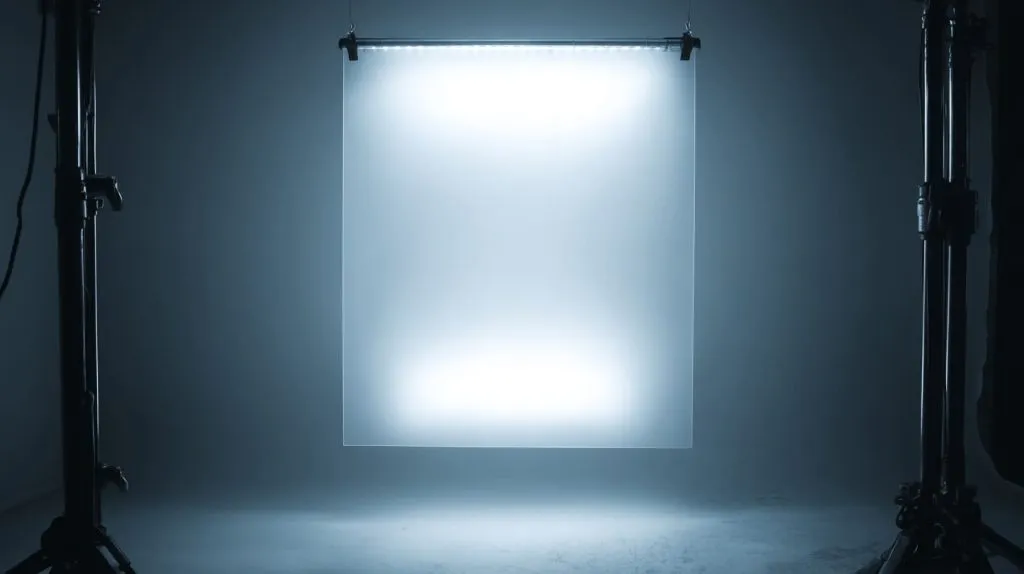
P95 has a nice personality. It does not shout. It softens things.
When LED light hits a clear acrylic sheet, the bright points can look too sharp. The viewer may see dots, strips, or harsh reflections. P95 helps break up that light. It gives the surface a softer look.
That is why I often see it in signs, light boxes, retail displays, photography props, and decorative panels.
Why lighting buyers like P95
| Need | How P95 helps |
|---|---|
| Softer LED light | The matte side helps diffuse brightness |
| Less glare | The surface reduces strong reflection |
| Better visual comfort | The viewer sees a calmer surface |
| Semi-private look | Objects behind the sheet look blurred |
| Premium display feeling | The frosted surface feels softer and cleaner |
P95 is also useful when a buyer wants a surface that is not fully transparent. It can hide small details behind the sheet while still allowing light to pass through.
One-side matte matters
This small detail is easy to miss.
P95 is often matte on one side and glossy on the other. That means the direction matters. The matte side can face the viewer or face the light source, depending on the design goal.
For real lighting projects, I do not decide by name only. I ask about LED distance, sheet thickness, light color, brightness, and whether the customer can accept visible hotspots, because P95 cannot magically fix a poor light box structure.
What Is P99 Acrylic and How Does It Differ From P95?
P99 can be confusing because it also has a matte effect. But it is not the same as P95.
P99 acrylic is mainly a non-glare acrylic sheet. It is often used for framing, signs, and display covers where viewers need to see the content clearly with less reflection from room lights or sunlight.
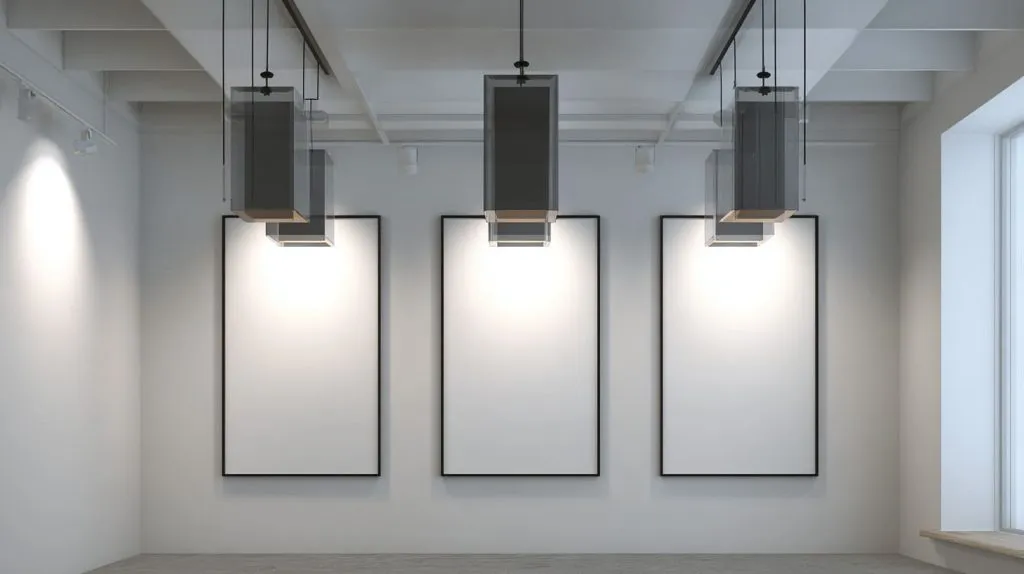
P99 is not mainly about making LED light beautiful. It is more about making viewing easier.
Think about a framed poster under ceiling lights. The artwork is there. The colors are there. But the reflection sits on top like an annoying white patch. P99 helps reduce that problem.
P95 and P99 may both sound “matte,” but the purpose is different.
P95 vs P99 in simple words
| Feature | P95 acrylic | P99 acrylic |
|---|---|---|
| Main purpose | Light diffusion and soft matte look | Non-glare viewing |
| Common use | Lighting, signs, frosted panels | Framing, displays, viewing covers |
| Surface feel | Frosted / matte on one side | Light matte / non-glare surface |
| Main concern | LED smoothness | Reflection control |
| Visual result | Softer and more blurred | Clearer viewing with less glare |
A buyer once asked me for “P95 for picture frames” because he thought matte acrylic always meant anti-glare. I asked for the final use before quoting. That small question saved the project from choosing a sheet that looked right in words but wrong in use.
Why P99 is useful in framed displays
P99 is useful when the viewer stands in front of the display and light reflection becomes a problem.
It can help in:
- Artwork framing
- Photo display
- Certificate covers
- Museum panels
- Retail information boards
- Menu displays
- Product information covers
It does not make the sheet invisible. No acrylic can do that. But it can make the viewing experience more comfortable.
What Are the Key Differences Between OP3, P95, and P99 Acrylic Sheets?
The key difference is not only the surface. It is the job each material is asked to do.
OP3 protects against UV light, P95 diffuses light with a matte surface, and P99 reduces glare for better viewing. The best choice depends on whether the project needs protection, lighting softness, or visual clarity.
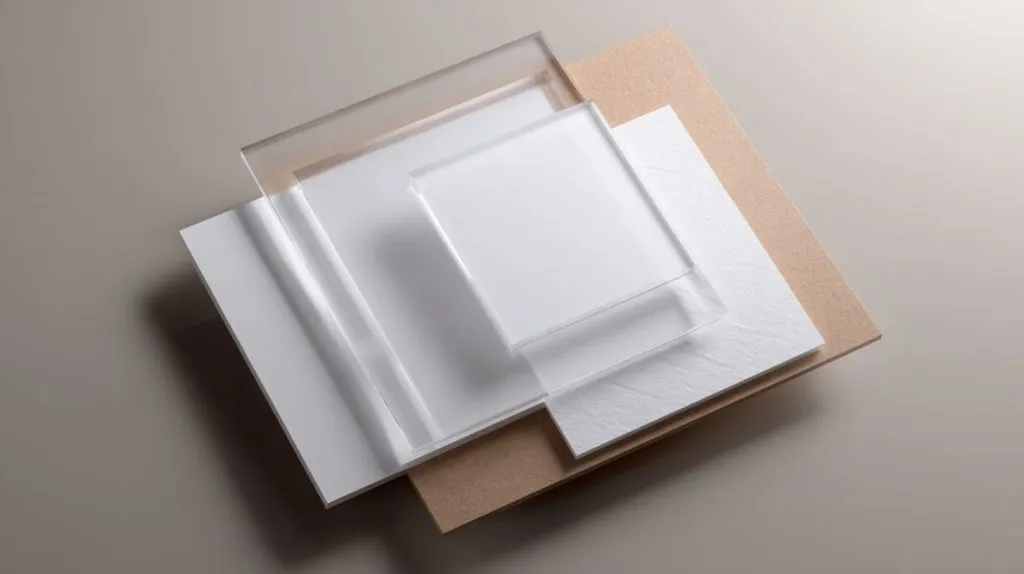
I like comparing these sheets because it forces the buyer to slow down. A sheet name is not a solution. It is only a path to a solution.
Quick comparison table
| Factor | OP3 | P95 | P99 |
|---|---|---|---|
| Main function | UV filtering | Light diffusion | Non-glare viewing |
| Surface style | Usually clear or smooth | Matte one side, glossy one side | Light matte non-glare surface |
| Best for | Artwork and conservation | LED signs and diffusers | Frames and display covers |
| Light behavior | Keeps clarity while filtering UV | Softens and spreads light | Reduces reflection |
| Common mistake | Using it for diffusion | Using it for artwork glare control | Using it as a lighting diffuser |
| Buyer type | Gallery, museum, framer | Sign maker, lighting buyer | Framer, display buyer |
What each one is “protecting” from
This is a helpful way to think about it.
| Acrylic type | It protects against |
|---|---|
| OP3 | UV damage and fading |
| P95 | Harsh light and visible LED points |
| P99 | Annoying glare and reflection |
This is where many quoting mistakes begin. The buyer may say “I need the better acrylic,” but better for what? Better for light? Better for UV? Better for glare? Better for cost?
My own rule is simple: I do not compare OP3, P95, and P99 as grades from low to high. I compare them as tools, because a very good tool still fails when it is used for the wrong job.
Which Acrylic Sheet, OP3 vs P95 vs P99, Is Best for LED Light Diffusion?
LED diffusion is a picky job. A sheet can look beautiful on the table and still show ugly dots after assembly.
P95 is usually the better choice among OP3, P95, and P99 for LED light diffusion because its matte surface helps soften light. But the final result also depends on LED spacing, sheet thickness, distance, and brightness.
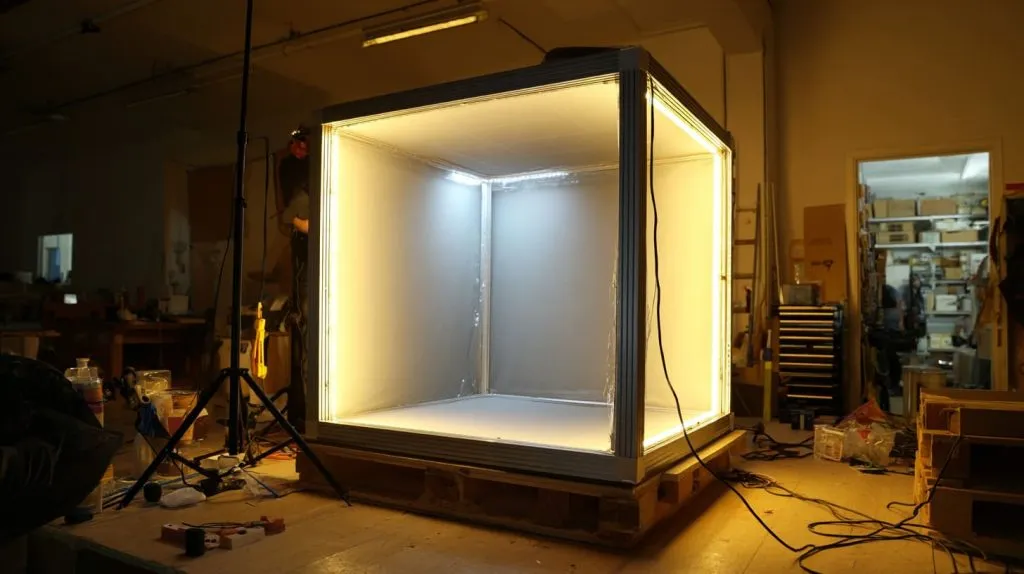
For LED projects, I do not only look at the sheet. I look at the whole lighting system.
Acrylic is only one part of the light box. The LED layout, depth, reflector, sheet color, and thickness all matter. If the LEDs are too close to the acrylic, even a good diffuser can struggle.
LED diffusion checklist
| Question | Why it matters |
|---|---|
| How far is the LED from the acrylic sheet? | More distance usually gives smoother light |
| What is the LED spacing? | Wider spacing can create visible dots |
| What thickness is the acrylic? | Thicker sheets may diffuse more but cost more |
| Is the sheet clear, white, or frosted? | Color affects brightness and diffusion |
| Is the surface matte or glossy? | Matte surfaces reduce glare and soften light |
| Is the light box shallow? | Shallow boxes need stronger diffusion planning |
When P95 works well
P95 often works well when the buyer wants:
- Soft edge lighting
- Backlit signs
- Lighted retail displays
- Decorative panels
- LED display covers
- Photography light panels
But P95 is not magic. I have seen buyers put strong LEDs too close behind a thin sheet and then blame the acrylic. The real issue was the design.
The small detail I check before promising a smooth light effect is the distance between the LED and the front panel. If that space is too small, the material choice alone may not save the result.
How Do OP3, P95, and P99 Acrylic Sheets Affect Light Transmission and Diffusion?
Light transmission and diffusion are not the same thing. This is where many buyers get trapped.
OP3 mainly keeps clarity while filtering UV light. P95 spreads and softens light with a matte surface. P99 reduces reflection and glare, but it is not mainly designed to create strong LED diffusion.
A clear sheet can transmit a lot of light but diffuse very little. A frosted sheet can diffuse light but reduce sharpness. A non-glare sheet can improve viewing comfort but may slightly change clarity.
So the question is not only, “How much light passes through?”
The better question is, “What does the light look like after it passes through?”
Transmission vs diffusion
| Term | Simple meaning | Why buyers care |
|---|---|---|
| Light transmission | How much light passes through | Affects brightness |
| Light diffusion | How evenly light spreads | Affects softness and hotspot control |
| Glare reduction | How much reflection is reduced | Affects viewing comfort |
| UV filtering | How much UV light is blocked | Affects fading and protection |
How the three sheets behave
| Acrylic type | Light transmission feeling | Diffusion feeling | Best visual result |
|---|---|---|---|
| OP3 | Clear and protective | Low diffusion | Clear display with UV protection |
| P95 | Bright but softened | Medium diffusion | Soft glow and reduced sharpness |
| P99 | Clearer viewing under light | Light surface diffusion | Less reflection on viewed content |
I pay close attention when a buyer says “high light transmission.” Sometimes he means brightness. Sometimes he means clarity. Sometimes he means no shadows. These are different things, and one sheet cannot always satisfy all three.
A practical example
If I make a museum cover, I care about UV protection and clear viewing. OP3 makes sense.
If I make a backlit logo sign, I care about soft light and fewer LED marks. P95 makes more sense.
If I make a framed photo for a bright office, I care about reflection control. P99 becomes more useful.
Same material family. Very different decision.
What Industries Use OP3, P95, and P99 Acrylic Sheets the Most?
Different industries ask acrylic to solve different problems. That is why these sheet types show up in different places.
OP3 is common in framing, museums, and galleries. P95 is common in lighting, signs, and retail displays. P99 is common in framing, display covers, and viewing panels where glare reduction matters.

In my work, industry matters because buyers use the same words in different ways.
A museum buyer may care about UV protection first.
A lighting buyer may care about hotspot control first.
A retail display buyer may care about appearance, cleaning, shipping, and cost at the same time.
Industry use table
| Industry | Common acrylic type | Main reason |
|---|---|---|
| Museum and gallery | OP3, P99 | UV protection and glare control |
| Picture framing | OP3, P99 | Protection and better viewing |
| Signage | P95 | Light diffusion and visual softness |
| Retail display | P95, OP3, P99 | Depends on lighting, viewing, or protection |
| Photography and studio | P95 | Soft light and reduced reflection |
| Office interior | P95, P99 | Privacy, glare reduction, soft appearance |
| Cosmetic display | P95, OP3 | Light effect or premium product protection |
| Collectible display | OP3, P99 | UV protection and viewing comfort |
Why retail display projects are tricky
Retail display projects often combine many needs. A cosmetic display may need light diffusion, clean edges, UV protection, and a premium surface. That means the buyer should not choose the sheet by one keyword.
A store fixture can fail in a quiet way. It may not break. It may just look cheap under light, collect marks too easily, or reflect ceiling lamps in the wrong place.
That is why I like asking where the display will sit. A sheet that works in a dark showroom may look different under strong retail lighting.
How Do You Choose Between OP3, P95, and P99 for Custom Acrylic Projects?
Choosing acrylic sheet is not only a material decision. It is a project decision.
Choose OP3 when UV protection is the priority. Choose P95 when soft light diffusion or a frosted look is needed. Choose P99 when glare reduction and clear viewing are more important than strong light diffusion.

For custom acrylic projects, I like to begin with the final use. I do not begin with the sheet name.
Acrylic sheets are not sitting alone in real life. They are cut, polished, printed, bent, glued, packed, shipped, cleaned, and touched by users. Each step can change the final result.
My selection questions
| Question I ask | What it helps me decide |
|---|---|
| Will the sheet protect artwork or products? | OP3 may be needed |
| Will LEDs sit behind the sheet? | P95 may be better |
| Will people view content under strong light? | P99 may be useful |
| Does the surface need to hide fingerprints? | Matte options may help |
| Does the buyer need sharp clarity? | Avoid too much diffusion |
| Will the item be cleaned often? | Surface durability matters |
| Is cost very sensitive? | Standard clear acrylic may be enough |
A simple decision guide
| Project need | Better choice |
|---|---|
| UV protection for artwork | OP3 |
| Soft backlit sign face | P95 |
| Non-glare picture frame | P99 |
| Frosted retail panel | P95 |
| Clear protective cover | OP3 or standard clear acrylic |
| Bright office display cover | P99 |
| LED diffuser panel | P95 or dedicated diffuser acrylic |
A custom project often has two goals fighting each other. The buyer may want high clarity and strong diffusion. He may want a matte surface and easy cleaning. He may want UV protection and low cost. I try to find the trade-off early, before samples become expensive lessons.
Why samples matter
I always prefer testing samples when the project depends on light or viewing angle.
A photo does not tell the full story. A catalog page does not show the exact LED effect. Even a small sample can reveal more than a long email.
For lighting and display projects, I trust real samples more than perfect words.
Are OP3, P95, and P99 Acrylic Sheets Suitable for Outdoor Use?
Outdoor use sounds simple. But sunlight, rain, heat, dust, and cleaning make acrylic work harder.
OP3, P95, and P99 acrylic sheets may be used outdoors in some projects, but suitability depends on sheet grade, UV resistance, thickness, color, installation, and surface exposure. Outdoor projects should be confirmed before production.
Acrylic can perform well outdoors when the right grade is used. But I do not like giving a blind “yes” for every project.
Outdoor use is not one condition. It can mean a shop window in Canada, a sign in hot sun, a cover near the sea, or a display cleaned every day by staff. These are not the same job.
Outdoor risk factors
| Factor | Why it matters |
|---|---|
| Sun exposure | Can affect color, surface, and aging |
| Rain and humidity | Can affect installation and cleaning needs |
| Temperature change | Can cause expansion and contraction |
| Dust and sand | Can scratch matte or non-glare surfaces |
| Cleaning chemicals | Can damage acrylic surfaces |
| Mounting method | Poor fixing can cause stress cracks |
| Sheet thickness | Thin panels may warp more easily |
Which one needs more care outdoors?
| Acrylic type | Outdoor concern |
|---|---|
| OP3 | Confirm UV-filtering grade and long-term exposure needs |
| P95 | Matte surface may collect dirt or marks more visibly |
| P99 | Non-glare surface may need careful cleaning |
| Standard outdoor acrylic | May be better for simple outdoor covers |
Acrylic surfaces can be beautiful, but matte and non-glare finishes need more respect. If people clean them with rough cloth or strong chemicals, the surface may lose its nice look.
Before I say yes to outdoor use, I want to know the location, fixing method, cleaning method, and expected service life. That small conversation protects both the buyer and the factory.
Conclusion
I separate OP3, P95, and P99 by purpose, not by name. OP3 protects, P95 softens light, and P99 reduces glare. This is how I avoid wrong samples, wasted cost, and disappointed buyers. If you need a custom acrylic display, cover, frame, or lighting panel, Feilong Acrylic can help review the real use before production.