Skip to content
A retail display is a funny thing. It looks quiet on a shelf. But it gets judged like a product, not like a “support tool.” One scratch, one crack, one cloudy corner under store lights, and the brand suddenly feels cheaper than it is.
I’ve had buyers send me the same CAD file twice in one month. Same shape. Same size. Same “clear plastic.” The first time, the sample came back with a hairline crack near a bend. The second time, the sample survived shipping, survived unpacking, survived the first week of store staff handling it. The difference was not luck. It was material choice.
Jacky, if you’ve been buying acrylic displays for ten years, you already know the painful part: the showroom decision and the real-world decision are not always the same decision.
Here’s my simple question today:
When is PETG a better choice than acrylic (PMMA) for retail displays?
My answer is also simple: PETG often wins when impact risk, fabrication flexibility, safety, and shipping damage matter more than perfect “hard gloss” and the most premium optical feel.
The tricky part is not learning the words “PETG” and “PMMA.” The tricky part is learning where your project will fail.
A lot of people start this topic by arguing material “quality.” I prefer to start by asking where the display will be touched, dropped, cleaned, stacked, and judged.
What Are PETG and Acrylic in Retail Display Applications?
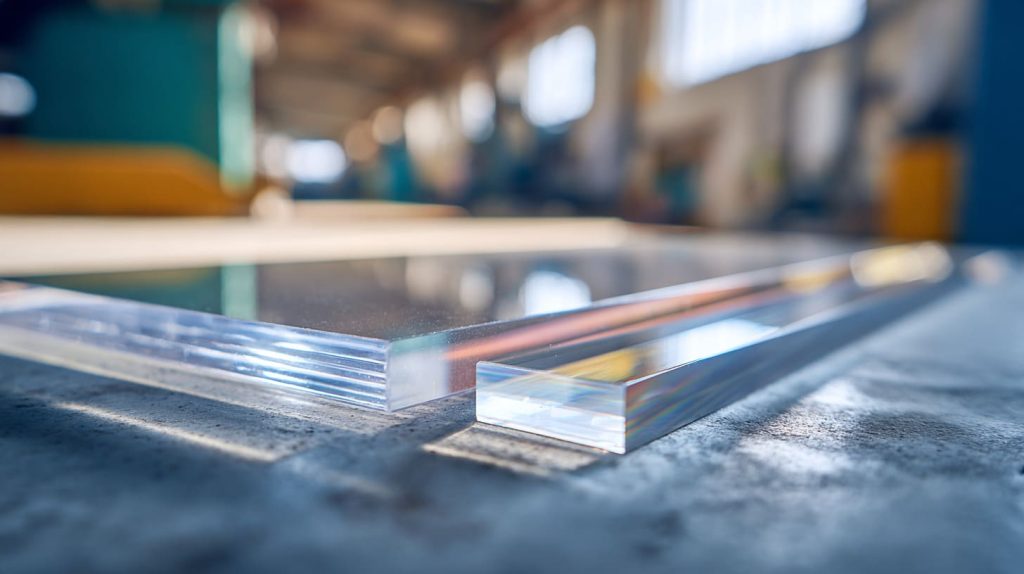
PETG and acrylic both can look clear and “high-end” in photos. In real stores, they behave very differently.
This is where I see people get burned: they pick acrylic because it looks premium on day one, but the display’s job is to still look good on day ninety.
Material overview (in plain words)
- PETG: a tough, more forgiving plastic. It bends and forms easier. It resists impact better.
- Acrylic (PMMA): a stiff, glossy plastic with strong “glass-like” clarity. It scratches less easily than PETG, but it can crack more easily when stressed.
The properties buyers actually feel in production
I like to put this into a table, because “clear plastic” is not one thing.
| Property that affects retail displays | PETG | Acrylic (PMMA) | What it means in a store |
|---|---|---|---|
| Impact resistance | Higher | Lower | PETG survives bumps and drops better |
| Scratch resistance | Lower | Higher | Acrylic stays “clean” longer if touched a lot |
| Optical clarity / gloss | Good | Excellent | Acrylic often looks more “premium” under lights |
| Forming / bending | Easier | Riskier | PETG is more forgiving for tight bends |
| Chemical sensitivity | Varies by cleaner | Varies by cleaner | Both can haze if the wrong cleaner is used |
| Heat behavior | Softer earlier | More heat stable (often) | Heat near lights or hot areas can matter |
Typical retail use cases I see
- Counter displays (cosmetics, jewelry, electronics)
- Cosmetic organizers (lipstick slots, skincare trays)
- POP stands (branded risers, brochure holders)
- Sign holders (menu holders, price tags, shelf talkers)
- Protective barriers (small guards, sneeze screens)
If you’re thinking, “Okay, but which one should I pick?”—good. That means you’re thinking like a buyer, not like a catalog.
Quick reality check I use before quoting a project: if the display has bending, shipping risk, and daily handling, I treat PETG as a serious candidate even if acrylic looks nicer on day one.
Now let’s talk about the first real battlefield: impact.
Next, I want to show you the exact moment PETG saves a project—when the display meets the floor, not the design file.
When Impact Resistance Matters More Than Surface Hardness

If your display will sit behind glass, acrylic is often fine. If your display will live in human hands, things change fast.
One decision I make almost instinctively now: if the display will be moved by store staff every day, I stop treating acrylic as the “default.”
High-traffic retail environments
These are the places where impact risk is normal, not “bad luck.”
- Supermarkets (fast restocking, carts, busy aisles)
- Cosmetic counters (constant picking up and putting down)
- Electronics stores (demo areas, lots of touching)
- Public interaction displays (customers lean, tap, push)
The real damage scenarios (not the textbook ones)
I’ve seen most display damage come from boring moments:
- A staff member grabs a stand with one hand, twists it slightly, and the stress concentrates at a corner.
- A box falls off a cart, not from a big height, but onto a sharp edge.
- A customer picks up a display to “inspect it,” then sets it down harder than they think.
Here’s the pattern: impact is rarely a single dramatic hit. It’s small hits, repeated, plus stress from bending and assembly.
PETG advantage in daily handling
PETG tends to:
- Take hits without cracking
- Flex a bit instead of snapping
- Reduce the “mystery break” complaints after shipping and unpacking
Acrylic tends to:
- Look fantastic when new
- Hold surface appearance better
- Crack when stress concentrates (especially near bends, drilled holes, sharp corners)
A simple way I explain it to buyers
If the display is like a “nice watch,” acrylic is attractive.
If the display is like a “work boot,” PETG often makes more sense.
Impact vs appearance trade-off table
| Scenario | My typical pick | Why |
|---|---|---|
| Display is handled daily | PETG | Less cracking and fewer replacements |
| Display is static and premium | Acrylic | Better gloss and scratch resistance |
| Tight bend + daily use | PETG | Acrylic can crack at the bend zone |
| Luxury brand look matters most | Acrylic | The visual feel can be the brand signal |
If you’ve ever had to explain to your boss why 200 pieces cracked “for no reason,” you already know this is not a small detail.
But impact is only half the story. The next failure point often happens before the display even ships—right when we start bending and forming.
When Complex Bending and Thermoforming Are Required
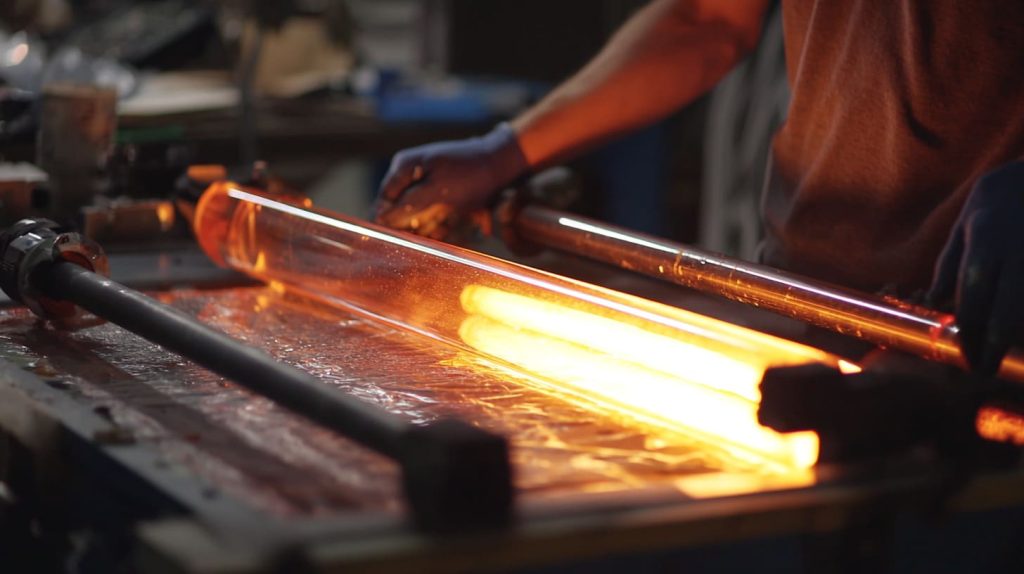
Bending is where material truth shows up. A sheet can look perfect. Then the first bend tells you if the project will be stable or stressful.
A choice I’ve learned to make early: if the design has tight bends or deep forming, I lean PETG unless the brand is paying specifically for acrylic’s look and we accept the higher risk.
Cold bending vs heat bending (what goes wrong)
Acrylic can bend beautifully—when done correctly. It can also punish you when the design is aggressive.
Acrylic cracking risks under tight bends
- Tight radius bends concentrate stress
- Small surface defects become crack starters
- Inconsistent heating causes micro-stress
- Sharp inside corners act like “tear points”
PETG flexibility advantages
- More forgiving in forming
- Less likely to crack at tight bends
- Better tolerance to small process variation
Deep forming and curved displays
When I hear words like:
- “rounded corners”
- “seamless curve”
- “wrap-around shape”
- “vacuum form”
…PETG usually starts to look like the safer bet.
Vacuum forming use cases
- Cosmetic trays with pockets
- Rounded product risers
- Contoured display bases
- Protective covers with complex geometry
Production efficiency (the part buyers feel in the invoice)
This is not just “material performance.” It’s cost performance.
| Production factor | PETG | Acrylic | Why it matters |
|---|---|---|---|
| Forming yield | Often higher | Often lower | Less cracking = less scrap |
| Process sensitivity | Lower | Higher | Acrylic needs tighter control |
| Rework tolerance | Better | Worse | Acrylic cracks don’t “heal” |
| Lead time stability | Better | Risky | Scrap delays schedules |
My practical “bend-risk checklist”
I don’t treat this like a science project. I treat it like risk control.
- Bend radius: is it tight or relaxed?
- Thickness: is it thin but stressed?
- Hole positions: are holes near bend lines?
- Edge finishing: are there sharp corners?
- Assembly stress: does it get screwed down hard?
If two of these are “risky,” PETG starts winning on peace of mind.
Now imagine this: the display survives bending, looks great, and then gets crushed by shipping reality. That’s the next reason PETG quietly becomes the hero.
When Shipping Risk and International Logistics Are a Concern
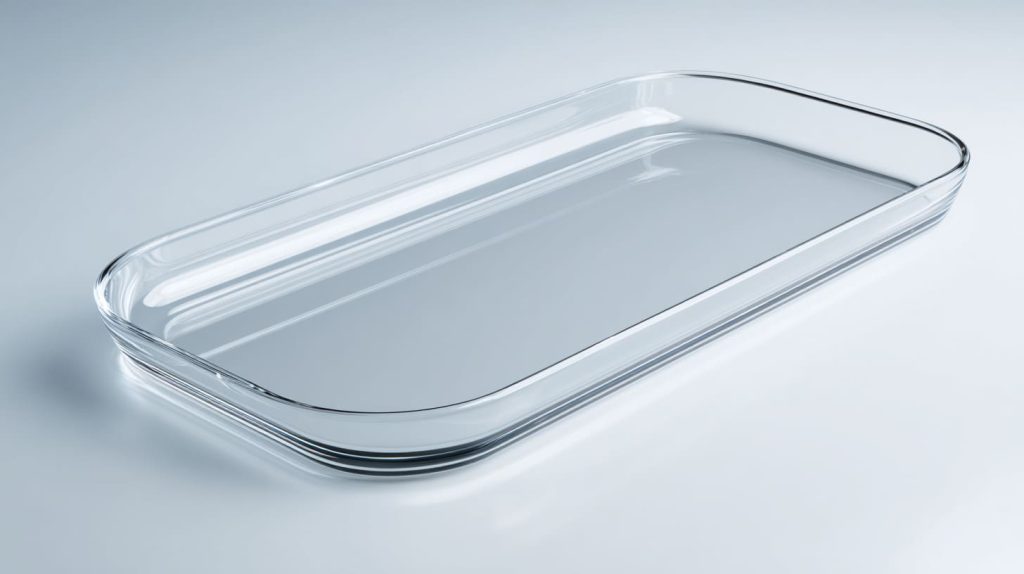
Shipping does not care about your design intent. Shipping cares about stacking pressure, vibration, temperature swings, and people rushing.
What I pay attention to first: if a display is exported long distance and packed in bulk, I assume it will experience rough handling at least once.
Export and long-distance transportation realities
For markets like:
- Canada
- Europe
- Japan
…your display might travel through multiple hands, warehouses, and trucks before it reaches a store.
Even when everything is done “right,” you still have:
- carton compression
- pallets shifting
- corner impacts
- container stacking pressure
Container stacking pressure is sneaky
Acrylic can be strong, but brittle failure is a nasty surprise. One small impact during packing can become a visible crack after weeks of vibration.
PETG’s toughness often means:
- fewer cracked corners
- fewer “it arrived damaged” emails
- fewer emergency replacements
Packaging cost optimization (real, not theoretical)
I’ve watched buyers spend more on packaging than they expected because the material choice demanded it.
| Packaging approach | Works better with PETG | Works better with acrylic | Notes |
|---|---|---|---|
| Bulk stacking with separators | ✅ | ⚠️ | Acrylic needs more protection |
| Thin protective films | ✅ | ✅ | Both benefit, but film isn’t magic |
| Heavy foam corner blocks | Optional | Often needed | Acrylic corners are sensitive |
| Reduced carton thickness | Sometimes | Risky | Depends on weight and stacking |
Damage rate vs brand reputation
Here’s the part people underestimate: retail buyers judge your brand by what arrives in the box.
A cracked acrylic stand doesn’t feel like “material failure.”
It feels like “supplier failure.”
Even if the crack happened in transit.
So if the project is:
- high quantity
- tight schedule
- overseas shipping
…I take PETG seriously because it reduces the chance of a reputation problem.
But there’s another topic that sounds boring until it becomes urgent: safety. When displays go into public spaces, “how it breaks” matters.
When Safety and Compliance Are Priorities

Safety is not only for hospitals and schools. Retail is also a public environment. Kids run. Customers lean. Staff move fast. Things fall.
The deciding thought I often have here: I would rather explain a small scratch than explain a sharp break.
Shatter behavior comparison (how they fail)
- Acrylic: more brittle. It can crack and break with sharper edges.
- PETG: more ductile. It tends to bend or deform before it breaks.
That difference matters when displays are:
- near customer hands
- near children
- mounted at face height
- used in interactive sections
Child-safe and public installations
PETG often fits better when the display is used in:
- schools and libraries
- toy stores
- interactive product demo areas
- public service kiosks
Regulatory considerations (what buyers ask about)
I’m not a lawyer, and I don’t pretend every project needs a compliance document. But I do see buyers ask these questions:
- Is the material food-contact safe for a sampling area?
- Can the display be cleaned with common retail cleaners?
- Does it have documented material grade?
PETG has food-contact grade options in many supply chains, and acrylic also has grades and documentation depending on source. The key is not the buzzword. The key is matching the material grade to the use case.
Quick “safety thinking” table
| Use case | Risk type | PETG benefit | Acrylic benefit |
|---|---|---|---|
| Kids nearby | Impact + sharp edges | Tougher failure mode | Better scratch resistance |
| Staff moves displays daily | Drop risk | Less cracking | Better gloss |
| Sampling / food adjacent | Cleaning + contact | Grade options exist | Grade options exist |
| Barrier screens | Impact + stability | Tougher | Stiffer feel |
If you’ve ever had a retail buyer ask, “What happens if this breaks?” you know this is not a small conversation.
Now let’s talk about the topic that always shows up near the end of a meeting: cost. Not just material cost—total cost.
When Budget and Total Project Cost Matter More Than Premium Gloss
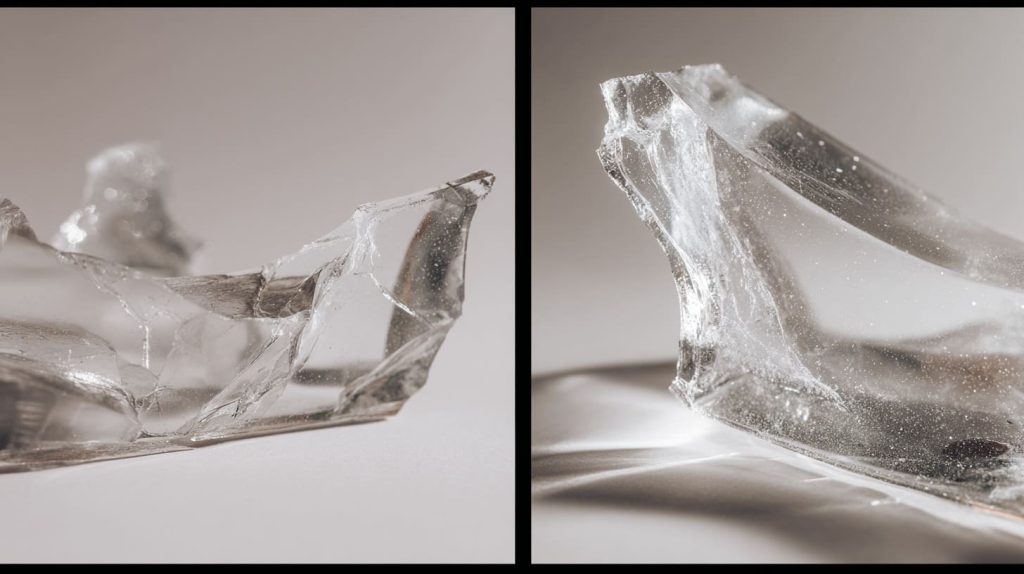
Some buyers only compare price per sheet. That’s not wrong. It’s just incomplete.
Where I see smart buyers win: they compare total project cost, including scrap, packaging, rework, and replacement.
Raw material cost differences (what changes the number)
Material prices move. Supply changes. Thickness changes yield.
So instead of pretending there is one “PETG is cheaper” answer, I look at:
- thickness required for stiffness
- sheet yield (how many parts per sheet)
- expected scrap during forming and assembly
Fabrication and waste cost
This is where PETG can quietly reduce cost:
- fewer cracked parts during forming
- fewer rejected parts due to micro-cracks
- less protective packaging needed (sometimes)
Acrylic can reduce cost when:
- the design is simple and flat
- the main risk is scratch appearance, not impact
- the display is premium and the look justifies the extra care
Cost drivers table (the “invoice truth” view)
| Cost driver | PETG tends to do better | Acrylic tends to do better |
|---|---|---|
| Scrap from bends / forming | ✅ | ⚠️ |
| Surface appearance over time | ⚠️ | ✅ |
| Packaging burden | ✅ | ⚠️ |
| Premium gloss value | ⚠️ | ✅ |
| Replacement rate | ✅ | ⚠️ |
Long-term cost of ownership
Retail displays are not “finished” after production. They live in stores.
Questions I like to ask buyers:
- How long will the display be used?
- Will staff wipe it daily?
- Will customers touch it?
- Will it be moved between campaigns?
If it’s a short campaign display, PETG’s toughness can be a good bargain.
If it’s a long-term premium counter piece, acrylic’s surface can pay for itself.
But if I only praise PETG, that would be dishonest. Acrylic still has real strengths, and in some projects it’s the right call. Let’s be fair.
Where Acrylic Still Performs Better

Acrylic earned its reputation for a reason. When people say “premium clear plastic,” they are often describing acrylic.
My honest judgment here: if the display’s main job is to look flawless under strong lighting for a long time, I still trust acrylic more.
Premium optical clarity and gloss
In luxury retail, the display is part of the product story.
Acrylic tends to offer:
- higher optical clarity
- stronger “glass-like” feel
- better light reflection and crisp edges
This matters when:
- the product is expensive
- the brand image is sensitive
- the store lighting is harsh and highlights defects
Scratch resistance (the daily beauty test)
PETG can scratch more easily. This is not a moral failure. It’s material reality.
So if the display will be:
- wiped often
- handled often
- placed in high-visibility zones
…acrylic can look “clean” longer.
UV resistance and outdoor exposure
For outdoor or near-window displays, UV can become a long-term issue. Material grade matters here, and acrylic is often chosen for better long-term clarity in sun exposure scenarios.
Where acrylic is worth the risk table
| Scenario | Why acrylic wins |
|---|---|
| Luxury counters | Premium clarity is part of brand value |
| Long-term static displays | Surface stays better over time |
| High cleaning frequency | Scratch resistance matters |
| Strong showroom lighting | Acrylic looks sharper and cleaner |
If you’re an experienced buyer, you already see the point: “best” depends on what the display must survive.
So how do you choose without guessing? I’ll show you the decision system I use with buyers like Jacky so the material choice stops being emotional.
How to Decide Between PETG and Acrylic for Your Custom Display Project

Material choice becomes easier when you stop asking “which is better” and start asking “what will punish this display.”
The question I ask myself before I recommend anything: what is the most likely failure mode—crack, scratch, haze, or shipping damage—and which one hurts the brand more?
Decision matrix (simple, but practical)
Here’s a quick way to structure the decision.
| Decision factor | If this is HIGH, lean PETG | If this is HIGH, lean acrylic |
|---|---|---|
| Impact risk | ✅ | |
| Shape complexity (bends/forms) | ✅ | |
| Shipping distance / export | ✅ | |
| Premium optical demand | ✅ | |
| Scratch sensitivity | ✅ | |
| Campaign is short-term | ✅ | |
| Display is long-term premium | ✅ |
Questions I like buyers to ask their manufacturer
If you want to avoid surprises, ask direct questions. Simple words. Clear answers.
- What is the bend radius limit for this thickness and shape?
- Where are the high-stress points in the design?
- What material grade are you using, and can you share a basic spec sheet?
- What packaging method do you recommend, and why?
- Can we do a small sample run and perform handling tests?
Prototype testing strategy (the way I prefer)
I’m not a fan of “perfect sample photos” only. I like tests that simulate retail life.
Drop tests
- Drop from realistic heights (cart height, counter height)
- Focus on corners and bends
Bend stress tests
- If there is a bent wall, apply gentle twisting like a staff member would do
Visual evaluation under retail lighting
- Look at edges and corners
- Look for stress haze
- Wipe with the cleaner the store will use (very important)
Test plan table (quick and easy)
| Test | What it reveals | Why it matters |
|---|---|---|
| Corner drop | Crack risk | Shipping + handling reality |
| Twist at bend | Stress failure | Staff handling behavior |
| Wipe test | Haze / scratching | Real cleaning routine |
| Light booth check | Visual defects | Retail lighting exposes flaws |
If you do these tests, the material choice becomes less like a debate and more like a decision backed by evidence.
Now I want to land this with a clear takeaway, because you don’t need more theory—you need fewer surprises and better results.
Conclusion

PETG is not “better” than acrylic in every case, and I don’t treat it that way in my work. I use PETG when the display’s real enemy is impact, bending stress, shipping pressure, or public handling. In those situations, PETG protects the schedule and protects the buyer’s reputation, because fewer pieces crack and fewer shipments turn into damage complaints.
I still choose acrylic when the display is meant to look premium for a long time under strong lighting, and when scratch resistance is the main battle. Acrylic can carry a luxury feel that PETG sometimes cannot match, and pretending otherwise would be dishonest.
The reason I hold this view is simple: I’ve watched too many projects fail in predictable ways. Not because the design was bad, but because the material was chosen for the wrong “story.” The sample story is always optimistic. The retail story is messy.
If you want, send me your display drawing (or even just a photo of a similar item), and tell me three things: where it will be used, how it will be handled, and how it will be shipped. I can help you pick the safer material path and avoid the most common failure points before you spend money on tooling and bulk production.