Skip to content
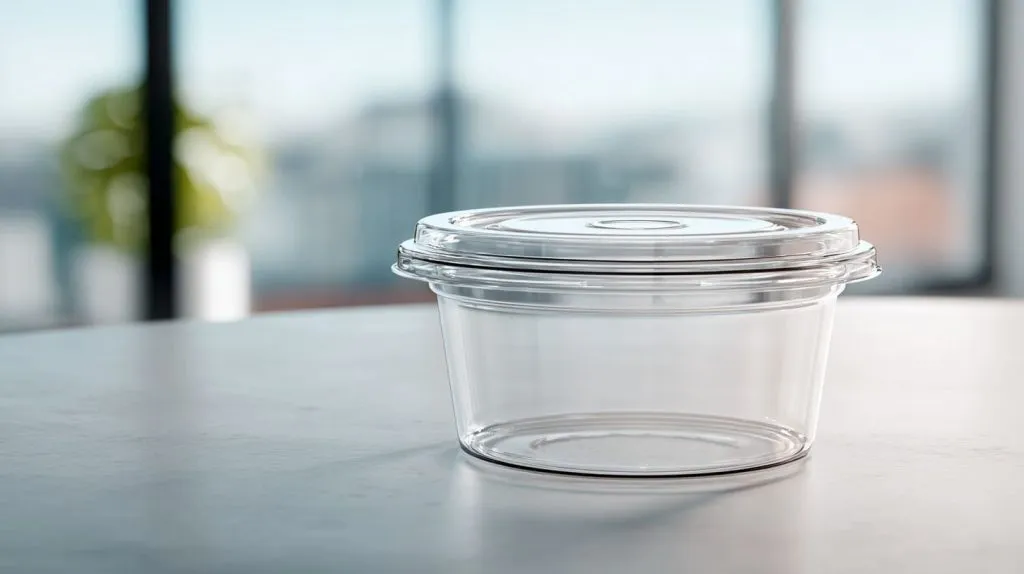
A buyer once sent me a neat drawing for a clear food lid. It looked simple. Smooth edges. Nice transparency.
Then the last message landed like a pebble in my shoe:
“Can we make it clear so customers can see the food… and also dishwasher safe?”
That is the moment I slow down. Not because I dislike clear parts. I actually love them. Clear plastic can make a product feel clean, premium, and trustworthy. But in food-contact design, “clear” is not just a look. It is a set of trade-offs.
One wrong assumption can turn into a real-world mess: odd smell after heat, haze after cleaning, cracks after stress, or a compliance question you cannot answer when a retailer asks for documents.
Here is the core idea I want to share:
Clear plastics are often chosen for the eyes, not for the environment. Food contact is an environment. It has heat, fat, acid, time, and cleaning chemicals. Those five things don’t care how pretty the part looks.
The risks usually fall into three buckets:
- Migration risk (what can move from plastic into food)
- Compliance risk (what you can prove with documents)
- Performance risk (what breaks, warps, or turns ugly over time)
One thing I do in real projects: I treat “clear plastic” like a question, not an answer. If the buyer cannot describe the food, temperature, time, and cleaning method, I assume the design is still incomplete.
Alright—before we talk about when to avoid it, let’s make sure we’re talking about the same “clear plastics.”
📏 Understanding Clear Plastics in Food Contact

Clear plastics are a big family, and people mix them up. I see “transparent plastic” written in notes like it is one material. It is not. Two clear plastics can look identical on day one, and behave like strangers after 30 dishwasher cycles.
Here’s what “clear plastics” often means in food-contact projects.
What “Clear Plastics” Typically Refer To
Most of the time, I see these four names come up:
- PET / PETG: clear, decent toughness, common in packaging and some containers
- PC (polycarbonate): very tough, very clear, heat capable in some grades, but often tied to BPA concerns
- PMMA (acrylic): crystal clear, stiff, great surface look, but can crack and hates some cleaners
- PVC: can be clear, but additives and plasticizers make it a tricky choice for food contact in many cases
And then there is the “mystery plastic” problem: a supplier says “it’s like PET” or “it’s like acrylic.” That language is not enough when food contact is involved.
To make this easier, I often use a simple comparison table early in the discussion.
| Material (Typical Clear Option) | What it does well | What it often fails at (food-contact reality) | Common “surprise” in use |
|---|---|---|---|
| PET / PETG | Clear, easy to form, cost-friendly | Heat and harsh cleaning limits | Haze, warping, stress whitening |
| PC | Very tough, impact resistant | Compliance questions (BPA), scratch visibility | Looks used fast, scratches show |
| PMMA (Acrylic) | Best clarity, “premium” look | Chemical resistance and cracking risk | Cracks near screws, crazing lines |
| PVC | Flexible, low cost in some markets | Additives, regulatory complexity | Smell, migration concerns |
Here’s the judgment I make in my own work: if the part is clear and touches food, I assume the material choice is risky until someone proves the use conditions are mild.
Key Characteristics of Food-Safe Plastics
People often say “food grade” like it is a magic stamp. In practice, it is closer to a paper trail plus conditions.
- “Food grade” usually points to a material compliance status (the resin, additives, and colorants are allowed under certain rules).
- “Food safe” is the outcome you actually care about: your food, your temperature, your time, your cleaning, your real users.
So I push buyers (especially experienced ones like Jacky) to define four things:
The 4 questions that decide whether “clear” is safe
- What food touches it? (dry snack vs hot oil is not the same world)
- How hot does it get? (processing, filling, reheating, dishwasher)
- How long is contact? (seconds, hours, days, months)
- How is it cleaned? (hand wash, sanitizer, alkaline detergent, steam)
When these are unknown, “clear plastic” becomes a guessing game.
To show why this matters, I sometimes sketch a quick “risk map” for a buyer:
| Use Condition | Why it matters | Risk level for many clear plastics |
|---|---|---|
| Hot liquids / steam | Heat speeds migration and softening | High |
| Fatty foods | Fat can pull certain chemicals more easily | High |
| Acidic foods | Acid can attack surfaces or change migration behavior | Medium–High |
| Long storage | Time increases exposure and migration potential | Medium–High |
| Strong cleaners | Chemicals can cause cracking or haze | High |
If that table makes you feel slightly uncomfortable—good. That discomfort is the same feeling I get when someone asks for “clear + food contact + high heat + easy cleaning,” all at once.
Next, let’s talk about the situations where I actively try to talk buyers out of clear plastics.
⚠️ When Clear Plastics Should NOT Be Used
This is the part many people want to skip. They ask, “Which clear plastic should I use?”
I often answer with a different question: “Do you actually need it to be clear in that place?”
Because some designs only need a clear window, not a fully clear body. And sometimes you need clarity for marketing, but not for the food-contact surface.
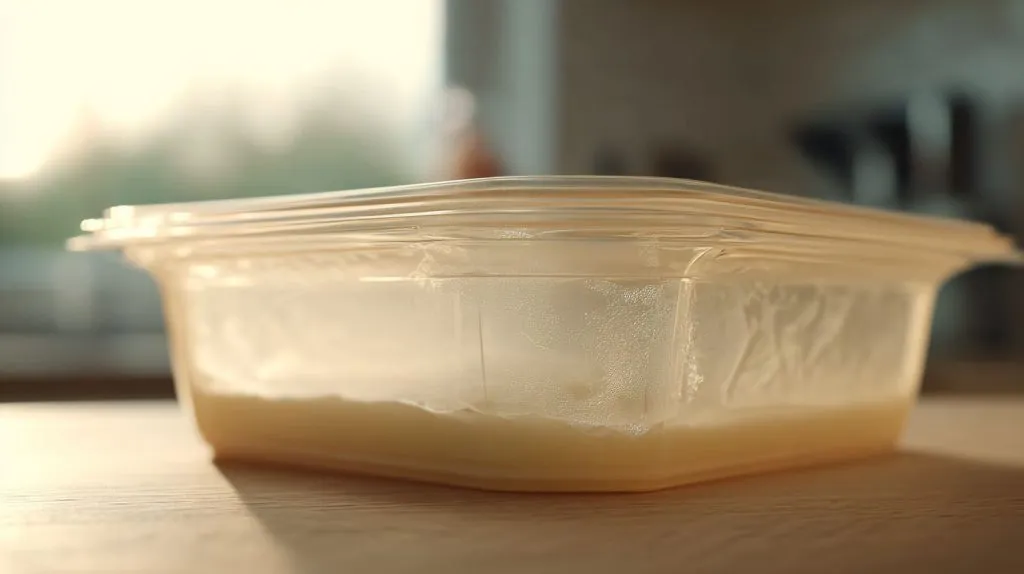
One thing I’ve learned: clear plastic fails quietly. It rarely explodes. It just gets cloudy, smells odd, cracks in a corner, or becomes hard to defend in a compliance audit.
Here are the five situations where I usually say: do not use clear plastics, or at least do not use them without strict controls.
1. High Temperature Applications
Heat is where “clear” becomes expensive.
- Hot filling
- Boiling liquids
- Microwave reheating
- Steam cleaning
- Dishwasher cycles
Even if a clear plastic survives the first run, repeated heat can change it. Some materials soften. Some warp. Some pick up haze. Some release odor when heated.
A practical table I use in early design reviews:
| Heat Scenario | What tends to happen | Typical failure you see first |
|---|---|---|
| Hot filling (short) | Softening or slight shape change | Warped edge, lid no longer seals |
| Microwave reheat | Local hot spots + stress | Cracking, whitening around corners |
| Dishwasher (repeated) | Heat + detergent attack | Haze, micro-cracks, surface dulling |
| Steam cleaning | High heat + moisture | Warping, stress failure |
My personal rule is blunt: if the product must stay clear after repeated dishwasher cycles, I do not trust a “looks good on day one” sample—only cycle testing earns that trust.
2. Contact With Acidic or Fatty Foods
Acid and fat are two different enemies.
- Fatty foods (oil, cheese, meat, sauces) can increase the pull on certain additives.
- Acidic foods (vinegar, citrus, tomato) can attack surfaces or change how the material behaves over time.
Clear plastics are often chosen for deli containers, salad lids, or sauce covers. Those are exactly the places where fat and acid show up.
Here’s a simple way I explain it:
- Water is polite.
- Oil is a thief.
- Acid is a slow grinder.
A tiny “safe-looking” choice can turn into complaints like:
- “It smells after warm soup.”
- “The lid looks cloudy after tomato sauce.”
- “The clear part has tiny lines after cleaning.”
3. Long-Term or Storage Beyond Intended Use
Time is a multiplier.
A buyer might say: “It’s just a cover.”
Then the real life is: the cover touches food for weeks, not minutes. Or it stays in a fridge, then gets warmed, then cleaned, then reused.
For long storage, you need to think about:
- migration over time
- odor absorption
- color change
- stress buildup
I have seen clear parts that are “fine” in a short test become unacceptable in long use because they pick up a faint smell or haze. That kind of failure is hard to argue with. Users don’t care about resin names. They care about trust.
4. Repeated Use Without Proper Specification
Reusability is not a vibe. It is a design requirement.
Many clear food packages are intended for single use. But users reuse them anyway. That’s human nature. If it looks solid and it’s still in one piece, people reuse it.
So if your product will be reused, you should plan for:
- fatigue from flexing
- hot/cold cycles
- detergent exposure
- scratch accumulation
A clear material that scratches easily can look “dirty” even when it is clean. And in food products, perception becomes reality.
5. Compliance & Regulatory Restrictions
This is the hidden cliff.
You can sometimes make a clear part that functions well.
But can you prove it is acceptable for food contact under the target market’s rules?
For B2B buyers, this is where projects stall:
- missing compliance declarations
- unclear additive lists
- colorant not approved
- recycled content questions
- suppliers who cannot provide consistent documentation
I’ve had buyers tell me: “We don’t need paperwork.”
Then a retailer asks for it, and suddenly the team is digging through email threads like a crime scene.
One decision I often make for my own sanity: if the supply chain cannot provide stable documentation, I’d rather choose a slightly less pretty material that I can defend, than a crystal-clear material that makes compliance a guessing game.
Before we go deeper into health concerns, I want to make the transition simple: most “clear plastic problems” are not dramatic. They are slow, boring, and expensive. That makes them dangerous.
🔬 Scientific & Health Considerations
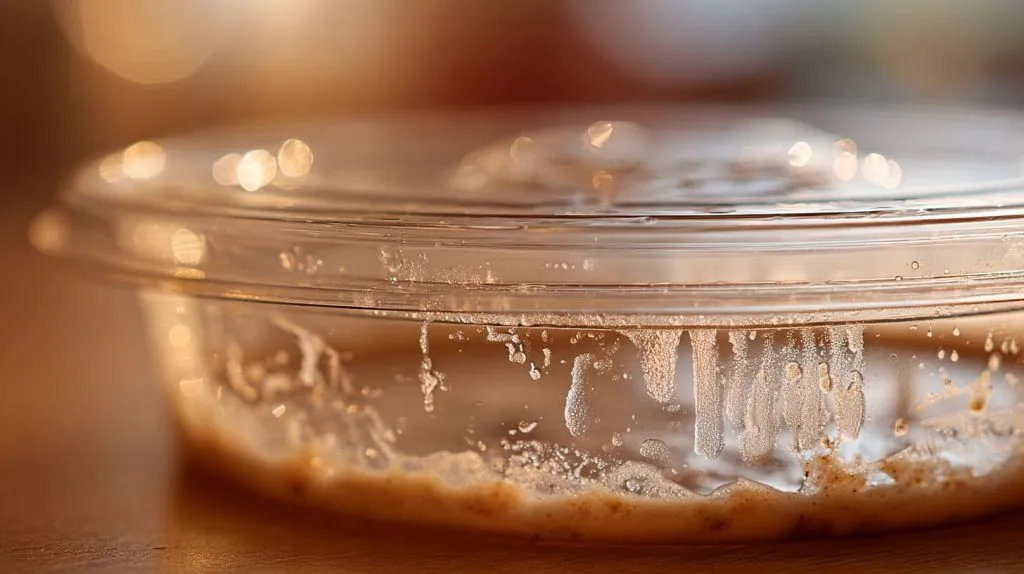
When people hear “health risk,” they often picture extreme cases. But most real issues are quieter:
- a low-level migration concern under heat
- odor that makes food feel unsafe
- micro-cracks that trap residue
- particles from wear that show up over time
This section is not about fear. It is about being honest about what can happen.
Here’s my practical judgment on this topic: when the product touches hot and fatty food, I stop trusting “common sense” and start insisting on material-specific testing or conservative material choices.
Chemical Migration Risks
Migration is basically “stuff moving.”
It can be:
- monomers (from the polymer itself)
- additives (stabilizers, processing aids)
- plasticizers (common in flexible plastics)
- contaminants (from recycled content or poor handling)
And the big drivers are simple:
- temperature
- time
- food type (fat can pull more)
- surface condition (cracks and scratches increase effective surface area)
To keep discussions grounded, I often use a “migration driver” checklist table:
| Driver | What increases risk | What reduces risk |
|---|---|---|
| Temperature | Hot fill, microwave, dishwasher | Cold use, room temp use |
| Time | Long storage, overnight contact | Short contact, quick transfer |
| Food type | Oils, fats, alcohol-based flavors | Dry foods, water-based foods |
| Cleaning | Harsh detergent, sanitizer, steam | Mild soap, controlled cleaning |
| Surface wear | Scratches, crazing, micro-cracks | Smooth stable surface, low abrasion |
If a design hits three or more “increases risk” items, I usually advise moving away from clear plastics, or limiting clear plastic to a non-contact window.
Microplastics and Environmental Health Concerns
Microplastics is a messy topic because it gets emotional fast. People argue about definitions and exposure levels. But as a product person, I think in a simple way:
- Wear happens.
- Users scrub.
- Edges chip.
- Scratches accumulate.
Clear plastics show wear more easily, and some clear plastics scratch easily. So even if the health science is still evolving in public debate, the product reality is clear: a worn surface is harder to clean, and customers lose trust.
One small example I’ve seen: a clear lid that looks “foggy” after repeated cleaning. Technically it might still be “safe,” but the user stops trusting it. They replace it. Or they complain. Either way, it becomes a business problem.
And that’s why this topic belongs in design, not just in labs.
Next, let’s talk about the rules and paperwork—because even a “good” material can become the wrong choice if you cannot document it.
🧪 Regulatory & Compliance Landscape

I’m not a lawyer, and I don’t pretend to be one. But I deal with the real-life version of regulation: buyers need documents, auditors ask questions, and brands want a clean story they can stand behind.
Here is how I think about compliance: it is not just “is this allowed,” it is “can we prove what we used, every time, for every batch.”
My own judgment here is simple: if the target market is unclear, or the customer sells in multiple regions, I avoid borderline materials and prefer materials with strong, consistent compliance support from the supply chain.
FDA and U.S. Standards
In the U.S. world, buyers often ask for:
- resin compliance statements
- food contact status documents
- declarations for additives and colorants
- temperature and use condition limitations
What I watch out for is the “assumption trap”:
- “It’s a common plastic, so it must be OK.”
That sentence causes delays later.
Even with the same base resin, two suppliers can use different additives. The part can look the same and behave the same—but the paperwork and compliance status can differ.
EU and International Frameworks
In EU-focused projects, the conversation often becomes more document-heavy:
- declarations of compliance
- traceability
- test conditions (simulants, time, temperature)
- restrictions on certain substances
The hard part is not the rule itself. The hard part is aligning:
- the exact material
- the use condition
- the paperwork
- the test plan
If one of these is missing, the project becomes a debate, not a build.
Documentation & Supplier Requirements
This is where I get very practical. I ask suppliers for three things:
- Material identity (what exactly is it, not “similar to PET”)
- Compliance statement (for the intended market and use)
- Change control (what happens if they change additives or resin source)
I like using a simple “document readiness” table with buyers:
| Item | What it should answer | Why it matters |
|---|---|---|
| Material spec sheet | Which resin family and grade | Prevents “mystery plastic” |
| Compliance declaration | Which markets and conditions | Avoids region mismatch |
| Additives/colorant info | What else is inside | Clear plastics can hide additive risk |
| Batch traceability | Can we track production lots | Helps in audits and complaints |
| Change control note | Can supplier change formulation | Prevents silent compliance drift |
If a supplier cannot provide these, I don’t fight them. I just change the design direction. That’s often cheaper than trying to “educate” a supply chain that doesn’t want to be audited.
Now we get to the fun part: how to design smarter, still look premium, and avoid the clear-plastic traps.
🛠️ Practical Design Strategies

I’m not here to say “never use clear plastics.” I’m here to say: don’t use them where they don’t belong. And if you must use them, design like you expect real humans to use the product.
Here is the judgment I use when I’m choosing a path: if clarity is mainly for marketing, I try to keep clear plastic away from heat + fat + harsh cleaning, and I push clarity into a window, a label area, or a non-contact layer.
Choosing the Right Material
Sometimes the best solution is not “find the perfect clear plastic.”
Sometimes the best solution is: stop demanding full clarity.
Here are a few practical alternatives:
- Opaque food-safe polymers for the contact surface, plus a clear window for visibility
- Glass for high heat + long life (heavy, break risk, but very stable)
- Stainless steel for durability and cleaning (no clarity, but excellent hygiene)
- Clear only in non-contact zones (cover outside layer, viewing panel)
I like to frame this as “where do we truly need to see?”
| Design Goal | Better approach than “all clear” | Why it helps |
|---|---|---|
| Let user see contents | Small clear window | Limits contact risk zone |
| Premium look | Gloss finish + clean geometry | Clarity is not the only premium signal |
| Hygiene perception | Easy-to-clean surfaces, fewer seams | Users trust cleanliness more than clarity |
| Heat resistance | Use non-clear stable materials | Heat is not a good friend of many clears |
Design for Safety
Clear parts often fail at corners, seams, and stress points. So I design around those realities:
Practical moves I use often
- Avoid sharp internal corners (reduce stress concentration)
- Control wall thickness transitions (warping and sink marks show more in clear parts)
- Choose joining methods carefully (screws can crack acrylic; snap fits can stress PETG)
- Plan cleaning behavior (users scrub where they see residue)
- Decide upfront: “single use” or “reusable” (then design accordingly)
Here’s a quick “design risk” table I sometimes share with Jacky-style buyers:
| Risk | What triggers it | Design move that helps |
|---|---|---|
| Cracking | Stress + chemicals | Bigger radii, better joint design |
| Haze | Detergent + heat | Material choice + smoother surface finish |
| Odor | Heat + absorption | Conservative material, avoid porous textures |
| Scratching | Abrasion | Matte hides scratches, but can trap residue |
| Compliance gaps | Weak supplier docs | Choose materials with strong documentation |
And yes, I always test the “ugly user behavior” scenario:
- Someone uses the wrong detergent.
- Someone puts it in the dishwasher anyway.
- Someone stores oily food overnight.
- Someone scrubs hard with a rough sponge.
Because that’s not “worst case.” That’s just Tuesday.
Before we wrap up, I want to summarize the conditions in a simple, copy-ready way. The next section is basically the checklist I wish every drawing note included.
📌 Summary: Key Conditions to Avoid Clear Plastics in Food Contact
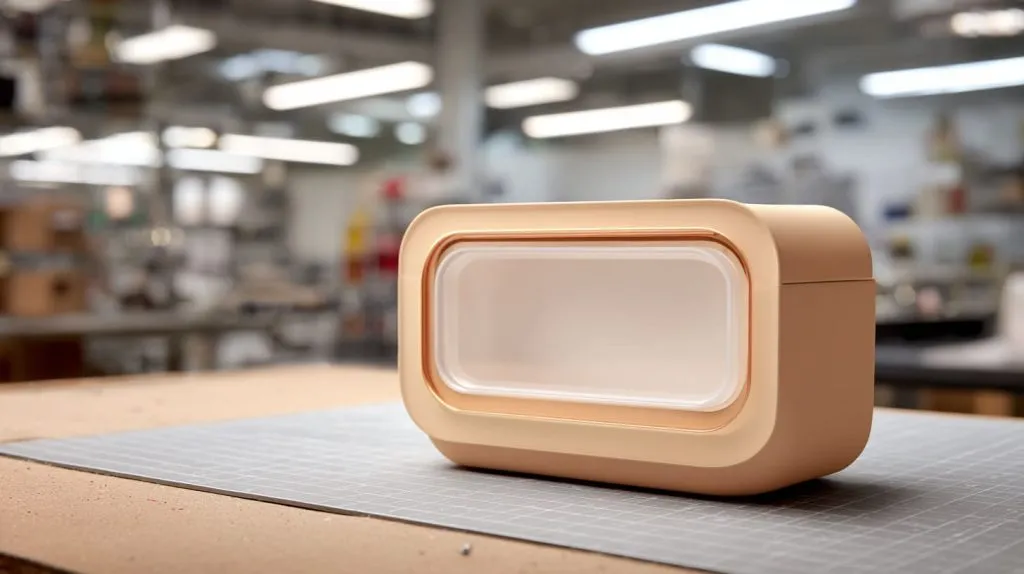
If you only remember one thing, remember this: clear plastics behave best when the environment is cool, mild, short-contact, and gently cleaned.
Here’s how I compress the decision in my head. This is the judgment I rely on most: when a design combines heat + fat + repeated cleaning, I treat clear plastic as a liability unless we have strong testing data and strong documentation.
The “avoid clear” conditions, in plain language
High heat or reheating
- hot fill
- microwave
- steam
- dishwasher cycles
Acidic, fatty, or aggressive foods
- hot oil, sauces, cheese
- vinegar-based foods
- alcohol-based flavoring contact
Long contact time
- overnight storage
- weeks in a fridge
- repeated reuse beyond original intent
Repeat cleaning with strong chemistry
- alkaline detergents
- sanitizer routines
- harsh scrubbing behavior
Weak documentation or unstable supply chain
- unclear resin grade
- missing compliance declarations
- “we changed supplier but it’s the same” stories
To make it easy for teams, I sometimes drop a one-table “go/no-go” guide:
| If your design has this… | My recommendation |
|---|---|
| Heat + repeated cleaning | Avoid clear plastic in contact zone |
| Fatty food + long storage | Avoid clear plastic unless proven |
| Short contact + cold use | Clear may be fine with good docs |
| Unknown market requirements | Avoid borderline materials |
| Clear needed only for viewing | Use a window, not full clear body |
If you’re thinking, “Okay, so what do I tell the buyer or my boss?”—good. That’s where the conclusion matters. Because this is not just a material decision. It’s a responsibility decision.
🏁 Conclusion
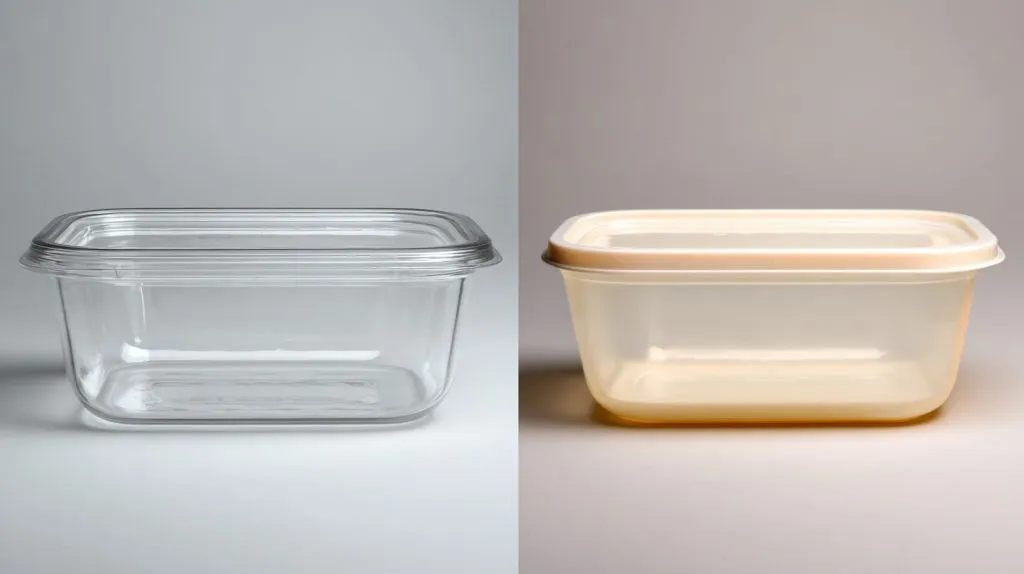
I don’t avoid clear plastics because I hate them. I avoid them because I’ve seen what happens when teams choose clarity first and reality second.
The reason I think this way is simple: food-contact design is not judged by how it looks in the CAD render. It’s judged by what happens after heat, time, cleaning, and human behavior take their turns.
I’ve learned to ask the uncomfortable questions early because it saves everyone later:
- What is the food?
- How hot?
- How long?
- How is it cleaned?
- Can we prove compliance in the target market?
And I’ve also learned a quiet truth about B2B projects: when something goes wrong, nobody remembers the supplier’s promise. They remember the brand name on the product. That is why I lean conservative on materials when the use conditions are harsh.
If you’re building a food-contact product and you’re not sure whether clear plastic belongs there, here’s my call to action:
- Send your use conditions (food type, temperature, time, cleaning method).
- Tell me where clarity is truly needed.
- Then we can redesign the part so it still looks clean, but behaves clean too.
If you want, you can paste your drawing notes or your material list, and I’ll help you spot the “clear plastic traps” before they become a rework email thread.