Skip to content
The email was short. No greeting. No long explanation. Just one line:
“Vincent, this sign was installed three years ago. Do you think it can survive two more?”
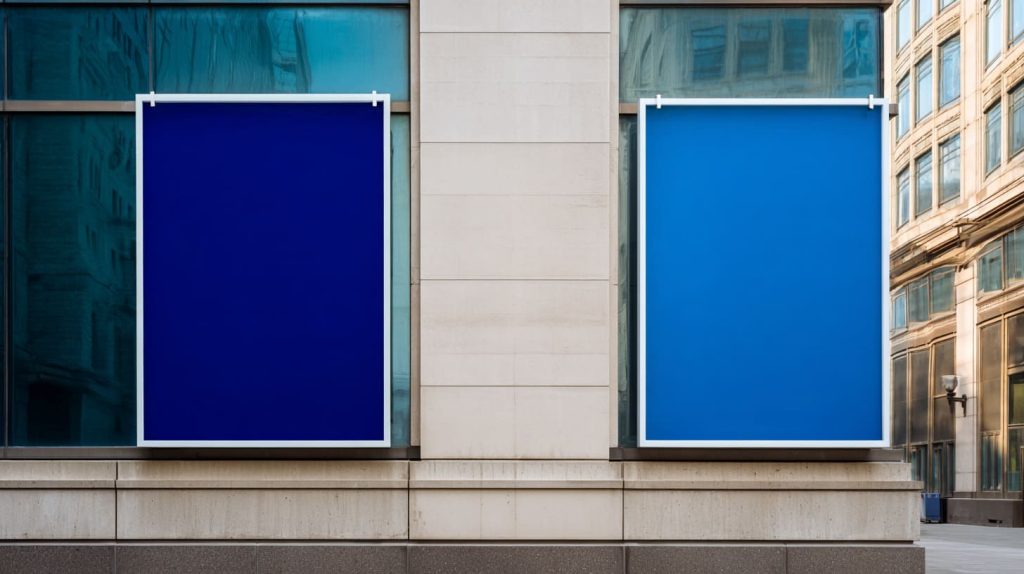
Attached were two photos. Same acrylic panel. Same logo. Same position on the wall.
But the blue did not look the same. One photo felt strong and fresh. The other one felt… softer. Slightly washed. Not terrible. Just not confident.
That is the moment when the real question appears.
Buyers rarely worry about how a sign looks on installation day. Everyone looks good on day one. The stress comes later—year three, year four, year five—when the brand is still growing but the sign starts aging faster than expected.
So the debate begins:
UV printing vs screen printing—who actually survives five years outdoors?
If I answer too quickly, I would mislead you. Because durability is not only about printing method. It is about ink chemistry, adhesion, coating, climate, and how honest the original specification was.
When I evaluate an outdoor job, I do not ask “Which method is better?”
I ask, “What will attack this sign every single day for the next five years?”
Sunlight. Heat. Rain. Pollution. Cleaning chemicals.
Outdoors does not negotiate.
And once we accept that reality, we can finally talk about the first method people usually choose—UV printing on acrylic.
What Is UV Printing on Acrylic?
UV printing is popular because it looks great and moves fast.
When Jacky-type buyers ask for sharp details and short lead time, UV is often the first tool people reach for.
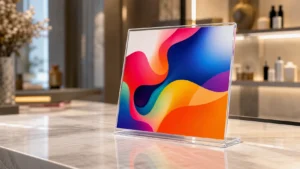
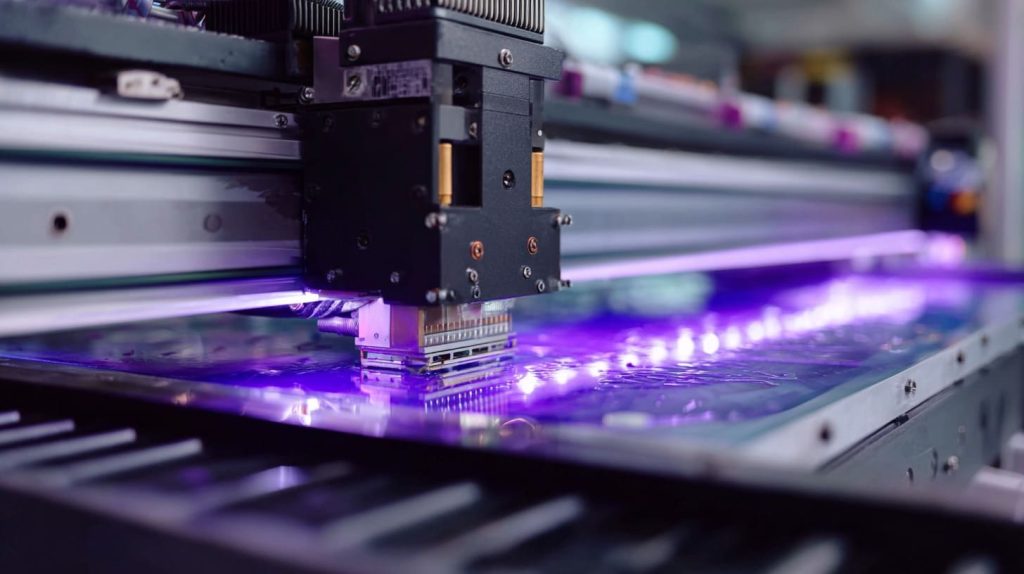
The basic idea is simple: the printer sprays ink directly onto acrylic, then UV lamps cure it right away.
So the ink becomes a solid layer sitting on the surface.
What makes this tricky is also what makes it convenient: it is a surface layer.
And outdoors, surface layers get punished.
One thing I personally watch for is this: if the artwork has heavy solid colors at the edge, I worry more, because edges are where lifting and micro-cracking like to start.
How UV Printing Works
- Ink is jetted directly onto the acrylic surface
- UV light cures the ink immediately
- The cured ink forms a film bonded to the acrylic
Here is a quick way I explain it to buyers:
| Part | What happens | Why it matters outdoors |
|---|---|---|
| Ink sits on surface | Cured ink forms a thin film | Thin films age faster under UV |
| Instant curing | Fast production | Fast does not mean durable |
| Direct-to-substrate | No screen needed | Prep becomes more important |
Strengths of UV Printing
UV printing is not “weak.” It is just honest. It does what it is designed to do.
- High detail: small text, fine lines, gradients
- Fast lead time: no screen setup
- Good for custom: small batch, many SKUs, short runs
I have seen UV prints look stunning.
And I have also seen the exact same design fade early because someone used indoor-grade ink or skipped protection.
Weaknesses in Outdoor Conditions
This is where people get emotional, because fading feels like betrayal.
- More exposure: the ink film takes UV directly
- Micro-cracking risk: temperature swings stress the ink layer
- Edge lifting risk: water and dirt work at edges over time
- Color fade depends on ink grade: cheap pigments lose strength fast
- Protection matters a lot: clear coat or laminate can change everything
A small but real detail: if a UV printed sign is installed where water runs and sits at the bottom edge, that edge will age faster. Always. I have not seen a “miracle exception.”
If you are thinking, “Fine, then screen printing must be the answer,” let’s slow down. Screen printing has its own trade-offs too.
What Is Screen Printing on Acrylic?
Screen printing feels old-school. And sometimes old-school is exactly what survives.
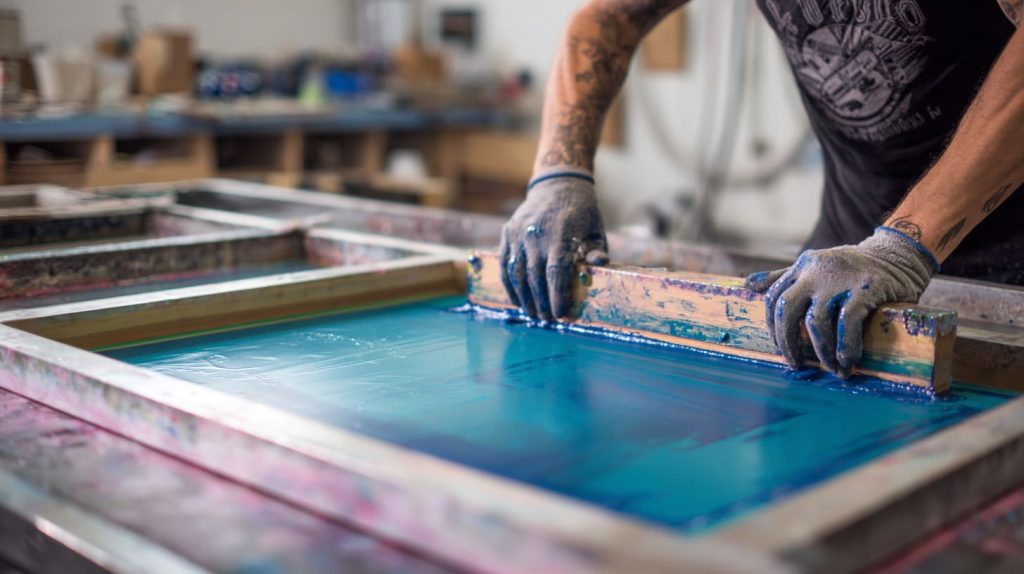
Instead of spraying ink like UV printing, screen printing pushes ink through a mesh stencil onto the acrylic.
The ink layer is usually thicker. That thickness can be a big deal outdoors.
Here is how I judge it in real orders: if the design is simple and the quantity is large, I lean toward screen printing because it is more consistent over time.
But if the buyer needs gradients, photo-like detail, or frequent design updates, screen printing can become slow and expensive.
How Screen Printing Works
- A mesh screen holds the artwork stencil
- Ink is pushed through onto acrylic
- Ink cures (methods vary based on ink system)
Think of it like painting with a controlled template.
Not flexible like UV for detail, but often stronger for solid outdoor color.
Strengths of Screen Printing
Screen printing is hard to beat for bold, simple graphics.
- Strong ink deposit: thicker layer can resist fading longer
- Solid color strength: logos, blocks of color, high contrast
- Good adhesion when done right: proven in signage work
Here is a simple comparison that helps buyers decide fast:
| Best for | UV Printing | Screen Printing |
|---|---|---|
| Fine detail / gradients | ✅ Strong | ❌ Weak |
| Large solid colors | ✅ Good | ✅✅ Excellent |
| Fast small batch | ✅✅ Best | ❌ Costly setup |
| Long outdoor track record | ✅ (depends) | ✅✅ Strong |
Limitations in Modern Projects
Screen printing is not “better.” It is “better in the right situation.”
- Less flexible for complex artwork
- Setup cost hurts small quantities
- More prep time (screens, alignment, testing)
Also, there is a quiet risk people ignore: if a factory rushes screen printing and curing is not stable, adhesion problems still happen. A thick ink layer does not forgive bad process control.
So now we have two methods. Both can succeed. Both can fail.
The next question is the one most people avoid: what actually kills outdoor prints over five years?
What Actually Damages Outdoor Prints Over 5 Years?
I wish I could say “sunlight” and be done.
But outdoors is not a single enemy. It is a group project, and every member is annoying.
When I troubleshoot fading or peeling, I do not start with “UV vs screen.”
I start with where the sign lives, and what it has to suffer every week.
If I see a sign in a coastal city or near an industrial zone, I assume the aging speed will be faster even if the print method is correct.
UV Radiation and Color Degradation
Sunlight breaks pigments down. That is the core.
- Some colors fade faster, especially reds and blues
- Black tends to hold longer (not always, but often)
- Pigment quality is the hidden factor
A simple reality: two “blue” inks can look the same on day one and age completely differently by year three.
Temperature Cycling and Material Expansion
Acrylic moves with temperature. Ink layers must move with it.
- Hot day → acrylic expands
- Cold night → acrylic shrinks
- That cycle repeats thousands of times
If the ink film is brittle, micro-cracks can appear.
Once micro-cracks start, dirt and water join the party.
Moisture, Pollution, and Chemical Exposure
Rain is not pure water. It carries dust, pollution, and sometimes salt.
- Moisture attacks weak adhesion points
- Pollution can stain and dull surfaces
- Coastal salt speeds up aging
- Cleaning chemicals can damage coatings or ink
Here is a quick “outdoor risk map” I share with buyers:
| Environment | Main risk | What I worry about most |
|---|---|---|
| Coastal | Salt + moisture | edge lifting + haze |
| Hot tropical | UV + heat | color fade + brittleness |
| Industrial | pollution + chemicals | staining + coating damage |
| Cold winter | temperature swing | cracking + adhesion stress |
And this leads to the moment buyers really want: “Okay, so after five years, who wins—UV or screen?”
Let’s compare them like adults. No romance. No marketing.
Durability Comparison: UV vs Screen Printing After 5 Years
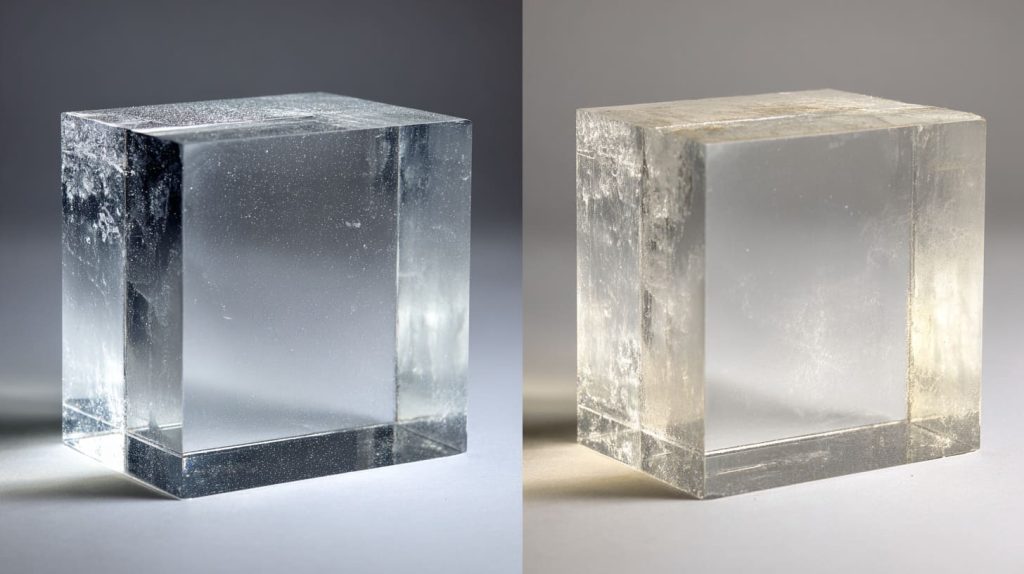
This is where I need to be honest: if you force me to pick one “safer by default,” I usually point to screen printing for harsh outdoor use.
But I also know UV can do well if the system is designed right.
My rule is simple: if the buyer will not add protection and the sign will face strong sun, UV printing is a risk I do not like to hide.
Ink Thickness and Protection Layer
Screen printing usually lays down a thicker ink deposit.
That thickness gives pigment more “mass” to survive.
UV printing can be thin. That is not a flaw, it is how it achieves detail.
But thin ink needs help outdoors.
- Clear coat can add UV protection and abrasion resistance
- Lamination can block direct UV and reduce surface wear
If you want a simple way to think about it:
| System | Typical outdoor outcome |
|---|---|
| Screen print, no coating | Often stable if ink is outdoor-grade |
| UV print, no coating | Can fade early in strong sun |
| UV print + clear coat | Can approach screen print durability |
| UV print + laminate | Strong protection, but adds cost and thickness |
Adhesion to Acrylic Surface
This part is boring, but it decides real life.
Surface prep can beat “good printing.”
If acrylic has oil, dust, or static contamination, adhesion drops.
- Proper cleaning matters
- Handling matters (fingerprints are real)
- Prep method matters (some use flame/plasma, some rely on cleaning)
Bad prep leads to peeling whether it is UV or screen.
Realistic Lifespan Expectations
Buyers love guarantees. Outdoors hates guarantees.
Here is the range I see most often in real projects:
| Print system | Typical lifespan outdoors (common projects) | Notes |
|---|---|---|
| UV print, no coating | 2–4 years | big spread based on ink quality |
| Screen print, outdoor ink | 4–7 years | strong for solid colors |
| UV print + coating/laminate | 4–7 years | depends on protection quality |
If you need a hard “5-year” target, the print method is not enough.
You need to design for it.
Which brings us to a better question: when can UV printing actually reach five years outdoors?
When Does UV Printing Last 5 Years Outdoors?
UV printing can last. I have seen it.
But it does not happen by accident. It happens because someone respected the environment.
Here is how I judge UV durability: I do not approve a 5-year outdoor claim unless I see proof of outdoor-grade ink and a protection plan.
Using Outdoor-Grade UV Inks
Not all UV inks are equal. Some are made for indoor décor. Some are built for outdoor abuse.
What matters is pigment and formulation.
A sign can look perfect today and still fade because pigment was cheap.
If a supplier cannot tell you the ink grade, that silence is a warning.
Adding Protective Clear Coating
Clear coat is like sunscreen. It is not glamorous, but it saves you.
- UV-resistant varnish helps slow pigment breakdown
- It can improve scratch resistance
- It can reduce staining from pollution
But clear coat is also a process.
If it is applied unevenly, the sign can age unevenly. That is a real headache.
Installing in Moderate Climate
Climate is a hidden spec.
- Northern climate with less intense UV can be kinder
- Tropical sun punishes faster
- South-facing installations usually age quicker
Also, the angle matters.
A sign that catches direct midday sun will age faster than one under shade.
So UV can reach five years, but you need to build the system around that goal.
Now let’s flip it: when is screen printing the safer bet without extra tricks?
When Is Screen Printing the Safer Long-Term Choice?
Screen printing is not magic.
But it is often a safer default because it has a thicker ink layer and a long outdoor history.
Here is my real-world judgment: if the buyer hates risk and hates rework, screen printing is the method I recommend more often for simple outdoor logos.
Large Batch Production with Simple Graphics
If the design is a logo with solid color blocks, screen printing shines.
- Strong color density
- Repeatability in mass production
- Cost spreads well across quantity
High-Sun, High-UV Environments
When UV is brutal, you want every advantage.
- Thicker ink helps
- Proven outdoor ink systems help
- Less dependence on extra coating (sometimes)
Projects Where Reprinting Is Expensive
This is the part buyers feel in their stomach.
If installation is expensive, failure cost is not the print cost.
It is the labor, the downtime, the brand embarrassment.
So even if screen printing costs more upfront, it can be cheaper in real life.
But let’s not pretend money does not matter.
The next question always shows up: “Which one is more economical over time?”
Cost vs Lifecycle: Which Is More Economical?
If you only compare unit price, you will pick wrong sometimes.
Outdoor signage is not a product. It is a maintenance plan in disguise.
The way I decide is simple: I compare total cost over five years, not print cost today.
Initial Production Cost
- UV printing is usually cheaper for small batch and custom
- Screen printing becomes cheaper at scale, but setup costs exist
Here is a simple buyer view:
| Quantity | Often cheaper choice | Why |
|---|---|---|
| 1–50 pcs | UV printing | no screen setup |
| 50–500 pcs | depends | artwork complexity matters |
| 500+ pcs | screen printing | setup cost spreads out |
Maintenance and Replacement Cost
This is where the math flips.
If a sign fades early:
- you pay for reprint
- you pay for installation again
- you lose brand strength in the meantime
Even a “cheap” sign can become expensive if it needs replacement.
Brand Risk Consideration
Brand risk is hard to measure, but easy to feel.
A faded sign tells customers:
- the business is older than it is
- the brand is not cared for
- details might be ignored inside too
That is not fair, but it is real.
So cost is not only money. It is perception.
Now the practical part: if you are a B2B buyer like Jacky, what should you actually do before sending a PO?
How Should B2B Buyers Decide?
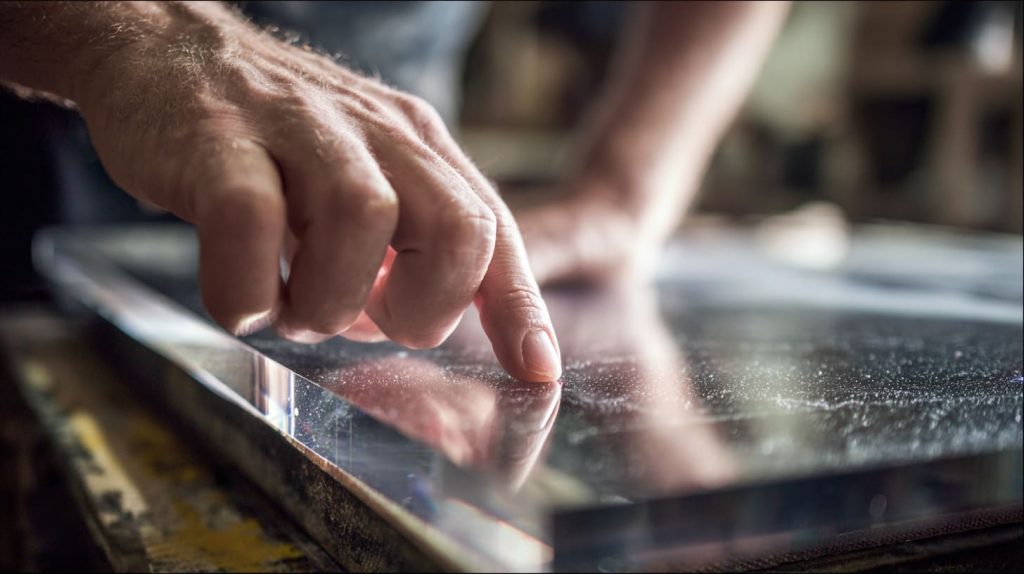
This is where I see projects win or lose, even before printing starts.
My personal way of judging a supplier is simple: if they only talk about “UV printing” or “screen printing” but avoid test data and protection details, I slow down immediately.
Ask for Real Weathering Test Data
Ask for real proof, not promises.
- accelerated UV test reports
- ink brand or ink series information
- outdoor use statement for the ink system
- sample photos after exposure if possible
Also, ask for a sample that matches your real spec.
A beautiful indoor sample proves almost nothing.
Define Environmental Exposure Clearly
A five-year sign in Vancouver is not the same as a five-year sign in Florida.
Tell the supplier:
- install location (country, city)
- sun exposure direction if known
- coastal or industrial environment
- cleaning method (some cleaners hurt coatings)
Even one line of context can prevent a bad spec.
Combine Method with Protective Strategy
This is the best mindset shift:
Do not choose only a printing method.
Choose a durability strategy.
Examples:
- UV printing + UV clear coat for detail-heavy branding
- Screen printing + outdoor ink for simple logos and scale
- UV printing + laminate when abrasion is a big threat
If you design the system properly, you stop gambling.
And now we can end the debate with the only kind of conclusion I like: one that explains why I believe what I believe.
Conclusion
I do not think UV printing or screen printing “wins” by default. I think specs win.
The reason I say this is simple: I have seen both methods succeed, and I have seen both fail. The failures almost always share the same pattern. Someone treated the printing method like a guarantee. They did not treat the job like an outdoor system.
Screen printing is often the safer path for harsh outdoor use because the ink layer is thicker and the history is long. That is why I lean toward it when the artwork is simple and the cost of replacement is scary.
But I do not dismiss UV printing. I use it a lot. I just respect its limits. When UV printing is paired with outdoor-grade ink and a protective layer, it can absolutely survive the five-year goal. The mistake is skipping that protection and hoping the sun will be kind.
If you are planning an outdoor acrylic sign project and you want it to stay confident for five years, send me your key details:
- size and thickness of acrylic
- artwork type (solid logo or gradient/photo)
- install environment (city, sun exposure, coastal/industrial)
- target lifespan and quantity
I will tell you what I would choose if it were my own brand on the wall—and what I would avoid, even if it looks cheaper today.