Skip to content

A buyer can hold a polycarbonate sample in one hand, bend it a little, tap it on the table, and feel a kind of comfort right away. I understand that feeling. I have seen it many times. The material feels tough. It feels forgiving. It feels like the safer answer before the real questions even start.
That is exactly why polycarbonate gets trusted so quickly.
I work around plastic products enough to know how this decision often happens. Someone compares acrylic and polycarbonate. They hear that polycarbonate has much better impact resistance. Then the choice starts to feel easy. Tougher must mean better. Better must mean safer. Safer must mean fewer problems. It sounds clean. It sounds logical. It sounds done.
But real projects are rarely that simple.
I have seen polycarbonate survive hard hits and still fail the job in a very ordinary way. It did not shatter. It did not break in one dramatic moment. It just got ugly, cloudy, scratched, yellowed, stressed, or bent out of shape little by little. Then the customer stopped liking it. Then the product stopped looking premium. Then the “safe” choice turned into the wrong choice.
That gap matters a lot.
Lab performance tells me one thing. Real life tells me another. A material can test well in a spec sheet and still disappoint once sunlight, cleaners, constant load, rough handling, and careless assembly enter the story. I do not judge plastic by one headline property anymore. I judge it by where it gets weak first, and whether that weak point matters to the job.
The detail I care about most at the start is not whether polycarbonate is strong. It is whether the first likely failure will be visible, expensive, or embarrassing for the buyer.
I think that is where many material decisions go off track. People often imagine failure as a crack or a break. I do not. I often see failure show up much earlier as surface damage, loss of clarity, small stress marks, or slow deformation that makes a product feel cheap long before it becomes unusable.
That is the heart of this article. I want to talk about where polycarbonate usually fails first in the real world, and why that first failure point matters more than many buyers expect.
A lot of these problems do not start with violence. They start with sunlight. With wiping. With heat. With pressure. With a screw tightened just a little too much. Small things. Very human things. That is why this topic deserves a more honest look.
And once I started looking at polycarbonate that way, I stopped asking only how strong it is. I started asking where it gets tired first.
That is where the real story begins.
Where Does Polycarbonate Fail Most Often?
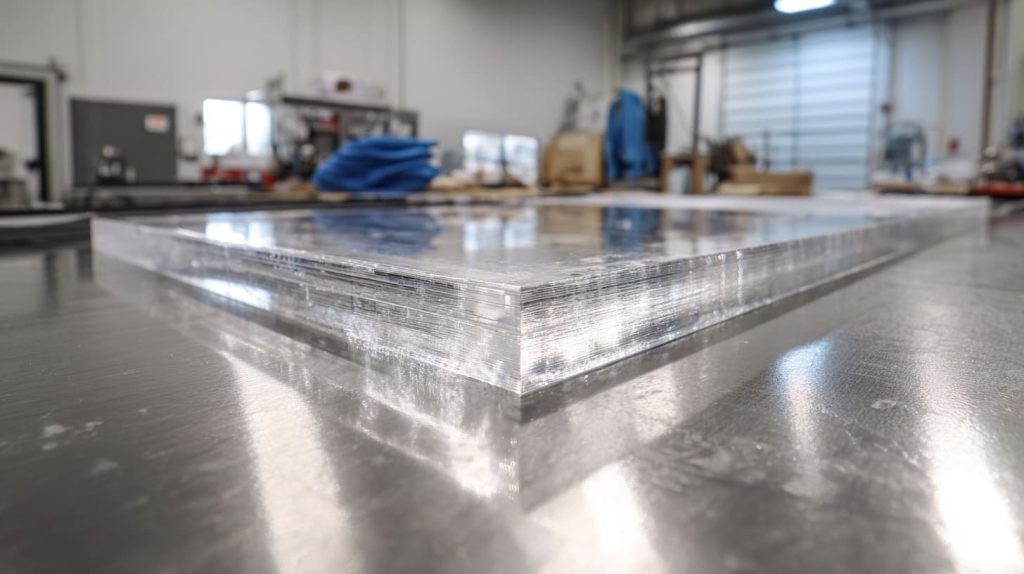
The first place polycarbonate often fails is not where many buyers expect. Most people picture a broken part, a cracked cover, or a snapped corner. I do not. I usually see the first failure in the surface, the appearance, or the slow change in behavior over time.
That matters because a product can still be technically “working” and already be failing in the eyes of the customer.
When I look at a polycarbonate part in real work, I do not ask only, Will it survive impact? I also ask, What will the customer notice first, and how quickly will they lose confidence?
Surface degradation vs structural failure
Surface damage often arrives long before structural damage. That is one of the biggest traps with polycarbonate.
The material is tough. It can take impact better than acrylic. That part is true. But toughness does not mean the surface stays clean. It does not mean it keeps a premium look. It does not mean it stays visually sharp after handling, wiping, packing, shipping, and daily use.
I have seen polycarbonate parts that were still strong but already looked tired. The surface picked up fine scratches. The gloss changed. The clarity dropped. The part still functioned. But it no longer looked like a quality product.
That is a failure in many B2B projects.
Why the surface often gives up first
- Polycarbonate is strong in impact
- Polycarbonate is softer on the surface than many buyers expect
- Daily contact leaves marks faster than dramatic damage does
- Repeated cleaning can dull the appearance
- Handling during assembly and shipping adds light wear very early
Here is how I usually compare early failure types:
| Failure type | How soon it appears | What causes it | How obvious it is | Business effect |
|---|---|---|---|---|
| Fine scratches | Early | Wiping, contact, packing | High on clear parts | Makes product look cheap |
| Haze or dullness | Early to medium | Cleaning, abrasion | Medium to high | Reduces premium feel |
| Yellowing | Medium to long term | UV exposure | High | Damages clarity and branding |
| Stress cracking | Medium | Chemicals, assembly stress | Medium to high | Can turn into breakage |
| Full breakage | Later in many cases | Severe impact or accumulated damage | Very high | Functional failure |
In customer-facing products, I often treat surface decline as the real first failure, because that is the moment the product stops feeling trustworthy even before it stops working.
Why visual failure matters more than some engineers expect
A buyer may say, “It still works.” A brand owner may say, “It no longer looks right.” Those are not the same thing.
That gap becomes very important in these kinds of products:
- Cosmetic displays
- Retail sign holders
- Transparent covers
- Protective windows
- Consumer-facing boxes
- Decorative storage items
In those jobs, appearance is part of performance. A scratched clear panel is not just a cosmetic issue. It changes the whole impression of the product.
Environmental vs mechanical failure
Mechanical failure gets more attention because it sounds dramatic. Environmental failure gets ignored because it is quiet.
That is a mistake.
Polycarbonate is famous for impact resistance. That is why buyers trust it in the first place. But real-world failure often comes from what surrounds the part, not what hits it. Sunlight, cleaners, heat, moisture, mounting stress, and repeated small loads can do more long-term damage than one big bump.
I have learned not to confuse impact resistance with overall durability. They overlap, but they are not the same.
Mechanical strength is only one part of the story
A part can do very well in these situations:
- Sudden impact
- Dropping
- Flexing
- Vibration
- Short-term abuse
But the same part can struggle in these conditions:
- UV exposure
- Repeated wiping
- Contact with chemicals
- Constant pressure at one point
- Warm operating environments
- Long-term static load
That is why I do not accept “polycarbonate is stronger” as a complete answer. Stronger in what way? For how long? Under what kind of use? Those questions change the decision fast.
Why slow failure is often missed
Slow failure does not make noise. It does not create urgency. It just keeps moving.
A clear cover gets a little more yellow.
A mounted panel bows a little more.
A cleaned surface gets a little more cloudy.
A stressed corner develops a tiny crack.
A screw hole starts whitening.
Then one day the buyer sees the part and thinks, Something feels off.
That is usually not one single event. It is accumulated neglect.
Here is a simple way I think about it:
| Type of stress | Common buyer focus | What I worry about more |
|---|---|---|
| Impact | Will it break if hit? | Will it still look and behave well after months of use? |
| Load | Can it hold now? | Will it creep and deform later? |
| Cleaning | Can it be wiped? | What cleaner will be used every day? |
| Outdoor use | Can it survive outside? | How fast will UV change clarity and toughness? |
| Assembly | Can it be fastened? | How much internal stress are we adding during assembly? |
That is why I say polycarbonate often fails first in the quiet zones. Not the dramatic ones. Not the places people fear. The overlooked places.
And once I saw that pattern enough times, I stopped being impressed by toughness alone. I started asking what the material has to endure when no one is paying attention.
That question takes us straight into one of the most common silent killers: sunlight.
How UV Exposure Becomes the First Silent Failure
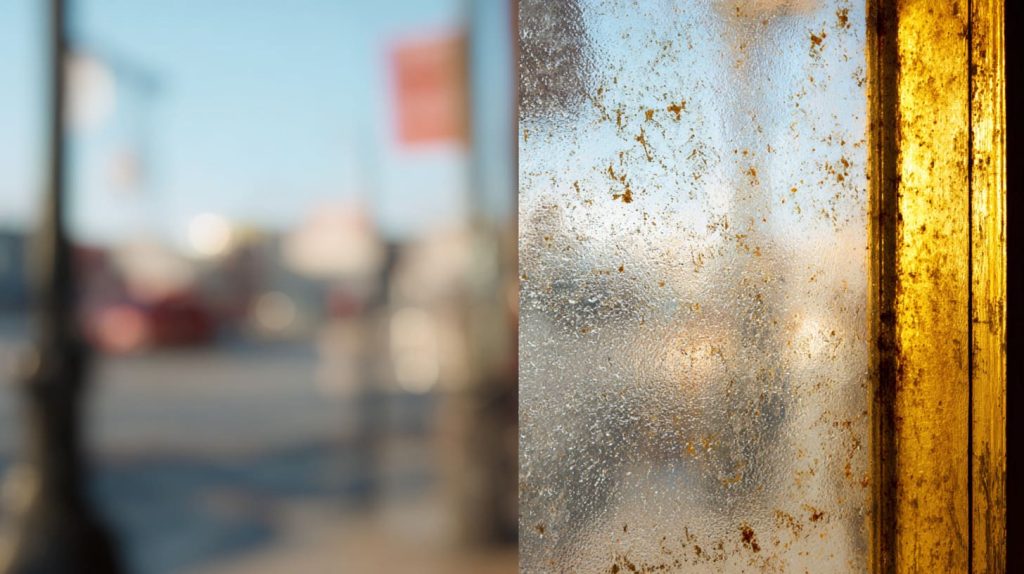
Sunlight does not usually attack polycarbonate in a dramatic way at the start. It works more like a patient thief. It steals clarity first. Then it steals appearance. Then it steals toughness. By the time some buyers notice the damage, the material has already been changing for a long time.
I do not need a part to crack in half before I call it a UV problem. If the sheet turns yellow, loses its clean look, or becomes more brittle than expected, I already know sunlight has started collecting its price.
Yellowing and loss of transparency
Yellowing is one of the easiest early signs to see. It is also one of the hardest for some buyers to accept, because the part may still be physically intact.
That is the trap.
Polycarbonate can start out very clear and clean. It can look modern, technical, and reliable. Then UV exposure starts to break down the polymer structure. The change may be gradual, but it is real. The sheet begins to lose that fresh clear look. It picks up a yellow tone. It can also lose light transmission and visual sharpness.
For some products, that is a minor issue. For others, it ruins the whole purpose.
Why yellowing matters so much in real products
Yellowing affects more than beauty. It changes trust.
In these products, even slight yellowing can be a serious problem:
| Product type | Why yellowing hurts |
|---|---|
| Cosmetic displays | Makes premium products feel old or dirty |
| Branded sign holders | Changes the clean brand image |
| Transparent covers | Reduces visual access to internal parts |
| Retail fixtures | Makes the whole store display look aged |
| Lighting-related parts | Alters light quality and appearance |
A clear plastic part is often chosen because the buyer wants a certain feeling: clean, modern, open, precise. Once yellowing starts, that feeling fades fast.
Why some teams underestimate this problem
A lot of teams focus on whether a part can survive outside. I focus on whether it can still look acceptable outside.
Those are different standards.
If the product is for an industrial guard or a rough-use shield, the buyer may tolerate some color change. If the product is for a display system or customer-facing cover, tolerance is much lower.
When the job depends on a crisp visual effect, I do not treat slight yellowing as a minor issue. I treat it as an early warning that the original value of the material is already slipping.
Brittleness after prolonged exposure
This part worries me more than color change, because it hides behind the surface story.
A buyer may notice yellowing and think the issue is mostly cosmetic. But UV damage can go deeper. Over time, polycarbonate can lose flexibility and become more brittle. That means the material that once handled impact well may become more vulnerable after long exposure.
This is where people get caught by old assumptions.
They keep thinking about the original material properties. They stop looking at the aged material properties. That is how bad field decisions happen.
What changes after long UV exposure
Over time, UV can lead to:
- Reduced ductility
- More fragile edges
- Lower impact resistance
- Greater sensitivity to stress points
- Higher chance of cracking during handling or maintenance
I have seen parts that were designed around “polycarbonate toughness” but were used in outdoor or sunlit settings long enough that the original advantage became much smaller. The buyer was still trusting the material description from day one. Real life had already moved on.
Why outdoor use speeds this up
Outdoor use is the obvious case, but I do not limit my concern to outdoor jobs only. Sun-facing windows, store fronts, skylit rooms, and bright transport settings can all build exposure over time.
This is how I usually think about exposure risk:
| Exposure level | Typical setting | Failure risk over time |
|---|---|---|
| Low | Indoor, low sunlight, occasional use | Slower UV-related decline |
| Medium | Indoor near windows, retail frontage | Noticeable yellowing and aging |
| High | Outdoor partial exposure | Faster appearance loss and brittleness |
| Very high | Full outdoor, harsh climate | High risk of early visible and mechanical decline |
A sheet does not care whether the sunlight comes from a “technical outdoor application” or a pretty front window. UV is still UV.
UV coating limitations
A UV coating can help. I do not deny that. But I do not treat it like magic.
This is where buyers sometimes relax too early. They hear “UV-protected” and assume the problem is solved. I never assume that. I want to know how long the coating lasts, how the part will be cleaned, what side is coated, how the edges are treated, and what the customer actually expects after one year, two years, or five years.
That is where the truth sits.
What UV coatings can do
- Slow yellowing
- Improve outdoor life
- Delay surface decline
- Protect appearance for longer
- Improve performance in exposed conditions
What UV coatings do not guarantee
- Permanent clarity
- Zero brittleness over long service life
- Protection from bad cleaning habits
- Protection from design stress
- Unlimited outdoor life
Here is the practical trade-off:
| Option | Benefit | Limitation | Best use case |
|---|---|---|---|
| Standard polycarbonate | Lower initial cost | Faster UV-related decline | Indoor use with low exposure |
| UV-protected polycarbonate | Better outdoor life | Higher cost, still not permanent | Outdoor covers, semi-exposed products |
| Acrylic | Better long-term clarity in many display uses | Lower impact resistance | Visual display-focused applications |
I often tell buyers this in plain words: if you need the part to stay beautiful, not just survive, then UV resistance needs to be judged with stricter eyes.
That leads into another quiet problem that surprises people even more than sunlight does. A clean-looking environment can still damage polycarbonate badly. All it takes is the wrong liquid.
Why Chemical Exposure Causes Unexpected Damage
A part can sit in a perfectly neat place, be handled by careful people, and still fail because of chemistry. That is one of the most frustrating things about polycarbonate. The environment may look safe. The shelf is clean. The room is controlled. The team is professional. Then a cleaner, spray, solvent, or product residue starts attacking the material in a way no one planned for.
I have learned to be suspicious of surfaces that look harmless. The danger is often not the room. The danger is what people wipe on the room every day.
Stress cracking from cleaners and solvents
Stress cracking is one of those failures that can make everyone argue. One person blames the material. Another blames the cleaner. Another blames assembly. Usually the truth is more mixed.
Polycarbonate can be sensitive to certain chemicals. When chemical exposure meets internal stress, cracks can appear around holes, bends, edges, or loaded areas. The part may not fail right away. It may start with whitening, fine marks, or tiny fractures. Then it grows.
That is why this kind of damage catches teams off guard. It often looks delayed and confusing.
Common chemical risks
Some of the usual problem makers include:
- Alcohol-based cleaners
- Ammonia-based cleaners
- Strong detergents
- Certain solvents
- Some adhesive residues
- Some cosmetic or industrial liquids
Not every exposure creates immediate damage. That is part of the problem. The part may survive a few cleanings, then fail after repeated use.
Where cracking often begins
I often watch these areas first:
| Area | Why it is vulnerable |
|---|---|
| Screw holes | Local stress concentrates there |
| Sharp inside corners | Stress builds more easily |
| Bent sections | Residual forming stress may remain |
| Cut edges | Small damage can grow over time |
| Tight mounting points | Chemical + pressure is a bad mix |
A lot of buyers think of chemical attack as surface melting or obvious erosion. Real chemical failure in polycarbonate is often more subtle. It may look like fine cracks, cloudy stress marks, or a strange break pattern that seems to come from nowhere.
Real-world pattern I see often
A clear guard or cover gets installed.
The team cleans it with a common spray.
The part looks fine at first.
A few weeks later, tiny cracks show up near a fastener.
The buyer thinks the screw was too tight.
The assembler thinks the material was weak.
The cleaner gets ignored.
That last part is usually the mistake.
Compatibility issues in different industries
Different industries bring different chemical habits. That means the same polycarbonate part can perform well in one setting and fail badly in another.
I never assume a “clean indoor environment” is safe for polycarbonate until I know what the part will actually touch.
That small question has saved people money more than once.
Cosmetic and beauty environments
This is a big one for display products.
Cosmetic spaces often expose materials to:
- Alcohol
- Fragrance oils
- Lotions
- Serums
- Makeup removers
- Repeated wiping
These products may drip, smear, or get cleaned off daily. A display can look elegant and still be chemically aggressive.
For product displays, I always care about what spills on the material, not just what the material is supposed to hold.
Medical and lab environments
Medical or lab settings may look controlled, but they often use strong cleaning routines. That means repeated exposure to disinfectants and specialty cleaners.
The material may need to survive not one bad event, but a disciplined pattern of chemical use.
Retail and public environments
Retail teams clean fast. They clean often. They use what is available. That reality matters more than ideal instructions on paper.
I have seen premium clear parts damaged simply because the daily cleaning process was never matched to the material.
Here is a useful way to compare risk:
| Industry / setting | Common exposure | Polycarbonate risk |
|---|---|---|
| Cosmetics retail | Alcohol, oils, removers | Medium to high |
| Medical areas | Disinfectants, repeated cleaning | Medium to high |
| General retail | Multi-use cleaners, fast wiping | Medium |
| Home storage | Mild cleaners, lower frequency | Low to medium |
| Industrial area | Solvents, process chemicals | High |
A material choice can look smart in a meeting and still fail in the cleaning closet.
That is why I do not trust “indoor use” as a full answer. I want to know what bottle the staff are holding in their hand at 6 p.m. when they wipe the unit down.
And once chemical damage joins surface softness, the next weak point becomes easy to predict: scratching. Not dramatic. Not exciting. Just constant, visible, and annoying.
How Surface Scratching Becomes a Functional Problem
Scratching sounds like a small problem until it starts changing how the product looks, how it is used, and how customers feel about it. Then it stops being small.
I think this is where many people misunderstand polycarbonate. They focus on toughness and forget hardness. Those are not the same thing. A material can take impact well and still pick up scratches too easily for a customer-facing job.
Low hardness compared to acrylic
This comparison matters because many buyers are choosing between polycarbonate and acrylic, not between polycarbonate and nothing.
Polycarbonate wins on impact strength. Acrylic often wins on surface hardness and long-term visual neatness. That trade-off is very real.
I have seen buyers choose polycarbonate because they feared breakage. Then later they got frustrated because the part looked worn much faster than expected. They solved one risk and created another.
That is not a win. That is just a trade.
Why tougher does not mean more scratch-resistant
This confuses people all the time.
Polycarbonate can flex more and resist cracking better. But the surface is easier to mark than acrylic. That means ordinary contact can create fine scratches:
- Wiping with rough cloths
- Sliding during packing
- Fingernail contact
- Product movement on shelves
- Dust particles dragged across the surface
For display and clear-cover jobs, these small marks build up fast.
Here is the simple comparison I keep in mind:
| Property | Polycarbonate | Acrylic |
|---|---|---|
| Impact resistance | Higher | Lower |
| Surface hardness | Lower | Higher |
| Scratch resistance | Lower | Better |
| Long-term clear appearance in gentle display use | Good, but can decline faster | Often better |
| Suitability for rough impact environments | Better | Less ideal |
When the product will be touched, wiped, and seen up close every day, I do not ignore that table.
Optical clarity loss over time
A scratch does not need to be deep to matter. On a clear part, many tiny scratches scatter light. That creates haze, dullness, and a loss of crispness that customers notice even if they cannot explain it.
The panel just stops looking sharp.
That is why I say scratching can become a functional problem. If the material is there to show a product, protect a view, or maintain a clean premium image, then reduced clarity is not just cosmetic. It interferes with the job.
What micro-scratches do in real use
- Reduce transparency
- Lower gloss
- Make light reflections messy
- Make surfaces look dirty even after cleaning
- Reduce the premium feel of the product
I have seen this happen with countertop displays and protective covers where the customer did not complain about strength at all. They complained that the part looked old too soon.
That complaint matters because it usually comes from the people closest to the product: sales staff, brand owners, merchandisers, and end users.
Why high-end products feel this more sharply
A rough industrial shield can survive with a worn surface. A luxury skincare display cannot.
That difference is huge.
| Application | Scratch tolerance | Why |
|---|---|---|
| Industrial guard | Higher | Function matters more than visual finish |
| Equipment cover | Medium | Clarity matters, but not always premium appearance |
| Retail display | Low | Appearance directly affects product value |
| Cosmetic organizer | Very low | Scratches reduce visual trust and elegance |
| Branded showcase | Very low | Surface quality supports the whole brand image |
That is why I become stricter when the product sells with its eyes.
Coating solutions and limitations
Hard coatings can improve scratch resistance. I respect that option. But again, I do not treat it like a full escape route.
A coating can help the surface last longer. It can improve performance. It can make polycarbonate more usable in demanding visual jobs. But it also adds cost, process limits, and a new dependency: the coating itself now becomes part of the performance story.
That means I have more questions, not fewer.
What coatings can improve
- Scratch resistance
- Surface durability
- Visual life in handling-heavy environments
- Perceived quality over time
What coatings do not erase
- Bad cleaning habits
- Deep abrasion
- Design mistakes
- Chemical mismatch
- Cost pressure in price-sensitive projects
Here is how I usually frame the decision:
| Choice | Strength | Weakness |
|---|---|---|
| Standard polycarbonate | Tough, flexible | Scratches easily |
| Hard-coated polycarbonate | Better surface life | Higher cost, coating limits |
| Acrylic | Better natural surface resistance | Lower impact resistance |
I often ask one direct question here: Is the project trying to protect against impact, or is it trying to preserve a clean beautiful surface? The answer changes everything.
Because once the product moves out of the showroom and into warm, loaded, real use, appearance is not the only quiet problem. Shape becomes the next one.
Where Heat and Load Cause Long-Term Deformation
Some failures do not scratch, crack, or yellow first. They sag. They bow. They drift out of shape so slowly that people do not notice the change until the part already looks wrong.
I have seen this happen with covers, guards, trays, and long spans that looked perfectly fine at installation. Then heat, weight, or constant stress started doing quiet work day after day.
A lot of buyers ask whether polycarbonate is strong enough. I often ask whether it will still hold the same shape after months of real service.
Heat distortion under moderate temperatures
Polycarbonate handles heat better than many basic plastics. That is true. But “better” is not the same as “immune.”
A part does not need extreme heat to start changing shape. Continuous moderate heat, especially near electronics, lighting, enclosed systems, or warm equipment, can soften performance enough to create warping or distortion over time.
That is where people can get fooled by technical comfort words like “heat resistant.”
Where moderate heat becomes a real issue
- Electronics enclosures
- Covers near power supplies
- Parts close to LED or light sources
- Warm industrial spaces
- Enclosed units with poor airflow
I have looked at parts that passed the first inspection with no problem, but after months in service the flatness was gone. The panel was not broken. It just no longer sat right. And once a clear or visible part loses its shape, the whole product starts feeling less controlled.
Why moderate heat is enough in some designs
Heat damage is not only about temperature. It is also about:
- Thickness
- Span length
- Support points
- Load direction
- Ventilation
- Time
That last one matters. Time turns “acceptable” conditions into a new result.
| Condition | Short-term result | Long-term risk |
|---|---|---|
| Warm but brief exposure | Usually stable | Low |
| Constant mild heat | May seem fine early | Medium deformation risk |
| Warm enclosed space with load | Looks safe at first | High deformation risk |
| Poor support + heat | Early shape change | Very high risk |
I do not judge heat risk by peak temperature alone. I judge it by the full setup the part has to live in.
Creep under constant load
Creep is one of the least dramatic and most expensive kinds of material disappointment. It means the material slowly deforms under constant stress or weight over time.
That sentence sounds technical. The real-world version is simple: a part starts bending because it never gets a chance to rest.
This happens more than people think.
Where creep shows up
- Horizontal shelves
- Loaded trays
- Covers under constant fastening pressure
- Unsupported spans
- Panels that carry mounted components
- Parts fixed in a stressed position
The part may pass every early check. Then weeks or months later, it begins to move.
I have seen this in products where the original design looked neat on paper but the support strategy was too optimistic. The material did not fail in one moment. It slowly accepted a new shape.
Why creep gets missed in the quoting stage
Quoting usually focuses on thickness, cost, and immediate use. Creep asks a harder question: What is the part still doing six months later?
That question often gets ignored because it slows the conversation down. But it is one of the best questions in the whole project.
Here is how I think about long-term load risk:
| Design condition | Creep risk |
|---|---|
| Short span with strong support | Low |
| Moderate span, light load | Medium |
| Long span, visible part, warm environment | High |
| Constant load plus heat | Very high |
The material is not being dramatic. It is just obeying physics over time.
Design considerations to reduce deformation
This is the part where design can save the material from being blamed unfairly.
A lot of deformation problems are not caused by “bad polycarbonate.” They are caused by weak structural thinking around polycarbonate.
I have found that small design changes can make a major difference:
- Increase thickness where needed
- Add ribs or supports
- Reduce unsupported span
- Distribute load more evenly
- Improve ventilation in warm assemblies
- Avoid forcing the part into stressed alignment
Practical design choices that help
| Design move | Why it helps |
|---|---|
| Thicker section | Adds stiffness and reduces flex |
| Ribbing | Improves strength without huge mass increase |
| More support points | Reduces span stress |
| Better airflow | Reduces heat buildup |
| Less preload during assembly | Reduces constant deformation pressure |
When I review a design, I do not only ask whether the material can survive the job. I ask whether the shape is being asked to do too much for too long.
And very often, the next hidden weakness is not in the environment at all. It is in the way the part was made and assembled.
Why Fabrication and Assembly Create Hidden Weak Points
Some polycarbonate failures begin before the product ever reaches the customer. That is a hard truth, but it is a useful one.
A part can leave the factory already carrying stress inside it. Then the field conditions simply reveal what fabrication and assembly already prepared.
I pay close attention to this because many teams blame service conditions for problems that were actually planted during cutting, bending, drilling, or fastening.
Stress introduced during machining and bending
Polycarbonate is workable, but that does not mean every fabrication method leaves it happy.
Machining, drilling, routing, and bending can all introduce internal stress. If the process is rough, rushed, overheated, or poorly controlled, that stress can stay in the part. Later, exposure to heat, load, or chemicals can turn that hidden stress into visible failure.
That is why a part may seem fine at shipment and fail later in a way that feels mysterious.
Where fabrication stress comes from
- Aggressive machining
- Dull tools
- Poor cutting speed control
- Excessive local heat
- Tight bending conditions
- Sharp internal corners
- Poor edge finishing
I have seen clear parts develop cracks that were blamed on use, but the real weakness started at fabrication. The field only finished the story.
Why edges and holes deserve extra attention
Edges and holes are where the truth often shows up first.
| Feature | Why it becomes weak |
|---|---|
| Drilled holes | Local stress concentrates there |
| Sharp corners | Stress cannot spread smoothly |
| Rough edges | Small flaws can grow |
| Heat-formed bends | Residual stress may remain |
| Thin cut sections | Less forgiveness under load |
This is why I never treat machining quality as a cosmetic issue only. It is a durability issue.
Fastening and mounting issues
Fasteners are small. Their mistakes are not.
A screw tightened too much can create more trouble than a rough shipping trip. A hole placed too close to the edge can turn a decent design into a fragile one. A rigid mounting pattern can trap stress into a part that wants a little movement.
These things sound minor until they fail in the field.
Common assembly mistakes
- Over-tightening screws
- Using poor washer support
- Placing holes too near edges
- Forcing parts into alignment
- Ignoring expansion and movement
- Mounting clear parts with uneven pressure
I often see whitening or cracking around fasteners long before major failure appears elsewhere. That is because the assembly point becomes the place where stress, motion, and material sensitivity all meet.
Mounting details I watch carefully
| Assembly detail | Low-risk approach | High-risk approach |
|---|---|---|
| Screw pressure | Controlled, supported | Tight, direct, uneven |
| Hole location | Good edge distance | Too close to edge |
| Alignment | Natural fit | Forced fit |
| Washer use | Load spread out | Point pressure |
| Movement allowance | Some flexibility | Fully locked with stress |
A part can be designed well and still be ruined by careless fastening. I have seen that enough times that I now treat assembly as part of material performance, not a separate topic.
Differences between injection molded vs CNC parts
Not all polycarbonate parts carry the same internal history. That matters a lot.
An injection molded part and a CNC-machined part may use the same material family, but their stress profile, geometry freedom, and consistency can be very different. A buyer who ignores that difference may expect one process to perform like the other without enough caution.
CNC parts
CNC work can produce beautiful custom parts, especially for lower-volume or prototype jobs. It gives flexibility. It supports custom work well. But it can also introduce edge stress, cut-related issues, and thickness-based design limits.
Injection molded parts
Injection molding supports repeatability and complex shapes at scale. But mold design, gate location, cooling behavior, and residual stress still matter. A molded part is not automatically stress-free just because it looks clean.
Here is the comparison I keep in mind:
| Process | Advantage | Risk |
|---|---|---|
| CNC machining | Flexible for custom jobs, lower tooling barrier | Edge stress, hole quality, machining heat |
| Injection molding | Efficient at scale, repeatable geometry | Residual molding stress, tooling-driven constraints |
I do not judge a polycarbonate part by raw material name alone. I want to know how it was turned into a part. That process history often explains later failure better than the sales sheet does.
And once all of that is on the table, the real comparison becomes harder to avoid. There are many projects where polycarbonate sounds safer but still loses to acrylic in the end.
When Polycarbonate Loses to Acrylic in Real Projects
I work in acrylic products, so I know this comparison can sound biased if I handle it badly. I do not want to do that. Polycarbonate has real strengths. I respect them. But I also think many real projects choose it for the wrong reasons.
A stronger material is not always a better material. I have seen polycarbonate win the argument in meetings and lose the project in practice.
That is not because it is weak. It is because the job cared more about something else.
Optical quality and long-term clarity
If the product lives through its visual effect, acrylic often has the cleaner argument.
Acrylic usually offers better natural surface hardness, strong optical clarity, and a very polished look for display-focused applications. That does not make it better at everything. But in many retail, cosmetic, and presentation-driven jobs, those qualities matter more than impact toughness.
I have seen buyers choose polycarbonate out of caution, then later admit the part never needed that extra impact resistance in the first place.
Where acrylic often feels more right
- Display stands
- Cosmetic organizers
- Retail fixtures
- Transparent brand elements
- Presentation boxes
- Clear risers and holders
In those products, the material is often being judged by the eye before it is judged by the hand.
Why clarity is not just a visual luxury
Clarity supports value perception.
| Need | Acrylic advantage |
|---|---|
| Premium display look | Strong |
| Long-term visual cleanliness | Strong |
| Sharp transparent presentation | Strong |
| Everyday scratch resistance in light-use display settings | Better |
| Brand image support | Strong |
If the part is there to make products look better, I usually become much stricter about choosing a material that ages visually in a graceful way.
Surface durability in customer-facing products
This is where some buyers get surprised. They choose polycarbonate for toughness, but the customer interacts with the surface, not the impact chart.
If the part gets touched, cleaned, and viewed at close distance, surface quality may matter more than structural strength.
That is where acrylic can outperform polycarbonate in a more practical way than many people expect.
Customer-facing use changes the standards
A customer may never drop the part. They may never hit it hard. But they will:
- Look at it in bright light
- Notice fine scratches
- Compare surfaces side by side
- Judge quality from finish
- Expect a clean, sharp appearance over time
If the use is gentle but visual, acrylic often makes more sense.
I tend to favor acrylic when the biggest business risk is not breakage, but a slow loss of elegance that makes the product stop selling itself properly.
Cost-performance mismatch
This is the point that quietly changes decisions.
Polycarbonate usually costs more than acrylic. That can be worth it when impact resistance is truly needed. But if the project does not need that extra strength, then the buyer may be paying more to get a property that does not solve the real risk.
That is not smart buying. That is fear buying.
When the extra strength is unnecessary
| Project type | Is polycarbonate strength really needed? |
|---|---|
| Indoor cosmetic display | Often no |
| Retail sign holder | Often no |
| Household organizer | Often no |
| Protective machine cover | Maybe yes |
| Rough-use industrial shield | Often yes |
| Safety-related transparent guard | Often yes |
I do not mind paying more for the right reason. I mind paying more for a story that sounds safe but does not fit the use.
That is where I believe good material judgment becomes visible. Not in repeating specs. In knowing which spec actually matters.
And once that difference is clear, the next step becomes very practical: how do I predict early failure before it becomes expensive?
How to Predict and Prevent Early Failure

I do not think material choice should be a guessing game. It should be a pattern-reading exercise. Most early failures leave clues before production starts, but only if someone asks the right questions.
I have made better decisions over the years not because I memorized more properties, but because I got better at matching those properties to real conditions.
Match material to real environment, not specs
A spec sheet is useful. It is not enough.
A material may look perfect on paper and still be the wrong answer if the real environment adds sunlight, harsh cleaners, daily wiping, warm load, or rough handling in a way the paper discussion never captured.
I like to slow down and ask simple questions first:
- Is the product indoor or outdoor?
- Will sunlight hit it directly?
- What cleaners will be used?
- Will the surface be touched often?
- Is the product mainly visual or mainly protective?
- Will the part carry constant load?
- How careful is the end user likely to be?
That last question matters more than many teams admit.
Practical environment check
| Real-world factor | Why it matters |
|---|---|
| UV exposure | Can cause yellowing and brittleness |
| Cleaning chemicals | Can trigger cracking or haze |
| Handling frequency | Raises scratch risk |
| Load duration | Raises creep risk |
| Operating heat | Can increase deformation |
| User behavior | Often decides whether the material ages gently or badly |
If I do not know the cleaning routine, I do not think I fully understand the project yet.
Design for longevity, not just strength
A part can pass the strength conversation and still fail the life conversation.
That is why I care about support, span, hole design, corner design, and stress distribution early. These things do not sound glamorous. They save projects anyway.
Design moves that improve long-term performance
- Reduce long unsupported spans
- Add support ribs where needed
- Keep good edge distance around holes
- Avoid sharp inside corners
- Reduce assembly stress
- Plan for real load paths
- Respect heat buildup in enclosed spaces
I often decide material suitability only after I look at what the shape is asking the material to do every day, not just what the quote says the material can survive once.
A quick prevention table
| Risk | Prevention move |
|---|---|
| UV aging | Use UV-protected material or choose acrylic if clarity matters more |
| Chemical cracking | Check cleaner compatibility early |
| Surface scratching | Consider acrylic or hard-coated options |
| Creep | Add support, increase thickness, reduce span |
| Assembly stress | Improve hole design and fastening method |
| Heat distortion | Improve ventilation and reduce sustained thermal load |
Good design does not eliminate all risk. It lowers avoidable risk. That is already a big win.
Use coatings, treatments, or alternatives wisely
I think coatings and special treatments are useful tools. I just do not like using them as excuses to ignore a poor material match.
A coating should support a good decision, not rescue a bad one.
That is how I usually judge it.
When it makes sense to upgrade polycarbonate
- Real impact resistance is needed
- The part faces moderate wear
- The buyer understands coating limits
- The budget can support added cost
- The project truly benefits from polycarbonate’s base strength
When it makes more sense to switch materials
- The product is display-focused
- Surface beauty matters more than impact
- Long-term clarity is critical
- The environment includes low impact but high visual expectation
- The cost of special treatment makes the original material logic weak
Here is the decision path I find most honest:
| Project priority | Better direction |
|---|---|
| Impact and abuse resistance | Polycarbonate |
| Premium clarity and display appearance | Acrylic |
| Outdoor transparent use with moderate abuse | UV-protected polycarbonate, judged carefully |
| Indoor branded display with low impact risk | Acrylic |
| Safety guard with real impact risk | Polycarbonate |
When I make this decision well, it never feels like I chose the “strongest” material. It feels like I chose the material that will disappoint the customer least.
And honestly, that is often the smarter definition of success.
Conclusion
Polycarbonate does not usually fail where people talk about it most. That is why this topic matters to me so much. The conversation often starts with impact strength, but the real failures often start somewhere else: in sunlight, in surface wear, in chemical contact, in heat, in load, in assembly stress, or in a design that quietly asks too much from the material over time.
That is why I think material decisions need more honesty and less comfort-language.
I do not say this because I dislike polycarbonate. I say it because I have seen what happens when people trust one “strong” property too much. They relax too early. They stop asking harder questions. Then the part survives the dramatic risk they feared and fails in the ordinary condition they ignored.
My view comes from how I judge projects in real life. I care about what fails first, what the customer notices first, and what creates avoidable regret later. If a product is customer-facing, I care deeply about clarity, scratching, yellowing, and long-term appearance. If the product lives near chemicals, I think about cleaning routines before I think about the sales sheet. If the design carries load, I look at creep and support before I trust thickness alone. If the part is assembled under pressure, I do not treat fasteners like a small detail.
That is why I believe the best material choice is not the one with the strongest headline. It is the one that fits the real use with the fewest hidden compromises.
I reached this view because I have seen too many projects go wrong in quiet ways. Not with a dramatic crash. With a slow disappointment. A panel that clouds. A clear part that yellows. A surface that scratches too soon. A cover that bows. A hole that cracks. Those failures are easy to underestimate at the start. They are much harder to explain later.
So when I compare polycarbonate with acrylic, I do not ask which one sounds safer in a meeting. I ask which one will still feel right after months of real handling, real cleaning, real light, and real use. That question has guided me better than any simple material slogan ever has.
If you are choosing material for a new custom display, cover, organizer, or clear structural part, I think the smartest next step is very simple: review the real environment before you lock the material. Check sunlight. Check cleaners. Check load. Check how people will touch it. Check whether appearance or impact matters more. That small pause can save a lot of money and even more frustration.
If you want, you can use this way of thinking on your next project and test it against your own product line. And if you are still comparing acrylic and polycarbonate for a custom application, I would start there: not with the claim that sounds strongest, but with the failure you can least afford to see first.