Skip to content

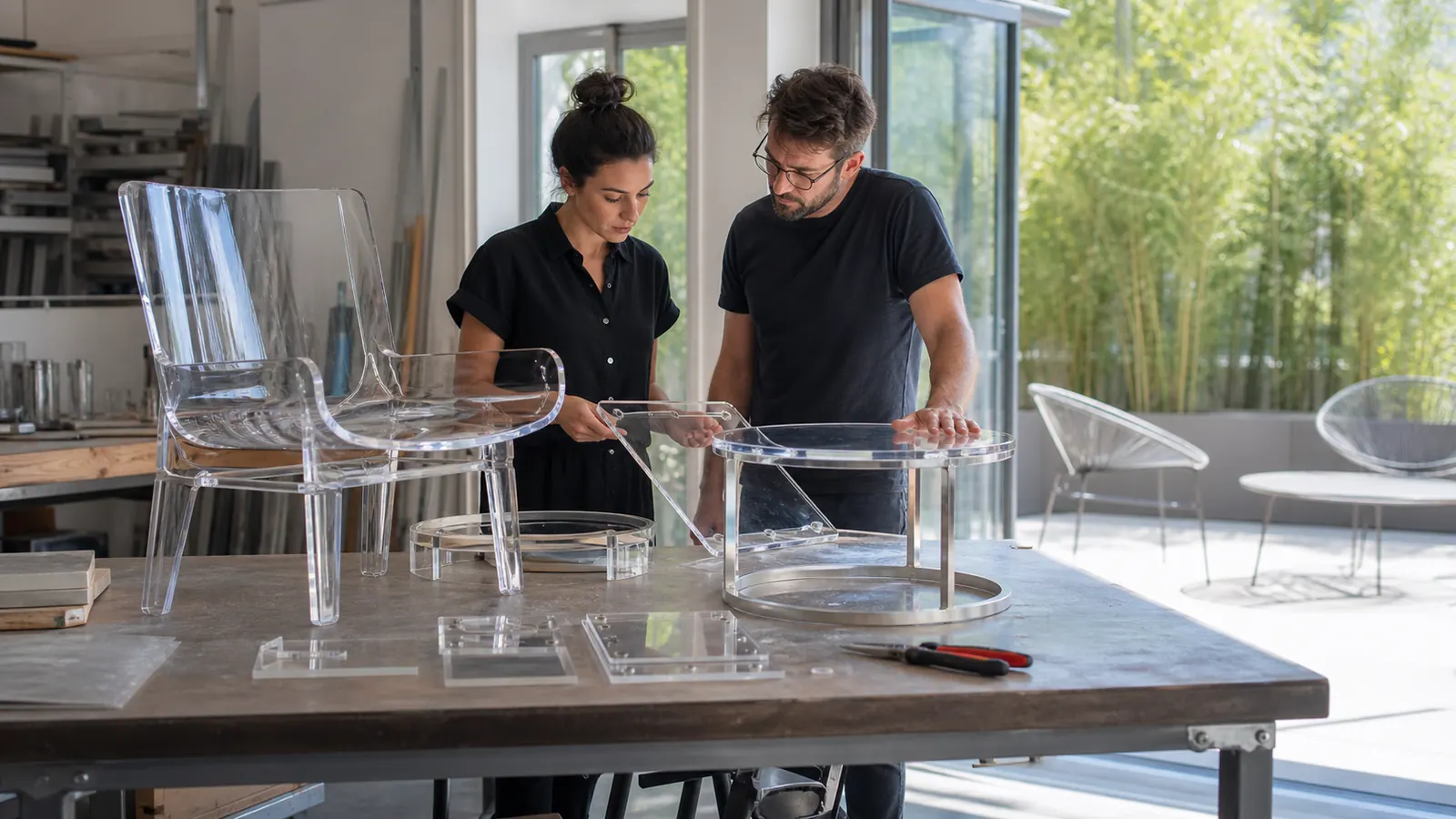
When a buyer asks us which clear plastic is "best" for an outdoor furniture detail, the first answer is usually a datasheet comparison: light transmission, impact strength, heat resistance, or UV performance. Those properties matter, but they do not decide whether a clear arm panel, table insert, screen, or decorative support will work after it is installed.
Outdoor furniture is a system. A clear part sees sunlight, water, cleaners, handling, hardware loads, movement in the supporting frame, packaging, and the expectation that every visible surface still looks intentional. I use material properties to narrow the options, then I test the part against its geometry and service conditions before approving a drawing.
A Material Property Is Not a Part-Level Requirement
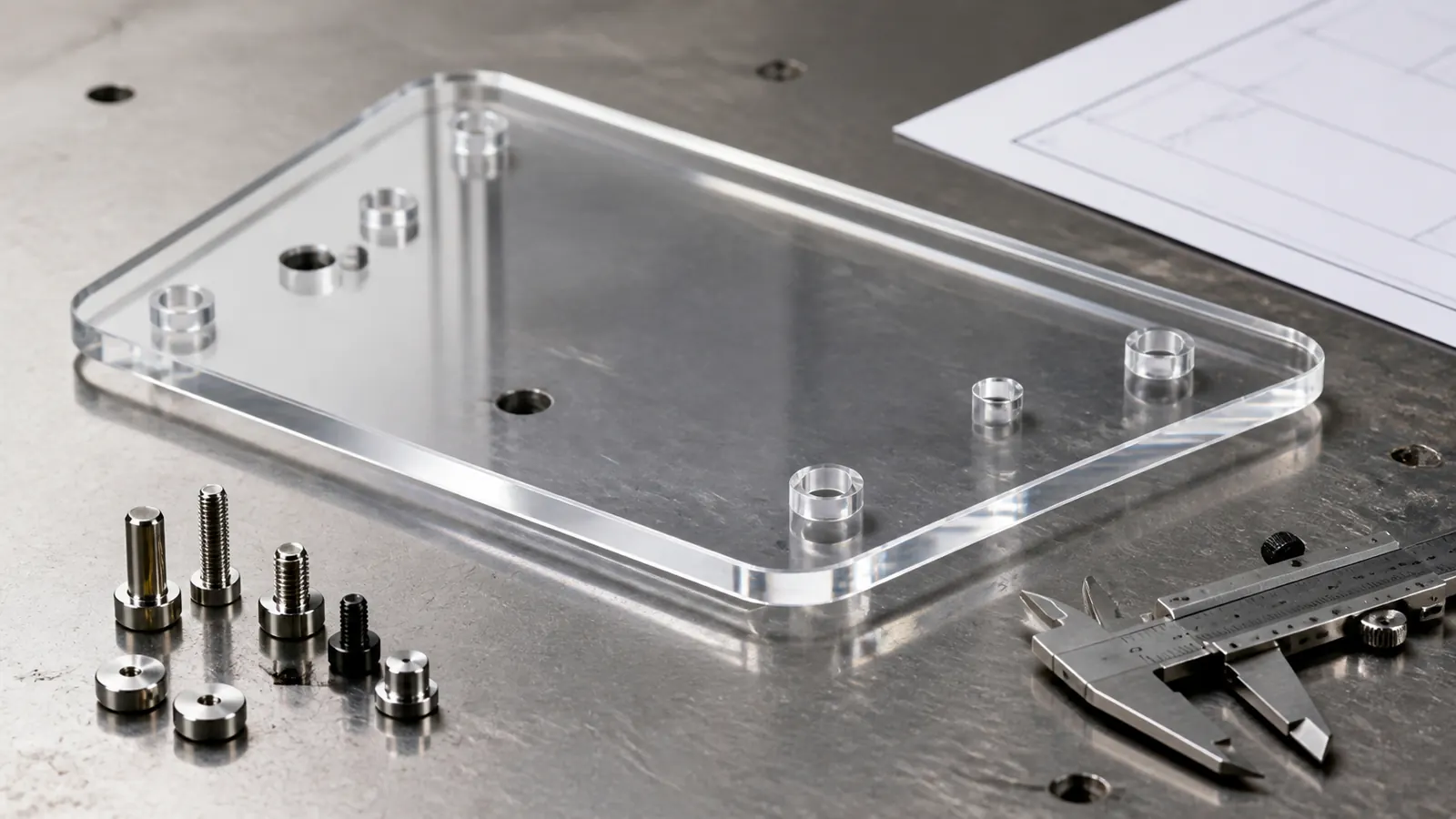
Datasheets report values on controlled specimens. The actual component can have sharp inside corners, a long unsupported span, drilled holes close to an edge, bonded seams, or a screw that concentrates load in one small area. A nominally suitable material can still crack, bow, haze, or look poor when those details are ignored.
For clear furniture components, I separate the question into two layers: what the sheet grade can do, and what the designed part asks it to do. That keeps a strong-looking property from being mistaken for a guarantee about a finished assembly.
| Datasheet question | Part-level question |
|---|---|
| Is the material UV-stable? | Which face is exposed, at what angle, in which climate, and is the actual grade specified? |
| Is the material impact resistant? | Could a chair, bag, tool, or edge strike the finished part at its thinnest section? |
| Is the material stiff? | What span, load path, support spacing, and allowable deflection does the design require? |
| Is the surface clear? | Will abrasion, cleaning, protective-film removal, and reflections be acceptable in the intended use? |
Start With the Job the Clear Part Must Do
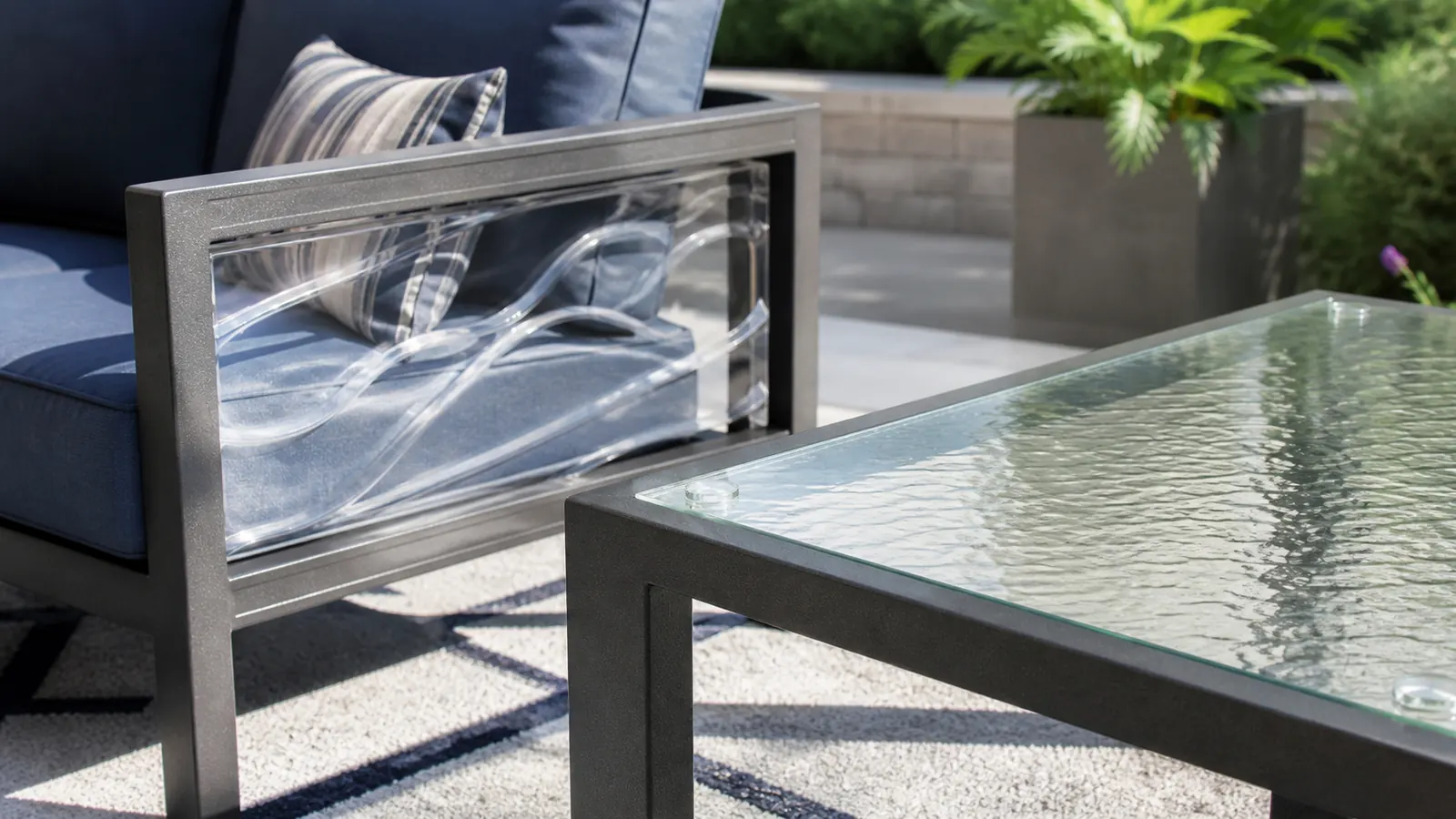
A clear insert that only creates a visual layer has a different material decision from a transparent panel that braces a chair or carries a tabletop load. I ask whether the part is cosmetic, protective, load-bearing, impact-exposed, or a combination. The answer changes the candidate material and the drawing details.
PMMA/acrylic is often compelling when optical clarity, a polished edge, and a premium visible finish are central to the design. But I would not choose it simply because it stays clear outdoors if the part also receives repeated impacts or depends on a long, flexible unsupported span. In that case, the structure, the impact route, and possibly a different clear material such as suitably UV-protected polycarbonate need review.
Outdoor Exposure Is More Than UV
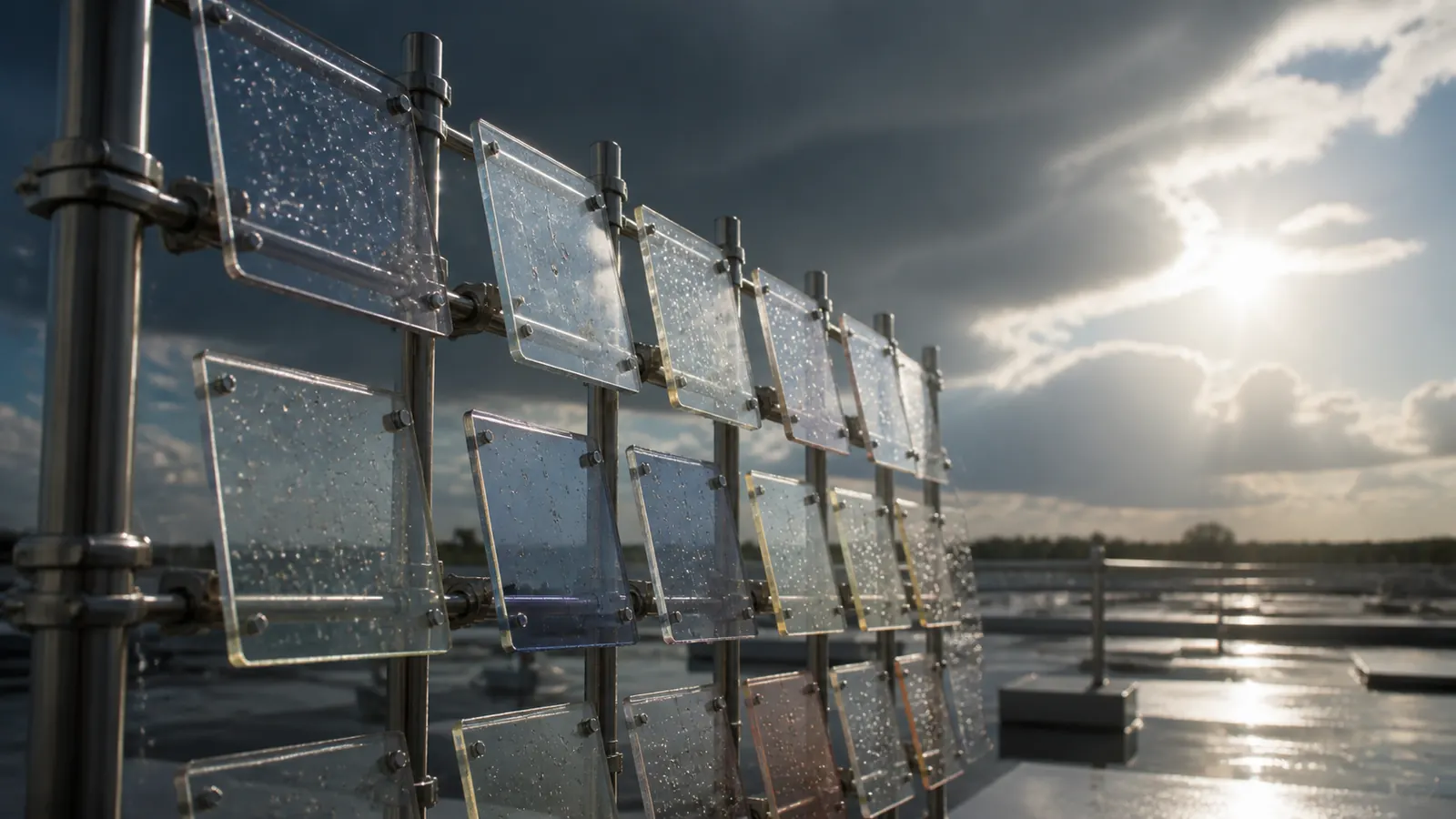
Good weatherability is valuable, but outdoor behavior is not a single material label. It combines UV dose, heat build-up, wet/dry cycling, airborne dirt, salt or pollutants, temperature changes, and where the furniture will be used. ASTM D1435 notes that relative outdoor durability can differ by exposure location because UV, wetness, temperature, and pollutants vary.
PMMA has a strong weathering record when the grade and application are appropriate; a long-term Canadian field study found no significant visible/near-infrared transmittance change for its tested PMMA sheets. That still does not answer whether a dark frame will heat a clear insert, whether water sits against a joint, or whether a particular color, coating, recycled content, or grade was selected. I put the exposure orientation and cleaning plan on the approval checklist rather than assuming one weathering result covers every project.
Grade, Surface, and UV Protection Must Be Specified
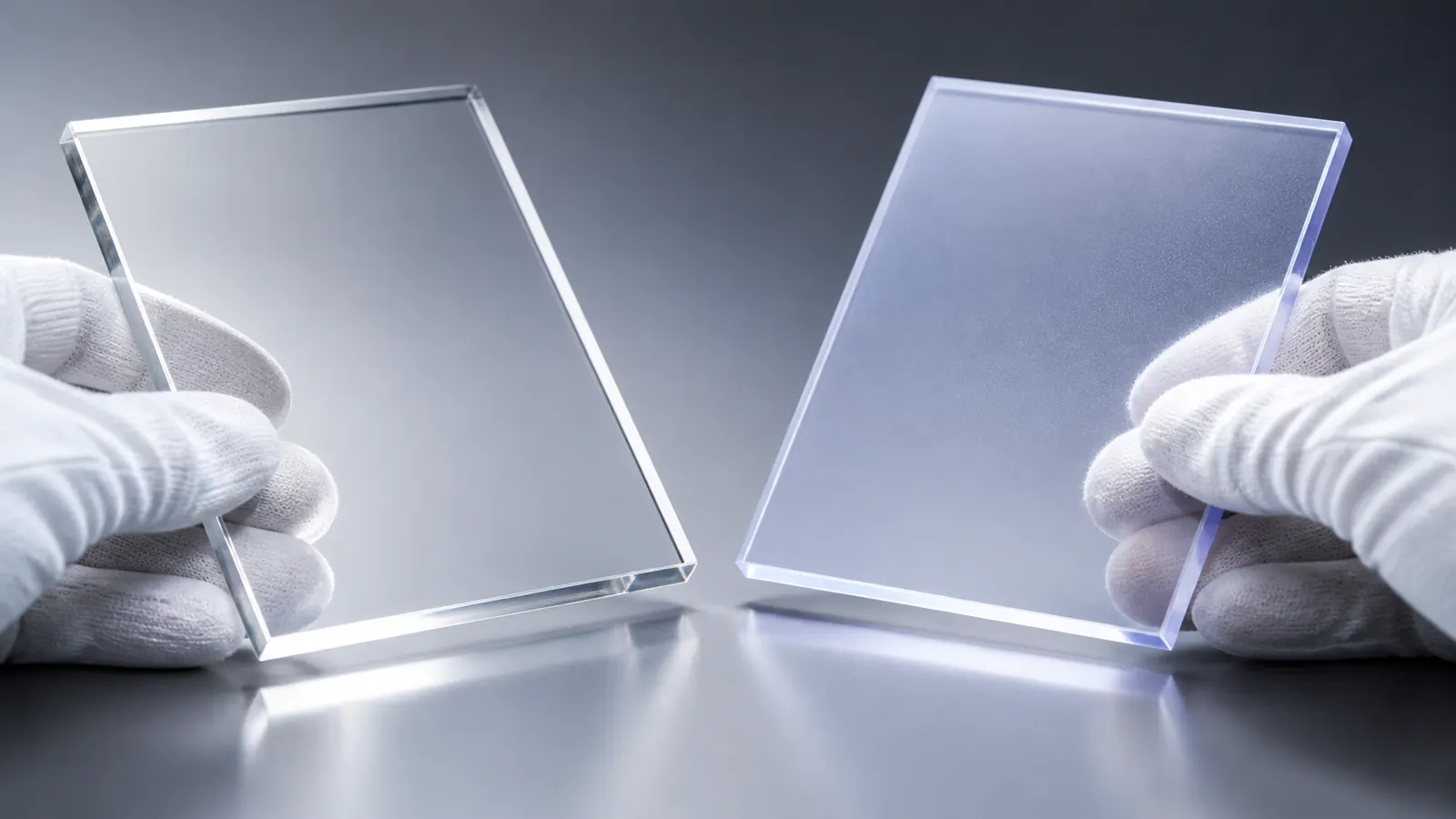
"Acrylic" and "polycarbonate" are families, not complete purchase specifications. A clear outdoor part should identify the intended grade, thickness, color or tint, surface finish, and any relevant UV or hard-coat requirement. This is especially important when comparing PMMA with polycarbonate: commercial outdoor PC products may rely on a UV-protected surface or a UV-stabilized construction, while untreated grades are a different decision.
The practical trade-off is visible finish versus abuse resistance. Acrylic can provide excellent clarity and polishable edges for a feature panel; a UV-protected polycarbonate grade may be the more defensible candidate where impact is the dominant risk. Neither conclusion is automatic—scratch expectations, chemical exposure, forming, edge appearance, and the supplier's grade documentation still need confirmation.
Geometry and Hardware Create Failures the Datasheet Cannot Show
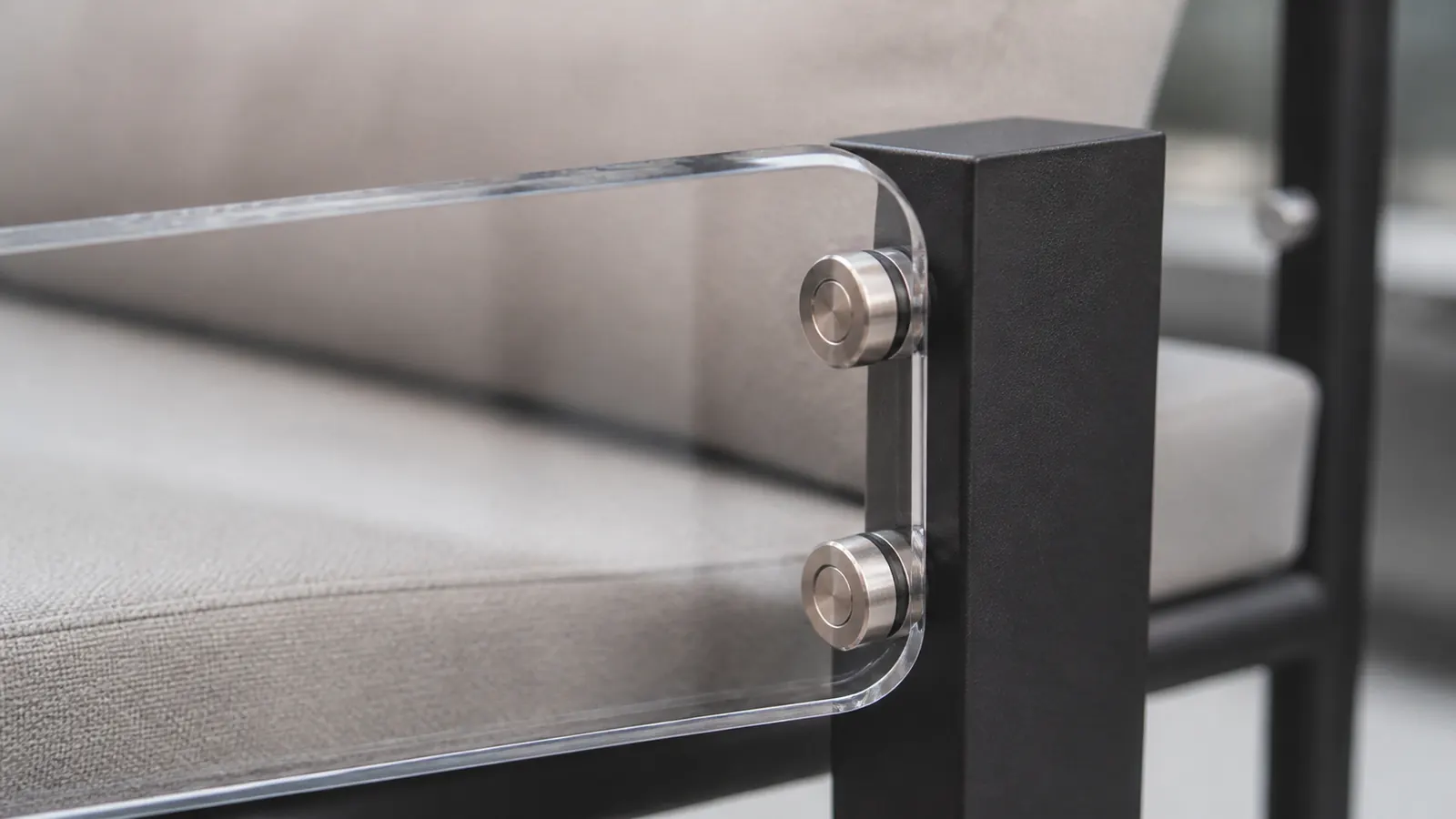
Most field problems I would anticipate are at transitions: a drilled hole, a thin tab, a tight fastener, a bonded corner, or an unsupported center span. A screw can over-constrain the panel as the frame moves; an edge hole can create a crack starter; a broad, clear tabletop insert can deflect enough to look wrong even if it does not break.
Before production, I review hole spacing, edge distance, support rails, clearance around hardware, load direction, and whether the part must accommodate differential movement. Rounded inside corners and sensible support locations are often more valuable than changing the material name in isolation. A prototype is useful when the appearance and loading are both critical, because the part is judged as an assembly, not as a coupon.
Cleaning, Handling, and Packaging Are Part of the Finish Specification
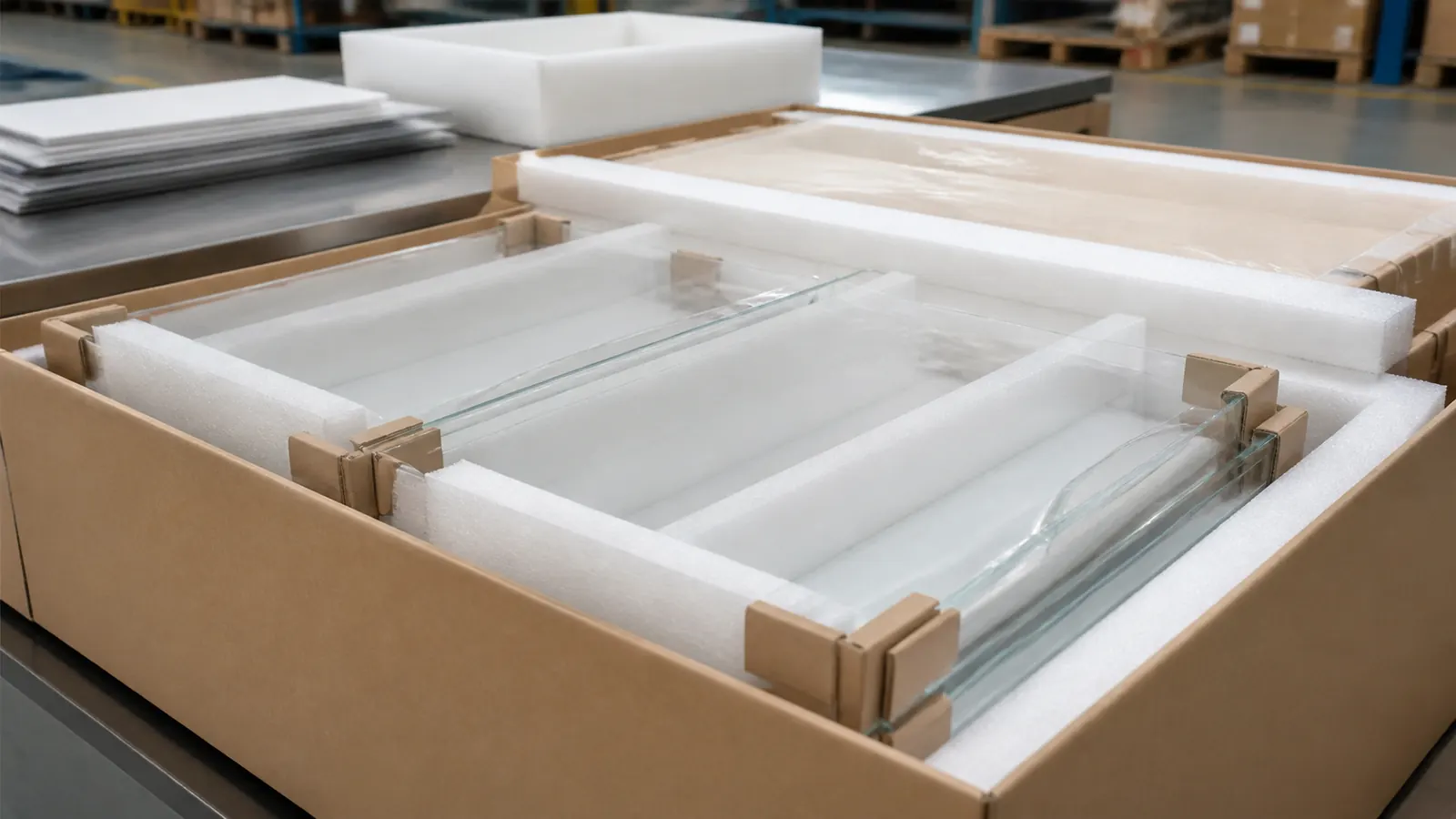
Clear furniture parts are judged by what people see at arm's length. Scratches, haze, glue lines, trapped dust, and rub marks can be commercial failures even when the component remains structurally sound. The purchase specification should therefore say who cleans the part, which products are expected, how it is protected during assembly, and what cosmetic acceptance looks like under normal viewing conditions.
In fabrication, I would align the cutting method, edge finish, drilling sequence, protective film, bonding requirements, and packing method with that standard. A polished acrylic edge can be a design asset, but it also makes inconsistent finishing easy to notice. For export, foam isolation, edge protection, and a separation plan matter as much as selecting a scratch-resistant-looking sheet.
Use a Prototype and Validation Plan for the Real Risk
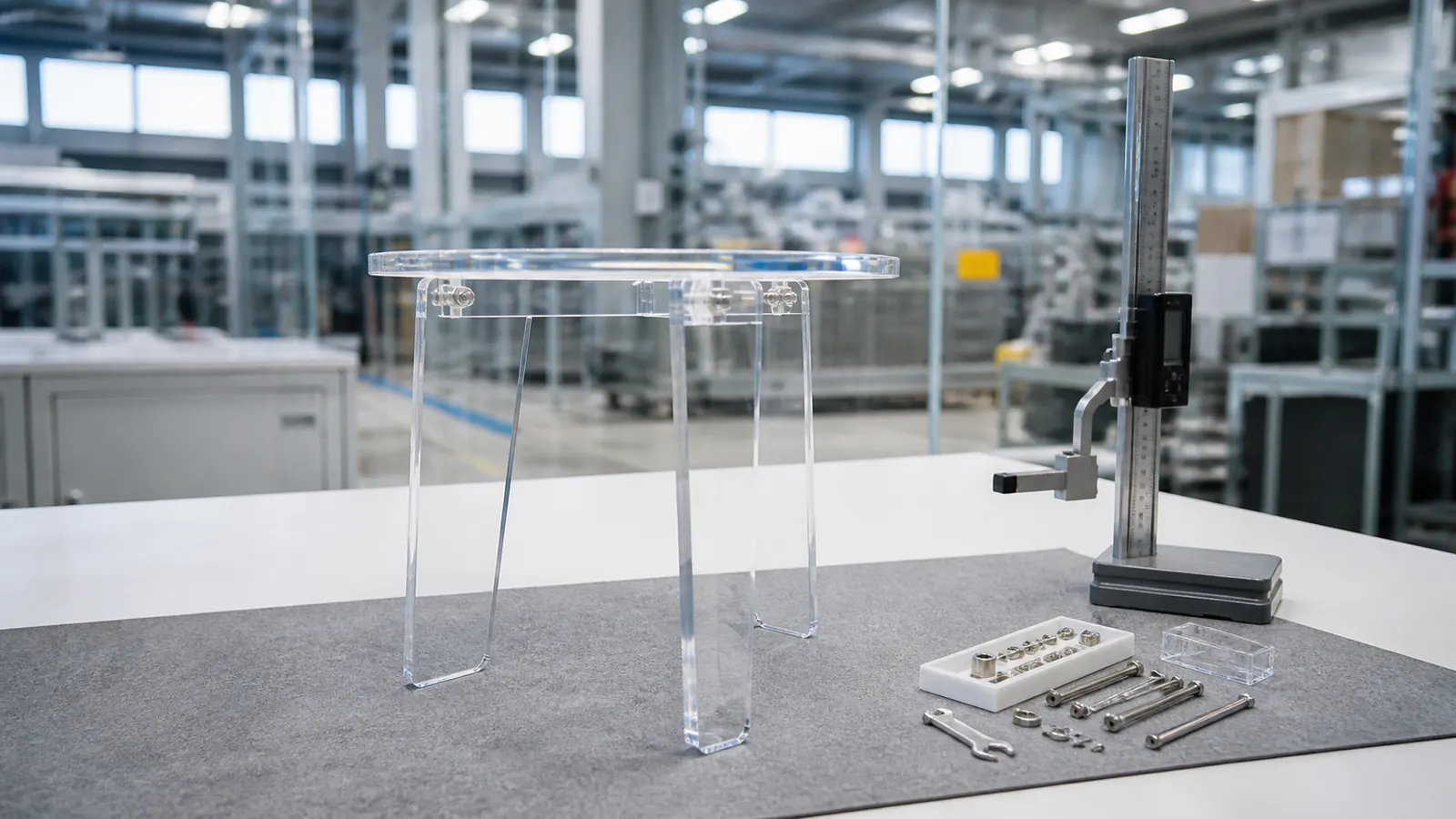
Material selection becomes more reliable when the buyer states what must be validated. That might be visual retention after defined exposure, impact at a known vulnerable area, load and deflection under an agreed use case, cleaning compatibility, or assembly fit after repeated installation. We can then build a prototype or representative sample with the actual thickness, holes, finish, and hardware.
Do not translate a laboratory number directly into an outdoor warranty. The useful question is whether the agreed sample, grade, geometry, and exposure assumptions satisfy the product team's acceptance criteria. For demanding outdoor programs, testing should be planned around the target climate and the relevant furniture requirement rather than a generic material claim. BIFMA's outdoor-furniture whitepaper is a useful reminder that exterior tables and chairs face direct UV, heat, humidity, cold, and moisture together.
A Practical Drawing-Approval Checklist
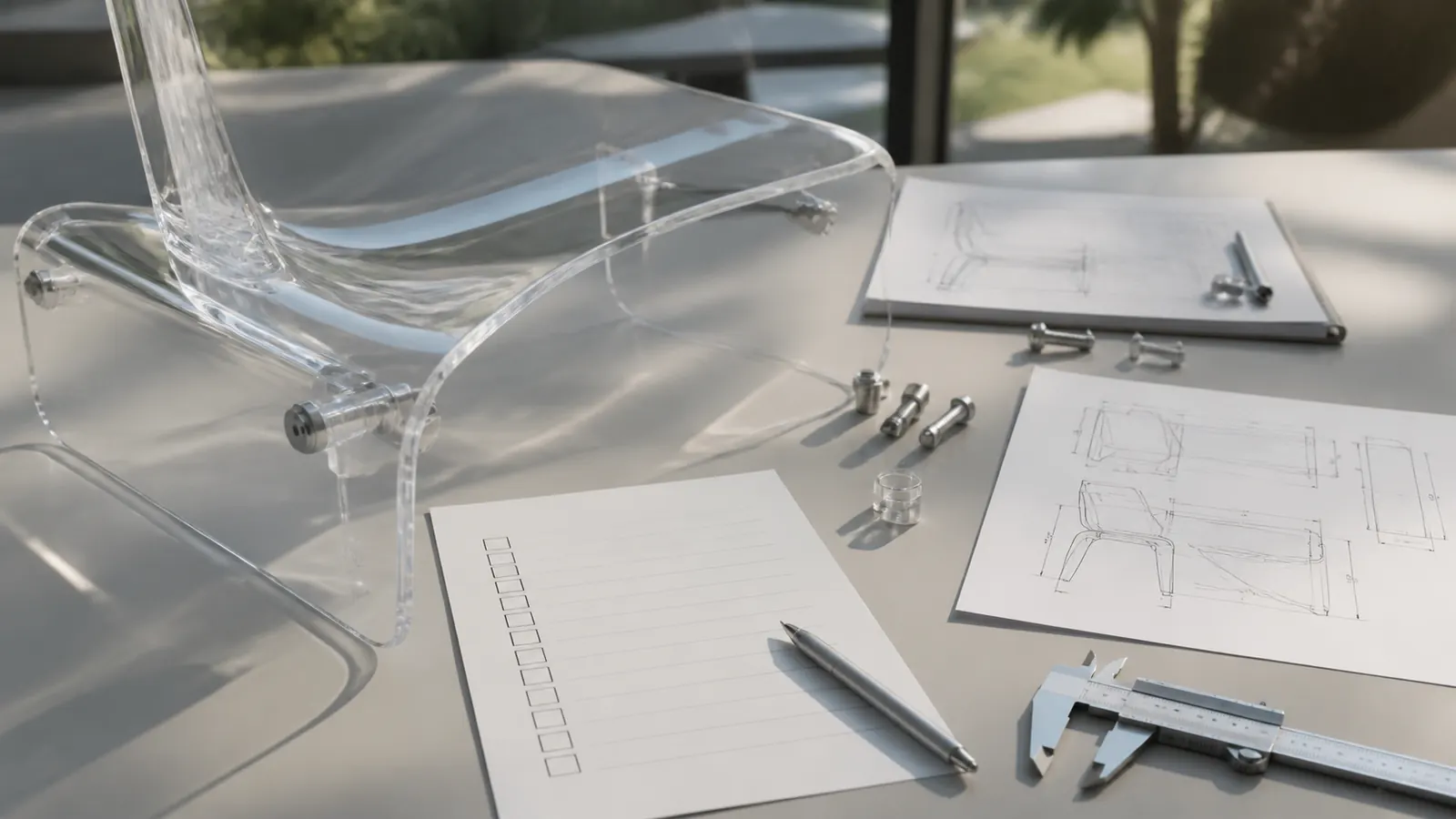
Before we quote a custom clear outdoor-furniture component, I would ask for:
- A drawing, sketch, or reference image with dimensions and the clear part's function.
- Expected load, span, support points, impact risks, and hardware arrangement.
- Installation environment: location, orientation, shade, water exposure, and cleaning method.
- Required material grade, thickness, tint, UV/surface treatment, and visible-edge standard.
- Prototype or validation needs, quantity, assembly sequence, and export-packaging expectations.
This does not make the process slower; it prevents us from quoting a visually attractive panel that is poorly matched to its outdoor job. Feilong can review a drawing or concept for custom acrylic components and flag the material, finish, hardware, and packing decisions that need to be resolved before production.
Conclusion
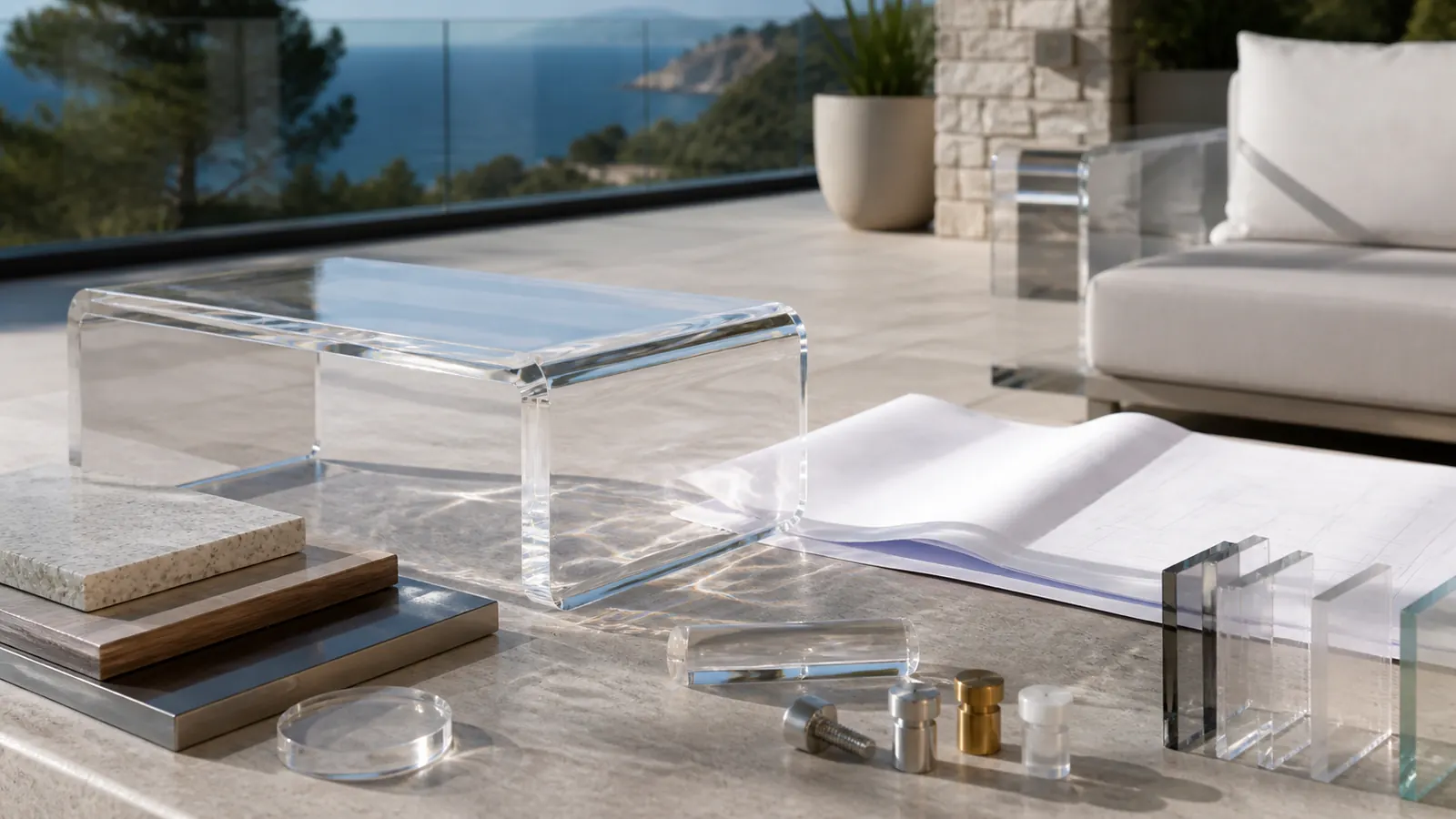
Clear plastic selection for outdoor furniture fails when a material property is allowed to stand in for the whole design. Use PMMA properties, PC properties, and weathering data as evidence—but make the final decision from the actual part's role, exposure, grade, geometry, hardware, finish, and validation plan.
For a clear acrylic furniture detail, send us the drawing, dimensions, support and fixing concept, visual target, outdoor conditions, and quantity. We will help turn that information into a practical fabrication review before you commit to production.