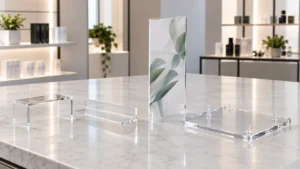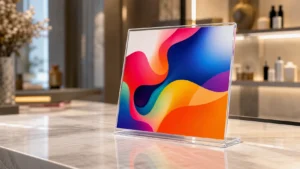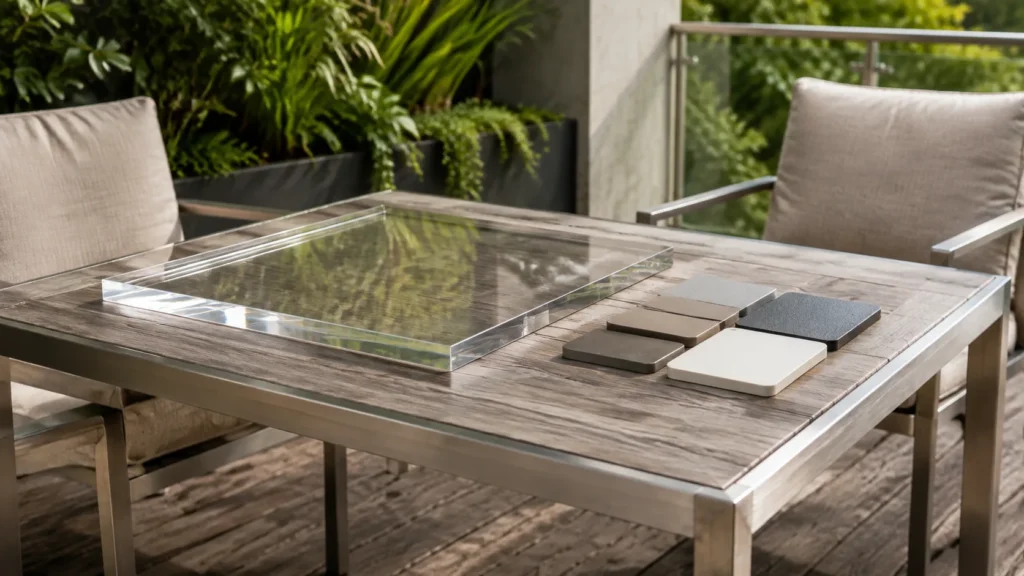
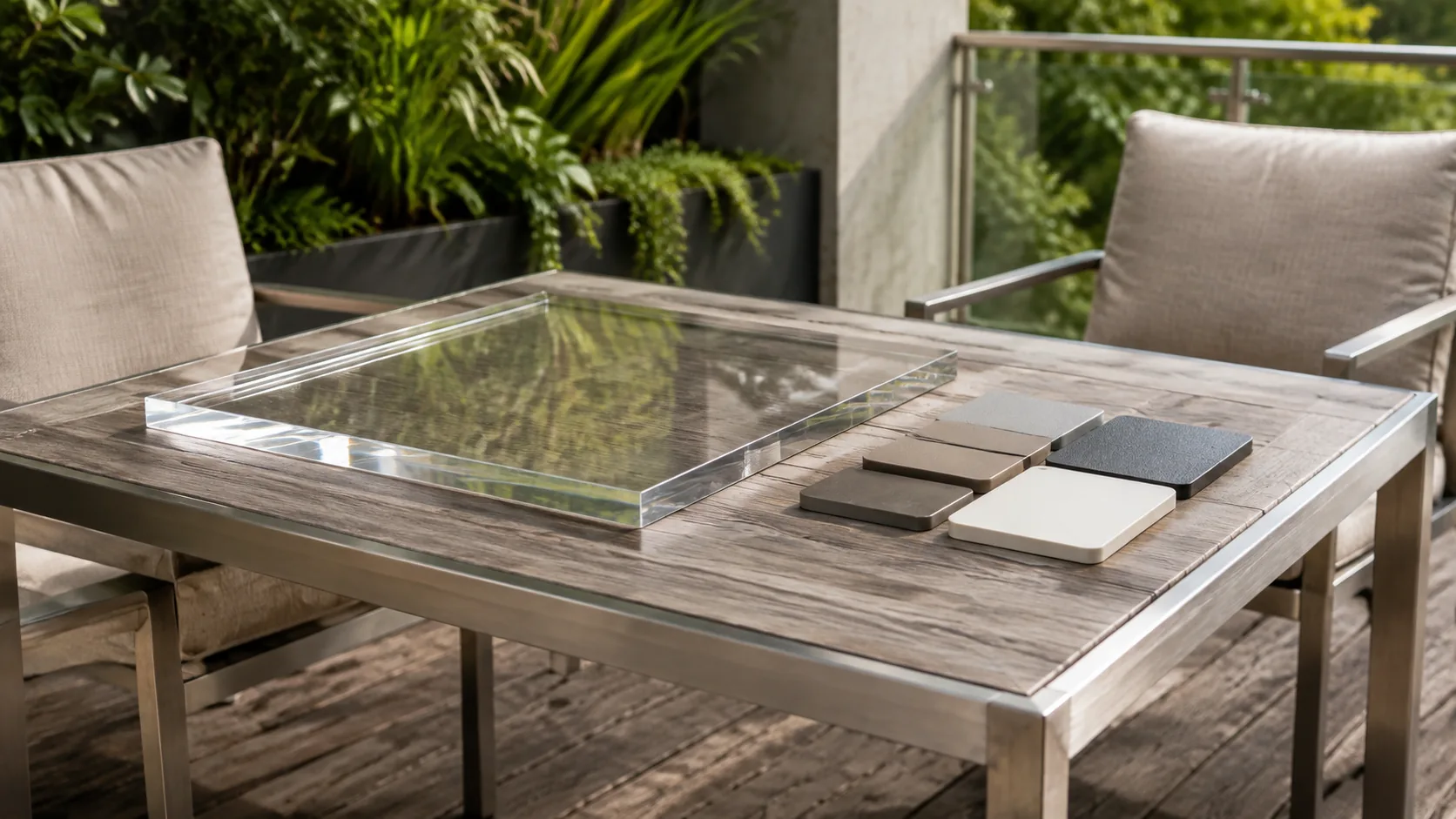
When a buyer asks me which plastic is best for outdoor furniture, I do not start with a resin name. I start with the part's job. A clear table accent, a molded lounge chair, a hidden spacer, and a structural outdoor panel may all live outdoors, but they do not carry the same load, exposure, appearance, or manufacturing risk.
The useful decision is not “plastic versus plastic.” It is a short material brief that states exposure, load path, transparency, surface expectation, geometry, cleaning, quantity, and packing. That brief keeps a strong material from being used where it looks wrong, and a beautiful material from being used where the support detail is doing too much work.
Start With the Outdoor Brief, Not a Datasheet

Before comparing materials, I ask the buyer to define four things: whether the part is transparent or opaque; whether it carries a person, a distributed display load, or only its own weight; how much sun, heat, rain, salt, and cleaning it will see; and whether the surface will be viewed close-up. Those answers change the shortlist faster than a long comparison table.
For example, a coastal hospitality project and a covered patio cannot be treated as the same outdoor condition. The grade, the exposed face, the hardware, and even the packing requirement may change. I prefer to write those assumptions onto the drawing or approval sheet, because an unspoken exposure condition is hard to recover after production begins.
Build a Material Shortlist Around the Part's Job
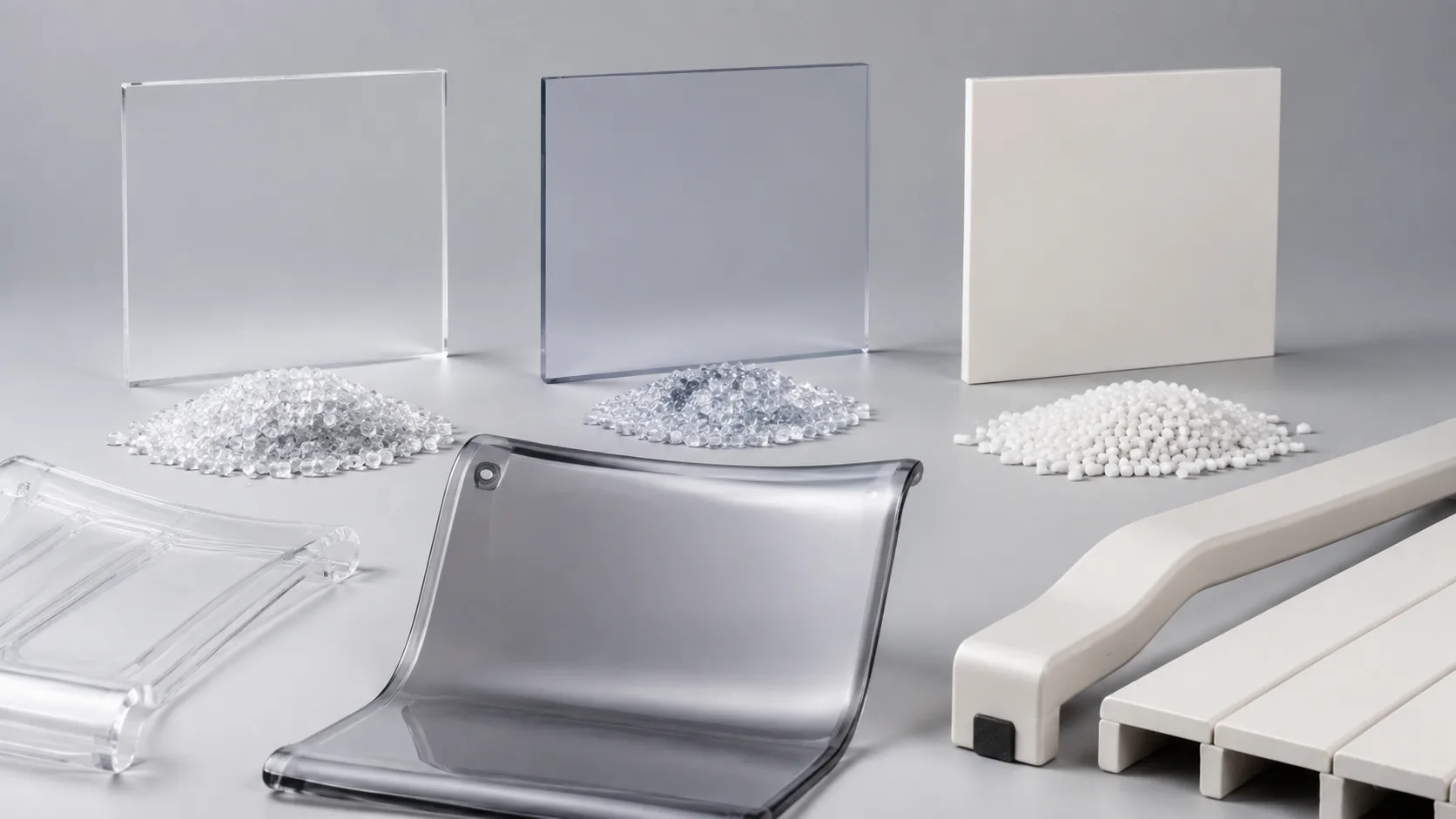
| Material family | A sensible starting use | What must be checked before approval |
|---|---|---|
| PMMA / acrylic | Clear decorative panels, display details, table accents, light-duty furniture components | Support span, edge finish, holes, impact risk, UV grade, cleaning and packing |
| Polycarbonate | Clear parts where impact margin is a primary requirement | Outdoor/UV grade, protected face, abrasion resistance, coating and forming limits |
| UV-stabilized polyolefin systems | Opaque, molded, larger-volume furniture programs | Exact resin formulation, pigment, structure, tooling, load path and supplier validation |
| Glass or metal combined with plastic | Parts needing a different stiffness, weight, or surface strategy | Joint design, differential movement, edge protection and transport risk |
I use this table as a screening tool, not as a specification. A material family name does not prove the outdoor grade, wall thickness, or final part behavior. For opaque molded systems especially, the formulation and the structural design matter more than the word on a purchase order.
Choose Acrylic When Clear Appearance Drives the Value
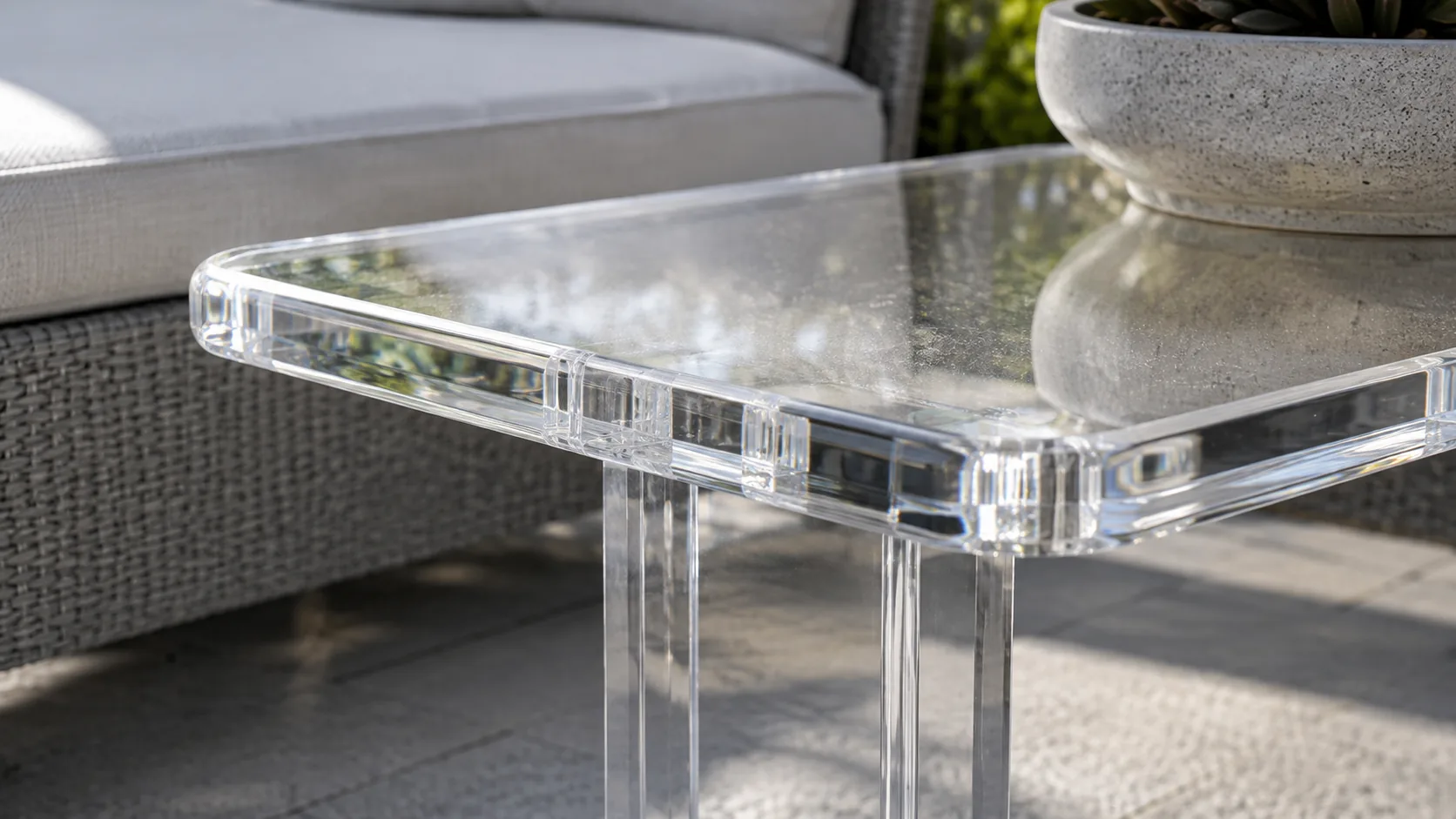
For premium clear furniture details, PMMA is often the most natural direction when optical appearance, low haze, polished edges, and a glass-like presentation are the reason the part exists. Trinseo's PMMA guidance describes the optical and weathering strengths that make suitable grades relevant to exterior visual applications.
In fabrication, I would still check the support condition before recommending acrylic. Long unsupported spans, sharp inside corners, closely drilled holes, and highly concentrated fastener loads can turn a good-looking panel into a cracking risk. A better drawing calls out the thickness, support points, edge condition, hole locations, and whether the visible faces need protective film through installation.
Choose Polycarbonate When Impact Is the Deciding Risk
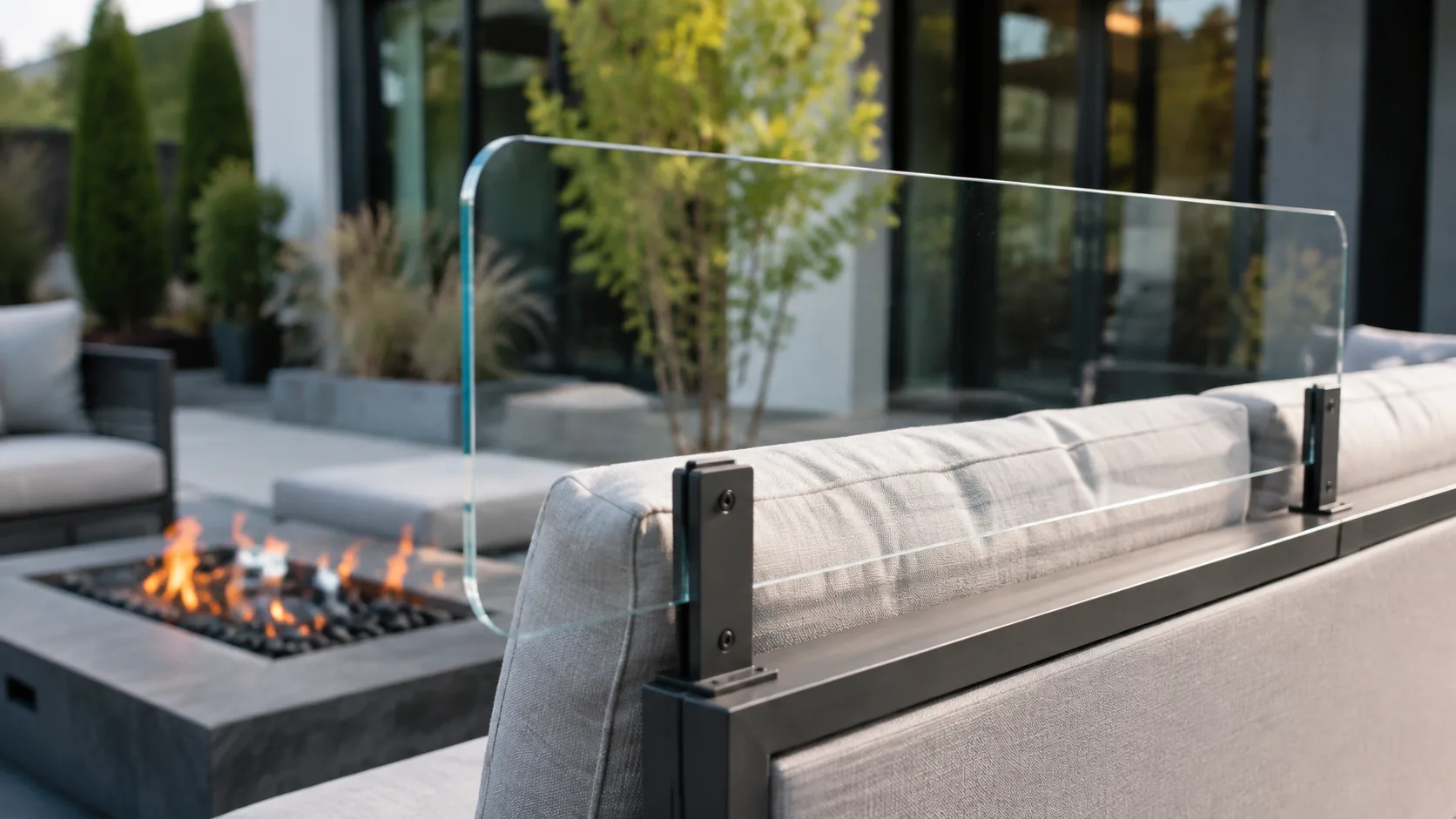
Polycarbonate earns its place when the clear part needs substantially more impact tolerance than an acrylic alternative can reasonably provide. That does not mean every PC sheet is automatically ready for an exposed furniture application. SABIC's LEXAN resin range includes UV-stabilized grades and cap-layer solutions for improved outdoor weathering, which is a useful reminder to specify the grade rather than assume the base polymer covers the whole requirement.
I would also settle the surface question early. A part that is frequently touched, wiped, stacked, or rubbed against hardware may need a defined abrasion or hard-coat approach. SABIC's weatherability guidance shows why weatherability and surface protection belong in the material decision, not as a late cosmetic add-on.
Treat Opaque Structural Plastics as a Separate Supply Decision
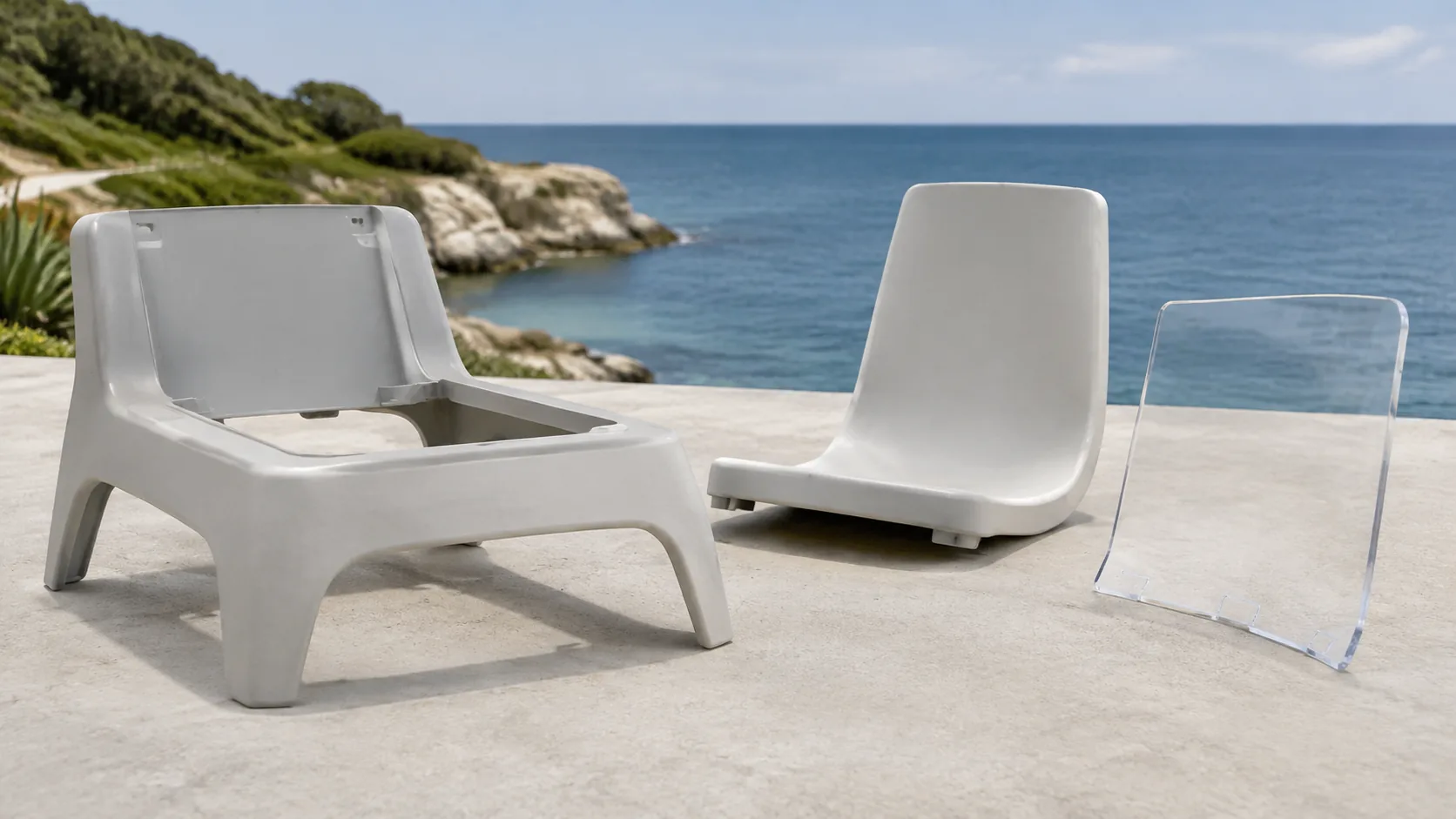
UV-stabilized opaque plastics can be excellent candidates for high-volume molded furniture and non-transparent components, but they call for a different supplier and validation path from custom acrylic fabrication. Their result depends on resin formulation, pigment package, mold design, ribs, wall thickness, drainage, fastening, and the final load case.
For an assembly that includes a custom clear panel plus an opaque molded base, I focus on the acrylic component and the interface: fixing points, expansion allowance, edge protection, service access, and visual alignment. That keeps the quotation honest and avoids pretending one fabrication route solves every component in the furniture system.
Design the Detail So the Material Can Succeed
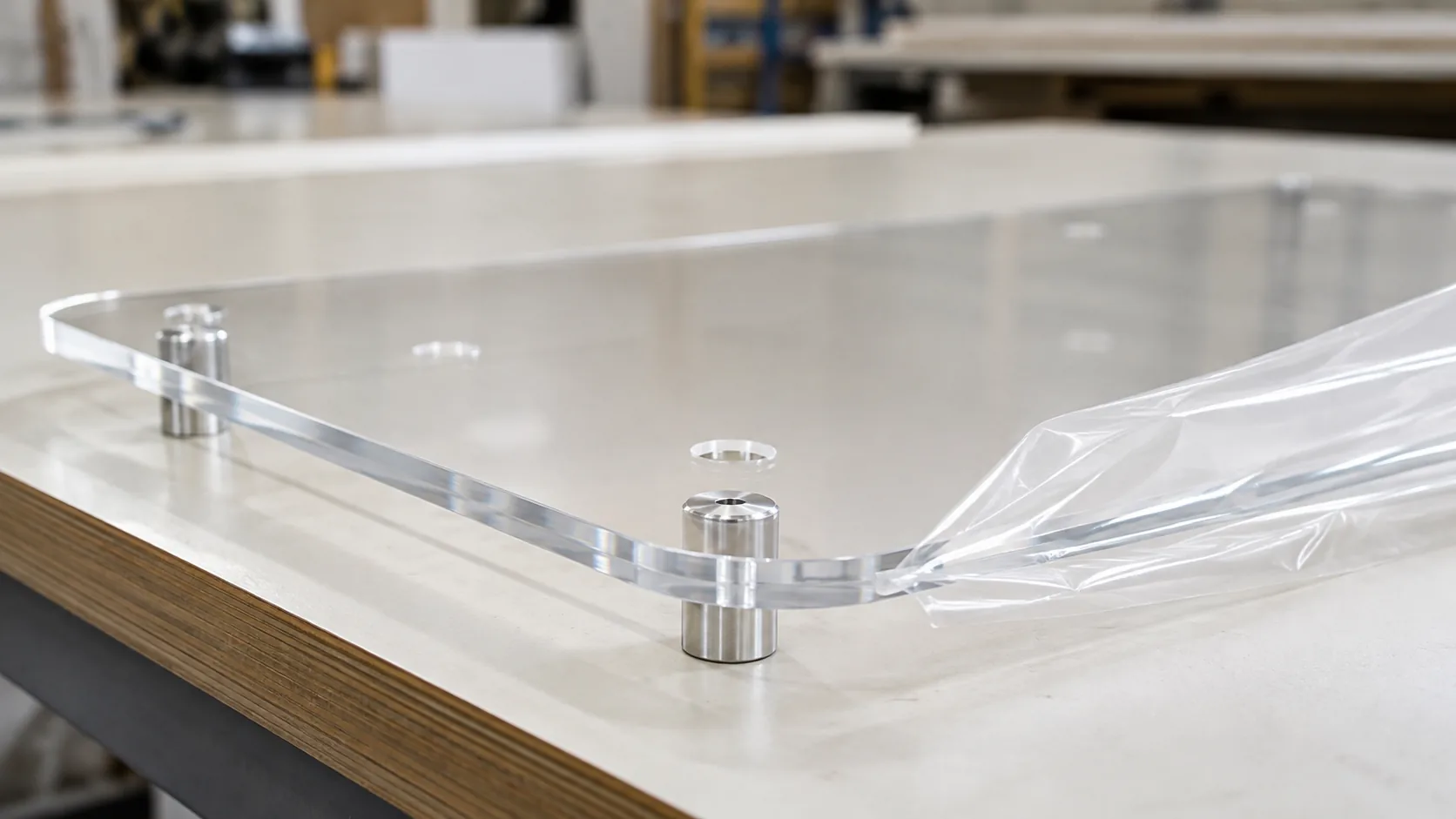
The material choice and the detail are inseparable. A clear panel needs enough support, forgiving hole locations, appropriate hardware, and a surface that is not forced to absorb assembly abuse. If a customer expects a pristine display surface, I also ask how it will be cleaned and whether it will be stacked, wrapped, or assembled on site.
For custom acrylic work, small decisions usually matter: a polished versus machined edge, a generous corner treatment, a standoff versus a through-fastener, a protected face during installation, and foam or separator placement in the carton. I would rather solve those on a drawing than explain a cosmetic issue after a shipment is opened.
Validate a Representative Part Before Scaling
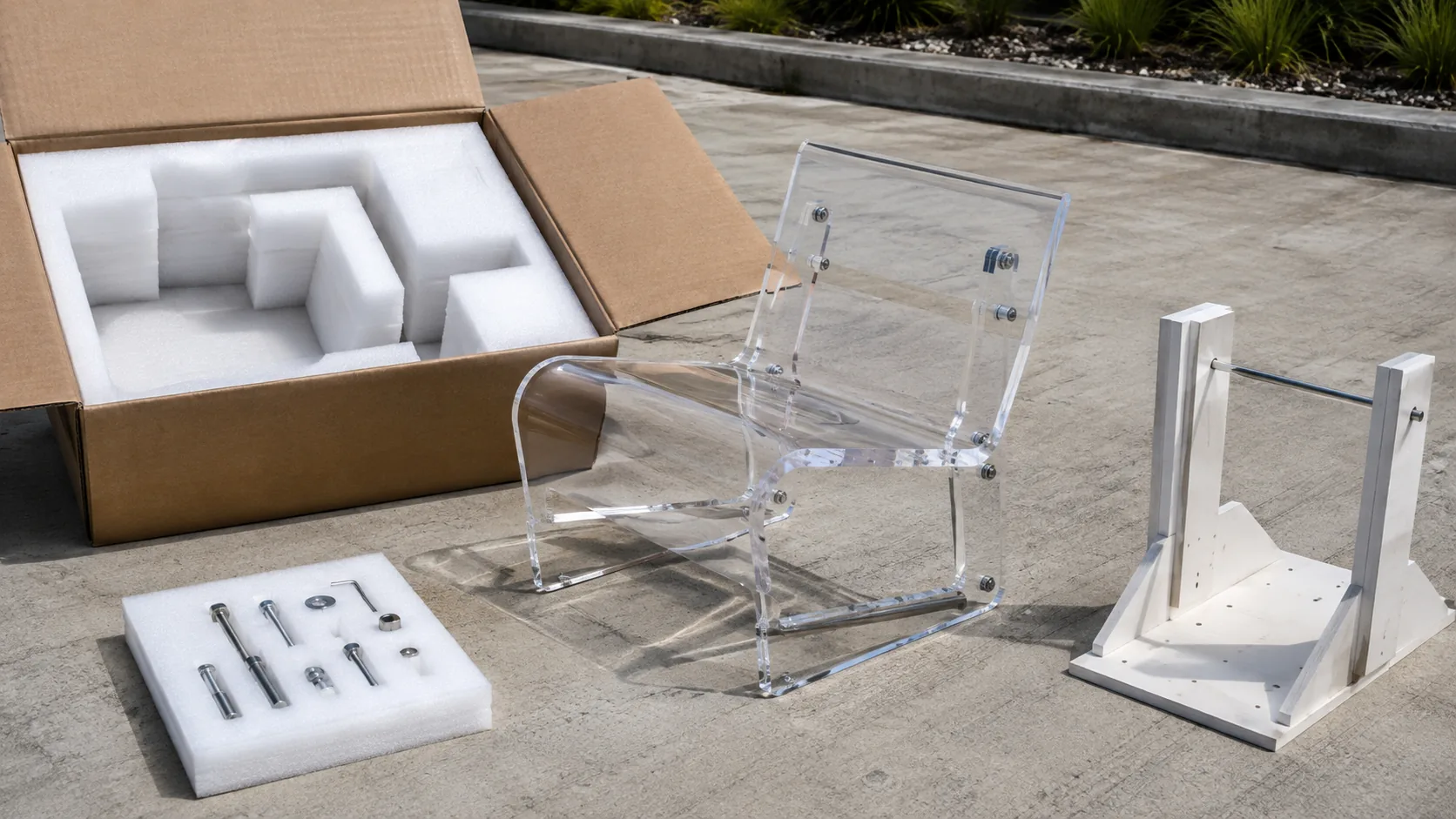
An outdoor furniture program deserves a prototype or representative sample when the clear component is visible, load-bearing, unusually large, bent, bonded, or joined to another material. The review should reflect the real application: assembly sequence, support, cleaning, outdoor exposure assumptions, and packaging—not only a loose sheet on a bench.
For a weathering-sensitive clear application, it is sensible to ask the resin or sheet supplier for grade-specific documentation and to align any accelerated-weathering plan with the intended climate and acceptance criteria. Standards such as ISO 4892 are commonly used to frame xenon-arc exposure testing, but a test plan still needs a clear pass/fail definition for the actual part.
Conclusion
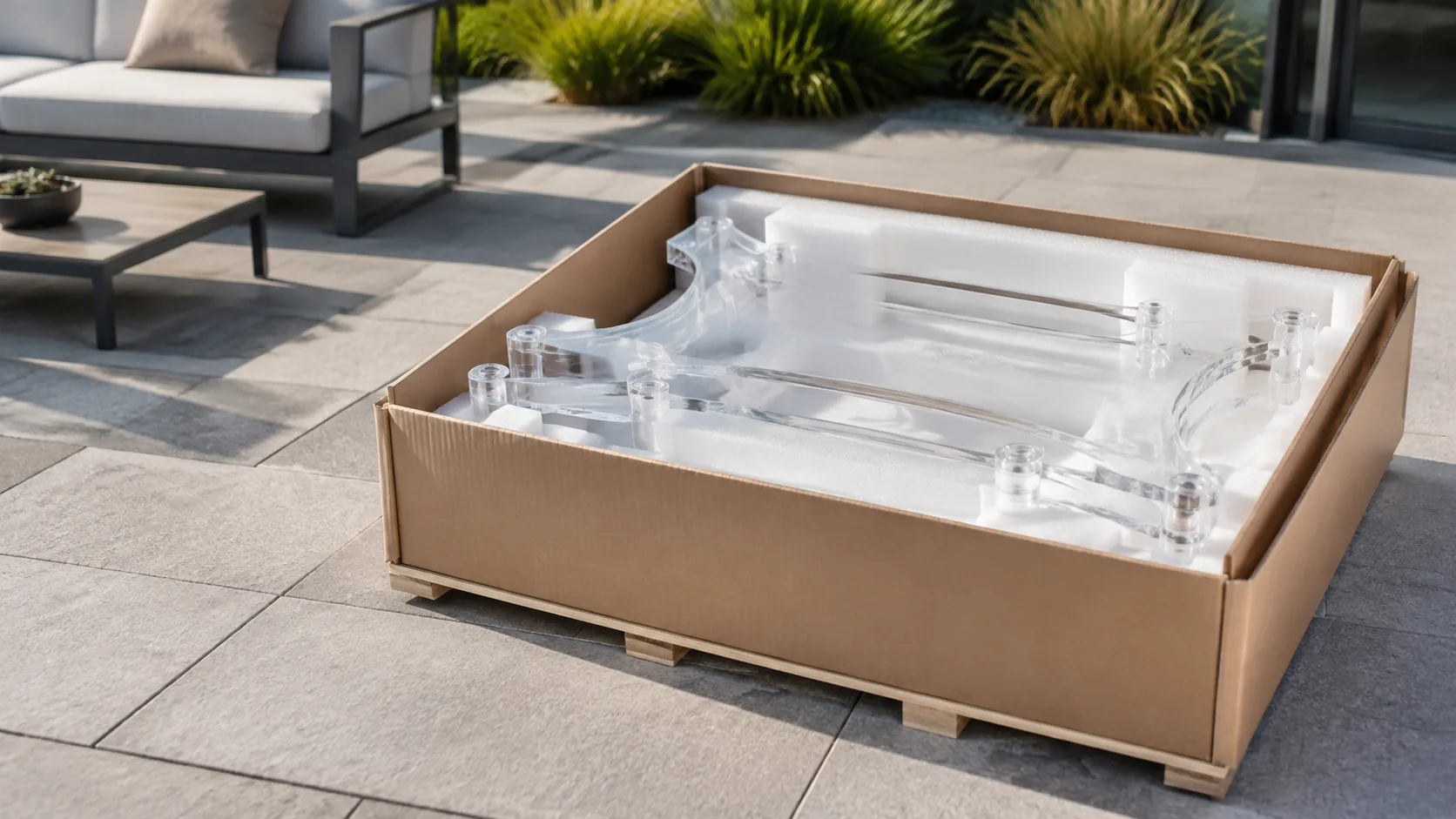
The right outdoor-furniture plastic is the one that matches the part's load, exposure, appearance, fabrication method, and delivery risk. Acrylic is often compelling for premium clear components where visual quality and controlled fabrication matter; polycarbonate is stronger when impact is the dominant clear-part risk; opaque molded systems belong to their own formulation and tooling decision.
If you are sourcing a custom clear furniture component, send us a drawing or reference image with dimensions, support points, expected exposure, finish, hardware, quantity, and packing expectations. I can help review whether acrylic is a practical fit before you commit the detail to production.