Skip to content

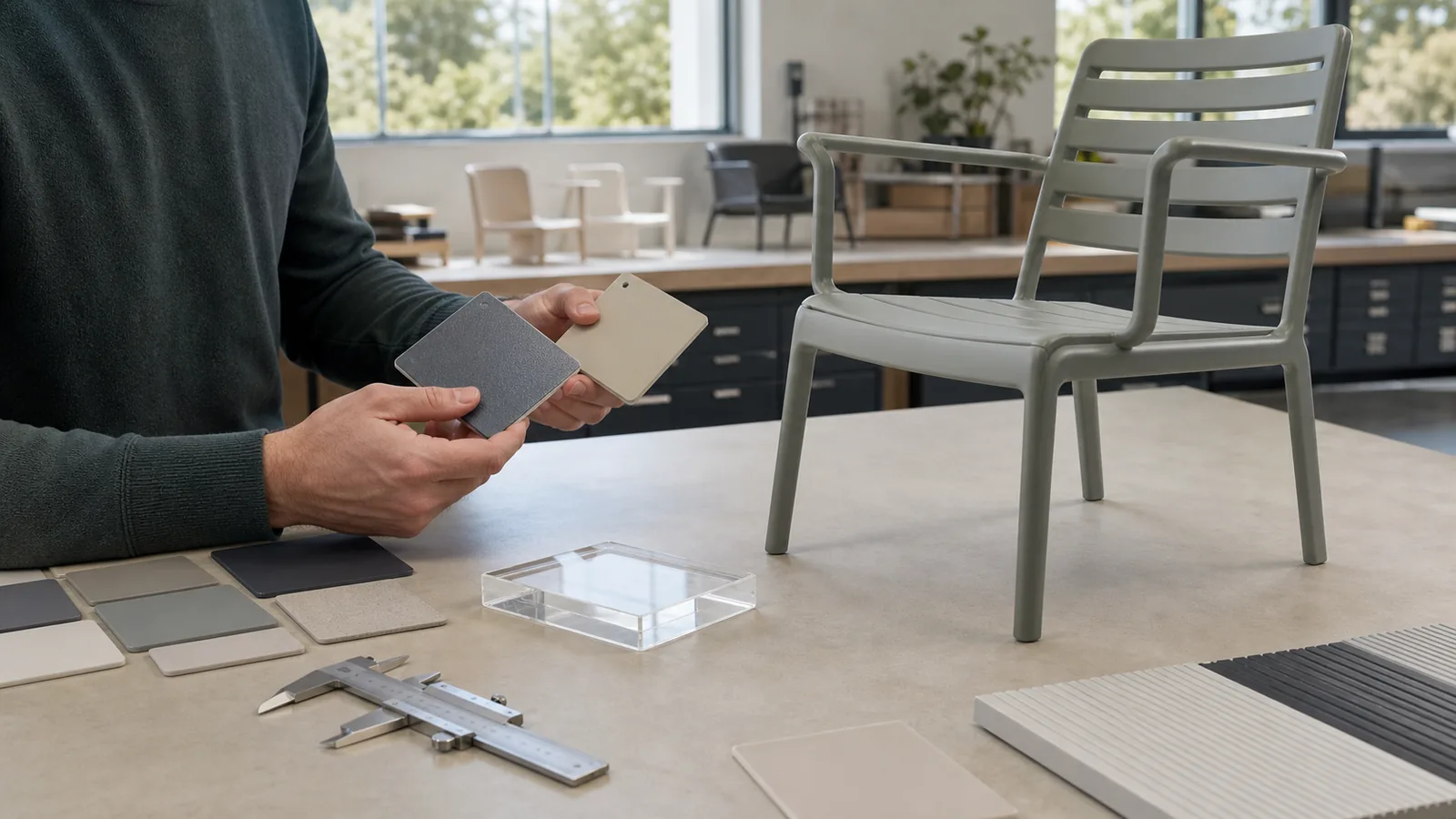
Outdoor furniture looks simple until a sample sits in real sun, rain, and temperature swings. Two plastic panels can look close on a quotation sheet, then behave very differently once they become a chair arm, a table top, or a clear accent panel.
For most load-bearing outdoor furniture, I would start with UV-stabilized HDPE, not because it is fashionable, but because it gives a practical balance of moisture resistance, durability, and low-maintenance use. The answer changes when the job needs transparency, a woven form, a very light molded part, or a special visual finish. Then the material, geometry, and outdoor formulation need to be considered together.
I do not approve a furniture plastic from a material name alone; I want to see where the load goes, how the part is fixed, what color and UV package are specified, and whether the product will live in a shaded balcony or a harsh open site.
The Short Answer: Use UV-Stabilized HDPE for Structural Pieces
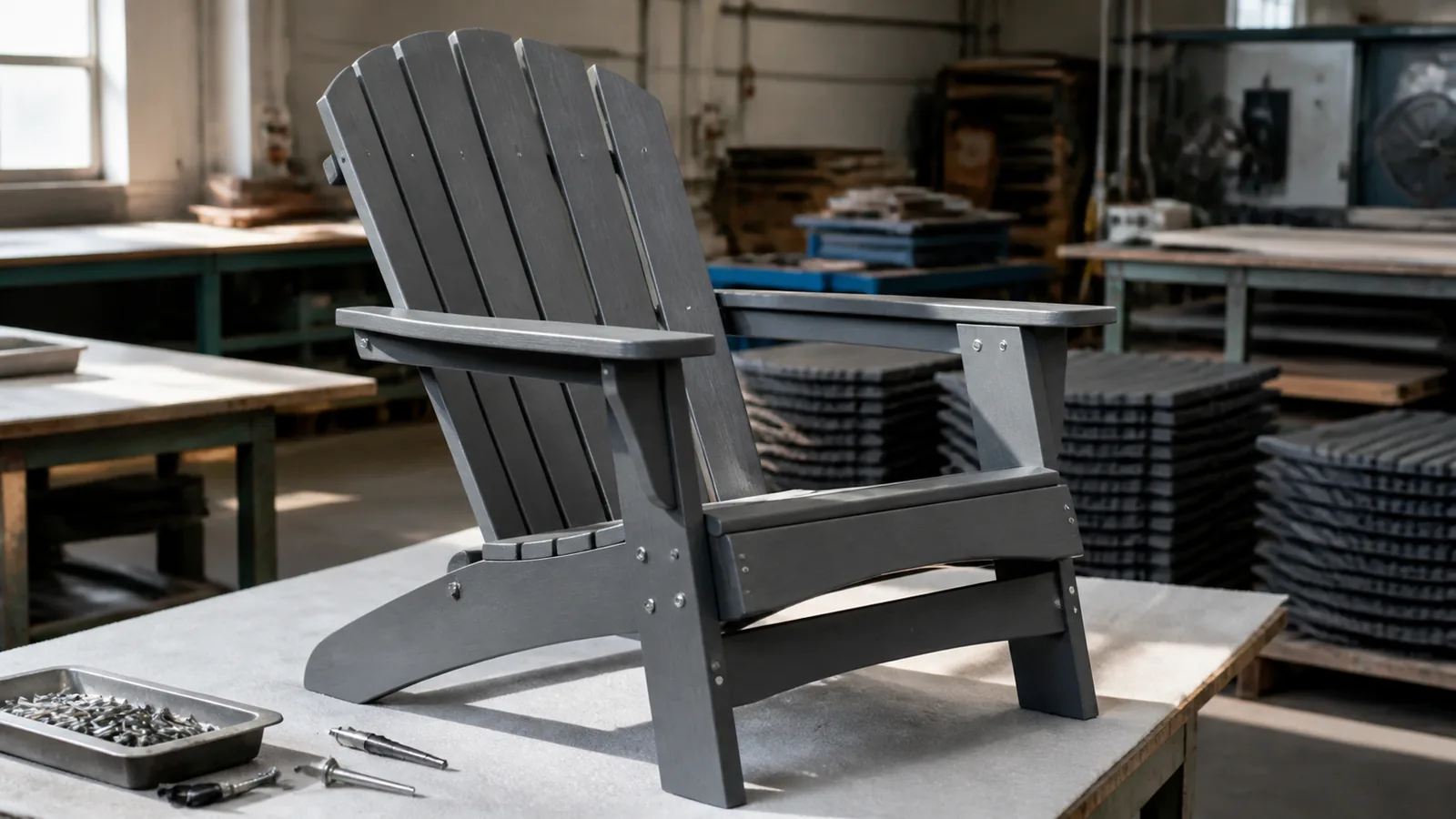
For a chair, bench, table, or outdoor cabinet that must carry repeated use, UV-stabilized HDPE is usually the strongest starting point among common plastic choices. It does not absorb water like wood, and it can be made into thick, sturdy panels for slatted furniture and plastic-lumber-style designs.
The important phrase is UV-stabilized. HDPE is not a magic word that removes the need for formulation control. Outdoor exposure brings ultraviolet light, heat, oxygen, moisture, and surface dirt. The grade, color, stabilizer system, panel thickness, and part design all influence how a finished product ages.
When I inspect an HDPE furniture design, I pay special attention to long unsupported spans and bolt locations; a thick-looking panel can still feel soft if the structure lets it flex too much. Good material cannot rescue an under-designed frame.
For a custom project, confirm whether the buyer needs a solid-color panel, a recycled-content material, a textured surface, or a wood-look finish. Those decisions affect appearance, processing, consistency, and sometimes the right joining method.
Compare the Plastic by the Furniture Job, Not by the Price List
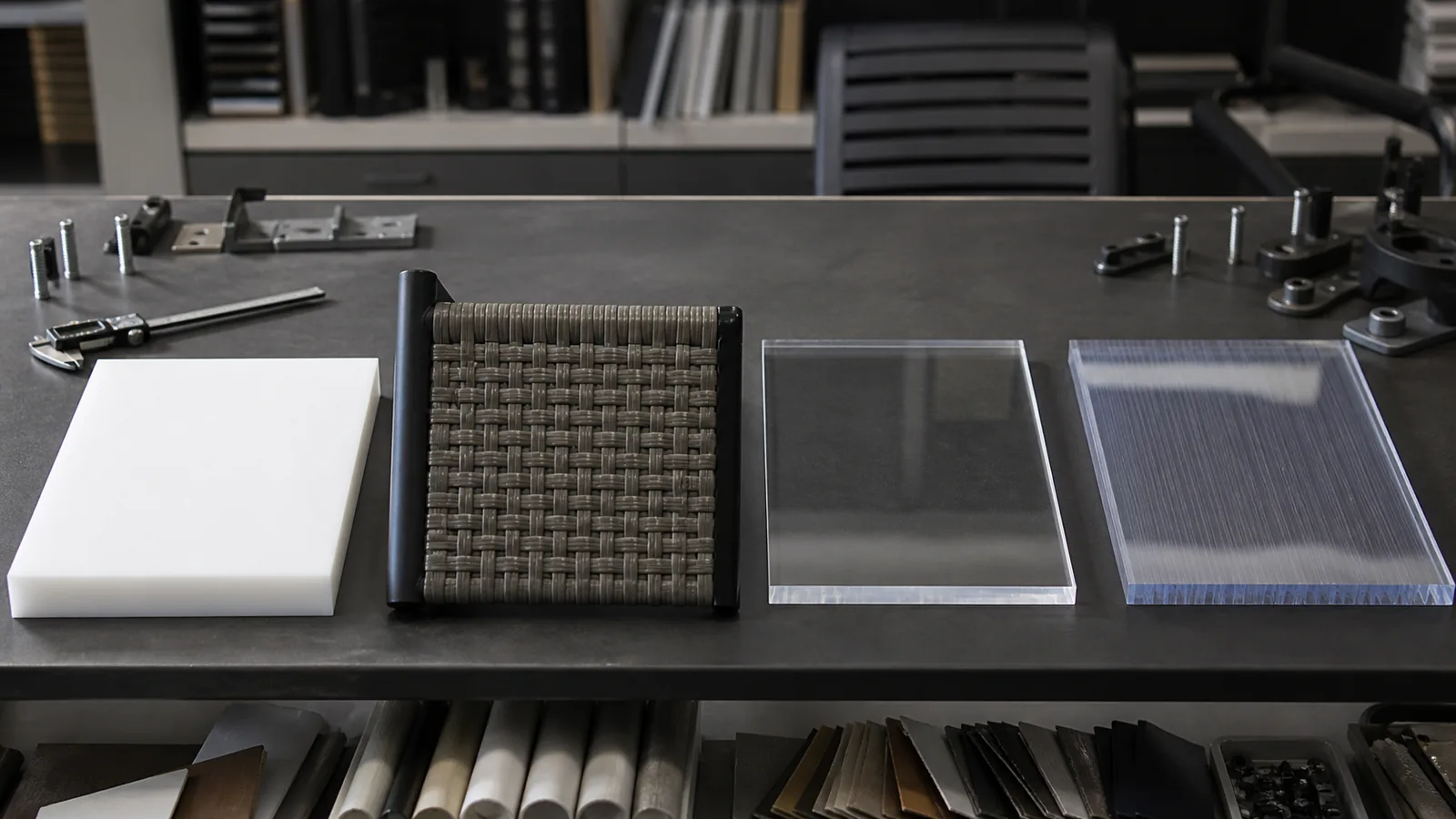
There is no universal winner for every outdoor furniture component. Here is the practical comparison I use before a material conversation becomes a quotation.
| Material | Where it usually fits | Main advantage | Watch carefully |
|---|---|---|---|
| UV-stabilized HDPE | Structural panels, chairs, tables, benches | Moisture resistance and durable solid-panel construction | Flex, thermal movement, fastening design |
| UV-stabilized PP | Molded chairs, shells, woven-style components | Light weight and efficient molding | Grade and UV package; cold-impact performance can vary |
| Polycarbonate | Guards, transparent impact-prone details | High impact resistance | Coating, UV grade, scratch appearance, heat expansion |
| PMMA / acrylic | Clear decorative panels, display-style details | Optical clarity and outdoor weatherability | Impact, stress at holes, unsupported loads |
Polypropylene can be a sensible choice for molded, lightweight furniture when the selected grade is formulated for outdoor use. I would not treat “PP” as enough information for a long-life project, especially if the part is thin, dark, highly loaded, or used through cold seasons.
Polycarbonate earns attention when impact resistance matters more than a pristine optical finish. It has a different feel from acrylic and a different scratch and coating conversation. For a transparent outdoor part, I ask the buyer which failure would be worse: visible surface wear, cracking at impact, yellowing risk, or a cloudy appearance after cleaning.
The cheapest resin choice often becomes expensive when a design has to be thickened, reinforced, remade, or over-packed later. Material selection should begin with the use case, then move to price.
Where Acrylic Belongs in Outdoor Furniture
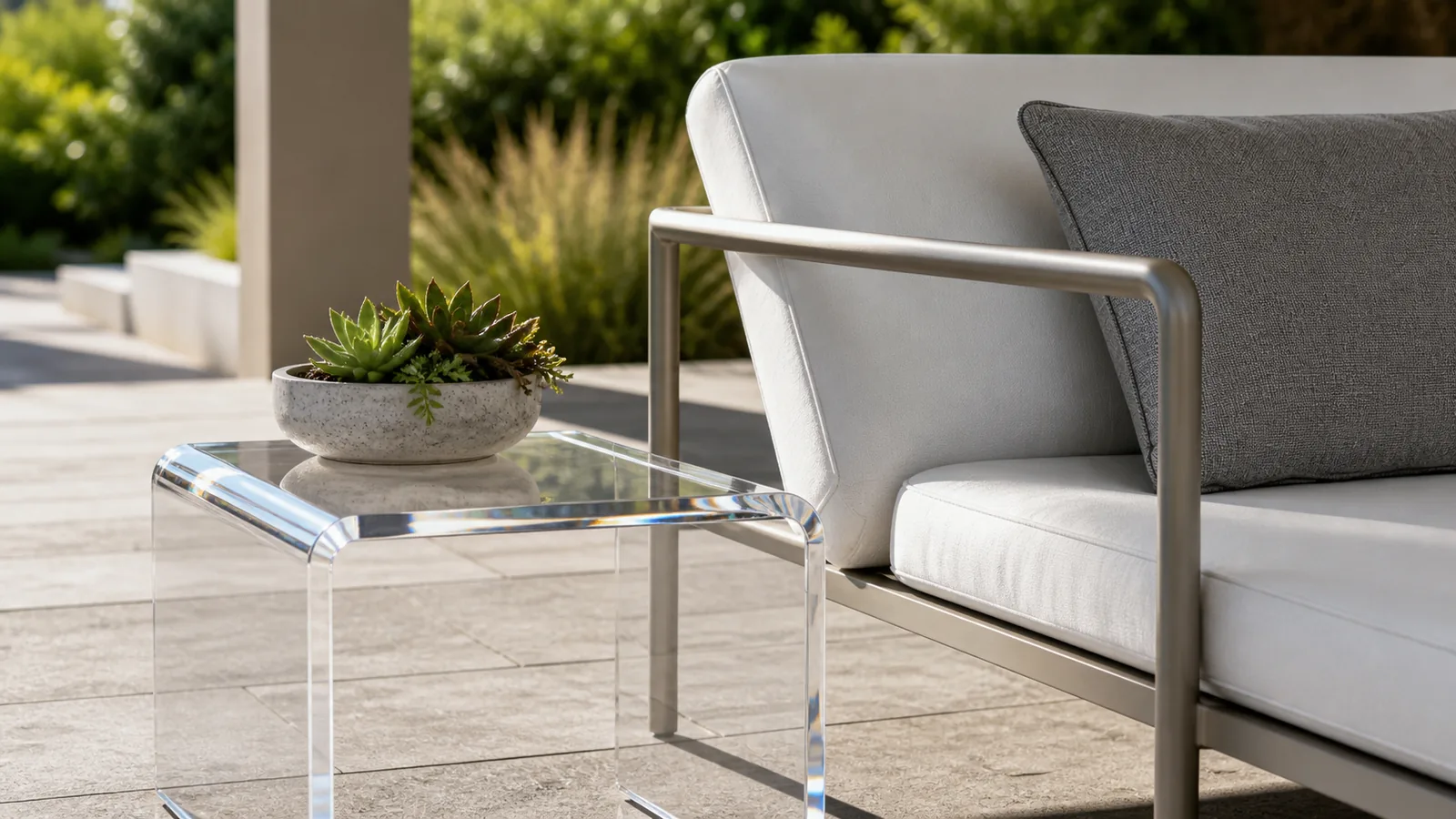
PMMA, commonly called acrylic, is not my first choice for a heavily loaded chair seat or a large unsupported outdoor table top. But it can be the right material when the project needs a clear, polished, premium-looking detail: a small side-table surface with proper support, a transparent wind detail, an illuminated accent, a display-style feature, or a protected decorative panel.
PMMA has useful weathering and optical properties, but those benefits do not make it impact-proof. Canada’s National Research Council reported that long-term weathering of PMMA did not significantly change its surface or visible/near-infrared transmittance in its study, while elongation decreased slightly to moderately. That is useful context, not a blanket design approval. Read the NRC record on acrylic-based plastics in long-term outdoor exposure.
With acrylic, I judge the holes, cut-outs, bonded joints, edge finish, support spacing, and cleaning routine before I judge the sheet thickness. A clear panel can look excellent under showroom light, yet a sharp internal corner or an over-tightened screw can create a crack risk that only appears later.
For custom acrylic outdoor furniture details, I would normally request a drawing or reference image showing the support points and hardware. That lets us decide whether cast acrylic, another transparent material, or a mixed-material construction makes better sense.
The Four Specifications I Confirm Before Production
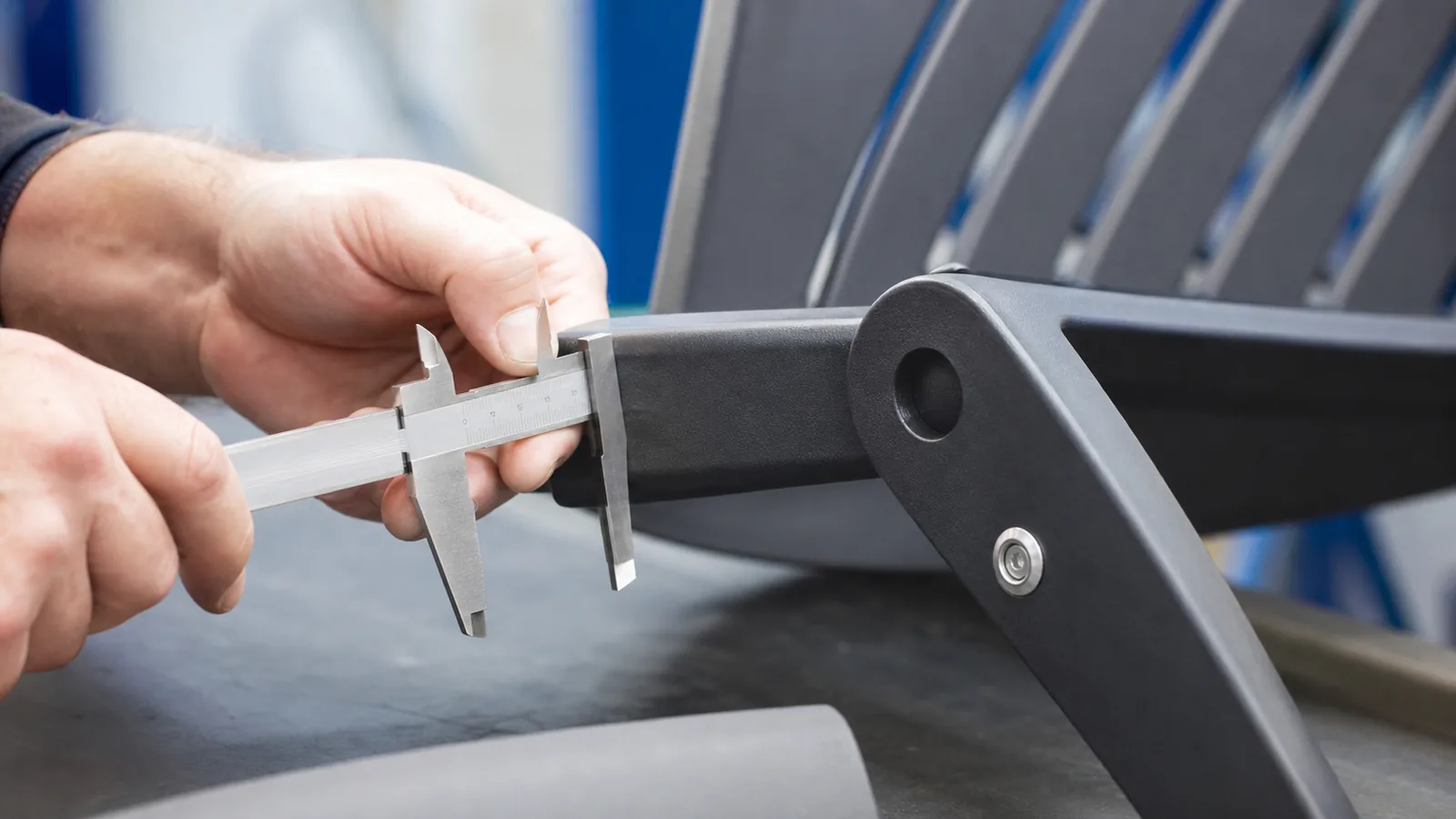
Before a supplier commits to an outdoor plastic part, these are the questions that prevent most avoidable surprises:
- What is the real exposure? Open sun, coastal air, seasonal storage, covered patio, and cold climates are not the same job.
- What load and span will the part see? A seat, shelf, armrest, and decorative screen need different stiffness and fixing decisions.
- What must the surface look like after use? Matte texture, glossy clear acrylic, woven effect, and molded grain all age differently and need different QC standards.
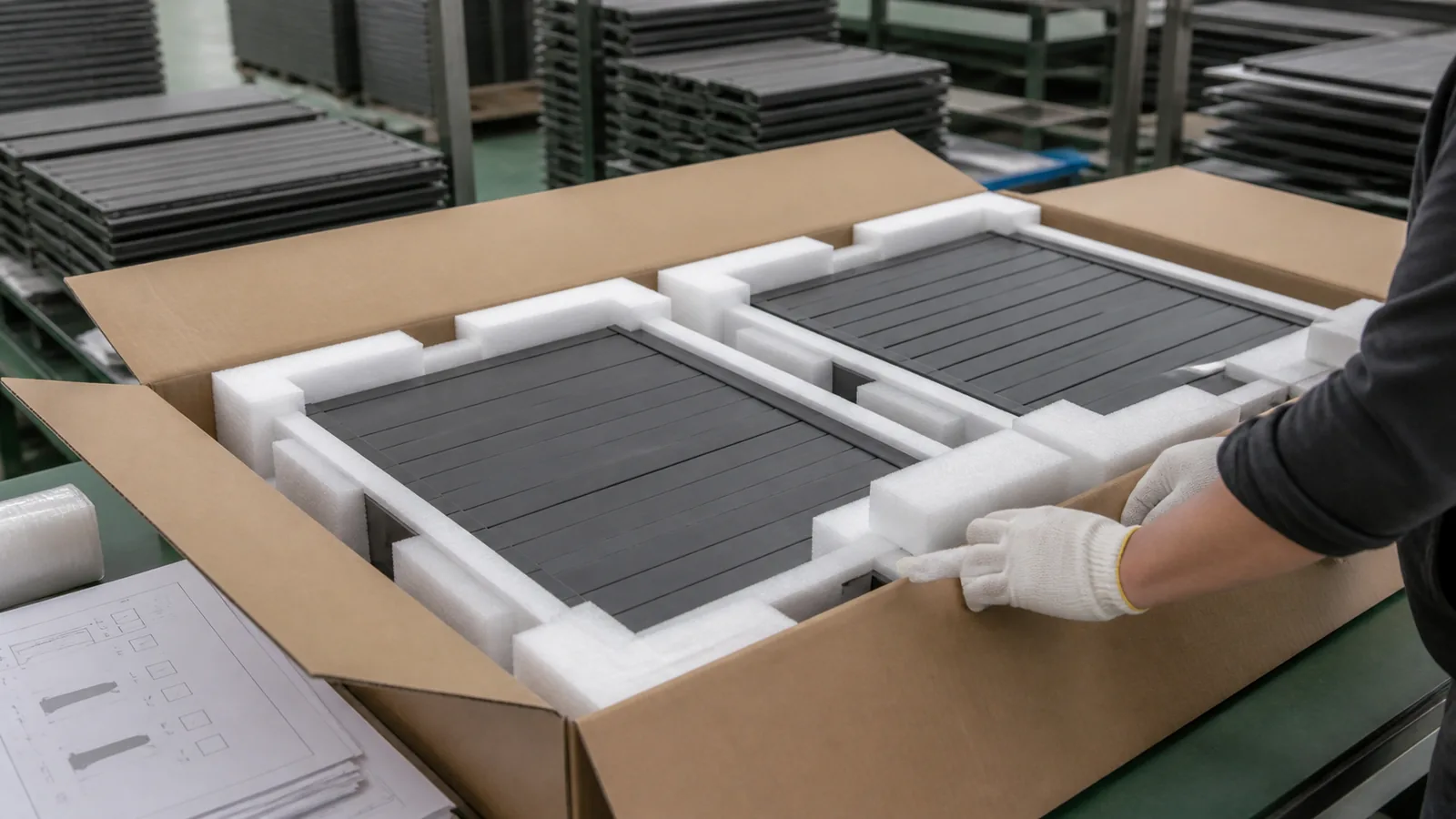
- How will it be assembled and shipped? Bolts, inserts, metal frames, protective film, foam, and carton design should be settled before the first production sample.
I treat a clear visual standard as seriously as a dimension because outdoor furniture is often judged at arm’s length in direct sunlight, where scratches, sink marks, glue lines, and uneven color become much more obvious.
The next decision is usually not “which plastic?” but “which detail needs to be proven on the sample?” That is where a small prototype can save a full production run from guesswork.
Conclusion
For most durable, load-bearing outdoor furniture, I would choose UV-stabilized HDPE as the first material to evaluate. It is a practical fit for solid structural parts, provided the panel thickness, spans, hardware, and outdoor grade are designed together. PP can work well for the right molded component. Polycarbonate and acrylic serve more specialized transparent roles.
I reach that view because material failures rarely begin with one dramatic mistake. They begin with a vague grade, a missing UV requirement, a long flexing span, an over-tightened fastener, or a packing detail that was left until the end. A custom furniture project becomes safer when those choices are visible in the drawing and sample.
If you are considering clear acrylic details or mixed-material outdoor furniture, send us a sketch or reference photos with dimensions, load points, and the expected outdoor exposure. We can review the material and manufacturability before quoting.