Skip to content
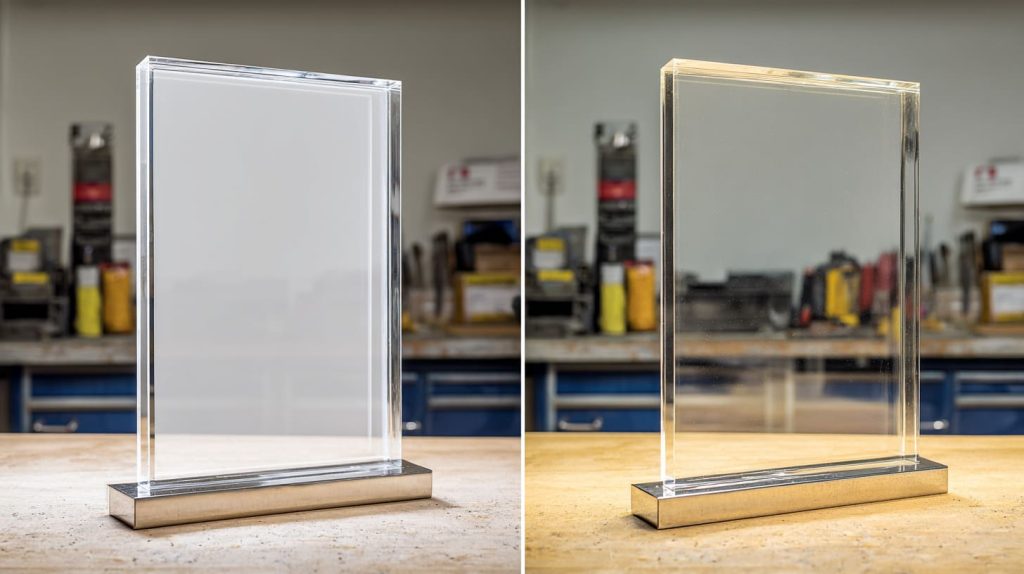
A picture frame is one of those products that looks too simple to cause trouble.
A clear front panel.
A photo inside.
A clean border.
A nice package.
That is what the buyer sees first.
But in real custom production, I have learned one thing the hard way: the front panel can quietly decide whether a frame project feels smooth or painful.
Acrylic and glass picture frames may look similar at first glance, but the decision goes far beyond appearance. For B2B buyers and experienced purchasers like Jacky, the real cost often shows up later—in shipping, breakage, customer complaints, and long-term product positioning.
I once checked a sample picture frame with a customer who cared a lot about the first impression. The frame looked clean on the table. The glass was bright. The edges were neat. The product photo looked good.
Then we started talking about shipment.
That was where the mood changed.
The buyer planned to ship the frames across countries. Some would go to retail stores. Some would be packed again by the distributor. Some would be sold online. Suddenly, the question was not just:
“Which one looks better?”
The real question became:
“Which one survives the whole journey?”
That small question changes everything.
Acrylic and glass can both make a picture frame look beautiful. But they behave very differently when people carry them, clean them, drop them, ship them, install them, and complain about them.
For a single home frame, the choice may feel personal.
For a B2B order, the choice becomes a business decision.
When I judge this kind of project, I do not start from the showroom look; I start from the worst moment the product may face, because that is where hidden cost usually appears.
So let’s talk about acrylic vs glass picture frames in a practical way. Not only from the front side. Not only from the catalog photo. But from the full life of the product.
From material.
To shipment.
To customer hands.
To brand reputation.
Because a frame does not only hold a picture.
Sometimes, it holds your margin too.
What Are Acrylic and Glass Picture Frames?
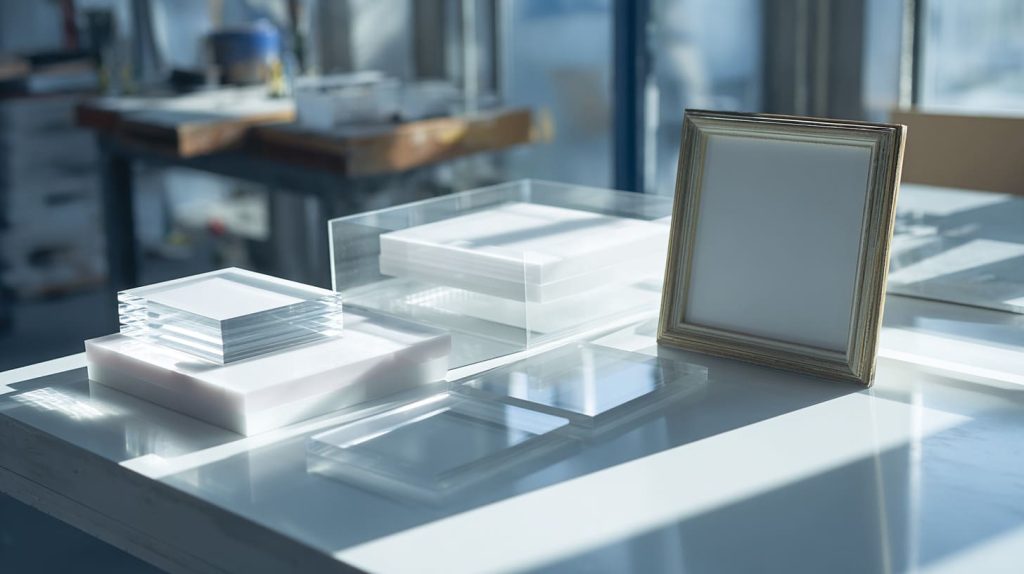
At first, acrylic and glass picture frames can feel almost the same.
Both are clear.
Both protect the picture.
Both make the frame look finished.
But if you work with custom products long enough, you begin to notice the small differences. The sound when you tap it. The weight when you hold it. The way the surface catches light. The way the material reacts when a corner hits the floor.
Those small details matter.
The first thing I check is not the name of the material, but how the finished frame will be used, packed, carried, and cleaned, because the same clear panel can create very different problems in different hands.
What is acrylic in picture framing?
Acrylic is a plastic material. Its full material name is often PMMA. Many buyers also call it plexiglass, acrylic glass, or Perspex-style sheet, depending on the market.
In picture framing, acrylic is used as the clear front panel. It protects the photo, poster, certificate, artwork, or display print.
Acrylic is popular because it is:
- Clear
- Lightweight
- Shatter-resistant
- Easy to cut
- Easier to customize than glass
- Safer for shipping and public use
I like acrylic because it is friendly to custom work. If a customer wants a special size, rounded corners, holes, printed edges, unusual shapes, or a frame design that is not easy to make with standard glass, acrylic gives us more room to work.
Common acrylic options include:
| Acrylic Type | Main Feature | Common Use |
|---|---|---|
| Clear acrylic | High transparency and clean appearance | General picture frames, photo displays, acrylic frames |
| Anti-glare acrylic / P99-style acrylic | Matte surface reduces harsh reflection | Office frames, gallery-style displays, bright indoor spaces |
| UV-resistant acrylic | Helps reduce UV exposure to the picture | Posters, artwork, certificates, long-term display |
| Hard-coated acrylic | Better scratch resistance | Higher-end frames, public-area displays |
But acrylic is not magic.
It can scratch more easily than glass. It may need protective film during production and shipping. It also needs proper cleaning instructions. If someone cleans acrylic with a rough cloth, the surface can become ugly very quickly.
This is why I always say: acrylic is strong in impact, but soft in surface.
That sentence may sound simple, but it helps buyers avoid many wrong expectations.
What is glass in picture framing?
Glass is the traditional material for picture frame fronts.
Most normal picture frame glass is soda-lime glass. It is clear, flat, hard, and familiar. Many customers trust glass because they have seen it for many years in home frames, galleries, offices, and stores.
Tempered glass is stronger than normal glass, and it is safer when broken. But it still has weight. It still needs careful handling. It also costs more than standard glass.
Glass is often chosen because it has:
- A harder surface
- Better scratch resistance
- A traditional premium feel
- Good flatness
- A cold, solid touch
- Familiar customer acceptance
For small home frames, glass can be a very good option.
The problem starts when the frame becomes large, the order becomes international, or the product goes into e-commerce shipping. Then glass is no longer just a clear panel. It becomes weight, risk, packaging cost, and after-sales pressure.
Why they look similar but behave differently
Acrylic and glass can both be transparent, but they do not behave the same.
Here is the simple comparison I often explain to buyers:
| Factor | Acrylic | Glass |
|---|---|---|
| Weight | Light | Heavy |
| Breakage risk | Low | High |
| Scratch resistance | Lower unless coated | Higher |
| Custom cutting | Easier | More limited |
| Large-size frame use | More practical | More risky |
| Shipping safety | Better | More fragile |
| Premium traditional feel | Good, but different | Strong |
| Cleaning sensitivity | Higher | Lower |
The tricky part is that buyers often choose from a photo.
In a product photo, acrylic and glass can look nearly the same. But after packing, shipping, unpacking, installing, and cleaning, the difference becomes much clearer.
A frame material is like a quiet worker in the background. It does not ask for attention. But if it fails, everyone notices.
I have seen this many times.
A buyer may say, “The glass version looks slightly more premium.”
That may be true.
But then I ask:
“Will the customer still feel premium if two corners break during delivery?”
That is the part a catalog photo cannot answer.
A small material choice can become a big business discussion. And once we understand the basic difference, the next question becomes more practical: how do these two materials really perform?
How Do Acrylic and Glass Compare in Core Performance?
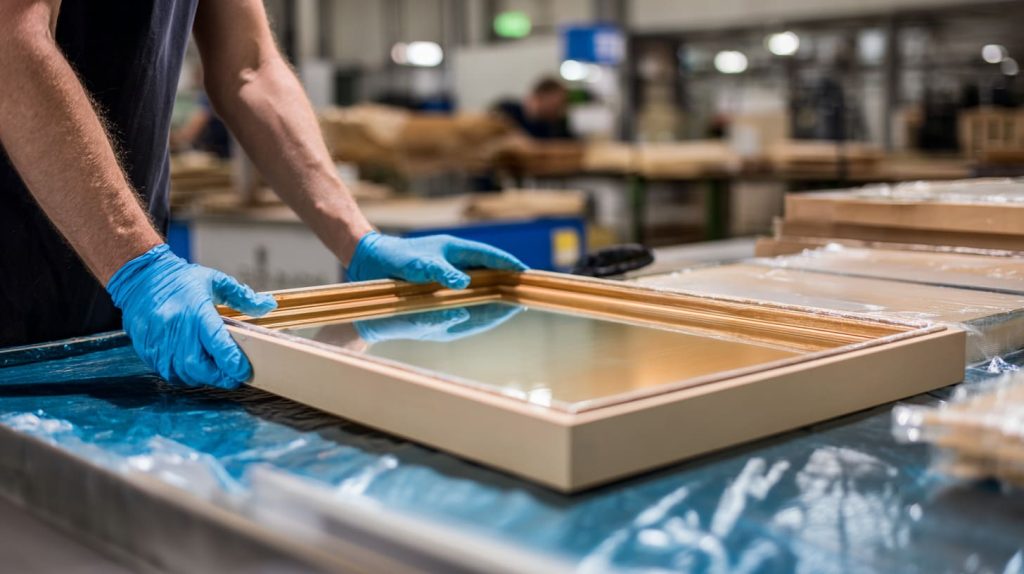
Material performance sounds like a technical topic, but for picture frames, it becomes very real.
It is the difference between easy installation and tired hands.
It is the difference between safe delivery and broken corners.
It is the difference between a happy customer and a complaint email with photos attached.
On real frame orders, I usually care less about one perfect sample and more about whether the same material can stay stable across hundreds or thousands of pieces.
Weight and handling differences
Acrylic is much lighter than glass. In many cases, acrylic is around half the weight of glass with similar panel size.
This matters more when the frame is large.
A small 4x6 inch frame may not show a big difference. But a large wall frame, poster frame, office display frame, or retail display panel can feel very different.
| Frame Situation | Acrylic Advantage | Glass Risk |
|---|---|---|
| Large wall frame | Easier to lift and mount | More stress on hooks and walls |
| Retail display | Easier for staff to move | Heavier and slower to install |
| E-commerce package | Lower shipping weight | Higher freight cost |
| Hotel or office use | Safer for repeated handling | More risk if dropped |
| Trade show display | Easier to transport | Harder to pack and carry |
I have seen workers handle large glass panels with that careful, nervous body language. Two hands. Slow steps. Eyes fixed on the corners.
With acrylic, people move more naturally.
That does not mean they can be careless. But the material gives more room for normal human handling.
This is important because products do not live in perfect conditions. Workers rush. Warehouse staff stack cartons. End users open packages with scissors. A frame may not be abused, but it will be touched by many hands.
Impact resistance and safety
Acrylic is shatter-resistant. This is one of its biggest advantages.
If acrylic falls, it may scratch, dent, or crack under strong force. But it usually does not break into sharp pieces like glass.
Glass is different. It can look strong for years, then fail in one second.
This matters in:
- Children’s rooms
- Schools
- Hotels
- Offices
- Retail stores
- Public spaces
- Online delivery
- Large format frames
For B2B buyers, safety is not only a nice feature. It can affect product approval, customer trust, insurance concerns, and after-sales handling.
Here is how I explain it:
| Risk Type | Acrylic | Glass |
|---|---|---|
| Drop during unpacking | Lower injury risk | Sharp breakage possible |
| Public area impact | Safer | More dangerous |
| Transport vibration | More forgiving | More fragile |
| Customer complaint style | Scratches or dents | Broken glass and safety concern |
| Replacement cost | Usually lower pressure | Often urgent and emotional |
Broken glass creates a different feeling.
A scratched acrylic panel is annoying.
Broken glass feels dangerous.
That emotional difference matters.
A customer who receives a scratched product may ask for replacement. A customer who opens a box with broken glass may feel unsafe and angry. They may not care whose fault it was. They just know the product failed before use.
Scratch resistance and durability
This is where glass fights back.
Glass is harder than acrylic. It resists everyday scratches better. If a customer wipes glass with a normal cloth, it usually survives well.
Acrylic can scratch if people use:
- Rough cloth
- Dry paper towel
- Dirty cleaning rag
- Harsh cleaner
- Strong solvent
- Poor packaging film
- Dusty storage surface
That is why acrylic picture frames need good protective film and clear cleaning guidance.
| Surface Issue | Acrylic | Glass |
|---|---|---|
| Fine scratches | Easier to happen | Less likely |
| Cleaning marks | Possible with wrong cloth | Lower risk |
| Surface hardness | Softer | Harder |
| Protective film need | Very important | Also useful, but less critical |
| Premium coated option | Hard coating available | Anti-reflective glass available |
Acrylic buyers should not pretend scratches do not exist. That would be dishonest.
The better approach is to design around the risk.
For example:
- Use better protective film
- Choose hard-coated acrylic for premium lines
- Use anti-glare acrylic when reflection is a problem
- Add cleaning instructions
- Improve packaging separation
- Avoid direct rubbing during transport
In my experience, acrylic problems often come from bad handling, not bad material. But customers do not separate those two things. They only judge the final surface.
So if we choose acrylic, we must respect the surface.
Optical clarity and visual effect
Both acrylic and glass can be very clear.
But they show light differently.
Glass often gives a crisp, hard, traditional look. Acrylic gives a clean and lighter modern look. Anti-glare acrylic can reduce reflection, but it may slightly soften the image depending on the material and distance from the photo.
The wrong choice can make a beautiful print look dull. The right choice can make a simple photo look expensive.
Here is a practical view:
| Visual Need | Better Option | Reason |
|---|---|---|
| Sharp traditional photo display | Glass | Hard surface and familiar look |
| Lightweight modern frame | Acrylic | Clean and less heavy |
| Bright office lighting | Anti-glare acrylic or anti-reflective glass | Reduces reflection |
| Large poster frame | Acrylic | Safer and lighter |
| Fine art premium display | Depends on market | Glass or special acrylic may both work |
I do not like saying one material is always more beautiful.
Beauty depends on the room, the light, the image, the frame border, and the customer’s expectation.
A glossy glass panel can look premium in a quiet home. The same panel can become a mirror under strong retail lighting.
Acrylic can look clean and modern. But if it is scratched or too thin, it can make the whole product feel cheaper.
So the real performance question is not:
“Which material is clearer?”
The better question is:
“Which material keeps the picture looking good in the place where it will actually be used?”
That answer often leads us to the hidden costs. Because performance is not only about what we see. It is also about what we pay for later.
What Are the Hidden Costs Buyers Often Ignore?
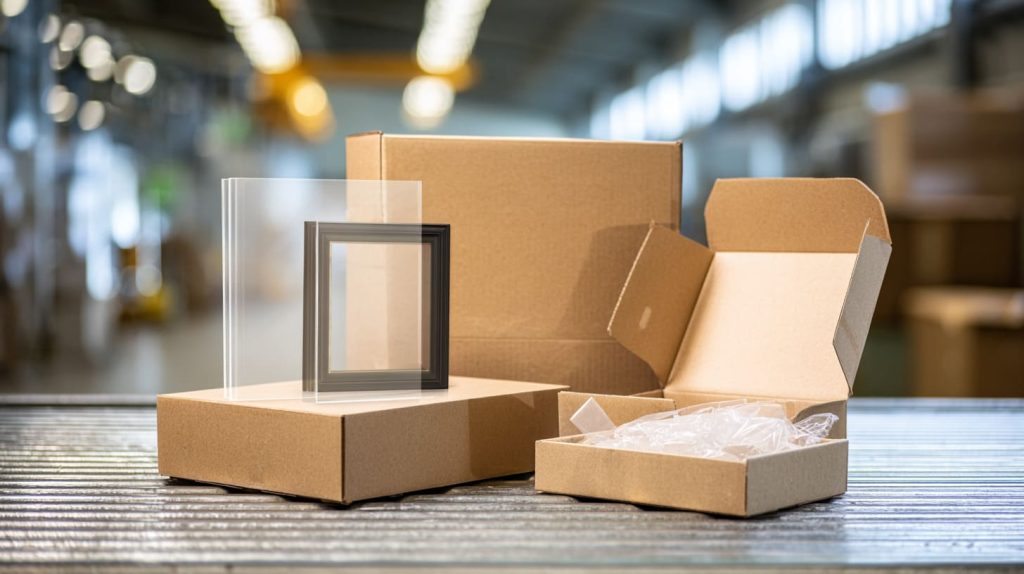
Many buyers compare acrylic and glass by unit price.
I understand why.
A quotation sheet looks clean. One line says acrylic. One line says glass. The lower price naturally pulls your eyes.
But picture frame cost does not stop at material price.
There is packaging cost.
Shipping cost.
Breakage cost.
Replacement cost.
Customer service cost.
Brand cost.
And that last one is painful because it does not show up clearly on the invoice.
This is where I slow down and ask the buyer how the frame will travel, because a material that looks cheaper at the factory can become more expensive after one bad shipment.
Shipping and logistics cost
Glass can require stronger packaging. The larger the frame, the more careful the packaging must be.
You may need:
- Thicker cartons
- More foam
- Corner protectors
- Extra separation layers
- Wooden crate for large sizes
- More careful loading
- Higher freight due to weight
- More inspection before shipment
Acrylic is lighter and more forgiving. It still needs protection, especially against scratches, but it usually reduces breakage pressure.
| Cost Area | Acrylic Frame | Glass Frame |
|---|---|---|
| Freight weight | Lower | Higher |
| Breakage protection | Moderate | Higher |
| Corner protection | Needed | Very important |
| Carton strength | Important | More critical |
| International shipment risk | Lower | Higher |
| Handling stress | Lower | Higher |
For export orders, this becomes serious.
A local store can replace a broken glass panel more easily. But an international buyer may need to wait weeks. The seller may need to send replacement parts or refund the customer. The buyer may lose trust before the second order begins.
That is a cost too.
Replacement and after-sales issues
After-sales cost is not only the cost of one replacement panel.
It includes:
- Time spent reading complaint emails
- Staff checking photos
- Negotiation with customer
- Warehouse picking replacement stock
- New packaging
- New freight
- Delay
- Negative review risk
- Loss of repeat order
Glass and acrylic create different complaint patterns.
| Complaint Type | More Common With Acrylic | More Common With Glass |
|---|---|---|
| Fine scratches | Yes | Less common |
| Broken panel | Less common | Yes |
| Sharp fragments | Rare | Possible |
| Surface haze from bad cleaning | Possible | Less common |
| Delivery damage | Lower | Higher |
| Customer safety concern | Lower | Higher |
Acrylic scratches can be controlled with better handling and packaging.
Glass breakage is harder to control after the product leaves the factory. You can improve packaging, yes. But once the box enters a long delivery chain, you cannot control every hand that touches it.
I have seen buyers pay more attention after the first broken shipment. Before that, glass looks normal. After that, every carton feels like a small risk.
Installation and labor cost
Weight affects installation.
This is easy to forget.
If a frame is installed in a home, one person may hang it. If it is installed in a hotel, office, school, or retail chain, workers may install many pieces in one day.
Heavy glass makes the job slower.
It may require:
- Stronger wall hooks
- Better frame structure
- More careful handling
- Two workers for large sizes
- More time per unit
- Higher risk during installation
Acrylic makes large frames easier to install.
| Installation Factor | Acrylic | Glass |
|---|---|---|
| One-person handling | Easier | Harder for large size |
| Wall load | Lower | Higher |
| Drop risk | Less serious | More serious |
| Installation speed | Faster | Slower |
| Public safety | Better | More risk |
For one frame, this may not matter.
For 300 frames in a hotel project, it matters.
The buyer may not see this cost in the product quote. But the installer feels it. And sometimes the final client pays for it through higher labor cost.
Long-term brand perception cost
This is the hidden cost that people do not like to discuss.
A product can be technically correct but emotionally wrong.
If acrylic scratches too easily, the customer may think the brand is cheap.
If glass breaks during shipping, the customer may think the brand is careless.
If the frame is too heavy, the customer may think the design is not user-friendly.
If the panel reflects too much light, the customer may think the display is annoying.
The material becomes part of the brand feeling.
| Customer Experience | Possible Material Cause | Brand Feeling |
|---|---|---|
| “It arrived broken.” | Glass breakage | Unsafe, careless |
| “It scratches too easily.” | Acrylic surface issue | Cheap, weak |
| “It is too heavy.” | Glass or thick structure | Hard to use |
| “The photo has too much glare.” | Wrong surface choice | Poor design |
| “It feels light but still clean.” | Good acrylic design | Modern, practical |
Brand perception is not built only by logos and packaging.
It is built by little moments.
The moment the customer opens the carton.
The moment they peel the film.
The moment they hold the frame.
The moment they clean it after one month.
A material choice touches all those moments.
And that is why the next step is not asking which material is better in general. The better question is: better for what use?
Which Material Is Better for Different Applications?
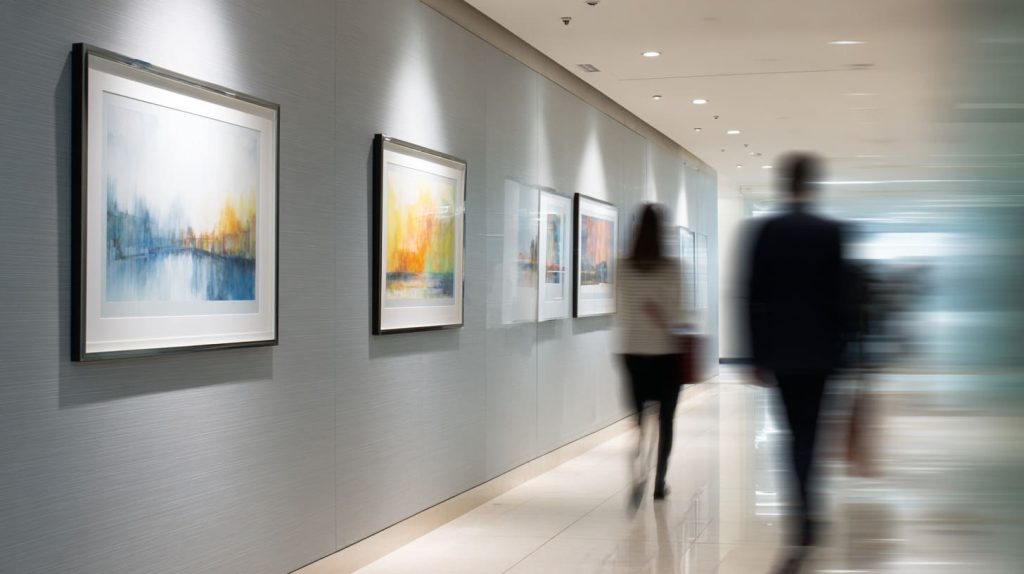
Acrylic and glass are both useful. The mistake is forcing one material into every situation.
I do not see materials as winners and losers. I see them as tools.
A hammer is not better than a screwdriver. It depends on what you are building.
For each frame project, I try to match the material to the place, the user, and the delivery path, because the wrong “premium” choice can become the wrong practical choice very quickly.
Retail display and commercial projects
For retail display and commercial projects, acrylic often makes more sense.
Retail environments are not gentle.
People move displays. Staff clean quickly. Customers touch things. Frames may be installed near counters, shelves, walls, or promotional areas.
Acrylic is useful because it is:
- Lighter
- Safer
- Easier to move
- Easier to customize
- Better for large sizes
- Less dangerous if dropped
For custom acrylic factories like ours, retail projects are very familiar. A buyer may need a clear front panel, a frame-like acrylic holder, or a display with special dimensions. Acrylic allows more design freedom.
| Retail Need | Why Acrylic Helps |
|---|---|
| Frequent layout changes | Easy to move |
| Large display size | Lower weight |
| Public customer area | Safer if hit or dropped |
| Custom shape | Easier to cut and process |
| Fast replacement | Easier to produce in custom sizes |
Glass can still work in retail, especially for fixed premium display cases. But for picture frames that need to be shipped, moved, or installed in many stores, acrylic is often the safer business choice.
Home décor is more emotional.
A customer may hold the frame and judge it by feeling. Weight can feel premium. Glass can feel traditional. Some customers like that cold, solid feeling.
For small home frames, glass can be a good choice.
It gives:
- Scratch resistance
- A familiar feel
- A clear and hard surface
- Traditional framing style
But acrylic also has a place in home décor.
It works well for:
- Modern minimal frames
- Children’s rooms
- Large wall prints
- Online shipped frames
- Lightweight hanging systems
| Home Frame Type | Better Material Choice |
|---|---|
| Small desktop photo frame | Glass or acrylic |
| Large poster frame | Acrylic |
| Children’s room frame | Acrylic |
| Premium traditional frame | Glass |
| Modern floating frame | Acrylic |
| Online-sold home décor frame | Acrylic often safer |
This is where the buyer must understand the end customer.
Some customers want weight.
Some customers want safety.
Some customers want low price.
Some customers want easy hanging.
A good product line can even use both materials for different price levels.
High-traffic environments
Hotels, offices, schools, hospitals, restaurants, and public spaces create a different problem.
People do not treat things as carefully as owners do at home.
A frame may be touched by cleaning staff. It may be bumped by bags. It may be installed in hallways. It may sit near doors or elevators.
Acrylic is often better in these spaces because it reduces risk.
| Environment | Main Risk | Practical Choice |
|---|---|---|
| Hotel hallway | Impact, cleaning, safety | Acrylic |
| School | Safety and rough handling | Acrylic |
| Office | Large wall frames, easy installation | Acrylic |
| Restaurant | Cleaning, movement, public contact | Acrylic |
| Gallery | Visual quality and lighting | Depends on display style |
For public use, safety has a value that is hard to show in a simple cost table.
One broken glass frame in a public place can create more than replacement cost. It can create a safety issue, a complaint, and a bad memory.
That is why acrylic often wins in high-traffic areas.
E-commerce and shipping-focused business
For e-commerce, acrylic has a strong advantage.
Online customers judge the product twice.
First, they judge the listing photo.
Then, they judge the package when it arrives.
If the frame arrives broken, the first impression is gone.
Acrylic helps reduce shipping damage. It lowers weight and breakage risk. It also gives sellers more confidence when shipping to different areas.
| E-commerce Issue | Acrylic Advantage |
|---|---|
| Courier handling | More impact-resistant |
| Long-distance shipping | Lower breakage risk |
| Return rate | Often easier to control |
| Product weight | Lower freight cost |
| Customer safety | Better unpacking experience |
But sellers must control scratches.
For e-commerce acrylic frames, I would pay special attention to:
- Protective film quality
- Inner packaging separation
- Clear cleaning card
- Dust-free packing environment
- Strong carton corners
- Sample drop testing
Acrylic is not automatically perfect for e-commerce. It still needs good process control.
But compared with glass, it usually gives the seller more room to survive real shipping.
After we choose the application, the next question becomes more direct: how should a professional buyer make the decision before placing an order?
How Should B2B Buyers Choose Between Acrylic and Glass?

A B2B buyer cannot choose only from personal taste.
A buyer must think about the product line, the user, the market, the package, the complaint rate, and the next order.
That sounds heavy, but it is real.
A picture frame is simple only when you buy one piece. It becomes more complex when you buy 5,000 pieces.
Before I suggest acrylic or glass, I want to know who will blame the buyer if the product fails, because that answer often shows the real risk behind the material choice.
Based on product positioning
Product positioning should come first.
Is the frame for a low-cost retail line?
Is it for a premium gift product?
Is it for hotel decoration?
Is it for online selling?
Is it for office use?
Different positioning creates different material logic.
| Product Position | Possible Material Choice | Reason |
|---|---|---|
| Budget frame | Thin glass or economical acrylic | Cost control matters |
| Premium traditional frame | Glass or anti-reflective glass | Familiar premium feel |
| Modern design frame | Acrylic | Lightweight and clean style |
| Commercial display | Acrylic | Safety and custom size |
| Export e-commerce frame | Acrylic | Lower breakage risk |
If the brand wants a “heavy luxury” feel, glass may help.
If the brand wants a clean, modern, safe, easy-to-ship product, acrylic often fits better.
A buyer should not ask only, “Which material is cheaper?”
A better question is:
“What does my customer expect to feel when they open and use this product?”
Based on frame size and structure
Size changes everything.
Small frames are easier. Both acrylic and glass can work.
Large frames are different. Weight, wall support, panel bending, packaging, and safety all become more serious.
| Frame Size | Acrylic | Glass |
|---|---|---|
| Small desktop frame | Good | Good |
| Medium wall frame | Good | Good if packed well |
| Large poster frame | Often better | Riskier |
| Oversized custom frame | Usually preferred | Heavy and fragile |
| Thin frame structure | Needs thickness control | Needs strong support |
For acrylic, thickness matters.
Too thin, and the panel may flex.
Too thick, and the cost rises.
Too soft, and the surface may scratch.
Too cheap, and the clarity may suffer.
For glass, thickness also matters.
Too thin, and it breaks easily.
Too thick, and it becomes heavy.
So material choice cannot be separated from structure.
A good frame is not just “acrylic or glass.” It is material plus thickness plus backing plus frame strength plus packaging.
Based on logistics and distribution model
A local store and an international e-commerce seller should not think the same way.
Glass can be fine for local retail because the delivery path is shorter. The seller may control transport better. Replacement may be easier.
For export orders, acrylic often becomes more attractive.
| Distribution Model | Better Direction |
|---|---|
| Local store pickup | Glass or acrylic |
| Local wholesale | Depends on packaging |
| International sea shipment | Acrylic often safer |
| Air shipping | Acrylic helps reduce weight |
| E-commerce courier delivery | Acrylic usually better |
| Retail chain installation | Acrylic often practical |
I have worked with many custom acrylic projects for export, and one pattern is clear: distance increases risk.
The longer the product travels, the more people touch it. The more people touch it, the more chances something goes wrong.
This is why acrylic often fits export thinking.
It does not remove all risk. But it lowers one big risk: breakage.
Based on customization needs
Acrylic is much easier to customize.
This is one reason custom acrylic products are popular for displays, frames, boxes, stands, and retail fixtures.
Acrylic can be:
- CNC cut
- Laser cut
- Polished
- Drilled
- Bent with heat
- Printed
- Engraved
- Made into special shapes
- Combined with other acrylic parts
Glass is more limited. It can be cut and processed, but the process is less flexible and more sensitive. Special shapes, holes, and edge details can add cost and risk.
| Custom Need | Acrylic | Glass |
|---|---|---|
| Special shape | Easier | Harder |
| Hole drilling | Easier | More risk |
| Logo printing | Easy | Possible, but different process |
| Edge polishing | Common | Possible |
| Bending | Possible | Not practical for normal frame use |
| Fast sample | Usually easier | Often slower |
For B2B custom orders, acrylic gives more design control.
This matters when the buyer wants a frame that is not a standard retail item. Maybe the frame needs a special size for a brand display. Maybe the corner needs to match a display stand. Maybe the panel needs holes for hanging. Maybe the frame needs to match a full acrylic product set.
In those cases, acrylic is not just a material. It becomes a design tool.
But even experienced buyers can still make mistakes. I see some mistakes again and again, and most of them start from one simple problem: the product looked good in the sample photo.
What Are Common Mistakes When Choosing Frame Materials?
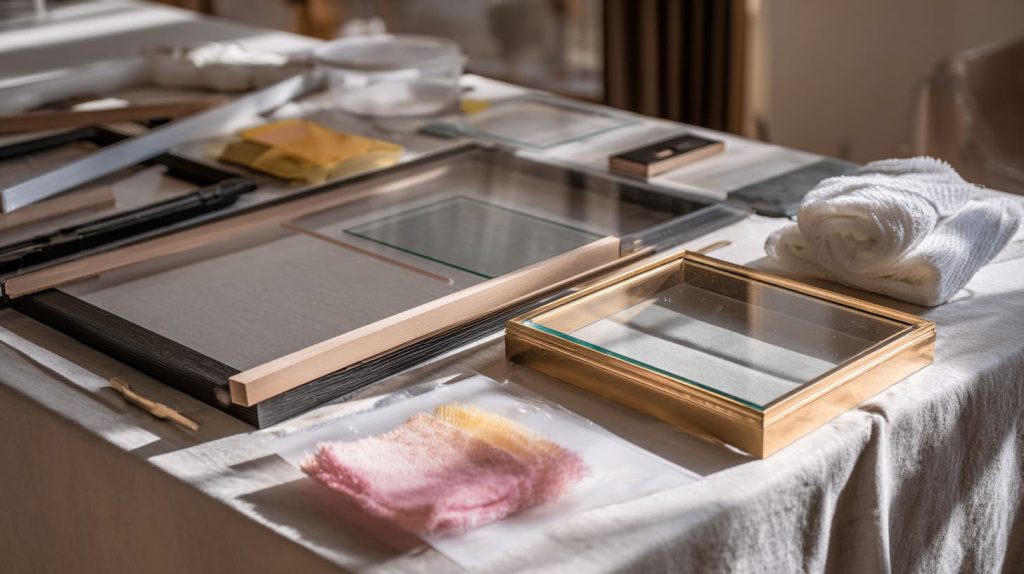
Most material mistakes do not look like mistakes at the beginning.
They look reasonable.
The sample looks clean. The price looks acceptable. The buyer feels the decision is safe.
Then the product meets real life.
That is when the hidden problems come out.
I become careful when a buyer says “they look the same,” because that usually means the testing has not yet touched the real pain points.
Choosing based on appearance only
This is the most common mistake.
Acrylic and glass can look similar in a photo. If the buyer only checks appearance, they may miss the real use conditions.
A material should be tested by more than eyes.
It should be tested by:
- Weight
- Handling
- Cleaning
- Shipping
- Installation
- Lighting
- User behavior
- Package design
| If Buyer Only Checks | What They May Miss |
|---|---|
| Front appearance | Weight and safety |
| Clarity | Reflection under strong light |
| Sample surface | Scratch risk after handling |
| Unit price | Shipping and replacement cost |
| Material name | Actual grade and treatment |
A frame is not finished when it looks good on a desk.
It must still look good after the customer receives it, opens it, hangs it, cleans it, and uses it for months.
That is a much harder test.
Underestimating shipping damage
Shipping damage is easy to ignore before the first order.
I understand this. Nobody wants to plan for failure. Buyers want the order to move smoothly.
But long-distance shipping is not gentle.
Cartons may be stacked.
They may be dropped.
They may be pressed.
They may face vibration.
They may be opened and repacked.
Glass does not forgive these moments well.
Acrylic gives more safety, but it still needs protection against scratches and pressure marks.
| Shipping Risk | Glass Frame | Acrylic Frame |
|---|---|---|
| Corner impact | High breakage risk | Lower breakage risk |
| Carton compression | Breakage possible | Bending or mark risk |
| Vibration | Crack risk | Surface rubbing risk |
| Rough courier handling | High risk | Lower risk |
| Inner package rubbing | Less scratch issue | Must control scratches |
A buyer should not ask, “Can this survive normal shipping?”
A better question is:
“Can this survive bad shipping?”
Because bad shipping is not rare. It is part of the real world.
Ignoring surface treatment options
Some buyers think acrylic is just acrylic and glass is just glass.
That is too simple.
Both materials have options.
Acrylic can use:
- Clear surface
- Anti-glare surface
- UV-resistant grade
- Hard coating
- Different thickness
- Different clarity levels
Glass can use:
- Standard glass
- Tempered glass
- Anti-reflective glass
- Museum-style glass
- Different thickness
| Problem | Possible Acrylic Solution | Possible Glass Solution |
|---|---|---|
| Scratches | Hard-coated acrylic | Standard glass already helps |
| Glare | Anti-glare acrylic | Anti-reflective glass |
| UV protection | UV acrylic | UV glass |
| Large size weight | Acrylic | Glass becomes heavy |
| Safety | Acrylic | Tempered glass helps, but still heavy |
Surface treatment can change the result.
But it also changes cost.
So the buyer must choose the right level, not the highest level by default.
I have seen buyers ask for anti-glare material without checking if the photo becomes slightly softer. I have also seen buyers ask for hard coating when normal handling control may already solve the issue.
A good material choice is not about adding every feature. It is about choosing the features that solve the real problem.
Not testing samples in real scenarios
A sample on a table is not enough.
I prefer to test samples in a way that matches real use.
For picture frames, that may include:
- Checking under strong light
- Hanging on a wall
- Cleaning with the expected cloth
- Packing and shaking the sample
- Testing corner protection
- Comparing weight by hand
- Checking if the acrylic bends
- Checking if the glass feels too heavy
- Peeling protective film
- Taking photos for e-commerce listing
| Test Scene | Why It Matters |
|---|---|
| Bright light test | Shows glare and reflection |
| Wall hanging test | Shows weight and structure issue |
| Cleaning test | Shows surface care risk |
| Packaging test | Shows shipping damage risk |
| Photo test | Shows online selling appearance |
| Handling test | Shows customer experience |
This is where many buyers save one day and lose one month.
Skipping sample testing feels faster. But if the first batch creates complaints, the whole project slows down.
A sample should not only prove that production is possible.
It should prove that the product is usable.
Once we know the common mistakes, we can talk about something more useful: how to control cost without making the frame feel cheap.
How Can You Optimize Cost Without Sacrificing Quality?
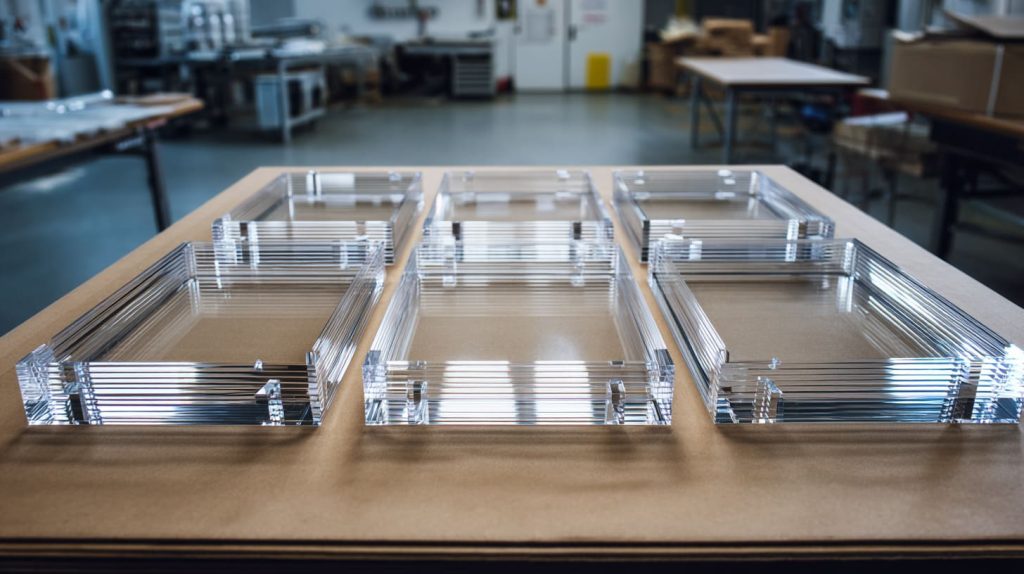
Cost control does not mean choosing the cheapest material.
Good cost control means removing waste while keeping the customer experience safe.
That is a very different mindset.
A cheap frame that creates returns is not cheap.
A stronger package that prevents damage may be cheaper in the end.
A slightly thicker acrylic panel may protect the product feeling.
A better cleaning card may reduce complaints.
When I help reduce cost, I try not to cut the part that protects the customer’s first touch, because that first touch often decides whether the product feels valuable or cheap.
Hybrid solutions
Sometimes the best answer is not pure acrylic or pure glass.
A hybrid solution can balance cost, strength, weight, and appearance.
For example:
- Acrylic front panel + solid MDF backing
- Acrylic cover + aluminum or wood frame
- Acrylic front + reinforced corners
- Glass front for small premium frame + acrylic for large frame in same product line
- Acrylic for shipping-heavy channels + glass for local retail channel
| Hybrid Idea | Benefit |
|---|---|
| Acrylic front + strong backing | Keeps weight low and improves structure |
| Acrylic panel + premium frame border | Keeps modern look with better value feeling |
| Glass for small size, acrylic for large size | Matches material to risk level |
| Acrylic front + good corner packaging | Reduces transport damage |
| Anti-glare acrylic only for selected models | Controls cost while solving glare issue |
A good product line does not need one answer for every size.
Small frames may use glass. Large frames may use acrylic. Premium online frames may use hard-coated acrylic. Budget frames may use standard acrylic with better packaging.
That is more practical than arguing about one “best” material.
Choosing the right acrylic thickness
Acrylic thickness affects cost and product feeling.
Too thin can feel weak.
Too thick can cost too much.
The right thickness depends on frame size, support structure, and customer expectation.
| Acrylic Thickness Thinking | Practical Concern |
|---|---|
| Small frame | Thin acrylic may be enough |
| Medium frame | Need balance between rigidity and cost |
| Large frame | Too thin may flex |
| Premium frame | Thicker panel may feel better |
| Shipping project | Thickness plus packaging both matter |
The thickness should not be chosen only from price.
It should be chosen from:
- Panel size
- Frame support
- Distance from backing
- Handling method
- Visual expectation
- Shipping method
- Budget level
For example, a large acrylic panel in a weak frame may bend or feel unstable. The buyer may blame the material, but the real problem is structure and thickness together.
This is why I like to review the full frame design, not only the front panel.
Acrylic is flexible in a good way. But if the design ignores support, that same flexibility can become a problem.
Surface treatment selection
Surface treatment can improve the frame, but it should be used with purpose.
Hard coating can reduce scratches. Anti-glare surface can reduce reflection. UV-resistant acrylic can help protect prints.
But each option has a cost.
| Surface Option | Solves | Watch Out For |
|---|---|---|
| Standard clear acrylic | General display | More scratch care needed |
| Anti-glare acrylic | Harsh reflection | May soften image slightly |
| UV-resistant acrylic | Light exposure | Higher cost |
| Hard-coated acrylic | Scratch complaints | Higher cost and MOQ may apply |
| Anti-reflective glass | Premium visual need | Higher cost and breakage risk remains |
I do not suggest adding premium treatment just because it sounds good.
I suggest asking:
- What complaint are we trying to prevent?
- Will the customer notice the improvement?
- Does the selling price support the added cost?
- Is this feature needed for all sizes or only premium models?
- Can packaging or instruction solve the issue more cheaply?
Sometimes a better protective film and cleaning card solve more problems than an expensive surface upgrade.
Sometimes hard coating is worth it because the product will be touched often.
There is no fixed answer. There is only a better fit.
Packaging design improvements
Packaging is not decoration.
Packaging is part of the product system.
For acrylic frames, packaging must protect against scratches and pressure.
For glass frames, packaging must protect against breakage and sharp damage.
| Packaging Part | Acrylic Focus | Glass Focus |
|---|---|---|
| Protective film | Very important | Useful |
| Corner protector | Important | Critical |
| Inner separation | Prevent rubbing | Prevent impact |
| Carton strength | Prevent pressure marks | Prevent breakage |
| Foam or paper layer | Prevent scratches | Absorb impact |
| Drop test | Useful | Very important |
A buyer may reduce material cost by choosing thinner panels. But if packaging becomes too weak, the whole saving disappears.
I have seen this happen.
A buyer saves a little on packaging, then pays more in claims. The numbers look good before shipment. They look bad after delivery.
The better way is to test packaging as part of the product.
Not after everything is finished.
Not when complaints begin.
But before mass production.
Good packaging does not need to be fancy. It needs to be honest.
It must protect the frame from the journey it will actually take.
And that brings us to the final point. Acrylic vs glass is not only a material comparison. It is a way of thinking about the full product life.
Conclusion
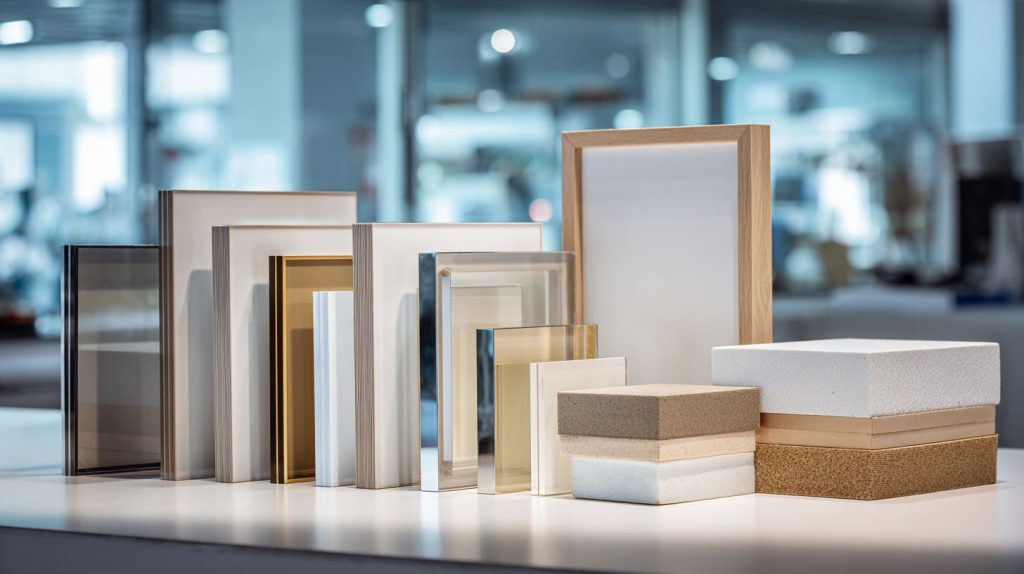
Choosing between acrylic and glass picture frames is not just a design decision.
It is a business decision.
The real cost appears in logistics, durability, customer satisfaction, and long-term brand perception.
I say this because I have seen too many buyers start from appearance and then pay for problems later. The frame looked good. The sample passed. The price looked fine. But after shipping, installing, cleaning, and customer use, the material told the real story.
My final check is always simple: if this frame reaches the customer in less-than-perfect conditions, will the material still protect the product, the user, and the brand feeling?
That is why I do not treat acrylic as “better” than glass in every case.
Glass has its place. It can feel traditional. It can resist scratches well. It can work beautifully for small premium frames and local retail projects.
Acrylic also has its place. It is lighter. It is safer. It is easier to customize. It is more practical for large sizes, public spaces, export orders, and e-commerce shipping.
For experienced buyers, the smartest choice is not the one that looks better at first glance.
It is the one that performs better across the entire product lifecycle.
That includes:
| Decision Area | What I Would Check |
|---|---|
| Product positioning | Is the product premium, practical, budget, or commercial? |
| Frame size | Will weight or bending become a problem? |
| Shipping route | Will the frame face long-distance delivery or rough handling? |
| Customer use | Will people clean it often or touch it often? |
| Safety risk | Will it be used in public areas or children’s rooms? |
| Surface need | Is glare, scratch, or UV exposure the real problem? |
| Custom design | Does the project need special shape, holes, or logo work? |
| Packaging | Can the package protect the material in real transport? |
This is how I think about it in real custom acrylic work.
I do not want a buyer to choose acrylic only because it sounds modern.
I also do not want a buyer to choose glass only because it feels familiar.
Both can be right. Both can be wrong.
The difference is whether the choice matches the real project.
At Feilong Acrylic, we work with custom acrylic products every day, from displays and boxes to frames, stands, racks, and other OEM acrylic parts. If your picture frame project needs a custom size, safer shipping, lighter structure, or a more flexible acrylic solution, we can help review the design before production.
A clear front panel may look like a small part.
But in a real B2B order, small parts often carry big costs.
So before choosing by appearance, I would rather ask one more practical question:
What will this frame experience after it leaves the factory?
That question may save more money than the cheapest quotation line.