Skip to content

Acrylic looks simple from the outside.
Clear sheet. Nice shine. Smooth surface. Easy to cut. Easy to polish. Easy to sell.
That is what many people think before production starts.
But once the sheet enters a real factory, the truth becomes less cute. The CNC machine does not care how clear the sheet looks. The laser machine does not care how nice the supplier’s quotation sounds. The worker doing bonding does not care whether the buyer saved a few cents per piece.
The material either behaves well, or it starts causing trouble.
I have seen this many times in custom acrylic projects. A customer sends a drawing for an acrylic display box. The design looks clean. The order quantity looks good. The target price is tight. Then someone says, “Can we use extruded acrylic? It is cheaper.”
That question sounds small.
But sometimes that small question decides whether the whole order runs smoothly or becomes a long, painful story full of cracks, bubbles, rough edges, bending marks, and angry emails.
For acrylic products, cast and extruded acrylic can look almost the same when they sit on a table. But inside production, they act like two different personalities. One is more stable for machining and bonding. The other is easier for some forming work and better for cost control.
Neither one is always good. Neither one is always bad.
The real question is this:
Which one causes more production problems for your specific product?
That is the question I want to talk about in this article.
Many buyers focus on two things first:
- Price
- Transparency
I understand why. These two things are easy to see and easy to compare.
If one supplier says the sheet is cheaper and still clear, the choice looks obvious. But acrylic sheet selection is not just about what the eye sees before fabrication. It is about how the material behaves after cutting, routing, bending, gluing, printing, polishing, packing, and shipping.
That is where many problems begin.
Acrylic material type can affect:
| Production step | Why material type matters |
|---|---|
| CNC machining | Edge quality, melting, tool marks, tolerance stability |
| Laser cutting | Burn marks, cracking risk, edge appearance |
| Bending | Heat response, warping, bubbles, deformation |
| Bonding | Stress cracks, bubbles, joint strength |
| Polishing | Edge clarity, surface quality, heat damage |
| Printing | Ink adhesion, surface consistency, final branding quality |
| Packing and shipping | Scratch risk, crack risk, customer complaints |
A wrong material choice may not fail at the first step. That is what makes it dangerous.
A sheet may cut well but crack after bonding. It may bend nicely but scratch too easily during assembly. It may look perfect in the sample room but become unstable in mass production.
I usually judge material risk by looking at the most sensitive production step, not the cheapest sheet price. If the product needs heavy bonding, I become careful with extruded acrylic. If the product needs repeated bending and cost control, I may look at extruded acrylic first.
That small judgment saves real money.
Because scrap is not just wasted material. Scrap also wastes labor, machine time, packing time, delivery time, and trust.
Why do experienced buyers still make mistakes with acrylic type selection?
Experienced buyers can still make mistakes because cast acrylic and extruded acrylic are not always clearly separated in the quotation stage.
Sometimes the buyer only writes “clear acrylic sheet.” Sometimes the drawing says “PMMA.” Sometimes the supplier assumes one material. Sometimes the buyer assumes another.
That is how confusion sneaks in.
And here is the tricky part: cast and extruded acrylic can look very similar before production.
A buyer may receive a small sample, hold it under light, and say, “It looks fine.”
But a sample does not always show the whole story.
A real order has:
- More sheets
- More batches
- More cutting paths
- More bonding joints
- More polishing work
- More handling steps
- More workers involved
- More chance for small errors to become big defects
I once saw a project where the sample looked clean, but during mass bonding, fine cracks started appearing near the glued edges. At first, the cracks looked like hair. Tiny. Almost invisible. But after packing and transport, some pieces looked ugly enough for rejection.
The buyer was not inexperienced. The factory was not careless. The problem came from material behavior and process matching.
That is why I always tell buyers one thing: do not choose acrylic only by appearance before production. Choose it by behavior during production.
Acrylic is not just a sheet.
It is a production partner.
And some partners are calm under pressure. Some are not.
Now let’s look at the two materials from the beginning.
What Is Cast Acrylic?
How is cast acrylic manufactured?
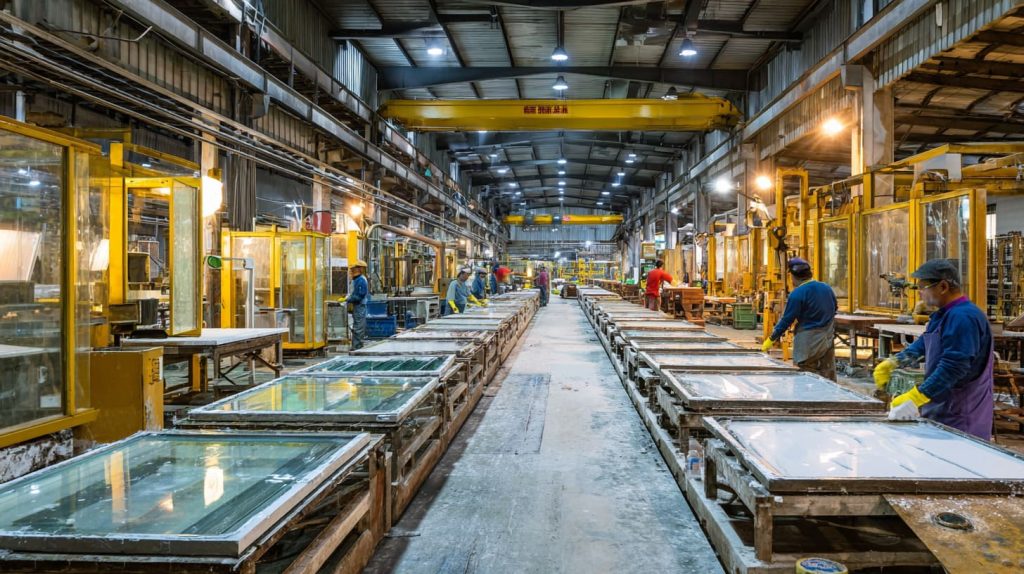
Cast acrylic is made in a slower and more traditional way.
The basic idea is simple. Liquid acrylic material is poured between two molds, usually glass molds. Then it cures slowly into a solid sheet.
This process takes more time than extrusion. It also gives the material a different internal structure. That difference matters a lot when the sheet is cut, polished, drilled, glued, or used for higher-end display products.
I like to think of cast acrylic like handmade bread compared with factory-sliced bread. It may not have the tightest thickness control, but it often has better body, better strength, and better behavior under certain types of work.
That is not a perfect comparison.
But in real production, it feels close.
Cell casting process explained
Cast acrylic is often made through a cell casting process.
The process usually looks like this:
| Step | What happens | Why it matters |
|---|---|---|
| Mold preparation | Two glass plates form a casting cell | Surface quality affects final sheet clarity |
| Liquid MMA filling | Liquid material is poured between plates | Material cures into acrylic sheet |
| Slow curing | The sheet forms over time | Slower process helps create a stronger structure |
| Cooling and separation | The sheet is removed from the mold | Sheet quality depends on process control |
| Inspection | Thickness, clarity, defects, and surface checked | Bad sheets should not enter fabrication |
The slower curing process is one reason cast acrylic often behaves better during machining and polishing.
Because the material is not pushed through rollers under the same kind of pressure as extruded sheet, it usually has less internal stress. This can reduce cracking problems during cutting and bonding.
At our factory, when a custom acrylic product has many polished edges, sharp corners, glue joints, or premium display requirements, I usually feel safer with cast acrylic. The material gives the production team more room to control quality.
Cast acrylic is often considered more premium because it usually gives better performance in these areas:
- Optical clarity
- Surface hardness
- Scratch resistance
- CNC machining behavior
- Polishing quality
- Solvent bonding stability
- Long-term display appearance
This does not mean cast acrylic is perfect.
Cast acrylic can have wider thickness tolerance. If a buyer needs very exact sheet thickness for slot fitting, assembly with metal parts, or tight mechanical spacing, this can become a real problem.
So I do not blindly say cast acrylic is always better.
The more honest view is this:
| Feature | Cast acrylic performance |
|---|---|
| Optical quality | Very good |
| Surface hardness | Better than extruded acrylic |
| Machining stability | Usually better |
| Laser edge | Often less glossy than extruded |
| Thickness tolerance | Less consistent |
| Cost | Higher |
| Bonding performance | Usually better |
| Premium display use | Strong choice |
A product designer like Jacky will understand this very quickly.
If the product is a luxury cosmetic display, a museum cover, a transparent box, or a high-end retail fixture, the final look matters. A small crack near the edge can ruin the whole feeling. A cloudy joint can make the buyer feel the product is cheap.
In that situation, I do not look only at material cost. I look at the cost of a failed impression.
Acrylic is often used because people want it to look clean and bright.
If the finished product looks stressed, scratched, or cloudy, then the material already failed its job.
A sheet may look like a quiet thing, but once it meets a machine, its true character comes out. That is why we need to compare it with extruded acrylic next.
What Is Extruded Acrylic?
How is extruded acrylic produced?
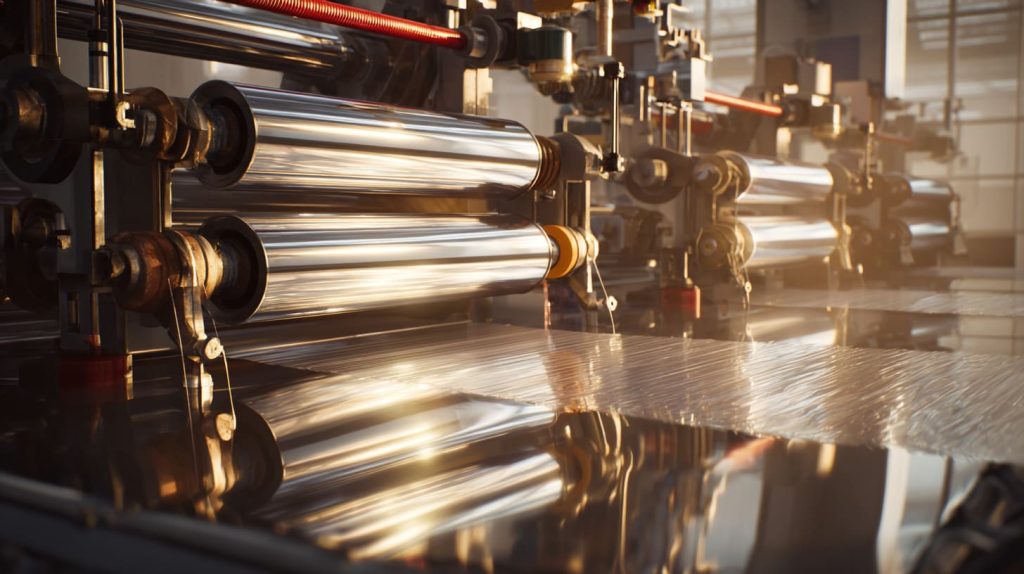
Extruded acrylic is made in a faster and more continuous process.
Acrylic pellets are melted and pushed through a die. Then the material passes through rollers to form a sheet with controlled thickness. This process is efficient. It is also why extruded acrylic is usually more affordable than cast acrylic.
In many commercial projects, extruded acrylic is not a bad choice at all.
It can be the right choice.
The problem starts when buyers use it for the wrong product or the wrong process.
A cheaper material can be a smart saving. It can also be a very expensive mistake. The difference depends on whether the factory understands how the material behaves after processing.
Continuous extrusion manufacturing process
Extruded acrylic is produced in a continuous line.
The process usually includes:
| Step | What happens | Production result |
|---|---|---|
| Pellet feeding | Acrylic pellets enter the machine | Stable raw material input |
| Heating | Pellets melt under controlled heat | Material becomes soft and flowable |
| Extrusion | Melted material is pushed through a die | Sheet shape begins |
| Rolling | Rollers control thickness and surface | Good thickness consistency |
| Cooling | Sheet becomes solid | Internal stress may remain |
| Cutting | Long sheets are cut into standard sizes | Good for high-volume supply |
This process is fast and controlled.
That is why extruded acrylic often has better thickness consistency than cast acrylic. For some standard products, that is a real advantage.
If a design needs slot assembly or a repeatable thickness for mass production, extruded acrylic may make assembly easier.
But the same process can also create internal stress. That stress may not be visible at first. It may only show itself during laser cutting, solvent bonding, bending, or later use.
That is the part many buyers miss.
Why extruded acrylic is popular in commercial projects
Extruded acrylic is popular because it solves practical problems.
It is:
- More cost-friendly
- More available in some markets
- Easier for thermoforming
- Better in thickness consistency
- Good for many standard commercial applications
For example, extruded acrylic can work well for:
| Application | Why extruded acrylic may work |
|---|---|
| Simple sign panels | Cost matters, thickness consistency helps |
| Curved covers | Easier heat forming |
| Protective guards | Standard sheet sizes and lower cost |
| Mass retail parts | High quantity needs cost control |
| Simple flat panels | Less machining and bonding risk |
If a customer needs a large quantity of simple acrylic panels, I will not automatically push cast acrylic. That would not be fair.
Acrylic selection should serve the product.
For a flat display panel with simple cutting and no complex bonding, extruded acrylic may be a smart choice. For a high-end display box with multiple glued joints and polished edges, extruded acrylic may create trouble.
This is where I pay attention to the production path before I talk about price. A sheet that saves money at the material stage may lose money during assembly if the design asks too much from it.
That is why extruded acrylic can be both useful and risky.
It depends on the job.
Now we can compare the two materials side by side, because this is where the real production thinking begins.
What Are the Main Physical Differences Between Cast and Extruded Acrylic?
Which material performs better under fabrication stress?
Acrylic sheets do not fail only because they are weak.
They often fail because stress builds up.
Stress can come from cutting, drilling, heating, bending, gluing, polishing, packing, and even from the material manufacturing process itself.
Cast acrylic and extruded acrylic handle stress in different ways.
This is one of the biggest reasons they behave differently in production.
Thickness tolerance comparison
Extruded acrylic usually has tighter thickness tolerance. Cast acrylic usually has wider thickness variation.
This surprises some buyers because they assume premium means “more accurate.” But that is not always true.
Cast acrylic is more premium in many visual and processing ways, but extruded acrylic often wins in sheet thickness consistency.
| Feature | Cast acrylic | Extruded acrylic |
|---|---|---|
| Thickness tolerance | Wider variation | Tighter control |
| Sheet-to-sheet consistency | Can vary more | Usually more stable |
| Best use | Premium fabrication | Standard volume production |
| Risk area | Slot fitting, tight assembly | Stress cracking, melting |
This matters for products like:
- Acrylic trays with grooves
- Slot-in display stands
- Acrylic parts combined with metal frames
- Multi-layer stacked acrylic products
- Products with tight assembly holes
If the material thickness changes too much, the product may not fit well. One batch may assemble smoothly. Another batch may feel too tight or too loose.
That sounds small.
But in production, small differences become worker complaints. Worker complaints become slow assembly. Slow assembly becomes higher cost.
Surface hardness and scratch resistance
Cast acrylic is usually harder and more scratch resistant than extruded acrylic.
That does not mean cast acrylic cannot scratch. Acrylic is still acrylic. It needs careful handling.
But extruded acrylic often feels more sensitive during production. If workers slide sheets on a table, stack parts too quickly, or remove protective film too early, scratches can appear more easily.
Here is a simple comparison:
| Surface issue | Cast acrylic | Extruded acrylic |
|---|---|---|
| Scratch resistance | Better | Lower |
| Handling risk | Medium | Higher |
| Polishing recovery | Better | More heat-sensitive |
| Premium display appearance | Stronger | More careful control needed |
For retail display products, surface quality is not a small detail. The customer may forgive a hidden tolerance issue, but they will see a scratch immediately.
A display product is judged by the eye first.
If the buyer sells cosmetic products, jewelry, collectibles, or luxury small items, the acrylic surface becomes part of the product story. A scratched surface makes the whole display feel tired.
I often tell my team to think like the end user. The final customer does not care whether the sheet was cast or extruded. They care whether it looks clean under bright store light.
Heat resistance and internal stress differences
Extruded acrylic usually contains more internal stress. Cast acrylic usually has better stress stability.
This becomes important when heat or solvent enters the process.
Common stress-triggering steps include:
- Laser cutting
- Flame polishing
- Solvent bonding
- Line bending
- Drilling near edges
- Fast cutting with dull tools
- Tight screw assembly
Acrylic can look fine after one process and fail after the next one. For example, laser cutting may leave stress near the edge. Then bonding solvent enters the joint. Then cracks appear later.
This is why production problems sometimes feel like a mystery.
The crack does not always appear where the mistake happened. It appears where stress finally finds a weak point.
| Stress factor | Cast acrylic | Extruded acrylic |
|---|---|---|
| Internal stress | Lower | Higher |
| Solvent crack risk | Lower | Higher |
| Heat response | More stable but needs higher heat | Softer and easier to form |
| Laser cutting risk | More predictable | More melting and cracking risk |
Before I decide material, I usually ask myself where the product will suffer the most pressure. If the answer is glue joints, polished edges, or precision machining, I become very cautious with extruded acrylic.
That is not theory.
That is factory survival.
Acrylic may be clear, but production risk is not always clear. The next place we see that risk very directly is CNC machining.
Which One Causes More Problems During CNC Machining?
Why do machinists often prefer cast acrylic?
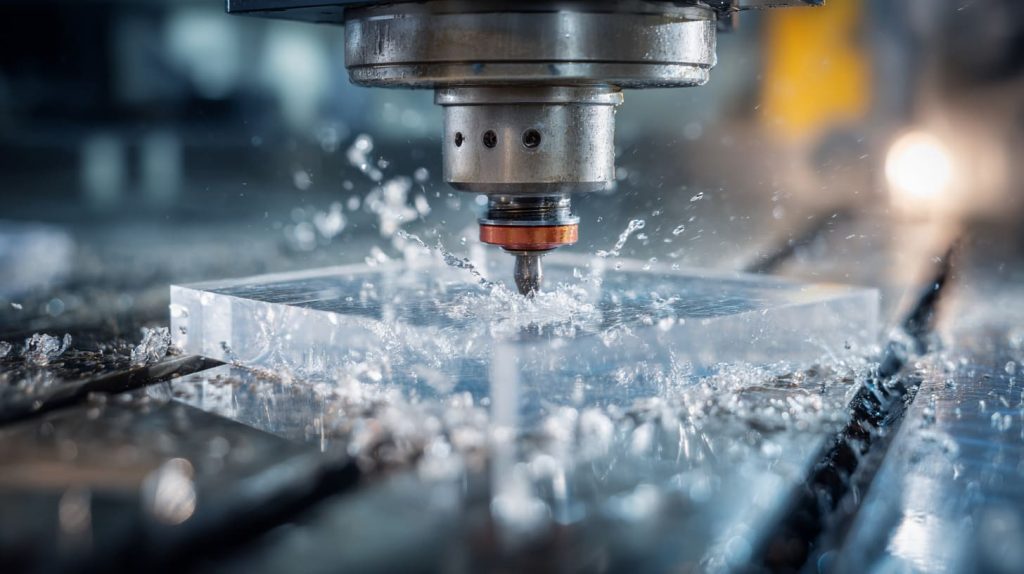
CNC machining is honest.
It does not care about the sales promise. It quickly shows whether the material is stable, sticky, brittle, soft, or easy to control.
In many CNC acrylic projects, machinists prefer cast acrylic because it cuts cleaner. It also holds shape better. It is less likely to melt into sticky chips when the cutting setup is correct.
Extruded acrylic can still be machined, but it often needs more care with tool speed, feed rate, cooling, and chip removal.
If the factory ignores that, problems come fast.
Edge quality after CNC routing
Cast acrylic usually gives cleaner routed edges.
That matters when the edge is visible. For acrylic display boxes, blocks, frames, stands, and organizers, the edge often becomes part of the product appearance.
A poor edge can look rough, cloudy, wavy, or burned. Then workers need more polishing time. More polishing time means more cost and more chance of deformation.
| CNC edge issue | Cast acrylic | Extruded acrylic |
|---|---|---|
| Clean cutting edge | Better | More difficult |
| Melting risk | Lower | Higher |
| Burrs | Lower when tools are sharp | Higher risk |
| Polishing after CNC | Easier | More sensitive |
| Final premium look | Easier to achieve | More process control needed |
When I see a drawing with many exposed CNC edges, I immediately pay attention to material. If the buyer wants a luxury look but chooses the material only by price, the edge will tell the truth later.
Acrylic edges are like the seams on a suit.
The front may look nice, but the seam shows the quality.
Chip removal and tool wear
Extruded acrylic can create sticky chips during machining.
This happens because it softens more easily under heat. If the tool gets hot, the material may melt instead of cutting cleanly. The chips can stick to the cutter, the edge, or the surface.
Then several problems appear:
- Rough edges
- White marks
- Burn marks
- Dimensional errors
- Higher tool wear
- More rejected parts
Cast acrylic usually breaks into cleaner chips. This makes machining more predictable.
| Machining factor | Cast acrylic | Extruded acrylic |
|---|---|---|
| Chip behavior | Cleaner chips | Sticky chips possible |
| Heat sensitivity | Lower | Higher |
| Tool loading | Lower risk | Higher risk |
| Production speed | More stable | Needs careful adjustment |
| Scrap risk | Lower for complex parts | Higher for tight details |
Of course, CNC settings matter a lot.
A bad tool can damage cast acrylic too. Poor speed can burn any material. A dirty table can scratch any sheet.
So I do not blame the material for every problem.
But material choice decides how wide the safe production window is. Cast acrylic usually gives workers more tolerance. Extruded acrylic gives less room for careless setup.
Tolerance stability during precision machining
Precision parts need more than clean edges.
They need stable dimensions.
Cast acrylic usually performs better when the product has small holes, fine cutouts, shaped pockets, and polished edges. It does not soften as easily during machining, so the dimensions are easier to control.
Extruded acrylic may move or deform more if heat builds up.
This is especially important for:
- Acrylic parts with screw holes
- Display stands with interlocking slots
- Acrylic fixtures
- Small engineering parts
- Multi-piece assembled products
Here is a practical view:
| Product feature | Safer material choice |
|---|---|
| Many CNC-cut details | Cast acrylic |
| Tight hole position | Cast acrylic |
| Simple flat panel | Extruded acrylic may work |
| Large standard guard | Extruded acrylic may work |
| Premium polished block | Cast acrylic |
| Low-cost formed cover | Extruded acrylic |
I do not like using one material rule for every product. I prefer to look at the drawing like a production map. The drawing already tells me where trouble may appear.
A sharp inside corner? Possible stress point.
A small hole close to an edge? Possible crack point.
A visible thick edge? Polishing issue.
A tight slot? Thickness tolerance issue.
That is how factory people read drawings.
Not just by lines. By future problems.
CNC is only one stage. The next stage, laser cutting, brings a different kind of trouble because heat joins the game.
Which Acrylic Creates More Problems During Laser Cutting?
Why does extruded acrylic sometimes fail during laser processing?
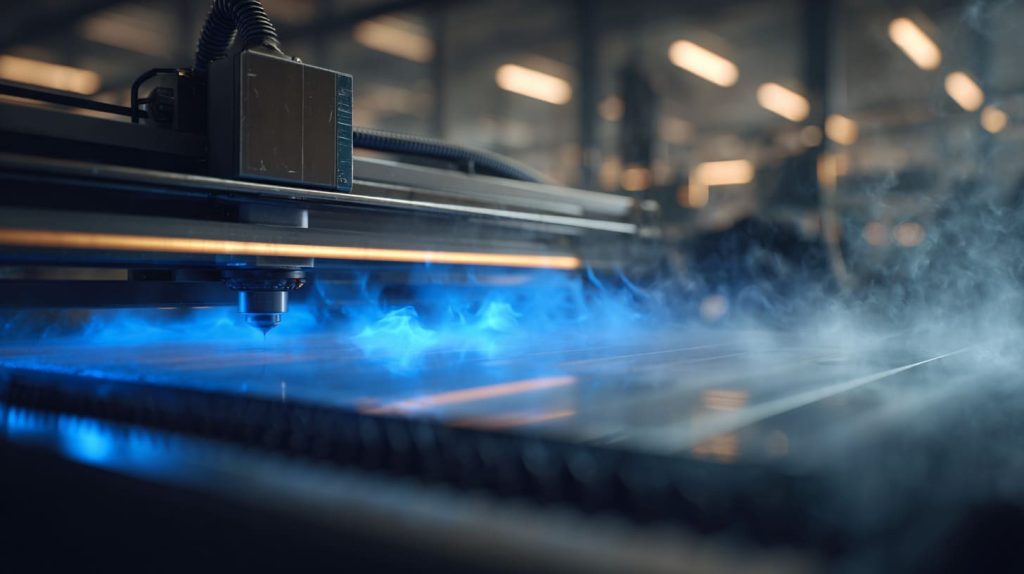
Laser cutting acrylic feels clean from the outside.
No blade. No chips flying everywhere. Fast cutting. Nice shape.
But laser cutting is also a heat process. And acrylic has feelings about heat. Very strong feelings, sometimes.
Cast and extruded acrylic react differently to laser cutting. Extruded acrylic often gives a glossy laser edge, which can look very nice. But it also has more internal stress, so cracking risk can become higher later.
Cast acrylic may give a less glossy edge, sometimes a frosted edge, but it is often more stable after cutting.
This is why I never judge laser-cut acrylic only by the edge right after cutting. I want to know what will happen after bonding, packing, and use.
Flame-polished edge differences
Extruded acrylic often creates a smooth, glossy edge after laser cutting.
This is one reason some sign makers like it.
Cast acrylic may create an edge that looks more matte or frosted after laser cutting. It may need extra polishing if the edge must be very clear.
So from a simple visual angle, extruded acrylic may look better immediately after laser cutting.
But immediate beauty is not the whole story.
| Laser edge factor | Cast acrylic | Extruded acrylic |
|---|---|---|
| Laser edge appearance | More frosted | More glossy |
| Need for post-polishing | Often higher | Often lower |
| Stress stability | Better | Lower |
| Risk after bonding | Lower | Higher |
| Best use | Premium stable parts | Signs, simple panels |
If the project is a simple sign panel, a glossy laser edge may be enough. If the project is a glued box, the laser edge becomes only one part of the risk.
A beautiful edge that cracks after assembly is not a good edge.
It is a trap with good lighting.
Cracking and stress issues after cutting
Extruded acrylic can crack after laser cutting because of internal stress and heat-affected edges.
This does not always happen immediately. That is why it causes confusion.
A part may pass inspection on Monday. It may crack after bonding on Wednesday. It may show fine stress marks after shipping.
Buyers may ask, “Why did it pass inspection if the material was bad?”
The answer is simple but painful: the failure was delayed.
Delayed failure is common in acrylic production.
Possible causes include:
- Internal stress from extrusion
- Heat stress from laser cutting
- Solvent reaction during bonding
- Tight assembly pressure
- Poor packing pressure
- Temperature changes during shipping
| Failure time | Possible reason |
|---|---|
| During laser cutting | Heat too high, poor settings |
| After bonding | Solvent attacks stressed edges |
| During assembly | Holes or slots too tight |
| During packing | Pressure on weak edges |
| After delivery | Temperature change and stored stress |
A buyer may only see the final crack. But the factory must trace the whole chain.
This is where experience matters.
Acrylic failure is often not one mistake. It is a stack of small risks.
Smoke, melting, and burn mark challenges
Laser cutting can also create smoke, melting, and burn marks.
Extruded acrylic can melt more easily if the power and speed are not controlled well. Cast acrylic is usually more predictable, but it can still burn if the settings are wrong.
Common laser problems include:
- Yellow edge marks
- Melted corners
- Uneven edge gloss
- Smoke stains on the surface
- Small flame marks
- Warped thin parts
The protective film also matters. Some films handle laser heat better than others. Poor protective film may leave residue or marks.
| Laser problem | Main control point |
|---|---|
| Burn marks | Power, speed, air assist |
| Smoke stains | Protective film, air flow |
| Melting | Heat input and cutting speed |
| Cracking | Material stress and edge design |
| Warping | Sheet thickness and cutting path |
I usually look beyond the machine setting when laser problems appear. I check the sheet type, protective film, part shape, cutting order, and next process after cutting.
Because laser cutting is not the end.
For many acrylic products, laser cutting is only the beginning of assembly.
And if assembly involves glue, then we need to talk about bonding.
Which Material Works Better for Acrylic Bonding and Gluing?
Why do bonding failures happen more often with extruded acrylic?
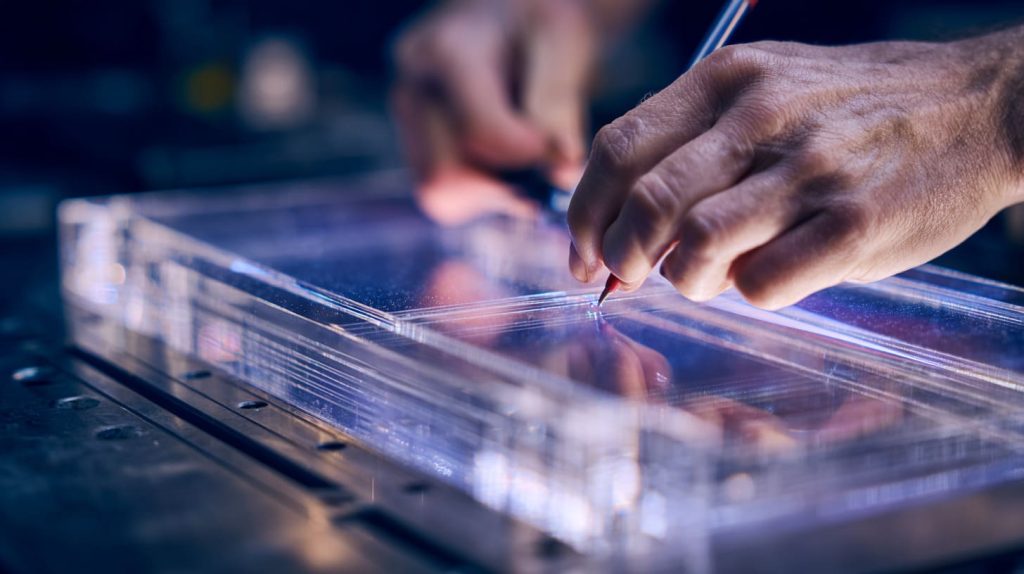
Bonding is where acrylic becomes emotional.
I say that half-jokingly, but it is true.
Acrylic bonding can look beautiful when everything goes right. Two clear parts join together, and the joint almost disappears. It feels clean, elegant, and premium.
But when bonding goes wrong, it is ugly.
Bubbles. White marks. Cracks. Uneven seams. Glue overflow. Weak joints.
For many custom acrylic products, bonding is the stage where extruded acrylic can cause more trouble.
Solvent bonding stress cracks
Solvent bonding works by softening acrylic surfaces so they can join together. This is useful, but it also means solvent can attack stressed areas.
Extruded acrylic usually has more internal stress, so it is more likely to show stress cracking after solvent bonding.
These cracks may look like tiny white lines or spider-web marks near the joint.
They can appear:
- Immediately after bonding
- Several hours later
- After polishing
- After packing
- After the customer receives the goods
That last one is the nightmare.
| Bonding factor | Cast acrylic | Extruded acrylic |
|---|---|---|
| Solvent crack risk | Lower | Higher |
| Joint clarity | Better | More risk of haze or cracks |
| Long-term stability | Better | Needs careful control |
| Premium box production | Stronger choice | Riskier |
| Worker tolerance | Wider | Narrower |
For display boxes, cosmetic organizers, acrylic covers, and clear display cabinets, I often prefer cast acrylic when the product has many glued joints.
The reason is not that I want to sell a more expensive sheet.
The reason is that bonding defects are painful to repair. In many cases, they cannot be repaired cleanly at all.
A bad bond is not like a small scratch that can sometimes be polished.
A cracked joint often means rejection.
Bubble formation and joint appearance
Bonding also creates visual problems.
If the joint is not clean, bubbles may appear. If the edge is not flat, the glue line may look uneven. If the worker uses too much solvent, the joint may turn cloudy. If the material has stress, cracks may appear.
Cast acrylic usually gives a cleaner visual result for high-end bonding work.
But again, material is not the only factor.
Good bonding also needs:
- Flat edges
- Clean surfaces
- Good fixture control
- Correct solvent amount
- Proper curing time
- Good worker skill
- Stable room temperature
| Bonding issue | Possible cause |
|---|---|
| Bubbles | Poor edge contact, fast solvent evaporation |
| White marks | Stress reaction, too much solvent |
| Weak joint | Poor surface preparation |
| Glue overflow | Too much adhesive |
| Uneven seam | Edge not flat |
| Later cracking | Internal stress and solvent attack |
Acrylic bonding is a patient person’s job.
If a worker rushes it, the material will punish the order.
I have seen buyers push hard for fast lead time. I understand that. But if bonding needs curing time, we cannot argue with chemistry. The joint needs time to settle.
A rushed acrylic box may look finished, but it may not be stable.
Best applications for each bonding method
Different products need different bonding choices.
For premium clear products, cast acrylic often works better. For simple low-cost products with limited bonding, extruded acrylic may still work.
| Product type | Material I usually consider first | Reason |
|---|---|---|
| Acrylic display box | Cast acrylic | Clear joints and lower crack risk |
| Cosmetic organizer | Cast acrylic | Premium look and many glued parts |
| Museum display cover | Cast acrylic | Optical quality and long-term stability |
| Simple sign holder | Extruded acrylic may work | Cost and simple structure |
| Formed protective cover | Extruded acrylic may work | Easier forming |
| Low-cost retail divider | Extruded acrylic may work | Simple shape and budget focus |
For products like cosmetic organizers, the buyer often cares about both cost and appearance. That creates a real trade-off.
If the design has many compartments, edges, and glue joints, low-cost material may increase defect risk.
If the design is simple, extruded acrylic can be fine.
This is why I always want to see the structure before giving a material answer.
Acrylic bonding is not only about joining two pieces. It is about joining design, material, worker skill, and patience.
Now, let’s move to another process where extruded acrylic sometimes becomes the better choice: bending and thermoforming.
Which Acrylic Performs Better in Thermoforming and Bending?
Why do some acrylic parts warp after heating?
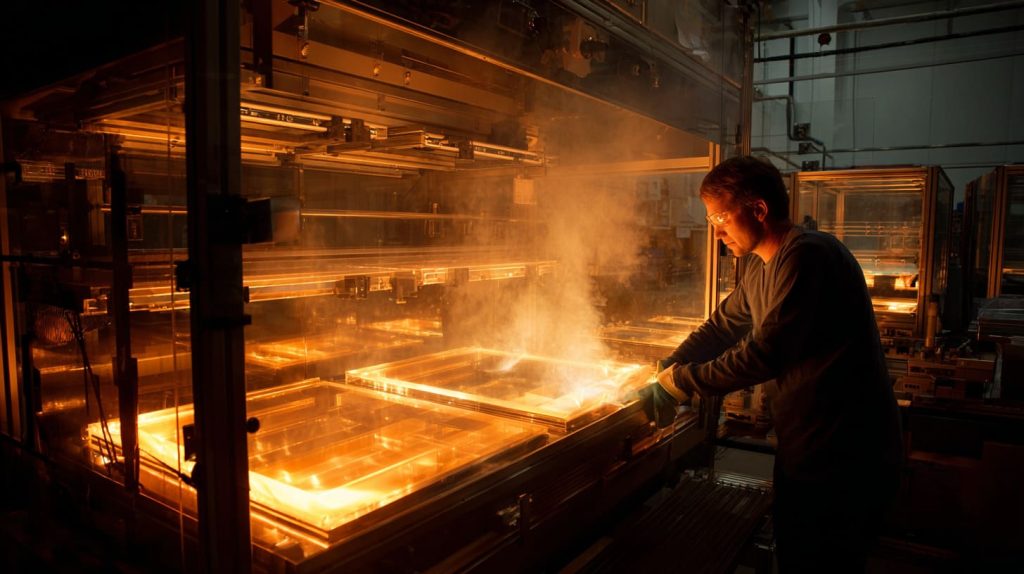
Heat can be a friend.
Heat can also be a troublemaker.
For acrylic bending and thermoforming, the material must soften enough to shape but not so much that it bubbles, warps, or loses its clean surface.
Extruded acrylic often performs better in simple thermoforming because it softens more easily and heats more evenly. Cast acrylic can also be formed, but it usually needs higher temperature and more careful drying and control.
This is one area where extruded acrylic may beat cast acrylic in real production.
Heat distribution differences
Extruded acrylic usually heats faster and more evenly.
This helps when making:
- Curved sign panels
- Bent display holders
- Simple protective covers
- Retail brochure holders
- Large formed panels
Cast acrylic usually needs higher forming temperature. It may also need pre-drying to reduce bubble risk.
| Forming factor | Cast acrylic | Extruded acrylic |
|---|---|---|
| Heating speed | Slower | Faster |
| Forming temperature | Higher | Lower |
| Ease of bending | More difficult | Easier |
| Bubble risk | Higher if not dried | Lower |
| Dimensional control | Good with proper setup | Good for simple forming |
| Best use | Premium formed parts | Mass formed parts |
If a buyer asks for a curved acrylic cover, I do not automatically choose cast acrylic. I first look at the shape, thickness, surface requirement, and quantity.
A thick, premium, optical cover may need cast acrylic. A simple formed retail part may be better with extruded acrylic.
The material should follow the process.
Not the other way around.
Bubble and deformation risks
Cast acrylic can form bubbles during heating if moisture is trapped inside or if the temperature process is not controlled well.
These bubbles can ruin the part.
Once bubbles appear inside clear acrylic, the product loses its clean look. You cannot hide them. You cannot polish them away. They become frozen inside the material like tiny mistakes.
Extruded acrylic usually has lower bubble risk in simple forming, but it can deform more easily if overheated.
So both materials have risks.
| Heating problem | More common risk | Control method |
|---|---|---|
| Bubbles | Cast acrylic | Pre-drying and correct temperature |
| Warping | Both materials | Fixture control and even heating |
| Over-softening | Extruded acrylic | Lower heat and shorter heating time |
| Surface marks | Both materials | Clean mold and protective handling |
| Size change | Both materials | Test forming before mass production |
This part is easy to underestimate.
A buyer may approve a flat sample and later request bending in mass production. But once bending enters the process, the old material choice may no longer be ideal.
A flat sheet decision is not always a formed part decision.
I have learned to ask about the final shape early. If the product will be heated later, I need to know that before material purchase.
Which material is better for complex shapes?
For complex shapes, the answer depends on what kind of complexity we mean.
If the product has many curves and needs cost control, extruded acrylic may be easier.
If the product needs high optical quality, thick material, polished edges, and premium appearance, cast acrylic may still be better, but the forming process must be controlled carefully.
| Product shape | Possible better choice | Reason |
|---|---|---|
| Simple U-shaped holder | Extruded acrylic | Easy bending and lower cost |
| Curved sign cover | Extruded acrylic | Good forming behavior |
| Thick transparent display cover | Cast acrylic | Better optical quality |
| Luxury curved display | Cast acrylic | Premium appearance |
| Mass retail formed tray | Extruded acrylic | Cost and forming efficiency |
| Complex optical part | Cast acrylic | Better visual performance |
For thermoforming, I care about repeatability. One perfect sample means little if the next 500 pieces warp differently.
The real test is whether the factory can repeat the result at scale.
That is why forming projects need small-batch trial production before full production. The shape may look simple on paper, but heat has its own personality.
After bending, we often need printing, polishing, or branding. That brings us to another area where material choice affects the final customer’s first impression.
Which One Has More Problems in Printing and Surface Finishing?
Why does surface quality affect branding results?
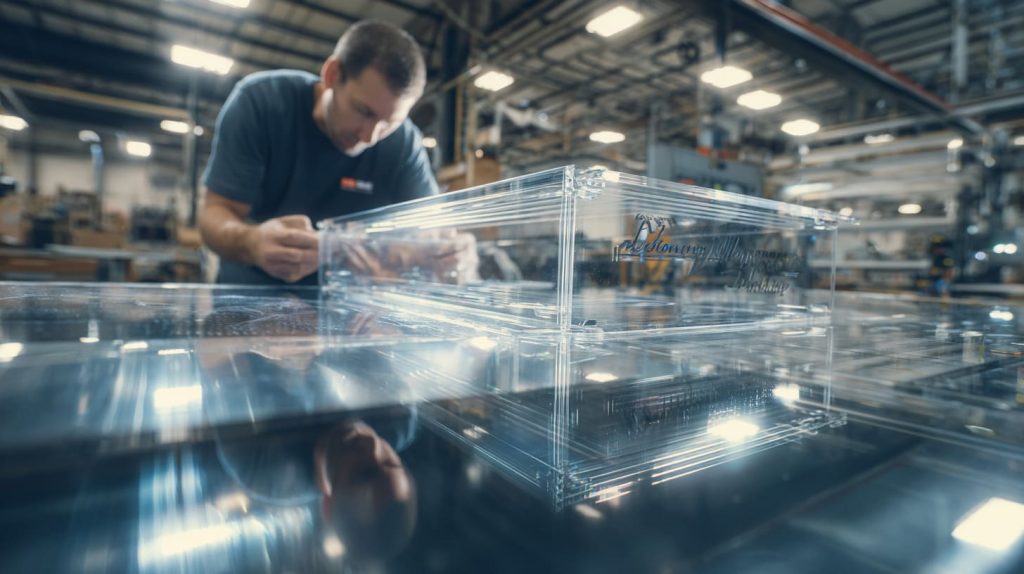
Acrylic products often carry a brand’s image.
A logo on an acrylic display stand is not just decoration. It tells the customer whether the product feels careful, clean, and professional.
That is why printing and surface finishing matter so much.
If the ink does not stick well, the logo looks cheap. If polishing is poor, the edge looks cloudy. If flame polishing overheats the material, the shape may distort. If the surface scratches during production, the whole product feels second-grade.
This is where material, process, and handling all meet.
UV printing adhesion comparison
UV printing on acrylic depends on surface condition, ink type, cleaning, and curing.
Both cast and extruded acrylic can be printed. But surface quality and consistency can affect the final result.
Before printing, the surface must be clean. Dust, oil, static, and protective film residue can all create problems.
Common printing issues include:
- Poor ink adhesion
- Color inconsistency
- Small pinholes
- Scratches under the print
- Dust marks
- Peeling after tape test
| Printing factor | Cast acrylic | Extruded acrylic |
|---|---|---|
| Surface hardness | Better | Softer |
| Scratch risk before printing | Lower | Higher |
| Ink adhesion | Good with proper cleaning | Good with proper cleaning |
| Surface consistency | Good | Often consistent |
| Premium logo appearance | Strong | Needs careful handling |
For branded display products, I usually ask whether the logo area is visible and touchable. If the logo sits on the front face and customers may touch it, printing quality becomes more important.
A small logo defect can make a whole batch feel wrong.
That is not dramatic.
That is how buyers inspect products.
They look at the logo first.
Polishing and flame finishing challenges
Cast acrylic usually polishes better.
This is a big reason factories like cast acrylic for premium display products. The edges can become very clear and glass-like with proper polishing.
Extruded acrylic can be polished too, but it is more sensitive to heat. Flame polishing can deform the edge or create stress if done carelessly.
| Finishing method | Cast acrylic | Extruded acrylic |
|---|---|---|
| Diamond polishing | Very good | Good but more sensitive |
| Flame polishing | Good with control | Higher deformation risk |
| Buff polishing | Very good | Possible heat marks |
| Laser edge finish | More frosted | More glossy |
| Premium edge clarity | Stronger | More difficult |
Polishing is one of those jobs that looks simple until you see a bad result.
A good polished acrylic edge is like clean ice.
A bad polished edge looks cloudy, wavy, or burned.
If the product is a thick acrylic block, photo frame, award base, or luxury display, edge quality can decide whether the product feels expensive or ordinary.
This is where I do not like cutting corners. If the edge is a selling point, material and polishing process must match.
Screen printing and coating performance
Screen printing and coating also depend on surface preparation.
Acrylic sheets may carry dust, static, fingerprints, or protective film residue. Even a good material can fail if the surface is not prepared well.
For mass production, consistency matters more than one beautiful sample.
A buyer may approve a printed logo on one piece. But the factory must print the same logo on hundreds or thousands of pieces.
That means the process must control:
- Surface cleaning
- Ink mixing
- Printing pressure
- Drying or curing time
- Worker handling
- Packing after printing
| Production issue | Why it matters |
|---|---|
| Static dust | Creates dots under print |
| Scratches | Become more visible after printing |
| Poor curing | Ink may peel |
| Uneven pressure | Logo edge becomes unclear |
| Bad packing | Print can rub or mark |
I pay attention to the finishing step because this is where the buyer sees the product emotionally. A technically acceptable part can still feel bad if the surface finish is weak.
The material may pass the drawing requirement.
But the customer buys with the eyes.
That is why industry application matters. The right acrylic choice is not the same for every product, every buyer, or every market.
Which Acrylic Is Better for Different Industries?
How should buyers choose based on application instead of price?
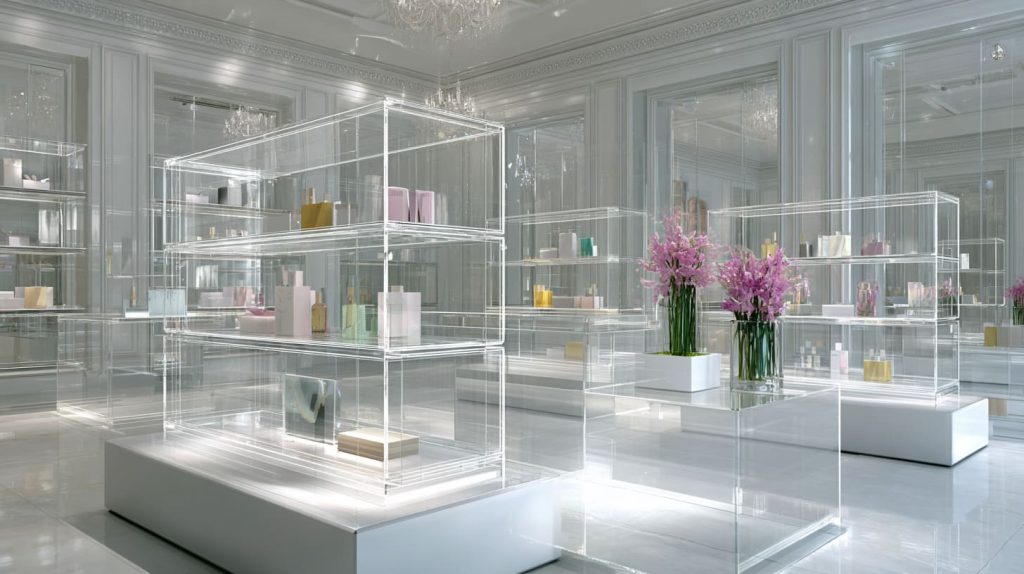
The best acrylic is not the most expensive one.
The best acrylic is the one that fits the product, the process, and the customer’s expectation.
This sounds simple, but many real projects fail because people choose material from the wrong angle.
Some buyers choose only by price. Some choose only by appearance. Some choose based on what worked in their last project, even when the new product is completely different.
Acrylic selection should start from application.
Best choice for retail displays and luxury products
For retail displays and luxury products, cast acrylic is often the safer choice.
These products usually need:
- Clean edges
- Good polishing
- Clear bonding
- Strong surface appearance
- Lower cracking risk
- Better long-term visual quality
Typical products include:
| Product | Why cast acrylic often works better |
|---|---|
| Cosmetic display stand | High visual requirement |
| Jewelry display box | Clear edges and premium feel |
| Acrylic photo block | Optical clarity matters |
| Collectible display case | Clean bonding and clarity |
| Luxury retail fixture | Surface and edge quality matter |
| Custom acrylic furniture part | Strength and appearance both matter |
For these products, the buyer is not only buying a function. The buyer is buying a look.
A cosmetic organizer may hold lipsticks. But it also needs to make the lipsticks look better.
A display case may protect a toy. But it also needs to make the toy feel more valuable.
Acrylic is often part of the stage.
And a bad stage makes the main product look worse.
Best choice for mass-production commercial projects
For mass-production commercial projects, extruded acrylic can be a very practical choice.
It is often used when:
- Cost is important
- Thickness consistency matters
- The shape is simple
- The product has limited bonding
- The product needs thermoforming
- The visual requirement is acceptable but not luxury level
Typical products include:
| Product | Why extruded acrylic may work |
|---|---|
| Simple sign panel | Lower cost and clean enough appearance |
| Brochure holder | Easy bending |
| Protective sneeze guard | Large flat panel at lower cost |
| Retail divider | Cost control |
| Simple display riser | Standard design |
| Curved cover | Better forming behavior |
In mass production, saving one small amount per piece can matter. I respect that.
But only if the saving does not create hidden quality cost.
That is the key.
If extruded acrylic can meet the requirement, use it. If it increases cracks, rework, or complaints, it is no longer cheap.
One rejected shipment can erase the saving from many orders.
Best material for engineering and industrial use
For engineering and industrial use, the answer is more technical.
The product may need strength, dimensional control, chemical resistance, impact behavior, heat resistance, or long-term stability.
Acrylic is not always the best engineering plastic. Sometimes polycarbonate, PETG, or another material may be better. So buyers should not force acrylic into every job.
If acrylic is chosen, the material type should match the process.
| Requirement | Better direction |
|---|---|
| Precision CNC machining | Cast acrylic |
| Tight thickness tolerance | Extruded acrylic |
| Solvent bonding stability | Cast acrylic |
| Simple thermoforming | Extruded acrylic |
| Premium optical clarity | Cast acrylic |
| Large low-cost panels | Extruded acrylic |
| Long-term display appearance | Cast acrylic |
| Budget-driven standard parts | Extruded acrylic |
The smarter move is not asking, “Which acrylic is better?”
The smarter move is asking, “What will this product go through before the customer uses it?”
Acrylic does not fail in theory.
It fails in the real path from sheet to finished product.
This brings us to a sensitive but useful question: why do different factories in China recommend different acrylic materials?
Why Do Chinese Acrylic Factories Often Recommend Different Materials?
How do factories balance cost, quality, and production efficiency?

Different factories recommend different materials because they see the project from different angles.
Some factories focus on low price. Some focus on easy sourcing. Some focus on stable production. Some focus on premium export quality. Some just follow what the customer writes without asking enough questions.
This is why two suppliers can quote the same drawing with different acrylic materials.
From the buyer’s side, this can feel confusing.
From the factory side, it is often a mix of cost, process comfort, experience, and risk control.
Why some suppliers push extruded acrylic
Some suppliers recommend extruded acrylic because it is cheaper and easier to source for certain standard sizes.
That does not mean they are dishonest.
For many simple products, extruded acrylic is suitable.
But problems can happen when suppliers push extruded acrylic into products that need cast acrylic performance.
They may do this because:
- The target price is very low
- The buyer did not specify material type
- The supplier wants to win the order
- The product looks simple on the drawing
- The supplier underestimates bonding or polishing risk
- The buyer only compares quotations
| Reason | Possible risk |
|---|---|
| Lower material cost | Higher scrap if process is complex |
| Easy sourcing | Material may not match premium requirement |
| Faster lead time | Less time for testing |
| Competitive quotation | Hidden quality cost |
| Simple drawing view | Real production may be harder |
I have no problem with cost control. In B2B manufacturing, cost is always part of the conversation.
But I have a problem with unclear cost control.
If a supplier uses extruded acrylic, the buyer should know why. If cast acrylic is safer, the buyer should understand the risk of not using it.
A cheap quote without risk explanation is not a real solution.
It is just a lower number.
Premium factories often prefer cast acrylic for custom display products because it reduces risk in machining, bonding, and polishing.
This is especially true for export orders, where buyers care about finish, packing, repeatability, and long-term supplier trust.
For products like custom acrylic boxes, retail displays, cosmetic organizers, and transparent covers, cast acrylic often gives a better production safety margin.
| Factory concern | Why cast acrylic helps |
|---|---|
| CNC edge quality | Cleaner cutting |
| Bonding defects | Lower stress cracking risk |
| Polishing finish | Better edge clarity |
| Customer complaints | Lower visual defect risk |
| Export quality | More stable premium result |
At Feilong Acrylic, we do many custom products. That means we cannot rely on one fixed catalog design. Each project has its own drawing, structure, material thickness, tolerance, and finishing need.
So I care a lot about process matching.
Sometimes I recommend cast acrylic even when the buyer asks for a lower price. Not because I like saying “more expensive.” Nobody enjoys that conversation. But I would rather explain the risk early than apologize after the goods are finished.
The hard truth is this: a factory’s material recommendation shows how it thinks about risk.
Some factories think about winning the order.
Good factories also think about finishing the order well.
Questions buyers should ask before placing an order
Buyers can avoid many problems by asking better questions before placing an order.
Not fancy questions.
Just practical ones.
Here are questions I think are useful:
| Question | Why it matters |
|---|---|
| Are you using cast or extruded acrylic? | Avoids hidden substitution |
| Which brand or grade of sheet will be used? | Helps control consistency |
| Is the material suitable for bonding? | Reduces cracking risk |
| Is the material suitable for CNC machining? | Prevents melting and edge issues |
| Will the sheet be tested before mass production? | Confirms process behavior |
| Can I approve a sample from the same material? | Prevents sample-production mismatch |
| What are the risks if we choose cheaper material? | Forces honest discussion |
| Do you recommend changes to design or thickness? | Uses factory experience early |
I also suggest buyers write material type clearly in the purchase order or drawing notes.
For example:
- Clear cast acrylic, 5 mm, polished edges
- Clear extruded acrylic, 3 mm, thermoformed
- UV-resistant cast acrylic, outdoor display use
- Frosted acrylic, exact brand or equivalent required
Clear material notes reduce misunderstanding.
A buyer who has visited China factories many times, like Jacky, already knows one thing: if a detail is not written, different people may understand it differently.
And in acrylic production, different understanding can become different quality.
Material selection should not be a guessing game.
Now let’s talk about how buyers can reduce risk before mass production starts.
How Can Buyers Avoid Production Problems with Acrylic Sheets?
What practical steps reduce manufacturing risks?
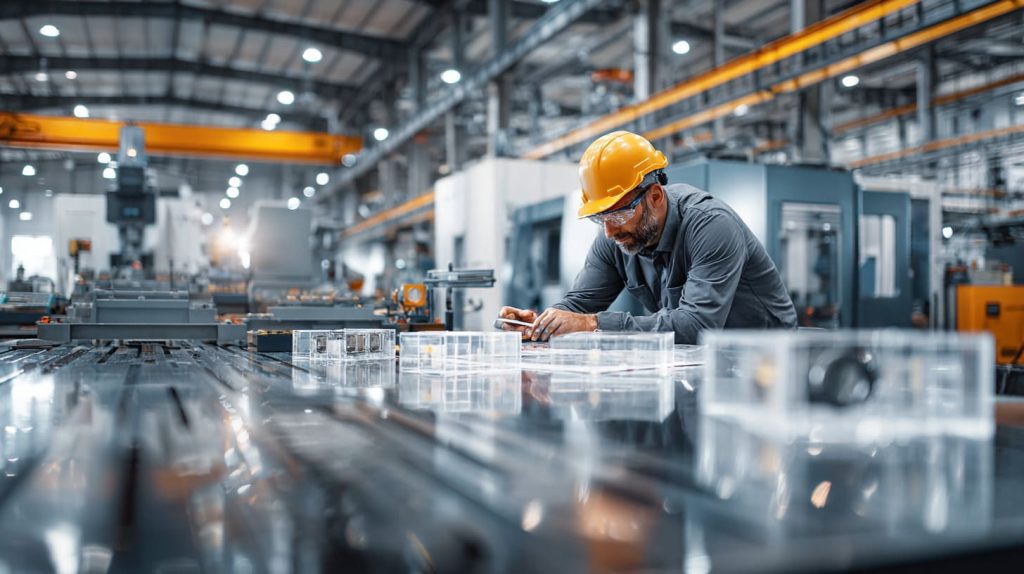
The best way to solve acrylic production problems is to catch them before mass production.
That sounds obvious.
But in real business, people often skip testing because they are in a hurry. The buyer wants fast delivery. The factory wants to start production. The sales team wants to close the order. Everyone feels the pressure.
Then the material problem appears after cutting 500 pieces.
That is a bad place to learn.
Testing is not a delay. Testing is insurance.
How to test acrylic before mass production
Before mass production, I like to test the acrylic through the same key processes that the product will need.
Not just visual checking.
A clear sheet on a table tells me very little.
A useful test should include:
| Test | What it checks |
|---|---|
| Visual inspection | Clarity, color, surface defects |
| Thickness measurement | Tolerance and fitting risk |
| CNC cutting test | Edge quality and melting risk |
| Laser cutting test | Burn marks and cracking risk |
| Bonding test | Bubbles, cracks, joint clarity |
| Polishing test | Edge finish and heat response |
| Bending test | Warping, bubbles, shape stability |
| Printing test | Ink adhesion and surface condition |
| Packing test | Scratch and pressure risk |
The test should match the real product.
If the final product needs bonding, bonding must be tested. If the final product needs polishing, polishing must be tested. If the final product needs bending, bending must be tested.
A sample that only proves “the sheet is clear” is not enough.
The sheet must prove that it can survive the process.
Why prototype validation matters
Prototype validation matters because small defects become expensive at scale.
One small crack on one sample is a warning. One small bubble in one glue joint is a message. One small edge mark after CNC routing is not “nothing.”
It may become a batch problem later.
That does not mean every sample defect means the project will fail. But it means the factory should understand the cause before moving forward.
| Sample issue | Possible next action |
|---|---|
| Edge melting | Adjust CNC settings or change material |
| Bonding cracks | Test cast acrylic or change bonding method |
| Bubbles in bending | Pre-dry material or adjust heat |
| Poor printing adhesion | Improve cleaning or test ink |
| Surface scratches | Improve handling and protective film |
| Tight assembly | Recheck thickness tolerance |
Prototype validation should answer practical questions:
- Can the material be cut cleanly?
- Can the edges be polished to the expected level?
- Can the parts bond without cracking?
- Can workers assemble the product smoothly?
- Can the product survive packing?
- Can the final look match the buyer’s market?
A buyer may think the prototype is only about shape.
I think the prototype is about risk.
The shape is easy to see. Risk is harder to see. That is why we test.
Checklist for choosing the right acrylic material
Here is a simple checklist I use when thinking about cast vs extruded acrylic.
| Question | If yes, consider |
|---|---|
| Does the product need many glued joints? | Cast acrylic |
| Does the product need premium polished edges? | Cast acrylic |
| Does the product need lower cost and simple shape? | Extruded acrylic |
| Does the product need tight thickness consistency? | Extruded acrylic |
| Does the product need bending or thermoforming? | Extruded acrylic often works well |
| Does the product need high optical clarity? | Cast acrylic |
| Does the product have many CNC details? | Cast acrylic |
| Does the product have large simple flat panels? | Extruded acrylic may work |
| Is the product for luxury retail display? | Cast acrylic |
| Is the design highly price-sensitive? | Extruded acrylic, but test first |
I also like to check four main points before confirming material:
Application environment
Where will the product be used? Indoor store? Outdoor area? Museum? Warehouse? Home?Fabrication method
Will it be CNC cut, laser cut, bent, glued, printed, or polished?Visual expectation
Does the buyer need a premium look or just a functional part?Budget and risk level
Is the buyer saving money, or only moving risk from material cost to production cost?
The last point is important.
Sometimes a buyer says, “We need to reduce cost.”
I understand.
But I always ask myself whether the saving is real. If cheaper material increases scrap rate by 8%, slows assembly, and creates more complaints, then the saving is fake.
It only looks good in the quotation.
Good purchasing is not about always choosing the lowest price. Good purchasing is about knowing where low price is safe and where it is dangerous.
That is the kind of thinking that protects both buyer and factory.
Now we can answer the main question directly.
Conclusion
Which acrylic actually causes more production problems?
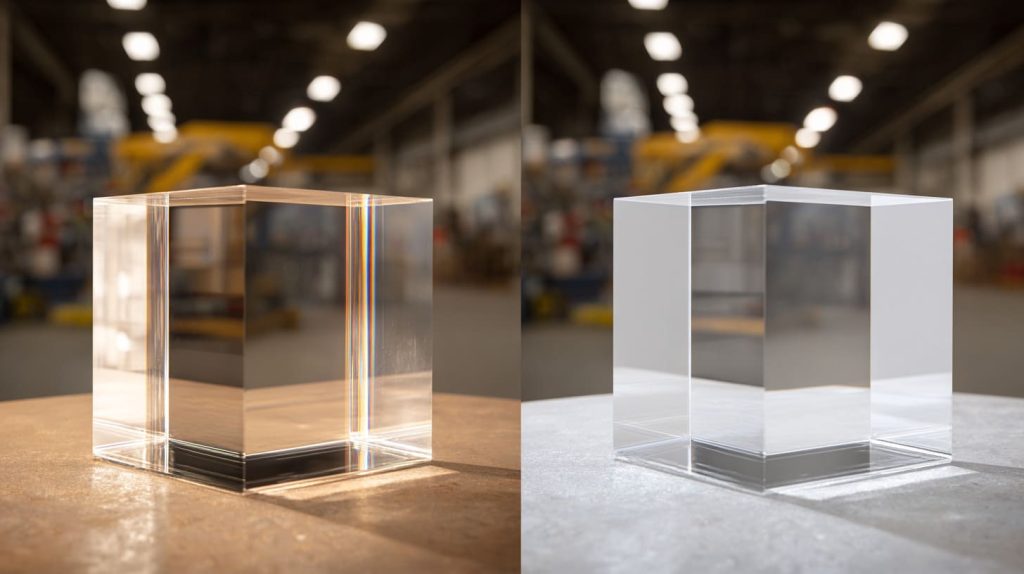
Cast acrylic and extruded acrylic can both cause production problems.
But they cause different kinds of problems.
If I must give a direct answer from my factory experience, I would say this:
Extruded acrylic usually causes more problems in CNC machining, bonding, solvent reaction, and stress cracking. Cast acrylic usually causes more problems in thickness tolerance, higher material cost, and some thermoforming control.
So the real answer is not “cast is better” or “extruded is worse.”
The real answer is: the wrong acrylic for the wrong process causes the most production problems.
The answer depends on the manufacturing process
For CNC machining, polished edges, premium displays, clear bonding, and luxury custom products, I usually trust cast acrylic more.
It gives better edge quality. It handles bonding better. It feels more stable during custom work.
For thermoforming, simple bending, standard panels, and price-sensitive mass production, extruded acrylic can be a smart choice.
It gives better thickness consistency. It forms more easily. It helps control cost.
Here is the simple version:
| Process or requirement | Usually safer choice |
|---|---|
| CNC machining | Cast acrylic |
| Solvent bonding | Cast acrylic |
| Premium polishing | Cast acrylic |
| Luxury display products | Cast acrylic |
| Thermoforming | Extruded acrylic |
| Simple bending | Extruded acrylic |
| Tight sheet thickness | Extruded acrylic |
| Low-cost standard panels | Extruded acrylic |
I do not choose material to make a quotation look nicer. I choose material to make the finished product behave better.
That is the difference between buying acrylic sheet and manufacturing acrylic products.
Why the cheapest material can become the most expensive mistake
The cheapest material is not always the cheapest finished product.
This is where many production problems hide.
A cheaper sheet may lead to:
- Higher scrap rate
- More polishing work
- More bonding failures
- More worker time
- More inspection time
- More customer complaints
- More replacement cost
- Longer delivery time
If the product is simple, the cheaper sheet may be fine.
If the product is complex, the cheaper sheet may become very expensive.
I have learned to respect small defects. A tiny crack near a glue joint is not tiny when the buyer opens the carton. A small polishing mark is not small under bright retail lighting. A little warping is not little when parts cannot assemble smoothly.
That is why I do not like “price-first” material decisions for custom acrylic products.
Price matters. Of course it matters.
But production behavior matters more.
Final advice for B2B buyers and product designers
If you are a buyer, product designer, or purchasing manager, my advice is simple.
Do not ask only, “How much is the acrylic?”
Ask:
- What acrylic type is being used?
- Why is this material suitable for my product?
- What production step creates the highest risk?
- Has the material been tested with the real process?
- Will the sample and mass production use the same material?
- What happens if we choose the cheaper option?
For custom acrylic products, material choice is not just a technical detail. It is a production decision. It affects cost, quality, lead time, and trust.
At Feilong Acrylic, I prefer to discuss these risks before production, not after problems appear. We are a custom acrylic factory, so we do not only make standard catalog items. We help buyers turn ideas into real acrylic displays, boxes, frames, stands, organizers, and other custom products.
That means we need to think like factory people and buyer people at the same time.
I believe cast acrylic is often safer for premium custom products. I believe extruded acrylic is useful for the right commercial projects. And I believe the best supplier should not push one material blindly.
The best supplier should explain the trade-off clearly.
If you are working on a custom acrylic display, box, stand, rack, or organizer, you can send your drawing, size, thickness, quantity, and application details to us.
We can help you check whether cast or extruded acrylic is the safer choice before mass production starts.
Because in acrylic manufacturing, the best problem is the one we prevent early.