Skip to content

I get questions about plastics from sports brands more often than people think.
Not from marketing teams. From designers and buyers who already know materials well.
The question is usually simple: “Which plastic should we use?”
But the real concern sits deeper. Performance. Safety. Cost. And what happens after one season of real use.
I work with acrylic and plastics every day. Displays. Boxes. Structural parts. Over time, I noticed something interesting. The sports industry asks the same questions as retail or electronics. Just louder. Because failure is visible. A cracked helmet. A worn grip. A surface that ages too fast.
Plastics matter in sports because they decide how fast, how safe, and how long a product survives. And not all plastics play the same role. Some are chosen for price. Some for strength. Others because nothing else works.
Once you see this difference clearly, the material choices start to make more sense.
1. Types of Common Plastics Used in Sports Equipment

When I talk with designers, I like to split plastics into groups.
Not by chemistry first. By how they behave in real life.
1.1 Commodity Plastics
Commodity plastics show up everywhere. They are not weak. They are just honest.
Polyethylene (PE)
PE is tough, flexible, and cheap.
I often see it used where impact and wear matter more than looks.
Common uses:
- Training cones
- Protective padding cores
- Artificial turf fibers
Strengths and limits:
| Property | Reality in Use |
|---|---|
| Impact resistance | Very good |
| Cost | Low |
| Surface finish | Basic |
| Structural strength | Limited |
PE works well until designers expect it to look premium. That is where problems start.
Polypropylene (PP)
PP is lighter than PE and holds shape better.
I see it often in accessories.
Typical applications:
- Water bottles
- Storage parts
- Clip-on sports accessories
PP survives bending well. But it hates cold weather.
I have seen PP parts crack during winter shipping tests.
Polyvinyl Chloride (PVC)
PVC divides opinions.
It can be rigid or soft. That flexibility gives designers freedom.
Where it fits:
- Inflatable sports products
- Ball outer layers
- Protective mats
PVC works. But designers must think about plasticizers, aging, and smell. These details matter more than datasheets suggest.
When buyers move past these basic plastics, they usually want more control. That is where engineering plastics enter the conversation.
2. Engineering Plastics

Engineering plastics solve problems commodity plastics cannot.
They cost more. But they also forgive design mistakes less.
Polycarbonate (PC)
PC is famous for impact resistance.
I trust it when safety is not negotiable.
Common uses:
- Helmet shells
- Face shields
- Protective panels
| Factor | PC Performance |
|---|---|
| Impact strength | Excellent |
| Transparency | High |
| UV resistance | Needs treatment |
| Cost | Medium–High |
PC protects people. But without UV coating, it ages fast outdoors.
ABS
ABS is predictable. Designers love that.
Where it appears:
- Helmet components
- Equipment housings
- Structural shells
ABS balances toughness and cost well.
But it is not outdoor-friendly unless modified.
POM (Acetal)
POM rarely shows up in marketing photos.
But engineers rely on it.
Use cases:
- Gears
- Wear parts
- Moving joints
POM resists friction. It stays stable.
It solves problems silently.
Nylon (PA)
Nylon stretches before it breaks.
That trait saves parts in real impact events.
Applications:
- Straps
- Reinforced frames
- Load-bearing components
Humidity changes nylon behavior. Designers must plan for that.
Composite Plastics
Carbon fiber reinforced plastics sit at the top.
Used in:
- Rackets
- Bike frames
- Performance sports gear
They are light. They are stiff. They are unforgiving.
Great performance always comes with strict process control.
At this point, designers often ask for feel, not just strength. That leads naturally to flexible polymers.
3. Specialized Performance Polymers

Some plastics exist only to touch hands, feet, or skin.
TPE / TPU
I see these materials everywhere grips matter.
Applications:
- Handles
- Shoe soles
- Cushioning zones
| Feature | Why It Matters |
|---|---|
| Soft touch | User comfort |
| Elastic recovery | Long-term feel |
| Grip | Safety |
TPU costs more than TPE. But it lasts longer under stress.
High-Performance Fibers
Kevlar and similar fibers do one job well.
They resist cutting and tearing.
Used in:
- Protective layers
- High-risk sports gear
These materials are not flexible in design.
They demand respect during manufacturing.
Once materials are chosen, the next question becomes obvious. Where exactly do they go?
4. Applications of Plastics Across Sports Categories

Materials behave differently depending on where they live.
4.1 Playing Surfaces and Facilities
Artificial turf relies on PE and PP blends.
They must survive sun, rain, and shoes.
Other uses:
- Stadium seating
- Rink panels
| Requirement | Material Response |
|---|---|
| UV exposure | Stabilizers needed |
| Wear | Thick sections |
| Safety | Controlled friction |
4.2 Protective Gear & Safety Equipment
Safety gear does not forgive mistakes.
Materials focus on:
- Impact absorption
- Crack resistance
- Stable aging
Designers often overbuild here. That is usually the right choice.
4.3 Footwear and Apparel
Shoes tell the best plastic story.
Layer by layer:
- EVA absorbs shock
- PU supports structure
- TPU adds grip
Each layer does one job. Mixing them poorly ruins everything.
4.4 Balls, Rackets & Handheld Equipment
These products feel small. But material choice decides play quality.
Key concerns:
- Weight balance
- Vibration
- Surface grip
Even small changes show up during play.
After seeing where plastics live, the next step is understanding why they behave this way.
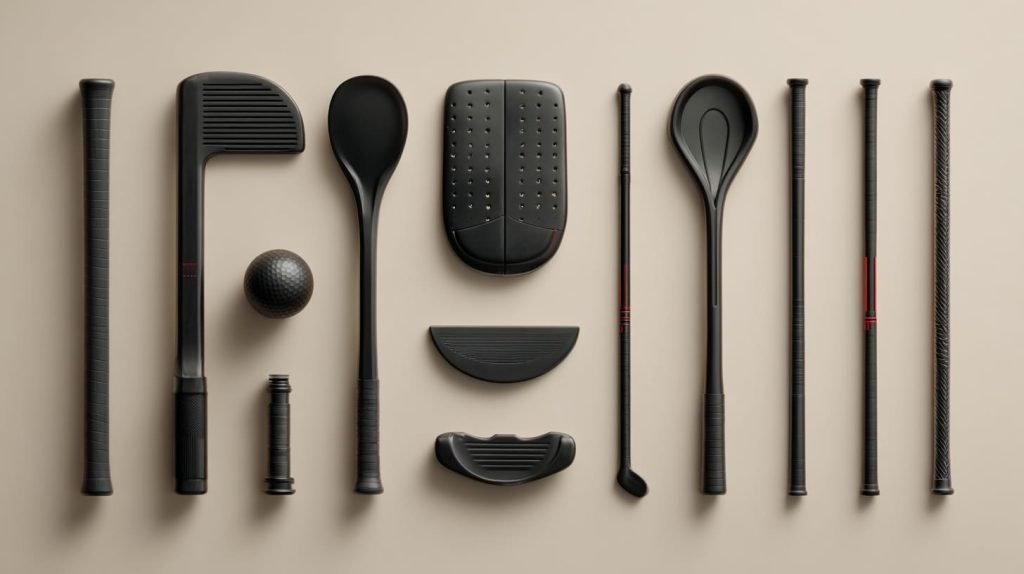
5. Key Material Properties Relevant to Sports Applications
Mechanical Performance
Strength alone is not enough.
Designers must think about:
- Impact cycles
- Fatigue
- Recovery after stress
A material that survives once may fail the second time.
Weight and Ergonomics
Light does not always mean better.
| Trade-off | Result |
|---|---|
| Too light | Less control |
| Too stiff | User fatigue |
Balance matters more than numbers.
Environmental Durability
Outdoor sports punish materials.
Key threats:
- UV light
- Water
- Dust
Ignoring environment shortens product life fast.
Safety & Compliance
Certifications shape design decisions.
Materials must pass:
- Toxicity checks
- Impact tests
- Long-term wear tests
Paperwork becomes part of the material choice.
Now comes the part most blogs skip. How these materials are actually made.
6. Manufacturing and Design Considerations

Material Selection for Performance Optimization
I often see designs fail because materials were chosen late.
Good designers ask early:
- Where is stress highest?
- Who touches the product?
- How long must it last?
Processing Methods
Manufacturing shapes behavior.
| Method | Effect |
|---|---|
| Injection molding | Precision |
| Extrusion | Consistency |
| Thermoforming | Lower cost |
| Composite layup | High performance |
The same plastic behaves differently with each process.
Sustainability & Recycling
Sports brands feel pressure here.
Challenges include:
- Mixed materials
- Bonded layers
- Limited recycling streams
Eco-friendly design starts at the drawing stage, not marketing.
Looking ahead, the industry keeps pushing limits.
7. Future Trends in Sports Plastics

Lightweight Composites
Carbon use will keep growing.
But costs and repair remain issues.
Smart Materials
Sensors inside plastics are no longer science fiction.
Used for:
- Training feedback
- Wear monitoring
But reliability still lags behind ideas.
Eco-Conscious Development
Bioplastics attract attention.
But performance gaps remain.
Designers must decide where compromise is acceptable.
Conclusion

After years of working with plastics, one truth stays clear.
No plastic is perfect. Each one solves a specific problem.
In sports, materials decide safety, comfort, and trust. Commodity plastics handle volume. Engineering plastics protect people. Performance polymers shape experience.
The best products come from asking hard questions early. Not from copying competitors.
If you are designing sports equipment and struggling with material choices, that struggle is normal. I see it every week. Talk through it early. Test honestly. And choose materials that match real use, not just specs.
If you want to discuss plastic selection or custom acrylic and plastic parts for sports products, you can reach me through Feilong Acrylic. I am always open to a real conversation.