Skip to content
Why Acrylic Sheet Aquariums Are Often Chosen for Custom Projects
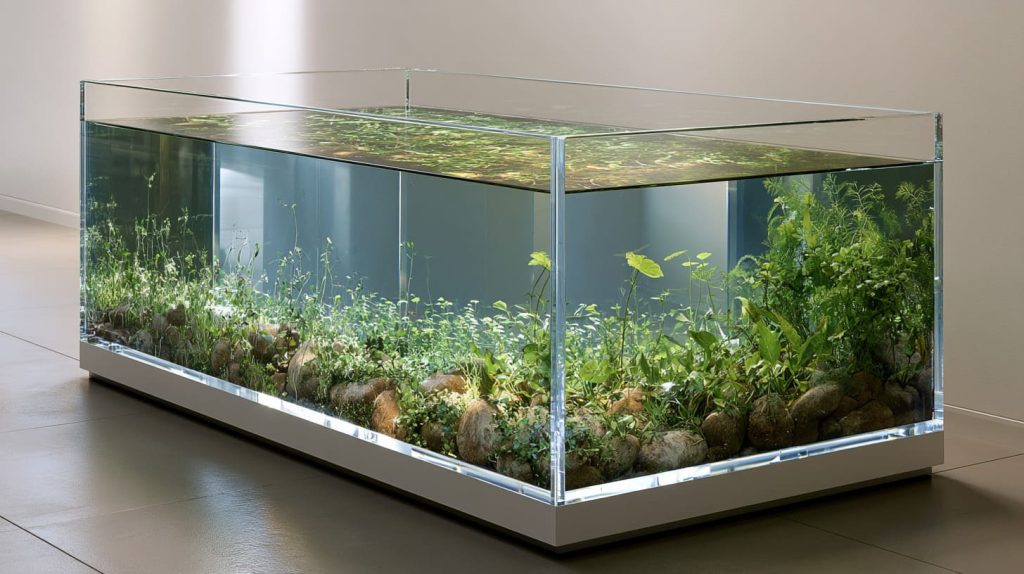
When a buyer asks me about an acrylic sheet aquarium, the first question is rarely about beauty.
It is usually something more practical.
“How heavy will it be?”
“Can it survive shipping?”
“Can we make it curved?”
“Will it scratch?”
“Is it better than glass?”
These are fair questions. I would ask the same questions if I were buying a custom tank from another factory. An aquarium is not just a transparent box filled with water. It has weight, pressure, seams, edges, polishing, packaging, and long-term maintenance behind it.
I have worked with custom acrylic products for many years, and I have seen one thing again and again: buyers do not choose acrylic only because it looks clear. They choose it because acrylic gives them more room to design, move, install, and repair the product.
Acrylic sheet aquariums are often compared with glass aquariums. Glass has its own place. It is hard on the surface, it resists scratches better, and it is familiar to many customers. But when the project becomes larger, heavier, more custom, or more display-focused, acrylic starts to show its value.
I usually do not judge acrylic and glass by saying one is always better. That is too simple. I look at the real project first: the tank size, the viewing distance, the delivery method, the installation site, the cleaning habits, and the buyer’s final use.
Here is a simple way I explain it to customers:
| Question | Why It Matters |
|---|---|
| Is the aquarium large? | Weight and impact resistance become more important. |
| Is it for a public display? | Safety and visual clarity matter more. |
| Does it need a special shape? | Acrylic gives more design freedom. |
| Will it ship overseas? | Packaging risk and breakage risk become serious. |
| Will users clean it often? | Scratch repair and maintenance methods matter. |
| Is temperature stability important? | Acrylic insulation can be useful. |
For me, the decision is not only about material price. It is about how the aquarium will live after it leaves the factory.
So in this article, I want to share the six main benefits of acrylic sheet aquariums from a practical manufacturing and purchasing point of view.
Not theory only.
Not a sales speech.
Just the kind of things I would explain to a buyer before a custom order starts.
Benefit 1: Acrylic Sheet Aquariums Are Lighter Than Glass Aquariums
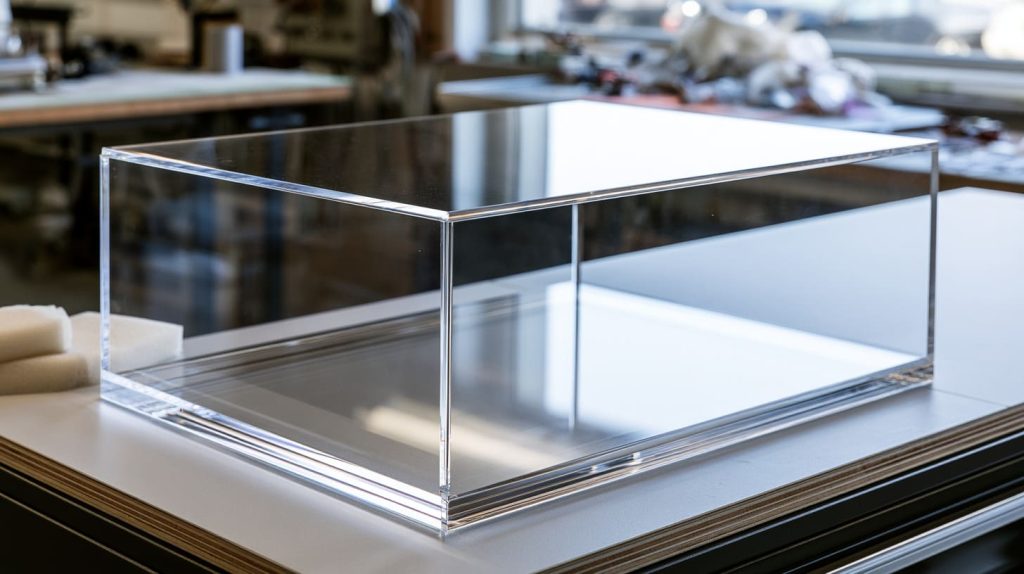
The first benefit is very easy to feel with your hands.
Acrylic is lighter than glass.
This sounds like a small point at first. But in real custom aquarium projects, weight can affect almost everything. It affects packaging. It affects labor. It affects shipping cost. It affects how many people are needed during installation. It can even affect whether the floor, shelf, or display structure needs extra support.
For a small desktop aquarium, the difference may not feel dramatic. But once the aquarium becomes larger, the difference becomes very real.
Easier to Transport and Install
When I look at a large acrylic aquarium project, I do not only ask, “Can we make it?”
I also ask, “Can the customer move it safely after they receive it?”
That question matters.
A heavy glass aquarium may need more people, stronger packaging, and more careful handling. One wrong movement during unloading can cause damage. One hard corner impact can turn into a costly problem.
Acrylic helps reduce this pressure because it is lighter. It is easier to lift, rotate, position, and install. For custom aquariums used in hotels, retail stores, offices, museums, restaurants, or private display spaces, this can make the whole project smoother.
| Item | Acrylic Sheet Aquarium | Glass Aquarium |
|---|---|---|
| Weight | Lighter | Heavier |
| Handling | Easier for large sizes | More difficult as size increases |
| Installation | Lower labor pressure | May need more people or equipment |
| Shipping | Often easier to manage | Higher risk due to weight |
| Site adjustment | More flexible | More difficult once positioned |
Of course, lighter does not mean careless handling is acceptable. Acrylic aquariums still need good packaging, edge protection, and correct lifting points. Water pressure is serious. Seams and joints must be made correctly.
But lower weight gives the buyer more room.
It makes the project less stressful.
It also helps when the installation site has narrow doors, elevators, stairs, or limited working space.
Lower Risk During Delivery
International shipping is not gentle.
I wish it were.
A product may be moved by forklift, loaded into a container, unloaded at a warehouse, checked by customs, moved again, then delivered to the final site. Each step adds risk.
With glass aquariums, weight and brittleness can become a bad combination. A strong impact during shipping can lead to cracks or breakage. The larger the aquarium, the more serious the risk becomes.
Acrylic is more forgiving during shipping. It is lighter and more impact resistant. This does not remove all risk, but it helps reduce the chance of serious breakage.
Here is how I usually think about it before quoting a custom acrylic aquarium:
| Project Detail | My Concern |
|---|---|
| Large panel size | Will the panel flex or be stressed during transport? |
| Long-distance shipping | Will the packaging survive multiple handling steps? |
| Sharp corners | Do we need extra corner protection? |
| Polished surface | How do we prevent rubbing marks? |
| Final installation site | Can workers move it without twisting the tank? |
For overseas custom orders, I often care as much about packaging as I care about production. A beautiful aquarium is useless if it arrives damaged.
This is where the lighter weight of acrylic becomes more than a material advantage. It becomes a supply chain advantage.
A buyer may only see the finished tank. I have to think about the journey before it gets there.
That is why weight is not a small detail. It can decide whether a project feels easy or painful from delivery to installation.
And once the tank is in place, the next question comes quickly: can it handle daily use without breaking easily?
Benefit 2: Acrylic Sheet Aquariums Have Better Impact Resistance
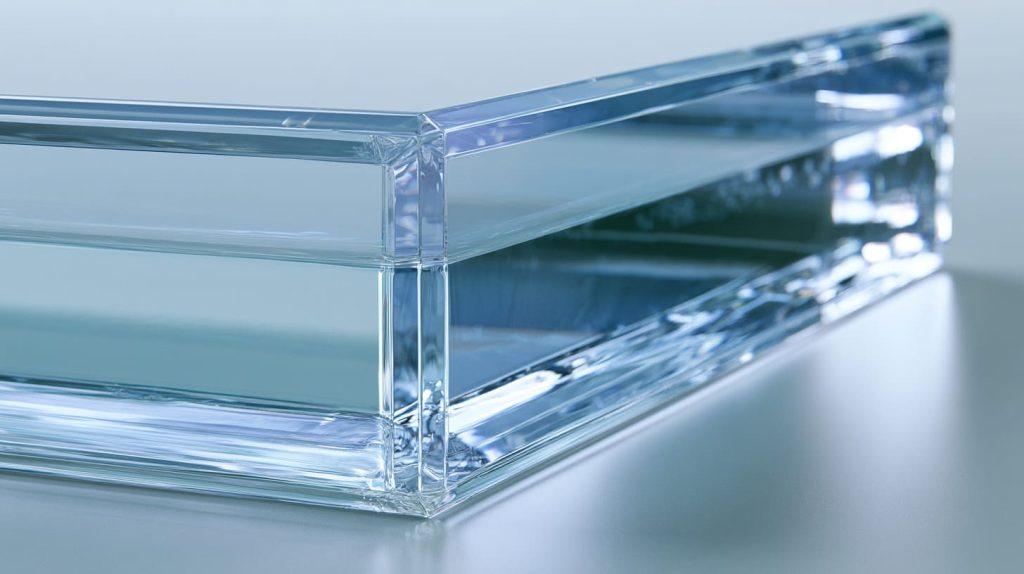
Acrylic sheet aquariums are often chosen because they are tougher against impact than glass.
This does not mean acrylic cannot be damaged. It can scratch. It can be stressed if the design is poor. It can also fail if the material thickness or bonding process is wrong.
But when we talk about impact, acrylic has a clear advantage.
It is less likely to shatter like glass.
For many buyers, this is one of the strongest reasons to choose acrylic, especially for large aquariums or public display projects.
Stronger Resistance to Cracking
Glass is hard, but it is also brittle.
Acrylic is softer on the surface, but it is more flexible under impact.
That difference matters in real use.
A glass aquarium may look strong because it feels solid. But if it receives a sharp hit at the wrong point, especially near an edge or corner, it can crack. Acrylic can absorb impact better. It may get scratched or marked, but it is much less likely to break suddenly in the same way.
This is important in places where people move around the tank:
- Shopping malls
- Hotels
- Restaurants
- Schools
- Offices
- Exhibition spaces
- Public aquariums
- Retail display areas
In these environments, accidents happen. Someone may bump into the tank. A cleaning tool may hit the surface. A child may touch or knock the panel. A cart may pass too close.
I do not design for the perfect day. I try to think about the careless day, because that is when weak details show themselves.
Here is a simple comparison:
| Factor | Acrylic | Glass |
|---|---|---|
| Impact resistance | Better | Lower |
| Shattering risk | Much lower | Higher |
| Surface hardness | Lower | Higher |
| Scratch risk | Higher | Lower |
| Safety in public areas | Strong advantage | Needs more caution |
This table also shows the trade-off.
Acrylic is better against impact, but it is easier to scratch. So the buyer has to think clearly: Is the bigger risk impact, or is the bigger risk surface scratching?
For a public display aquarium, I usually care more about impact safety. Scratches can often be repaired. A cracked glass panel is a much bigger problem.
Better Choice for Large or Commercial Tanks
Large aquariums are not just bigger versions of small aquariums.
They are different projects.
Water pressure increases. Panel size increases. The need for proper support increases. Installation risk also increases.
In large tanks, impact resistance becomes more valuable because replacing a damaged tank is not simple. It can involve draining water, removing fish or aquatic plants, taking apart surrounding structures, calling installers again, and delaying the whole site.
That is not just a product problem.
That is a business problem.
For commercial tanks, downtime has a cost. A hotel lobby aquarium is part of the guest experience. A restaurant aquarium is part of the atmosphere. A retail display tank may be part of the brand image. If the tank fails, the buyer does not only lose the product. They lose time, trust, and sometimes sales.
| Use Case | Why Impact Resistance Matters |
|---|---|
| Hotel lobby aquarium | Many people pass near the tank every day. |
| Restaurant aquarium | Staff movement and cleaning tools can create impact risk. |
| Retail display aquarium | Customers may stand close and touch the surface. |
| Museum or exhibition tank | Public safety is very important. |
| Large private custom tank | Repair and replacement can be expensive. |
Acrylic gives these projects a more forgiving safety margin.
But I still like to remind buyers that impact resistance is not a reason to ignore design. Thickness, bonding quality, support structure, top bracing, and installation method still matter.
A strong material can still fail if the design is careless.
That is why I usually ask for drawings, tank dimensions, water height, installation photos, and final use details before making a suggestion. A good aquarium is not only about choosing acrylic. It is about using acrylic in the right way.
Once safety is clear, many buyers start looking at the part they can see every day: the view.
Benefit 3: Acrylic Sheet Aquariums Offer Excellent Optical Clarity
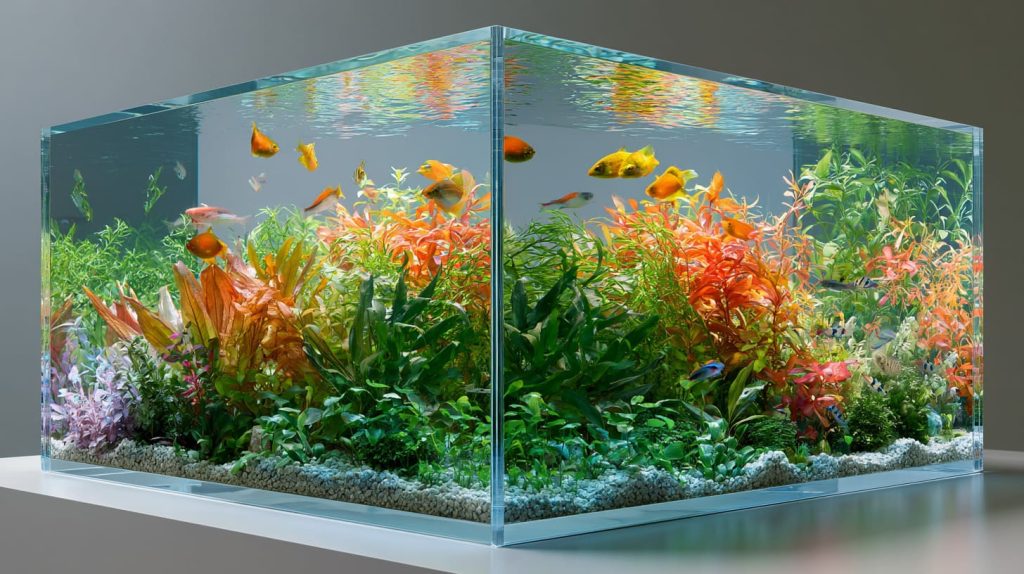
An aquarium is made to be seen.
That sounds obvious, but it is easy to forget during purchasing.
A buyer may spend a lot of time discussing thickness, price, packaging, and lead time. These things are important. But after the aquarium is installed, most people only care about one thing first:
“How does it look?”
Acrylic sheet can offer excellent optical clarity. This is one reason it is widely used for display tanks, custom viewing panels, museum displays, and decorative aquariums.
Clearer Viewing Experience
Good acrylic has high transparency.
When the material is well selected, cut cleanly, bonded properly, and polished carefully, the viewing experience can be very impressive. Fish colors look clean. Aquatic plants look fresh. Decorative stones and lighting effects become easier to appreciate.
For display-focused projects, this matters a lot.
If a customer installs an aquarium in a hotel lobby or retail store, the tank is not only a container. It is part of the space. It needs to attract attention without looking heavy or dull.
This is where acrylic works well.
| Viewing Factor | Why It Matters |
|---|---|
| Transparency | Fish and plants look clearer. |
| Edge polishing | The tank looks cleaner and more premium. |
| Bonding quality | Joints look less distracting. |
| Surface condition | Scratches or haze affect the view. |
| Material grade | Better acrylic gives a better visual result. |
When I judge optical clarity, I do not only look at the center of the panel. I also check the edges, corners, bonding lines, and reflection under light, because small visual defects become obvious after water and lighting are added.
This is especially true for custom aquariums with lighting systems. Light can reveal details that are easy to miss in normal factory inspection.
A small glue mark.
A cloudy edge.
A polishing line.
A tiny scratch.
Before water is added, these may look minor. After installation, they may stand out.
That is why optical clarity is not only about the acrylic sheet itself. It is also about workmanship.
Less Green Tint Than Regular Glass
Many people notice that regular glass has a slight green tint, especially along thicker edges.
For small tanks, this may not bother the buyer. But for larger display aquariums, this tint can affect the visual feeling. The water may not look as pure. The fish color may feel slightly changed. The whole display may look less clean.
Acrylic does not have the same green edge effect as standard glass. This gives it a clearer and more natural look, especially when the buyer wants a bright, clean, modern display.
Here is a practical comparison:
| Material | Visual Feeling |
|---|---|
| Standard glass | Can show green tint, especially at thick edges |
| Low-iron glass | Clearer than regular glass, but often more expensive |
| Acrylic | Very clear, with less green tint |
| Poor-quality acrylic | May look hazy or yellowish over time |
The last line is important.
Not all acrylic is the same.
Low-quality acrylic can look good at first but may age poorly. It may yellow, craze, or lose clarity faster under the wrong conditions. For aquariums, especially custom or commercial aquariums, I prefer high-transparency acrylic from reliable material suppliers.
For buyers like Jacky, who already have experience with China factories, this point is important. A cheap quote may look attractive, but if the material quality is unstable, the final product can disappoint the end customer.
Clear material is not enough.
The material must stay clear.
The next benefit is where acrylic becomes more interesting for designers. Because acrylic is not only clear. It is also much easier to shape.
Benefit 4: Acrylic Sheet Aquariums Allow More Custom Shapes
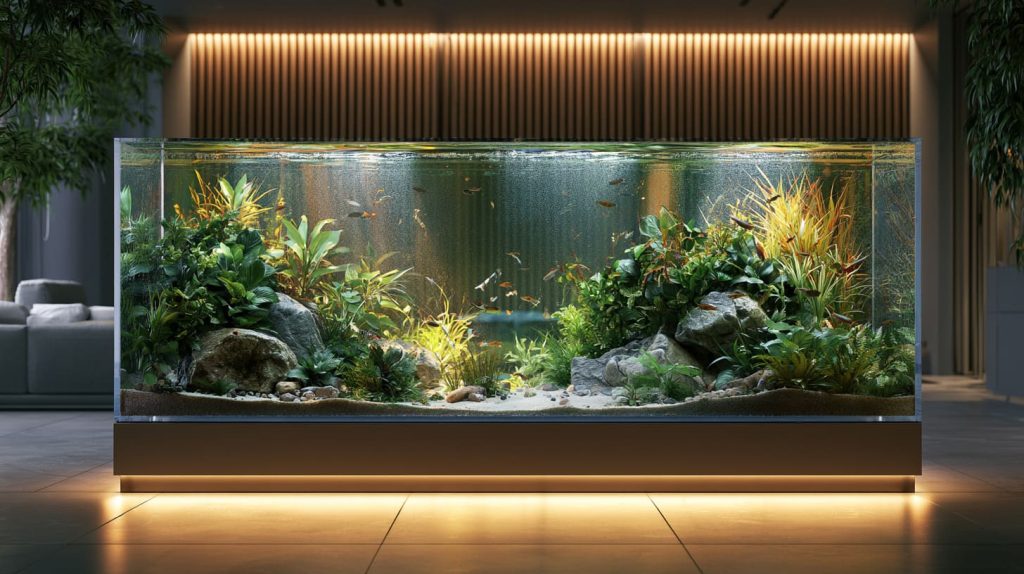
This is one of my favorite parts of acrylic.
Acrylic gives designers more freedom.
Glass can be made into many aquarium designs too, but it has limits. Curved glass is harder to make, harder to control, and often more expensive. Acrylic is easier to cut, bend, shape, bond, and machine. This makes it suitable for custom aquariums that do not follow a basic rectangular form.
For buyers who need something unique, acrylic is often the more practical material.
Easier to Bend, Form, and Fabricate
Acrylic can be formed into curved panels, cylinders, tunnels, rounded corners, and special display shapes.
This is useful when the aquarium is part of a larger design concept. For example, a hotel may want a curved aquarium in a lobby. A restaurant may want a long custom tank that fits a wall. A museum may need a special viewing panel. A retail brand may want a small aquarium display shaped around a product theme.
Acrylic supports these ideas better than standard glass.
| Custom Feature | Acrylic Advantage |
|---|---|
| Curved panel | Easier to form than glass |
| Cylinder tank | More practical for custom display |
| Rounded corners | Better visual flow |
| Special cutouts | Easier CNC processing |
| Integrated display design | Easier to combine with stands or frames |
| Large viewing window | Good clarity and lower weight |
Acrylic is also easier to machine. We can cut holes, polish edges, bond parts, and create special details based on a drawing. This is valuable for OEM projects where the buyer already has a design idea.
But design freedom also creates danger.
The more special the shape, the more carefully the project needs to be checked.
A curved aquarium may look simple in a rendering, but the real product has stress, bending radius, bonding area, water pressure, and polishing challenges. If the design is too aggressive, the tank may be beautiful on paper but risky in real life.
A drawing can look exciting, but I always slow down when I see tight curves, unusual seams, or very tall water height, because beauty does not cancel pressure.
This is the kind of discussion that should happen before production, not after a sample fails.
Better for Custom Aquarium Designs
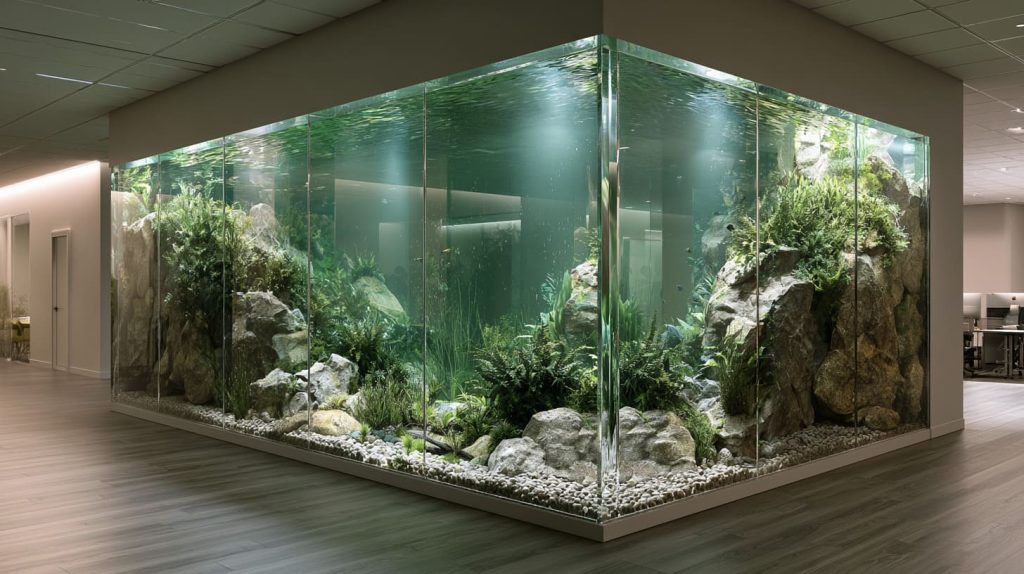
Acrylic sheet aquariums are especially useful for custom commercial spaces.
In many B2B projects, the buyer is not looking for a standard aquarium. They want the aquarium to fit into a design, a brand, a room, or a customer experience.
That means the aquarium may need:
- A special size
- A curved front
- A built-in base
- A clear viewing window
- A matching acrylic cover
- Custom openings
- Integrated lighting space
- A unique shape for display
Acrylic works well for this kind of project because it can be processed with more flexibility.
At Feilong Acrylic, we are used to custom acrylic manufacturing. We do not work like a retail catalog store. Buyers often come to us with a drawing, idea, photo, or rough concept. Then we help turn that into a workable custom acrylic product.
For aquarium projects, this custom thinking is very important.
| Buyer Type | What They Usually Care About |
|---|---|
| Hotel designer | Visual effect, size, safety, installation |
| Restaurant owner | Atmosphere, durability, cleaning |
| Retail brand | Unique display shape and clear appearance |
| Museum or exhibition team | Public safety and viewing experience |
| Aquarium project contractor | Technical details, delivery, installation risk |
| Wholesaler | Repeatable design and stable quality |
Acrylic gives these buyers more design options.
But more options also mean more decisions.
The buyer needs to think about thickness, support, bonding, polishing, cleaning, packaging, and installation. If the design is very special, it is better to discuss these points early.
A custom aquarium should not only look good in a photo. It should also be practical to make, safe to ship, and easy to maintain.
And maintenance is where the next benefit quietly matters, especially when water temperature is part of the project.
Benefit 5: Acrylic Sheet Aquariums Provide Better Thermal Insulation
Acrylic has better thermal insulation than glass.
This benefit is not always the first thing buyers ask about. Many people focus on weight, clarity, and strength first. But for some aquarium projects, temperature stability can be very important.
Fish, aquatic plants, and water systems do not like sudden temperature changes. A stable environment can help reduce stress inside the tank. It can also make heating easier to manage.
More Stable Water Temperature
Acrylic transfers heat more slowly than glass.
This means an acrylic aquarium can help slow down heat loss. In a room where the temperature changes, acrylic may help the water stay more stable compared with a similar glass tank.
This does not mean acrylic replaces a heater. It does not. The aquarium system still needs proper heating, cooling, filtration, and monitoring.
But better insulation can help.
| Situation | Why Acrylic Insulation Helps |
|---|---|
| Cold room | Water loses heat more slowly |
| Large tank | Temperature changes may be easier to control |
| Tropical fish setup | Stable temperature supports fish health |
| Public display | Less temperature swing improves reliability |
| Energy-conscious project | Heater may work less often |
This is one of those benefits that becomes more important after the aquarium is already in use.
A buyer may not notice it during purchasing. But the operator may notice it later when they manage water temperature every day.
I do not oversell insulation, because tank performance also depends on room temperature, water volume, lighting heat, pumps, covers, and airflow around the aquarium.
That is the honest way to look at it.
Acrylic helps, but it is only one part of the full system.
Potential Energy Savings
Because acrylic can help reduce heat loss, the aquarium heater may not need to work as hard in some conditions.
For small aquariums, the savings may be limited. For large tanks, commercial tanks, or temperature-sensitive setups, the effect can be more meaningful over time.
The key phrase is over time.
A buyer may compare only the purchase price at first. But the real cost of an aquarium includes shipping, installation, operation, cleaning, repair, and replacement risk.
| Cost Area | Acrylic May Help By |
|---|---|
| Shipping | Lower weight |
| Installation | Easier handling |
| Operation | Better heat retention |
| Repair | Polishable scratches |
| Safety | Better impact resistance |
| Design | More custom shape options |
The small hidden cost I like to check is not only the material price, but who will pay for daily operation and maintenance after the tank is installed.
This is very relevant for commercial buyers.
A hotel manager may not care how the acrylic panel was produced. But they care if the tank is easier to manage. A restaurant owner may not study thermal conductivity. But they care about electricity bills and stable display quality.
For buyers, this is a useful way to think:
Do not only ask, “How much is the tank?”
Also ask, “What will this tank cost me after six months or one year?”
That question often leads to a better decision.
Still, acrylic is not perfect. It can scratch more easily than glass. But this leads to the sixth benefit: many scratches can be repaired.
Benefit 6: Acrylic Sheet Aquariums Are Easier to Repair
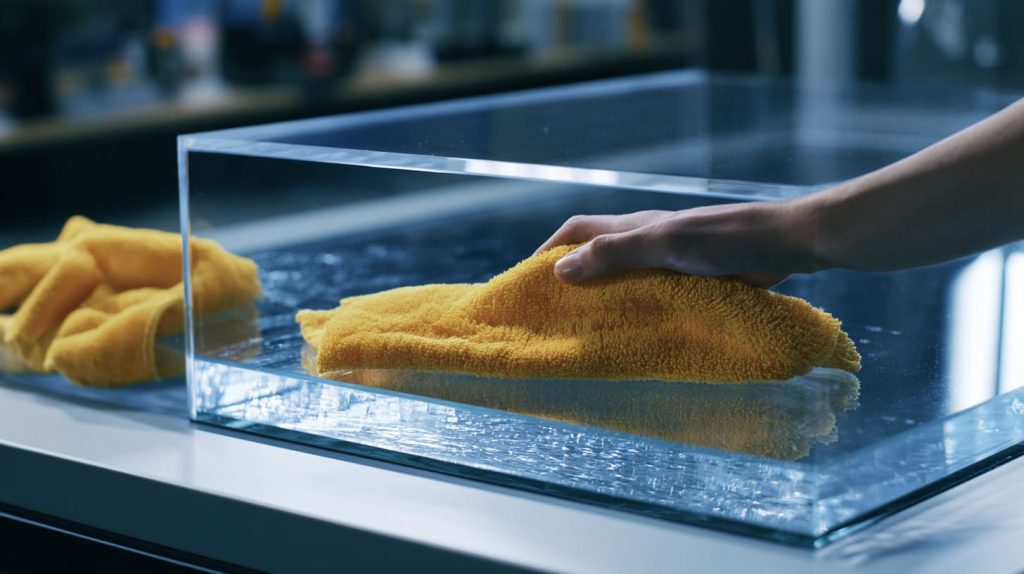
Acrylic scratches more easily than glass.
I want to say that clearly.
If someone tells you acrylic never scratches, that person is not helping you make a good decision. Acrylic is beautiful and practical, but it needs correct cleaning and care.
The good news is this: many surface scratches on acrylic can be polished and repaired.
That is a real advantage.
With glass, scratches are much harder to remove. Once scratched, the panel may stay that way. With acrylic, light scratches can often be reduced or polished out with the right method.
Scratches Can Often Be Polished
Surface scratches on acrylic can often be repaired by sanding and polishing, depending on depth and location.
This is useful for long-term use.
In public or commercial spaces, scratches are not rare. Cleaning staff may use the wrong cloth. Someone may wipe the panel with dust on the surface. A tool may touch the aquarium during maintenance.
These things happen.
Acrylic gives the buyer a second chance.
| Scratch Type | Repair Possibility |
|---|---|
| Light surface marks | Often polishable |
| Fine cleaning scratches | Usually can be improved |
| Medium scratches | May need sanding and polishing |
| Deep scratches | Repair may be difficult |
| Cracks or structural damage | Needs professional review |
This is where I usually separate cosmetic damage from structural damage. A surface scratch is one issue. A crack, seam problem, or deep stress mark is a completely different issue.
That difference matters.
A buyer should not treat every mark as a disaster. But they also should not ignore serious damage near seams, corners, or high-stress areas.
For custom aquarium projects, I always prefer clear maintenance instructions. The end user should know what cloth to use, what cleaner to avoid, and how to prevent scratches during daily cleaning.
Better Long-Term Appearance With Proper Care
Acrylic aquariums can keep a beautiful appearance for a long time if users take care of them correctly.
The key is simple: clean gently.
Do not use rough cloth.
Do not wipe dry dust across the surface.
Do not use harsh chemicals without checking compatibility.
Do not treat acrylic like glass.
That last point is important.
Acrylic and glass have different personalities. Glass is harder on the surface. Acrylic is tougher against impact and easier to repair. If the user understands this trade-off, acrylic can perform very well.
| Maintenance Habit | Result |
|---|---|
| Use soft microfiber cloth | Reduces scratch risk |
| Rinse dust before wiping | Prevents fine surface marks |
| Use acrylic-safe cleaner | Avoids chemical damage |
| Avoid rough tools | Protects clarity |
| Polish minor scratches early | Keeps surface looking clear |
| Train cleaning staff | Reduces repeated mistakes |
The biggest maintenance problem I see is not one big accident. It is small wrong habits repeated every week.
For example, someone wipes the surface with a rough cloth. The first time, the damage is small. After months, the panel starts looking hazy. Then the buyer thinks the material quality is poor.
But sometimes the real issue is cleaning method.
This is why I believe maintenance guidance should be part of the product, especially for commercial aquarium projects. A custom acrylic aquarium may be well made in the factory, but it still needs correct care at the site.
Acrylic gives buyers a repairable surface, but repair should not become an excuse for careless use.
Good material plus good care. That is the better combination.
Conclusion
Are Acrylic Sheet Aquariums a Good Choice?
Yes, acrylic sheet aquariums can be a very good choice, especially for custom and commercial projects.
But I do not say this because acrylic is perfect.
It is not.
Acrylic can scratch more easily than glass. It needs proper cleaning. It needs correct thickness. It needs good bonding. It needs careful packaging and installation. If any of these details are ignored, the final product may not perform well.
I say acrylic is a strong choice because, in many real projects, its advantages match what buyers actually need.
The six benefits are clear:
| Benefit | Why It Matters |
|---|---|
| Lighter weight | Easier transport, handling, and installation |
| Better impact resistance | Safer for large and public display tanks |
| Excellent optical clarity | Cleaner viewing and better display effect |
| More custom shapes | Better for creative and OEM designs |
| Better thermal insulation | Helps support stable water temperature |
| Easier repair | Minor scratches can often be polished |
My view comes from practical factory work. I care about how the product is made, but I also care about what happens after it leaves our workshop.
Can the buyer move it safely?
Can it survive shipping?
Can it fit the design?
Can users enjoy the view?
Can it be maintained without too much trouble?
Can the project avoid unnecessary risk?
These questions are more useful than only asking whether acrylic or glass is “better.”
For me, the better material is the one that fits the real job.
If the buyer needs a small, low-cost, scratch-resistant home tank, glass may still be a good option. But if the buyer needs a large custom aquarium, a curved display tank, a commercial installation, or a clear viewing panel with better impact resistance, acrylic is often worth serious consideration.
At Feilong Acrylic, we focus on custom acrylic manufacturing. We work with buyers who need made-to-order products, not ready-made retail items. If you have an acrylic sheet aquarium project, the best first step is not to ask for a fast price only.
The better first step is to share the size, drawing, water height, use environment, quantity, and design goal.
Then we can help review the structure, material thickness, processing method, packaging idea, and production details before the order moves forward.
That is how I prefer to work.
Not by guessing.
Not by pushing one material blindly.
But by checking the real project and helping the buyer avoid problems before they become expensive.