Skip to content

A buyer once sent me a very simple request:
“We need UV-resistant acrylic. Please quote.”
That sentence looked clear. It was short. It was easy to answer. I could have replied with a price, thickness options, and lead time.
But I did not quote right away.
I asked one more question: “What problem are you trying to avoid?”
The buyer paused. Then he said the display would be used near a store window in Canada. The product was not fully outdoors. The main worry was not yellowing. It was cracking around the screw holes after installation.
That changed the whole direction.
This is why I often feel that UV-resistant acrylic is useful, but it is often asked for too early. Many buyers use “UV-resistant” as a shortcut word. They want the acrylic to last longer. They want fewer complaints. They want the display to stay clear, clean, and premium.
That is reasonable.
But in real custom acrylic work, UV is only one risk. It is not the whole story.
Why buyers often ask for “UV-resistant acrylic” first
I understand why buyers ask this question first. UV sounds like the most obvious outdoor problem.
Sunlight is visible. Yellowing is easy to imagine. Outdoor aging feels like a material issue. So the buyer thinks, “If I choose UV-resistant acrylic, the problem should be solved.”
But this is where many projects start in the wrong place.
Acrylic can already perform well in many sunlight and outdoor display situations, especially when the material is good and the design is reasonable. The bigger issue is often hidden in another place.
It may be the thickness.
It may be the installation.
It may be the screw pressure.
It may be cleaning with alcohol.
It may be a sharp inside corner.
It may be a display placed under strong heat from lighting.
So when a buyer asks me for UV-resistant acrylic, I do not only hear a material request. I hear a risk question.
The real question: what failure are we actually trying to prevent?
The real question is not “Do you have UV-resistant acrylic?”
The real question is:
What kind of failure are we trying to prevent?
| Buyer’s concern | Possible real cause | Better question to ask |
|---|---|---|
| Yellowing | UV exposure, poor material, wrong grade | Is the part exposed to direct sunlight for years? |
| Cracking | Stress, drilling, screw pressure, tight fit | Where are the holes and how is it mounted? |
| Warping | Heat, large span, thin sheet | What is the size and support structure? |
| Haze | Wrong cleaning chemicals or dry wiping | How will staff clean it every day? |
| Scratches | Handling, packaging, use environment | Will the surface be touched often? |
| Joint failure | Small glue area or bad load direction | Where does the load go after assembly? |
I have seen buyers spend more money on UV-grade acrylic while ignoring a weak structure. That is like buying better shoes while walking on broken stairs. The shoes help, but they do not fix the stairs.
Snippet: UV resistance helps, but it does not fix poor design, wrong thickness, impact risk, bad installation, or harsh cleaning
UV-resistant acrylic helps reduce damage from sunlight. It can protect clarity, color, and long-term appearance in the right application.
But it does not fix poor design.
It does not stop cracking from tight screws.
It does not make a thin panel strong enough for wind load.
It does not protect the surface from bad cleaning habits.
It does not turn acrylic into polycarbonate.
My own rule is simple: I never treat UV resistance as a magic material upgrade before I understand how the part will be used, mounted, cleaned, and handled.
That one rule saves many projects from the wrong solution.
And this leads to the first question we should answer clearly: what does UV-resistant acrylic actually solve?
What Does UV-Resistant Acrylic Actually Solve?
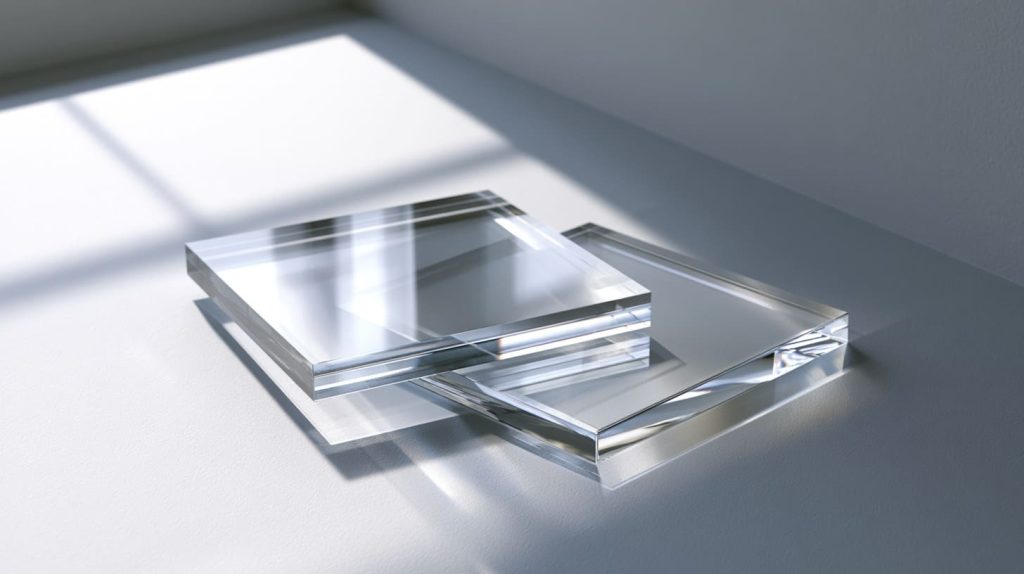
UV-resistant acrylic does solve real problems. I do not want to make it sound useless. It is useful. It has a clear place.
The problem is that people often expect it to solve problems outside its job.
I like to think of UV-resistant acrylic like sunscreen. Sunscreen helps with sunlight. It does not stop you from falling down stairs. It does not stop your shirt from tearing. It does not make your shoes stronger.
Acrylic is the same. UV protection helps with sunlight-related aging. It does not replace design thinking.
Yellowing and optical clarity loss
The first thing UV-resistant acrylic helps with is yellowing.
For clear acrylic products, yellowing is a big worry. A display stand, cover, frame, or box may look premium on day one. But if it turns yellow, the buyer does not care about the original material spec. He only sees that the product looks cheap.
This is especially important for:
- Clear acrylic display cases
- Cosmetic display risers
- Museum covers
- Artwork protection panels
- Window-facing retail displays
- Outdoor signs and covers
- Long-term transparent protective panels
When clarity is the main value of the product, any color change becomes a business problem.
| Product type | Why clarity matters | UV concern level |
|---|---|---|
| Cosmetic display | Product color must look clean and premium | Medium to high |
| Museum cover | The object inside must be protected and visible | High |
| Retail window display | Sunlight exposure can be strong | High |
| Indoor organizer | Usually low sunlight exposure | Low |
| Outdoor sign cover | Long-term sunlight exposure | High |
For a low-cost indoor organizer placed away from windows, UV-grade material may not be needed. For a clear window display that faces direct afternoon sun, I will take UV much more seriously.
Color fading in printed, tinted, or display parts
UV does not only affect clear acrylic. It can also affect colors.
This matters when acrylic products use:
- Printed logos
- Tinted sheets
- Colored acrylic
- Painted surfaces
- Display graphics
- Decorative layers
A buyer may think the acrylic itself is the only thing at risk. But sometimes the weak point is the ink, the printed logo, or the color layer.
For example, a clear acrylic display with a printed brand logo may still look clear after long use, but the logo may fade. From the customer’s view, the product still failed.
So I do not only ask, “Is the sheet UV-resistant?”
I also ask:
- Is there printing?
- Is there color?
- Is the logo exposed to sunlight?
- Is the printed side protected?
- How long should the branding stay fresh?
One small detail can change the material or process choice.
Outdoor aging under sunlight exposure
Outdoor aging is not only about yellowing. Sunlight can also make some plastics more brittle over time. It can change appearance. It can make the surface look tired.
Acrylic is known for good weathering compared with many other plastics, but that does not mean every acrylic product is automatically suitable for every outdoor condition.
Outdoor use brings more than UV:
| Outdoor factor | What it can cause |
|---|---|
| Sunlight | Yellowing, fading, surface aging |
| Heat | Warping, expansion, stress |
| Rain | Water marks, leakage, joint issues |
| Wind | Vibration, panel movement, cracking |
| Dust | Scratches during cleaning |
| Temperature change | Expansion and contraction |
This is why I do not like the phrase “outdoor acrylic” without more detail. Outdoor in a shaded hotel lobby entrance is different from outdoor on a hot wall under direct sun. Outdoor in Canada is different from outdoor in the Middle East.
The word is the same. The risk is not.
When standard high-quality acrylic is already good enough
Sometimes a buyer asks for UV-resistant acrylic because he wants to be safe. I respect that. A buyer does not want trouble later.
But over-specifying can also create problems.
It can increase cost. It can reduce supplier options. It can slow down sampling. It can make the project look more complicated than it needs to be.
Here is how I usually think:
| Use condition | My usual material thinking |
|---|---|
| Indoor, away from sunlight | Standard high-quality acrylic is usually enough |
| Indoor, near window | Check sunlight time and expected life |
| Outdoor, shaded | Outdoor-grade acrylic may be considered |
| Outdoor, direct sun for years | UV performance becomes important |
| Museum or artwork protection | UV-filtering grade may be worth it |
| High-impact public area | Acrylic may not be the right first choice |
The small judgment I make here is cost-based but also trust-based: if I sell a higher-grade material when the real risk is low, the buyer may pay more but not get a better result, and that is not good cooperation.
A better supplier should not only say yes to a material request. A better supplier should help the buyer avoid paying for the wrong safety feature.
Now that we know what UV resistance can solve, we need to look at why it often becomes the wrong starting point.
Why UV Resistance Is Often the Wrong Starting Point
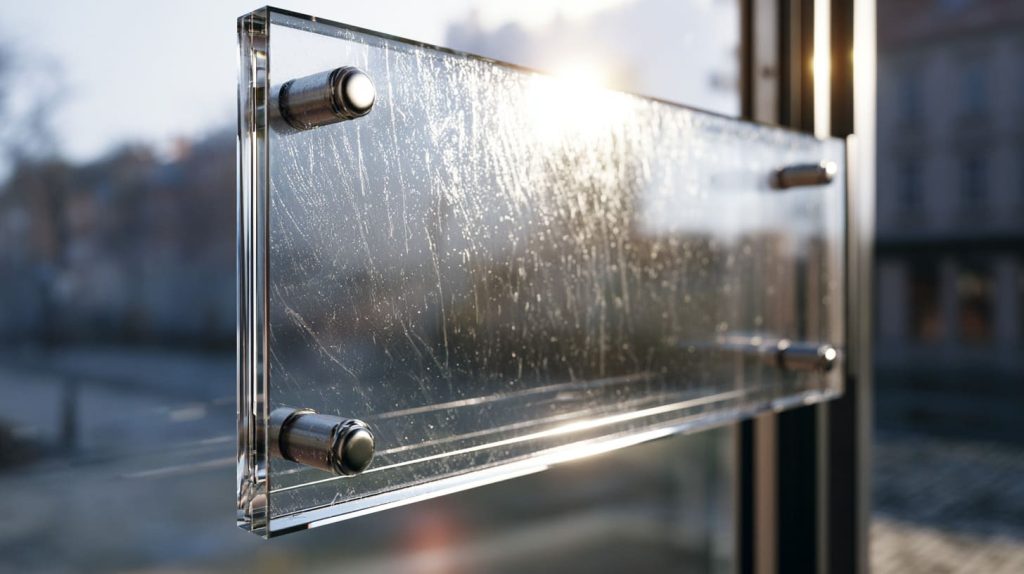
I have noticed one habit in custom acrylic projects. Buyers often name the material solution before they explain the problem.
They say:
- “We need UV-resistant acrylic.”
- “We need thicker acrylic.”
- “We need anti-scratch acrylic.”
- “We need outdoor acrylic.”
- “We need stronger acrylic.”
These words are not wrong. But they can hide the real issue.
When I hear “UV-resistant acrylic,” I slow down. Not because I want to make the project harder. I slow down because the first answer is often not the best answer.
UV is only one part of outdoor failure
Outdoor failure is rarely caused by one thing.
A display used outdoors may fail because of sunlight. But it may also fail because of wind, heat, rain, cleaning, poor support, or metal hardware pressure.
The acrylic sheet may be UV-resistant, but the product is not only a sheet. It is a structure.
It has holes.
It has edges.
It has joints.
It may have printing.
It may have screws.
It may have glue.
It may be mounted to a wall, shelf, metal bracket, or wooden base.
Each part creates a possible failure point.
| Part of product | Possible failure |
|---|---|
| Sheet surface | Yellowing, haze, scratches |
| Edge | Cracks, chips, stress marks |
| Screw hole | Radial cracks, breakage |
| Glue joint | Separation, whitening, weak bond |
| Large flat panel | Bowing or warping |
| Printed logo | Fading or peeling |
| Mounting point | Stress concentration |
If we only talk about UV, we may miss the part that will fail first.
Buyers often confuse sunlight exposure with total outdoor durability
This is one of the most common misunderstandings.
A buyer may say, “This product is for outdoor use, so I need UV-resistant acrylic.”
That sounds logical. But outdoor use is not one condition. It is a bundle of conditions.
A product can be exposed to sunlight but not impact.
A product can be shaded but exposed to heavy cleaning.
A product can be indoors but placed under strong LED lighting and daily touching.
A product can be outdoors but only used for a short campaign.
So I prefer to divide outdoor durability into smaller questions.
| Question | Why it matters |
|---|---|
| Is it under direct sun? | UV and heat risk |
| Is it touched by customers? | Scratch and impact risk |
| Is it washed often? | Chemical and surface risk |
| Is it mounted with screws? | Crack risk |
| Is it large and flat? | Warping and wind risk |
| Is it permanent or temporary? | Cost and grade choice |
The mistake is not asking for UV resistance. The mistake is thinking UV resistance equals full durability.
A UV-resistant sheet can still crack, warp, scratch, leak, or fail at joints
This is the part buyers sometimes do not want to hear, but it matters.
A UV-resistant acrylic sheet is still acrylic.
It still needs the right design.
It still needs clean processing.
It still needs correct installation.
It still needs proper cleaning.
A UV-resistant sheet can still crack around a screw hole if the hole is too close to the edge.
It can still warp if the panel is too thin for its size.
It can still scratch if staff wipe dust with a dry rough cloth.
It can still leak if the joint design is poor.
It can still fail if heavy load is placed in the wrong direction.
This is why I try not to quote material grade alone. I want to see the drawing, size, environment, and use method.
Judgment point: before choosing UV-grade material, define the real failure mode
Before I recommend UV-grade material, I usually ask myself one uncomfortable question: if this product fails, what will the buyer blame first, and what will actually cause it?
Those two answers are often different.
The buyer may blame the material. But the real cause may be installation.
The buyer may blame the supplier. But the real cause may be cleaning.
The buyer may blame sunlight. But the real cause may be heat or stress.
So I try to define the failure mode first.
| Possible failure mode | Main prevention method |
|---|---|
| Yellowing | Better acrylic grade, UV performance |
| Cracking at holes | Larger holes, more clearance, better position |
| Warping | More thickness, ribs, support, smaller span |
| Scratching | Surface protection, handling SOP, cleaning method |
| Joint separation | Better bonding design and larger glue area |
| Logo fading | Better ink, print position, UV protection |
When the failure mode is clear, the material choice becomes easier.
And this is where the real detective work begins. Many “UV problems” are not UV problems at all.
What Problems Are Commonly Misdiagnosed as UV Problems?
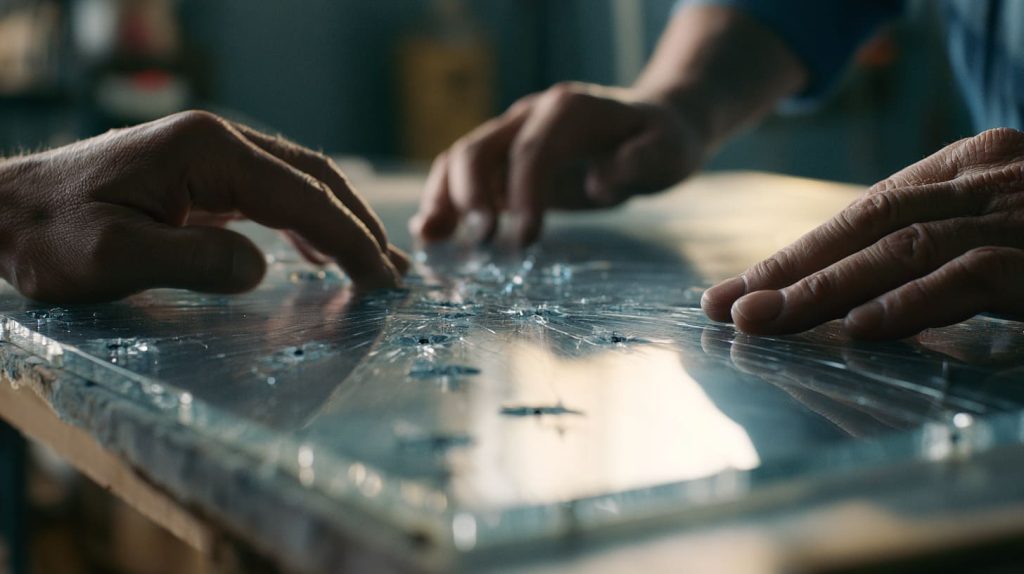
In our factory work, some problems arrive wearing the wrong name.
A buyer may say, “The acrylic aged badly.”
But after checking photos, the problem is stress cracking.
Another buyer may say, “The acrylic quality is poor.”
But the surface was cleaned with strong alcohol every day.
Another buyer may say, “The acrylic cannot handle outdoor use.”
But the panel was too thin and unsupported.
This is why I do not like guessing from one sentence. Acrylic failure has patterns. If we read the pattern, we can find the real cause faster.
Cracking from stress, drilling, bonding, or tight tolerances
Cracking is one of the most common problems that buyers may misread as aging.
If cracks appear around holes, corners, bends, or glued areas, UV is usually not my first suspect.
I look for stress.
Stress can come from many small decisions:
- Hole too close to the edge
- Screw too tight
- No washer or soft gasket
- Sharp inside corner
- Bad drilling quality
- Solvent bonding stress
- Tight assembly tolerance
- No expansion gap
- Acrylic forced into position
Acrylic does not like being trapped. It needs room. It needs smooth edges. It needs clean holes. It needs reasonable pressure.
| Crack location | Likely cause |
|---|---|
| Around screw holes | Over-tightening or no clearance |
| At inside corners | Sharp corner stress |
| Along bonded joint | Poor bonding or stress from solvent |
| Near drilled hole edge | Hole too close to edge |
| Across bent area | Forming stress or wrong radius |
A UV-resistant sheet will not save a bad hole design.
For a buyer like Jacky, who has factory visit experience, this matters because the drawing stage is the cheapest time to solve cracking. After production, every fix is more expensive.
Warping from heat, thickness, and unsupported spans
Warping is another problem that gets blamed on sunlight.
Sometimes sunlight is part of the cause. But the deeper cause is often heat plus weak structure.
A large flat acrylic panel can bow if it is too thin. A display cover can move if it has no support. A long acrylic strip can bend if one side gets hotter than the other side.
The problem becomes worse when:
- The panel is large
- The sheet is thin
- The acrylic is dark-colored
- The part is close to lights
- The mounting holds one side too tightly
- The design has no ribs or support
| Design condition | Warping risk |
|---|---|
| Small acrylic box | Low |
| Large clear cover with support | Medium |
| Large thin panel with no frame | High |
| Dark acrylic under sun | High |
| Long display shelf with load | Medium to high |
Here is the practical trade-off I often explain to buyers: a thicker sheet costs more, but a thin sheet that warps costs more twice—once in production, and again in complaints.
Warping is rarely solved by UV grade alone. It is usually solved by better structure.
Surface haze from wrong cleaning chemicals
Surface haze is painful because the product may be well made, but it slowly starts to look old.
Many acrylic products are used in retail stores, hotels, offices, and homes. Staff clean them often. The cleaning method matters a lot.
Acrylic can be damaged by harsh chemicals. Strong alcohol, ammonia-based cleaners, solvents, and abrasive cleaners can create haze, fine cracks, or dull surfaces.
The buyer may think the acrylic is aging under light. But the real damage may happen every morning during cleaning.
| Cleaning method | Risk |
|---|---|
| Soft cloth with mild soap water | Low |
| Microfiber cloth and acrylic cleaner | Low |
| Dry wiping dust | Scratch risk |
| Alcohol spray every day | Haze or stress risk |
| Ammonia cleaner | Surface damage risk |
| Rough paper towel | Fine scratches |
Acrylic is beautiful because it is clear and glossy. That also means bad cleaning damage is easy to see.
For cosmetic displays, this is very important. A hazy display makes the cosmetic product look cheaper. The display does not sell beauty anymore. It starts to steal beauty.
Scratches from handling, packaging, and daily use
Scratches are not UV damage. But buyers often put them into the same “durability” bucket.
Acrylic has good clarity, but it can scratch more easily than glass. That means handling and packaging are not small details. They are part of product quality.
Scratches can happen during:
- Cutting
- Polishing
- Assembly
- Film removal
- Packing
- Shipping
- Store installation
- Daily cleaning
- Customer touching
A buyer may receive a display and see scratches. He may think the material is weak. But sometimes the problem is packaging, film quality, separator design, or staff handling.
| Stage | Scratch prevention |
|---|---|
| Production | Keep protective film on as long as possible |
| Assembly | Use clean work surface |
| Packing | Use foam, film, and separators |
| Shipping | Avoid part-to-part rubbing |
| Store use | Train staff to clean gently |
For custom acrylic displays, I care a lot about packaging because the buyer does not judge only the product. He judges the product after shipping. That is the real product he receives.
Joint failure from poor glue area or bad load design
Acrylic bonding can look clean when done well. But joints are often a weak point if the design is wrong.
A glued joint can fail because:
- The glue area is too small
- The load pulls the joint in the wrong direction
- The surface is not prepared well
- The part is forced during assembly
- The bonding process leaves stress
- The product is used with more weight than planned
UV resistance does not strengthen a weak joint.
If a display shelf holds heavy products, the load path matters. If the weight pulls directly on a narrow glued edge, I become cautious. If the design uses slots, supports, ribs, or mechanical fixing, I feel more comfortable.
| Joint design | Risk level |
|---|---|
| Wide bonding area | Lower |
| Slot-and-glue structure | Lower |
| Thin edge-only glue | Higher |
| Heavy load on unsupported joint | Higher |
| Glue joint plus screw support | Often safer |
The small thing I watch here is not the glue brand first; I watch how the weight travels through the product, because even good glue fails when the design asks it to do the wrong job.
Once we separate these false UV problems, we can make a better decision. There are still many times when UV-resistant acrylic is exactly the right choice.
When UV-Resistant Acrylic Is the Right Choice

I do recommend UV-resistant acrylic in the right situation.
I just do not want it to become the default answer for every durability question.
Good material choice is like good medicine. It works when the diagnosis is right.
Outdoor signs and display covers
Outdoor signs and display covers are clear cases where UV performance can matter.
These products may face sunlight for a long time. They must stay clear or keep their color. If they yellow, fade, or look old too fast, the brand image suffers.
Common examples include:
- Outdoor menu covers
- Sign protection panels
- Display windows
- Outdoor brochure holders
- Information board covers
- Clear protective panels for signage
For these products, I normally ask:
- Is the acrylic fully outdoor or semi-outdoor?
- Does it face direct sun?
- Is it vertical or horizontal?
- Is rain involved?
- Is the customer expecting 1 year, 3 years, or 5 years of use?
- Is the product easy to replace?
| Use case | UV importance | Other important checks |
|---|---|---|
| Outdoor sign cover | High | Thickness, mounting, sealing |
| Outdoor menu display | High | Cleaning, rain, opening method |
| Semi-outdoor brochure holder | Medium | Drainage, impact, dust |
| Indoor sign near window | Medium | Sun direction, service life |
| Short-term event display | Low to medium | Cost and schedule |
In outdoor signage, UV-resistant acrylic makes sense, but I still check the fixing method. A clear cover that stays transparent but cracks around the screws is still a failed product.
Museum, artwork, and product protection
For museums, artwork, and premium product protection, UV filtering can be very important.
The acrylic is not only protecting itself. It is protecting what is behind it.
This is a different mindset.
A normal retail display wants to look good. A museum cover or artwork panel may need to reduce UV exposure to the object inside or behind it.
This can matter for:
- Art prints
- Photos
- Documents
- Collectibles
- Museum objects
- Premium display items
- Limited-edition products
| Project type | Main concern |
|---|---|
| Artwork cover | Protect color and paper |
| Museum display case | Protect object and maintain viewing quality |
| Collectible display | Reduce aging and dust |
| Premium product cover | Keep product clean and visible |
For these projects, I pay more attention to optical quality. The buyer may care about distortion, reflection, edge finish, and surface quality as much as UV.
If the viewing experience is poor, UV protection alone is not enough.
Window-facing retail displays
Window-facing retail displays are tricky.
They are not fully outdoors, but they may receive strong sunlight every day.
This is common for:
- Cosmetics displays
- Jewelry displays
- Watches
- Perfume stands
- Gift product displays
- Bakery or packaged food displays
- Brand showcase shelves
A window display has two jobs. It must show the product. It must also survive the sun.
If the acrylic yellows, the product looks old. If the printed logo fades, the brand looks weak. If the surface scratches during cleaning, the whole window loses its sharp look.
For window-facing displays, I check sunlight direction and daily cleaning habits before choosing material. A display behind glass may still get heat and UV exposure, but cleaning and scratching may become the bigger daily risk.
Clear covers exposed to strong sunlight
Clear covers are especially sensitive because they are judged by transparency.
A small change is easy to notice.
A cloudy cover looks dirty. A yellow cover looks cheap. A scratched cover makes the object inside look less valuable.
Clear covers may include:
- Protective covers
- Dust covers
- Equipment covers
- Display case covers
- Product shields
- Transparent panels
For these parts, I often ask if the buyer prefers:
- Better UV resistance
- Better impact resistance
- Better scratch resistance
- Lower cost
- Better clarity
- Easier replacement
The answer depends on the use.
A clear acrylic cover for a premium indoor display has different needs from a cover used in a public outdoor area.
Long-life projects where optical clarity is critical
If the project is expected to last many years, material grade matters more.
For short-term promotional displays, the buyer may care more about cost and fast delivery. For long-life products, small aging problems become big later.
| Expected use time | Material decision |
|---|---|
| 1-3 months | Standard acrylic may be enough |
| 6-12 months | Check light, cleaning, and handling |
| 1-3 years | Consider better grade if exposed |
| 3+ years | UV and structure both matter more |
I make a sharper recommendation when the buyer gives me a target service life, because without that number, “durable” is just a nice word with no real meaning.
That service life question sounds simple. But it often changes the quote, the drawing, and even the packaging.
Still, there is a line we should not cross. Some projects are too demanding for UV-resistant acrylic alone.
When UV-Resistant Acrylic Is Not Enough
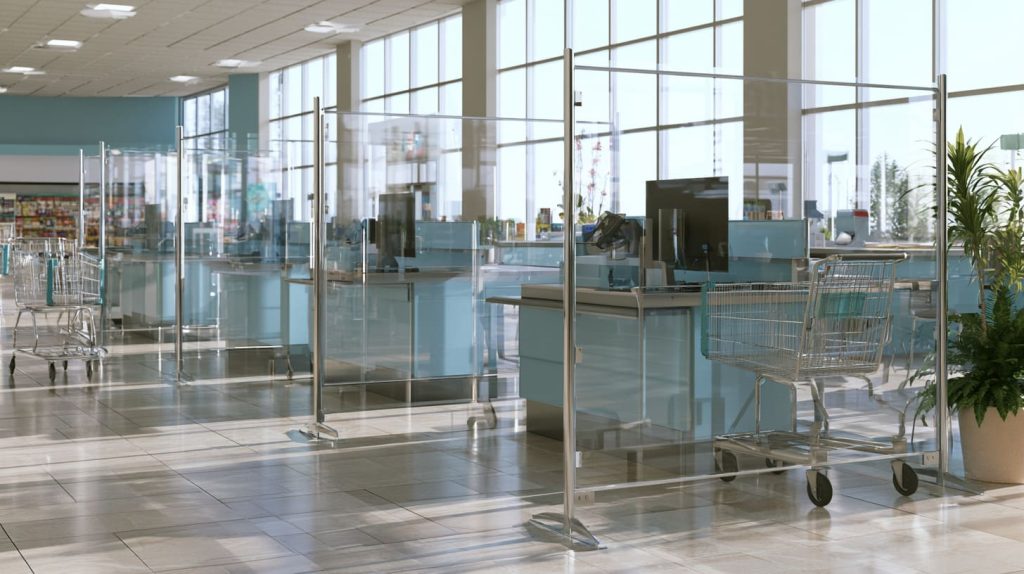
Some buyers want one material to solve everything.
I understand that feeling. It is easier. It is faster. It makes the RFQ look simple.
But custom acrylic work does not reward oversimplification.
UV-resistant acrylic is not enough when the main risk is not UV.
High-impact public areas
Acrylic is strong enough for many display uses, but it is not the best answer for every impact situation.
If a product is used in a place where people may hit it, push it, drop things on it, or abuse it, I become careful.
Examples include:
- Public transport areas
- School environments
- Outdoor public displays
- Sports facilities
- High-traffic retail areas
- Protective shields near moving objects
Acrylic can crack under strong impact. Polycarbonate is often better when impact resistance is the main requirement.
| Environment | Main risk | Better focus |
|---|---|---|
| Boutique counter | Appearance and cleaning | Acrylic often works well |
| Mall walkway | Touching and impact | Thicker acrylic or PC may be needed |
| School or public area | Abuse resistance | Polycarbonate may be safer |
| Outdoor public sign | Sun, impact, wind | Structure and material both matter |
The decision I make here is not about what material sounds better; I look at who will touch the product, because user behavior often damages displays faster than weather does.
A display used by trained staff is different from a display used by the general public.
Large outdoor panels with wind load
Large panels need structure.
A UV-resistant acrylic panel can still bend, vibrate, or crack if wind load is high and the mounting is weak.
This matters for:
- Outdoor signs
- Large display windows
- Protective panels
- Wall-mounted covers
- Large decorative acrylic sheets
When the panel size increases, the risk increases fast.
A small acrylic sign may be simple. A large sheet on an outdoor wall is not simple. It may need thicker material, frame support, flexible mounting, or even another material.
| Panel condition | Risk |
|---|---|
| Small panel, full support | Low |
| Medium panel, edge support | Medium |
| Large panel, corner screws only | High |
| Large thin panel outdoors | Very high |
For large outdoor panels, I care about span distance, fixing points, and frame design more than the UV label.
Sunlight may age the panel slowly. Wind may break it much sooner.
Hot environments near lighting or equipment
Heat is often ignored.
Acrylic can handle normal display environments well, but heat can create warping, expansion, and stress.
This is important near:
- Strong LED light boxes
- High-power lighting
- Equipment covers
- Store windows with heat buildup
- Outdoor dark-colored panels
- Enclosed display cases without airflow
Acrylic expands with temperature change. If the design gives no room for movement, the material may stress or crack.
| Heat source | Possible problem |
|---|---|
| Direct sunlight | Expansion and warping |
| LED lighting | Local heat buildup |
| Dark surface color | Higher heat absorption |
| Closed box | Poor airflow |
| Metal frame | Pressure during expansion |
A UV-resistant sheet may survive sunlight better, but it still expands. If it is locked tightly by screws or a frame, stress can build up.
So heat needs design space, not only better material.
Chemical exposure or aggressive cleaning
If acrylic is exposed to harsh chemicals, UV resistance will not help much.
This includes:
- Strong alcohol cleaning
- Ammonia cleaners
- Solvents
- Industrial cleaners
- Fragrance oils
- Cosmetic chemicals
- Adhesive residue removers
For cosmetic displays, this point is easy to miss. The display may not be in a factory. It may look like a safe retail environment. But cosmetics, perfume, oils, and cleaning sprays can contact acrylic.
The surface can haze. Fine cracks may appear. The glossy look may fade.
| Exposure | Risk |
|---|---|
| Mild soap water | Low |
| Perfume spray | Medium |
| Alcohol cleaning | Medium to high |
| Solvent cleaner | High |
| Industrial chemical | High |
When chemical contact is expected, I ask for the exact liquid if possible. A general word like “cleaner” is not enough.
Heavy-duty industrial or transport applications
Acrylic can be used in many custom parts, but it is not always the right material for heavy-duty industrial use.
If the part must handle vibration, impact, chemical exposure, high heat, or rough transport, we may need to compare acrylic with polycarbonate, PETG, metal, or other materials.
Acrylic is excellent for clarity, display quality, and clean visual presentation. But it should not be forced into every job.
| Application | Acrylic suitability |
|---|---|
| Retail display | Very good |
| Cosmetic organizer | Very good |
| Clear dust cover | Good |
| Outdoor public guard | Depends |
| Heavy impact shield | Often not first choice |
| Industrial machine guard | Needs careful review |
I would rather lose a wrong order than ship a product that I already know may fail, because a short-term sale can become a long-term trust problem.
That is why the next question becomes important: if not only UV, then should we compare acrylic with polycarbonate?
Acrylic vs Polycarbonate: Is UV Really the Main Decision?
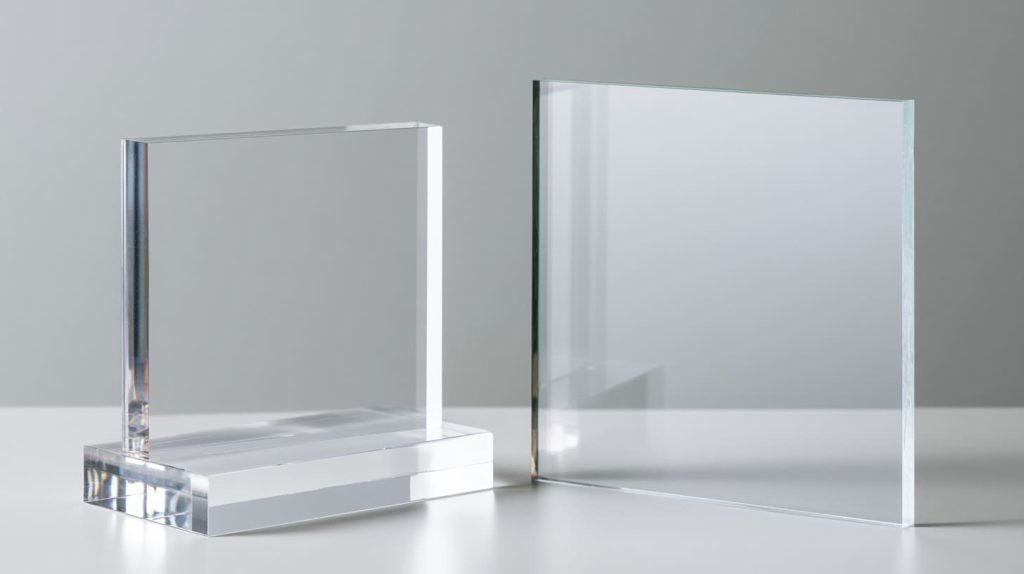
Many buyers compare acrylic and polycarbonate when they talk about outdoor use.
This comparison is useful, but it can also create another misunderstanding.
The main question is not always “Which one is more UV-resistant?”
The better question is: What does the part need to survive?
Acrylic: better optical clarity and weathering in many display uses
Acrylic is popular because it looks good.
It has high clarity. It has a clean glossy surface. It can be polished well. It works beautifully for display products, boxes, stands, frames, covers, and custom visual parts.
For many display uses, acrylic gives a premium look at a reasonable cost.
Common acrylic strengths include:
- Excellent clarity
- Good weathering for many applications
- Easy polishing
- Good appearance
- Good fabrication options
- Good for laser cutting and bonding
- Good for retail and cosmetic displays
| Acrylic is strong when... | Why |
|---|---|
| Appearance matters | Clear and premium look |
| Product is display-focused | Good optical quality |
| Impact risk is moderate | Acrylic can perform well |
| Custom shape is needed | Easy to cut, bend, bond |
| Cost must be controlled | Good value for display work |
Acrylic is not weak. It is just not the answer for every kind of abuse.
Polycarbonate: better impact resistance and toughness
Polycarbonate is much tougher against impact.
If the part may be hit, dropped, pushed, or used in a rough public area, polycarbonate may be the better direction.
But polycarbonate also has trade-offs.
It can scratch more easily. It may need coating. It may cost more. It may not polish like acrylic. Its appearance may not be as clean for some display products.
| Polycarbonate strength | Trade-off |
|---|---|
| High impact resistance | Higher cost |
| Tougher for public areas | Surface can scratch |
| Better for safety shields | May need coating |
| Useful for guards | Fabrication can differ |
This is why “stronger” is not always “better.”
A cosmetic display does not need to survive a hammer. It needs to look clean, premium, and easy to maintain. Acrylic may be better there.
A public protective shield may need impact toughness more than perfect polish. Polycarbonate may be better there.
UV-coated polycarbonate: useful when impact and sunlight both matter
Sometimes the best answer is UV-coated polycarbonate.
This can make sense when the part needs both:
- Better impact resistance
- Better sunlight performance
Examples may include outdoor guards, public shields, transport covers, or protective panels exposed to sunlight.
But again, this increases cost. It may also change fabrication and lead time.
So I do not recommend it automatically.
| Requirement | Possible material direction |
|---|---|
| Clear retail display | Acrylic |
| Outdoor sign cover | UV-resistant acrylic |
| Public impact shield | Polycarbonate |
| Outdoor impact shield | UV-coated polycarbonate |
| Premium indoor display | High-quality acrylic |
I like this comparison because it brings the conversation back to the real need.
Decision rule: choose acrylic for clarity, polycarbonate for abuse resistance
My simple way to explain it is this:
Choose acrylic when the buyer needs beauty, clarity, and display quality.
Choose polycarbonate when the buyer needs toughness against impact and rough use.
Choose UV-coated polycarbonate when the buyer needs both impact resistance and sunlight exposure performance.
| Main buyer priority | Better starting point |
|---|---|
| Best visual clarity | Acrylic |
| Premium display appearance | Acrylic |
| Better outdoor clarity | UV-resistant acrylic |
| Strong impact resistance | Polycarbonate |
| Outdoor impact resistance | UV-coated polycarbonate |
| Low-cost indoor display | Standard acrylic |
I do not treat acrylic and polycarbonate like competitors; I treat them like two workers with different skills, and I choose the one that will not complain halfway through the job.
That mindset keeps the decision practical.
But even when acrylic is the right choice, design details can still matter more than the UV grade.
Design Factors That Matter More Than UV Grade
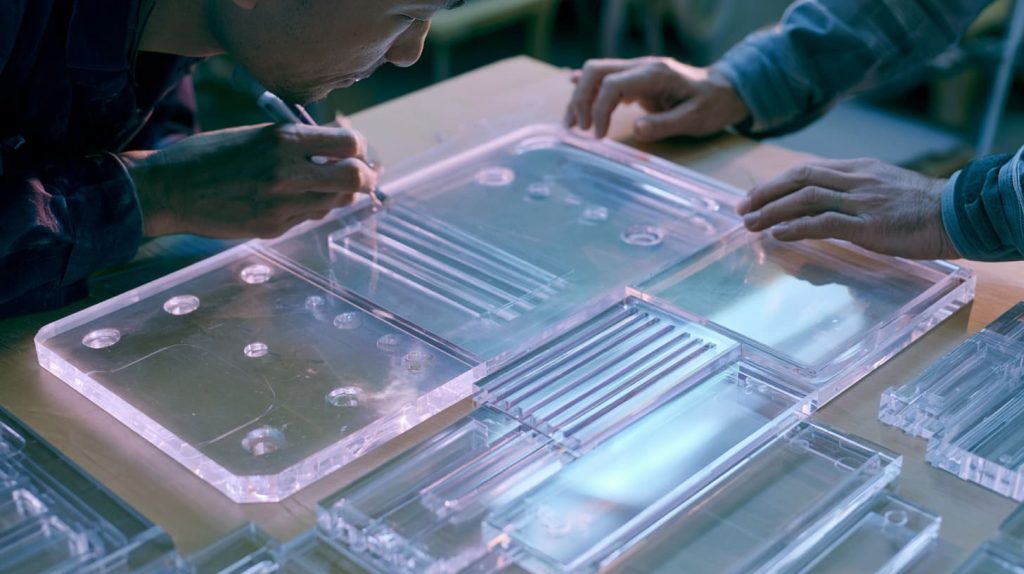
A good acrylic product is not only a good sheet.
It is a good sheet used in a good design.
This is where many custom projects win or lose.
I have seen simple design changes solve problems that a more expensive material grade could not solve.
Thickness and span distance
Thickness is one of the first things buyers discuss.
But thickness should not be chosen by habit. It should be chosen based on size, load, support, and use.
A 3 mm acrylic sheet may work for a small sign holder. It may not work for a large cover. A 5 mm sheet may feel strong in a small box but weak in a large flat panel.
| Product condition | Thickness thinking |
|---|---|
| Small countertop display | Thin to medium sheet may work |
| Large display cover | Need more thickness or support |
| Shelf with load | Need load calculation and structure |
| Outdoor panel | Need thickness plus mounting review |
| Tall freestanding display | Need base stability |
Span distance matters because large unsupported acrylic can bend.
A buyer may ask for thicker material, but sometimes adding support is smarter than only increasing thickness.
| Problem | Possible solution |
|---|---|
| Panel bends | Add support frame |
| Shelf sags | Add ribs or reduce span |
| Cover feels weak | Increase thickness or add bends |
| Cost too high | Improve structure instead of over-thickening |
The choice I usually make is not “thicker is safer”; I compare the cost of thicker material against the cost of smarter structure, because a clever support can save money and perform better.
Edge finishing and corner radius
Acrylic edges are not only about appearance.
Poor edges can create stress points. Sharp corners can crack more easily. Rough cuts can look cheap and may become weak areas.
Good edge finishing matters for:
- Safety
- Appearance
- Stress reduction
- Touch feeling
- Assembly quality
Common edge options include:
| Edge finish | Use |
|---|---|
| Deburred edge | Basic safety and clean handling |
| Flame polished edge | Glossy appearance |
| Diamond polished edge | Premium clean edge |
| Rounded edge | Better touch and lower sharpness |
| Beveled edge | Decorative and premium look |
Inside corners deserve special attention.
A sharp inside corner can concentrate stress. A small radius can reduce cracking risk.
This is especially important for cutouts, slots, and openings.
Hole position and drilling clearance
Holes are small, but they can cause big problems.
Acrylic needs proper hole design. If the hole is too close to the edge, the part can crack. If the screw is too tight, the acrylic can crack. If there is no clearance for expansion, cracks can appear later.
I usually check:
- Hole diameter
- Distance from edge
- Screw type
- Washer use
- Slot holes or round holes
- Expansion space
- Mounting pressure
| Hole design issue | Possible result |
|---|---|
| Hole too close to edge | Crack |
| Screw too tight | Stress cracking |
| No washer | Point pressure |
| No expansion gap | Cracks after temperature change |
| Rough drilling | Weak hole edge |
For outdoor or window-facing parts, hole design is even more important because temperature changes can move the material.
Load direction and mounting method
Acrylic can look strong, but load direction matters.
A shelf load is different from a hanging load. A vertical display load is different from a side impact. A glued box is different from a screw-mounted cover.
Before production, I like to understand how the product will be used in real life.
Questions I ask:
- Will it hold products?
- Will customers touch it?
- Will it be fixed to a wall?
- Will it hang from hooks?
- Will it move during transport?
- Will staff remove and reinstall it?
| Mounting method | Key risk |
|---|---|
| Wall mounting | Hole stress and support |
| Countertop placement | Stability and tipping |
| Hanging display | Load direction |
| Shelf display | Sagging and joint strength |
| Cover with screws | Expansion and pressure |
Acrylic design is not only about how the part looks in a drawing. It is about how force moves through the part.
Expansion gap for temperature changes
Acrylic expands and contracts with temperature.
This is easy to forget because the movement is not obvious when the product is new.
But if a part is exposed to sunlight or temperature change, expansion becomes important.
If the acrylic is locked tightly, stress builds up. If screws leave no room, cracks can form. If the frame is too tight, the panel may bow.
| Design choice | Better practice |
|---|---|
| Tight screw holes | Use clearance holes |
| Rigid frame | Leave expansion space |
| Metal pressure points | Use gasket or soft washer |
| Large panel | Allow movement |
| Outdoor use | Avoid trapping acrylic too tightly |
Expansion gaps are not wasted space. They are insurance.
And in acrylic work, small insurance often saves big trouble.
Design is one side. Installation is the other side. A well-designed part can still fail if it is installed badly.
Installation Mistakes That Make UV-Resistant Acrylic Fail
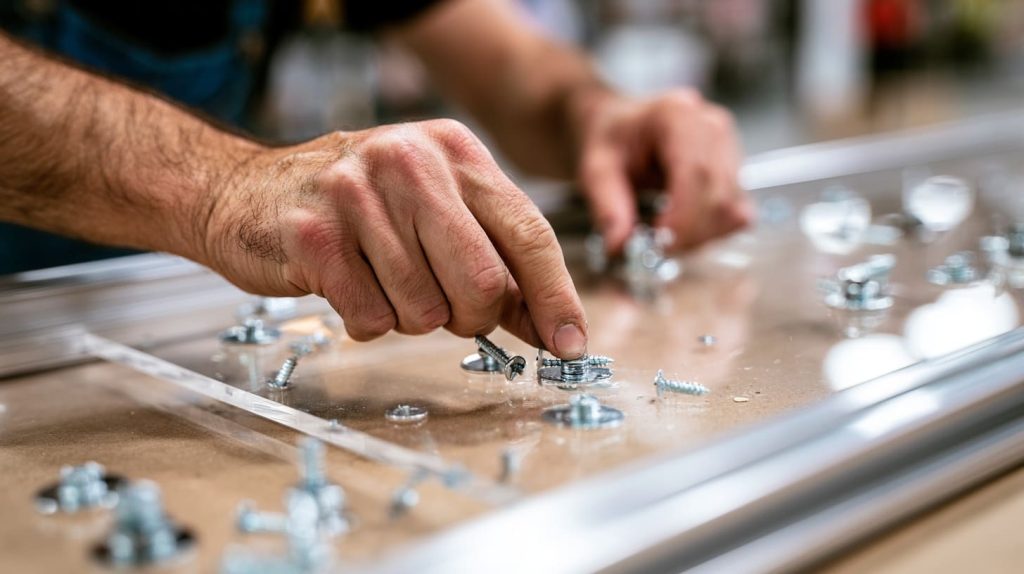
Acrylic products do not live in drawings.
They live on walls, counters, shelves, windows, and display floors.
That means installation is part of product performance.
A good product can fail if installation creates stress. A UV-resistant sheet can crack if the installer treats it like metal.
Over-tightened screws
This is probably one of the most common installation mistakes.
Acrylic does not need to be crushed to stay in place. But some installers tighten screws until the material is under pressure.
At first, it may look fine.
Later, small cracks can appear around the hole. The buyer may think the acrylic quality is poor. But the real issue is pressure.
| Screw issue | Result |
|---|---|
| Too tight | Stress cracking |
| No washer | Point pressure |
| Small hole | No movement |
| Hard metal contact | Crack risk |
| Uneven pressure | Distortion |
A simple washer or gasket can reduce risk. A slightly larger hole can allow movement. Clear installation notes can prevent mistakes.
The detail I never ignore is screw pressure, because the installer can destroy a good acrylic part in ten seconds with one over-tightened screw.
No room for thermal expansion
If acrylic is installed outdoors or near sunlight, it needs room to move.
No room means stress.
This mistake often happens when acrylic is placed into a tight frame or fixed with screws that do not allow movement.
The part may expand during the day and shrink at night. Over time, the stress can create cracks, bowing, or noise.
| Installation condition | Risk |
|---|---|
| Tight frame | Bowing or stress |
| Fixed all sides tightly | No movement |
| Small screw holes | Cracking |
| Metal frame under sun | Heat and pressure |
| No gasket | Direct stress |
This is why I like to know the mounting method before quoting. If the buyer says, “It will be installed by our local team,” I may suggest basic installation notes.
Unsupported large panels
Large acrylic panels need support.
A panel may look flat and strong on the table, but after installation, gravity and wind start working.
If the panel is too large and only fixed at a few points, it can vibrate, bow, or crack.
Common risky designs include:
- Large panels with only corner screws
- Thin sheets with no middle support
- Outdoor panels with no frame
- Long horizontal covers
- Large vertical panels exposed to wind
| Large panel design | Risk |
|---|---|
| Four corner screws only | High stress at corners |
| No frame | Bending |
| Thin sheet | Warping |
| Outdoor exposure | Wind vibration |
| No middle support | Sagging |
For large panels, the question is not only “What thickness?” It is also “How will the panel be supported?”
Direct metal-to-acrylic pressure points
Metal hardware can damage acrylic if pressure is not controlled.
Metal is harder. Acrylic is more sensitive to point pressure. If a metal bracket, screw head, or clamp presses directly on acrylic, cracks can form.
I like using soft contact where possible:
- Rubber washers
- Silicone pads
- Plastic spacers
- Gaskets
- Larger contact area
- Rounded hardware edges
| Contact type | Risk |
|---|---|
| Sharp metal edge | High |
| Small screw head | Medium to high |
| Rubber washer | Lower |
| Wide plastic spacer | Lower |
| Soft gasket | Lower |
This is a small detail, but it shows experience. A drawing may not show pressure marks. Real use will.
Poor outdoor sealing around holes and joints
Outdoor acrylic products may face rain, dust, and temperature change.
If holes, joints, or seams are poorly sealed, water can enter. Water may not damage acrylic like it damages some materials, but it can cause stains, dirt buildup, or problems with parts inside.
For display boxes and covers, sealing matters.
| Area | Possible issue |
|---|---|
| Screw holes | Water entry |
| Glue joints | Dirt line or leakage |
| Hinges | Gaps |
| Doors | Poor closure |
| Bottom area | Water collection |
Good outdoor design may need drainage, gaskets, better covers, or different joint design.
This is why I do not answer “Can it be outdoor?” with only yes or no. Outdoor use needs details.
After installation, the product still has a daily life. That daily life is mostly cleaning and handling.
Cleaning and Maintenance Problems Buyers Often Ignore
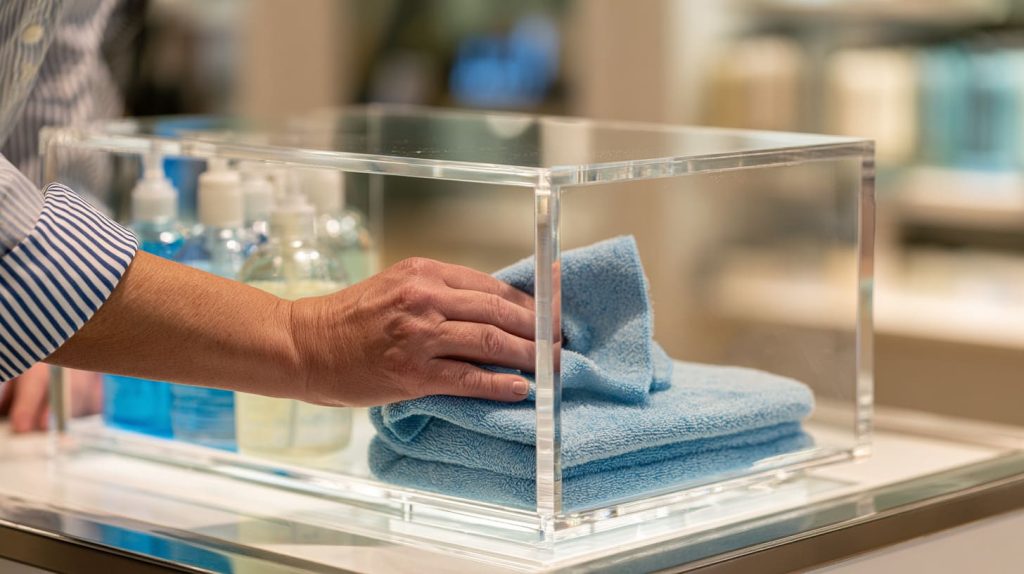
Many buyers spend time on material, thickness, and price.
But they forget cleaning.
That is a mistake.
Acrylic display products often fail visually before they fail structurally. The box still stands. The shelf still holds. The cover still protects. But the surface looks tired.
In retail, appearance is performance.
Alcohol, ammonia, and harsh solvent damage
Acrylic should not be cleaned with every cleaner on the shelf.
Strong alcohol, ammonia, and solvents can damage the surface or create fine cracking, especially when the part already has stress.
This is very important for retail displays because many stores use fast cleaning routines. Staff may spray whatever cleaner is nearby.
| Cleaner type | Acrylic risk |
|---|---|
| Mild soap water | Low |
| Acrylic-safe cleaner | Low |
| Alcohol cleaner | Risky for repeated use |
| Ammonia cleaner | Risky |
| Solvent cleaner | High risk |
| Abrasive paste | High risk |
If the buyer does not train staff, the best material can still look bad.
My practical habit is to ask how the product will be cleaned, because the person with the spray bottle may have more effect on the display than the person who chose the material.
Dry wiping and dust scratches
Dust looks soft. It is not always soft.
When staff dry-wipe dusty acrylic, the dust can act like fine sand. Over time, the surface develops small scratches. Under store lighting, those scratches become visible.
This is common for:
- Clear display boxes
- Cosmetic risers
- Jewelry stands
- Acrylic trays
- Window-facing displays
- Dust covers
Better cleaning steps are simple:
- Blow or rinse away loose dust if possible.
- Use a soft microfiber cloth.
- Use mild soap water or acrylic-safe cleaner.
- Wipe gently.
- Avoid circular hard rubbing.
- Do not use rough paper towels.
Small scratches do not happen all at once. They build up quietly.
Wrong cloth or repeated abrasive cleaning
The cloth matters.
A rough cloth, dirty cloth, or paper towel can create fine scratches.
This sounds too simple, but it is real.
Many retail stores clean displays every day. If the cloth is wrong, the damage repeats every day.
| Cleaning tool | Risk |
|---|---|
| Clean microfiber cloth | Low |
| Soft cotton cloth | Low to medium |
| Dirty reused cloth | Medium |
| Paper towel | Medium |
| Rough towel | High |
| Abrasive sponge | Very high |
Acrylic has a premium look when the surface is clean and glossy. But that premium look needs gentle care.
Staff training for retail and commercial users
For B2B buyers, staff training may sound like the end user’s problem.
But if the display fails visually, the supplier may still receive complaints.
That is why I like to provide simple care instructions when needed.
They do not need to be long. They need to be easy.
Example:
- Do not use alcohol or ammonia cleaner.
- Do not dry-wipe dusty acrylic.
- Use soft microfiber cloth.
- Use mild soap water.
- Avoid sharp tools.
- Keep protective film on until installation.
This is not just “after-sales service.” It protects the product reputation.
Simple maintenance rules that protect long-term appearance
Acrylic maintenance does not need to be complicated.
It needs consistency.
| Rule | Why it matters |
|---|---|
| Clean gently | Reduces scratches |
| Use mild cleaner | Protects surface |
| Avoid solvents | Prevents haze and cracking |
| Remove dust first | Prevents fine scratches |
| Store with separators | Avoids rubbing |
| Train staff | Reduces repeated mistakes |
For cosmetic organizers and retail displays, I believe maintenance is part of design. If a display is beautiful but impossible to keep clean, the design is not complete.
Now we can move from problems to decisions. Before ordering, how should a buyer judge the real requirement?
How to Judge the Real Requirement Before Ordering

A good RFQ does not need to be long. But it needs to be honest.
When a buyer tells me the real use condition, I can give a better answer. When he only gives me a material keyword, I may miss the risk.
This is why I like asking practical questions before quoting.
Where will the acrylic be used?
Location changes everything.
Indoor use is not one thing. Outdoor use is not one thing.
Acrylic used in a hotel lobby is different from acrylic used in a sunny store window. Acrylic used in a shopping mall is different from acrylic used in a school. Acrylic used in Canada is different from acrylic used in a hot coastal market.
| Use location | Main concern |
|---|---|
| Indoor retail shelf | Scratches, cleaning, load |
| Store window | UV, heat, cleaning |
| Outdoor wall | UV, wind, mounting |
| Museum display | Clarity, UV filtering, dust |
| Public area | Impact and abuse |
| Bathroom or wet area | Water marks, sealing |
When I know the location, I can think like the product will live there. That is more useful than only reading a drawing.
How much sunlight will it receive?
Sunlight exposure has levels.
A product near a window for two hours a day is different from a product facing direct sun all afternoon.
I usually ask:
- Is it indoor or outdoor?
- Is it behind glass?
- Which direction does the window face?
- How many hours of direct sun per day?
- Is the acrylic clear, colored, or printed?
- What service life is expected?
| Sunlight condition | UV concern |
|---|---|
| No direct sunlight | Low |
| Indoor, indirect light | Low to medium |
| Window-facing, some direct sun | Medium |
| Strong direct sun daily | High |
| Outdoor permanent use | High |
The judgment changes when the buyer gives real exposure details. Without them, “UV-resistant” is only a guess.
Is impact, heat, or chemical exposure more serious than UV?
Sometimes UV is not the biggest risk.
If the product is used in a public area, impact may be more serious.
If the product is near lighting, heat may be more serious.
If the product is used in cosmetics or cleaning-heavy places, chemical exposure may be more serious.
| Risk type | Warning sign |
|---|---|
| Impact | Public use, children, transport, rough handling |
| Heat | Sun window, lights, equipment, dark color |
| Chemical | Cleaners, perfume, alcohol, cosmetics |
| Load | Shelves, heavy products, long spans |
| Stress | Screws, tight frame, sharp corners |
I try to rank the risks before choosing the material, because the most expensive material option is still a poor choice if it protects against the third biggest problem while ignoring the first.
That sentence may sound strict, but it saves money.
What service life does the buyer expect?
Service life is one of the most useful questions.
A short-term promotion and a five-year display should not be specified the same way.
| Expected service life | Design direction |
|---|---|
| Short promotion | Cost and speed may matter more |
| Seasonal use | Balance cost and appearance |
| 1-2 years | Better material and packaging may matter |
| 3-5 years | UV, structure, cleaning, and replacement plan matter |
| Long-term museum use | Higher optical and UV requirements |
If the buyer does not define service life, every choice becomes vague.
A supplier may quote too low. Another supplier may quote too high. Then the buyer compares numbers that do not represent the same product.
What appearance change is acceptable?
This question is often ignored.
Some products must stay almost perfect. Other products only need to remain functional.
For a museum cover, small optical changes may be unacceptable. For a temporary outdoor sign, minor surface wear may be acceptable. For a cosmetic display, scratches may hurt brand image quickly.
| Product type | Appearance tolerance |
|---|---|
| Museum case | Very low tolerance |
| Cosmetic display | Low tolerance |
| Retail organizer | Medium |
| Outdoor utility cover | Medium to high |
| Temporary event display | Depends on campaign |
Acrylic is often chosen because it looks clean. So we need to define how clean it must stay.
After these questions, the specification becomes much easier to write.
Practical Specification Checklist for Custom Acrylic Products
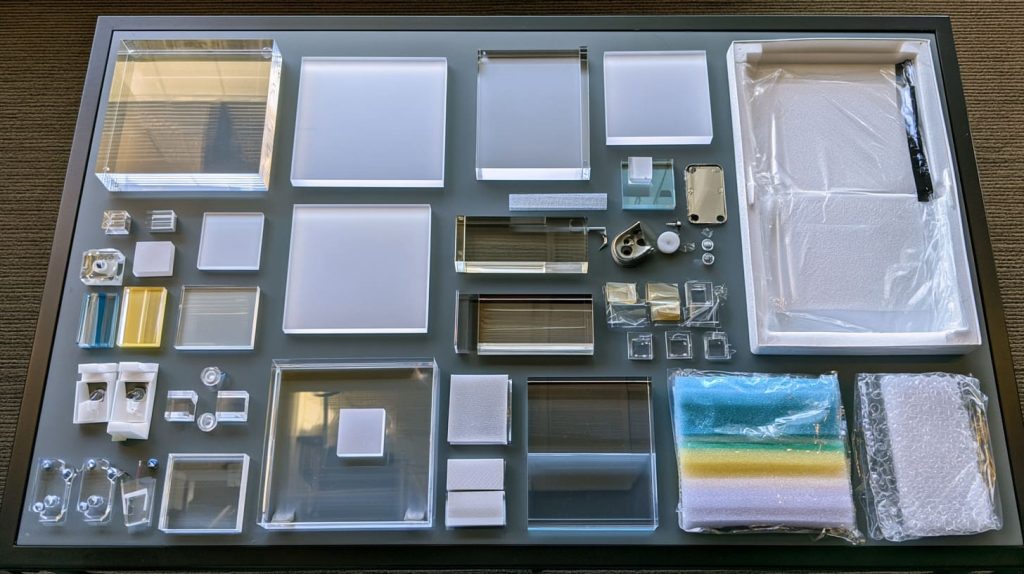
A checklist sounds boring.
But in custom manufacturing, a checklist is a seat belt.
You may not think about it when everything goes well. You are very happy to have it when something goes wrong.
For custom acrylic products, the right checklist keeps the buyer, designer, and factory talking about the same product.
Material grade: standard, UV-filtering, outdoor-grade, or impact-modified
The material grade should match the real use.
Not every product needs UV-filtering acrylic. Not every product needs outdoor-grade material. Not every product should be acrylic if impact is the main risk.
| Material direction | Good fit |
|---|---|
| Standard high-quality acrylic | Indoor displays, boxes, organizers |
| UV-resistant acrylic | Sun-exposed displays and covers |
| UV-filtering acrylic | Artwork, museum, protective panels |
| Impact-modified acrylic | Moderate impact needs with acrylic appearance |
| Polycarbonate | High-impact use |
| UV-coated polycarbonate | Outdoor impact use |
The way I decide material grade is simple but careful: I choose the lowest grade that can safely meet the real requirement, not the highest grade that sounds impressive.
That keeps the product practical.
Thickness and structure
Thickness should work with structure.
A thick sheet with poor structure can still fail. A medium sheet with smart support can perform well.
For RFQ, buyers should provide:
- Product size
- Sheet thickness target
- Load requirement
- Mounting method
- Use direction
- Any bending or bonding areas
| Specification item | Why it matters |
|---|---|
| Overall size | Affects bending and packing |
| Thickness | Affects strength and cost |
| Load | Affects shelf and joint design |
| Support points | Affects warping and cracking |
| Mounting method | Affects holes and stress |
For large or load-bearing products, I prefer to review structure before confirming thickness.
Finish: clear, frosted, tinted, printed, or bonded
Finish changes both appearance and risk.
Clear acrylic shows scratches more easily. Frosted acrylic hides some marks but may show oil or fingerprints. Tinted acrylic may absorb more heat. Printed acrylic needs ink durability. Bonded acrylic needs joint quality.
| Finish | Main concern |
|---|---|
| Clear | Scratches, yellowing, optical quality |
| Frosted | Fingerprints, cleaning |
| Tinted | Heat, color consistency |
| Printed | Logo fading, ink adhesion |
| Bonded | Joint strength and glue marks |
| Polished edge | Appearance and handling |
If the product has printing, I want to know whether the printed side faces sunlight, touch, or cleaning.
Mounting method and hardware
Mounting is not a small detail.
Acrylic parts can be damaged by poor hardware choices.
Buyers should define:
- Screw size
- Hole diameter
- Washer or gasket
- Bracket material
- Frame design
- Installation direction
- Whether the part needs movement space
| Mounting detail | Risk if ignored |
|---|---|
| Screw size | Hole cracking |
| Washer | Point pressure |
| Frame clearance | Warping |
| Bracket design | Stress |
| Installation notes | Wrong handling |
If the buyer has his own hardware, I like to see it early. Hardware can change the acrylic design.
Packaging and handling requirements
Packaging is part of product quality.
For clear acrylic products, scratches during shipping are a real risk.
Good packaging may include:
- Protective film
- PE bag
- Foam protection
- Paper or foam separators
- Strong carton
- Corner protection
- Pallet packing for bulk orders
- Clear unpacking instructions
| Product type | Packaging focus |
|---|---|
| Clear display stand | Scratch prevention |
| Acrylic box | Corner and edge protection |
| Large panel | Flatness and bending protection |
| Printed display | Surface protection |
| Polished product | Anti-rubbing protection |
A product is not finished when production ends. It is finished when the buyer receives it in good condition.
Sample testing before bulk order
Samples are not only for checking appearance.
They are for finding risk before bulk production.
A good sample check may include:
- Size and fit
- Surface clarity
- Edge finish
- Bonding quality
- Load test
- Installation test
- Cleaning test
- Packaging test
- Sunlight exposure check if needed
| Sample test | What it finds |
|---|---|
| Fit test | Drawing or tolerance issue |
| Load test | Shelf or joint weakness |
| Cleaning test | Surface sensitivity |
| Installation test | Hole and hardware risk |
| Packaging test | Shipping damage risk |
For custom orders, I like sample testing because it turns opinions into evidence. The sample either works or it tells us where to improve.
Now the technical side is clearer. But how should we explain this to buyers without sounding difficult?
How We Explain This to B2B Buyers
A good supplier should not make the buyer feel foolish for asking a simple question.
If a buyer asks for UV-resistant acrylic, I do not answer, “You are wrong.”
That would be rude. Also, it would not help.
I prefer to say, “Yes, UV-resistant acrylic can help. Let me also check the use environment so we can avoid the real failure.”
This keeps the conversation friendly and professional.
Do not sell “UV-resistant acrylic” as a magic solution
It is tempting to say yes quickly.
“Yes, we have UV-resistant acrylic.”
“Yes, it is suitable for outdoor use.”
“Yes, no problem.”
But this kind of answer can create problems later.
If the product fails because of cracking or warping, the buyer will remember that we said “no problem.”
So I avoid magic words.
Instead, I explain the limits.
UV-resistant acrylic can help with sunlight aging. It cannot replace correct thickness, good installation, proper cleaning, and smart structure.
| Buyer asks | Better answer |
|---|---|
| Is it UV-resistant? | Yes, and we should also check use condition |
| Can it be outdoor? | It depends on sunlight, mounting, size, and service life |
| Will it last long? | Let us define expected life and main risks |
| Is thicker better? | Sometimes, but structure may matter more |
| Will it crack? | We need to check holes, stress, and installation |
The answer should be honest, not scary.
Ask about use environment before quoting
Before quoting, I like to ask a few basic questions.
Not too many. Just enough.
Useful questions include:
- Where will the product be used?
- Is it indoor, outdoor, or window-facing?
- Does it face direct sun?
- What size and thickness do you expect?
- How will it be mounted?
- Will it hold weight?
- Will people touch it often?
- How will it be cleaned?
- What service life do you expect?
These questions help avoid wrong assumptions.
I have learned to ask these questions early, because changing a drawing after sampling is still okay, but changing a whole batch after shipping is painful for everyone.
That pain is real. Nobody wants it.
Show the trade-off between cost, appearance, and durability
B2B buyers understand trade-offs. They do not always need the cheapest option. They need a clear reason.
So I like to show choices.
| Option | Cost | Strength | Best for |
|---|---|---|---|
| Standard acrylic | Lower | Good for indoor use | Indoor displays |
| UV-resistant acrylic | Medium | Better sunlight performance | Window/outdoor displays |
| Thicker acrylic | Higher | Better stiffness | Larger panels |
| Acrylic with better support | Medium | Better structure | Shelves and covers |
| Polycarbonate | Higher | Better impact resistance | Public or rough use |
When buyers see the trade-off, they can decide with confidence.
They may choose the higher-cost option. They may choose the standard option. But at least the decision is clear.
Help the buyer avoid over-specifying the wrong feature
Over-specifying sounds safe, but it can waste money.
A buyer may request UV-resistant acrylic, thicker material, special coating, and premium packaging all at once. Some of these may be useful. Some may not.
The supplier’s job is not only to accept every request. The supplier should help filter the request.
For example:
| Buyer request | Possible better direction |
|---|---|
| UV-resistant acrylic for indoor drawer organizer | Standard acrylic may be enough |
| Thick acrylic for large shelf | Add support structure too |
| Outdoor acrylic for public area | Check impact risk first |
| Anti-scratch request | Improve cleaning and packaging first |
| Clear box for sun-facing display | UV material and print protection may help |
This kind of advice builds trust.
A buyer with 10 years of purchasing experience does not need empty sales talk. He needs a supplier who can think with him.
Give clear options instead of one generic material answer
I like giving options because one answer may not fit every budget or risk level.
A simple structure can be:
- Option A: Standard acrylic for indoor or low-risk use
- Option B: UV-resistant acrylic for sunlight exposure
- Option C: Thicker or supported structure for large panels
- Option D: Polycarbonate if impact risk is high
This helps the buyer choose.
| Option | When I suggest it |
|---|---|
| Standard acrylic | Indoor, low sunlight, cost-sensitive |
| UV-resistant acrylic | Sunlight exposure, clear appearance needed |
| Thicker acrylic | Large size or load |
| Better structure | Warping or joint risk |
| Polycarbonate | Impact or public abuse risk |
The final recommendation should sound like a working conversation, not a catalog page. Feilong Acrylic does custom work, so the answer should fit the project, not force the project into a fixed product list.
And that brings me to the final point.
Conclusion
UV-resistant acrylic is useful.
I use it. I recommend it. I respect its value.
But I do not treat it as the first and only answer.
The reason is simple. In real custom acrylic manufacturing, many failures are not caused by UV.
A display may crack because the screw holes are too tight.
A panel may warp because the sheet is too thin and unsupported.
A surface may haze because staff clean it with the wrong spray.
A printed logo may fade because only the sheet was considered, not the ink.
A box may fail because the joint design asks the glue to do too much.
So my view is this: UV resistance should be one part of the decision, not the whole decision.
UV resistance is useful, but it should not be the first and only question
If the product faces strong sunlight, yes, UV performance matters.
If the product protects artwork, yes, UV filtering may matter.
If the product sits in a window for years, yes, we should take sunlight seriously.
But before choosing UV-resistant acrylic, I want to know what we are really protecting against.
Sunlight?
Impact?
Heat?
Cleaning?
Load?
Installation stress?
The answer changes the material, thickness, structure, and price.
The better decision is to identify the real risk: sunlight, impact, heat, cleaning, load, or installation
Acrylic products live in real places.
They are touched by staff. They are cleaned every day. They are shipped in cartons. They are installed with screws. They sit near windows. They hold products. They face customer behavior.
This is why I judge the real risk before I judge the material grade.
If the main risk is sunlight, I talk about UV-resistant acrylic.
If the main risk is impact, I compare polycarbonate.
If the main risk is warping, I check thickness and support.
If the main risk is cracking, I check holes, corners, and installation.
If the main risk is surface damage, I check cleaning and packaging.
For custom acrylic products, correct design usually matters as much as the material grade
At Feilong Acrylic, we make custom acrylic products, not catalog items.
That means every project has its own risk.
A cosmetic organizer, a retail display, an acrylic box, a wall-mounted sign, and a museum cover may all use acrylic. But they should not all be judged by the same material sentence.
Correct design matters.
Correct processing matters.
Correct packaging matters.
Correct installation matters.
Correct cleaning matters.
UV resistance is part of quality. It is not the full quality system.
Final judgment: solve the actual failure mode, not just the most visible keyword
This is why I often slow down when a buyer says, “We need UV-resistant acrylic.”
I am not trying to make the quotation difficult.
I am trying to protect the project.
I want the buyer to spend money on the feature that really reduces risk. I want the final product to look good after shipping, after installation, and after daily use. I want the buyer to feel that the supplier did not only follow words, but understood the project.
If you are planning a custom acrylic display, box, cover, stand, rack, or organizer, do not start only with a material keyword.
Start with the real use.
Tell us where the product will go, how it will be mounted, how long it should last, what it will touch, and what failure you most want to avoid.
Then we can help you choose the right acrylic grade, thickness, structure, finish, and packaging.
That is how we solve the real problem—not just the most visible one.