Skip to content
Trade shows are essential for businesses to showcase their products, network with potential clients, and stay ahead of industry trends. But choosing the right display booth can make or break your trade show experience. It’s not just about setting up a table and hoping for the best—it's about crafting an experience that attracts attention, sparks conversations, and ultimately drives business forward. Today, we’re diving into the various types of displays you can use at trade shows, and how to make sure your booth stands out from the crowd.
1. Inline Booths

Definition and Layout
Inline booths are probably what most of us think of when we imagine a trade show display. These booths are lined up in rows, with each booth sharing walls with the ones next to it. You’ll typically only have one open side facing the aisle, which can feel a bit limiting at first glance. But don’t worry—there’s still plenty of room to make an impact if you know how to work with what you’ve got.
Inline booths are ideal for exhibitors who want to keep things simple and budget-friendly while still making a statement. Plus, they’re usually easy to set up, which is a huge bonus when you're dealing with limited time before the show starts.
Advantages
- Cost-Effective: Inline booths are generally cheaper than other booth types. Their standard design and shared walls help keep costs down, making them a solid choice for businesses looking to save.
- Simplicity: The one open side keeps things straightforward. You don’t need to worry about managing multiple access points or complicated layouts, which can save you a lot of time and effort.
Limitations
- Limited Exposure: With just one side open, you might struggle to grab the attention of attendees. It’s easy for your booth to get lost in a sea of other inline booths.
- Space Constraints: Sharing walls with other booths can limit your display’s size and flexibility. You’ll need to get creative to make the most of your space.
Let’s Dive Deeper
If you’re working with a limited budget or don’t need a massive booth, inline booths can work wonders. But if you’re hoping for more visibility or better access to attendees, you might want to think about upgrading to a corner booth.
2. Corner Booths
Definition and Layout
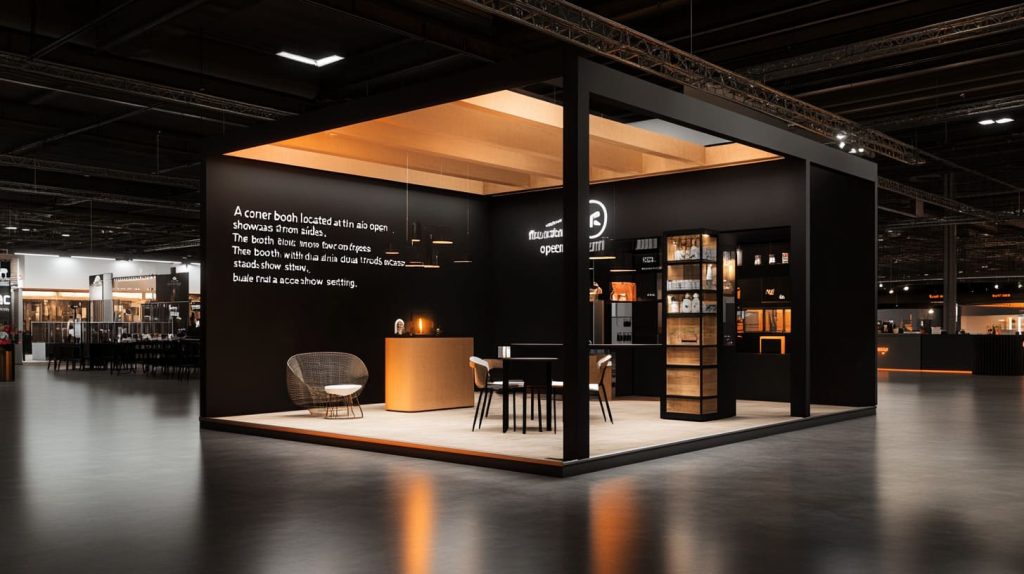
Corner booths are located at the end of aisles, giving you exposure on two sides. This extra open side can be a game-changer for visibility and foot traffic. Attendees can approach your booth from both directions, which increases your chances of being seen. It’s like having the best of both worlds: more exposure without the hefty price tag of an island booth.
Advantages
- Increased Visibility: The dual exposure can make your booth stand out from the rest. Instead of being hidden behind a shared wall, you get twice the space to engage with people walking by.
- Enhanced Engagement: With access from two sides, you can interact with more people and showcase your products in a more dynamic way.
Limitations
- Higher Costs: Corner booths come at a premium because they offer more visibility. But if your goal is to attract a lot of foot traffic, it’s a solid investment.
- Design Challenges: Having two open sides means you’ll need to plan your booth layout carefully. You want to make sure your booth feels cohesive, not cluttered or unorganized.
Moving On...
A corner booth could be exactly what you need if you’re looking for increased exposure but don’t have the budget for an island booth. Now, let’s talk about another option: the peninsula booth.
3. Peninsula Booths
Definition and Layout
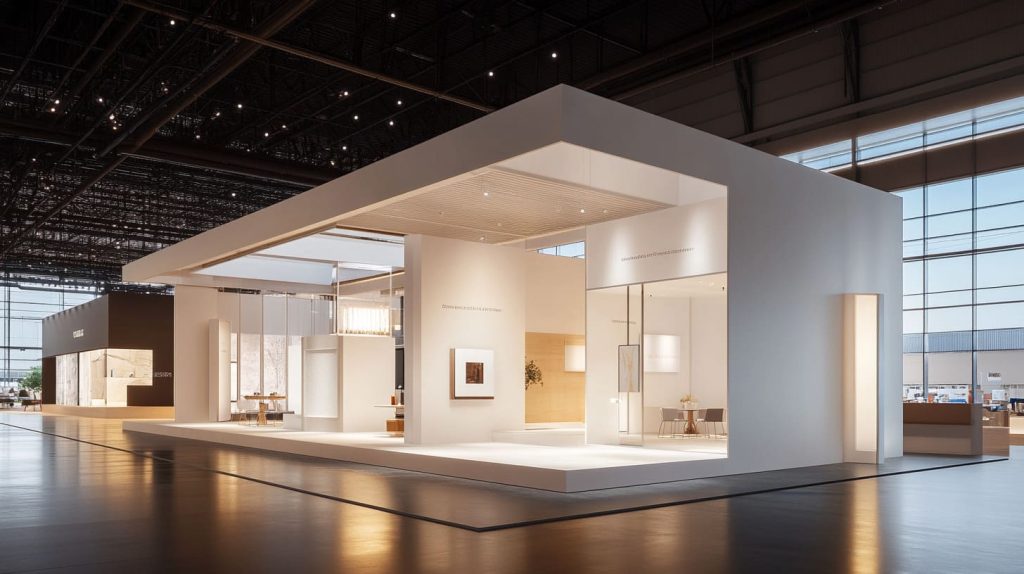
Peninsula booths offer access from three sides, making them a standout choice for exhibitors who want maximum exposure while still being part of the trade show’s flow. These booths are typically located at the end of aisles, so you get that extra attention from multiple directions. It’s perfect if you want a little more room to spread out your display or add interactive elements.
Advantages
- Ample Space: The three sides give you plenty of room to showcase your products or services. You can even add extra features like displays or touchpoints to engage attendees.
- Strategic Positioning: Being positioned at the end of aisles means you’re more likely to attract people from both the main aisle and intersecting aisles.
Limitations
- Complex Setup: With three open sides, it’s easy for your booth to feel overwhelming if it’s not designed well. You’ll need to focus on a layout that feels organized and inviting.
- Potential for Overcrowding: The extra space can be a blessing, but it can also lead to clutter if not managed properly. Keep your booth layout neat and functional.
Want to Keep Reading?
If you’re considering a larger setup, a peninsula booth might be a great choice. But if you want something even bigger, let’s take a look at the island booth next.
4. Island Booths
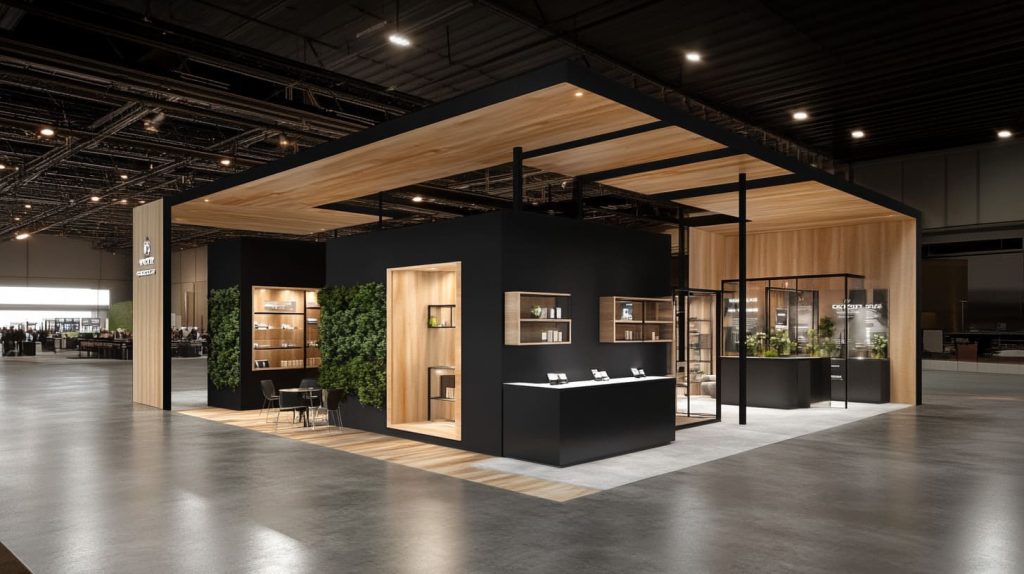
Definition and Layout
Island booths are open on all four sides, giving you the ultimate freedom to create a booth that truly reflects your brand’s personality. With no walls limiting your design, island booths offer unparalleled visibility and flexibility. They’re the perfect choice for businesses looking to make a big impact at the trade show.
Advantages
- Maximum Visibility: Because your booth is open on all sides, attendees can approach from any direction. This makes it much easier to grab attention.
- Design Flexibility: The four-sided design gives you more creative freedom. You can design a booth that really stands out and draws people in from every angle.
Limitations
- Higher Costs: As expected, island booths come with a hefty price tag. Not only do you pay for the prime location, but you also have to account for the extra space and design complexity.
- Increased Complexity: The open design requires careful planning to ensure everything flows smoothly. It’s easy for your booth to feel disjointed if you’re not careful.
Let’s Keep Going
Island booths are ideal for companies that want to make a huge statement, but they’re not for everyone. Let’s shift gears and talk about a more compact option: tabletop displays.
5. Tabletop Displays

Definition and Layout
Tabletop displays are smaller setups that sit on tables, often used for exhibitors with limited space or budget. They’re simple and compact, perfect for companies that don’t need a large booth but still want to make a mark. Think of them as the little guy with a lot of heart—they may not take up much space, but they can still deliver big results.
Advantages
- Cost-Effective: Tabletop displays are much more affordable than larger booths, making them a great choice for businesses on a budget.
- Simplicity: They’re easy to set up and manage, requiring minimal effort from your team. Plus, they’re perfect for smaller product lines or displays.
Limitations
- Limited Space: You won’t be able to display as much as you would in a larger booth. So, keep it simple and focus on showcasing your best products.
- Reduced Visibility: With less space and less height, tabletop displays can be harder to spot in a crowded trade show.
On to the Next One...
Looking for something that’s a bit more engaging? Digital displays might be exactly what you need.
6. Digital Displays

Definition and Layout
Digital displays bring your trade show booth to life with dynamic content like videos, animations, and interactive presentations. Whether you’re showing off your product in action or sharing customer testimonials, digital displays are a great way to keep attendees engaged and interested.
Advantages
- Engaging Content: Videos, slideshows, and animations are more likely to capture attention than static displays. It’s a great way to break up the monotony of traditional booths.
- Flexibility: You can change the content on the fly, which gives you the ability to adapt to different audiences and situations.
Limitations
- Technical Requirements: You’ll need the right equipment and reliable technology to make sure everything runs smoothly.
- Higher Costs: Digital displays can be more expensive to set up and maintain, so be sure to factor that into your budget.
Looking for More?
Digital displays are great, but if you really want to get people involved, interactive displays might be the way to go.
7. Interactive Displays

Definition and Layout
Interactive displays take things up a notch by encouraging attendees to engage directly with your booth. This could be through touchscreens, virtual reality, or interactive demos. The goal is to create an immersive experience that attendees won’t forget.
Advantages
- Enhanced Engagement: Interactive displays are incredibly engaging, making it easier to build memorable experiences and create lasting connections.
- Data Collection: You can gather valuable insights and feedback from attendees, which is priceless for improving future trade show strategies.
Limitations
- Technical Challenges: Interactive displays require solid technical support and reliable equipment to ensure everything goes smoothly.
- Higher Costs: The setup and maintenance costs can be pretty steep, so be prepared for a larger investment.
Conclusion
Choosing the right type of trade show display is essential to making the most out of your event. From the simplicity of inline booths to the flexibility of island displays, there’s a booth style to suit every need. Keep in mind your goals, budget, and the type of interaction you want with your audience. Whether you opt for a more traditional approach or embrace the digital world, your booth’s design will play a key role in your trade show success.