Skip to content

I’m writing this at my workbench, a tall mug of green tea steaming beside a half‑finished acrylic box prototype. Ten minutes ago, a video call with Jacky in Canada wrapped up—he asked, “Why does China still out‑pace everyone else on custom boxes?” That question stuck with me. I’ve walked the factory floor here at Feilong Acrylic for thirteen years. I’ve felt the heat from the laser cutters, smelled the sweet tang of fresh‑cut acrylic, and watched how fast a rough sketch becomes a polished display. Today, I’ll share what I’ve learned so that someone like Jacky, who already knows the basics, can dig deeper.
A quick note before we start: I won’t drown you in jargon or buzzwords. We’ll keep it plain, practical, and personal.
Advantages of Choosing a China Custom Acrylic Box Manufacturer
Cost‑efficiency and Economies of Scale
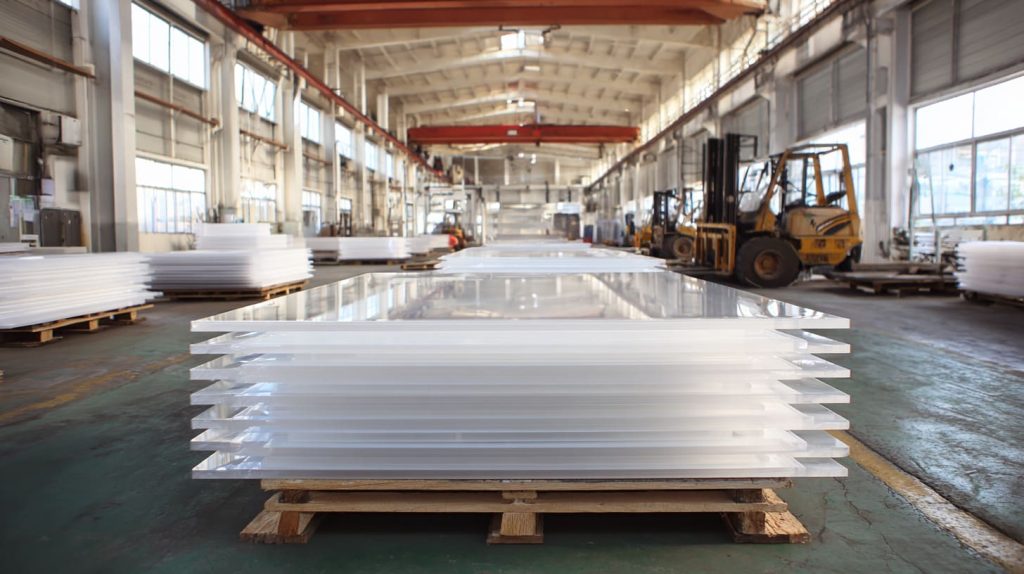
I see the math every day. One sheet of GSG‑certified acrylic costs less when it rides a container with a thousand others. Volume pulls the unit price down, even after freight. That’s the first lever.
Direct Sourcing and Material Savings
Our purchasing team buys pellets straight from the polymer plants in Guangzhou. We skip middlemen, lock in bulk pricing, and pass the savings along. Simple chain, fewer mark‑ups.
Professional In‑house Customization
Five production lines—all under one roof—mean shorter feedback loops. If the CNC operator notices a tolerance drift, the designer is twenty steps away, not twenty hours. Problems shrink fast.
| Advantage | How It Helps You | What To Ask The Factory |
|---|---|---|
| Scale | Lower unit cost | Minimum order quantity, tiered pricing |
| Direct sourcing | Material traceability | Supplier certificates, lot numbers |
| In‑house teams | Faster tweaks | Lead‑time for design changes |
The cost talk is helpful, yet numbers alone don’t pick a partner. Let’s explore the hard checks that separate a solid factory from a risky one.
Key Factors to Evaluate Before Partnering
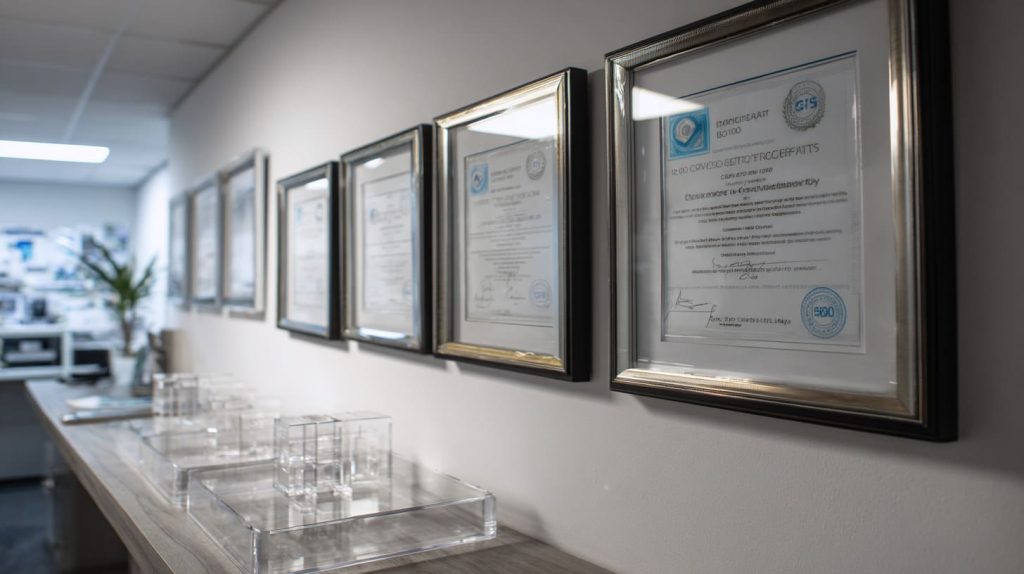
Material Quality & Certifications (ISO9001, GSG, BSCI, SEDEX)
Certs aren’t just wall art. ISO9001 tracks processes; GSG confirms clarity and eco‑safety. Ask for the latest audit date—stale certificates hide sloppy habits.
Design/Technical Capabilities (CAD, CNC, thermoforming)
Peek at the software stack. Do they use SolidWorks or a knock‑off? Can they export STEP files without data loss? Precision lives in the file hand‑off.
Production Capacity and Lead Time
Five lines sound good until they’re overloaded. Request a recent Gantt chart or at least a run‑rate: boxes per day at 70 % capacity. That shows real breathing room.
Factory Audits & Quality Control
On our floor, a QC log hangs beside every press. It lists raw lot, operator ID, and inspection time. If a factory won’t share such logs, pause.
Brass‑tacks checks are vital, but customization drives the final look. Next, we’ll open that toolbox.
Customization Options Offered
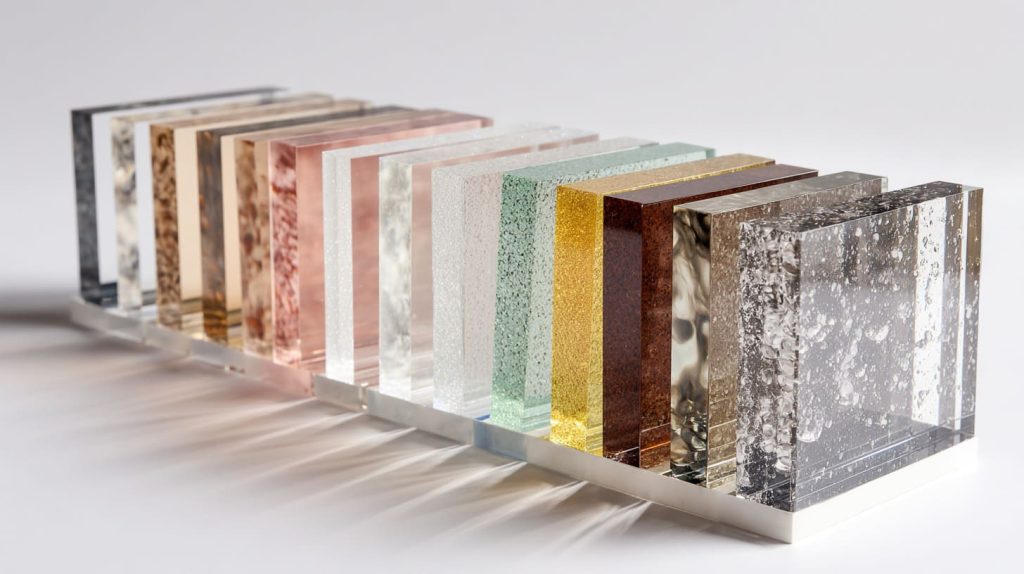
Size, Shape, Color, Thickness
From palm‑sized gift boxes to museum showcases, we adjust the cutter’s travel and bit size, then swap sheet gauges from 3 mm to 15 mm.
Surface Treatment: Polishing, Laser‑cutting, Screen‑printing, UV Printing
A flame‑polished edge glows like glass; a matte‑frost hides fingerprints. Laser etching delivers hair‑line logos in under a minute.
Functional Features: Hinges, Locks, UV‑resistance Coatings
Jewelry clients love micro‑hinges; sports memorabilia shops demand UV blockers. Each add‑on nudges cost and lead time—nothing stays “free.”
Branding: Logo Printing, Engraving, Packaging Options
Silk‑screen, pad print, or deep engrave? Decide by volume and color count. Small runs favor engraving; big runs favor screen.
| Option Type | Typical Lead‑time Impact | Cost Impact (1–5) |
|---|---|---|
| Custom size | +1 day | 2 |
| UV print | +2 days | 3 |
| Lock fitting | +3 days | 4 |
Design bells are fun, yet process discipline keeps them on schedule. Let’s walk through a real build—from sketch to ship.
Manufacturing Process Overview
From Brief to Sample: Consultation & Design Approval
I start with a hand‑drawn sketch or a 3D file from the client. We discuss stress points, shipping drop tests, and budget. Once specs freeze, the sample clock starts.
Prototyping & Sample Production
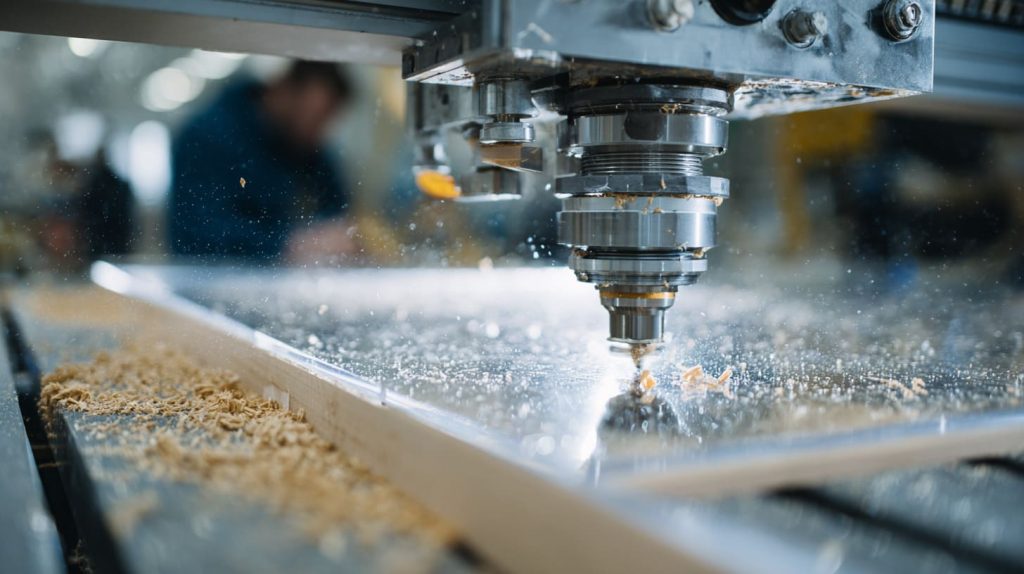
A CNC router mills the first unit. The QC team measures it, records tolerances, and I shoot a 360‑degree video for client sign‑off.
Mass Production Workflow: Cutting, Bending, Bonding, Polishing
Sheets enter the laser cutter, bent at 80 °C, bonded with solvent cements, then flame‑polished. Every fifty units, inspectors run a pull test on joints.
Final QC and Packing, Shipping & Logistics
We drop a data‑logger in one carton to monitor temperature and shocks. Results go to the client alongside tracking numbers.
| Stage | Typical Duration | Key Checkpoint |
|---|---|---|
| Sample | 3‑5 days | Dimension report |
| Mass run | 10‑15 days | Mid‑run audit |
| Packing | 1‑2 days | Carton drop test |
A process map is solid, but certificates alone won’t catch hidden flaws. Next up, the deeper assurance layer.
Quality Assurance & Certifications
Raw Material Inspection & Traceability
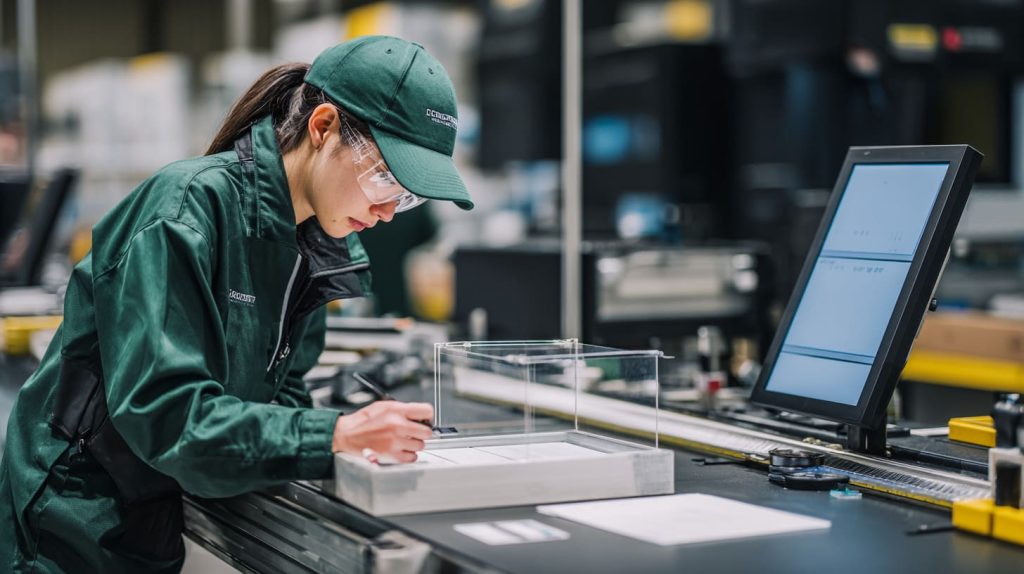
Every sheet gets a barcode. If a box yellows six months later, we can trace it to a batch and a shift.
Process Control: ISO9001 and QC Checkpoints
Operators tick off torque, temperature, and bond time in real time on tablets. Deviations trigger alarms—no guessing.
Pre‑shipment Inspection / Third‑party Audit
I welcome third‑party eyes. They spot loose tape seals, we tighten them, everyone sleeps better.
Post‑delivery Support & Feedback Loop
A scratch complaint triggers a root‑cause drill. We adjust packing foam density and update SOPs. Continuous loops beat static manuals.
Quality shields your brand; pricing guards your margin. Let’s break down the money next.
Cost Considerations & Pricing Strategy
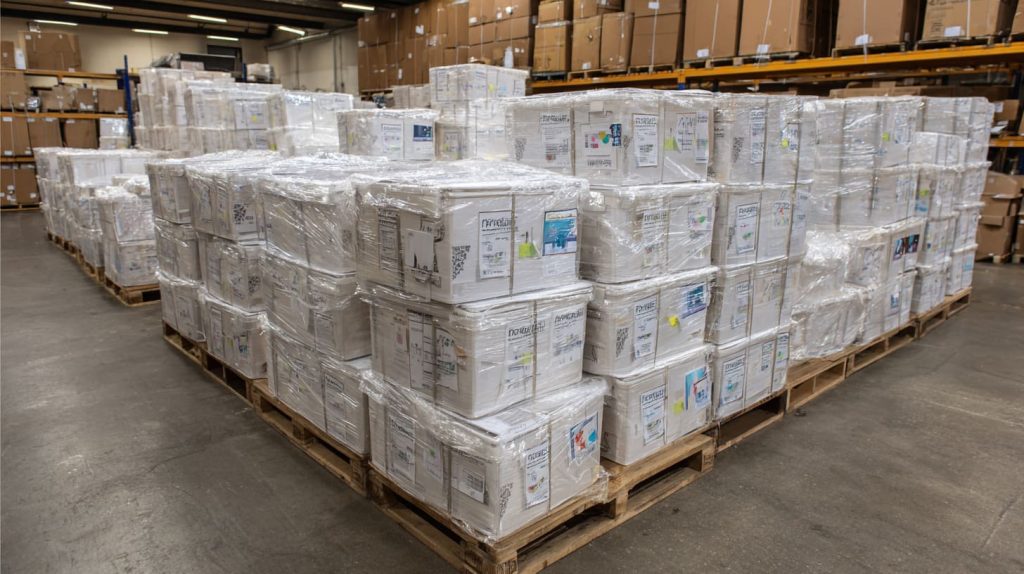
Cost Drivers: Size, Thickness, Features and Order Quantity
Bigger boxes use more acrylic; thicker walls hike weight. Locks and UV coats add labor and chemicals. Quantity tempers it all.
Bulk Pricing and Discounts for OEM/ODM
Tiered prices kick in at 500, 1 000, and 3 000 units here. Each jump saves 5–8 %.
Hidden Costs: Shipping, Customs, Duties, Packaging
Sea freight may beat air, but slow cash flow carries its own cost. Duties vary by HS code—check before quoting clients.
| Cost Element | % of Total (avg) |
|---|---|
| Raw material | 45 % |
| Labor & overhead | 30 % |
| Packaging | 5 % |
| Freight & duty | 20 % |
Money matters, yet smooth teamwork often saves more than discounts. Let’s talk collaboration.
Tips for Effective Collaboration with Chinese Manufacturers
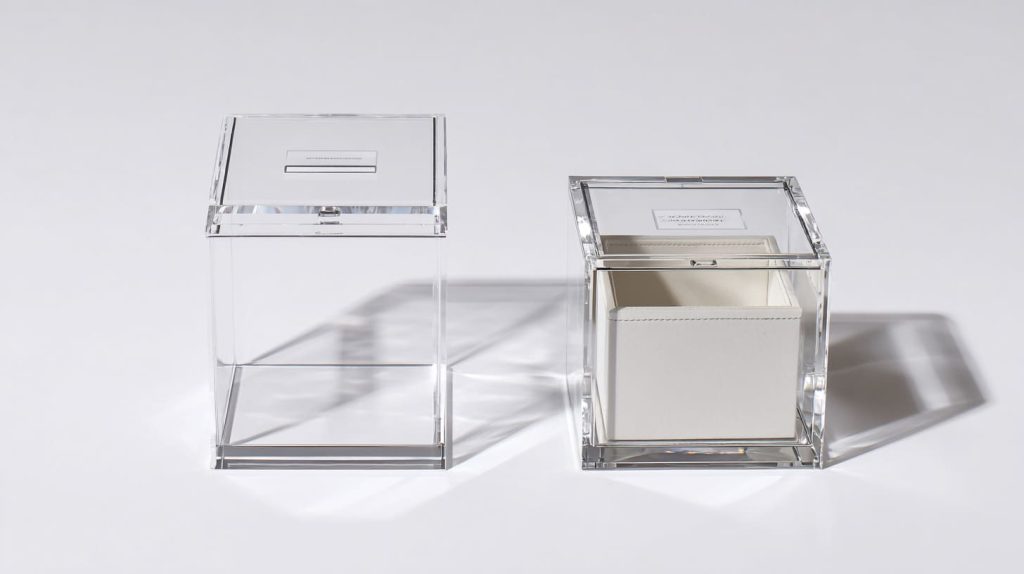
Research Suppliers: Online, Exhibitions, Referrals
Jacky met us at the Canton Fair. Face‑to‑face beats any PDF catalog.
Provide Clear Specifications and Full Project Briefs
A PDF drawing with tolerances and Pantone codes halves the back‑and‑forth emails.
Define Contracts, Timelines & Payment Terms
We use 30 % deposit, 70 % before shipping. Milestones tie to QC sign‑offs.
Maintain Ongoing Communication and Milestone Checks
Weekly video calls keep surprises small—late surprises cost real money.
Schedule Factory Visits or Hire Inspectors
Seeing the shop floor reveals more than any brochure. Bring a tape measure and check your samples against production pieces.
Collaboration shines when you know the end‑use. Let’s zoom out to markets.
Versatile Applications & Market Use Cases
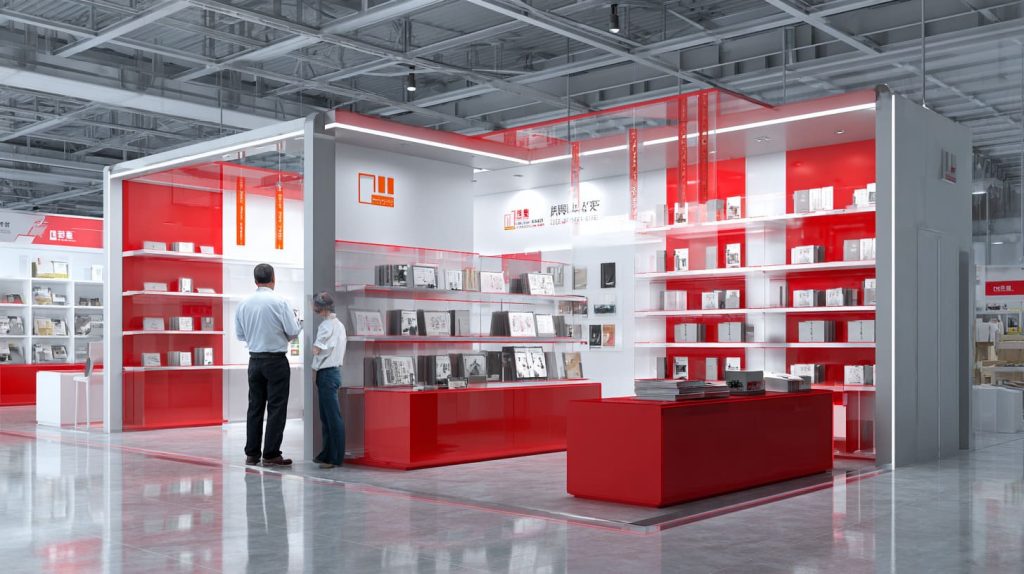
Retail, Cosmetic, Jewelry & Electronic Displays
Acrylic boxes with LED bases make cosmetics pop; anti‑static liners protect circuit boards.
Museum, Exhibitions, Events & POP Displays
We once built a clear case for a 200‑year‑old violin—UV filters shielded varnish without tint.
Personal, Home Organization and Gifts
Clear shoe boxes stack tight and let sneakerheads flex without dust.
Specialty: Donation Boxes, Ballot/Shoe/Acrylic Furniture Components
Transparent ballot boxes raise trust at trade‑union elections. Thick‑walled ones double as side tables in boutique hotels.
| Sector | Key Requirement | Typical Feature |
|---|---|---|
| Cosmetics | High clarity | LED base |
| Museum | UV blocking | Low‑iron acrylic |
| Retail POP | Quick assembly | Knock‑down panels |
Boxes travel far, so upkeep matters. Here’s how to keep them shining.
Maintenance & After‑sales Care
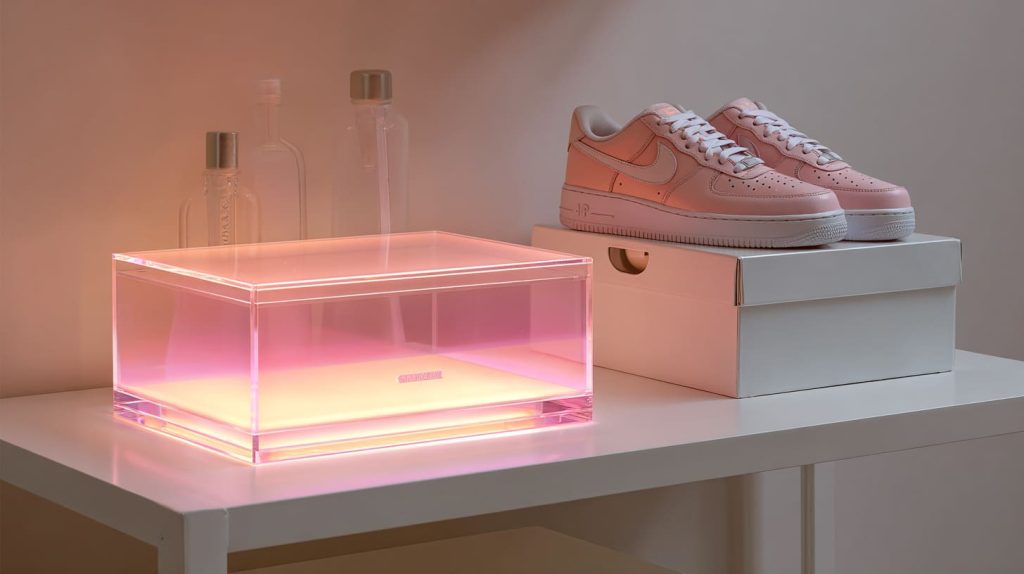
Cleaning Best Practices (non‑abrasive cloth, soapy water)
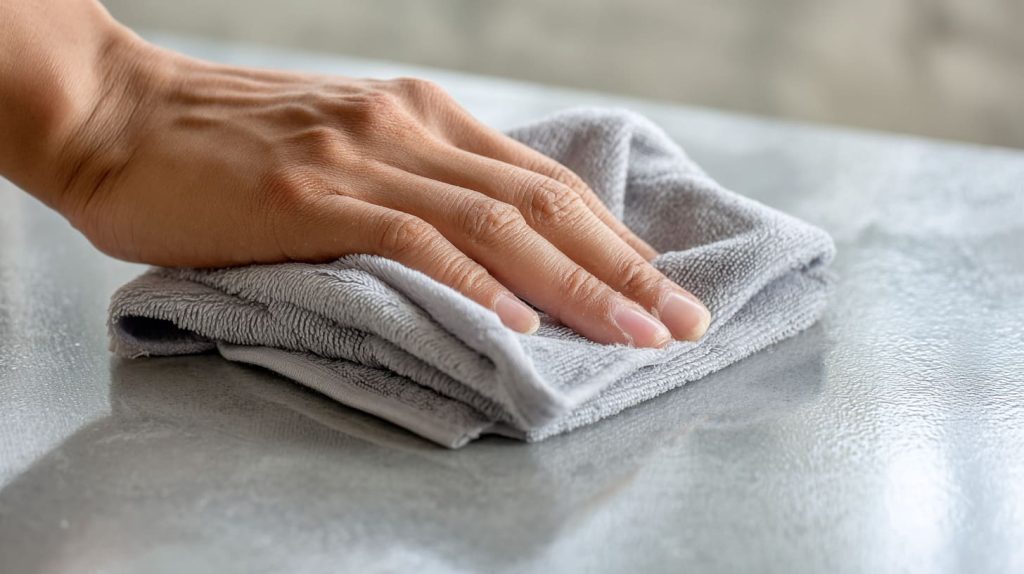
Skip ammonia cleaners. A soft microfiber cloth with mild soap avoids micro‑scratches.
Scratch & UV Protection Tips
Light scuffs buff out with acrylic polish. For UV, apply a clear film if the box lives in direct sun.
Repair or Reworks: Polishing, Heat‑bonding, Replacement Parts
A cracked hinge corner can be re‑bonded with solvent cement if you catch it early.
| Issue | Quick Fix | Long‑term Fix |
|---|---|---|
| Minor scratch | Polish compound | Replace panel |
| Yellowing | UV film | New sheet with UV‑resin |
Good care closes the loop, but strategy ties it all together. Let’s wrap up.
Conclusion
Choosing a Chinese partner for custom acrylic boxes isn’t just about low cost. It’s about clear specs, open communication, and shared pride in a crystal‑clear finish. After thirteen years at Feilong Acrylic, I’ve learned that the best projects feel like joint craftsmanship, not transactions. If you need that kind of partnership—one that values speed, quality, and honest feedback—drop me a note at vincent@flacrylic.com. I’ll have the kettle on.