Skip to content
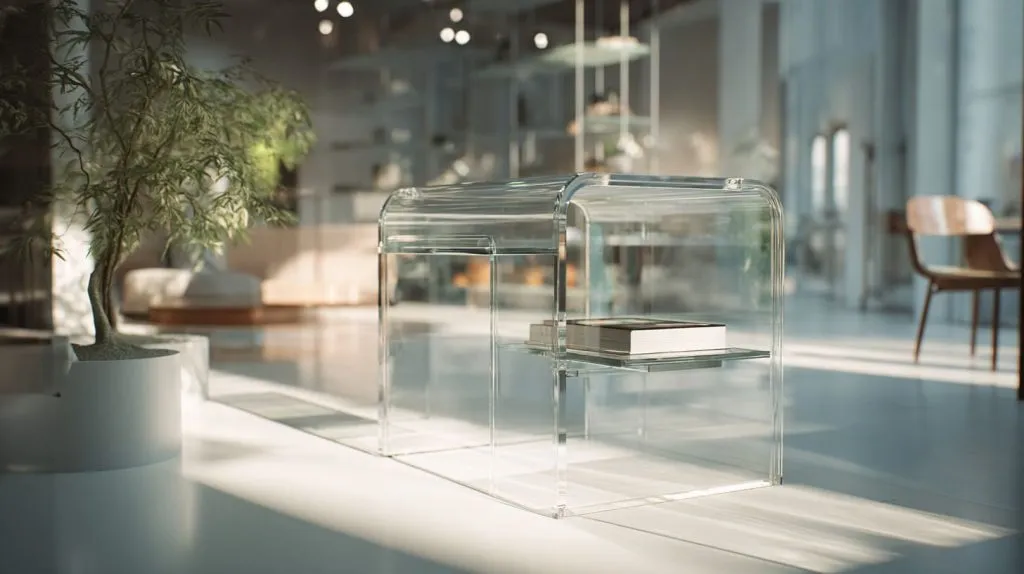
A furniture drawing can look so calm on a screen.
The lines are clean. The edges feel elegant. The proportions look balanced. A clear acrylic side table or a glass display shelf can seem almost effortless when I first look at the file. That is the trap. A piece can look refined in a rendering and still fail in real use for reasons that do not show up in a pretty drawing.
I learned that lesson from a showroom project that looked almost too good to question. The customer wanted a transparent furniture piece for a retail space. The idea was simple. The shape was modern. The material looked premium. Everyone liked it at first glance. Months later, the product still stood in place, but it no longer looked confident. The top line had started to sag a little. The shine was still there. The structure was not.
That kind of failure bothers me more than dramatic breakage.
A dramatic break gets attention right away. A slow failure is trickier. It sneaks in. It makes the product look tired before anyone even realizes what went wrong. That is often worse for the buyer, because the complaint does not come in one loud moment. It comes in small doubts. Why does this shelf look bent? Why does this table not feel flat anymore? Why does this display now look cheap?
That is why shape stability matters more to me than first appearance.
Acrylic often gets treated as the safer and more practical choice. Glass often gets treated as the stronger and more serious one. Both ideas contain some truth. Both ideas can also mislead buyers when they are used too loosely.
What matters in real work is not which material wins in a simple slogan.
What matters is this: which one keeps its shape better over time under weight, heat, light, and normal daily use?
That is the question I want to answer here. Not in a lab-only way. Not in a sales-pitch way. I want to answer it the way I think about real products, real buyers, and real complaints.
The first thing I pay attention to is not whether the sample looks beautiful on day one, but whether it will still look trustworthy after months of use.
A lot of people compare acrylic and glass by appearance. I think that is where the confusion begins. So before I compare the two materials, I need to slow down and define what “losing shape” really means.
What Does “Losing Shape” Really Mean in Furniture?
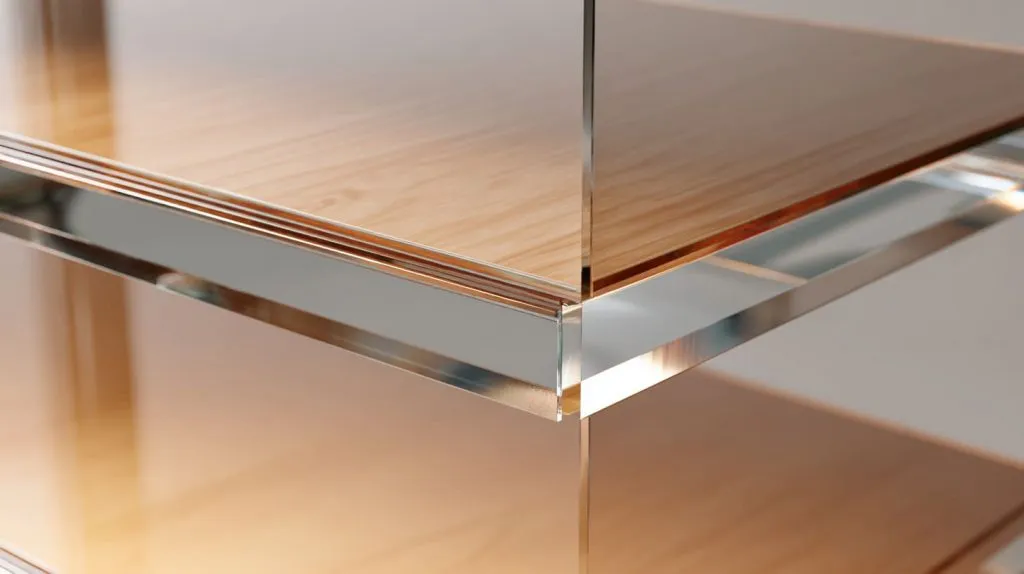
When people say a furniture piece “lost shape,” they often mean different things.
Some people mean the panel bent. Some mean the top sagged. Some mean the edge line no longer looks straight. Some mean the product did not break, but it stopped looking precise. In furniture, that distinction matters a lot. A piece can stay in one piece and still fail.
Surface Deformation vs Structural Failure
I like to separate this topic into two parts.
The first part is surface deformation. The second part is structural failure.
Surface deformation is the quiet problem. Structural failure is the loud one.
| Type | What it looks like | Common in acrylic? | Common in glass? | What buyers notice first |
|---|---|---|---|---|
| Bending | Panel line curves slightly | Yes | Rare before break | Uneven visual line |
| Sagging | Center drops over time | Yes | Rare | Tired or cheap appearance |
| Warping | Shape changes from heat or stress | Yes | Rare in normal indoor use | Poor fit or unstable surface |
| Cracking | Visible fracture | Possible | Yes | Immediate alarm |
| Shattering | Sudden complete break | No | Yes | Safety risk |
Acrylic tends to show its stress slowly. Glass tends to hide its stress until the moment it fails.
That difference changes everything.
Short-Term Change vs Long-Term Change
A second point gets missed all the time: not all deformation happens at the same speed.
A panel may stay flat during the first week. It may still look acceptable after one month. Then half a year later, the curve becomes obvious. That is why I never trust a material decision based only on how the sample looks on the day it arrives.
This is where things often go wrong: a buyer checks a fresh sample, sees no issue, and assumes the design is safe for long-term use.
In my experience, short-term appearance can be a very poor judge of long-term shape stability.
Key Factors Behind Shape Loss
Three things usually drive the outcome.
1. Load Distribution
A wide shelf with evenly spread products behaves very differently from a narrow shelf with one heavy item in the center.
A distributed load is easier to manage. A point load is harsher.
2. Material Stiffness
Stiffness decides how much a material resists bending. This is one of the biggest reasons glass and acrylic act so differently in furniture.
3. Environment
Heat, sunlight, indoor lighting, humidity, and daily temperature swings can all change the result. The drawing does not show that. The room does.
Why Slow Deformation Is More Dangerous Than Breakage
At first glance, breakage looks worse. In many cases, it is worse for safety. But from a product image point of view, slow deformation can be a more damaging kind of problem.
Why? Because it creates doubt without urgency.
- A bent shelf makes the product look low quality
- A sagging top makes the design look badly engineered
- A curved line makes premium furniture feel cheap
- A slow shape change can trigger returns, complaints, and distrust
I have seen buyers focus too much on “Will it break?” and not enough on “Will it stay straight?” That second question is often the smarter one.
Here is how I usually think about it:
| Problem | Immediate risk | Long-term brand damage | Easy to detect early? |
|---|---|---|---|
| Sudden glass breakage | High | High | Sometimes |
| Slow acrylic sagging | Low at first | Very High | Often no |
That is why I treat “losing shape” as more than a technical detail. It is a business detail. It changes how people feel when they see and touch the product.
Once I define the problem this way, the next question becomes much clearer: why do acrylic and glass behave so differently in the first place?
Material Basics: How Acrylic and Glass Behave Differently
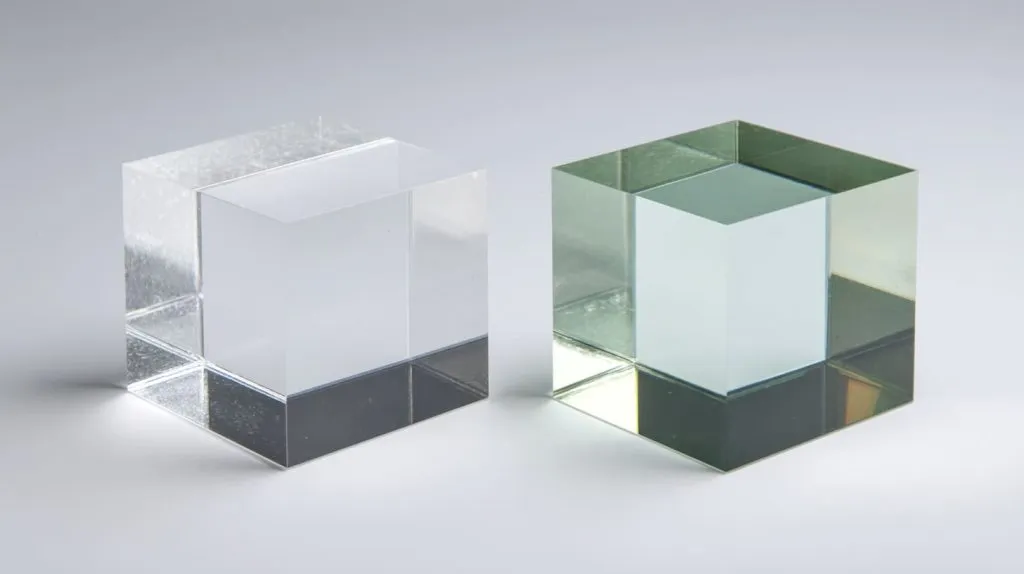
Acrylic and glass can both look clear, smooth, and elegant. That visual similarity fools a lot of people.
They do not behave like twins. They behave like distant cousins who dress alike and argue about everything.
Acrylic (PMMA) Core Properties
Acrylic is light. It is easier to machine. It resists impact better than glass. It gives me more freedom when I want custom shapes, thicker edges, polished details, or special fabrication.
That is why I like acrylic for many custom projects.
Still, acrylic has a softer side. Literally.
It is not as stiff as glass. It flexes more. It also reacts more to long-term stress and heat because it is a thermoplastic.
How acrylic usually feels in real use
- Lighter in the hand
- Less cold and hard than glass
- More forgiving during handling
- More likely to bend before it breaks
That last point matters a lot in furniture.
Glass Core Properties
Glass feels more rigid right away. It stays flatter under normal load. It gives a hard, crisp, premium feeling that many designers love.
At the same time, glass is brittle.
It does not like impact. It does not like edge damage. It does not give much warning before failure. It holds shape very well, until one day it does not.
I do not call glass “better” in a simple way. I call it more dimensionally stable, but less forgiving.
Quick Comparison Table
| Property | Acrylic | Glass |
|---|---|---|
| Weight | Light | Heavy |
| Flexibility | High | Very Low |
| Stiffness | Moderate | High |
| Impact Resistance | Strong | Weak |
| Shape Stability | Lower | Higher |
| Ease of Machining | High | Low |
| Risk of Sudden Breakage | Low | High |
| Long-Term Sag Risk | Higher | Lower |
Why This Difference Creates So Much Confusion
The confusion comes from how people evaluate furniture.
A buyer might lift an acrylic panel and think, this is easier to handle, so it should be more practical. That is understandable. Another buyer may tap on glass and think, this feels firmer, so it must be stronger in every way. That is also understandable.
Both judgments are incomplete.
I have learned to separate impact safety from shape stability. Those are not the same thing.
Acrylic is often safer against accidental hits. Glass is often better at staying flat under steady load.
That trade-off is the heart of the whole comparison.
I do not judge these materials by how impressive they feel in my hand for ten seconds. I judge them by what kind of complaint each one is more likely to create later.
A Simple Way I Explain It to Buyers
I sometimes use this plain comparison:
- Acrylic behaves more like a material that wants support
- Glass behaves more like a material that wants protection
That one sentence helps many people understand the decision much faster.
Acrylic asks me to think hard about thickness, span, and long-term load.
Glass asks me to think hard about safety, edge quality, and impact risk.
Once that difference is clear, the next step is easier. We can stop talking about general properties and start looking at real load behavior.
Which Material Bends First Under Load?
This is where the answer becomes less diplomatic.
Under steady load, acrylic bends first.
That does not mean every acrylic furniture piece fails fast. It does not mean every glass piece is the better choice. But if the question is only about which one loses shape first under real weight, the answer is usually acrylic.
Acrylic Under Continuous Weight
Acrylic can look wonderfully straight when it is new. Then the real world starts pressing on it.
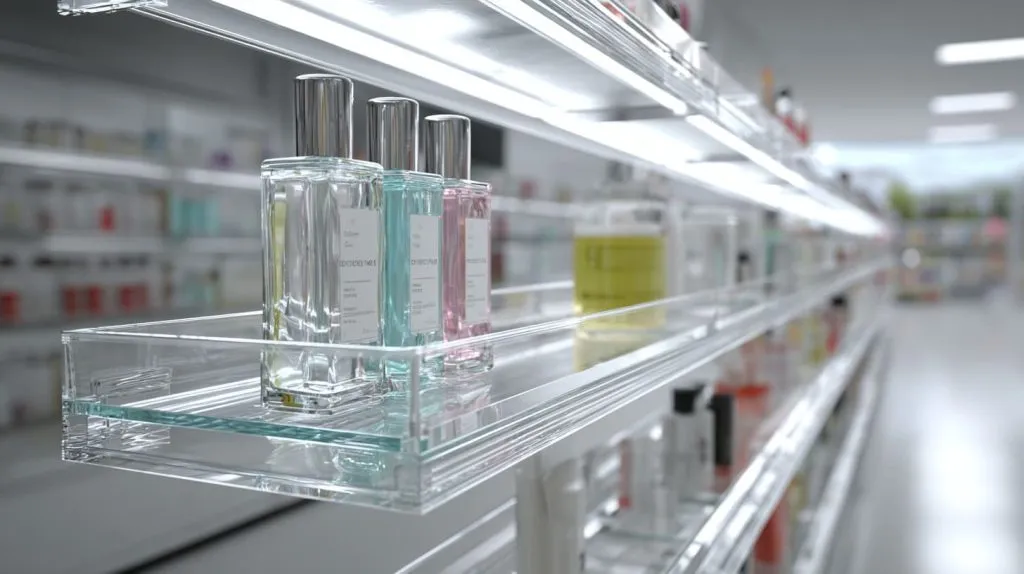
A row of skincare bottles. A stack of books. Decorative objects. A person leaning on a tabletop. A warm room. A long unsupported span. That is when the material starts to show its nature.
Acrylic is prone to gradual sagging. This is especially true in:
- Long shelves
- Wide tabletops
- Floating display panels
- Thin sections with center load
Why thickness matters so much
A small change in thickness can make a big difference in stiffness.
That is why I never treat acrylic thickness like a cosmetic detail. For furniture, it is often a structural decision.
| Acrylic Thickness | Likely Use Feeling | Risk Under Wide Span |
|---|---|---|
| Thin | Light and elegant | High |
| Medium | Balanced | Moderate |
| Thick | More secure | Lower |
A thin acrylic piece can photograph beautifully and still disappoint in real use.
Glass Under Load
Glass usually stays flatter under the same load. It resists visible bending much better than acrylic. That is why glass shelves and tabletops often keep a cleaner line over time.
But the story does not end there.
Glass often gives less warning. If the load is too high, or the edge is damaged, or the support is poor, the piece may fail suddenly instead of sagging slowly.
That means glass wins the shape contest, but not always the safety contest.
Real-World Example Scenarios
Let me break this into the kind of situations buyers actually face.
Cosmetic Display Shelves
This is common in my work.
Acrylic works very well for cosmetic displays when the spans are short and the support is smart. But if the shelf is wide and full of heavy bottles, the center can bow over time.
Glass can stay flatter in that same condition, but it becomes heavier, harder to ship, and riskier during handling.
Coffee Tables with Center Load
Acrylic coffee tables can look amazing. I understand the appeal. They feel modern and open. But a center-loaded top can slowly lose confidence if the panel is too thin or too wide.
Glass stays flatter here. But the consequences of impact are more serious.
Long-Span Floating Panels
This is where acrylic gets challenged fast.
A floating clear shelf with a long unsupported span may look elegant in a drawing. In reality, that same design often starts to tell a different story after months of use.
A narrow design mistake can become a visible curve.
I get cautious the moment I see a buyer wanting the visual lightness of glass but the flexibility of acrylic in the exact same geometry. That usually means the design is asking the material to do something it does not like.
A Side-by-Side View
| Scenario | Acrylic | Glass |
|---|---|---|
| Long shelf with bottles | May sag over time | Stays straighter |
| Coffee table top | Can bend under repeated center load | More rigid |
| Retail display ledge | Good if well supported | Good if protected |
| Floating clear panel | Needs careful design | Better shape retention |
So yes, acrylic bends first. But saying only that is too shallow. The more important question is why it bends first and how that process unfolds over time.
That quiet, slow movement has a name, and it deserves its own section.
The Hidden Enemy: Long-Term Creep in Acrylic
If I had to name the most misunderstood reason acrylic furniture loses shape, I would say one word: creep.
It sounds technical. It acts personal. It ruins nice designs quietly.
What Is Creep in Plastics?
Creep means a material slowly changes shape under constant stress over time.
The load does not need to increase. The stress does not need to become dramatic. The material simply keeps moving, little by little, because the force never really leaves.
This is one of the biggest reasons an acrylic piece that looks flat today may look tired later.
Why Acrylic Is Vulnerable
Acrylic is a polymer. Its internal structure is not as rigid as glass. Under long-term weight, especially in warm conditions, the internal chains can shift gradually.
That movement is small at first. Then it adds up.
Main triggers that make creep worse
- Constant load
- Wide unsupported span
- High indoor temperature
- Direct sunlight
- Thin material section
- Poor support placement
The mistake I see most often is not using acrylic. The mistake is using acrylic as if time does not matter.
Typical Failure Pattern
The pattern is boring. That is why people miss it.
- The panel arrives flat
- The panel stays flat for a while
- A slight center curve appears
- The curve becomes visible in normal viewing
- The shape change becomes permanent
That sequence is painfully common.
I have seen buyers blame the factory too quickly in these cases, and sometimes the factory does deserve blame. But sometimes the real issue started much earlier, at the design stage, when the load and span were underestimated.
A design that survives one showroom photo is not the same as a design that survives one year of actual use.
Why Creep Feels So Unfair
Glass usually either stays flat or fails hard. Acrylic can keep working while still losing dignity.
That sounds dramatic, but I mean it.
A sagging clear shelf still holds the products. A bent panel still exists. A warped table still stands. That half-failure is what makes creep so frustrating. The product is not broken enough to get immediate action, but it is wrong enough to damage trust.
A Practical Comparison
| Behavior Over Time | Acrylic | Glass |
|---|---|---|
| Gradual deformation | Common under load | Rare |
| Permanent sag | Possible | Uncommon |
| Sudden failure | Less common | More common |
| Easy to miss early stage | Yes | Yes, but in a different way |
How I Read Early Warning Signs
When I review a furniture design in acrylic, I look for clues:
- Is the shelf span too generous?
- Is the panel too thin for the width?
- Will the user put heavy items in the center?
- Will this sit near a window or warm light source?
- Is the design relying too much on appearance and not enough on support?
Those questions save more projects than fancy language ever will.
I become cautious when a design looks “beautifully minimal” but has no real backup against long-term load, because minimal shapes often hide maximum stress.
Creep does not care how clean the rendering looks. It only cares about force, time, and support.
That brings me to another factor that makes creep much worse than many buyers expect: temperature and environment.
Temperature and Environment: Who Handles It Better?
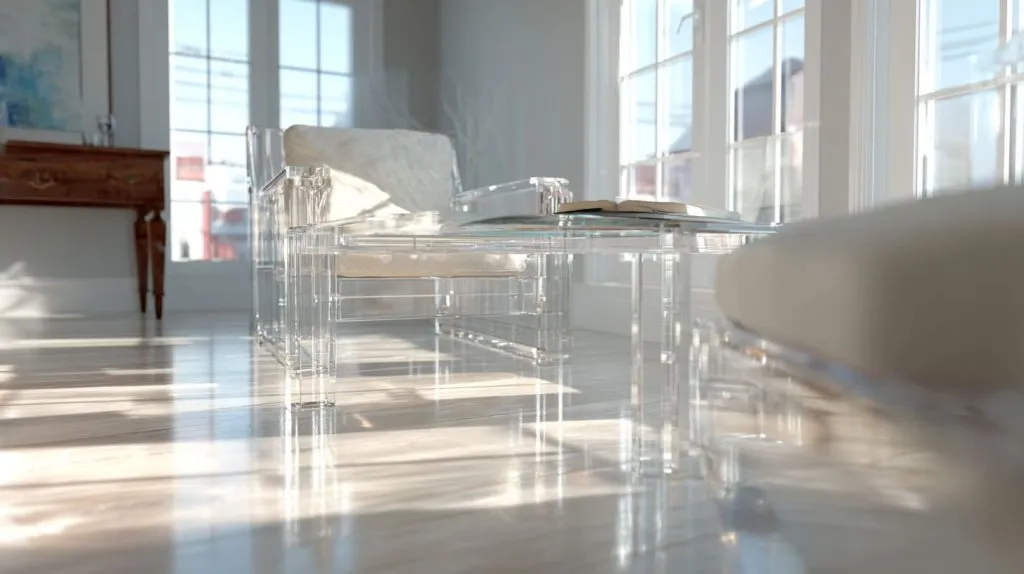
A furniture piece does not live inside a perfect material chart.
It lives near windows, lights, heaters, air-conditioning, sunlight, warm displays, and sometimes in rooms where nobody controls anything carefully. That is why environment matters so much.
Acrylic Response to Heat
Acrylic can tolerate normal indoor use well in many cases. Still, it is more sensitive to heat than glass. That sensitivity shows up in shape stability.
When acrylic gets warm, it becomes more vulnerable to movement under load. It does not need to melt to become a problem. It only needs enough heat to become less resistant to slow deformation.
- Near sunny windows
- Under strong retail lighting
- In warm enclosed spaces
- In shipping or storage with heat exposure
Acrylic furniture that seems safe in a cool office may behave differently in a bright retail environment.
Glass Thermal Behavior
Glass is much more stable under normal indoor temperature changes. It stays rigid. It does not soften in the same way acrylic does. For shape retention, this is a major advantage.
That is one reason glass often performs better in environments where visual flatness must last.
Still, thermal shock can be another story for glass. Extreme temperature differences can create their own risks. So again, the answer is not one-sided. It depends on the actual use case.
UV and Aging Effects
Heat is only part of the story. Light matters too.
Acrylic can age under UV exposure. Some grades perform better than others, but long-term sunlight can still affect appearance and performance. Yellowing, surface changes, and gradual weakening can all enter the conversation.
Glass is much more stable in this area. It does not yellow in the same way, and its structure is less affected by ordinary UV exposure.
Comparison Table: Environment Performance
| Condition | Acrylic | Glass |
|---|---|---|
| Warm room | More shape risk | Stable |
| Strong sunlight | May age and deform faster | More stable |
| Indoor retail lighting | Can worsen sag under load | Usually stable |
| Normal office use | Often acceptable if designed well | Very stable |
Why Buyers Often Miss This
The buyer may approve a sample in one environment and use it in another.
That simple mismatch causes a lot of trouble.
A display shelf tested in a cool meeting room may end up installed beside a bright shop window. A clear side table approved in mild weather may later sit in a hot room with direct afternoon light. The material did not suddenly become bad. The context changed.
One small detail I never like to ignore is where the furniture will actually live, because a safe material choice in one room can become a weak one in another.
That is why I do not trust material decisions made in a vacuum. Furniture does not serve theory. It serves rooms, habits, users, and weather.
And once the environment is part of the conversation, the next question becomes even more practical: what design details decide the winner?
Design Factors That Decide the Winner
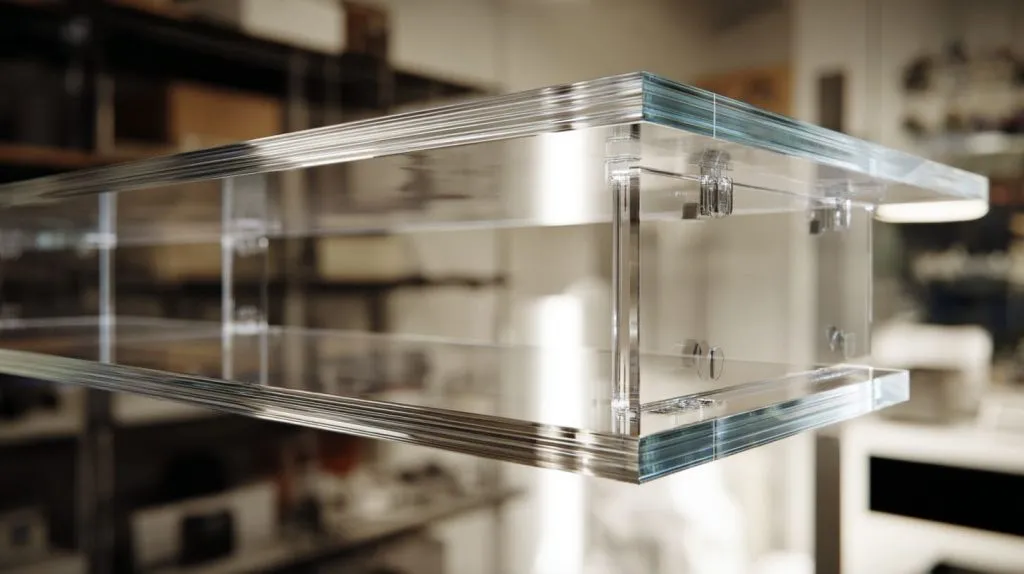
Material matters, yes. Design matters just as much.
I have seen a smart acrylic design outperform a careless glass design. I have also seen a badly judged acrylic design collapse into a sagging lesson that nobody enjoyed.
Thickness Selection
Thickness is one of the biggest decision points in this whole topic.
Acrylic usually needs more thickness to resist bending. Glass can stay thinner and still feel rigid. That difference changes the look, weight, cost, and handling of the product.
A buyer may want acrylic because it looks lighter. Then the design may need thicker acrylic to stay stable. At that point, the appearance and cost may shift.
That is a very real trade-off.
Thickness is not only about safety
Thickness affects:
- Visual weight
- Edge appearance
- Cost
- Shipping weight
- Machining time
- Long-term stiffness
| Design Need | Acrylic Approach | Glass Approach |
|---|---|---|
| Thin elegant look | Harder to keep stable | Easier to keep rigid |
| Stronger flat surface | Increase thickness | Often possible with thinner section |
| Easy custom fabrication | Very good | Limited |
Span and Support Design
Unsupported length is one of the fastest ways to create shape problems in acrylic.
A panel can be thick enough in theory, but once the span stretches too far, the risk changes fast.
That is why support design matters so much.
Better support can save the design
Useful support ideas include:
- Shorter span
- Extra center support
- Side rails
- Back reinforcement
- Ribs or hidden frame
This is the point where many “minimal” designs need a reality check. A clean look is nice. A clean look that stays straight is better.
Load Type and Distribution
Not all loads behave the same way.
A row of evenly spaced small products is gentler than one heavy object dropped in the center. Many buyers think in average load. Materials often fail because of peak load.
Point load vs distributed load
| Load Type | Acrylic Response | Glass Response |
|---|---|---|
| Evenly distributed | More manageable | Very stable |
| Center point load | Higher sag risk | Better rigidity, but brittle risk |
| Repeated user leaning | Fatigue concern | Strong shape retention, impact concern |
Why Geometry Cannot Be Copied Blindly
One of the biggest mistakes in custom furniture is copying a glass design directly into acrylic without changing the structure.
The drawing may keep the same size, same span, same support points, same visual language. Then the result changes because the material has changed.
I often tell buyers this: same shape does not mean same behavior.
That sentence saves a lot of confusion.
The design choice I care about most is not the one that looks smartest in CAD, but the one that still makes sense after weight, heat, user habits, and shipping risk all enter the room.
That brings us to a question buyers care about immediately after design: how does all of this affect cost, and when does the cheaper-looking option become the expensive mistake?
Cost vs Performance Trade-Off
This is where many decisions get emotional.
Acrylic often looks like the more convenient option. In many cases, it is. It is easier to fabricate. It is easier to customize. It usually ships more easily than glass. It feels friendlier during production and handling.
But convenience and long-term performance do not always point in the same direction.
Acrylic Advantages
I work with acrylic all the time, so I can say this clearly: acrylic has real strengths.
Why buyers often choose acrylic
- Easier cutting and machining
- Easier polishing and shaping
- Better for custom forms
- Lower shipping burden
- Lower breakage risk during handling
- Better impact resistance in day-to-day life
For many B2B custom projects, those are strong reasons.
Glass Advantages
Glass wins in a different way.
It offers a hard, stable, premium feel that many buyers want for long-term flatness. It usually keeps its line better under constant load. It looks calm and confident when the design requires rigid elegance.
Why glass still attracts serious buyers
- Strong dimensional stability
- Better shape retention
- Premium visual feel
- Better resistance to long-term sagging
When Lower Cost Becomes Higher Risk
Acrylic may look like the lower-risk cost choice at first. Then the project goes live.
Then the shelf bends.
Then the table top loses its perfect line.
Then the buyer replaces units.
Then the brand image takes a hit.
That is where “saving money” turns into paying twice.
| Cost Factor | Acrylic | Glass |
|---|---|---|
| Fabrication flexibility | High | Lower |
| Shipping ease | Better | Worse |
| Breakage during transport | Lower | Higher |
| Long-term shape stability cost risk | Higher | Lower |
| Replacement due to sagging | Possible | Less likely |
My Real View on Cost
I do not compare materials only by quotation price. I compare them by the total cost of survival.
That includes:
- Production
- Packaging
- Shipping
- Installation
- Use
- Complaint risk
- Replacement risk
Acrylic often wins on the front end. Glass often wins on long-term flatness. Which one is “better” depends on what kind of failure costs more in that project.
The cost mistake I see again and again is choosing the cheaper path for production while ignoring the more expensive path of later disappointment.
Cost is never just about what the factory charges. It is also about what the product asks for after it leaves the factory.
And sadly, some of the most avoidable extra costs come from buyer mistakes I have watched many times.
Real Buyer Mistakes I Have Seen

I do not say this to criticize buyers. I say it because I have seen smart buyers make these mistakes too.
The problem is rarely a lack of intelligence. The problem is usually a design shortcut that seemed harmless at the time.
Choosing Acrylic Based Only on “Lightweight”
Yes, acrylic is lighter. That is true.
But “lighter” is not the same as “better for shape.”
I have seen buyers choose acrylic because they want easier handling, lower shipping weight, and safer use. All of that makes sense. Then later they realize the same panel thickness no longer gives the same confidence as glass.
The missing question was not “Is acrylic lighter?”
The missing question was “Will this lighter material still stay straight in this exact design?”
Underestimating Span Width
This one shows up often.
A wide clear shelf can look beautiful in a drawing. The rendering has no gravity. Real life does.
When the unsupported width gets too ambitious, acrylic starts to show stress. The buyer may not notice during early sampling. The curve arrives later.
A small visual gap can predict a big future problem
Sometimes I can tell trouble is coming from a design that just looks too brave. The shelf line is long. The supports are too far apart. The products planned for display are heavier than the drawing emotionally suggests.
That kind of design often survives approval and fails reality.
Copying Glass Designs Directly Into Acrylic
This is one of the most expensive shortcuts.
A glass concept gets approved. Then the team decides to produce it in acrylic for cost, safety, or fabrication reasons. The size stays the same. The geometry stays the same. The support stays the same.
Then everyone acts surprised when the acrylic version behaves differently.
But why would it behave the same? The material changed.
| Buyer Mistake | Why it happens | What goes wrong later |
|---|---|---|
| Choosing by weight only | Focus on handling | Ignores stiffness |
| Missing span risk | Drawing looks clean | Sag shows up later |
| Copying glass geometry into acrylic | Saves redesign time | Shape retention drops |
| Testing only in short term | Fast approval pressure | Long-term creep ignored |
The Story Behind These Mistakes
I once saw a buyer approve a transparent display design very fast because the sample looked elegant and easy to move. That part was true. After some time in real use, the center line changed just enough to make the whole display feel less premium. Nobody could point to one dramatic failure. That was the problem. The product simply stopped looking sharp.
That kind of issue is frustrating because it looks small and feels expensive at the same time.
When I see a design decision made mainly because the sample feels nice in the hand, I slow down, because furniture usually gets judged harder by months of use than by five minutes of admiration.
The good news is that these mistakes are avoidable. Acrylic can still work beautifully when the design respects what the material needs.
So now let me get practical. If I do choose acrylic, how do I stop it from losing shape too early?
How to Prevent Shape Loss in Acrylic Furniture
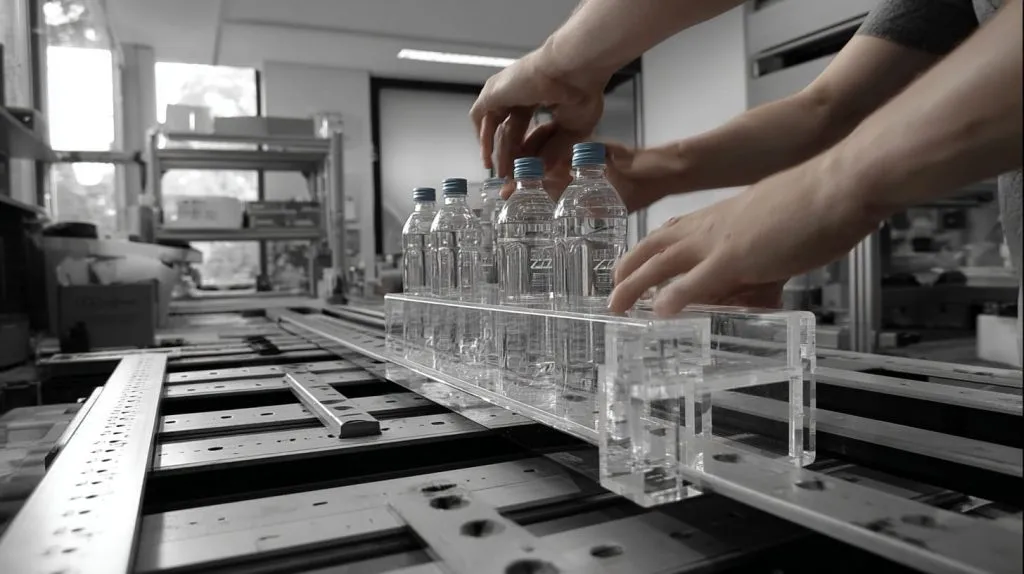
I do not like fear-based advice. Acrylic is not a bad material for furniture. It just needs honest design.
When I treat it properly, acrylic can look excellent, function well, and last much better than many people expect.
Smart Design Adjustments
The easiest way to improve shape stability is not magic. It is structure.
Design moves that help most
- Increase thickness where load matters
- Shorten unsupported span
- Add hidden support
- Use side returns or ribs
- Spread the load better
- Avoid unnecessary center stress
Even a small support detail can make a big difference.
Example table: simple design fixes
| Problem | Common weak design | Better acrylic solution |
|---|---|---|
| Long shelf sags | Thin flat panel | Thicker panel + center support |
| Tabletop flexes | Wide unsupported top | Hidden frame or rib |
| Display ledge bows | Heavy center items | Shorter span + load distribution |
| Floating clear part bends | Minimal support points | Back reinforcement |
Material Alternatives
Sometimes the answer is not “use thicker acrylic and hope.”
Sometimes the answer is to combine materials or upgrade the structure.
Useful options
- Reinforced acrylic structure
- Acrylic with metal support frame
- Acrylic with thicker edge and lighter center design
- Hybrid furniture where acrylic provides appearance and metal provides stiffness
I like hybrid solutions when the design must keep a clear, modern look but cannot afford long-term sag.
Testing Before Mass Production
This is one of the most ignored steps in custom work.
A perfect sample is not enough.
I prefer testing that reflects real use:
- Put actual product weight on the shelf
- Leave it under load for time
- Test in warm conditions if needed
- Check center deflection
- Check visual line from normal viewing angle
A fast sample tells me about fabrication. A patient test tells me about future complaints.
A Practical Testing Mindset
I sometimes think of acrylic furniture like a promise. It is easy to make. It is harder to keep.
That is why I like to ask a few plain questions before mass production:
- What will sit on it every day?
- Where will it be used?
- How long is the unsupported section?
- What happens after six months, not six hours?
- Will the customer tolerate even slight visual sag?
That last question matters more than people admit.
The design move I trust most is not the cleverest one on paper, but the one that gives me less reason to worry after I imagine real users putting real weight on it every day.
Acrylic can absolutely work. I believe that. I also believe that some projects are simply asking for glass instead. That is worth saying clearly.
When Should You Choose Glass Instead?
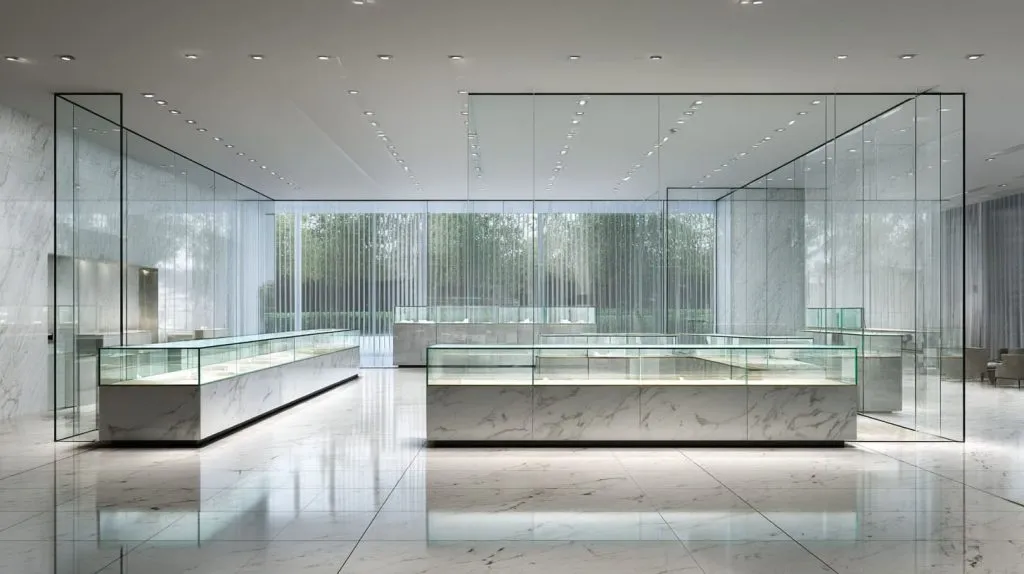
Sometimes I can improve an acrylic design enough to make it safe and stable. Sometimes I should not force it.
Some projects simply want the nature of glass.
Applications Requiring Rigidity
If the job asks for long shelves, flat surfaces, and very low tolerance for visible shape change, glass often makes more sense.
Typical examples include:
- Long display shelves
- Flat premium tabletops
- Rigid presentation surfaces
- Installations where line precision must stay sharp
Glass performs better when long-term flatness is the priority.
High-End Display Environments
There are spaces where the furniture is not only functional. It is part of the brand language.
Luxury retail is like that. High-end showrooms are like that. Clean visual lines matter there. A slight sag can hurt more than many people expect.
In those environments, glass often wins because it holds visual discipline better.
Low-Risk Environments for Breakage
Glass becomes more attractive when the environment is controlled.
That means:
- Lower impact risk
- Careful users
- Stable installation
- Less movement and handling
- Better edge protection
If the space is calm and controlled, glass has room to show its strengths.
Quick Decision Table
| Situation | Better Choice |
|---|---|
| Need for long-term flatness | Glass |
| Need for impact safety | Acrylic |
| Need for light weight | Acrylic |
| Need for premium rigid feel | Glass |
| Need for custom shaping | Acrylic |
| Need for minimal visible deformation | Glass |
The Honest Answer
I do not choose glass because it sounds more premium. I choose it when the design asks for rigidity that acrylic will struggle to hold without compromise.
That is an important difference.
If I need visual perfection to last, and the environment is safe enough, glass deserves serious respect. If I need safer handling, lighter weight, and more fabrication freedom, acrylic still has huge value.
The material decision becomes much clearer once I stop asking, “Which one is better?” and start asking, “Which failure am I less willing to accept?”
That is the question that brings everything together.
Conclusion
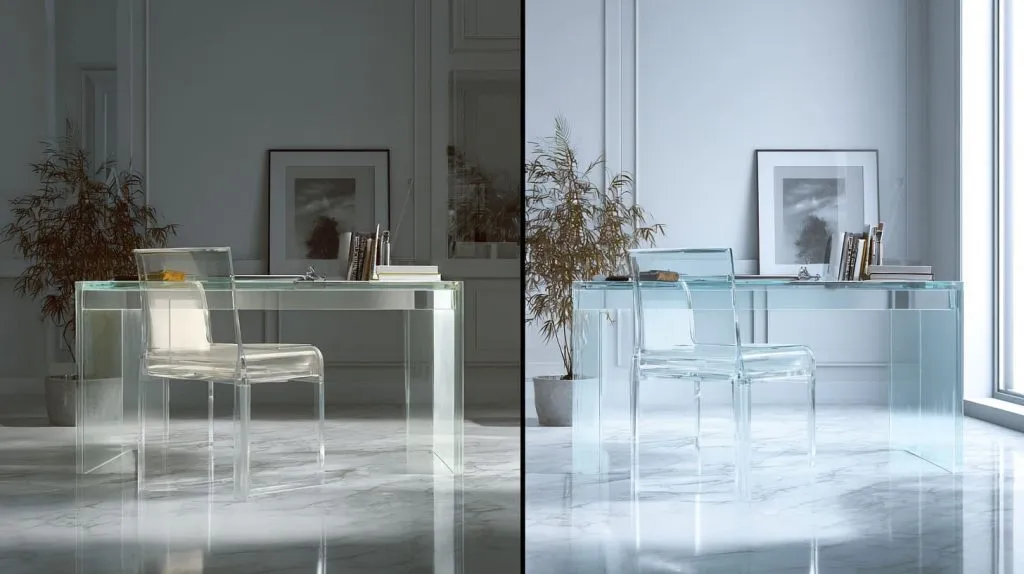
If I strip the whole topic down to one honest answer, I would say this: acrylic usually loses shape first under real use, while glass usually keeps its shape longer but carries a sharper failure risk.
That is why I think this comparison gets misunderstood so often.
People love clean material labels. Acrylic is safer. Glass is stronger. Acrylic is practical. Glass is premium. Those phrases sound useful, but they are too shallow for real furniture work. Real projects ask harder questions. How long is the span? What sits on the surface every day? Will the piece live near heat or sunlight? Does the buyer fear breakage more, or sagging more?
That is why I do not make this choice based on appearance alone.
I think the better question is always about behavior over time. I have seen enough beautiful samples become disappointing products later. I have also seen careful design turn acrylic into a very smart, reliable choice. So my view did not come from theory alone. It came from watching what happens after installation, after use, after the first excitement fades.
I believe acrylic deserves respect, not blind confidence. I believe glass deserves respect, not blind praise.
My opinion is simple because my experience keeps pushing me there: if the design needs long-term flatness with low visible deformation, glass usually has the advantage. If the project needs lighter weight, safer handling, and more custom freedom, acrylic can still be the better choice, but only when I give it the support, thickness, and testing it truly needs.
The final call I make is never about which material sounds nicer in a meeting. I care more about which one gives the buyer fewer regrets after months of real use.
If you are working on a custom furniture or display project and you want help judging span, thickness, structure, or the right acrylic approach for long-term stability, you can reach out to me through Feilong Acrylic at flacrylic.com. I would rather help fix the decision early than watch a beautiful design slowly lose its shape later.