Skip to content

Introduction
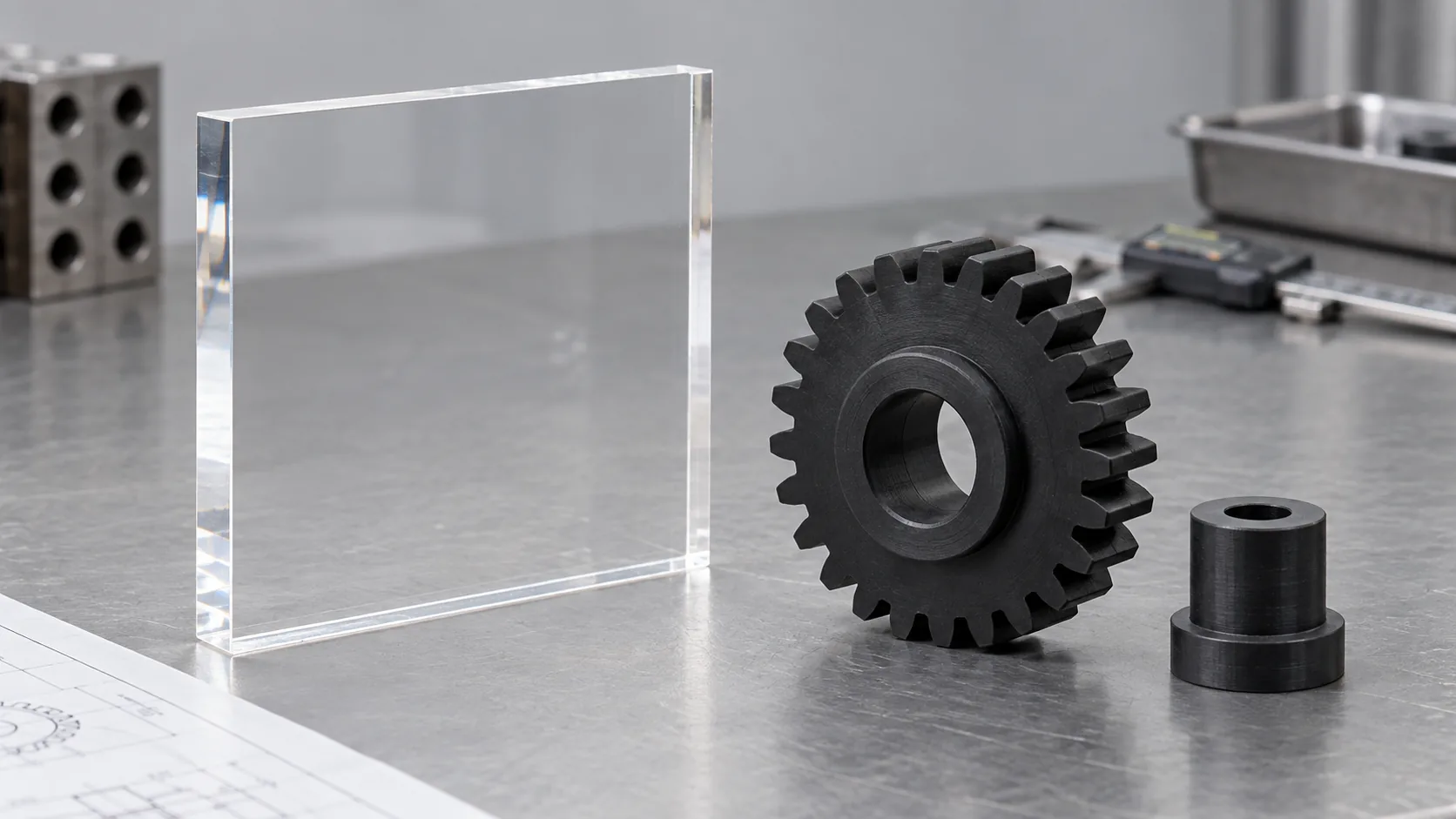
When a buyer asks us to compare acrylic and nylon, I do not begin with a property table. I begin with the part the material must become. These plastics solve very different problems: acrylic (PMMA) is often selected for visible clarity and controlled presentation, while nylon (polyamide, or PA) is commonly selected for tougher, wear-oriented mechanical parts.
The costly error is treating them as substitutes just because both can be machined. A transparent retail display, an equipment guard, a sliding wear pad, and a bushing can all be custom parts, but they need different material logic. At Feilong, we fabricate custom acrylic components; we use nylon here as the comparison point that helps a buyer decide whether acrylic is truly the right quote.
The Real Difference: Visible Surface or Mechanical Duty?
| Decision factor | Acrylic (PMMA) | Nylon (PA) | What to confirm |
|---|---|---|---|
| Appearance | Clear, glossy, and suitable for visible edges | Usually opaque or translucent, with a technical appearance | Is optical clarity part of the product requirement? |
| Mechanical role | Best for properly supported visible parts | Often a strong candidate for wear, sliding, and load-bearing machine details | What load, impact, and motion will occur? |
| Moisture exposure | Does not carry nylon's characteristic moisture-conditioning concern | Grade and humidity can affect dimensions and properties | Are fits or tolerances sensitive to ambient humidity? |
| Fabrication focus | Edge finish, holes, bonding, polishing, and cosmetic protection | Machining method, grade, moisture condition, and mating surface | Which features must repeat from prototype to production? |
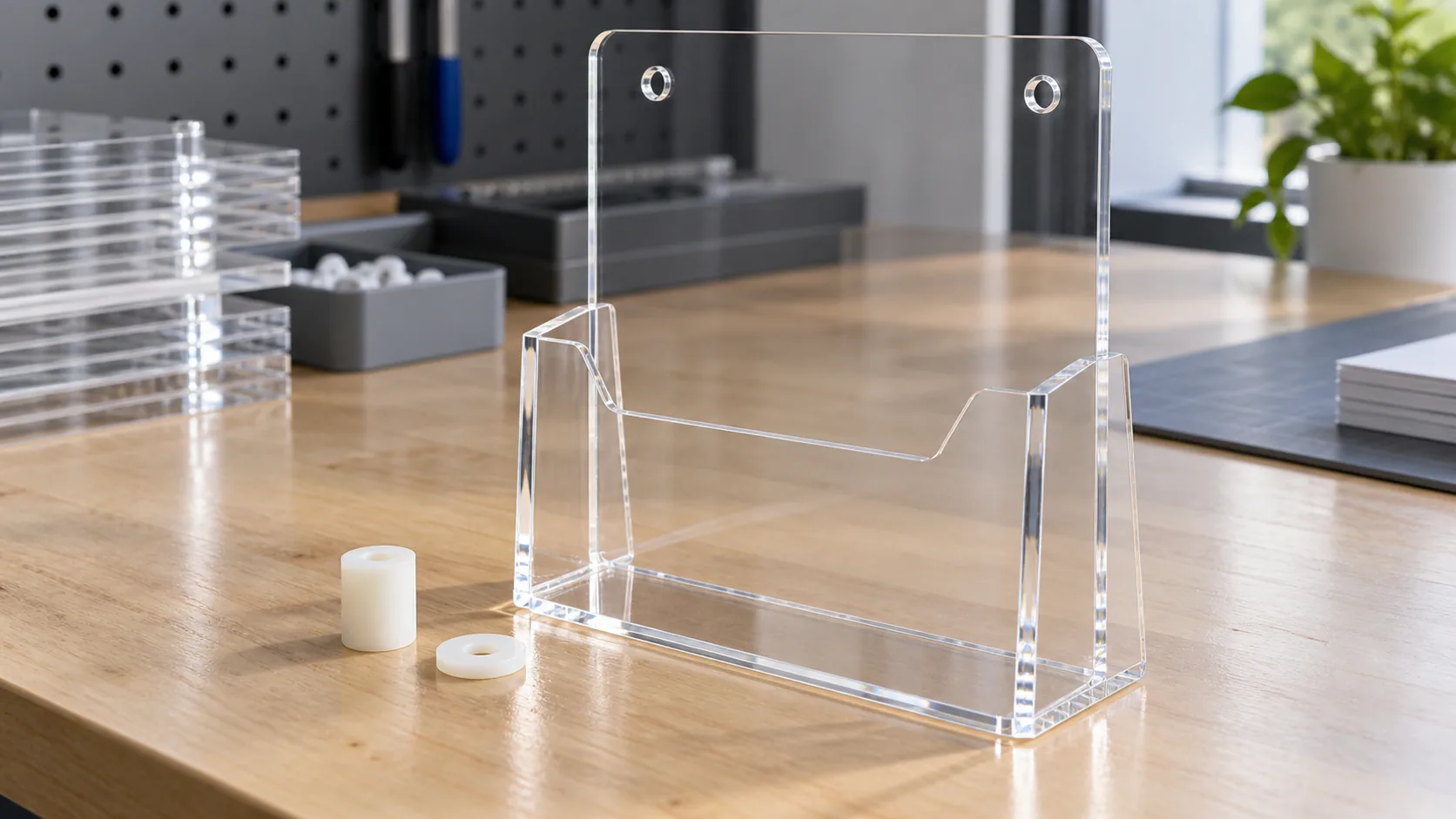
My practical rule is simple: if the part needs to disappear visually, show a product clearly, or carry a premium polished edge, acrylic should be the first conversation. If the part is hidden and its job is to slide, wear, or carry a mechanical interface, nylon may deserve the first engineering review.
Where Nylon Is Usually the Better Direction
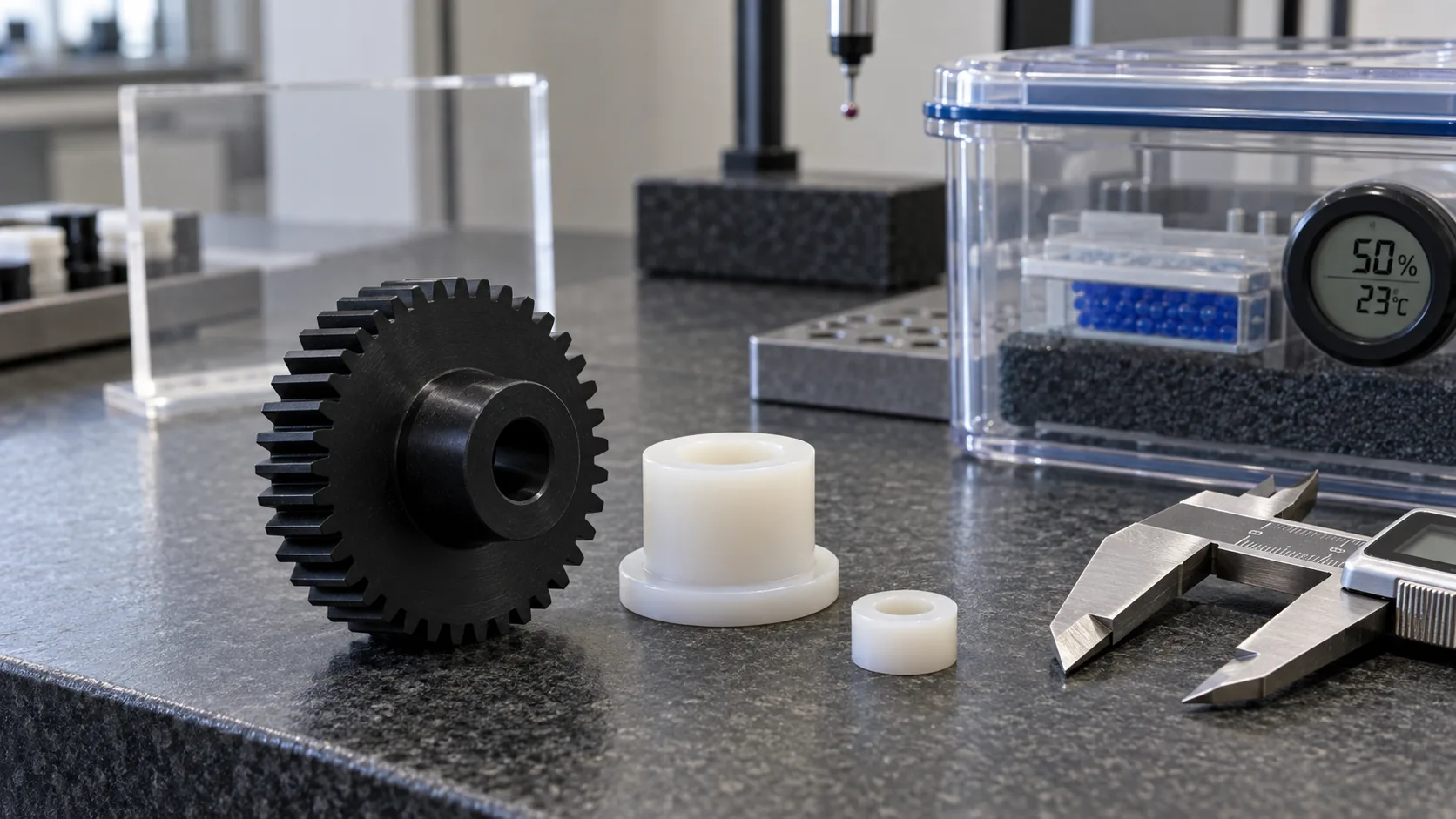
Nylon earns attention for gears, bushings, wear strips, guides, spacers, and other mechanical components where the key question is not optical appearance. Ensinger describes polyamide as a construction plastic valued for wear resistance, friction behavior, temperature resistance, and impact strength in its applicable grades. Those are useful starting points—not permission to choose a grade without checking the actual duty cycle, mating material, lubrication, load, and temperature.
The important procurement caveat is moisture. Ensinger notes that polyamides tend to absorb comparatively high amounts of moisture, which can affect dimensions and mechanical or electrical properties. For a close-tolerance nylon part, I would ask the material supplier how the stock will be conditioned, what humidity it will see, and whether the drawing needs an as-machined or conditioned inspection state. A nylon part can be technically excellent, yet still create assembly variation if that question is left until production.
For a nylon component, confirm the precise PA family, reinforcement if any, color, conditioning, load path, operating temperature, wear partner, and dimensional acceptance method. Feilong does not present nylon machining as our core manufacturing offer; this is the point at which the project should involve a capable nylon material and manufacturing source.
Where Acrylic Gives the Buyer a Better Result
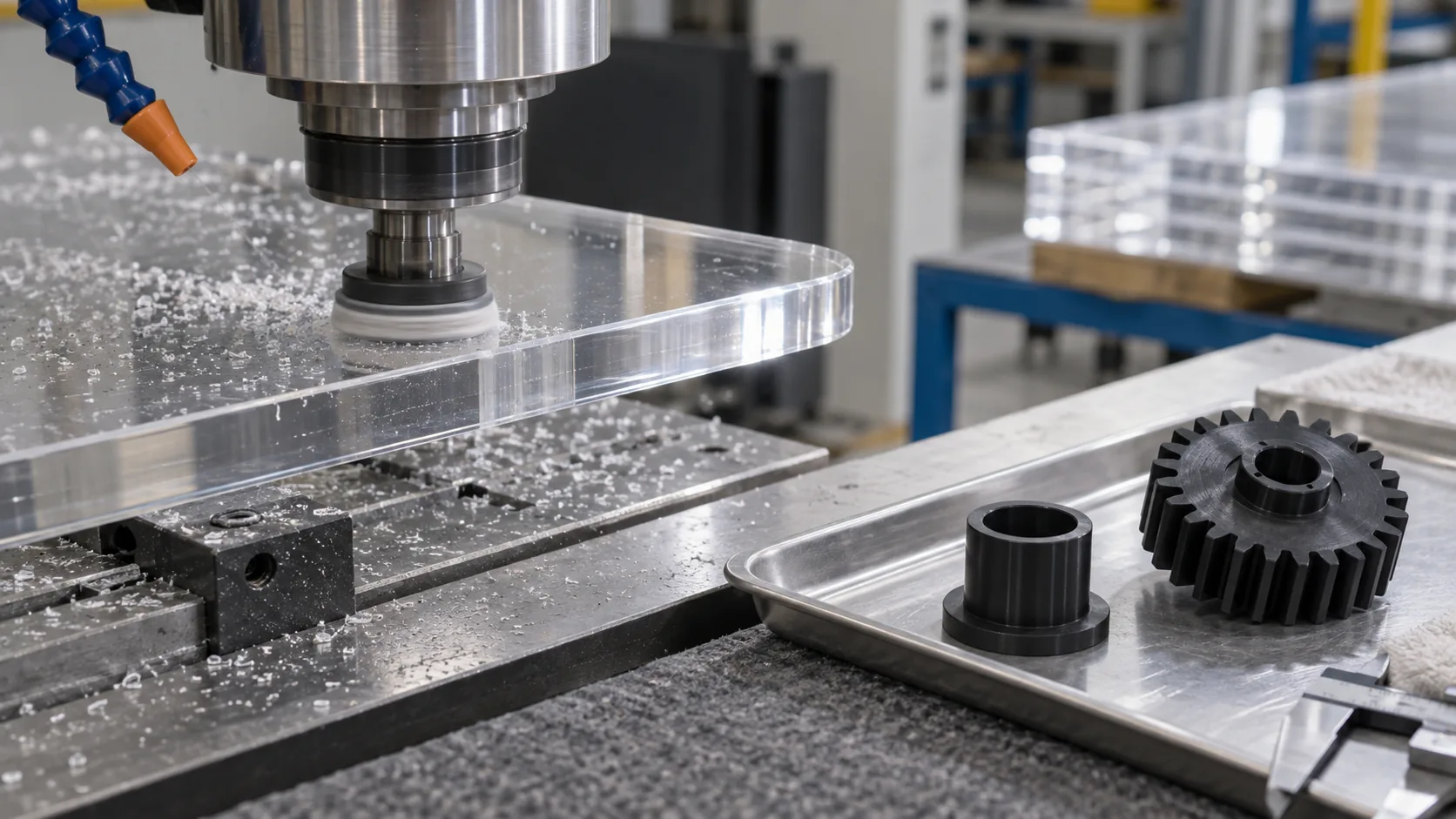
Acrylic is the more natural choice when the part is meant to be seen: product displays, protective covers with a clear viewing requirement, branded retail fixtures, presentation boxes, signs, risers, furniture details, and illuminated or display-adjacent components. Ensinger identifies acrylic's optical clarity, light transmission, weathering properties, and uses in displays, lighting, furniture, and glazing; those characteristics map directly to the questions our custom acrylic buyers bring to us.
But transparent does not mean consequence-free. A clear acrylic part needs a design that respects support span, hole position, local stress, edge treatment, cleaning, and handling. I prefer to approve the visual standard with a sample that includes the real thickness, finish, holes, hardware, and protective film. That gives the buyer a useful answer about the finished component, rather than an abstract material promise.
For outdoor or daylight-exposed visible work, grade selection still matters. Röhm describes PMMA's optical and weathering performance for outdoor applications, but project performance depends on the selected grade, exposure, geometry, mounting, cleaning routine, and acceptance standard.
Fabrication and Assembly Change the Comparison
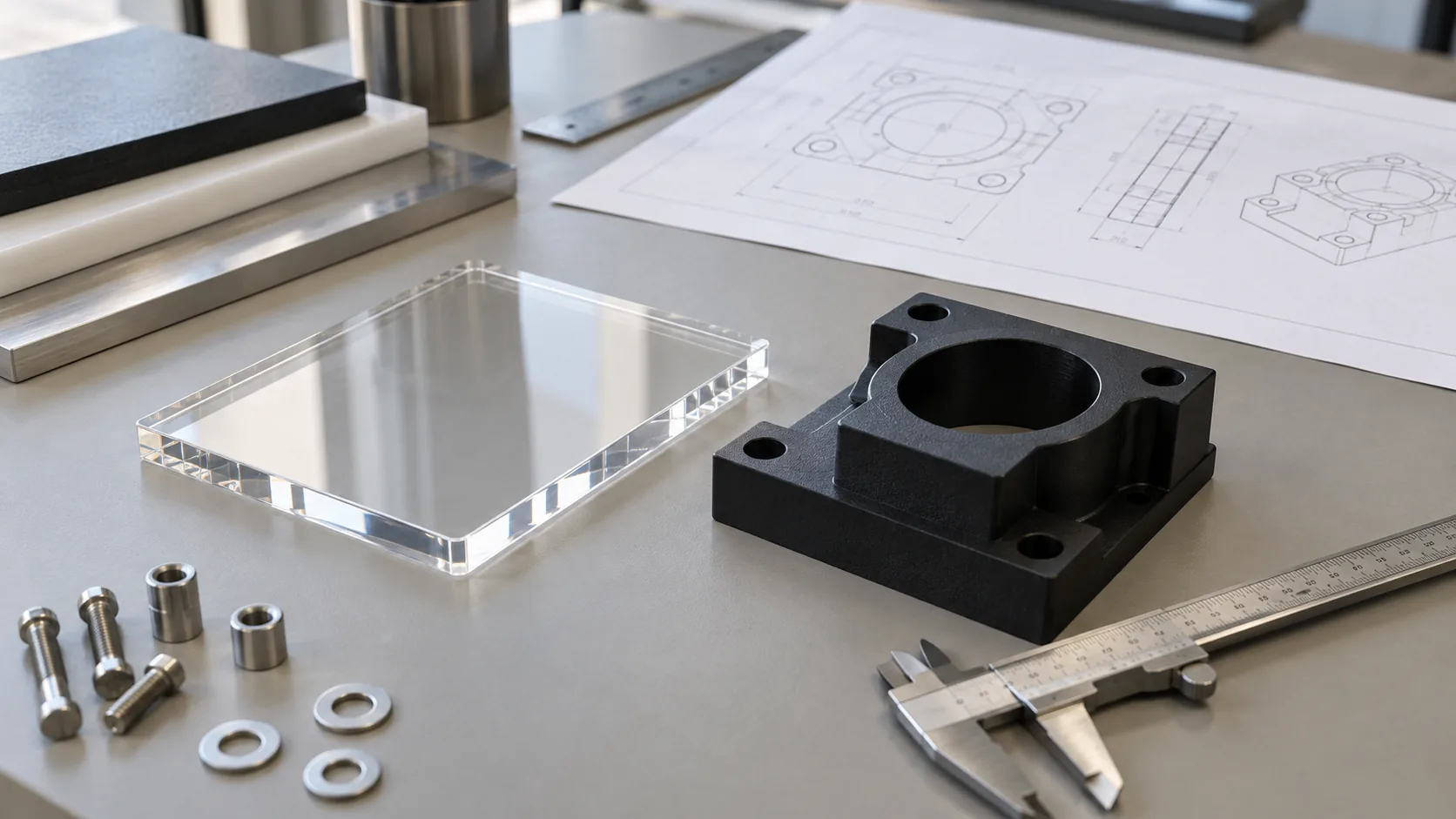
The material decision should arrive before the fabrication plan—not after a shape has been copied from another material. Acrylic can be laser cut or CNC machined, drilled, polished, bonded, heat bent, printed, or assembled with hardware when the design suits those processes. In a visible acrylic assembly, a buyer usually notices edge clarity, glue-line appearance, fastener stress, protective-film removal, and the way a clear panel meets metal or wood.
Nylon calls for a different review: cutting behavior, moisture condition, thread or insert strategy, bearing surface, and the way the part interfaces with metal hardware. A direct acrylic-to-nylon substitution can therefore change both the part design and the inspection plan. I would not quote from a material name alone when hole patterns, load path, mounting, or fit are critical.
The most efficient early document is a drawing or marked reference image that identifies visible faces, cosmetic edges, functional surfaces, hardware, quantities, and any force or motion. It prevents the familiar problem of approving a shape before anyone has agreed what “good” looks like.
A Better Approval Sequence for Custom Parts
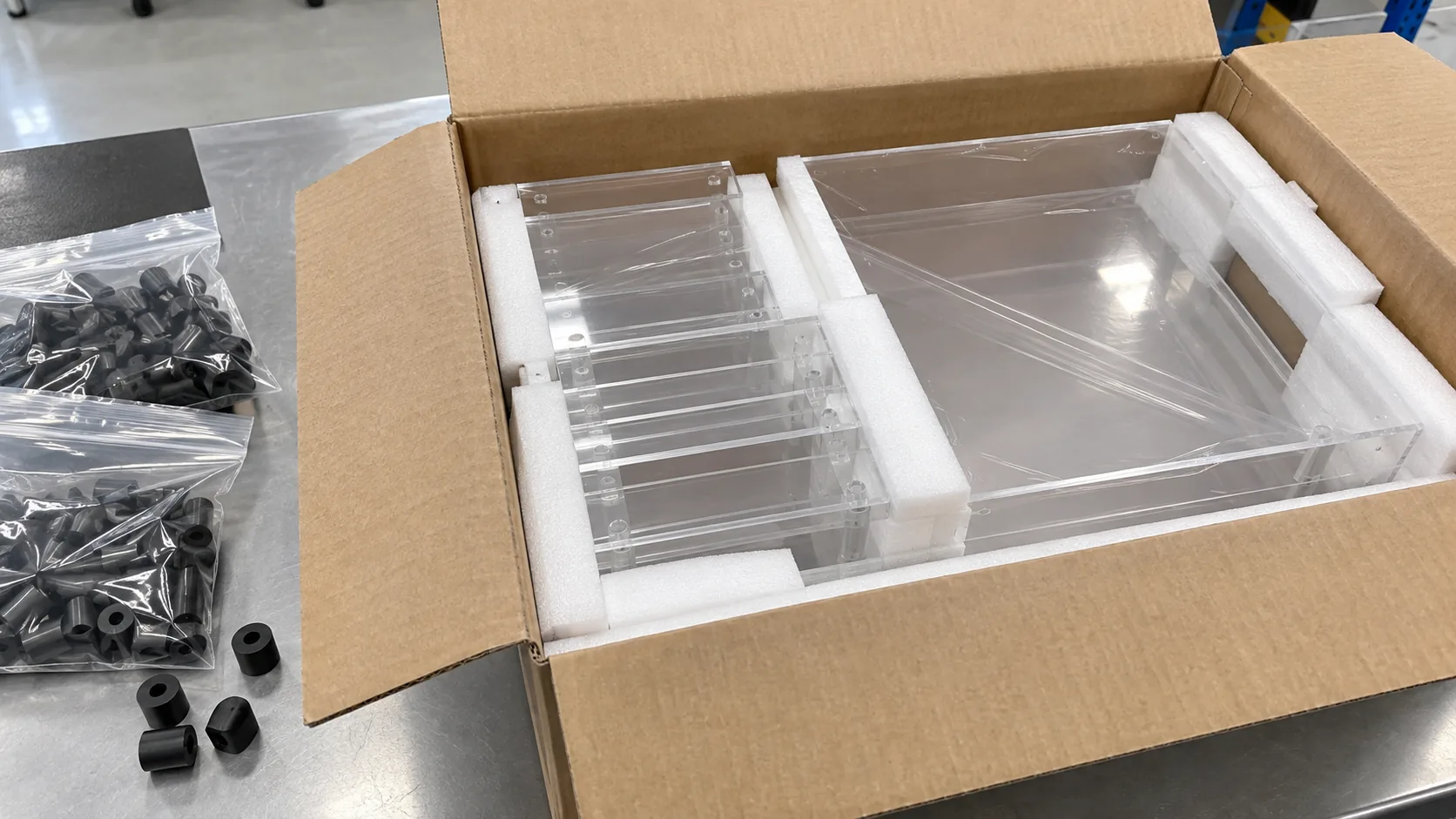
I recommend a short material-approval sequence before a production quote is finalized:
- Define the part's visual role, load, motion, temperature, exposure, cleaning, and expected service environment.
- Identify the candidate material grade and finish—not only “acrylic” or “nylon.”
- Review a representative sample with the real thickness, holes, edges, hardware, and mating materials.
- Agree the inspection criteria: cosmetic standard for acrylic, and dimensions plus conditioning state where nylon fit is sensitive.
- Confirm protective packing and assembly sequence before scaling production.
This sequence is especially valuable when a clear acrylic feature is joined to a nylon mechanical detail. The two materials can complement one another, but the joint needs an allowance for support, fastening, movement, and the appearance of the exposed acrylic face.
Conclusion
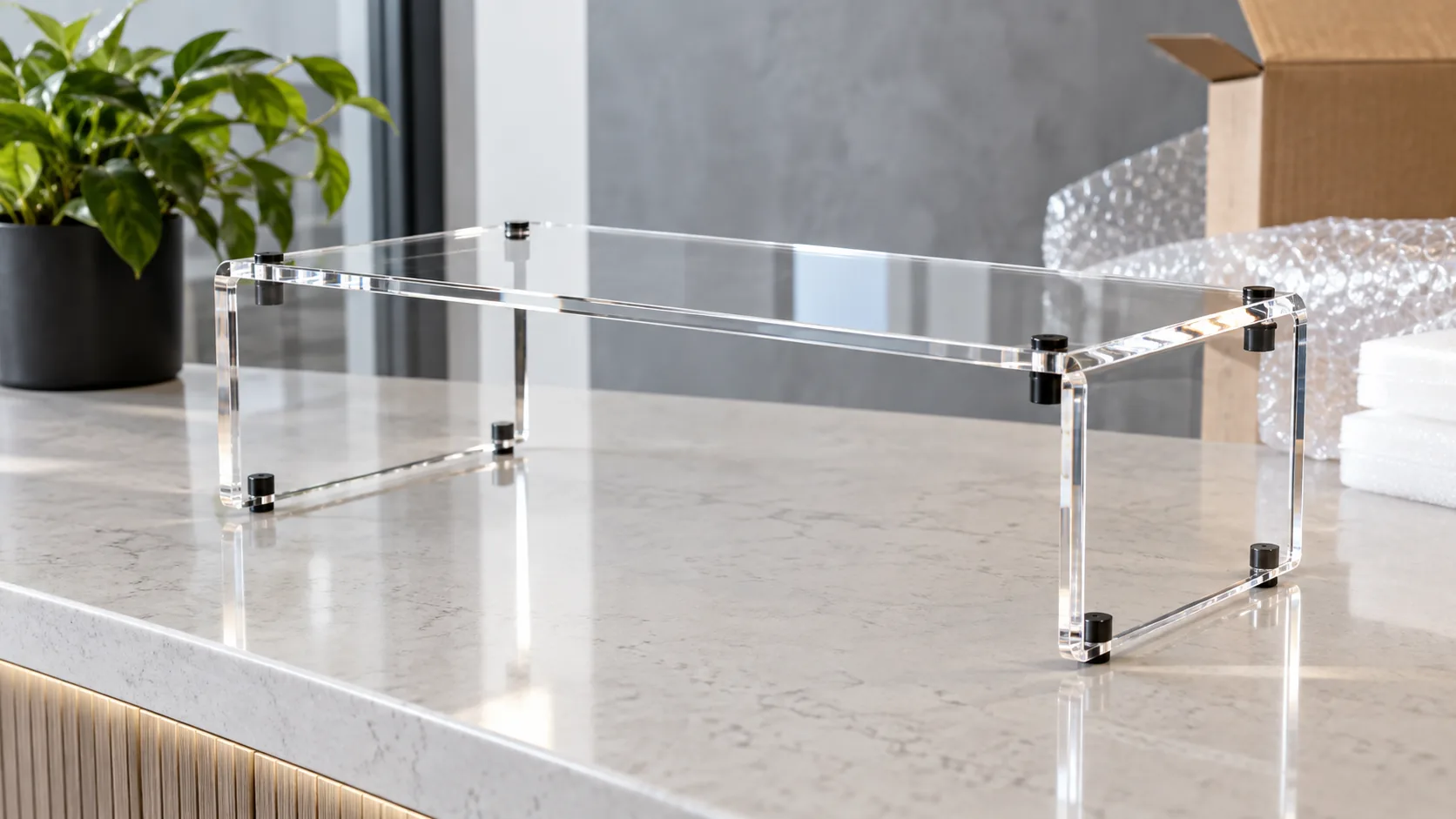
The key difference is not that one material is universally better. Nylon is often the more relevant starting point for technical, wear-oriented mechanical parts, provided its grade and moisture-related behavior are engineered into the design. Acrylic is often the more relevant starting point for transparent, premium, visible components where optical quality and finished presentation matter.
If you are sourcing a custom clear component, send Feilong your drawing or reference image with dimensions, thickness idea, visible faces, hardware, quantity, exposure, and packaging expectation. We can review whether acrylic is the right material and how to fabricate it cleanly before quotation. If the part is fundamentally a nylon mechanical component, take the same definition package to a specialist supplier rather than forcing acrylic into the wrong job.