Skip to content
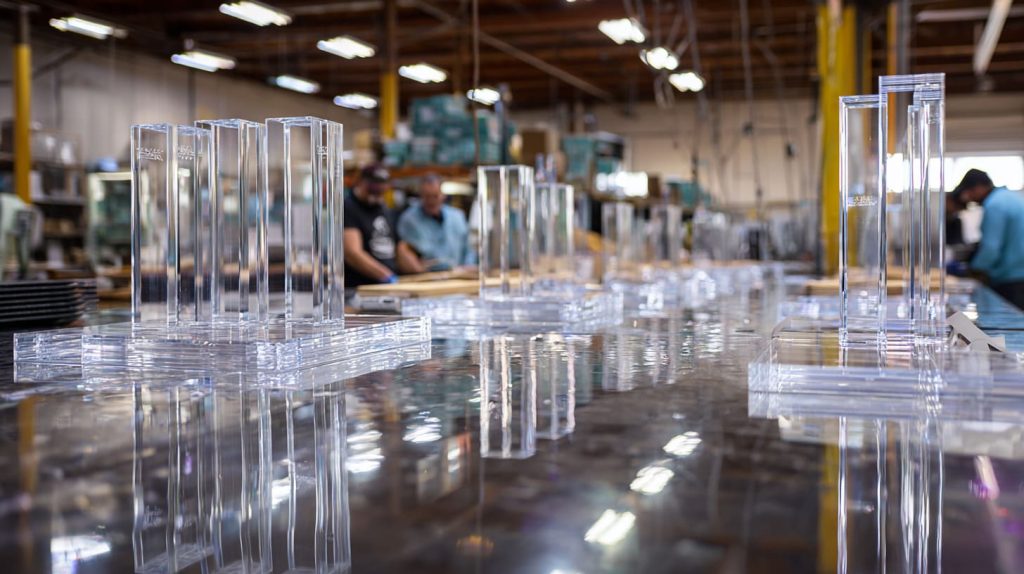
Acrylic prototypes can be very charming.
They sit on the table with clean edges, clear surfaces, nice bonding lines, and a shape that finally looks like the buyer’s idea. Everyone feels a little relieved. The designer feels heard. The buyer feels safe. The factory feels the project can move forward.
But I have learned one thing the hard way: a beautiful acrylic prototype is not the same as a production-ready acrylic product.
A prototype proves that an idea can be made once. Mass production proves that the same idea can be made again and again, with stable quality, controlled cost, and predictable delivery.
That difference is small on paper.
It is huge in the factory.
I have seen acrylic display stands, acrylic boxes, cosmetic organizers, store display cabinets, and acrylic furniture parts pass sample approval smoothly. Then, when the order moved into batch production, problems started showing up like little cracks in a clean mirror.
One part was 1 mm too tight.
One edge looked different from the sample.
One bonding line had bubbles.
One batch of acrylic sheets looked slightly less clear.
One packing method caused surface scratches during shipping.
None of these problems looked serious during prototype approval. But in mass production, small problems become loud. They repeat. They multiply. They cost money.
My own judgment is simple: I do not treat a prototype as a green light for mass production until I know how the same product behaves under real production conditions. A sample can be perfect because people babysit it. A production order must be good even when the factory is busy, workers change shifts, materials come in batches, and delivery time is real.
That is why many experienced buyers still face trouble after approving a prototype. They are not careless. They just trust the wrong signal.
A prototype says, “This design can exist.”
Mass production asks, “Can this design survive reality?”
And reality, as every factory person knows, has sharp teeth.
So let’s talk honestly about why prototype success does not always mean your acrylic product can be mass produced.
Why Do Many Buyers Mistakenly Trust Prototype Results?
A prototype feels concrete. It is not a drawing anymore. It is not a promise in an email. It is something you can hold, measure, photograph, and show to your team.
That is why buyers often trust it so much.
I understand that feeling. If I were sitting in a purchasing office in Canada, looking at a clean acrylic display sample from a China manufacturer, I would also feel more confident. The product is real. The structure works. The logo looks acceptable. The size looks right.
But that confidence needs a seatbelt.
A prototype is often made in a very different way from a mass production order. It receives more care, more time, and more manual correction. This does not mean the factory is cheating. It means prototype work and production work have different goals.
A Prototype Is Built Under Controlled Conditions
A prototype is usually made in small quantity. Sometimes only one piece. Sometimes three or five pieces.
That small quantity changes everything.
A technician can spend more time checking the dimensions. A worker can polish an edge one more time. Someone can adjust the fit by hand. If a small acrylic part does not align perfectly, the worker may gently trim it. If the bonding line is not clean, the factory may remake that piece.
This is normal during sample development.
The problem starts when the buyer assumes that the same level of manual attention can be repeated across 500 pieces, 2,000 pieces, or 10,000 pieces.
| Prototype Stage | Mass Production Stage |
|---|---|
| One or several pieces | Hundreds or thousands of pieces |
| More manual adjustment | More process control needed |
| More time per unit | Limited time per unit |
| Defects can be remade quietly | Defects affect cost and delivery |
| Skilled technician may handle it | Multiple workers may join production |
A prototype can be made almost like a handmade object. A mass production item must be made like a controlled process.
That is a very different game.
Prototype Goals Differ from Production Goals
The main job of a prototype is to answer basic questions.
Does the shape work?
Does the size fit?
Does the acrylic thickness look strong enough?
Does the product match the buyer’s visual expectation?
Can the logo be printed in the right position?
These are important questions. But they are not enough.
Mass production asks different questions.
Can the product be made quickly?
Can different workers make it with the same result?
Can the acrylic sheet be cut efficiently?
Can the bonding process stay stable?
Can the product be packed without scratches?
Can the cost stay close to the quoted price?
I often explain it like this: prototype approval is design validation, not production validation.
A beautiful sample can still hide a weak process.
Sample Approval Creates False Confidence
Many buyers approve samples based mainly on appearance. I do not blame them. Appearance is easy to judge. You can see the surface, the color, the edge, the size, and the logo.
But many production risks are not visible at first glance.
For example:
- The product may require too much hand alignment.
- The bonding gap may be too small for stable glue flow.
- The acrylic sheet thickness may not stay consistent in large batches.
- The structure may need too many small parts.
- The packing method may work for one sample but fail in carton shipment.
- The polishing quality may depend too much on one skilled worker.
A sample can look like a finished answer. But sometimes it is only a polite warning.
The tricky part is that a prototype rarely tells you what will happen on a busy Tuesday afternoon when 800 pieces must be cut, bonded, polished, inspected, packed, and moved out on schedule.
And that is where the next problem begins.
What Makes Acrylic Prototype Manufacturing Different from Mass Production?
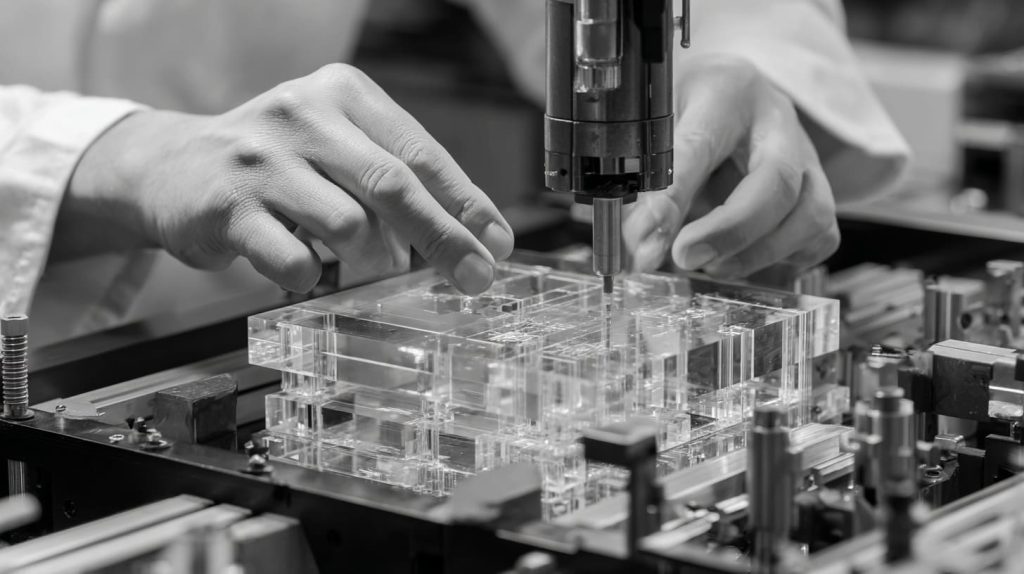
I once saw a buyer fall in love with a prototype acrylic display box because the edges looked almost like glass. The sample was beautiful. The corners were clean. The bonding line was nearly invisible.
Then the buyer asked for a larger order with the same finish.
That was the moment the real question appeared.
Could we make one beautiful piece? Yes.
Could we make 1,000 pieces with the same look, without the price becoming crazy and without the delivery time stretching too far? That was a different discussion.
For production work, I pay less attention to how impressive one sample looks and more attention to whether the process behind it can be repeated by normal workers under normal pressure. If the sample needs a “master worker mood” to succeed, I see risk hiding behind beauty.
Manual Craftsmanship Plays a Larger Role
Acrylic is a wonderful material, but it is not magic.
It needs cutting, polishing, bending, bonding, printing, cleaning, inspection, and packing. In prototype production, many of these steps can rely heavily on skilled hands.
A worker may adjust a slot by hand.
A technician may polish an edge longer than normal.
A sample maker may carefully hold parts during bonding until the angle looks perfect.
This kind of care is useful for proving a concept. But it can become dangerous if the design depends too much on manual correction.
| Process Step | Prototype Reality | Mass Production Risk |
|---|---|---|
| Cutting | Can be adjusted piece by piece | Small size errors repeat |
| Polishing | Extra time can be used | Finish may vary by batch |
| Bonding | Skilled worker handles it | Bubbles and glue marks increase |
| Assembly | Hand fitting is possible | Speed and consistency become hard |
| Inspection | Each piece gets special care | Defect control needs standard rules |
Manual skill is valuable.
But mass production should not depend only on manual talent. It needs stable methods.
Production Speed Is Not a Priority
A prototype is slow by nature. And that is okay.
When making a sample, the factory wants to solve problems. Speed is not the biggest goal. A sample maker can stop, think, adjust, test, and remake.
But mass production has rhythm.
Cutting machines run by schedule. Workers follow batch plans. Material must be prepared. Packing must be arranged. Inspection must keep up. The whole line needs flow.
If one product requires too much stopping and adjusting, the production line becomes heavy.
Acrylic products can look simple from the outside, but some designs are slow monsters. They eat labor quietly.
For example, a small acrylic cosmetic display may include:
- 12 separate parts
- 4 polished edges per part
- 8 bonding points
- 3 logo printing positions
- 1 protective film removal step
- 1 final cleaning step
- 1 custom carton packing process
On a prototype, that feels manageable.
In mass production, every step becomes a cost center.
Material Utilization Differs Significantly
During prototyping, material waste is often accepted. The factory may cut several test pieces to find the right structure. It may use a larger sheet area than needed. It may remake parts without much discussion.
But mass production is different.
Material usage affects price directly. Acrylic sheet cost is not something we can ignore, especially for thick sheets, colored acrylic, frosted acrylic, or high-transparency material.
A design that looks fine in one sample may waste too much material in sheet layout.
Here is a simple example:
| Design Choice | Prototype Impact | Mass Production Impact |
|---|---|---|
| Large curved parts | Easy to test once | High sheet waste |
| Many small parts | Acceptable for sample | More cutting and sorting work |
| Thick acrylic | Looks premium | Higher material and shipping cost |
| Complex shape | Attractive appearance | Lower yield rate |
| Tight nesting layout | Not important for one piece | Critical for cost control |
Acrylic mass production is not only about whether we can make the shape.
It is also about whether we can make the shape without wasting too much material, time, and energy.
And this is why some beautiful design features become troublemakers later.
Why Do Design Features That Work in Prototypes Often Fail in Production?
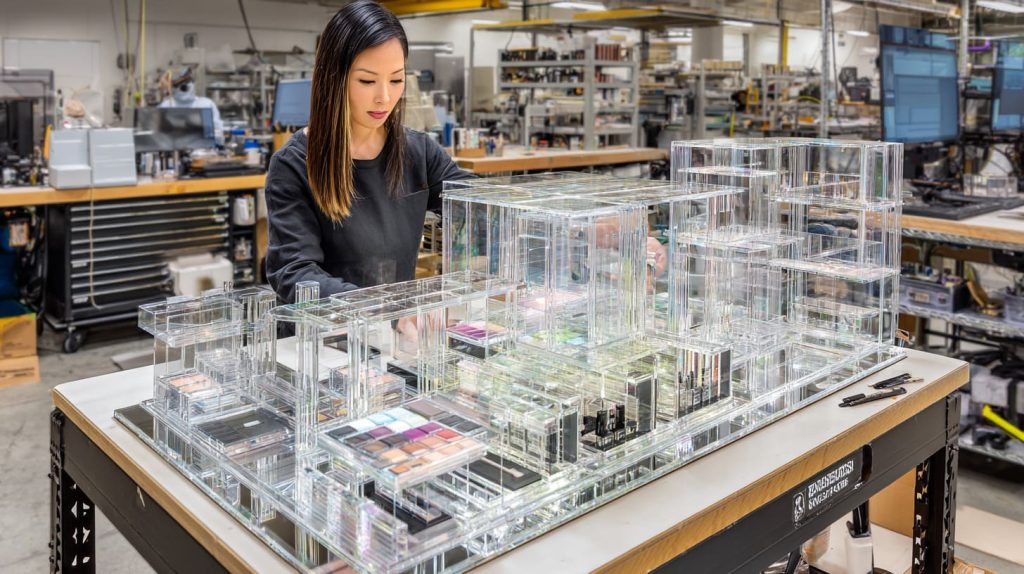
Designers love clean lines. Buyers love premium details. Brands love special shapes.
I like them too.
Acrylic is perfect for this because it can look simple, clear, and modern. A display stand with a soft curve or a box with a perfect transparent lid can make a product feel more valuable.
But in acrylic manufacturing, every beautiful detail has a cost behind it.
Sometimes the cost is money.
Sometimes it is time.
Sometimes it is risk.
When I review an acrylic design for mass production, I always ask myself where the design is asking the factory to be “too perfect.” If a structure only works when every sheet, cut, bend, bond, and hand movement is perfect, I know the problem is not the worker. The problem is the design.
Tight Tolerances Become Difficult to Maintain
Prototype tolerance can be controlled carefully.
Mass production tolerance must survive variation.
Acrylic sheet thickness may vary slightly. CNC cutting may have small differences. Laser cutting may create heat effect. Polishing may remove a little material. Bonding may shift parts slightly. Each step looks small.
Together, they add up.
That is called tolerance accumulation. It sounds technical, but the idea is simple.
Small errors become bigger when many parts meet.
For example, imagine an acrylic display box with a lid.
If the box body is slightly wider than expected, and the lid slot is slightly narrower than expected, the lid may feel too tight. If the opposite happens, the lid may feel loose.
Both problems can happen even when each part is “almost correct.”
| Design Area | Prototype Looks Fine | Production Problem |
|---|---|---|
| Lid fit | Adjusted by hand | Too tight or too loose |
| Slot connection | One sample fits | Batch variation causes mismatch |
| Multi-layer shelves | Manually aligned | Layers shift slightly |
| Screw holes | Carefully drilled | Hole positions vary |
| Acrylic door | Opens smoothly once | Batch doors rub or tilt |
Tight tolerance is not always wrong.
But tight tolerance without production thinking is expensive trouble wearing a nice suit.
Complex Structures Increase Production Risk
Some acrylic products have many parts.
This is common in cosmetic displays, countertop organizers, toy display cabinets, jewelry displays, and retail store display units.
A complex structure may look impressive in a prototype. But every extra part adds risk.
More parts mean more cutting.
More cutting means more size control.
More size control means more inspection.
More inspection means more labor.
More labor means more chances for human error.
It is not glamorous, but it is real.
Cosmetic Requirements Become Harder to Achieve Consistently
Acrylic is valued for clarity. That is also why defects are easy to see.
A small glue mark on clear acrylic can look ugly.
A tiny scratch on a flat surface can catch light.
A slightly uneven polished edge can feel cheap.
A bonding bubble can make the whole product look careless.
With one sample, the factory can choose the best piece. With mass production, the factory must control the whole batch.
| Cosmetic Requirement | Why It Is Hard in Production |
|---|---|
| Clear bonding line | Glue flow and operator skill affect result |
| Scratch-free surface | Handling and packing become critical |
| Glass-like polished edge | Polishing time and worker consistency matter |
| Stable color | Acrylic sheet batches may vary |
| Clean logo printing | Positioning and ink control must stay stable |
This is why I respect simple designs that are easy to repeat.
Simple does not mean cheap.
Sometimes simple means smart.
And nowhere does this become clearer than in bonding and assembly.
How Can Acrylic Bonding and Assembly Become Major Production Problems?
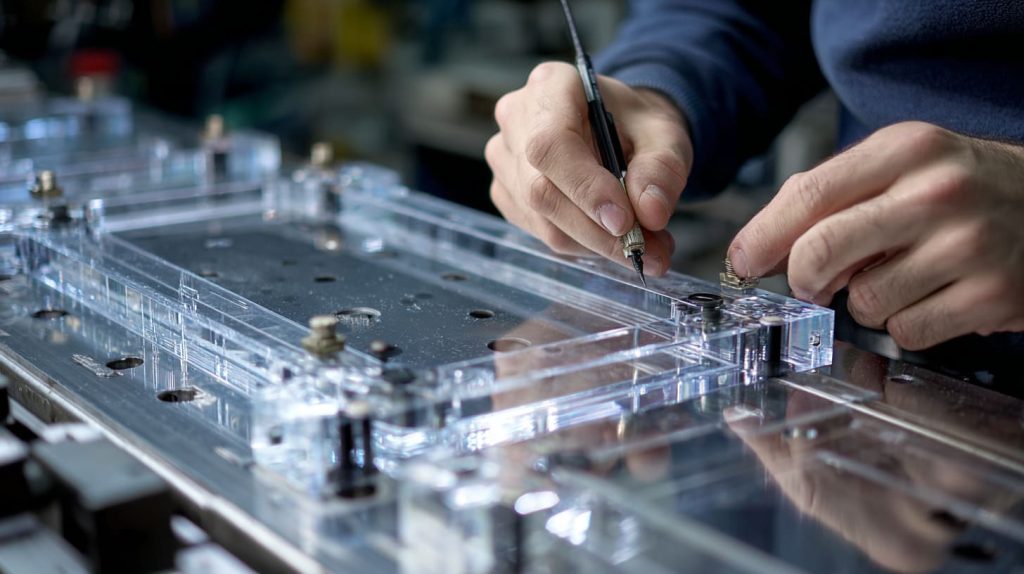
Acrylic bonding is one of those things that looks easy from far away.
You put two clear parts together. You apply solvent or glue. The parts join. Done.
Well, not quite.
Bonding is where many acrylic products either become clean and premium, or they start showing all their secrets. Bubbles. White marks. Uneven corners. Tiny gaps. Visible glue lines.
The sample may hide these risks because the best worker handles it slowly. But production has a different personality.
It is faster. Louder. Less forgiving.
This is where I often slow the project down on purpose, because a bonding structure that looks “acceptable” in one sample can become a complaint machine in mass production. I would rather spend more time checking the bonding method early than spend more time explaining defects later.
Bonding Quality Varies Between Operators
Different workers handle solvent differently.
One worker may apply too much.
Another may apply too little.
One may move quickly.
Another may hold the parts longer.
One may clean the surface carefully.
Another may miss a small dust point.
In clear acrylic products, these small habits show up fast.
Common bonding problems include:
- Air bubbles
- Glue overflow
- White marks
- Uneven bonding lines
- Weak joints
- Visible dust inside joints
- Part movement during drying
Some buyers only inspect the outside dimensions during sample approval. But I always pay attention to the bonding line. It tells me how difficult the product will be to repeat.
Assembly Tolerances Accumulate
Acrylic assembly is not just putting parts together. It is a chain of small decisions.
If the first part shifts slightly, the second part may need adjustment. If the second part is adjusted, the third part may become harder to fit. By the end, the whole product may still look acceptable, but the worker has spent too much time saving it.
That kind of product is dangerous for mass production.
Here is a simple way to think about it:
| Assembly Structure | Production Difficulty |
|---|---|
| Two flat parts bonded at 90 degrees | Low to medium |
| Four-sided acrylic box | Medium |
| Box with lid, hinge, lock, and shelf | Medium to high |
| Multi-tier cosmetic display with logo | High |
| Large cabinet with doors and compartments | Very high |
The more parts we add, the more we need fixtures, clear work instructions, and realistic tolerance design.
Production Speed Affects Bonding Quality
Bonding quality needs time.
The worker needs time to align parts.
The solvent needs time to flow.
The joint needs time to set.
The product needs time before cleaning or packing.
If production is rushed, the risk increases.
This is especially true when the order has a tight deadline. Everyone wants speed. The buyer wants delivery. The sales team wants progress. The factory wants to finish the batch.
But acrylic bonding does not care about anyone’s calendar.
It follows material behavior.
If the product is moved too early, joints may shift. If cleaning happens too soon, marks may appear. If packing happens before the product is stable, damage may happen.
Acrylic has a quiet way of punishing impatience.
And bonding is not the only quiet risk. Material supply can also change the whole result.
Why Are Material Supply and Consistency Critical for Mass Production?
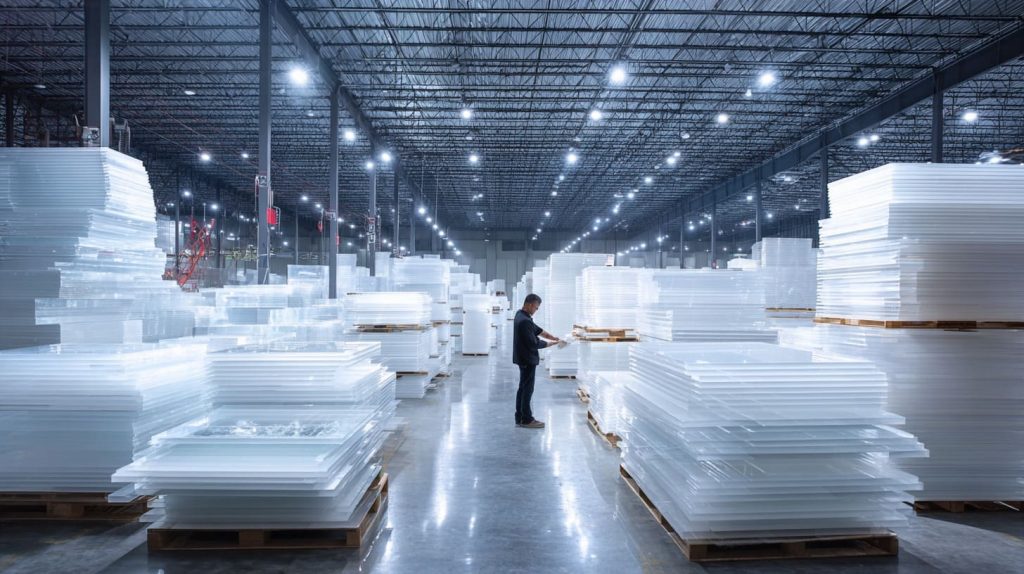
Acrylic looks simple because it is clear.
But “clear” is not always the same clear.
One sheet may look bright and clean. Another may look slightly dull. One batch may have better surface quality. Another may have tiny marks. One color acrylic sheet may match the sample. The next batch may look a little warmer or cooler.
For a single prototype, this may not matter much.
For a retail display order, it matters a lot.
Before I feel comfortable with mass production, I want to know whether the material used for the prototype can be supplied again in stable quality and enough quantity. A product does not fail only because the design is poor. Sometimes it fails because the material supply is treated like an afterthought.
Prototype Materials May Differ from Production Materials
Sometimes a sample is made from material already available in the factory.
That material may be high quality. It may be from a previous project. It may be only enough for a few samples.
Then mass production starts, and new acrylic sheets must be purchased.
This can create differences in:
- Transparency
- Thickness
- Color tone
- Surface flatness
- UV resistance
- Scratch resistance
- Protective film quality
For clear acrylic products, small material differences may still be acceptable. For colored acrylic, frosted acrylic, tinted acrylic, or brand display products, the risk becomes bigger.
A cosmetic display brand, for example, may care deeply about color matching. A small color change can make the display feel off-brand.
Large Orders Expose Batch-to-Batch Variation
Large orders often require multiple sheets or multiple batches of acrylic material.
This is where variation becomes visible.
One sheet may be 2.9 mm. Another may be 3.1 mm. The supplier may still call both “3 mm acrylic.” But if the design has tight slots, that small difference can cause real assembly problems.
| Material Issue | Possible Production Result |
|---|---|
| Thickness variation | Parts fit too tight or too loose |
| Transparency difference | Finished products look inconsistent |
| Surface scratches | Higher rejection rate |
| Color variation | Brand display looks uneven |
| Warped sheet | Cutting and bonding become harder |
| Poor protective film | More handling damage |
This is why material control matters before cutting begins.
Good production does not start at the machine.
It starts at incoming material inspection.
Supply Chain Reliability Affects Production Success
Acrylic product mass production needs planning.
If the material arrives late, the whole schedule moves. If only part of the material arrives, production may be split. If the material quality is unstable, the factory must sort, reject, or replace sheets.
All of this affects delivery.
Buyers often think the main risk is factory labor. But material lead time can be just as painful.
For custom acrylic products, the risk increases when the material is special:
- Custom color acrylic
- Thick acrylic sheet
- UV-resistant acrylic
- Frosted or matte acrylic
- Mirror acrylic
- Anti-glare acrylic
- Large-size sheets
Special material can make a design stand out.
It can also make production less flexible.
That is why a serious supplier should not only say, “Yes, we can make it.”
The supplier should also ask, “Can we source this material consistently for the order quantity?”
The answer to that question can save a buyer from a very expensive surprise.
How Do Manufacturing Processes Reveal Hidden Design Weaknesses?
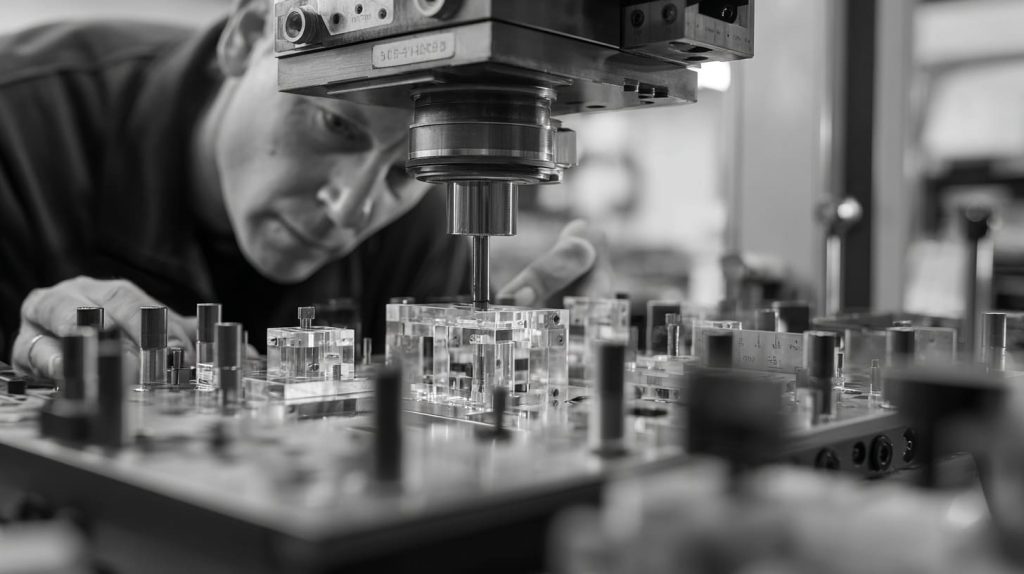
A design can look calm on a computer screen. It can look even better as a prototype.
Then the production fixture touches it, and the truth comes out.
This is one of the strange joys of manufacturing. The factory does not care how nice the drawing looks. The factory only cares whether parts can be cut, held, aligned, bonded, inspected, and packed again and again.
A weak design often hides until the process becomes repetitive.
Then it starts speaking.
Loudly.
I trust production fixtures more than beautiful sample photos, because fixtures show whether the product has enough forgiveness for real manufacturing. If a product fights the jig every time, it will fight the whole order too.
Production Fixtures May Expose Dimensional Issues
Fixtures and jigs are used to hold parts in position during assembly. They help workers keep angles, gaps, and alignment stable.
But fixtures also reveal problems.
If parts do not sit properly in the jig, something is wrong. Maybe the dimension is too tight. Maybe the acrylic sheet thickness varies. Maybe the design has no tolerance space. Maybe the bending angle changes after cooling.
For one prototype, a worker can adjust by hand.
For production, the fixture asks for repeatability.
| Fixture Reaction | What It May Reveal |
|---|---|
| Part does not sit flat | Warping or cutting issue |
| Slot is too tight | Tolerance too narrow |
| Angle changes after bonding | Weak structure or stress |
| Worker needs hand pressure | Poor fit design |
| Finished product shifts after removal | Assembly method unstable |
A good fixture does not only help production.
It also tells the truth.
Scaling Production Increases Defect Exposure
In one sample, a rare defect may not appear.
In 1,000 pieces, it probably will.
That is why mass production is less about luck and more about probability.
If a process has a 1% defect rate, one sample may look perfect. But in 1,000 pieces, that could mean 10 defective products. If the defect rate becomes 5%, now the problem is serious.
This is why production data matters.
Acrylic products can have many defect types:
- Cutting size error
- Burn marks from laser cutting
- Edge polishing inconsistency
- Bonding bubbles
- Scratches
- Dust inside joints
- Printing misalignment
- Packing pressure marks
- Missing accessories
- Wrong protective film removal
A prototype does not show defect rate.
A pilot run does.
Operator Interpretation Varies
Work instructions matter more than many buyers think.
If a design is not clear, workers will interpret it differently. One worker may align parts from the left side. Another may align from the center. One may remove protective film before bonding. Another may keep it longer. One may clean before assembly. Another may clean after.
Small differences can create different results.
This is not because workers are careless.
It is because unclear processes invite personal habits.
For mass production, the process should be simple enough and clear enough that different trained workers can produce the same result.
That means we need:
- Clear drawings
- Standard samples
- Assembly sequence
- Bonding method
- Inspection points
- Packing instructions
- Defect examples
- Acceptable tolerance range
Acrylic production is not only about machines.
It is about making human work stable.
And when human work is not stable, cost starts moving.
Why Can Cost Estimates Change Dramatically During Mass Production?
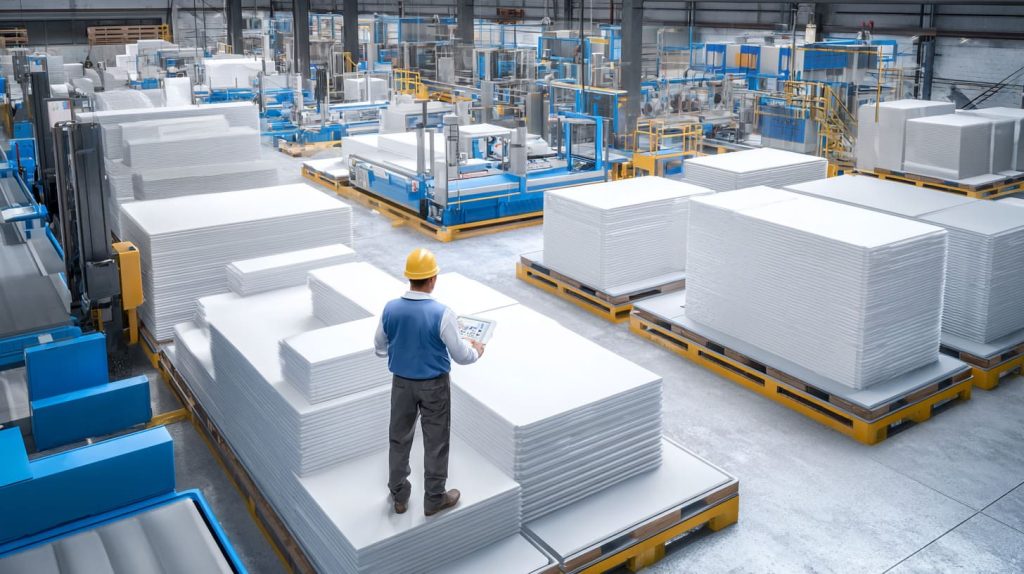
Prototype cost can be misleading.
A sample price often includes development time, manual work, and trial effort. But it may not show the true production cost. At the same time, a mass production quote may look reasonable before the factory fully understands the hidden difficulty.
This is why some projects become uncomfortable after sample approval.
The buyer expects the quoted price to stay stable.
The factory discovers that production is slower than expected.
Nobody enjoys that conversation.
When a sample looks too labor-heavy, I do not celebrate too early, because the real cost is not in making one piece look good; it is in making every piece look good without slowing the whole workshop down. A design that steals five extra minutes per unit may look harmless until the order quantity becomes large.
Prototype Costs Do Not Reflect Production Realities
A prototype is often treated as development work.
The factory may not calculate every second of labor. It may accept extra waste. It may remake parts. It may use senior workers. It may absorb some cost to support the buyer.
Mass production cannot work this way forever.
Every process must be counted.
Every extra operation matters.
| Cost Area | Prototype Stage | Mass Production Stage |
|---|---|---|
| Labor | Flexible and often underestimated | Must be measured per unit |
| Material waste | More acceptable | Affects margin directly |
| Rework | Hidden in sample process | Becomes visible cost |
| Tooling or fixture | May not be needed | Often required |
| Inspection | Informal and detailed | Must be systematic |
| Packing | Simple sample packing | Export-safe packing needed |
A buyer may approve a sample without realizing that the product requires too much hand work.
Then the order becomes expensive to make.
Hidden Manufacturing Complexity Increases Expenses
Some costs do not appear clearly at the sample stage.
For example, a product may need a special jig for assembly. It may need extra cleaning. It may need protective film to stay on longer. It may need individual polybag packing. It may need foam inserts. It may need more QC time because the surface is easy to scratch.
These details are not exciting.
But they decide whether the order makes sense.
Hidden cost often comes from:
- Too many parts
- Too many bonding points
- Special polishing requirements
- Difficult logo positioning
- Delicate surface handling
- Complicated packing
- Low defect tolerance
- Slow assembly speed
Acrylic looks light and clean.
The production behind it can be heavy.
Yield Loss Affects Total Cost
Yield rate means how many good products we get from the total production quantity.
If the yield rate is high, production is healthy.
If the yield rate is low, cost rises quickly.
Let’s say a factory cuts material for 1,000 acrylic display boxes. If 50 pieces fail due to bonding marks, scratches, or size issues, the factory must spend more labor and material to replace them.
That cost does not disappear.
Someone pays for it.
Maybe the factory absorbs it and loses profit. Maybe the buyer faces a higher price next time. Maybe delivery gets delayed. Maybe quality drops because people rush to catch up.
None of these outcomes are good.
| Yield Problem | Business Impact |
|---|---|
| High scrap rate | More material cost |
| Heavy rework | More labor cost |
| Slow inspection | Longer lead time |
| Unstable bonding | More customer complaints |
| Packing damage | Replacement and freight cost |
| Low production efficiency | Higher unit price |
This is why I do not like judging cost only from a sample.
The sample shows appearance.
The production run shows economics.
And before a buyer places a large order, production validation should happen.
What Production Validation Should Be Completed Before Mass Manufacturing?
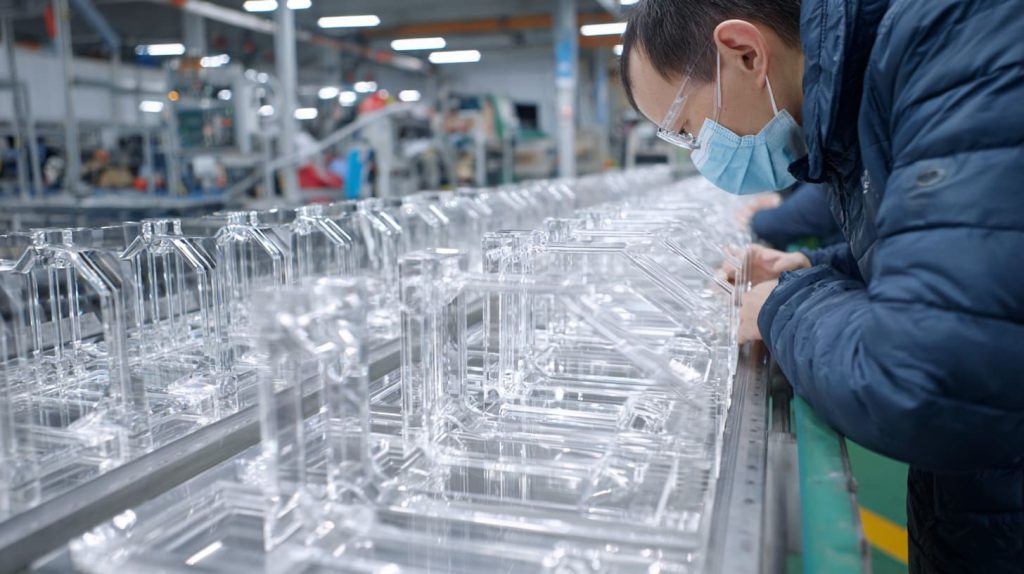
Acrylic production validation sounds like a big factory phrase.
But the idea is very practical.
Before making a large order, we should test whether the product can be produced in a small real batch. Not one carefully made sample. Not a showpiece. A small batch made with real production methods.
That is where the truth becomes useful.
For custom acrylic products, I prefer a small pilot run when the design has tight fit, complex bonding, special material, or premium cosmetic requirements. It may feel slower at first, but it is much cheaper than finding the same problem after the full order is already on the table.
Conduct Pilot Production Runs
A pilot run is a small batch before full production.
It may be 20 pieces, 50 pieces, or 100 pieces. The number depends on product complexity and order size.
The goal is not only to produce good pieces. The goal is to see how the process behaves.
During a pilot run, I want to check:
- Can workers follow the assembly steps?
- Are dimensions stable?
- Does the bonding process create bubbles?
- Does the polishing finish stay consistent?
- Does the product need too much rework?
- Does the packing protect the product?
- Does the production time match the cost plan?
A pilot run is like a rehearsal before the real performance.
If the rehearsal is messy, the big show will not magically become smooth.
Evaluate Process Capability
Process capability means whether the factory can produce within the required range again and again.
For acrylic products, this is often about consistency.
One product may be acceptable.
But are 50 pieces acceptable?
Are they acceptable in the same way?
Do they have the same edge finish, same fit, same clarity, same logo position, same packing result?
| Validation Point | What I Check |
|---|---|
| Cutting size | Are key dimensions stable? |
| Edge finish | Does polishing look consistent? |
| Bonding | Are bubbles and marks controlled? |
| Assembly | Do parts fit without hand correction? |
| Printing | Is logo position stable? |
| Surface quality | Are scratches within acceptable range? |
| Packing | Does shipping protection work? |
This is where buyers should ask for real production feedback, not only pretty photos.
Pretty photos are useful.
Production notes are better.
Stress-Test Production Conditions
Some problems only show up when production moves faster.
That is why I like testing real conditions when possible.
For example:
- Use actual production workers, not only sample technicians.
- Use the planned acrylic material batch.
- Use the real cutting method.
- Use the real bonding fixture.
- Use the real packing method.
- Inspect products under normal QC standards.
- Record defects honestly.
This kind of test can feel less romantic than sample approval.
But it protects the project.
Acrylic mass production is not won by optimism.
It is won by boring checks done at the right time.
And once these checks are done, buyers can judge production readiness with much clearer eyes.
How Can Buyers Determine Whether an Acrylic Product Is Truly Production Ready?
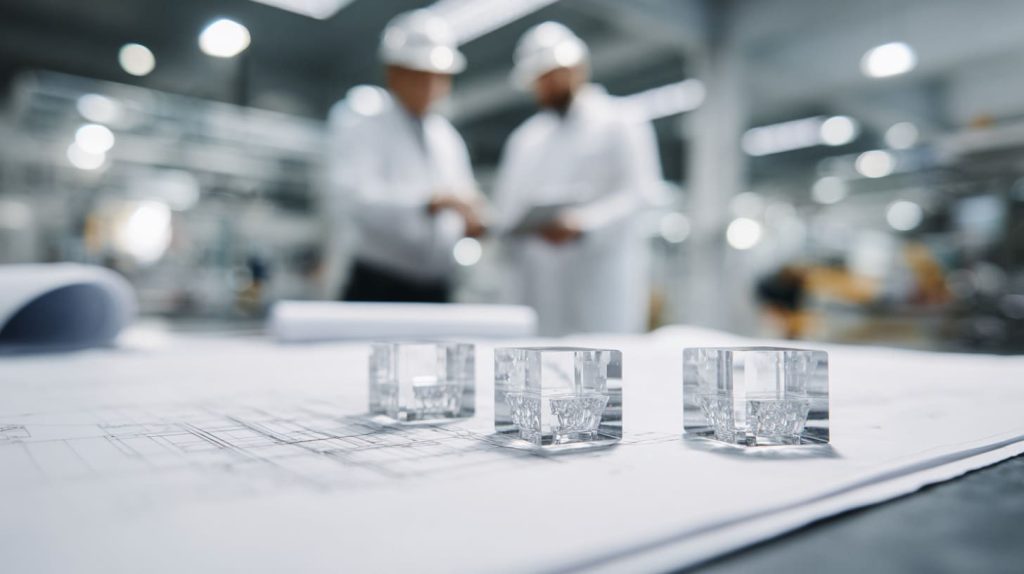
A production-ready acrylic product does not always look more exciting than a prototype.
Sometimes it looks simpler.
Sometimes it has wider tolerance.
Sometimes it has fewer parts.
Sometimes it uses a more common material.
Sometimes the design team gives up one fancy detail so the whole batch can be made better.
That is not failure.
That is maturity.
When I judge whether an acrylic product is ready for production, I look for boring stability more than dramatic beauty. A perfect sample may win attention, but a stable process wins the order.
Review Manufacturability During Design Stage
Manufacturability means how easy and stable a design is to make.
This should be reviewed before production, not after problems appear.
For acrylic products, I usually think about these questions:
- Can the design use fewer parts?
- Can the tolerance be more forgiving?
- Can the bonding area be easier to control?
- Can the structure be assembled with a fixture?
- Can the material be sourced consistently?
- Can the product be packed safely?
- Can workers inspect it clearly?
Sometimes a small design change can save a large amount of trouble.
For example, increasing a slot gap slightly may reduce assembly pressure. Changing a bonding method may reduce visible glue marks. Simplifying a corner detail may improve yield rate.
| Design Question | Why It Matters |
|---|---|
| Can parts be reduced? | Less assembly risk |
| Are tolerances realistic? | Better batch consistency |
| Is bonding easy to control? | Fewer cosmetic defects |
| Is material common enough? | Safer supply |
| Is packing considered early? | Less shipping damage |
| Can QC inspect it easily? | Faster problem detection |
Good design is not only about what buyers see.
It is also about what workers can repeat.
Verify Supplier Production Capability
Acrylic product suppliers are not all the same.
Some are strong in simple cutting and polishing. Some are better at display stands. Some are good at boxes and cabinets. Some handle printing well. Some have better CNC capacity. Some have stronger QC systems.
A buyer should not only ask, “Can you make this?”
A better question is, “How will you make this in quantity?”
I would look at:
- Similar product experience
- Equipment match
- Worker skill
- Quality control process
- Material sourcing ability
- Production line capacity
- Export packing experience
- Communication habits
A supplier with good sample ability may still struggle with large production if the process is not controlled.
For B2B custom acrylic projects, the supplier’s thinking matters as much as the machines.
Focus on Consistency Instead of Perfect Samples
A perfect sample can be seductive.
It makes everyone feel safe.
But consistency is what protects the buyer.
If I were Jacky, sitting in a purchasing role and sourcing acrylic products from China, I would not only ask for sample photos. I would ask for pilot run results, defect feedback, material confirmation, packing method, and QC points.
That may sound less exciting.
But it is how serious buyers avoid painful surprises.
Here is a simple production-ready checklist:
| Production-Ready Check | Good Sign | Risk Sign |
|---|---|---|
| Sample quality | Matches design | Only one perfect piece exists |
| Pilot run | Stable small batch | Many hand adjustments needed |
| Material | Confirmed and available | Similar material used instead |
| Tolerance | Realistic | Very tight without reason |
| Bonding | Stable method | Depends on one skilled worker |
| Cost | Based on real process | Based on optimistic estimate |
| Packing | Tested for shipment | Sample packed differently |
| QC | Clear inspection rules | Appearance judged casually |
A product is truly production ready when the factory does not need luck to make it well.
That is the line I care about.
Conclusion
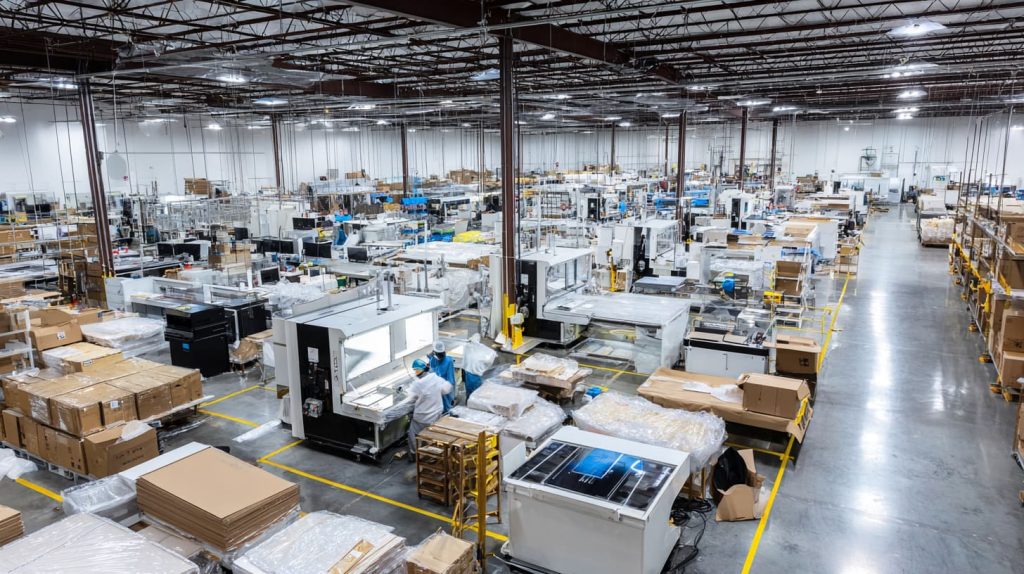
Acrylic prototype success is important.
I never ignore it.
A prototype helps buyers see the shape, test the size, check the appearance, and confirm the design direction. Without a prototype, many custom acrylic projects would feel like guessing in the dark.
But I do not stop there.
I believe prototype approval is only the first gate because I have seen what happens when buyers treat it as the final answer. The sample looks good. The order starts. Then production exposes the weak points: tight tolerance, unstable bonding, material variation, slow assembly, high scrap rate, poor packing, or cost pressure.
That is why I think the real question is not, “Can this acrylic product be made once?”
The better question is, “Can this acrylic product be made consistently, economically, and safely at scale?”
For me, that question comes from real factory work, not theory. A sample can receive special attention. Mass production cannot depend on special attention every minute. It needs a stable process. It needs suitable material. It needs clear drawings. It needs trained workers. It needs proper fixtures. It needs honest inspection. It needs packaging that protects the product after it leaves the factory.
That is also why I encourage buyers to look beyond the perfect sample.
Ask about the production method.
Ask about the pilot run.
Ask about material consistency.
Ask about bonding control.
Ask about the inspection standard.
Ask how defects will be found before shipment.
A production-ready acrylic product is not the one that looks best in one photo. It is the one that can survive real manufacturing without turning every small detail into a daily problem.
At Feilong Acrylic, this is how I prefer to handle custom acrylic projects. I want the product to look good, yes. But I also want it to be practical to produce, stable in quality, and safe for bulk delivery.
If you are developing a custom acrylic display, acrylic box, acrylic organizer, acrylic cabinet, acrylic stand, or another acrylic product for bulk order, send us your drawing, idea, or sample reference.
We can help you review not only whether it can be made, but whether it can be mass produced in a smart and stable way.