Skip to content
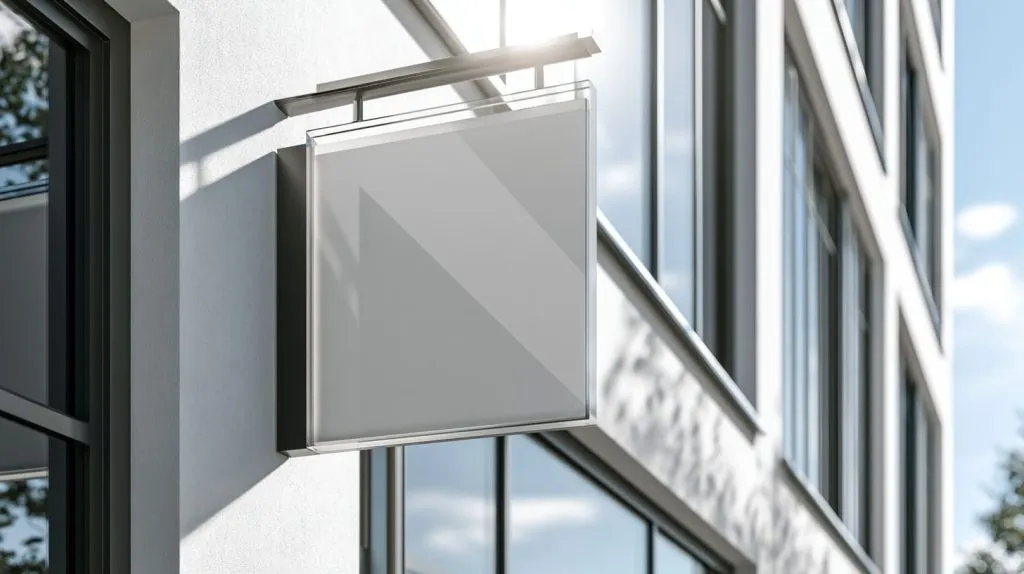
Acrylic is one of those materials that looks easy to choose.
It is clear. It is clean. It can be laser cut. It can be polished nicely. It can be printed, bent, drilled, glued, and shaped into many kinds of signs. For outdoor signage, it often gives a bright and premium look without making the project too heavy or too expensive.
So I understand why many buyers like it.
When a customer sends me an outdoor signage idea, acrylic is often one of the first materials they ask about. They may say, “We want something clear, modern, and weather-resistant.” That sounds like acrylic. In many cases, it is acrylic.
But not always.
That is the part many people miss.
Acrylic is a good material. I work with it every day. I also know its limits. A good supplier should not say “yes” to acrylic just because the buyer asked for acrylic. A good supplier should check the real use environment first.
A sign does not fail in the quotation file. It fails outside, under sun, wind, dust, impact, salt, and real human use.
Why Acrylic Is Popular for Outdoor Signage
Acrylic has many strong points for signage projects. It is not popular by accident.
| Acrylic Advantage | Why Buyers Like It | Why It Matters for Signage |
|---|---|---|
| High clarity | It looks clean and bright | Good for brand logos and premium signs |
| Easy fabrication | It can be cut, engraved, drilled, and formed | Good for custom designs |
| Light weight | Easier to install than glass | Lower handling and shipping pressure |
| Good color options | Clear, frosted, tinted, black, white, and custom colors | Good for brand matching |
| Smooth surface | Easy to polish and print | Good for a clean visual finish |
| Lower cost than some alternatives | More budget-friendly than glass or some metals | Useful for bulk custom orders |
For many retail signs, office signs, shop displays, wall logos, hotel signs, and decorative outdoor branding pieces, acrylic can work very well. It can make a brand look more modern without making the sign too heavy.
This is why many businesses choose acrylic for outdoor branding.
They want a sign that looks clean from the first day. They want the logo to stand out. They want something that feels more premium than foam board or cheap plastic. They also want custom shapes, printed colors, and fast lead times.
Acrylic fits these needs nicely.
But there is a common misunderstanding here.
Many people think, “Acrylic can be used outdoors, so it must be suitable for any outdoor signage.”
That is not true.
Acrylic can be used outdoors, but the location, size, mounting method, climate, and risk level all matter. The same acrylic sign may perform well on a shaded shop entrance but fail faster on a south-facing wall in a hot desert city.
That is the difference between “material possibility” and “project suitability.”
The Real Question: When Should You Avoid Acrylic?
The better question is not, “Can acrylic be used outdoors?”
The better question is, “Should I use acrylic for this exact outdoor sign?”
That small change makes the whole discussion more useful.
Before I suggest acrylic for an outdoor signage project, I usually think about the worst day of the sign’s life, not the best day. I ask myself: Will this sign face strong sun every afternoon? Will people touch it? Can someone hit it? Will salt air reach it? Will it expand and contract every season? Will the client still be happy after two or three years?
That is how real material selection should work.
Outdoor signage life can be shortened by many factors:
- Strong UV exposure
- High heat
- Very cold weather
- Fast temperature changes
- Wind load
- Poor mounting design
- Salt air
- Sand and dust
- Frequent cleaning
- Public impact
- Vandalism
- Wrong thickness
- Wrong installation method
Acrylic is not weak. But it is not magic.
I have seen beautiful acrylic samples look perfect on a factory table. Then, when the same idea is placed in a harsh outdoor environment, the risk becomes obvious. The material itself is only one part of the decision. The environment is the other half.
Acrylic can be a smart choice.
Acrylic can also be the wrong choice.
The trick is knowing the difference before production starts.
And that is where the real money is saved.
Signs Your Outdoor Project Is NOT Suitable for Acrylic
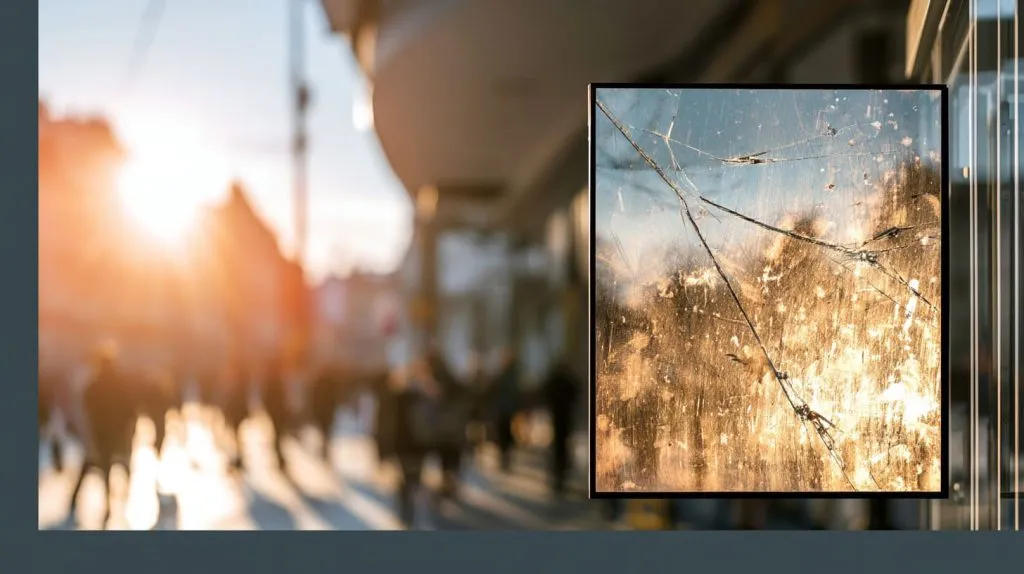
Acrylic does not usually fail because the buyer made one big mistake. It fails because several small details were ignored at the beginning.
The sun was stronger than expected. The panel was too large. The mounting holes were too tight. The area had more impact risk than the designer imagined. The cleaning staff used a rough cloth every week. Nobody checked the wind load.
One detail alone may not kill the sign.
But several details together can turn a good-looking sign into a problem.
This is where things often go wrong: people judge acrylic by how it looks in the showroom, but I judge it by what it must survive after installation.
Extreme Sun Exposure and High UV Environments
Acrylic is often chosen because it looks bright and clear. But outdoor sunlight is not gentle.
In some locations, the sign receives strong direct sunlight for many hours every day. The surface heats up. The color layer may fade. The material may age faster. If the acrylic is not the right grade, or if the design is not suitable, the sign may lose its premium look earlier than expected.
Continuous Direct Sunlight Can Cause Problems
Direct sunlight can create several risks for acrylic signage.
| Possible Problem | What It Looks Like | Why It Matters |
|---|---|---|
| Yellowing | Clear acrylic becomes slightly warm or yellow | The sign loses its clean look |
| Fading | Printed colors or colored sheets lose strength | Brand colors may look wrong |
| Surface aging | Surface looks dull over time | The sign looks old even if it still works |
| Brittleness | Material becomes less forgiving | Cracks may appear more easily |
| Heat stress | Panel expands and contracts often | Mounting holes or edges may crack |
High-quality acrylic can perform outdoors much better than low-grade material. UV-resistant acrylic also helps. But it still needs the right project conditions.
If the buyer wants a sign for short-term promotion, acrylic may still be fine.
If the buyer wants a sign to stay outdoors for many years with very little maintenance, then I start asking more questions.
Acrylic’s clean look is a strength. But that clean look also makes aging easier to notice. A small color change on a clear or white acrylic sign can be very visible. On a rough metal sign, the same aging may not bother anyone.
That is an important detail.
Locations Most at Risk
Some outdoor locations are much harder on acrylic than others.
| Location Type | Risk Level | Main Reason |
|---|---|---|
| Desert climates | High | Strong sun, heat, dry air, sand |
| Tropical regions | Medium to high | UV, heat, humidity, rain |
| South-facing facades | High | Long daily sun exposure |
| Rooftop signs | High | Sun, wind, heat, little shade |
| Shaded storefronts | Lower | Less direct UV and heat |
| Indoor-facing window signs | Lower | Better protection from weather |
A buyer may say, “It is just an outdoor sign.”
But outdoor in Vancouver is not the same as outdoor in Dubai. Outdoor in a shaded shopping street is not the same as outdoor on a highway wall. Outdoor under a canopy is not the same as outdoor on a rooftop.
I always try to understand the location before I recommend the material.
Areas with High Impact Risk
Acrylic is stronger than regular glass in many practical signage uses. It is lighter and easier to handle. But it is not the best material when impact is the main risk.
Acrylic can crack. It can chip at the edge. It can break if it receives strong force at the wrong angle.
That does not mean acrylic is bad.
It means acrylic should not be used like polycarbonate.
Acrylic Is Strong but Not Unbreakable
Acrylic and polycarbonate are often compared because both can be clear plastic sheet materials. But they behave differently.
| Material | Main Strength | Main Weakness | Better Use Case |
|---|---|---|---|
| Acrylic | High clarity and clean finish | Lower impact resistance than polycarbonate | Premium visual signs |
| Polycarbonate | Very high impact resistance | Usually more expensive and can scratch more easily | Public areas and impact-risk zones |
If the sign is in a calm location, acrylic may be a better choice because it looks cleaner and can be easier to fabricate. If the sign is in a place where people may hit it, push it, kick it, or throw objects at it, polycarbonate may be safer.
Impact risk is not only about vandalism.
It can also come from daily life.
A delivery cart can hit a sign. A bicycle can fall into it. Children can touch it. A cleaner can knock it with equipment. A sports ball can hit it. A door can swing into it.
Small things happen.
And outdoor signs live with those small things every day.
Typical High-Risk Applications
Some locations make me careful immediately.
| Application | Why Acrylic May Be Risky | Better Direction |
|---|---|---|
| Public transportation stations | Many people, high touch, impact risk | Polycarbonate or metal |
| Sports facilities | Balls, equipment, crowd movement | Polycarbonate |
| Schools and playgrounds | Children, rough use, safety concern | Polycarbonate or rounded metal |
| Street-level public signs | Vandalism and accidental hits | Metal, ACP, or polycarbonate |
| Parking areas | Cars, carts, tools | Metal or impact-resistant plastic |
For a private office wall sign, acrylic may be excellent.
For a bus station sign that faces thousands of people daily, I would be more careful.
The buyer may still choose acrylic for budget or appearance reasons. That is possible. But the risk should be clear before production.
A beautiful sign that breaks in six months is not a good sign. It is an expensive lesson.
Regions with Severe Temperature Fluctuations
Temperature movement is easy to forget because it is invisible.
Acrylic expands and contracts when temperature changes. Most materials do. Metal does it too. The problem is not the movement itself. The problem is when the design does not allow movement.
A tight screw hole. A long panel with no expansion gap. A rigid mounting system. A thick sign placed in direct sun during the day and cold air at night.
These small design choices can create stress.
Expansion and Contraction Issues
Acrylic needs space to move.
If the mounting holes are too tight, the panel may crack around the screws. If the sign is too large and fixed too strongly, the panel may warp or bow. If the edge is polished but the stress is not controlled, small cracks may start from the edge.
| Design Detail | Possible Risk | Better Practice |
|---|---|---|
| Tight screw holes | Cracks around fasteners | Use larger holes and proper washers |
| No expansion gap | Stress inside the panel | Leave controlled movement space |
| Large thin panel | Bowing or flexing | Increase thickness or use support frame |
| Sharp internal corners | Stress concentration | Use radius corners |
| Poor edge finishing | Crack starting points | Polish and inspect edges carefully |
This is one reason I do not like to quote large outdoor acrylic signs based only on length and width.
I also want to know the thickness, fixing method, screw position, installation surface, and local climate. Without these details, the quote may look fast, but the risk is hidden.
Acrylic signs are not just flat panels.
They are working parts in an outdoor system.
Outdoor Conditions That Increase Risk
Temperature problems become more serious in certain climates.
| Climate Condition | Risk for Acrylic |
|---|---|
| Cold winter and hot summer | Strong seasonal expansion and contraction |
| Hot daytime and cold nighttime | Daily stress cycles |
| Mountain climates | UV exposure plus temperature change |
| Desert climates | Heat, sun, dust, and fast cooling |
| Dark-colored acrylic outdoors | More heat absorption |
Dark colors are a good example.
Black acrylic can look very premium. I like it for many indoor signs and display projects. But outdoors, black surfaces absorb more heat. On a hot wall, that heat can increase expansion and stress.
So the sign may look simple on paper, but the material behavior is not simple outside.
This is why outdoor acrylic design should always include enough tolerance.
Tolerance is not a boring technical detail.
It is the space that keeps the sign alive.
Coastal and Marine Environments
Coastal projects look beautiful in photos. Blue sky. Sea view. Premium restaurants. Hotels. Resorts. Outdoor brand signs near the entrance.
But salt air is not friendly.
Acrylic itself can handle moisture better than many materials. But a coastal environment is not just “wet air.” It includes salt, wind, sand, UV, humidity, and often more cleaning. The hardware also matters. Screws, frames, brackets, adhesives, and printed layers may age faster.
When I see a coastal installation, I do not only think about the acrylic panel. I think about the full sign system, because one weak screw or one poor coating can make the whole sign look cheap.
Salt Exposure Can Accelerate Wear
Salt air can create more maintenance pressure.
| Component | Coastal Risk | What Can Happen |
|---|---|---|
| Acrylic surface | Salt film, dust, cleaning marks | Dull look or surface scratches |
| Printed graphics | UV and moisture exposure | Fading or peeling |
| Metal screws | Corrosion if wrong grade | Rust marks around holes |
| Frames | Coating damage | Edge staining or loose structure |
| Adhesive | Heat and humidity stress | Bond failure over time |
The acrylic may still be usable.
But if the project requires long-term outdoor performance near the sea, I become more cautious. The material choice, hardware choice, and cleaning plan all need to match the environment.
Acrylic is often judged by the panel only. In coastal signage, that is a mistake.
The panel may survive, but the accessories may not.
Better Alternatives for Coastal Installations
In some coastal projects, acrylic can still be used as a decorative face or protected component. But for exposed structural signage, other materials may be more suitable.
| Alternative Material | Why It May Work Better |
|---|---|
| Marine-grade stainless steel | Better corrosion resistance with correct grade |
| Powder-coated aluminum | Good balance of weight and outdoor durability |
| Aluminum composite panel | Stable, light, and widely used for outdoor signs |
| Treated metal letters | Stronger for long-term exterior branding |
| Outdoor-rated composite materials | Better for harsh mixed weather conditions |
The right choice depends on the sign type.
A hotel logo near a covered entrance may use acrylic beautifully. A large freestanding seaside sign may need metal or ACP. A decorative acrylic layer may still be part of the design, but I may not use acrylic as the main structural material.
That is the difference between using acrylic wisely and forcing acrylic into the wrong job.
Large Outdoor Signs Requiring Maximum Structural Strength
Large outdoor signs create a different kind of problem.
A small acrylic logo on a wall is one thing. A huge outdoor panel facing wind is another thing.
When signs become larger, the material must deal with more force. Wind pushes the panel. The mounting system carries the load. The panel may flex. The fixing points may receive stress. The sign may vibrate.
Large size changes the whole decision.
I often tell buyers that the same material can be right at one size and wrong at another size. A 300 mm sign and a 3000 mm sign are not the same project just because both use acrylic.
Acrylic's Limitations in Oversized Applications
Acrylic can be made in larger panels, but oversized outdoor signs need careful engineering.
| Issue | Why It Matters |
|---|---|
| Flexing | Large panels may move under wind pressure |
| Weight | Thick acrylic becomes heavier and harder to mount |
| Mounting stress | Screw points can crack if stress is not spread |
| Thermal movement | Larger panels move more with temperature change |
| Installation risk | Handling large sheets can cause edge damage |
Acrylic has a clean look, but it is not always the best load-bearing choice.
If the sign is large, I want to know:
- Is it wall-mounted or freestanding?
- Is it exposed to strong wind?
- Is there a metal support frame?
- Will the acrylic be a decorative face or the main structure?
- What thickness is planned?
- How many fixing points are used?
- Can the installer allow expansion space?
- Is the sign lit from behind or from the front?
Acrylic can work well as part of a large sign system. But I become careful if the buyer wants acrylic to do everything by itself.
That is where problems start.
Situations Requiring Stronger Materials
Some outdoor signs usually need stronger material planning.
| Sign Type | Why Acrylic Alone May Not Be Ideal |
|---|---|
| Large monument signs | Need strong structure and long outdoor life |
| Highway signage | Wind, vibration, and safety concerns |
| Tall freestanding signs | Structural load is high |
| Large rooftop signs | Wind exposure is serious |
| Large outdoor lightboxes | Heat, impact, and panel size all matter |
For these projects, acrylic may still be used for letters, faces, small windows, or decorative parts. But I would not choose it blindly as the main body.
This is an important point for B2B buyers.
Sometimes the buyer asks, “Can you make this in acrylic?”
The answer may be yes.
But the better answer is, “Yes, but should we?”
That one extra question can prevent a lot of trouble.
Locations Requiring Long-Term Scratch Resistance
Acrylic has better scratch resistance than some plastics, but it still scratches more easily than glass and some coated materials.
Outdoor signage may face dust, sand, cleaning cloths, wind-blown particles, and human contact. Over time, these small scratches can make the surface look cloudy or old.
Scratches are not always a material failure.
But they are a visual failure.
For signage, visual failure matters.
A sign can still stand on the wall and still disappoint the brand owner.
Acrylic Scratches More Easily Than Some Alternatives
Acrylic surfaces need proper cleaning and care. Rough cloth, dry wiping, strong chemicals, and dust can all create marks.
| Scratch Source | Common Result |
|---|---|
| Dry wiping dust | Fine surface scratches |
| Sand and wind | Dull surface over time |
| Rough cleaning cloth | Swirl marks |
| Harsh chemicals | Surface damage or cloudiness |
| Public touching | Fingerprints and small scratches |
This matters more when the sign is close to eye level.
A small scratch on a rooftop sign may not matter. A small scratch on a luxury store entrance sign may matter a lot. The viewing distance changes the standard.
Acrylic can look premium.
But premium also means people notice the small flaws.
Examples of Challenging Environments
Some locations are harder for acrylic because scratches happen often.
| Environment | Why It Is Challenging |
|---|---|
| Construction sites | Dust, tools, workers, rough cleaning |
| Industrial facilities | Oil, particles, strong cleaning agents |
| Busy commercial districts | Touching, cleaning, pollution |
| Sandy areas | Wind-blown particles |
| Public walkways | Accidental contact and vandalism |
For these areas, I may suggest different materials or protective design changes.
For example:
- Use thicker acrylic with protected edges.
- Use acrylic only behind a frame.
- Use matte or frosted finish if small marks are acceptable.
- Use replaceable acrylic face panels.
- Use metal or ACP for the main sign body.
- Use glass where scratch resistance is more important than weight and impact safety.
The best material is not always the prettiest material on day one.
The best material is the one that still makes sense after real use.
That brings us to the next question: if acrylic is not suitable, what should we use instead?
What Materials May Be Better Than Acrylic in These Situations?
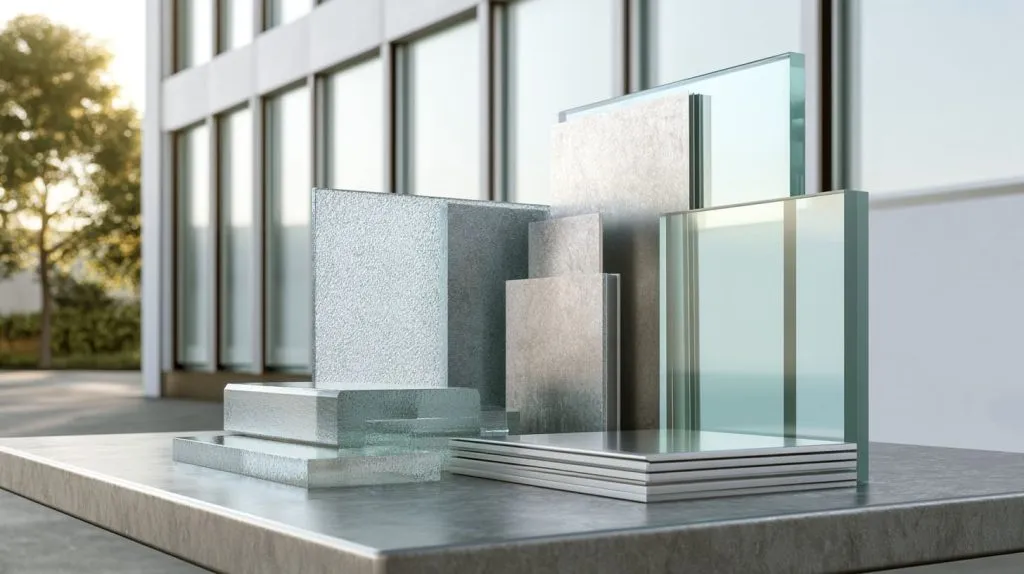
Acrylic is not the only option for outdoor signage. In fact, many good outdoor signs use more than one material.
Acrylic may be used for the logo face. Metal may be used for the structure. ACP may be used for the background. Polycarbonate may be used where impact is a concern. Glass may be used where a premium architectural look is more important.
Material selection is not a beauty contest.
It is a job interview.
Each material must prove it can handle the work.
My own rule is simple: I do not replace acrylic because another material sounds more expensive; I replace acrylic when the risk, maintenance cost, or failure cost is higher than the savings.
Polycarbonate
Polycarbonate is often the first material I think about when impact resistance is the main concern.
It may not have the exact same clean edge feel as acrylic after laser cutting, and it can be more expensive. But it is much tougher in many impact situations.
Best for Impact Resistance
Polycarbonate is suitable when the sign may face hitting, pushing, vandalism, or strong physical contact.
| Project Need | Acrylic | Polycarbonate |
|---|---|---|
| Premium clarity | Excellent | Good |
| Impact resistance | Good, but limited | Very strong |
| Outdoor public use | Depends on risk | Often safer |
| Cost control | Usually better | Usually higher |
| Fabrication appearance | Clean and polished | Needs proper tooling |
| High-risk areas | Not my first choice | Better choice |
If a buyer needs a sign for a school, stadium, transit station, or public walkway, I may suggest polycarbonate even if acrylic looks nicer.
Why?
Because a broken sign in a public area is not only a product issue. It can become a safety issue, a replacement cost issue, and a brand issue.
Acrylic may win the beauty round.
Polycarbonate may win the survival round.
Aluminum Composite Panels (ACP)
ACP is widely used for outdoor signs because it is light, flat, stable, and weather-resistant when the right grade is chosen.
It is especially useful for larger panels and sign backgrounds.
Best for Large Outdoor Signage
ACP can handle many outdoor signage needs better than acrylic when the sign is large and flat.
| Feature | Why ACP Is Useful |
|---|---|
| Light weight | Easier to install on large surfaces |
| Good flatness | Better for large sign panels |
| Weather resistance | Suitable for many outdoor applications |
| Printable surface | Good for graphics and branding |
| Structural stability | Better than thin plastic sheets for large panels |
For a large storefront background sign, ACP may be more practical than acrylic.
Acrylic can still be used for raised letters or logo parts on top of ACP. That combination often works well. The ACP carries the background and the acrylic creates the visual highlight.
This is how I like to think about material combinations.
Do not ask one material to do every job.
Let each material do what it does best.
Metal Signage
Metal signage is often the better choice when the project needs long-term durability, strength, and a serious outdoor presence.
Aluminum, stainless steel, galvanized steel, and other treated metals can be used depending on the environment and design.
Best for Extreme Durability
Metal is not always as bright and glossy as acrylic. But it can be much stronger for demanding outdoor projects.
| Metal Option | Common Strength | Common Use |
|---|---|---|
| Aluminum | Light and corrosion-resistant | Outdoor signs, letters, panels |
| Stainless steel | Strong and premium | Hotel, building, coastal projects |
| Galvanized steel | Strong and cost-effective | Industrial and structural signage |
| Powder-coated metal | Color and weather protection | Brand signs and outdoor frames |
Metal is a good choice for:
- Large exterior letters
- Long-term building signage
- Coastal signs with the right grade
- Industrial signs
- Monument signs
- Outdoor frames and support structures
The trade-off is also clear.
Metal may cost more. It may need different tooling. It may not offer the same transparent look. It may also need coating, welding, bending, or more complex finishing.
But for some outdoor signs, that extra work is worth it.
A cheap sign replacement after one year can cost more than a better material choice at the beginning.
Glass
Glass is not suitable for every outdoor sign. It is heavy and fragile in impact situations. But for premium architectural projects, it still has a place.
Glass has strong scratch resistance and a very clean feel. It can look more permanent than plastic.
Best for Premium Architectural Projects
Glass may be considered when the sign is protected, fixed properly, and designed for a high-end location.
| Glass Advantage | Why It Matters |
|---|---|
| Strong scratch resistance | Good for long-term clean appearance |
| Premium look | Suitable for luxury buildings |
| High surface hardness | Better against cleaning marks |
| Stable feel | Good for permanent installations |
But glass also has clear limits.
| Glass Concern | Why It Matters |
|---|---|
| Heavy weight | Higher installation difficulty |
| Breakage risk | Safety concern in public areas |
| Higher transport risk | More careful packing needed |
| Less flexible fabrication | Not as easy for custom shapes |
So I do not treat glass as a simple acrylic replacement.
I treat it as a special choice for specific projects.
For example, a luxury office directory in a protected entrance may use glass well. A street-level sign in a busy public area may not.
Each material has a personality.
Polycarbonate is the tough one. ACP is the practical one. Metal is the strong one. Glass is the elegant one. Acrylic is the clean and flexible one.
The buyer’s job is not to love one material.
The buyer’s job is to choose the right material for the real project.
Now the next question is more practical: how do we decide?
How to Determine Whether Acrylic Is the Right Choice

Material choice should not start with a material name.
It should start with a project condition.
This sounds simple, but many quotation requests skip this step. The buyer sends a size, a photo, and says, “Please quote acrylic.” The supplier quotes. Everyone moves fast. Then hidden risks show up later.
Fast quotation is nice.
Wrong quotation is expensive.
Before I confirm acrylic for outdoor signage, I like to slow down for a few minutes and check the details that may become problems later.
Questions to Ask Before Choosing Acrylic
The right questions are not complicated.
They are practical.
They help the buyer and supplier see the same project, not just the same drawing.
Environmental Conditions
Outdoor environment is the first thing I check.
| Question | Why I Ask It |
|---|---|
| Will the sign face direct sun? | Strong UV and heat can speed up aging |
| Is the sign shaded or exposed? | Shade can improve lifespan |
| Is the location coastal? | Salt air affects the whole sign system |
| What is the local temperature range? | Expansion and contraction need space |
| Is there heavy dust or sand? | Surface scratching may increase |
| Is the area windy? | Large panels may flex or vibrate |
| Will rain hit the sign directly? | Edges, printing, and hardware must be protected |
Acrylic may be fine in one outdoor environment and risky in another.
So I do not like simple answers such as “Acrylic is good outdoors” or “Acrylic is bad outdoors.”
Both answers are too lazy.
Acrylic is suitable when the design and environment match. It is not suitable when the project asks it to do a job it was not meant to do.
Functional Requirements
The second part is function.
What does the sign need to do?
| Requirement | Why It Changes the Material Choice |
|---|---|
| Expected lifespan | A 6-month sign and a 5-year sign are different projects |
| Impact risk | Public areas may need polycarbonate or metal |
| Sign size | Large panels need stronger support |
| Viewing distance | Close-view signs show scratches more easily |
| Brand level | Luxury signs need higher surface standards |
| Maintenance plan | Low-maintenance projects need tougher choices |
| Lighting | Heat and light diffusion affect material choice |
| Mounting method | Screws, frames, adhesives, and standoffs all matter |
If the sign is temporary, acrylic may be a smart choice.
If the sign is permanent, exposed, large, and hard to replace, I may suggest other options.
Not because acrylic is bad.
Because replacement is painful.
A buyer may save money on the first order and lose more money on maintenance, installation, and brand damage later.
That is not a good deal.
Working with an Experienced Manufacturer
A good manufacturer should not only ask for size and quantity.
For outdoor signage, I believe a good manufacturer should ask about use.
That may feel slower at the start, but it helps avoid mistakes.
Why Material Selection Matters
Material selection affects more than price.
It affects:
- Production method
- Thickness
- Edge finishing
- Printing method
- Packaging
- Installation
- Maintenance
- Lifespan
- Replacement cost
- Customer satisfaction
At Feilong Acrylic, we mainly work on custom acrylic items for B2B projects. We do custom displays, boxes, frames, stands, racks, cabinets, blocks, organizers, and other acrylic products. We support OEM orders and custom design ideas. We have more than 13 years of export experience, 5 production lines, laser and CNC equipment, and a team that handles custom production every day.
But even with that acrylic background, I do not believe acrylic is always the answer.
That may sound strange from an acrylic manufacturer.
But it is exactly why I say it.
If I want a buyer to trust me for the long term, I cannot only sell the material I make. I need to help the buyer avoid the wrong material choice.
For outdoor signage, this usually means we discuss:
| Project Detail | What We May Suggest |
|---|---|
| Small premium logo sign | Acrylic may be suitable |
| Large outdoor panel | ACP or metal support may be better |
| High-impact public area | Polycarbonate may be better |
| Coastal sign | Metal grade and hardware need careful review |
| Luxury entrance sign | Acrylic, glass, or metal may all be considered |
| Short-term promotion | Acrylic can be cost-effective |
| Long-term exposed sign | Material mix may be safer |
Acrylic is often best when it is used with clear thinking.
Not fear.
Not habit.
Not “the customer asked for it, so we make it.”
Real custom manufacturing should include a little pushback. Friendly pushback. Useful pushback. The kind that saves the buyer from a bad surprise later.
And that brings me to the final point.
Conclusion
Acrylic is excellent for many signage projects, but it is not excellent for every outdoor sign.
That is the main point I want to make.
I work with acrylic because I respect what it can do. It can create clear, sharp, modern, and custom products. It is a very useful material for displays, boxes, stands, frames, organizers, cabinets, and many types of signs. It gives buyers a lot of design freedom. It also allows fast custom production when the drawing and requirements are clear.
But real experience also teaches me where acrylic should not be forced.
Acrylic Is Excellent—But Not for Every Outdoor Sign
I would be careful with acrylic outdoor signage in these situations:
| Situation | Why I Would Be Careful |
|---|---|
| Extreme sun exposure | Yellowing, fading, heat stress, surface aging |
| High impact areas | Acrylic can crack under strong force |
| Severe temperature changes | Expansion and contraction may cause stress |
| Coastal environments | Salt, wind, hardware corrosion, and cleaning pressure |
| Very large signs | Wind load, flexing, and mounting stress |
| Scratch-sensitive locations | Dust, cleaning, and touching may affect appearance |
This does not mean acrylic must be rejected in every case above.
It means the project needs more careful review.
Sometimes the answer is thicker acrylic. Sometimes the answer is UV-resistant acrylic. Sometimes the answer is a metal frame. Sometimes the answer is ACP plus acrylic letters. Sometimes the answer is polycarbonate. Sometimes the answer is metal.
A good decision is rarely made from one word.
“Acrylic” is not enough.
The real decision comes from environment, size, lifespan, risk, and budget.
Choosing the Right Material Leads to Better Results
I have this view because custom manufacturing is not only about making what is drawn. It is also about understanding what the product must survive.
A buyer may send me a beautiful outdoor sign idea. My job is not to destroy the idea. My job is to protect it from real-world problems.
That is why I ask questions.
Where will the sign be installed? How much sun will it face? Is it near the sea? How large is it? How will it be mounted? Will people touch it? How long should it last? Is the surface easy to replace? What happens if it cracks?
These questions may look small.
But they decide whether the final sign becomes a clean brand asset or an expensive complaint.
For me, the right material is not always the most beautiful material on the sample table. It is the material that still makes sense after shipping, installation, weather, cleaning, and daily use.
If your outdoor signage project needs a custom acrylic part, acrylic display element, logo panel, protective cover, or a full custom solution, Feilong Acrylic can help review the design before production. We can work from drawings, ideas, samples, or OEM requirements.
You can send us your size, quantity, material idea, installation location, and expected use.
We will help you check whether acrylic is the right choice.
And if it is not, I would rather tell you early than let the problem appear outside later.