Skip to content
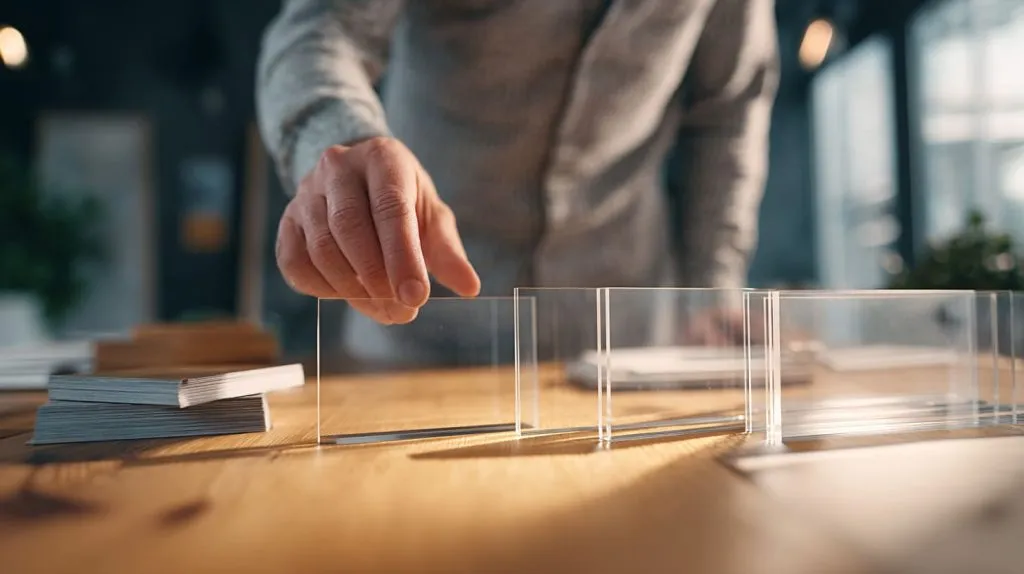
Price has a strange power in purchasing.
A quote lands in your inbox. One supplier offers acrylic frames at $3.20. Another offers $2.65. A third one says they can do $2.10 if the quantity is good. The spreadsheet looks clean. The cheaper number feels like a small win.
I understand that feeling very well.
In acrylic custom manufacturing, I have seen many buyers compare acrylic frames mainly by unit price. It feels logical. It feels safe. It feels measurable. A frame is a frame, right?
Not always.
An acrylic frame is not just a piece of clear plastic cut into shape. It has material choices, edge finishing, polishing quality, bonding strength, tolerance control, protective film, packaging method, and shipping risk. If one of these small details is ignored, the “cheap” frame can quietly become the most expensive part of the project.
The tricky part is this: the hidden cost does not show up on the quotation sheet.
It shows up later.
It shows up when the frame cracks during shipping. It shows up when the edge looks cloudy under store lighting. It shows up when the customer says the product feels “low-end.” It shows up when a retail launch is delayed because the mass production batch does not match the sample.
A low price can be useful. I never say buyers should ignore price. That would be silly. Every buyer has a budget. Every project has pressure. But I do believe one thing strongly: choosing acrylic frames by price alone is like buying a suitcase only by weight. It may look light and easy at first, but you only know the real cost when it breaks on the road.
For buyers like Jacky, who already understand custom acrylic products and have dealt with China factories many times, the real question is not “Which supplier is cheapest?”
The better question is:
Which supplier gives me the lowest total risk for the money I spend?
That is the point of this article.
I want to walk through the hidden cost behind cheap acrylic frames, from material and polishing to packaging and supplier experience. Not in a scary way. Not in a salesy way. Just in the honest way I normally think when I review a project before production starts.
Why Do Cheap Acrylic Frames Often Become Expensive Later?
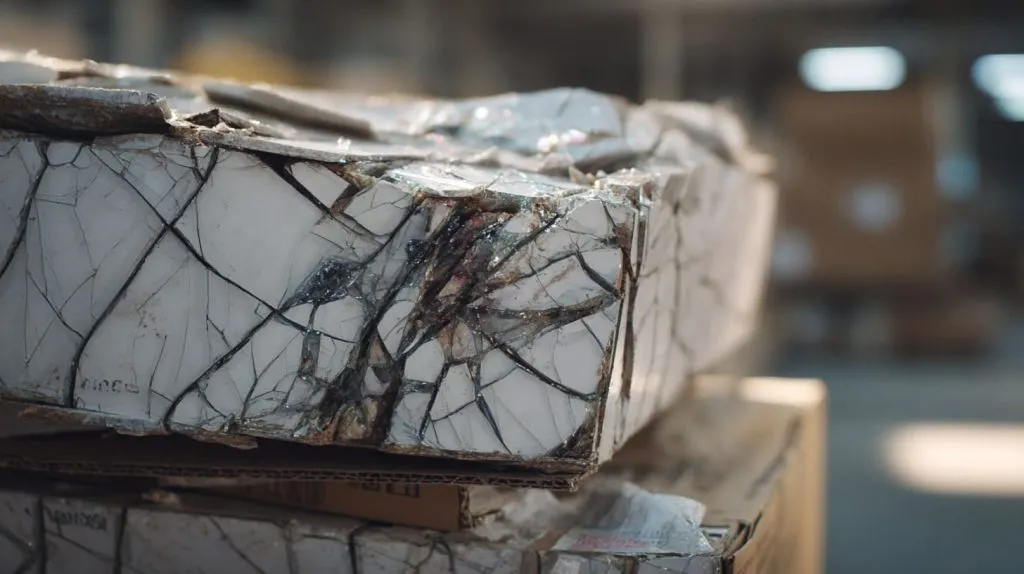
Acrylic frames can look simple on paper. Size, thickness, color, quantity, logo, packaging. Done.
But real production is never that flat.
The first thing I try to understand is not the lowest number on the quotation. I look at where the supplier may have saved money, because every very low price usually has a reason hiding somewhere.
Sometimes that reason is good. Maybe the supplier has stock material. Maybe the design is easy to produce. Maybe the quantity is large enough.
But sometimes the reason is not good at all.
It may be thinner material. It may be weak packaging. It may be rough polishing. It may be a factory that wants the order first and solves the headache later.
And later is where the cost begins.
The Difference Between Purchase Price and Total Ownership Cost
The purchase price is what you pay the factory.
The total cost is what the product costs you after everything happens.
That includes:
- Freight damage
- Replacement pieces
- Extra inspection time
- Customer complaints
- Delayed sales
- Brand reputation loss
- Extra emails and problem solving
- Possible discount requests from your customer
Acrylic frames are often used in retail displays, photo frames, signage, awards, cosmetic counters, gift packaging, and home decor. Many of these uses are visual. The buyer is not only buying function. The buyer is buying appearance.
That means one small defect can feel bigger than it is.
A tiny scratch on a metal bracket may not bother anyone. A tiny scratch on a clear acrylic frame? Everyone sees it. Acrylic is honest like glass. It does not hide mistakes well.
| Cost Type | Looks Small at First? | Real Effect Later |
|---|---|---|
| Cheap material | Yes | Lower clarity, easier cracking, weak appearance |
| Weak edge polishing | Yes | Product looks cheap under light |
| Poor packaging | Yes | Scratches, broken corners, replacement cost |
| Loose tolerance | Yes | Inserts do not fit, assembly problems |
| Slow communication | Yes | Delays and repeated corrections |
| No batch control | Yes | Sample good, bulk order unstable |
A buyer may save $0.30 per piece at the quotation stage. But if 8% of the goods arrive scratched or cracked, the math changes very fast.
Let us say a buyer orders 5,000 acrylic frames.
| Item | Better Supplier | Cheap Supplier |
|---|---|---|
| Unit price | $2.80 | $2.50 |
| Order value | $14,000 | $12,500 |
| Defect/damage rate | 1.5% | 8% |
| Replacement needed | 75 pcs | 400 pcs |
| Extra shipping + handling | Low | High |
| Customer pressure | Low | High |
| Final feeling | Controlled | Painful |
The cheap supplier looks cheaper by $1,500 at first. But if replacement production, freight, delay, inspection, and customer complaints are counted, that saving can disappear quickly.
And worse, money is not the only loss.
Trust is harder to repair than acrylic.
Why Low Prices Can Hide Production Shortcuts
Acrylic frame pricing usually depends on a few core things:
- Acrylic sheet quality
- Sheet thickness
- Cutting method
- Polishing method
- Labor time
- Bonding method
- Packaging protection
- Quality inspection
- Production management
If the design and quantity are the same, a very low quote often means the supplier is reducing cost in one of these areas.
That does not always mean the supplier is dishonest. Sometimes they simply choose a lower production standard because the buyer keeps pushing price lower. This is where both sides can fall into a trap.
A buyer says, “Can you make it cheaper?”
The supplier says, “Yes.”
But the real sentence may be:
“Yes, if we reduce material quality, polish less carefully, use thinner protective film, pack more pieces together, and inspect faster.”
That full sentence rarely appears in the email.
Real-World Examples From Retail and Display Projects
I once saw a display frame project where the sample looked acceptable on a desk. The price was attractive. Everyone felt relaxed.
Then the bulk order arrived.
The frames had uneven edges. Some corners were sharp. Some pieces had small stress marks near the bent area. Under normal warehouse light, the problem was not too obvious. But under retail lighting, it looked worse.
That is the thing about acrylic. Store lighting is brutal. It exposes everything.
Here are some common “cheap frame” problems I have seen in real projects:
| Problem | Why It Happens | Hidden Cost |
|---|---|---|
| Cracking during shipping | Weak packaging or brittle material | Replacements, delay, customer complaints |
| Yellowing over time | Low-grade or unsuitable acrylic | Brand damage, returns |
| Uneven edges | Poor cutting or rushed polishing | Low-end appearance |
| Weak bonding | Not enough bonding time or poor process | Product failure |
| Thin material bending | Material substitution | Poor shelf display effect |
| Scratches on arrival | Poor protective film or packing | Rework or rejection |
Acrylic frames are quiet products. They do not shout when something is wrong. They just slowly embarrass the project.
That is why I prefer to ask boring questions early. Boring questions are cheaper than exciting problems later.
The next part is where many hidden costs begin: the material itself. It looks clear. It looks simple. But not all clear acrylic behaves the same.
How Does Acrylic Material Quality Affect Frame Performance?
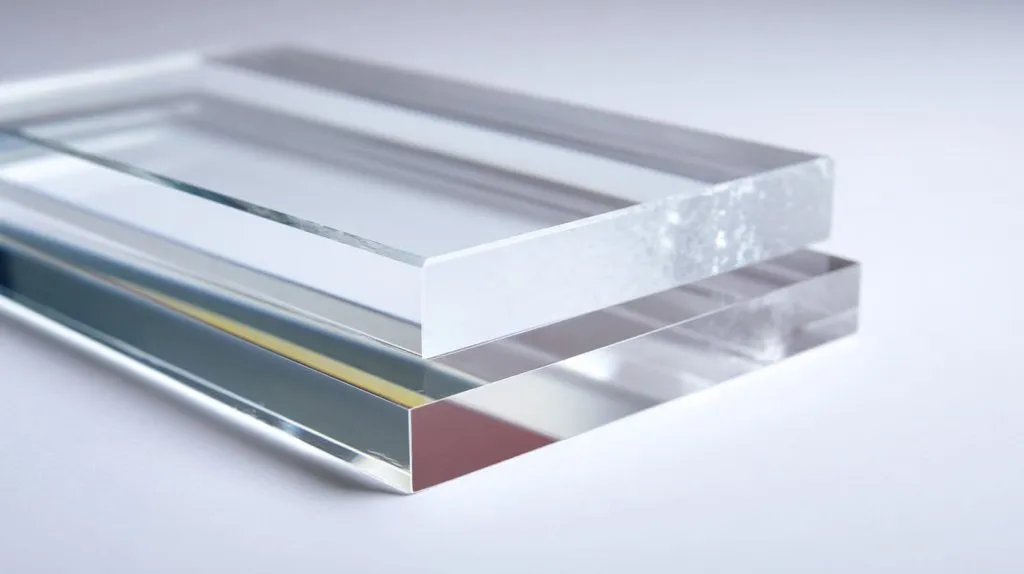
Acrylic material is the foundation of the frame.
If the material is wrong, everything after that becomes decoration on a weak house.
I usually check the material choice before I worry about polishing, because good polishing cannot save acrylic that is already too brittle, too cloudy, or too thin for the job.
Acrylic can look similar in photos. A buyer may see two samples on a white table and think they are close enough. But once the frame is used in a real store, shipped across countries, or handled every day, the difference starts to show.
Cast Acrylic vs Extruded Acrylic
The two common types are cast acrylic and extruded acrylic.
Both can be useful. Both have a place. But they are not the same.
| Item | Cast Acrylic | Extruded Acrylic |
|---|---|---|
| Clarity | Usually excellent | Good, but can vary |
| Thickness stability | Better for custom work | More variation possible |
| Machining performance | Better for CNC, polishing, engraving | Easier to stress during machining |
| Cost | Usually higher | Usually lower |
| Best use | Premium displays, custom frames, thicker parts | Simple, cost-sensitive products |
Cast acrylic is often preferred for high-quality custom frames because it usually has better optical clarity and machining performance. It is more forgiving during cutting, polishing, and engraving.
Extruded acrylic can be fine for many simple products. I do not treat it like a bad material. That would not be fair. But I become careful when the product needs premium edges, thicker structure, or long-term display quality.
The wrong choice can create small headaches:
- Edges may not polish as cleanly.
- Stress marks may appear more easily.
- The part may crack during processing.
- The final product may feel less premium.
A cheaper material may still pass a quick sample check. But the real test is bulk production and actual use.
Why Recycled Acrylic Creates Hidden Problems
Recycled acrylic can lower cost. That sounds attractive.
But for clear acrylic frames, recycled material can be risky if the buyer expects premium clarity and clean finishing.
The common issues include:
- Lower transparency
- Slight color tone difference
- More bubbles or impurities
- Higher brittleness
- Easier scratching
- Inconsistent batches
For a hidden internal part, recycled content may not matter much. But for a clear acrylic frame, the material is the product. The customer sees through it, touches it, and judges it.
Acrylic frames often hold photos, certificates, signs, price cards, menus, awards, or branded inserts. If the acrylic is cloudy, the insert looks cheaper too.
That is unfair to the design.
A good design can lose value because the material around it looks poor.
How Thickness Affects Strength and Appearance
Thickness is one of the easiest ways to reduce price.
It is also one of the easiest ways to create hidden cost.
A 2 mm acrylic frame and a 3 mm acrylic frame may look close in a small photo. But they do not feel the same in hand. They do not bend the same way. They do not survive shipping the same way.
| Application | Common Thickness Thinking | Risk If Too Thin |
|---|---|---|
| Small photo frame | 2-3 mm | Bending, cheap hand feel |
| Desk sign holder | 2-4 mm | Weak standing angle |
| Retail display frame | 3-5 mm | Poor premium look |
| Larger wall frame | 4-8 mm | Warping, cracking |
| Luxury product display | 5 mm+ | Weak brand impression if too light |
Thickness is not only about strength. It is also about emotion.
A thicker acrylic frame feels calm. Stable. Valuable.
A very thin one can feel nervous, like it is trying too hard to be cheap.
Of course, thicker is not always better. A thicker frame costs more. It weighs more. It may need stronger packaging. It may not fit the customer’s display system. So I do not blindly push thickness.
I look at the final use first.
If the frame sits in a premium cosmetic store, I care about clarity and hand feel. If it is used for a temporary promotion, I may accept a simpler structure. If it ships by courier one by one, I become more careful about corners and protection.
Acrylic material is the first place where cheap choices hide. But even good material can look bad if the edges are poorly finished. That is where the frame either starts to shine, or quietly loses face.
Why Are Edge Finishing and Polishing So Important?
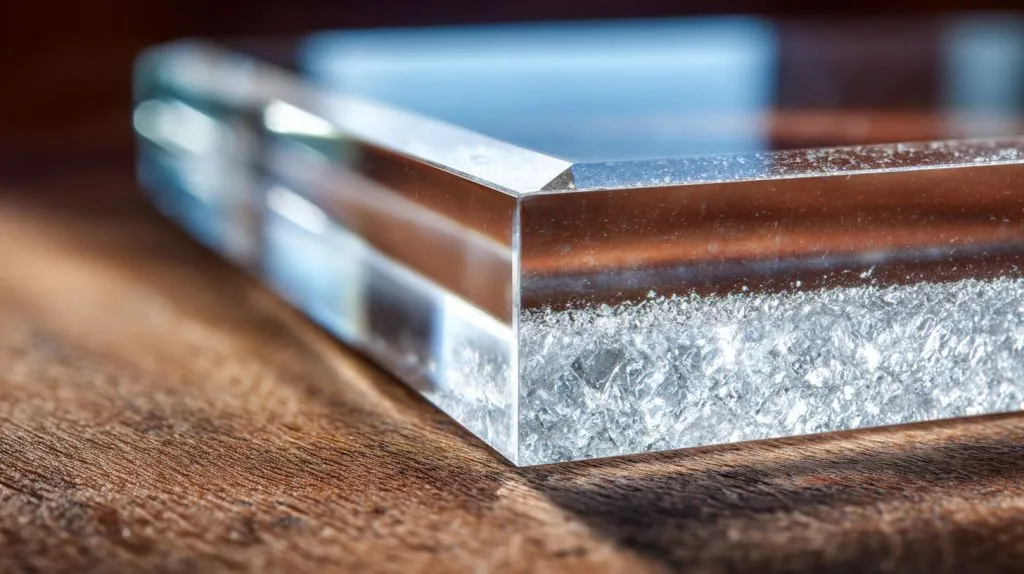
Edges are like shoes at a business meeting.
People may not mention them first. But they notice.
For acrylic frames, the edge is often the difference between “clear plastic” and “premium display product.” A well-polished edge catches light in a clean way. A poor edge looks cloudy, rough, or cheap.
When I review an acrylic frame sample, I do not only look at the front surface. I turn it sideways and check the edge under light, because the side view often tells the truth about the factory’s process.
Flame Polishing vs Diamond Polishing
There are different ways to finish acrylic edges. Two common methods are flame polishing and diamond polishing.
Both can produce a clear edge. But they are different.
| Method | Main Benefit | Possible Risk | Best Use |
|---|---|---|---|
| Flame polishing | Fast, glossy look | Can create stress if overdone | Simple shapes, cost-sensitive products |
| Diamond polishing | Clean, stable, high-end finish | Higher cost | Premium frames, straight edges, display products |
| Hand polishing | Flexible for special shapes | Labor consistency risk | Small runs, special parts |
Flame polishing uses heat to make the edge look clear. It is fast and cost-effective. But if the operator is not careful, the heat can create stress. Later, the frame may crack near the edge or bonding area.
Diamond polishing uses a machine to cut and polish the edge more precisely. It often gives a cleaner and more controlled finish. It costs more, but for premium acrylic frames, it can be worth it.
The right choice depends on the product.
For a simple, low-cost frame, flame polishing may be enough. For a high-end retail display frame, diamond polishing may be the safer choice.
Common Low-Cost Finishing Problems
Low-cost finishing problems often appear in small details.
The factory may rush the polishing stage because polishing takes labor time. If the buyer only compares price, this is one of the first places where cost can be cut.
Common problems include:
- Cloudy edges
- Sharp corners
- Uneven shine
- Small burn marks
- Stress lines near bends
- Rough inside cutouts
- Visible tool marks
- Edge chips
These problems may not stop the frame from working. That is why they are dangerous. The product can still “function,” but it does not feel good.
And in display products, feeling matters.
A customer may not say, “The edge polishing is poor.” They may simply say, “It looks cheap.”
That is harder to argue with.
How Edge Quality Influences Customer Perception
In luxury retail, cosmetic display, jewelry display, and premium packaging, edge quality is part of the brand message.
A clear polished edge makes the product feel clean and intentional. A cloudy edge makes the product feel unfinished.
This is especially important for:
- Cosmetic counter displays
- Jewelry presentation frames
- Branded photo frames
- Award display blocks
- Boutique store signage
- Gift packaging inserts
| Edge Quality | Customer Feeling | Business Effect |
|---|---|---|
| Clear and smooth | Premium, clean, reliable | Better brand fit |
| Cloudy and uneven | Cheap, rushed, careless | Lower perceived value |
| Sharp corners | Unsafe, uncomfortable | Complaints or returns |
| Stress marks | Weak, unstable | Fear of cracking |
Acrylic has a funny personality. It can look expensive when finished well. It can also look painfully cheap when finished poorly.
Same material. Different process. Different result.
That is why I never treat edge finishing as a small decoration. For many acrylic frames, edge quality is part of the product’s face.
But edge finishing is only one part. Even a beautiful frame can create cost if the size is slightly wrong. In custom projects, a few millimeters can turn into a very expensive argument.
How Can Poor Manufacturing Precision Increase Costs?
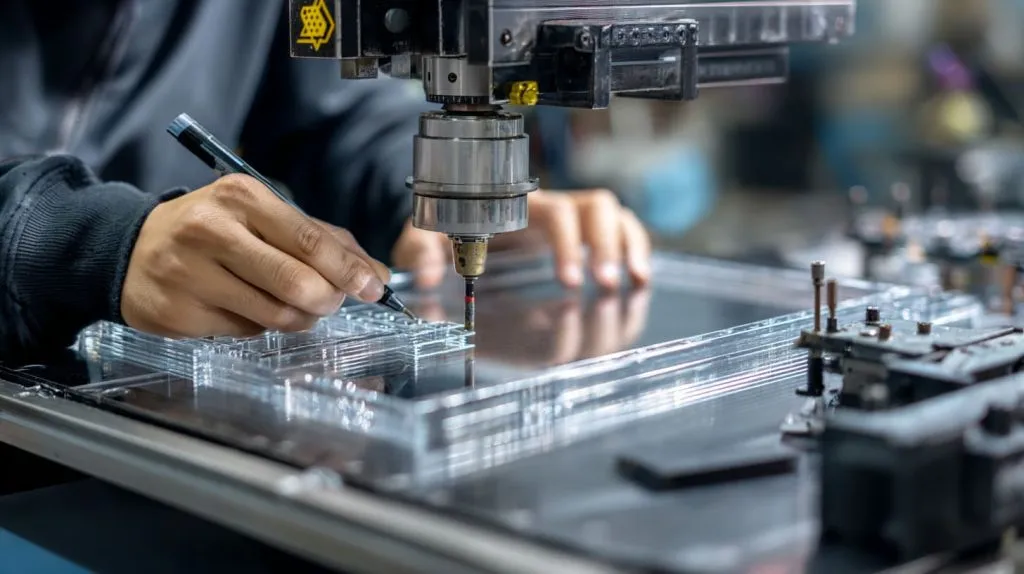
Manufacturing precision sounds like a technical topic. But in real projects, it becomes a very human problem.
Someone tries to insert a printed card, and it does not fit.
Someone assembles two parts, and the holes do not align.
Someone opens the carton before a retail launch, and the frame cannot stand straight.
That is not a theory. That is a bad afternoon.
When I look at a custom acrylic frame drawing, I pay close attention to tolerance and fit, because a beautiful product with the wrong size is still a wrong product.
Why Dimensional Accuracy Matters
Acrylic frames often work with other items:
- Printed paper inserts
- Photos
- Magnetic parts
- Screws
- Metal brackets
- Wooden bases
- LED bases
- Wall mounting parts
- Packaging inserts
If the acrylic part is off by a little, the full system may fail.
For example, a frame slot may be designed for a printed card. If the slot is too tight, the customer cannot insert the card easily. If it is too loose, the card moves around and looks cheap.
Neither result is good.
| Precision Issue | What Happens | Hidden Cost |
|---|---|---|
| Slot too narrow | Insert does not fit | Rework or rejection |
| Slot too wide | Insert moves | Poor display effect |
| Hole misalignment | Assembly fails | Extra labor |
| Uneven bend angle | Frame leans | Customer complaint |
| Size variation by batch | Packaging mismatch | Delays and sorting |
Acrylic frames can be unforgiving because many designs are visual and functional at the same time.
The frame must look nice. It must also hold something correctly.
CNC Cutting vs Low-Precision Cutting Methods
CNC cutting can provide better consistency for custom shapes and precise features. Laser cutting can also be useful for many acrylic products, especially clean profiles and flat parts.
But the machine is not the whole story.
A good machine with poor setup still creates problems. A simple machine with careful operators can sometimes do better than expected. So I do not worship machines. I look at the factory’s process control.
Important questions include:
- Is the drawing checked before production?
- Are tolerances confirmed?
- Is the sample measured and recorded?
- Are fixtures used for repeat production?
- Are first pieces inspected before bulk production?
- Are random checks made during production?
| Production Factor | Why It Matters |
|---|---|
| Drawing review | Prevents wrong assumptions |
| CNC or laser setting | Controls edge quality and size |
| Fixture design | Keeps repeated parts consistent |
| First article inspection | Catches problems early |
| In-process inspection | Prevents full-batch defects |
| Final QC | Reduces shipment risk |
A supplier can produce one good sample by spending extra time. But the real question is whether they can repeat it 1,000 or 10,000 times.
That is where precision becomes money.
The Hidden Cost of Inconsistent Batches
Inconsistent batches are one of the most painful problems in B2B custom acrylic orders.
One carton looks good. Another carton has slightly different dimensions. One batch has clear edges. Another batch has rougher edges. One production run fits the insert. The next run feels tight.
This creates a messy situation.
The buyer must sort goods. The customer loses confidence. The factory must explain. Everyone spends time on something that should have been controlled earlier.
| Batch Problem | Why It Hurts |
|---|---|
| Different size between batches | Hard to assemble or match packaging |
| Different color tone | Visual inconsistency |
| Different edge finish | Uneven quality feeling |
| Different protective film | Scratch risk changes |
| Different packing method | Damage rate changes |
This is why I value production records and stable workflow. In acrylic manufacturing, memory is not enough. The factory needs drawings, samples, photos, inspection standards, packaging notes, and clear internal communication.
Acrylic frames are not complicated like aircraft parts. But they still punish careless production.
And once the goods leave the factory, the next risk begins. Packaging. Many buyers underestimate it until the first damaged shipment arrives.
Why Does Packaging Quality Matter More Than Most Buyers Expect?
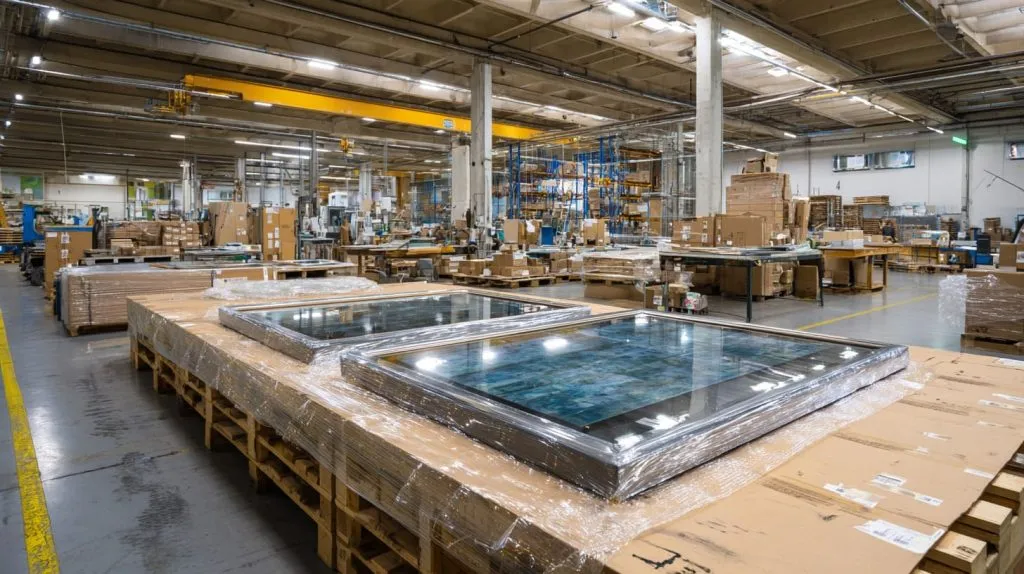
Packaging is not exciting.
Nobody puts packaging at the top of a beautiful product page. Nobody says, “Wow, what a lovely export carton.”
But packaging can decide whether the acrylic frame arrives as a product or as a problem.
For acrylic frames, I treat packaging as part of the product cost, not as an afterthought, because the best polished frame is worthless if it arrives scratched, cracked, or rubbed by another frame.
How Cheap Packaging Increases Freight Damage
Acrylic scratches more easily than many buyers expect. It can also crack at corners when the packaging does not protect the stress points.
This is especially important for international shipping.
A carton may move through factory handling, truck transport, warehouse loading, sea freight, air freight, customs inspection, local delivery, and final unpacking. Every step adds risk.
Acrylic frames can be damaged by:
- Surface rubbing
- Corner impact
- Heavy stacking
- Loose movement inside cartons
- Poor-quality protective film
- Moisture affecting cartons
- Rough courier handling
| Packaging Weakness | Common Result |
|---|---|
| Frames packed too tightly | Surface rubbing |
| No corner protection | Cracked corners |
| Weak carton | Compression damage |
| Thin protective film | Scratches |
| No inner separation | Product-to-product damage |
| Poor palletizing | Carton collapse |
Cheap packaging saves money at the start. But it can become very expensive when the shipment is damaged.
Protective Film and Cushioning Standards
Good packaging for acrylic frames usually needs layers of protection.
The exact method depends on the product size, thickness, shape, quantity, and shipping method.
Common packaging choices include:
- Protective film on acrylic surfaces
- Individual poly bags
- Foam sheets between pieces
- Corner protectors
- Bubble wrap for special shapes
- Inner boxes for premium items
- Strong export cartons
- Pallet packing for larger orders
| Product Type | Packaging Focus |
|---|---|
| Small acrylic frames | Avoid surface rubbing |
| Large frames | Protect corners and prevent bending |
| Premium retail frames | Individual clean packing |
| Heavy acrylic frames | Strong carton and inner support |
| Irregular shapes | Custom cushioning |
One mistake I often see is packing acrylic like normal plastic goods.
That does not work well.
Clear acrylic is more like a mirror than a bucket. It needs clean protection. If two pieces rub against each other during transport, the surface may arrive with fine scratches. The frame may still be usable, but it no longer looks new.
And for B2B buyers, that is a serious issue. Their customer does not care whether the scratch happened in China, at the port, or during local delivery. They only see the damaged product.
Why Replacement Shipments Destroy Profit Margins
Replacement shipments are painful because they cost more than the product itself sometimes.
If a buyer needs 100 replacement acrylic frames, the factory may remake them. That sounds simple. But then come the hidden costs:
- Small-batch production cost
- Extra QC time
- Air freight cost
- Extra communication
- Customer waiting time
- Possible discount or compensation
- Damage to future trust
| Replacement Issue | Why It Hurts Profit |
|---|---|
| Small remake quantity | Higher unit cost |
| Urgent delivery | Expensive freight |
| Customer waiting | Trust loss |
| Internal sorting | Extra labor |
| Repeated issue | Relationship damage |
This is why I prefer to spend a little more on proper packaging at the beginning.
Packaging is like insurance, but cheaper and more practical.
Acrylic frames are often not expensive enough to justify complicated claims after damage. So the better method is simple: reduce the chance of damage before shipping.
Good packaging does not make the product more beautiful. It makes sure the beauty survives the trip.
But packaging is only one sign of supplier thinking. The deeper question is whether the supplier has enough experience to see problems before they happen.
How Does Supplier Experience Affect Long-Term Cost?
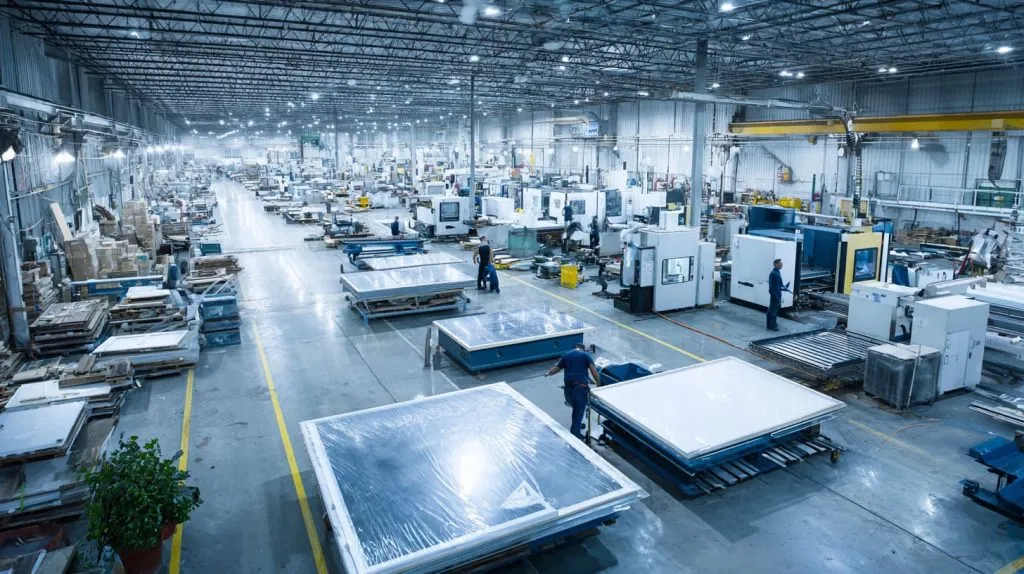
Supplier experience is hard to measure in a quotation table.
A price is clear. A lead time is clear. A material thickness is clear.
Experience is quieter.
It shows up when something goes wrong, or better, when something is prevented before it goes wrong.
I do not judge a supplier only by how fast they say “yes,” because a useful supplier sometimes says, “This part may be risky, let us adjust it before production.”
That sentence can save a project.
Why Experienced Factories Reduce Project Risk
An experienced acrylic factory has seen many common mistakes already.
They know where acrylic tends to crack. They know which edge finish is suitable for which design. They know when a bend radius is too tight. They know when packaging must be stronger. They know when a buyer’s drawing looks nice but may be difficult in mass production.
That kind of experience reduces risk.
It also saves time.
A less experienced supplier may follow the drawing exactly, even if the drawing has a hidden issue. Then the product fails, and both sides argue.
An experienced supplier should ask questions early.
Examples:
- “Do you need cast acrylic or extruded acrylic?”
- “Will the frame be used indoors or outdoors?”
- “Will it be exposed to sunlight?”
- “Does the insert need to be replaced often?”
- “Is this for retail display or temporary promotion?”
- “Do you need individual packaging?”
- “What is the acceptable scratch level?”
- “Do you have a drop test requirement?”
These questions are not annoying. They are useful.
They help the supplier understand the real use, not just the drawing.
The Importance of Production Capacity
Production capacity matters because acrylic custom orders often have deadlines.
Retail projects have launch dates. Exhibition displays have show dates. Seasonal packaging has selling windows. If the supplier cannot deliver on time, the product may arrive perfectly and still be useless.
That is a harsh truth.
| Capacity Factor | Why Buyers Should Care |
|---|---|
| Number of production lines | Helps handle larger orders |
| Skilled workers | Supports stable handmade processes |
| CNC and laser machines | Improves custom production flexibility |
| QC team | Reduces batch defects |
| Packing team | Controls shipment quality |
| Export experience | Reduces document and logistics issues |
Acrylic frames often involve both machine work and manual work. Cutting may be machine-based. But polishing, bonding, cleaning, inspection, and packaging still need human care.
If a factory has weak capacity, urgent orders become risky. Workers may rush. QC may become loose. Packaging may be simplified.
That is when a cheap quote becomes a dangerous promise.
Why OEM Project Experience Matters
OEM projects usually have more details than standard products.
They may include:
- Custom size
- Custom shape
- Logo printing
- Engraving
- Color matching
- Special packaging
- Retail labels
- Assembly instructions
- Barcode stickers
- Quality standard documents
A supplier without OEM experience may treat the frame as only a product. But a buyer often needs a full project solution.
| OEM Detail | Possible Risk If Ignored |
|---|---|
| Logo placement | Wrong position or poor alignment |
| Packaging design | Product does not fit inner box |
| Surface protection | Scratches before customer use |
| Color consistency | Brand mismatch |
| Batch labeling | Warehouse confusion |
| QC standard | Different expectations |
For buyers like Jacky, who deal with China manufacturers and understand factory work, supplier experience is not a fancy bonus. It is part of cost control.
A factory with experience may not always give the lowest price. But it may give fewer surprises.
And fewer surprises are worth money.
Still, even with an experienced supplier, hidden costs can appear after production starts. That is where many buyers feel the real pressure.
What Hidden Costs Appear After Production Starts?
Before production starts, everything feels clean.
The drawing is approved. The sample is confirmed. The price is agreed. The lead time is written down.
Then production begins.
That is when reality walks into the room with dirty shoes.
The point where I become most careful is the move from sample to mass production, because many problems are not visible until the factory repeats the same part many times.
Sample Quality vs Mass Production Quality
A sample can be beautiful for several reasons.
The factory may spend extra time on it. The best worker may polish it. The QC manager may check it three times. The material may be selected from a perfect sheet.
That does not mean the mass production batch will be the same.
This is why buyers should never judge a factory only by one nice sample.
The better question is:
Can the factory repeat this quality consistently?
| Stage | Main Risk |
|---|---|
| Sample making | Too much manual adjustment |
| Pre-production | Drawing details not locked |
| Bulk cutting | Size variation |
| Polishing | Different workers, different results |
| Bonding | Glue marks or weak joints |
| Packing | Scratches and mixed pieces |
| Final inspection | Defects missed under time pressure |
A good supplier should transfer sample standards into production standards.
That may include:
- Sample photos
- Measurement records
- Approved material notes
- Edge finish standard
- Packaging method
- Defect limit
- Inspection checklist
Without this transfer, the sample is just a pretty promise.
Communication Misunderstandings and Revision Costs
Communication cost is real.
It does not always appear as a line item. But every unclear detail can turn into extra work.
Common misunderstanding points include:
- Drawing units
- Tolerance expectations
- Logo size
- Logo color
- Printing method
- Acrylic thickness
- Edge finish
- Protective film removal
- Packaging method
- Inner box label
- Assembly direction
I have seen projects where both sides thought they understood each other. Then the product arrived with the logo in the wrong position. The supplier thought the position was “close enough.” The buyer needed exact alignment.
That small difference created a big problem.
| Detail | Better Way to Confirm |
|---|---|
| Size | Drawing with units and tolerance |
| Logo | Artwork file and placement proof |
| Material | Sheet type, thickness, color |
| Edge | Sample photo or edge standard |
| Packaging | Packing mockup or packing photo |
| QC | Defect samples and acceptance limits |
Simple communication saves money.
A long email is not always needed. But clear photos, marked drawings, and confirmed samples are very important.
Delays Caused by Unstable Suppliers
Delays are one of the most expensive hidden costs.
Acrylic frames may be part of a bigger launch. If they are late, the whole project can suffer.
Examples:
- A retail store cannot open its display on time.
- A cosmetic brand misses a promotion window.
- A distributor cannot ship to its customer.
- An exhibition booth has incomplete display tools.
- A seasonal gift package misses the selling season.
The acrylic frame may be cheap. But the delay is not.
| Delay Cause | Real Effect |
|---|---|
| Material not ready | Production starts late |
| Machine schedule conflict | Lead time extends |
| Quality issue found late | Rework needed |
| Packaging shortage | Shipment delayed |
| Poor internal planning | Delivery date becomes unstable |
This is why I care about production planning. A supplier should not only say, “We can make it.”
They should know how they will make it, when they will inspect it, and how they will ship it.
Acrylic frames are not the most complex product in the world. But custom orders still need discipline.
That leads to the next question: how can buyers evaluate suppliers before the problem starts?
How Can Buyers Evaluate Acrylic Frame Suppliers More Professionally?

A professional buyer does not need to make supplier evaluation complicated.
The goal is not to create a giant checklist that nobody reads.
The goal is to ask the few questions that reveal how the supplier thinks.
Before I trust a quote, I try to see whether the supplier understands the use of the product, because a supplier who only talks about price may not protect the project when details become messy.
Questions Buyers Should Ask Before Ordering
Good questions are like a flashlight. They show corners that the quote does not show.
Here are questions I would ask before ordering acrylic frames:
| Question | Why It Matters |
|---|---|
| What acrylic material will be used? | Prevents hidden material substitution |
| Is it cast or extruded acrylic? | Affects clarity and machining |
| What thickness tolerance is acceptable? | Controls fit and strength |
| How will the edges be polished? | Affects visual quality |
| How will each frame be protected? | Reduces scratches |
| What is the packing method? | Reduces shipping damage |
| Can you provide pre-production samples? | Confirms bulk standard |
| How do you inspect before shipment? | Reduces defect risk |
| What happens if goods arrive damaged? | Tests responsibility |
| Have you made similar OEM frames before? | Checks project experience |
A supplier’s answers matter.
But the way they answer also matters.
If they answer clearly, with photos or practical suggestions, that is a good sign. If they only say “no problem” to everything, I become careful.
“No problem” is sometimes the most dangerous phrase in manufacturing.
How to Evaluate Factory Capabilities
Acrylic factory capability can be checked through several practical signals.
You do not always need to visit the factory in person. A visit is useful, of course. But even before a visit, buyers can request information.
Useful items include:
- Workshop photos
- Machine list
- Production line photos
- QC process photos
- Packing photos
- Material storage photos
- Similar product examples
- Export carton examples
- Certification documents
- Sample inspection records
| Capability Area | What to Look For |
|---|---|
| Machinery | CNC, laser cutting, polishing equipment |
| Workers | Skilled handling and bonding ability |
| QC | Clear inspection steps |
| Material storage | Clean and protected sheets |
| Packaging | Export-ready packing methods |
| Export experience | Understanding of documents and logistics |
| Communication | Fast, clear, detail-focused replies |
For acrylic frames, the workshop environment also matters.
Dust, careless handling, and messy storage can create scratches before the product even leaves the factory. Clear acrylic needs clean handling. It is not a product that enjoys chaos.
Why Samples Should Be Tested Under Real Conditions
A sample should not only be admired.
It should be tested.
That sounds simple, but many buyers only check the sample by appearance. They look at it under office light, take a few photos, and approve it.
That may not be enough.
Depending on the project, buyers can test:
- Insert fit
- Standing angle
- Wall mounting fit
- Logo durability
- Scratch resistance during handling
- Corner strength
- Packaging protection
- UV exposure for outdoor or window use
- Drop test for courier shipping
- Cleaning method
| Test | What It Reveals |
|---|---|
| Insert test | Fit and ease of use |
| Light check | Edge clarity and scratches |
| Drop test | Packaging protection |
| UV test | Yellowing risk |
| Assembly test | Hole and slot accuracy |
| Cleaning test | Surface durability |
| Handling test | Real customer experience |
A sample is not a trophy. It is a warning tool.
If it shows a problem early, that is good news. Early problems are cheaper than late problems.
Acrylic frames need practical testing because the final customer will not use them gently like a sample room. They will touch them, move them, clean them, ship them, and sometimes drop them.
A good supplier should welcome reasonable testing. It protects both sides.
Once a buyer learns to evaluate suppliers this way, price becomes only one part of the decision. The next part is harder to measure, but often more valuable: reliability.
What Makes a Reliable Acrylic Frame Supplier Worth Paying More For?

A reliable supplier is not always the cheapest.
That sentence may sound obvious. But in real purchasing, it is easy to forget.
When numbers sit side by side, the cheaper one pulls the eyes like a magnet. I get it. Everyone has pressure. Buyers need to control cost. Managers want better margins. Customers want competitive pricing.
But a reliable acrylic frame supplier can save money in ways that do not show up on the first quote.
For long-term custom orders, I value stability more than a one-time low price, because one unstable batch can erase the profit from several smooth orders.
Stable Quality Saves Money Over Time
Stable quality means the buyer does not need to worry every time a shipment arrives.
That is a big thing.
A stable supplier reduces:
- Defect rate
- Inspection pressure
- Customer complaints
- Replacement cost
- Launch risk
- Internal stress
- Repeated explanations
| Supplier Type | First Feeling | Long-Term Feeling |
|---|---|---|
| Cheapest supplier | Exciting | Uncertain |
| Stable supplier | Slightly more expensive | Easier to manage |
| Experienced OEM supplier | More questions early | Fewer problems later |
| Weak supplier | Fast promise | Slow correction |
Stable quality is boring in the best way.
No drama. No panic. No surprise photos from the customer showing cracked frames.
In manufacturing, boring is beautiful.
Better Communication Improves Project Efficiency
Good communication does not mean fancy English.
It means clear, practical, and honest communication.
A good supplier should be able to say:
- “This design may crack here.”
- “This thickness may bend.”
- “This edge finish will cost more, but it looks better.”
- “This packaging is too weak for courier shipping.”
- “This logo position may be hard to control.”
- “This lead time is too tight unless we adjust the schedule.”
That kind of communication protects the buyer.
Poor communication creates hidden cost because every unclear detail becomes a possible mistake.
| Communication Style | Result |
|---|---|
| Only says “yes” | Risk stays hidden |
| Gives clear suggestions | Risk becomes visible |
| Shares photos and drawings | Details are easier to confirm |
| Responds slowly | Project timeline suffers |
| Avoids difficult topics | Problems appear later |
For custom acrylic frames, the supplier should not act like a silent machine. They should act like a production partner.
Not dramatic. Not over-talking. Just clear and useful.
Long-Term Partnerships Create Hidden Value
A long-term supplier relationship can create value that is hard to measure at the start.
When a supplier knows your style, your standards, your packaging needs, and your customer expectations, future projects become smoother.
That can lead to:
- Faster sampling
- Better design suggestions
- More stable pricing
- Priority scheduling
- Fewer repeated explanations
- Better packaging habits
- Easier problem solving
- More consistent quality
| Long-Term Value | Why It Matters |
|---|---|
| Supplier remembers standards | Less repeated communication |
| Better project history | Faster development |
| More trust | Easier urgent orders |
| Stable process | Lower defect risk |
| Shared understanding | Fewer mistakes |
This does not mean buyers should blindly stay with one supplier forever. That would also be risky.
A buyer should still compare, review, and test. But if a supplier has proven stable, replacing them only for a slightly lower price can be dangerous.
Sometimes the cheapest new quote is just an invitation to start learning the same old lessons again.
Acrylic frames may look simple, but they carry brand image, customer experience, and project timing. That is why supplier reliability is not a soft value. It is a cost control tool.
Conclusion

The cheapest acrylic frame is not always the lowest-cost acrylic frame.
I say this because I have seen the same story too many times. A buyer starts with a very attractive price. The sample looks okay. The order moves forward. Then small problems begin to appear one by one.
A scratch here.
A cracked corner there.
A cloudy edge under retail lighting.
A logo that is not quite aligned.
A carton that cannot survive long-distance shipping.
None of these problems feels huge alone. But together, they eat profit like termites inside wood. Quietly. Slowly. Then suddenly, the project does not feel cheap anymore.
My own view is simple: I do not judge acrylic frames only by how much they cost to buy. I judge them by how much trouble they may create after they are bought.
That is why I care about material. I care about thickness. I care about edge polishing. I care about precision. I care about packaging. I care about supplier experience. These things may look like small details, but custom acrylic products live or die by small details.
A good acrylic frame should do more than hold a photo, sign, certificate, or display card.
It should protect the buyer’s project.
It should support the brand image.
It should arrive safely.
It should feel right in the customer’s hand.
It should match the approved sample not only once, but again and again in real production.
For experienced B2B buyers, price is still important. I never ignore it. But price should sit beside quality, not on top of it like a king.
If you are developing custom acrylic frames for retail displays, cosmetic counters, gift packaging, photo products, signage, or branded presentation projects, I suggest one simple step before choosing the cheapest quote:
Ask the supplier what is included behind the price.
Ask about the material.
Ask about the edge.
Ask about the tolerance.
Ask about the packaging.
Ask about the inspection.
Ask what could go wrong.
A serious supplier will not be afraid of these questions.
At Feilong Acrylic, this is how I prefer to work. I would rather discuss the small risks before production than apologize for big problems after shipment. We are a custom acrylic factory, so we do not sell from a fixed catalog. We help buyers turn ideas into real acrylic products with proper material, clear workmanship, and export-ready packaging.
If you have an acrylic frame project and you are comparing different quotes, do not only send the size and quantity. Send the real use, the market, the packaging need, and the quality level you expect.
That makes the conversation better.
And usually, it makes the final product better too.