Skip to content

A clear panel can look strong and still fail at the exact moment people trust it most. That gap creates expensive mistakes and very real danger.
Plexiglass is not truly bulletproof in the normal way people mean it. Standard plexiglass is mostly impact-resistant, while specially engineered ballistic acrylic can resist some handgun rounds under tested conditions, thicknesses, and ratings.
I have seen buyers use the word plexiglass too loosely. That sounds harmless at first. It is not. One loose word can push a security job in the wrong direction before the drawing is even finished.
Is plexiglass actually bulletproof or just impact-resistant?
People often say “bulletproof plexiglass” like it is one simple product. It is not that simple.
Most plexiglass is impact-resistant, not bulletproof. Standard acrylic can handle bumps and hits better than glass, but only specially made ballistic acrylic can resist limited gunfire under specific test conditions.
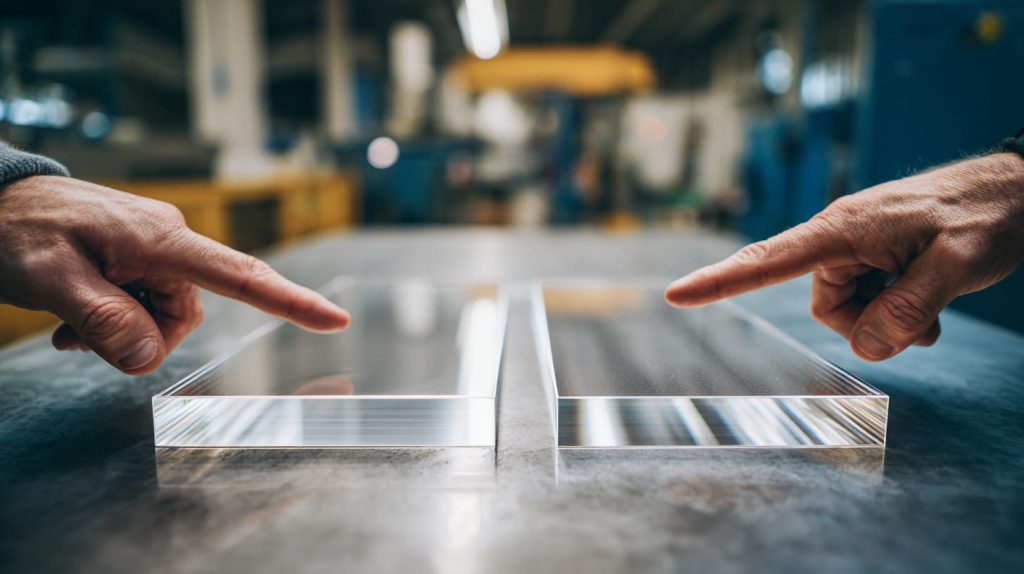
The first thing I separate is standard acrylic from ballistic acrylic. That small wording change matters more than many buyers expect.
Why the confusion happens
Plexiglass is usually just a common way people refer to acrylic sheet. Acrylic is strong for its weight. It is clear. It is easier to fabricate than many glass systems. So people assume strength in one area means strength in every area.
That is where the problem starts.
Acrylic can be:
- strong against daily impact
- good for guards, covers, and displays
- useful for machine shields and sneeze guards
- completely wrong for a real ballistic threat
I do not treat impact resistance and bullet resistance as cousins. I treat them like two different jobs.
A simple way I explain it
| Material type | What it usually handles well | What it does not promise |
|---|---|---|
| Standard acrylic sheet | Daily impact, visibility, lighter-duty protection | Ballistic protection |
| Ballistic acrylic | Tested handgun resistance at certain ratings | Unlimited bullet protection |
| Multi-layer ballistic glazing | Higher security use, more threat-specific design | Low cost or easy handling |
One detail often gets missed here: a sheet can survive one kind of hit and fail badly under a different kind of hit. That is why I never approve a “security acrylic” description until I know the actual threat.
What is the difference between plexiglass and bulletproof glass?
The names sound close enough to confuse people. The structures are not close at all.
Plexiglass is usually a single acrylic plastic sheet. Bullet-resistant glass is usually a tested security glazing system made from layered materials such as glass, acrylic, polycarbonate, or laminates built for specific threat levels.
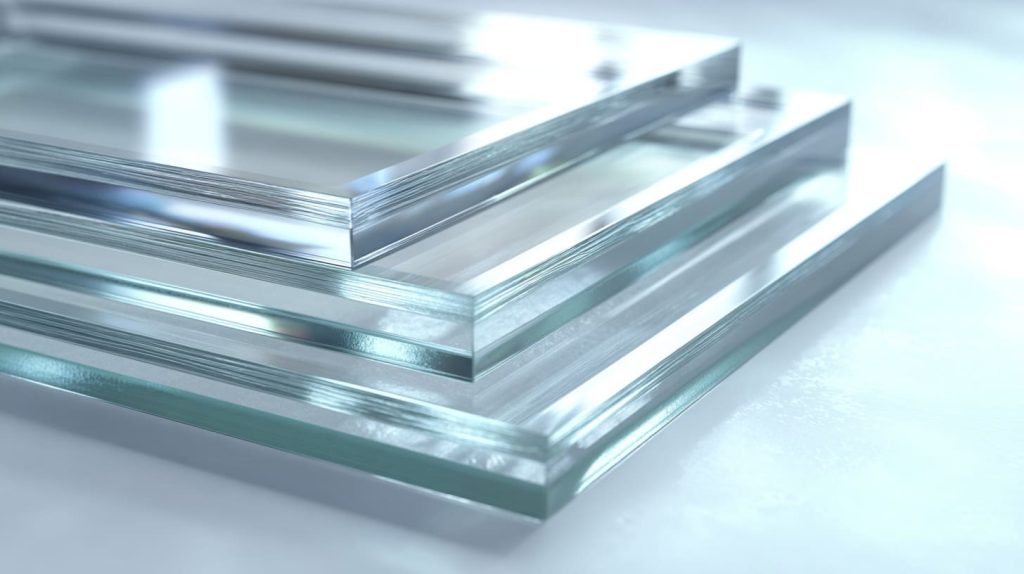
When I compare these two, I do not start with the word glass. I start with system design, because that is what decides survival.
One is a plastic sheet. The other is an engineered barrier.
Standard plexiglass is simple. That is part of its appeal.
Bullet-resistant glazing is different. It is often built in layers so the panel can:
- absorb energy
- slow penetration
- reduce dangerous fragments
- stay in place after impact
That layered build is the whole story.
Side-by-side view
| Feature | Standard plexiglass | Bullet-resistant glazing |
|---|---|---|
| Basic structure | Single acrylic sheet | Multi-layer or specialty-tested build |
| Main goal | Clarity, light protection, fabrication ease | Threat resistance and occupant protection |
| Typical use | Displays, covers, barriers, fixtures | Banks, secure windows, transaction areas, high-risk spaces |
| Performance basis | General material properties | Certified test level and system design |
I have learned to distrust “bulletproof glass” as a casual phrase on quotes. Buyers use it loosely. Suppliers use it loosely. Real projects need a rating, not a nickname.
Can acrylic stop a bullet under any conditions?
This is the point where the answer becomes uncomfortable but useful.
Yes, acrylic can stop a bullet under some conditions, but not as a general rule. It usually takes specially engineered ballistic acrylic, enough thickness, the right firearm level, and a tested product rating.
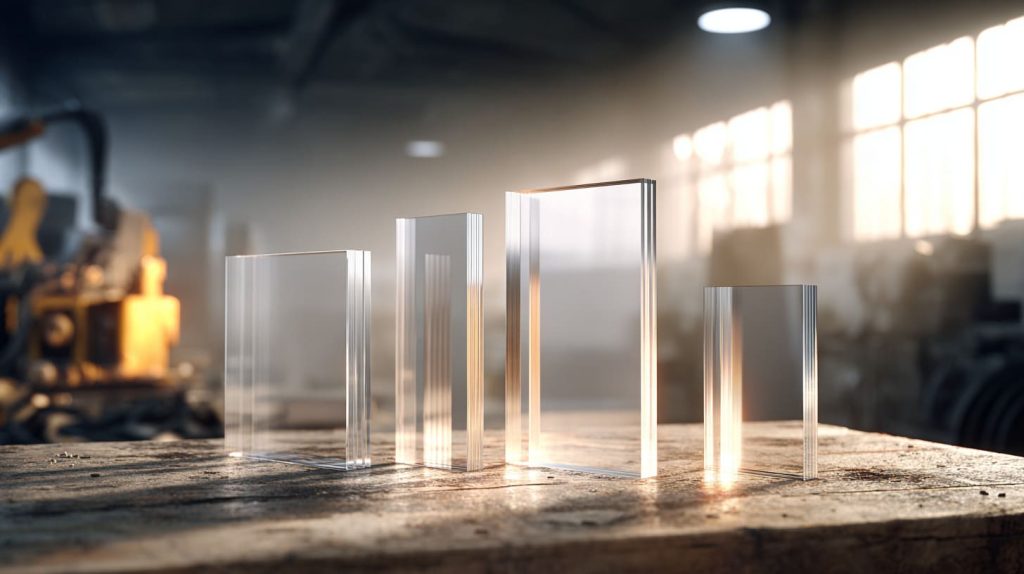
Acrylic is not magic. It works only when the whole setup matches the test it was built for.
When the answer can be yes
Acrylic may stop a bullet when:
- the sheet is ballistic grade, not ordinary grade
- the threat is within the tested level
- the thickness is appropriate
- the framing and installation are also correct
- the panel is used in the right environment
I have seen people focus only on the sheet and ignore the frame. That is like buying a strong door and hanging it on weak hinges.
What changes the outcome
| Factor | Why it matters |
|---|---|
| Bullet type | Different rounds hit with different energy |
| Thickness | More thickness can improve resistance |
| Material build | Monolithic acrylic behaves differently from laminates |
| Shot pattern | Multiple hits close together increase stress |
| Framing | Weak framing can defeat a strong panel |
What makes me slow down on this question is not the panel thickness first. It is the sentence “under what exact conditions?” because that is where safe answers begin.
How thick does plexiglass need to be to stop a bullet?
Buyers love this question because it sounds direct. Real answers are never just one number.
There is no single thickness that makes plexiglass bullet resistant in every case. Thickness depends on whether the sheet is standard acrylic or ballistic acrylic, what round it faces, and what test level it is designed to meet.
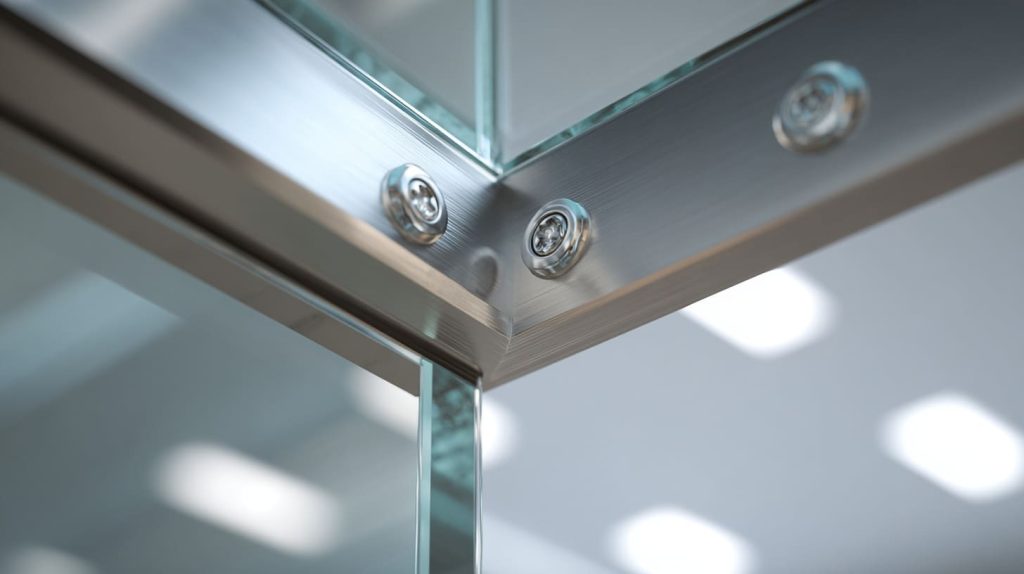
A thickness number without a threat level is just a comforting guess.
Why thickness alone is not enough
A thick clear sheet may still be the wrong material. That surprises people. They assume more plastic always means more safety.
It does not work that way.
A panel has to match:
- the threat
- the test standard
- the installation method
- the expected repeat hits
A practical thickness view
| Situation | Thickness answer |
|---|---|
| Standard acrylic sheet | No reliable ballistic answer |
| Ballistic acrylic for low handgun threats | May work at substantial tested thicknesses |
| Higher ballistic threats | Often needs thicker laminates or different materials |
| Rifle-threat protection | Usually needs systems beyond simple acrylic |
A buyer once asked me for “the thinnest safe option.” I understood the budget pressure, but I have learned that thin and safe stop being friends very quickly in security work.
What types of bullets can acrylic resist, if any?
This is where the sales language usually becomes slippery.
Ballistic acrylic can resist some common handgun rounds at certain tested levels, but standard acrylic is not a dependable barrier against firearm threats. The exact bullet types depend on the certified rating of the product.
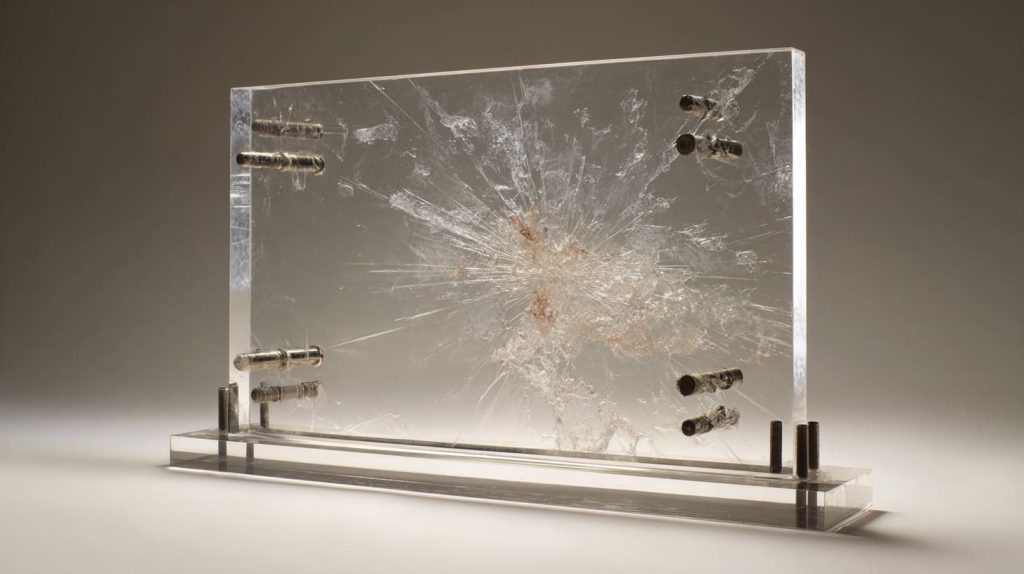
I try not to answer this with brand language. I answer it with test language.
Threats acrylic may handle in limited cases
Some ballistic acrylic products are designed around lower handgun threats. That is a very different claim from saying they stop “bullets” in general.
Simple threat comparison
| Threat type | Standard acrylic | Ballistic acrylic | Higher-end ballistic systems |
|---|---|---|---|
| Low handgun rounds | Poor choice | Possible at tested levels | Yes, depending on rating |
| Stronger handgun rounds | Poor choice | Limited, depends on rating | Better option |
| Rifle rounds | Not suitable | Usually not the right answer | Often required |
| Repeated attack | Unreliable | Limited by design and level | Better, depending on system |
The question I ask myself is not “Can it stop one shot?” I ask “What happens after repeated hits, edge stress, and real panic?” That second question is the one that protects people.
How does polycarbonate compare to acrylic for bullet resistance?
Now the trade-off gets more interesting.
Polycarbonate is usually tougher and more impact-resistant than acrylic, while acrylic often offers better surface clarity and appearance. For ballistic work, polycarbonate-based laminates are often chosen when higher toughness or reduced spall matters more.
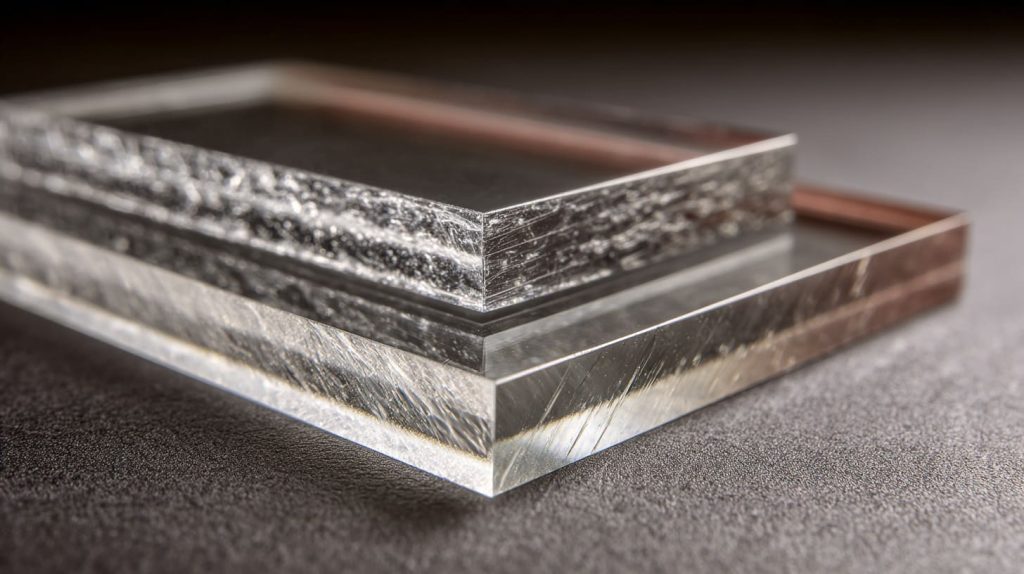
This comparison is never only about strength. It is also about scratching, optics, cleaning, cost, and how the barrier will be used every day.
Acrylic vs polycarbonate
| Property | Acrylic | Polycarbonate |
|---|---|---|
| Optical clarity | Excellent | Very good |
| Surface hardness | Better than plain polycarbonate | Softer unless coated |
| Impact toughness | Strong, but less forgiving | Much tougher |
| Fabrication ease | Good | Good |
| Ballistic system role | Useful for some lower-level solutions | Very common in advanced security laminates |
Why polycarbonate shows up so often
Polycarbonate bends and absorbs energy better. That matters in violent impact events. It also helps reduce dangerous back-side failure in many security builds.
I tend to become cautious when a project asks for “glass-like beauty” and “serious ballistic confidence” in the same breath, because that is usually where acrylic-only thinking starts to break down.
Where is bullet-resistant acrylic used in real-world applications?
This is where the material becomes less abstract and more practical.
Bullet-resistant acrylic is often used in controlled indoor security settings such as teller windows, reception barriers, transaction windows, and other public-facing interior barriers where clear visibility and handgun-level protection may be needed.

Real use cases are usually less dramatic than movies. They are quiet, routine, and very intentional.
Common application areas
- teller lines
- pharmacy counters
- reception security windows
- check-cashing locations
- cashier barriers
- certain office transaction points
Why acrylic gets picked
| Reason | Why buyers like it |
|---|---|
| Clear appearance | It feels open, not harsh |
| Lighter weight | Easier to handle than thick glass systems |
| Fabrication | Openings and custom shapes are easier |
| Cost | Often more affordable for limited threat levels |
One thing I watch closely is whether the panel will live indoors or outdoors, because a material that looks perfect in a protected interior space can become a headache under harder exposure.
Do banks or retail stores use plexiglass for security barriers?
Yes, but the word plexiglass still needs cleaning up here.
Banks and retail stores do use clear plastic security barriers, but serious security installations usually use tested bullet-resistant acrylic or other rated glazing systems, not ordinary plexiglass sheet sold for general fabrication.

People see a clear barrier at a counter and assume all clear panels do the same job. They do not.
What stores and banks actually need
Security barriers in public-facing spaces often balance:
- visibility
- communication
- money transfer access
- staff safety
- appearance
That is why these projects often use rated transaction windows and barrier systems instead of random clear sheet.
Typical barrier choices
| Environment | Common goal | Better material direction |
|---|---|---|
| Bank teller area | Handgun protection, visibility | Rated ballistic acrylic or glazing system |
| Retail cashier area | Deterrence and barrier control | Depends on threat and budget |
| Pharmacy counter | Staff protection with access | Rated security glazing |
| Simple splash guard | Basic separation only | Standard acrylic or PET may be enough |
I make a hard distinction between “security-looking” and “security-rated,” because many barriers look convincing right up until someone tests them in the worst possible way.
Why is plexiglass not suitable for true bulletproof applications?
This is the part many buyers resist, because acrylic seems so strong in normal life.
Plexiglass is not suitable for true bulletproof applications because standard acrylic is not engineered to manage serious ballistic energy, repeated fire, edge stress, spall control, or higher-level threat demands the way purpose-built ballistic systems are.

A strong-looking material can create false confidence. That may be the most dangerous failure of all.
Why standard plexiglass falls short
- it is not designed for certified ballistic ratings
- it can crack or fail under firearm energy
- it may not control fragments well
- it may not survive multi-hit scenarios
- it is only one part of a barrier, not the whole system
| Problem | Why it matters |
|---|---|
| Wrong material assumption | People believe they are protected when they are not |
| Weak installation | Even a better panel can fail in a poor frame |
| No certified rating | No clear basis for threat expectation |
| Misuse of “bulletproof” | Leads to bad decisions in purchasing |
I get nervous when a project uses safety words for marketing comfort instead of engineering accuracy, because that is often how preventable failures get invited into the drawing.
What are the safety risks of using acrylic instead of ballistic materials?
The risk is not only breakage. The risk is wrong judgment.
Using ordinary acrylic instead of ballistic-rated materials can expose people to penetration, dangerous fragments, failed barriers, poor emergency performance, and a false sense of security in high-risk situations.

This is not only a technical mistake. It is a responsibility mistake.
Main risks
- direct penetration
- edge or frame failure
- fragment injury
- barrier collapse after first hit
- poor performance under repeated attack
- legal and liability exposure
Risk table
| Risk | Standard acrylic | Ballistic-rated glazing |
|---|---|---|
| Penetration risk | High in firearm use | Lower within rated threat |
| Fragment control | Uncertain | Designed and tested for it |
| Multi-hit reliability | Poor | Better, depending on level |
| Documentation | Usually none for ballistic use | Rating and test path available |
What bothers me most is when people save a little money on material and quietly move a much bigger risk onto the people standing behind it.
Can acrylic panels be customized for security or protective use?
This is one reason acrylic stays popular in security work.
Yes, acrylic panels can be customized for protective use. Ballistic acrylic can often be cut, drilled, shaped, edged, and built into custom barrier designs, but the customization has to respect the rated product and its approved use.

Custom work is possible. Casual modification is not the same thing.
What can often be customized
- cut-to-size panels
- pass-through openings
- speak-thru details
- edge finishing
- framed barrier designs
- transaction windows
- custom interior layouts
What I stay careful about
| Custom feature | Why I check it carefully |
|---|---|
| Holes and cutouts | They can weaken the panel area |
| Edge finish | Stress points matter |
| Frame fit | A strong panel needs a matching frame |
| Coatings | Cleaning and scratch resistance matter |
| Use location | Indoor vs outdoor changes the decision |
I do not judge a custom security panel by the clean CNC work alone. I judge it by whether the modifications still respect how that panel was meant to protect someone.
What standards define bullet-resistant materials, and how do UL ratings work?
This is where vague talk needs to stop.
Bullet-resistant materials are defined by test standards, and in the United States UL 752 is one of the best-known standards for architectural ballistic protection. These ratings match materials to tested firearm threats and shot conditions.

If a product has no clear standard behind it, I treat its security claims as marketing first and protection second.
Why standards matter
Standards create a common language. They help answer:
- What gun was used?
- How many rounds were fired?
- From what distance?
- Did the material stop penetration?
- How much back-side damage happened?
Without that, buyers are comparing fear, not facts.
Simple UL-level view
| UL concept | What it tells me |
|---|---|
| Lower levels | Usually handgun-focused protection |
| Middle levels | Stronger handgun or specialized threats |
| Higher levels | Rifle or more demanding threats |
| Certified test result | The claim has a real test basis |
Why ratings beat guesses
A panel does not become safer because a salesperson calls it heavy-duty. It becomes safer when the tested level matches the real threat.
I always look for the rating before I look at the price, because cheap material with the wrong standard is still expensive once it fails.
What materials are better than plexiglass for bullet resistance?
This question usually comes after a buyer realizes ordinary acrylic is not enough.
Materials better than standard plexiglass for bullet resistance include ballistic acrylic, polycarbonate laminates, glass-clad polycarbonate, and other engineered multi-layer glazing systems selected by threat level, weight limits, optical needs, and budget.

“Better” depends on the threat, but standard plexiglass is rarely where serious ballistic design should end.
Common better options
| Material | Why it can be better |
|---|---|
| Ballistic acrylic | Clear and useful for some handgun-level interiors |
| Polycarbonate laminate | Tougher and better at absorbing impact |
| Glass-clad polycarbonate | Stronger multi-layer protection for tougher threats |
| Multi-layer ballistic glass systems | Used where higher certified protection is needed |
Selection logic
I think about four things first:
- threat level
- indoor or outdoor use
- acceptable weight
- visual requirement
The choice usually becomes clearer after that.
My real-world instinct is simple here: once the threat moves beyond limited handgun risk, I stop trying to make plain acrylic do a job it was never born to do.
Is laminated acrylic ever used in ballistic glazing systems?
Yes, and this is where the topic gets more nuanced.
Yes, acrylic can be part of laminated ballistic glazing systems. In some products, acrylic is combined with polycarbonate or other layers to improve protection, optics, fabrication flexibility, or overall system performance.

Acrylic is not always excluded from ballistic design. It is often just not enough by itself.
Why lamination changes things
Lamination lets designers combine strengths:
- acrylic for clarity
- polycarbonate for toughness
- coatings for durability
- layered construction for controlled performance
Acrylic in a bigger system
| System style | Role acrylic may play |
|---|---|
| Monolithic ballistic acrylic | Main protective body at lower levels |
| Acrylic-polycarbonate laminate | Optical and structural role inside a tougher build |
| Glass-clad hybrid system | Part of a layered ballistic package |
| Custom interior barrier system | Depends on rating and product design |
I usually relax a bit when I see acrylic used as one smart layer in a tested system, because that tells me someone designed the barrier like a protection product, not like a display panel with big promises.
Conclusion
Plexiglass is not truly bulletproof in the everyday sense. Standard acrylic is mostly an impact material, while ballistic-rated acrylic and layered glazing systems can resist specific threats under tested conditions. If you are planning a security barrier, I would match the material to the real risk first, then build the design around a verified rating.