Skip to content
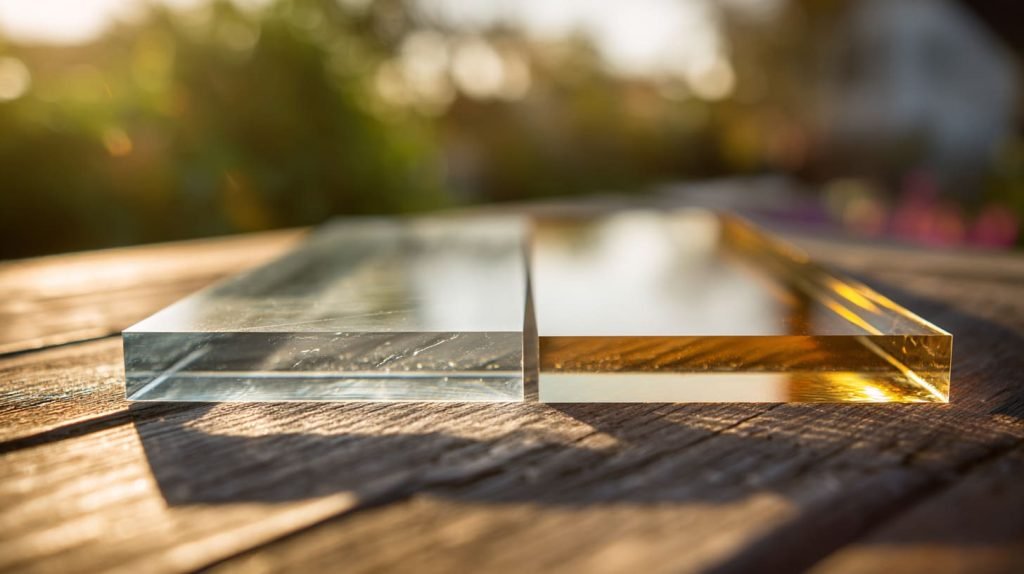
Acrylic looks clean when it is new. But sunlight has patience. It can slowly test the material, the surface, and the buyer’s decision.
Acrylic can turn yellow in sunlight, but high-quality clear acrylic usually resists yellowing much better than many other plastics. Yellowing depends on UV exposure, material grade, additives, thickness, heat, cleaning method, and outdoor service conditions.
I have seen buyers feel safe after checking a bright, clear sample indoors. Then they ask one quiet question: “What happens after two summers near a window?” That question is small. But the answer can decide the whole project.
Does Acrylic Turn Yellow Faster Outdoors or Indoors?
Acrylic ages faster when sunlight, heat, rain, and dust work together. Indoors, the pressure is usually softer.
Acrylic usually turns yellow faster outdoors than indoors because outdoor acrylic faces stronger UV light, higher heat, rain, wind, pollution, and cleaning stress. Indoor acrylic near windows can also yellow, but the process is often slower.
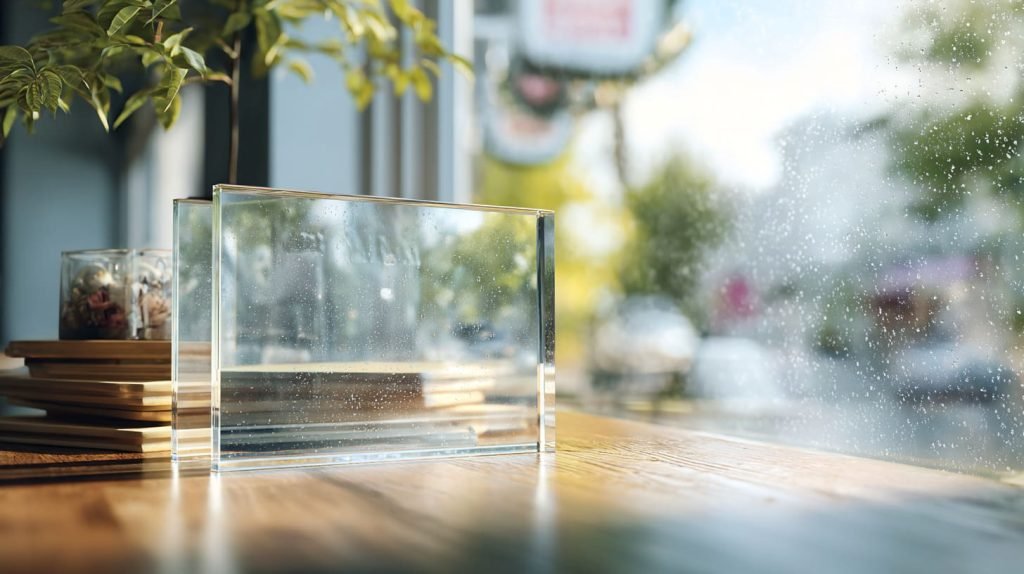
Outdoor use is not one simple condition.
A small acrylic sign under a roof is not the same as an acrylic display case standing under direct summer sunlight. A clear acrylic cover inside a shop window is not the same as an outdoor control panel cover near the sea.
This is where I slow down before giving a material suggestion. I do not only ask, “Is it outdoor?” I ask where the acrylic will sit, how much sun it will receive, and who will clean it after dust builds up.
Indoor sunlight is still sunlight
Many buyers feel safe because the product is “only indoors.” But indoor does not always mean protected.
For example:
- A cosmetic display beside a glass storefront may face sunlight every afternoon.
- A museum cover near a window may receive UV exposure for years.
- A retail shelf under strong lighting may slowly lose its fresh look.
- A transparent acrylic box near a hot window may face both light and heat.
Indoor acrylic often has less rain and less dirt. But sunlight through windows can still matter, especially for display products where clarity is the selling point.
Outdoor acrylic faces more than UV
Outdoor acrylic has to deal with several enemies at the same time.
| Condition | Indoor acrylic | Outdoor acrylic |
|---|---|---|
| UV exposure | Low to medium | Medium to high |
| Heat change | More stable | Often strong |
| Rain and moisture | Usually low | High |
| Dust and pollution | Medium | High |
| Cleaning frequency | Medium | Often higher |
| Yellowing risk | Lower | Higher |
Acrylic does not fail because one thing happens. It often fails because many small things happen together.
Sunlight warms the surface.
Dust sticks to it.
A worker wipes it with the wrong cloth.
Rainwater dries on the edge.
The screw hole has stress.
Then the material starts to show age.
My simple project rule
For indoor use, I focus on clarity, scratch risk, thickness, and cleaning.
For outdoor use, I add more questions:
- Is it under direct sunlight?
- Is it near the sea?
- Is it in a hot country?
- Is it fixed with screws?
- Will people clean it often?
- Is yellowing only a cosmetic problem, or will it hurt the brand?
If a customer says, “This acrylic part must stay clear outdoors for years,” I do not treat normal clear acrylic as a casual choice. I start talking about UV-resistant grade, design protection, and realistic service life.
Why Does Clear Acrylic Become Yellow Over Time?
Clear acrylic looks simple, but it is still a plastic. Light, heat, and chemistry can slowly change it.
Clear acrylic becomes yellow over time mainly because UV light and heat can change the material surface and inner structure. Low-quality material, wrong additives, harsh cleaners, and long outdoor exposure can speed up this color change.
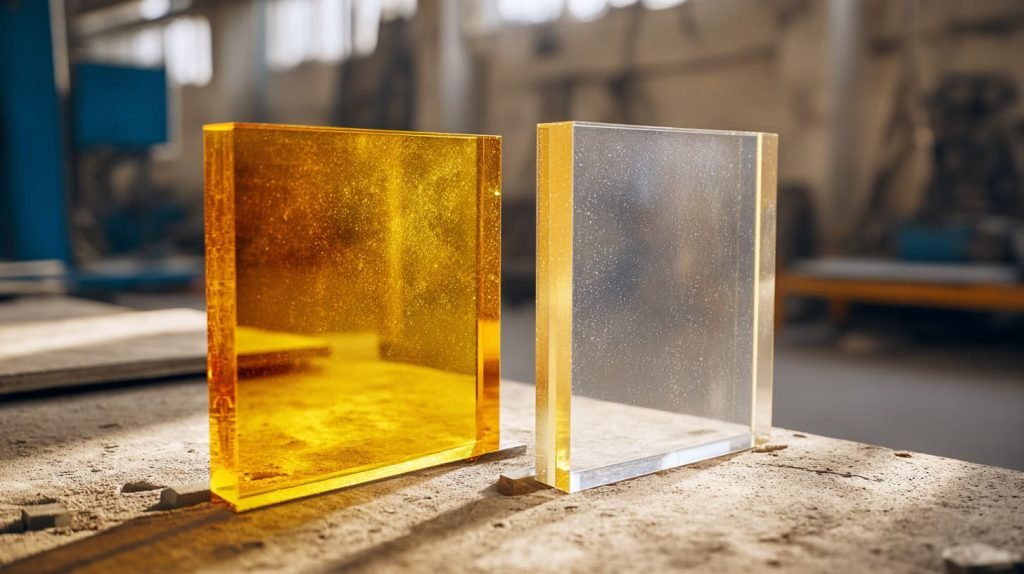
Yellowing is not always dramatic.
Most of the time, it starts quietly. The acrylic still looks clear in normal light. Then someone places it beside a new sample. Suddenly, the difference becomes obvious.
One piece looks fresh.
The other looks tired.
That is the painful part. Yellowing is easy to ignore until comparison makes it visible.
A detail I never ignore is the first sample comparison, because a single clear sample on the table can lie to your eyes, but an aged sample beside a new sample tells the truth much faster.
Common causes of acrylic yellowing
| Cause | What happens | Common project example |
|---|---|---|
| UV light | Surface and material slowly change | Outdoor signs, window displays |
| Heat | Aging becomes faster | Sun-facing covers, lighting boxes |
| Poor raw material | Color stability is weaker | Low-cost acrylic sheets |
| Wrong additives | Material may discolor faster | Cheap mixed plastic sheets |
| Harsh cleaners | Surface becomes cloudy or stained | Store displays cleaned daily |
| Pollution | Dirt and chemicals attack surface | Street signs, outdoor boxes |
Acrylic has good weather resistance compared with many plastics. But “good” does not mean “never changes.”
Yellowing can come from surface damage too
Sometimes a buyer thinks the acrylic itself has turned yellow. But the real problem may be on the surface.
For example:
- The surface has tiny scratches.
- Dust gets trapped in the scratches.
- Cleaning liquid leaves residue.
- Heat makes the residue look worse.
- The acrylic looks yellow or cloudy.
This is why cleaning method matters. A clear acrylic display can lose its premium look not only because of UV, but also because people clean it like glass.
That is a mistake.
Glass is hard.
Acrylic is softer.
The cloth and cleaner matter.
Why low-cost acrylic is risky
In B2B projects, price pressure is real. I understand that very well.
A buyer may ask for lower price because the order quantity is large. A re-brand seller may compare several suppliers. A product engineer may need to fit the enclosure cost into the whole device budget.
But clear acrylic is one of those materials where a small saving can become visible later.
If the raw material is not stable, the sheet may look fine during inspection. The problem may appear after months in real use.
That is why I prefer to discuss service conditions before price gets locked. Price is important. But the real cost includes replacement, complaints, shipping, and brand damage.
How Long Does Acrylic Last in Direct Sunlight?
Acrylic can last a long time in sunlight, but the answer depends on grade, design, and environment.
Good-quality acrylic can last several years in direct sunlight with limited yellowing, especially when UV-resistant material is used. Normal acrylic may still perform well, but harsh sun, heat, pollution, and poor cleaning can shorten its clear appearance.
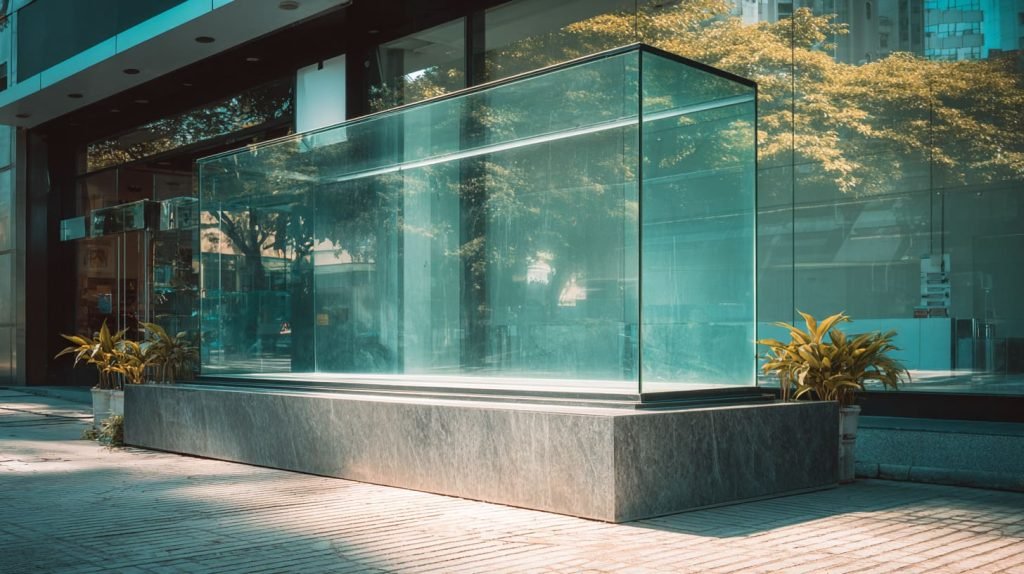
No honest factory should give one fixed number for every acrylic project.
Acrylic used in Finland is not working under the same sky as acrylic used in the Middle East. A display case under a roof is not the same as a sign panel on an open street.
The number on paper is useful. But the real world has weather, people, and maintenance.
Before I estimate service life, I first judge whether the customer needs “still usable” or “still beautiful,” because these two standards are very different in real projects.
“Last” can mean different things
Acrylic may still be physically usable after many years. But a buyer may reject it earlier because the appearance is no longer good enough.
| Meaning of “last” | What it checks | Example |
|---|---|---|
| Structural life | Does it still hold shape? | Protective cover, machine guard |
| Optical life | Does it still look clear? | Display case, photo frame |
| Brand life | Does it still look premium? | Retail display, cosmetic stand |
| Safety life | Does it crack or break? | Outdoor enclosure window |
For acrylic displays, appearance often matters more than strength.
A slightly yellowed machine cover may still work.
A slightly yellowed luxury display box may already be a problem.
Direct sunlight makes aging uneven
Sunlight does not always hit every surface equally.
One side may turn yellow faster.
One edge may become more brittle.
One panel may fade before another.
One corner may crack because heat and screw stress meet there.
This is easy to miss during design.
For outdoor acrylic boxes and display cases, I like to think about sun direction. If the front face always faces afternoon sun, that panel carries more risk than the side panel.
A practical service life view
Here is how I usually explain it to buyers:
| Use condition | Yellowing risk | My practical view |
|---|---|---|
| Indoor, away from window | Low | Normal clear acrylic usually works well |
| Indoor, near window | Medium | UV-resistant acrylic may be worth it |
| Outdoor, shaded | Medium | Good acrylic plus smart design is important |
| Outdoor, direct sun | High | UV-resistant grade should be considered |
| Outdoor, hot and polluted | Very high | Material, design, and maintenance all matter |
I do not like giving false comfort.
If the part is cheap and easy to replace, normal acrylic may be acceptable. If the part is part of the brand image, I prefer safer material and better design.
Can UV-Resistant Acrylic Prevent Yellowing?
UV-resistant acrylic helps a lot, but it does not make the material immortal.
UV-resistant acrylic can greatly reduce yellowing by blocking or resisting ultraviolet light. It cannot stop all aging forever, but it is a safer choice for outdoor displays, sunlight-facing panels, acrylic windows, and long-term clear applications.
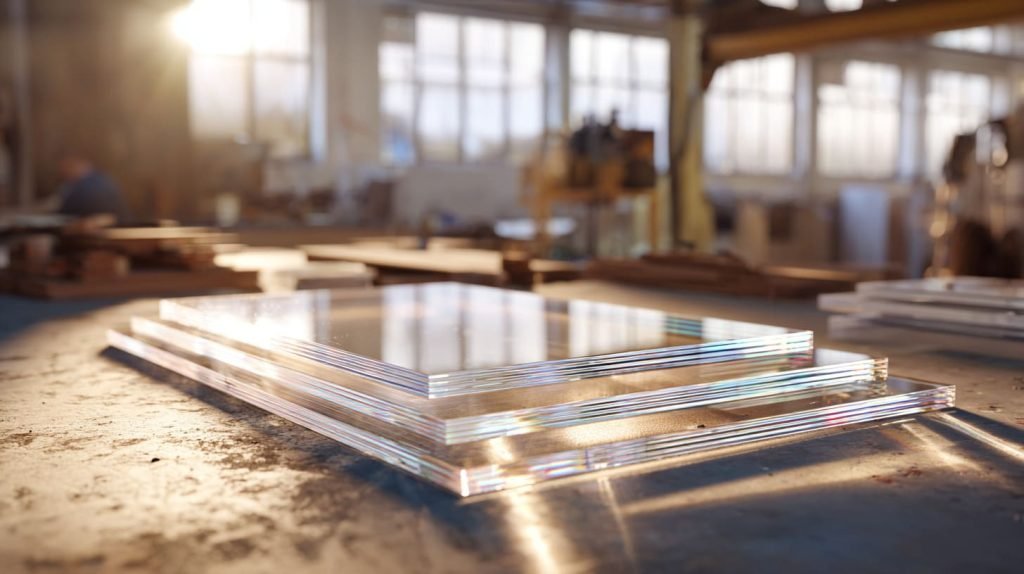
I like UV-resistant acrylic because it gives the project more breathing room.
It does not remove every risk. But it reduces one of the biggest risks: long-term sunlight damage.
That matters when the product sits outside or near a bright window every day.
My judgment here is simple: if the acrylic part protects the product image, not just the product itself, UV resistance is not a small upgrade; it is often part of the basic design.
What UV-resistant acrylic does
UV-resistant acrylic may help by:
- Reducing UV light damage
- Slowing yellowing
- Protecting clarity longer
- Reducing surface aging
- Improving outdoor performance
- Helping printed graphics or products behind it last longer
It is useful for products like:
| Product | Why UV resistance matters |
|---|---|
| Outdoor sign panels | Keeps the panel clearer for longer |
| Retail display covers | Protects premium appearance |
| Acrylic windows | Maintains visibility |
| Museum covers | Helps protect items behind the panel |
| Outdoor enclosures | Reduces aging of transparent windows |
| Light box covers | Handles light and heat better |
UV-resistant does not mean careless design
Some buyers hear “UV-resistant” and feel the problem is solved.
I understand that feeling. It sounds like insurance.
But the design still matters.
If the acrylic panel is under strong stress, UV-resistant material will not remove that stress. If the cleaner is too harsh, the surface can still become cloudy. If the screw hole is too tight, cracks may still start there.
Acrylic needs material protection and design protection.
When I suggest UV-resistant acrylic
I usually suggest UV-resistant acrylic when:
- The product faces direct sunlight.
- The product must stay clear for years.
- The acrylic protects a high-value display.
- The buyer sells under their own brand.
- Replacement is expensive.
- The environment is hot, wet, or polluted.
- Yellowing will create customer complaints.
For low-risk indoor parts, normal acrylic may be enough.
For outdoor brand-facing parts, I prefer not to gamble.
Does Polycarbonate Turn Yellow Faster Than Acrylic?
Polycarbonate is tougher than acrylic, but yellowing is a different question.
Polycarbonate often turns yellow faster than acrylic under sunlight if it does not have UV protection. Acrylic usually has better natural UV resistance and clearer long-term appearance, while polycarbonate offers stronger impact resistance.
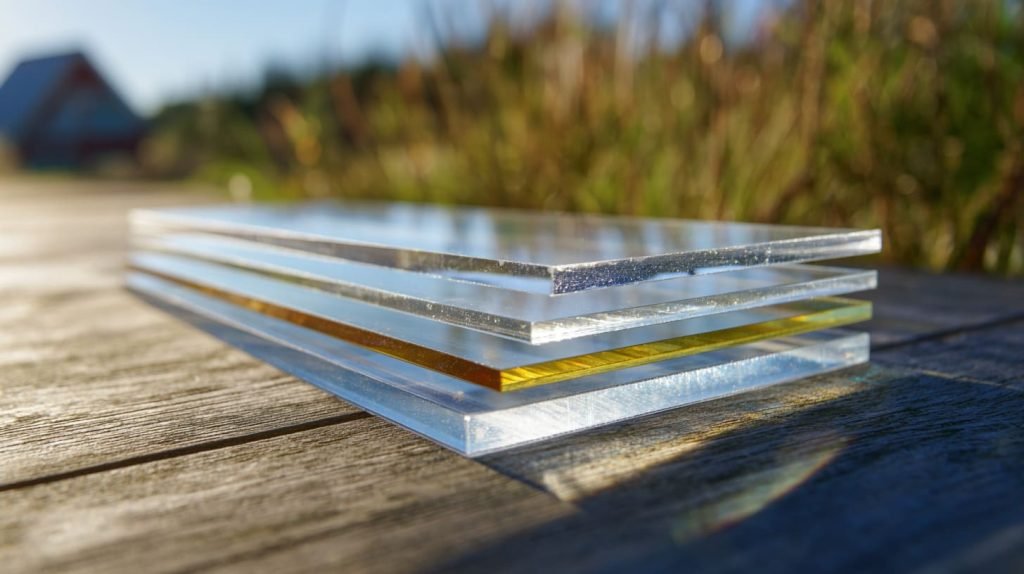
Many buyers compare acrylic and polycarbonate as if one material must win.
I do not see it that way.
Acrylic is usually better for optical clarity and UV stability. Polycarbonate is usually better for impact resistance. So the right choice depends on what the part must survive.
This is where projects often go wrong: people choose polycarbonate because it is stronger, then forget that outdoor sunlight may punish its appearance faster if the grade is not protected.
Acrylic vs polycarbonate in sunlight
| Feature | Acrylic | Polycarbonate |
|---|---|---|
| Optical clarity | Very good | Good |
| Natural UV resistance | Better | Weaker without coating/additives |
| Yellowing risk | Lower | Higher without UV protection |
| Impact resistance | Good, but not best | Excellent |
| Scratch resistance | Better than PC, but still soft | Easier to scratch |
| Outdoor display use | Often strong choice | Needs UV protection |
| Safety guard use | Sometimes suitable | Often better |
If the buyer needs a clear display case, acrylic often feels better.
If the buyer needs a safety shield near impact risk, polycarbonate may be safer.
Strength is not the same as weather beauty
Polycarbonate can take hits better. That is its strong point.
But sunlight is not a hammer.
Sunlight works slowly. It attacks appearance, color, and surface quality. A strong plastic can still become yellow, dull, or scratched.
So I ask the buyer one practical question:
What is more important here, impact resistance or long-term clear appearance?
That question usually makes the answer easier.
My material selection view
For clear covers and displays:
- I often start with acrylic.
- I consider UV-resistant acrylic for sunlight.
- I use polycarbonate when impact risk is serious.
- I use UV-protected polycarbonate when outdoor impact risk and weather exposure both matter.
For outdoor electronic enclosures, the transparent window may need a different material from the main housing. The housing can be aluminum, plastic, or sheet metal. The window can be acrylic or polycarbonate. One enclosure can use different materials for different jobs.
That is not overthinking.
That is good design.
What Type of Acrylic Is Best for Outdoor Use?
Outdoor acrylic needs more than a clear look. It needs stable material and smart design.
UV-resistant cast acrylic is often the best choice for outdoor use when clarity, weather resistance, and long-term appearance matter. For cost-sensitive projects, good-quality extruded acrylic may work in milder outdoor conditions with proper design protection.
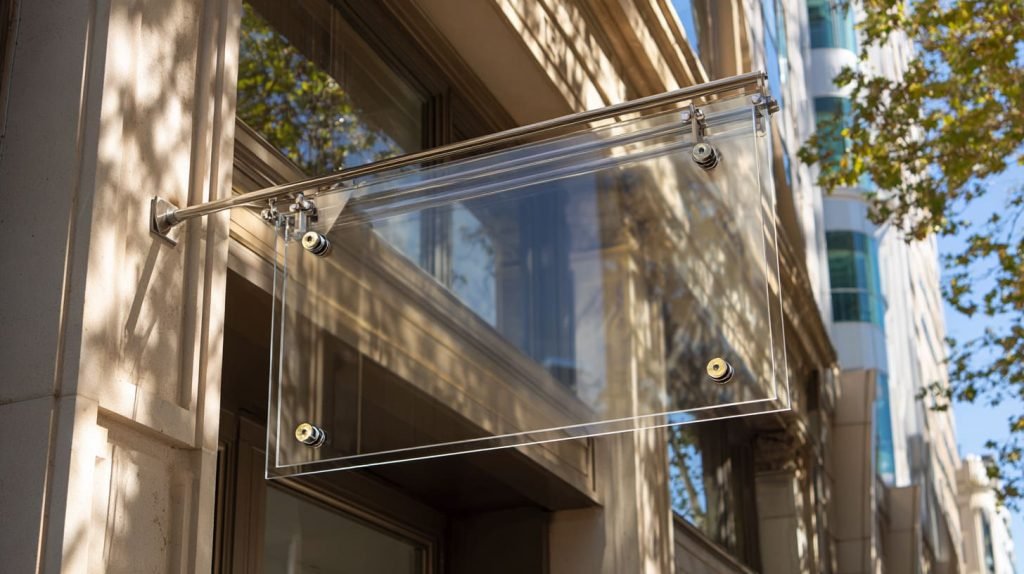
Outdoor acrylic should be chosen for where it will live.
Not just what it looks like in a sample room.
A perfect sample on a desk tells only half the story. The outdoor environment tells the other half, and it usually speaks louder.
The first thing I check is not only the acrylic type; I check whether the buyer expects the part to be cheap, clear, strong, easy to replace, or beautiful for a long time.
Common acrylic options for outdoor use
| Acrylic type | Outdoor suitability | Best use |
|---|---|---|
| Standard clear acrylic | Medium | Mild outdoor use, shaded areas |
| UV-resistant acrylic | High | Sunlight-facing displays and covers |
| Cast acrylic | High | Premium clarity and better stability |
| Extruded acrylic | Medium | Cost-sensitive flat parts |
| Colored acrylic | Depends on pigment | Decorative signs and displays |
| Frosted acrylic | Depends on grade | Diffusion panels, privacy covers |
Why cast acrylic is often preferred
Cast acrylic is often more stable for outdoor and high-quality applications.
It usually has better optical quality, better chemical resistance, and better performance during fabrication. It can also be better for polishing, engraving, and thicker custom parts.
That does not mean extruded acrylic is bad.
Extruded acrylic can be good for flat panels, cost-sensitive parts, and simple shapes. But when a product needs a premium appearance and long service life, cast acrylic often gives me more confidence.
Outdoor design also matters
Even the best acrylic can suffer if the design is poor.
I look at:
- Hole distance from the edge
- Screw pressure
- Expansion space
- Panel thickness
- Edge polishing quality
- Drainage design
- Wind load
- Cleaning access
- Packing protection
Acrylic expands and contracts with temperature. If the design locks it too tightly, stress builds up. Then cracks may appear near holes, edges, or corners.
Outdoor acrylic is not just a material purchase. It is a small engineering decision.
Can Sunlight Damage Acrylic Display Cases and Enclosures?
Sunlight can damage acrylic slowly, especially when the product must stay clear and premium.
Sunlight can damage acrylic display cases and enclosures by causing yellowing, fading, surface dullness, brittleness, heat stress, and cracking. Good material, UV protection, proper thickness, and stress-free design help reduce these problems.
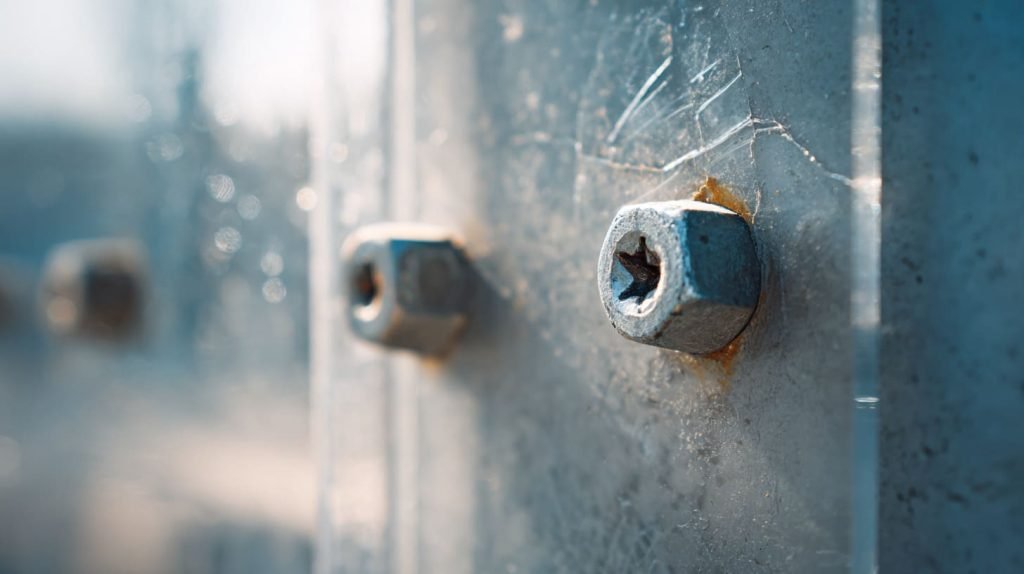
Acrylic display cases and enclosures are often judged by appearance first.
If the surface looks yellow, scratched, or cloudy, the customer may think the whole product is cheap. Even if the structure still works, the feeling is already damaged.
For display cases, I always think about what the acrylic is protecting: sometimes it protects a product, but sometimes it protects the buyer’s brand trust.
How sunlight affects acrylic display cases
| Sunlight effect | What the customer sees | Why it matters |
|---|---|---|
| Yellowing | Clear panel looks old | Hurts premium look |
| Fading | Colored panel loses tone | Weakens brand color |
| Heat stress | Panel bends or cracks | Creates function risk |
| Surface dullness | Display looks dirty | Lowers product value |
| Brittleness | Edges crack easier | Causes replacement cost |
Acrylic display cases are often used for cosmetics, jewelry, electronics, collectibles, and samples.
These products depend on visual trust.
If the case looks tired, the product inside also feels less valuable.
Enclosure windows have a different risk
For electronic enclosures, acrylic may be used as a window, cover, light guide, label plate, or protective panel.
The risk is not only appearance.
A yellowed or cracked acrylic window may affect:
- LED visibility
- Display reading
- Inspection access
- Seal performance
- User confidence
- Safety perception
If the enclosure sits outdoors, I do not treat the acrylic window as decoration. I treat it as a functional part.
Hidden heat behind clear acrylic
Clear acrylic can allow light to pass through. But the space behind it can still heat up.
A closed acrylic display case in sunlight can become warm inside. That heat may affect the items inside, especially printed labels, cosmetics, electronics, rubber parts, or adhesive.
This is one reason I ask about the product inside the case.
The acrylic may survive.
The product inside may not.
Good design looks at both.
How Do You Protect Acrylic From UV Damage?
Protection starts before the product is made. Cleaning and placement only help after that.
You can protect acrylic from UV damage by choosing UV-resistant material, avoiding direct sunlight when possible, using proper thickness, reducing stress around holes, cleaning with mild products, and adding shade, coatings, or protective films when needed.
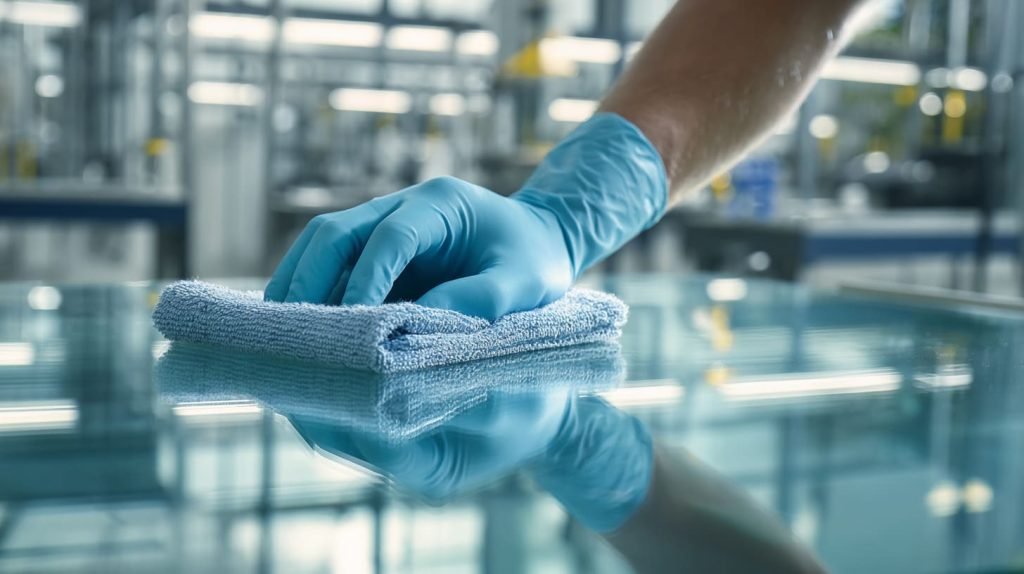
Many people think UV protection is one single product feature.
I see it more like a chain.
Material is one link. Design is one link. Cleaning is one link. Installation is one link. If one link is weak, the whole result can suffer.
The small detail I care about is stress around fixing points, because UV and heat often make a bad screw design fail faster than the material itself.
Practical ways to protect acrylic
| Method | Why it helps | Best timing |
|---|---|---|
| Use UV-resistant acrylic | Slows yellowing | Before production |
| Choose cast acrylic | Improves stability | Before production |
| Add shade or roof | Reduces direct sun | During installation |
| Leave expansion gap | Reduces cracking | During design |
| Use soft washers | Reduces screw stress | During assembly |
| Clean with mild soap | Protects surface | During use |
| Avoid alcohol cleaners | Reduces surface damage | During use |
| Use protective film | Reduces scratches before use | During shipping |
Cleaning can protect or damage acrylic
Acrylic should not be cleaned like a metal part.
I prefer:
- Soft microfiber cloth
- Clean water
- Mild soap
- Gentle wiping
- No dry rubbing on dusty surfaces
I avoid:
- Alcohol-based cleaners
- Strong solvents
- Rough cloth
- Paper towels with grit
- High-pressure rubbing
- Abrasive powders
The surface may look strong, but small scratches collect dirt. After that, the acrylic starts to look dull. People may think it has yellowed, but it may be surface abuse.
Design protection matters more than people expect
Acrylic needs room to move.
Outdoor temperature changes can make the sheet expand and contract. If the screws are too tight, the hole is too small, or the edge is too close, stress builds up.
A better design may include:
- Larger holes than the screw shaft
- Rubber or silicone washers
- Rounded inner corners
- Enough distance from holes to edges
- Proper thickness
- No sharp internal cuts
- Balanced support
This is not fancy design. It is practical protection.
Does Colored Acrylic Fade or Yellow in the Sun?
Colored acrylic can change in sunlight, but the change depends on pigment quality and exposure.
Colored acrylic may fade, discolor, or lose brightness in the sun. Clear acrylic usually shows yellowing, while colored acrylic may show fading, uneven tone, dullness, or color shift, especially under strong UV exposure.
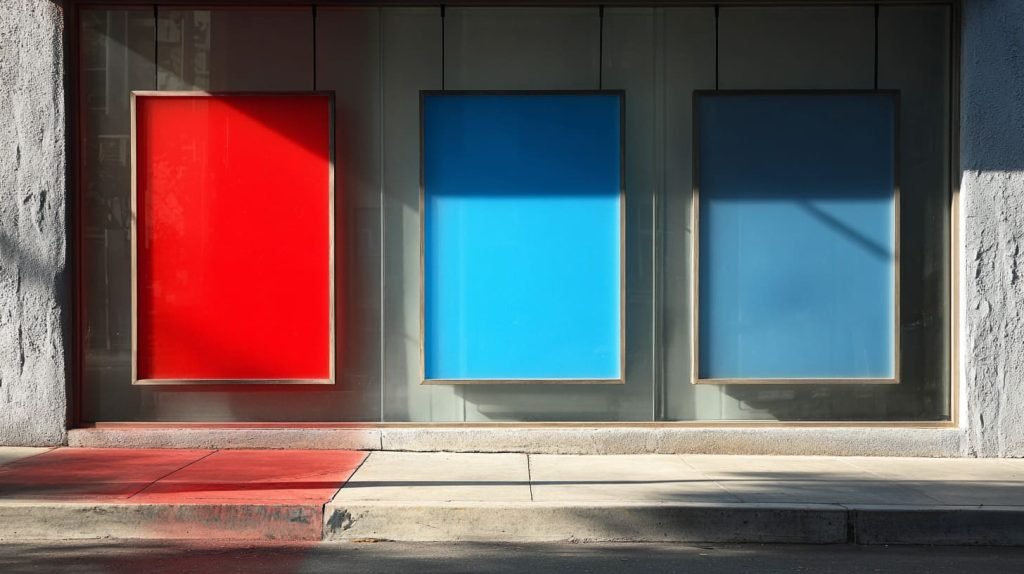
Colored acrylic can be beautiful.
A smoke gray display.
A red sign panel.
A blue protective cover.
A frosted black acrylic brand plate.
But sunlight may change the color story over time.
When I review colored acrylic for outdoor use, I do not only check whether the color looks nice today; I ask whether the color must match a brand tone after one or two years.
Clear acrylic vs colored acrylic aging
| Acrylic type | Common sunlight change | Visual problem |
|---|---|---|
| Clear acrylic | Yellowing, dullness | Looks old or dirty |
| White acrylic | Yellowing, staining | Looks uneven |
| Black acrylic | Surface dullness | Looks less premium |
| Red acrylic | Fading | Color looks weak |
| Blue acrylic | Fading or shifting | Tone may change |
| Smoke acrylic | Uneven tone | Looks patchy |
Some colors hide yellowing better than clear acrylic. But they may fade instead.
So the problem changes shape.
It does not disappear.
Brand color is a serious issue
For custom projects, color is often tied to brand identity.
A customer may approve a sample because the color matches their design. But if the color fades after long sun exposure, the final product may look inconsistent.
This matters for:
- Store signage
- Logo panels
- Product displays
- Colored covers
- Retail fixtures
- Outdoor decoration
- Branded acrylic parts
If a color must stay stable, I prefer to test samples or ask for UV-stable material options.
Dark colors can absorb more heat
Dark acrylic may absorb more heat under sunlight.
This can increase thermal stress and deformation risk, especially for large flat panels. The color may look strong, but heat can create another problem.
For outdoor use, I think about both color and heat.
A black acrylic panel may look premium.
But a large black panel under direct sun may need extra thickness, support, or another material.
That is the trade-off.
Is Cast Acrylic More UV Resistant Than Extruded Acrylic?
Cast acrylic is often preferred for outdoor and premium applications, but grade still matters.
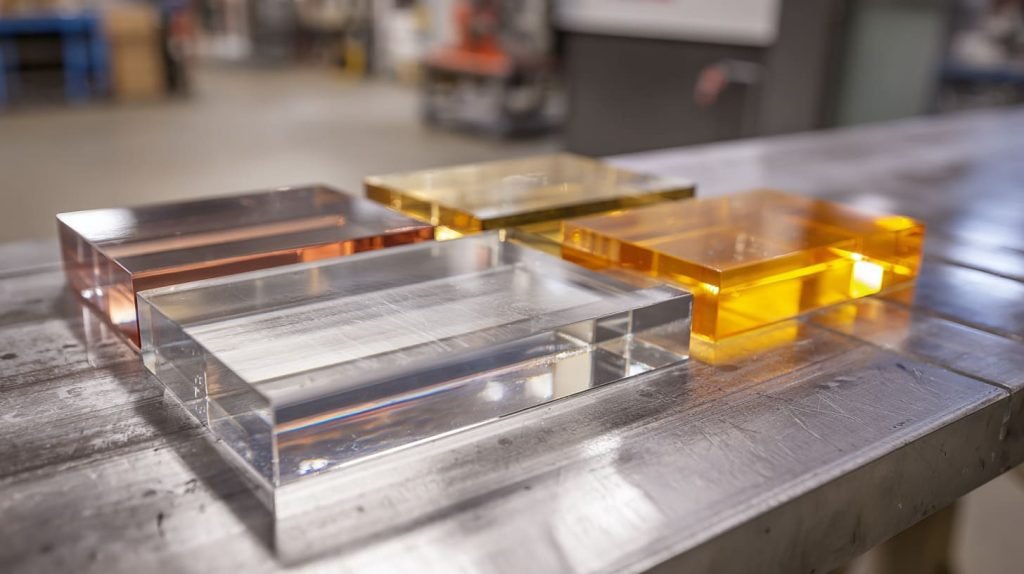
Cast acrylic is generally more stable and often preferred for outdoor use because it usually has better optical quality, chemical resistance, and fabrication performance. Extruded acrylic can still work outdoors, but UV grade and project conditions matter.
Cast and extruded acrylic may look similar to a new buyer.
Both can be clear.
Both can be cut.
Both can be polished.
Both can be used for covers and panels.
But they do not always behave the same in production or long-term use.
My real-world choice often depends on whether the part is just a flat cover or a brand-facing part that needs clean edges, stable appearance, and less risk after fabrication.
Cast acrylic vs extruded acrylic
| Factor | Cast acrylic | Extruded acrylic |
|---|---|---|
| Optical quality | Usually better | Good |
| Thickness tolerance | Less uniform | More uniform |
| Chemical resistance | Usually better | Usually lower |
| Fabrication | Better for polishing and machining | Easier for simple cutting |
| Cost | Higher | Lower |
| Outdoor premium use | Often preferred | Depends on grade |
| Laser cutting | Good | Good, but edge behavior differs |
Why cast acrylic feels safer for custom work
For custom acrylic products, the edge matters.
A display case may have polished edges. A transparent cover may have holes. A branded panel may need engraving. A thick block may need a clean surface and clear depth.
Cast acrylic often handles these jobs better.
It gives me more confidence when the part has:
- Thick material
- Polished edges
- CNC machining
- Engraving
- Bending limits
- Outdoor exposure
- Premium display requirements
Extruded acrylic still has a place
I do not reject extruded acrylic automatically.
It can be useful when:
- The part is simple and flat.
- The budget is tight.
- The thickness is thin.
- The exposure is mild.
- The customer accepts normal service life.
- The project needs stable thickness control.
The wrong move is not using extruded acrylic.
The wrong move is using it without understanding the application.
That is where problems begin.
Can Yellowed Acrylic Be Restored or Polished Clear Again?
Sometimes acrylic can be improved, but deep yellowing is hard to fully reverse.
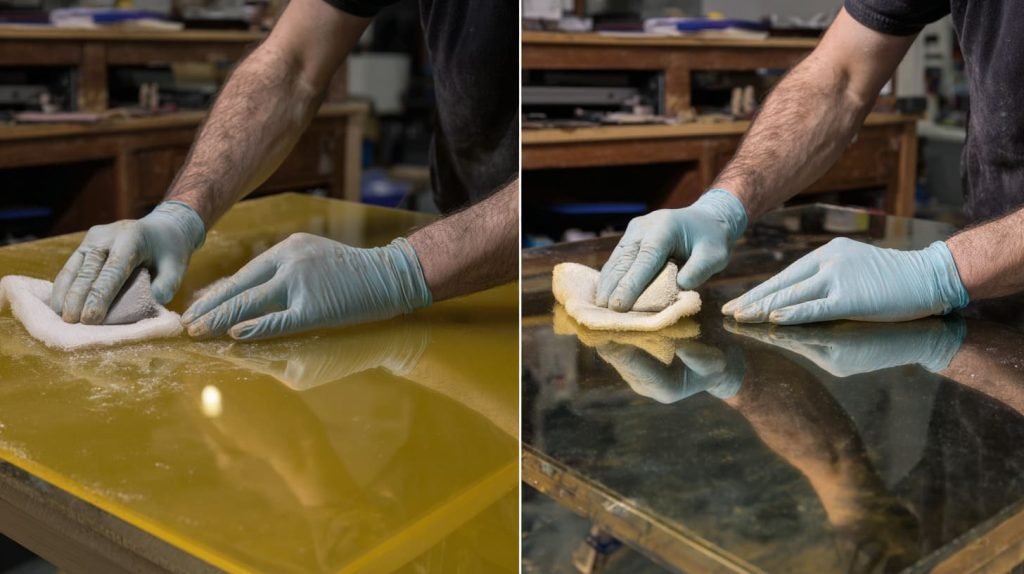
Yellowed acrylic can sometimes be cleaned or polished if the problem is surface dirt, scratches, or haze. But if yellowing comes from deep UV aging inside the material, polishing cannot fully restore the original clear appearance. Replacement may be better.
This question comes up after the damage is already visible.
A buyer may ask, “Can we polish it back?”
Sometimes yes.
Sometimes no.
And that “sometimes” matters.
The practical test I like is simple: if a small cleaned area looks much better, the problem may be surface-level; if the color stays yellow after cleaning, the material itself has likely aged.
Surface problem or material problem?
| Problem type | Can polishing help? | Common sign |
|---|---|---|
| Dust and dirt | Yes | Surface wipes cleaner |
| Light scratches | Yes | Haze reduces after polishing |
| Cleaner residue | Sometimes | Film-like appearance |
| Surface oxidation | Sometimes | Dull top layer |
| Deep UV yellowing | Usually no | Whole sheet looks yellow |
| Internal discoloration | No | Color remains after polishing |
When polishing makes sense
Polishing may help when the acrylic has:
- Light surface scratches
- Small cloudy areas
- Handling marks
- Cleaning haze
- Edge dullness
- Minor surface aging
But polishing takes time. It can also create uneven gloss if done badly.
For one expensive display case, polishing may be worth it. For many low-cost panels, replacement may be cheaper and cleaner.
When replacement is better
Replacement is usually better when:
- The acrylic is deeply yellowed.
- The part is brittle.
- Cracks already appear.
- The panel is large and uneven.
- The part is brand-facing.
- Labor cost is higher than new material.
- The customer expects a clear new look.
I do not like giving customers false hope. If the material has aged inside, polishing is like washing an old window from the outside while the problem sits inside the glass.
It may look a little better.
But it will not become new again.
What Causes Acrylic to Crack or Become Brittle Outdoors?
Outdoor cracking often comes from stress, UV, heat, and poor design working together.
Acrylic can crack or become brittle outdoors because of UV aging, thermal expansion, tight screws, sharp corners, impact, chemical cleaners, poor edge finishing, and repeated heat-cold cycles. Design stress often makes outdoor aging worse.
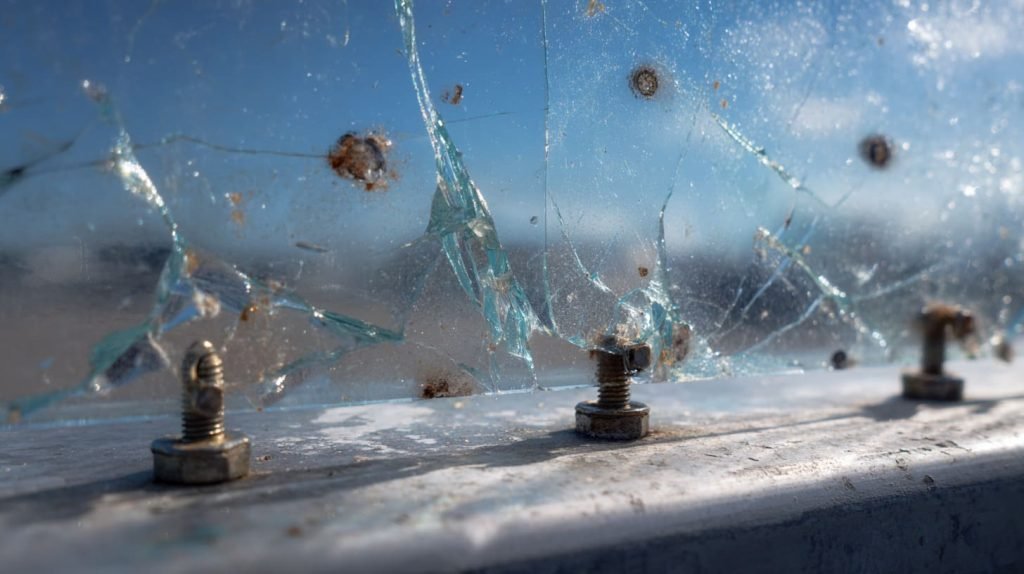
Acrylic cracking is rarely a mystery to me.
Most cracks start from a weak point.
A screw hole.
A sharp corner.
A rough edge.
A bend line.
A place where the material has no room to move.
I become extra careful when I see small holes close to the edge, because that little detail can become the starting point of a very expensive complaint.
Common crack starting points
| Weak point | Why it cracks |
|---|---|
| Tight screw holes | No space for expansion |
| Sharp inside corners | Stress gathers there |
| Rough cut edges | Tiny cracks start from tooling marks |
| Thin panels | Less strength against movement |
| Large flat panels | More thermal movement |
| Solvent contact | Chemical stress cracking |
| Poor bending | Internal stress remains |
| Impact points | Crack starts after small hit |
UV and heat make stress worse
Acrylic may handle normal indoor stress for a long time. But outdoors, UV and heat can reduce tolerance.
The material expands under heat.
It shrinks when temperature drops.
It faces wind and vibration.
It may receive impact or cleaning pressure.
If the part is already stressed during assembly, outdoor weather can push it over the line.
Better design reduces cracking risk
For outdoor acrylic parts, I prefer:
- Rounded corners
- Polished or smooth edges
- Proper hole size
- Soft washers
- Not over-tightened screws
- Enough panel thickness
- Space for expansion
- No forced bending during installation
Small design changes can save a project.
Acrylic is not weak when used correctly. But it does not forgive careless stress as easily as metal.
How Does Heat Affect Acrylic in Outdoor Applications?
Heat can speed up aging and cause bending, expansion, or stress around fixed points.
Heat affects acrylic outdoors by increasing expansion, softening the material slightly, speeding up UV aging, and creating stress around screws, edges, and large flat panels. Dark colors and closed spaces can make heat problems worse.
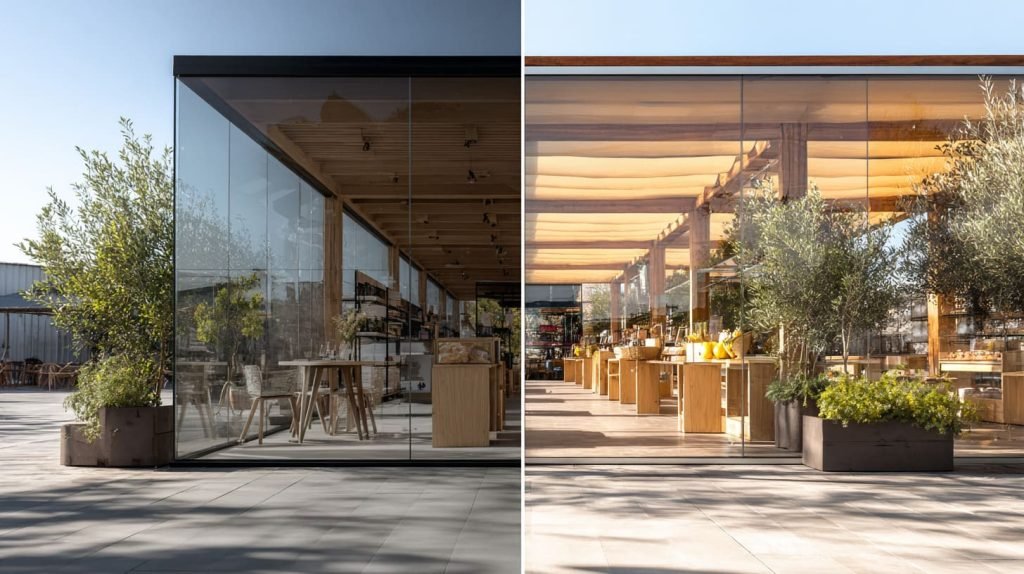
Sunlight is not only light.
It is heat too.
That sounds obvious, but it is often forgotten during material selection. A clear sample in an office does not show what happens on a hot wall in July.
For outdoor acrylic, I pay close attention to panel size, color, and fixing method, because heat movement can quietly turn a nice drawing into a cracked part.
| Heat issue | What may happen |
|---|---|
| Thermal expansion | Panel pushes against screws or frame |
| Softening | Large panels may warp |
| Faster aging | UV damage may speed up |
| Heat buildup | Items behind acrylic may suffer |
| Color absorption | Dark acrylic may become hotter |
| Seal pressure | Gaskets and joints may shift |
Large panels need more care
A small acrylic label may handle outdoor heat well.
A large acrylic sheet is different.
Large panels move more because there is more material to expand. If the design fixes the panel too tightly, heat stress can create cracks or warping.
For large outdoor acrylic panels, I often check:
- Thickness
- Support distance
- Expansion gap
- Fixing method
- Wind pressure
- Color
- Installation direction
A panel does not need to fail dramatically. A small wave or bend may already make it look cheap.
Closed acrylic boxes can trap heat
A clear acrylic enclosure or display case can trap heat inside.
This can hurt:
- Electronics
- Battery packs
- Labels
- Glue
- Rubber feet
- Printed graphics
- Products on display
For electronic enclosure projects, heat is one of the first things I ask about. If a PCB or power module sits inside, the material choice is only one part of the answer. Venting, aluminum heat paths, spacing, and internal layout may matter more.
Acrylic can be useful. But it should not be asked to solve every heat problem alone.
Is Acrylic Better Than Glass for Outdoor Displays?
Acrylic and glass both work outdoors, but they solve different problems.
Acrylic is often better than glass for outdoor displays when light weight, impact resistance, easy fabrication, and safer shipping matter. Glass is better when scratch resistance, high heat resistance, and long-term surface hardness are more important.
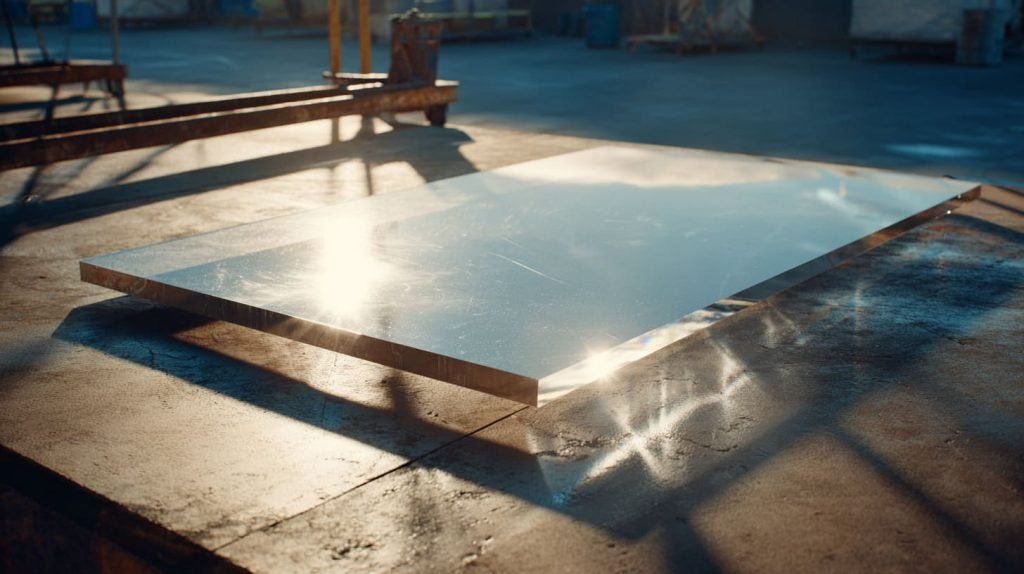
I do not like simple “acrylic is better” or “glass is better” answers.
That kind of answer sounds clean, but real projects are not clean.
A retail display, outdoor sign, museum cover, machine window, and picture frame cover do not ask for the same material.
My decision usually starts with the failure I most want to avoid: broken glass during shipping, scratched acrylic during cleaning, yellowing under sun, or too much weight during installation.
Acrylic vs glass for outdoor displays
| Factor | Acrylic | Glass |
|---|---|---|
| Weight | Lighter | Heavier |
| Impact resistance | Better | Lower unless tempered |
| Scratch resistance | Lower | Higher |
| Yellowing risk | Possible but often low with good grade | No plastic yellowing |
| Fabrication | Easy to cut and shape | Harder and more costly |
| Shipping safety | Safer | Higher breakage risk |
| Clarity | Excellent | Excellent |
| Cost | Depends on thickness and grade | Depends on type and processing |
When acrylic feels better
Acrylic is often better when:
- The display must be lightweight.
- Shipping breakage is a concern.
- The shape needs custom cutting.
- The product needs holes, bending, or bonding.
- The display is used in retail or events.
- Safety is more important than scratch resistance.
For B2B custom displays, shipping is a real cost. A beautiful glass display means nothing if the carton arrives with broken corners.
When glass feels better
Glass may be better when:
- Scratch resistance is critical.
- The surface will be cleaned often.
- High heat exposure is expected.
- The panel is flat and simple.
- Long-term hardness matters.
- Weight is not a problem.
Glass has its own dignity. It stays hard and clear. But it is heavier and easier to break during transport.
So the better material depends on the project risk.
Not the material name.
Does Acrylic Withstand Long-Term Outdoor Weather Exposure?
Acrylic can handle outdoor weather well when the grade and design match the environment.
Acrylic can withstand long-term outdoor weather exposure better than many plastics, especially when UV-resistant cast acrylic is used. But long-term success also depends on sunlight intensity, heat, installation stress, cleaning method, thickness, and maintenance.
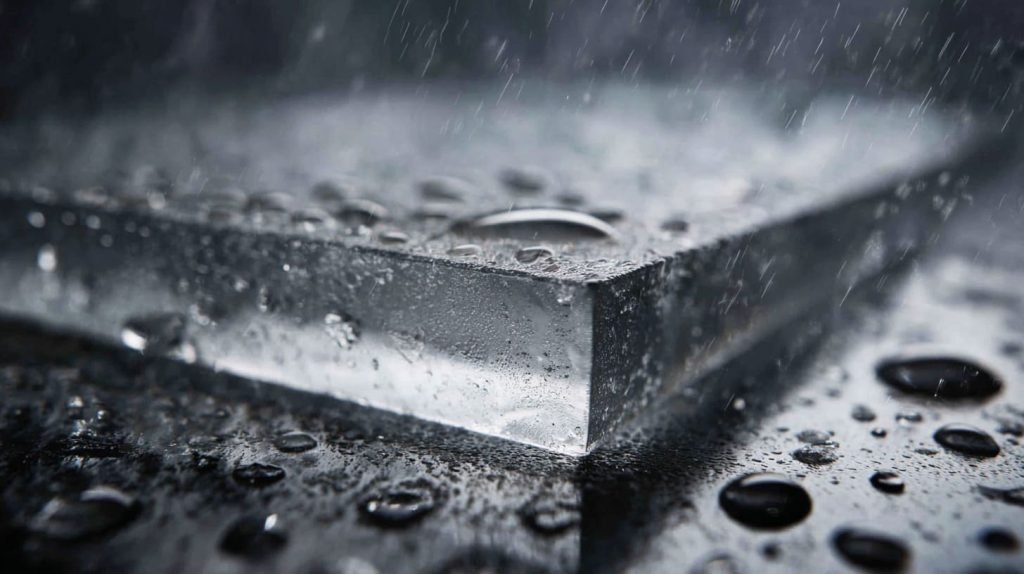
Acrylic is not a fragile material.
Good acrylic can serve outdoors for a long time. That is why people use it for signs, windows, covers, light boxes, display panels, and protective parts.
But I still do not treat outdoor acrylic as “set it and forget it.”
The question I ask myself is not only “Can acrylic survive?” but “Can it still look acceptable for this customer’s use after weather has done its work?”
Long-term outdoor factors
| Factor | Why it matters |
|---|---|
| UV intensity | Strong sun speeds aging |
| Temperature change | Causes expansion and contraction |
| Rain and humidity | Affects edges, joints, and dirt buildup |
| Pollution | Can stain or dull the surface |
| Wind | Adds vibration and stress |
| Cleaning method | Can protect or scratch the surface |
| Material grade | Decides long-term stability |
| Design stress | Controls cracking risk |
Outdoor acrylic needs a full system
Long-term performance is not only about buying a better sheet.
It needs a full system:
- Right acrylic grade
- Proper thickness
- Smooth edge finishing
- Smart hole design
- Enough expansion gap
- UV protection where needed
- Good packing
- Correct installation
- Gentle cleaning
If one part is wrong, the material may get blamed.
But sometimes the acrylic did not fail alone. The design failed with it.
My honest recommendation
For mild outdoor use, standard good-quality acrylic can work.
For direct sunlight, long-term clear appearance, or brand-facing displays, I prefer UV-resistant cast acrylic.
For impact-heavy outdoor use, I may compare UV-protected polycarbonate.
For high-heat or scratch-heavy use, I may compare glass or metal-framed solutions.
I do not choose acrylic because it is popular. I choose it when its strengths match the real job.
Conclusion
I trust acrylic when the grade, sunlight, heat, and design are checked together. If your outdoor part must stay clear and brand-worthy, choose the material before price chooses the problem for you.