Skip to content
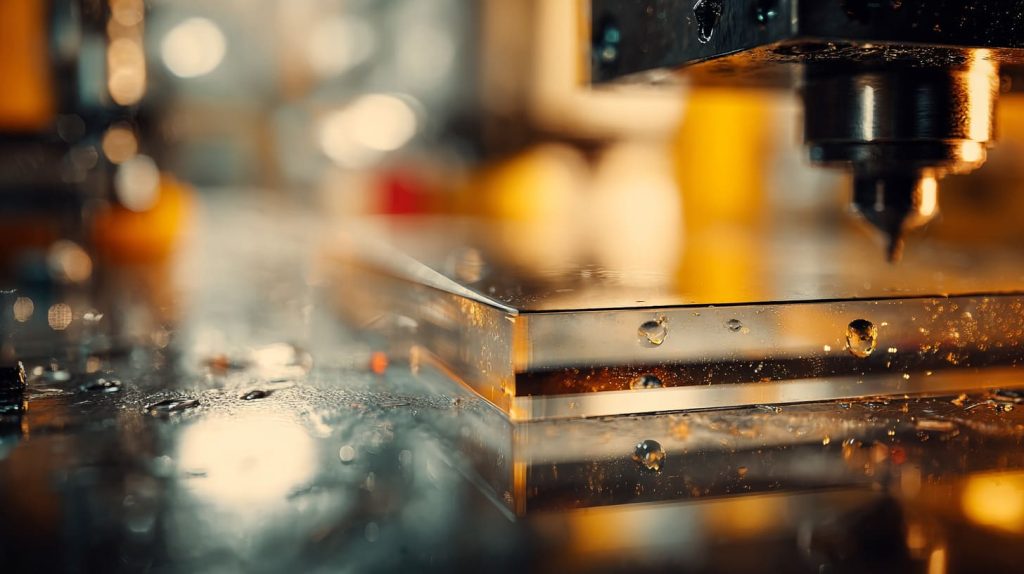
Acrylic edges can fool people.
A sheet can look clean. The laser edge can look glossy. The polished corner can shine like glass. The buyer may pick it up, turn it under the light, and say, “This looks good.”
But acrylic does not always fail on the day we inspect it.
Sometimes it fails later.
A small crack appears beside a bonded corner. A polished edge starts showing tiny white lines. A display stand arrives at the customer’s store, and two weeks later the buyer sends a photo with one painful sentence:
“The edge is cracking. What happened?”
That question is never fun.
I have seen this many times in acrylic custom projects. The strange part is this: the problem often does not start from a visible defect. It starts from stress inside the acrylic edge.
And this is where cast acrylic and extruded acrylic behave very differently.
For simple flat panels, the difference may not look big at first. But when we cut, polish, drill, bend, glue, or ship the product, the material starts telling the truth. Cast acrylic usually stays calmer. Extruded acrylic can become nervous faster, especially around edges.
The small judgment I make before choosing material is simple: if the product has polished edges, thick sections, solvent bonding, or long-term display use, I treat edge stress as a real risk, not a small technical detail.
This article is not only about “which one is better.” That answer is too lazy. The better question is:
Which acrylic gives me a safer edge after real fabrication?
For most demanding custom acrylic products, my answer is cast acrylic. But extruded acrylic still has its place. The key is knowing where the risk hides before the order starts.
Let’s open the edge and look inside.
What Is Cast Acrylic?
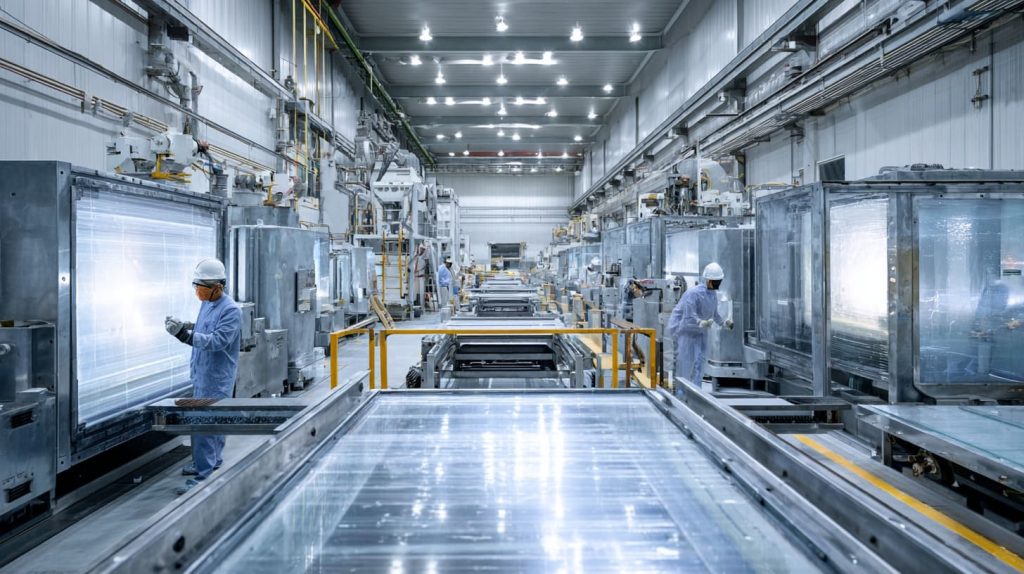
Cast acrylic is the material I usually trust more when a product needs a clean edge, a strong look, and a longer life.
It is made in a slower way. Liquid material is poured between molds, often glass molds, and then cured. This slower process gives the sheet a more stable structure. It is not perfect magic. It is still plastic. But it behaves better when we cut, polish, and machine it.
The way I judge cast acrylic is not only by the sheet surface; I care more about how it behaves after the second and third process, because acrylic problems usually appear after cutting, polishing, or bonding, not while the sheet is still sitting nicely in the warehouse.
How cast acrylic is manufactured
Cast acrylic starts from liquid MMA. The material is poured between two mold surfaces. Then it cures into a solid sheet.
This slower curing process matters.
Why?
Because the acrylic has more time to form in a controlled way. The internal stress is usually lower. The material feels more “relaxed” when we machine it.
Think of it like cooking meat slowly instead of blasting it with high heat. Both methods can create food. But one gives you more control. The other can make the outside look ready while the inside still has problems.
Common characteristics of cast acrylic
Cast acrylic is usually preferred for projects where appearance and processing stability matter.
| Feature | Cast Acrylic Behavior | Why It Matters |
|---|---|---|
| Optical clarity | Very good | Useful for premium displays and transparent parts |
| Chemical resistance | Usually stronger | Better when cleaning agents or adhesives are involved |
| Machining stability | More predictable | Lower risk during CNC cutting and edge polishing |
| Edge polishing | Usually cleaner | Better for luxury display products |
| Internal stress | Usually lower | Less chance of delayed cracking |
I do not say cast acrylic is always easy. Thick cast acrylic can still crack if the worker overheats the edge. A poor flame polish can still damage it. A bad glue joint can still fail.
But cast acrylic gives us a wider safety margin. In real factory work, that margin matters.
Typical applications
Cast acrylic fits well in products where the edge is part of the beauty.
For example:
- Premium retail display stands
- Cosmetic display boxes
- Thick acrylic photo blocks
- Museum display covers
- Luxury product risers
- Clear acrylic furniture parts
- Custom awards and trophies
- Polished acrylic blocks
These products do not hide their edges. They show them proudly.
And when an edge is visible, it becomes a promise. It tells the buyer, “This product is well made.”
That is why I usually prefer cast acrylic for premium custom acrylic products. It gives the product a more stable base before the workers even start cutting.
There is a small trap here, though. Cast acrylic costs more. Buyers sometimes ask, “Can we use extruded acrylic to save money?”
Yes, sometimes.
But before we answer that, we need to look at extruded acrylic honestly.
What Is Extruded Acrylic?
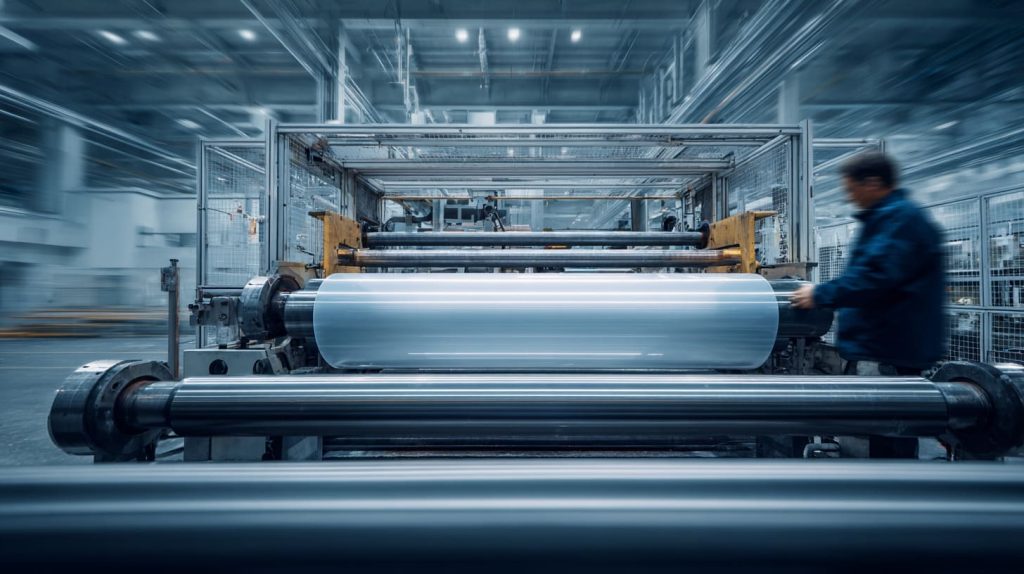
Extruded acrylic is the practical cousin of cast acrylic.
It is cheaper. It is easier to produce in large volume. It often has better thickness consistency. For many simple products, it can work well.
But it is not as calm around edges.
Extruded acrylic is made through a continuous production process. The material is pushed through rollers or dies, cooled, and formed into sheets. This faster process makes it efficient. It also tends to leave more internal stress inside the sheet.
When I look at extruded acrylic for a custom job, I do not reject it immediately; I first ask whether the product edge will be heated, polished, glued, drilled, or forced into a tight structure, because those details decide whether the lower material cost is still a smart saving.
How extruded acrylic is produced
Extruded acrylic is made in a continuous line.
The acrylic material is heated, pushed through a forming system, and cooled into sheet form. This method is fast. It supports stable sheet thickness. It also helps lower cost.
That is why many mass-production acrylic products use extruded acrylic.
It is not a “bad” material. That is too simple.
It is a material with a different personality.
Cast acrylic is more like a patient worker who takes time. Extruded acrylic is more like a fast worker who gets the job done, but may carry tension under pressure.
Common characteristics of extruded acrylic
| Feature | Extruded Acrylic Behavior | Practical Meaning |
|---|---|---|
| Cost | Lower | Good for budget-sensitive projects |
| Thickness control | Often more consistent | Useful for flat sheets and simple panels |
| Heat resistance | Usually lower than cast | More risk during laser cutting or flame polishing |
| Surface hardness | Often softer | More care needed during handling |
| Chemical resistance | Usually weaker than cast | Higher crazing risk with solvent or cleaner exposure |
| Internal stress | Usually higher | Edges may crack more easily after processing |
The main issue is not that extruded acrylic looks poor. It can look very nice at first.
The issue is that it can be less forgiving.
If the cutting speed is wrong, the edge may store heat stress. If the flame polish is too aggressive, the edge may look beautiful today and crack later. If the product is solvent bonded, the chemical can reveal stress that was already hiding inside.
Typical applications
Extruded acrylic can make sense in many cases.
For example:
- Low-cost display panels
- Simple sign boards
- Thin protective covers
- Flat acrylic sheets
- Lightweight retail displays
- Large-volume simple parts
- Temporary promotional displays
For these projects, the buyer may care more about price, speed, and basic appearance than long-term edge performance.
That is fair.
A small flat sign panel does not carry the same risk as a thick polished cosmetic display block. A temporary promotion display does not need to behave like a museum-grade showcase.
The mistake happens when people use extruded acrylic for a product that really needs cast acrylic behavior.
And that brings us to the real troublemaker: edge stress.
What Is Edge Stress in Acrylic?
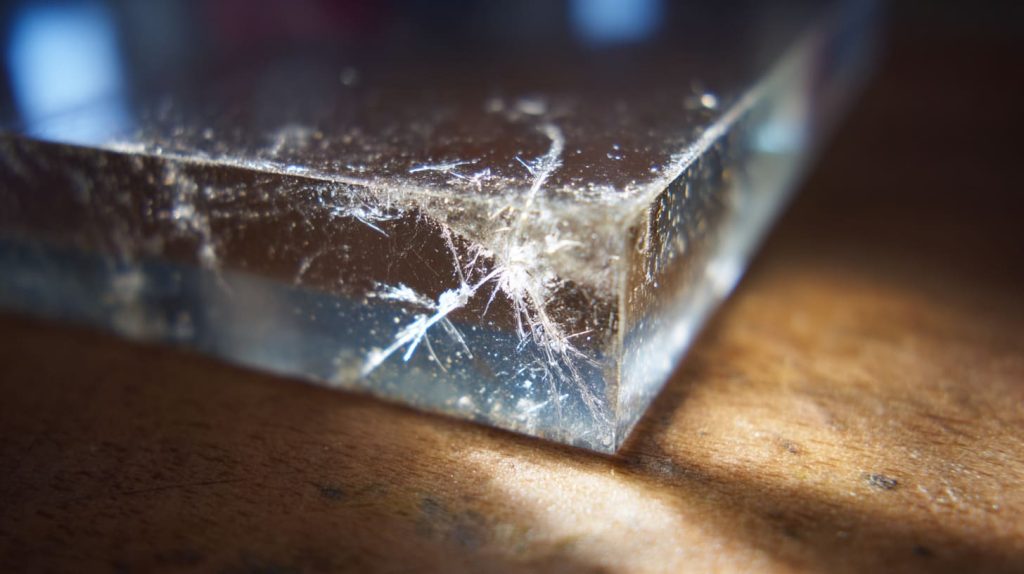
Edge stress is one of those problems that sounds small until it costs real money.
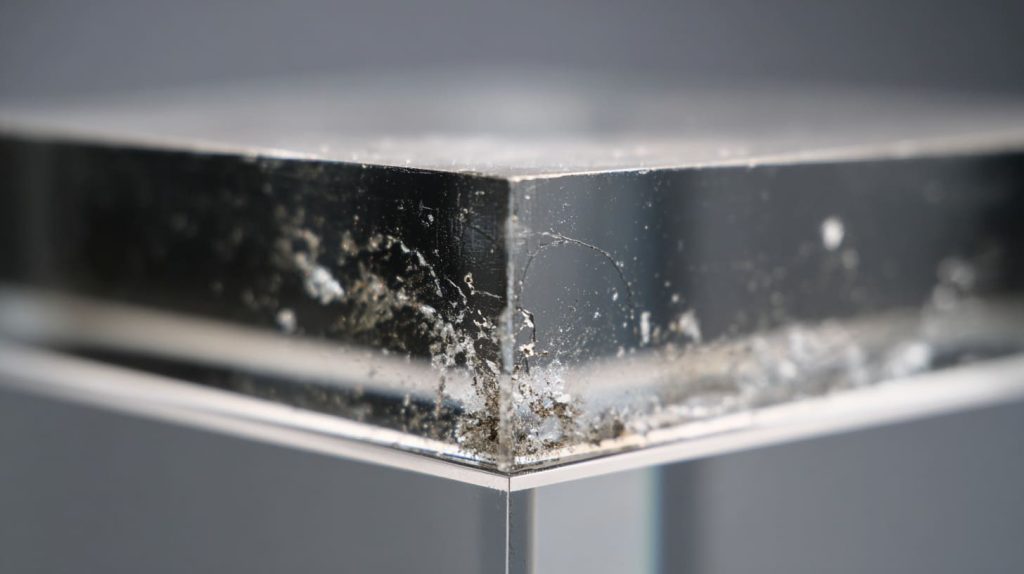
It is not always visible. It does not always appear right away. It can hide inside the edge after cutting, polishing, or bonding. Then, under heat, pressure, chemical exposure, or time, it shows itself as cracks, crazing, or whitening.
This is why acrylic edge quality is not only about how smooth the edge looks.
A glossy edge can still be stressed.
A clear corner can still be weak.
A perfect sample can still fail after shipping.
The detail I watch most carefully is not the shine of the edge; I care whether the process used to create that shine added too much heat or chemical stress, because a beautiful edge that cracks later is not a beautiful edge at all.
How edge stress forms
Edge stress can form during several common fabrication steps.
Laser cutting heat
Laser cutting is clean and efficient. It also brings heat.
The laser melts and vaporizes the acrylic edge. If the heat is too high or the speed is too slow, the edge absorbs stress. This is more dangerous with extruded acrylic.
A laser edge can look polished directly after cutting. Many people like this. But that glossy edge is not always safe.
It can be like a shiny apple with a bruise inside.
CNC machining pressure
CNC cutting creates mechanical force. If the cutter is dull, the feed rate is wrong, or the material is not fixed well, the acrylic edge can carry stress.
Cast acrylic usually handles machining better. Extruded acrylic may melt or gum up more easily if heat builds up.
Flame polishing overheating
Flame polishing is fast. It is also risky.
A good worker can make an acrylic edge shine beautifully. A rushed worker can overheat the edge and create hidden stress.
This is one of the most common places where buyers misunderstand quality. They see a bright edge and feel happy. I look at the edge and ask, “Was it overheated?”
Solvent bonding reactions
Solvent bonding uses chemical action to join acrylic parts. The solvent softens the acrylic surface and helps the parts fuse.
But if the acrylic already has stress, solvent can trigger crazing. Small white cracks may appear near the joint.
Sometimes the crack does not appear during production. It appears later, when the product is packed, shipped, cleaned, or used.
Signs of edge stress
Edge stress can show up in several ways.
| Sign | What It Looks Like | What It May Mean |
|---|---|---|
| Micro cracks | Tiny lines near the edge | Stress from heat, cutting, or bonding |
| Whitening | Cloudy white marks | Overheating or chemical reaction |
| Crazing | Fine spider-web cracks | Internal stress exposed by solvent or cleaner |
| Corner cracks | Cracks from inner corners | Sharp corner stress concentration |
| Delayed cracking | Cracks after days or months | Hidden stress released over time |
The most painful part is delayed cracking.
A factory may pass inspection. The product may look good in photos. The buyer may approve the sample.
Then the crack appears later.
For B2B custom products, that is not just a technical problem. It becomes a trust problem.
Why edge stress becomes a major B2B problem
In B2B acrylic projects, one failure can create many small fires.
The buyer may need to explain the problem to their customer. The supplier may need to remake goods. The shipping schedule may break. The brand may lose face.
Acrylic edge stress can cause:
- Rejected goods
- Customer complaints
- Extra replacement cost
- Delayed product launch
- Bad reviews
- Disputes between buyer and factory
- Loss of trust in material choice
I have learned that a small crack is never small in the buyer’s mind.
To the buyer, it says, “Maybe this supplier did not control the process.”
To the end customer, it says, “Maybe this product is cheap.”
That is why we need to understand why extruded acrylic often carries more edge stress than cast acrylic.
Why Does Extruded Acrylic Usually Have More Edge Stress?
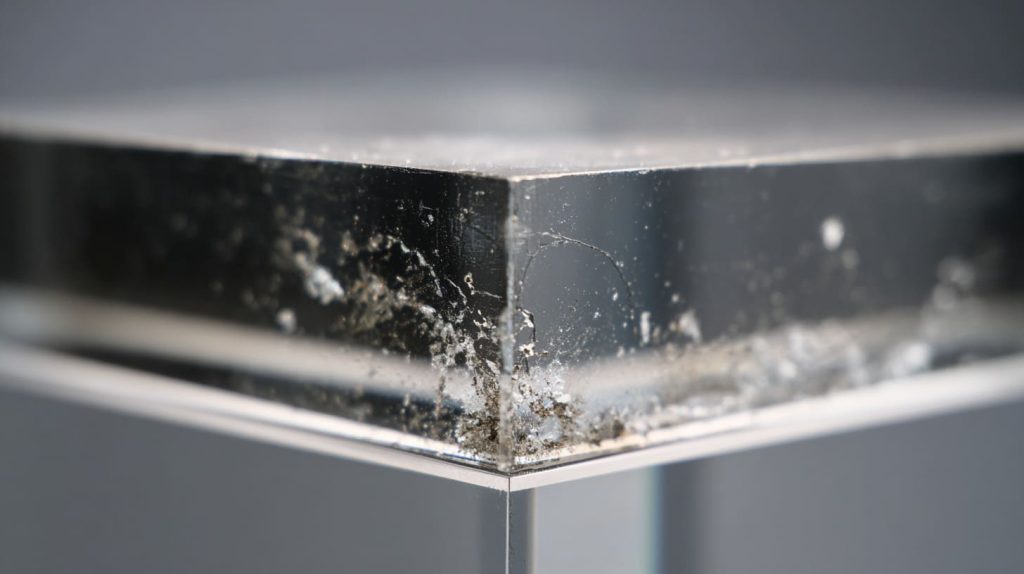
Extruded acrylic usually has more edge stress because of how it is made and how it reacts during processing.
It goes through a faster production process. The material is pushed and cooled in a continuous line. This can leave more internal stress inside the sheet. Then fabrication adds more stress on top.
It is like starting a project with a nervous material, then asking it to stay calm under heat, pressure, flame, and solvent.
This is where things often go wrong: people compare cast and extruded acrylic only by sheet price, but the real cost may appear after cutting, polishing, bonding, packing, and customer use.
Internal stress already exists before fabrication
Extruded acrylic can have built-in stress before the factory starts any custom work.
This stress comes from the extrusion process. The material is heated, pushed, shaped, and cooled. That process can align the material structure in a way that creates tension.
The sheet may still look clear and flat. But the hidden stress is there.
When we cut the sheet, the stress may move toward the edge. When we polish the edge, heat may make it worse. When we glue the part, solvent may expose it.
Molecular alignment issues
I do not want to make this sound like a chemistry class.
So let’s say it simply.
In extruded acrylic, the material structure can be more “stretched” in one direction because of the production process. This can make the sheet less stable when we disturb it.
And fabrication is a disturbance.
Cutting is a disturbance.
Polishing is a disturbance.
Gluing is a disturbance.
Even shipping vibration can become a disturbance if the part is already stressed.
Extruded acrylic reacts more aggressively to heat
Heat is one of the biggest triggers.
Extruded acrylic usually has a lower heat tolerance than cast acrylic. So when we laser cut or flame polish it, the edge can become stressed more easily.
| Process | Extruded Acrylic Risk | Why It Happens |
|---|---|---|
| Laser cutting | Higher edge stress | Heat builds up fast |
| Flame polishing | Higher crazing risk | Surface overheats quickly |
| Drilling | More chance of cracks | Heat and pressure combine |
| Solvent bonding | More whitening or crazing | Chemical exposes hidden stress |
A buyer may say, “But the laser edge looks smooth.”
Yes. It may look smooth.
But smooth is not the same as stable.
Flame polishing can trigger crazing faster
Flame polishing is tempting because it gives fast shine.
But extruded acrylic can react badly if the flame is too hot or the worker moves too slowly.
The edge may become glossy. Then after bonding or cleaning, fine cracks appear.
I have seen products where the edge looked better on day one but performed worse after two weeks. That is the kind of problem that makes everyone tired.
Acrylic does not care about our inspection photos. It cares about stress.
Solvent bonding risks are higher
Solvent bonding is another danger zone.
When solvent touches stressed acrylic, it can create crazing. This is especially common near corners, bonded seams, and polished edges.
A simple bonded box can become risky if all these factors combine:
- Extruded acrylic sheet
- Laser-cut edge
- Flame-polished surface
- Solvent bonding
- Sharp inner corner
- Tight packaging pressure
One factor alone may be okay.
Six factors together? Now the edge is asking for trouble.
This is why I usually slow down before approving extruded acrylic for bonded display boxes. The material may save money at the start, but the joint can become the place where the truth comes out.
Why Is Cast Acrylic More Stable Around Edges?

Cast acrylic is usually more stable around edges because it starts with lower internal stress and handles processing better.
It does not mean cast acrylic cannot fail. It can. Bad processing can ruin any material. But cast acrylic gives us a better chance to create a clean, strong, long-lasting edge.
The real value of cast acrylic is not just clarity. It is forgiveness.
It forgives cutting better.
It forgives polishing better.
It forgives bonding better.
Not always. But often enough that I take it seriously.
Before I approve cast acrylic for a premium project, I still check the full process route, because even good material can fail if a factory treats edge polishing like a cosmetic shortcut instead of a stress-control step.
Better molecular stability
Cast acrylic usually has less built-in stress because of its slower production process.
This gives the material more stable behavior during cutting and machining. When the CNC tool passes through the sheet, the edge is less likely to react badly. When we polish the edge, the material is less likely to craze.
This is why many thick acrylic products use cast acrylic.
The edge needs to stay clear after heavy processing.
More predictable machining behavior
Predictability is not exciting. But in manufacturing, predictability is gold.
A predictable material helps the factory control:
- Cutting speed
- Tool path
- Edge finish
- Polishing method
- Bonding quality
- Final inspection
For a custom project, this matters a lot.
A buyer may request a special shape. The designer may add curves, slots, steps, holes, and polished edges. The more processing steps we add, the more we need a stable material.
Cast acrylic usually gives us that stability.
Better performance during polishing
Polishing is where cast acrylic often shows its value.
A properly polished cast acrylic edge can look deep, clean, and glass-like. It can also stay stable if the process is controlled.
There are several polishing options:
| Polishing Method | Result | Risk Level | Best Use |
|---|---|---|---|
| Flame polishing | Fast glossy edge | Medium to high if overheated | Simple edges, skilled workers |
| Diamond polishing | Clean professional edge | Lower | Premium displays and thick parts |
| Manual sanding + buffing | Flexible but slower | Depends on worker skill | Small batches and complex shapes |
| CNC fine finishing | Controlled edge | Lower when done well | Precision custom parts |
For premium acrylic products, I often prefer diamond polishing or controlled mechanical polishing over aggressive flame polishing. It may cost more, but it gives a safer edge.
Stronger chemical resistance
Cast acrylic also tends to handle chemicals better than extruded acrylic.
This matters in real use.
Retail displays are cleaned. Cosmetic displays may contact alcohol-based cleaners. Acrylic boxes may be glued. Display fixtures may sit in stores under light and temperature changes.
If the acrylic edge already has stress, chemicals can make it worse.
Cast acrylic is not immune. But it usually gives more resistance.
Reduced crazing risk in retail environments
Retail environments are not gentle.
People touch displays. Staff clean them quickly. Products are moved, packed, unpacked, and wiped again. A tiny stress problem can grow faster in this kind of setting.
That is why cast acrylic is often safer for:
- Cosmetic displays
- Jewelry displays
- Premium brand fixtures
- Thick clear blocks
- Acrylic boxes with bonded corners
- Long-term retail installations
If the product must look clean for months or years, cast acrylic is usually the calmer choice.
But there is another detail that changes everything: thickness.
Does Thickness Change the Edge Stress Problem?
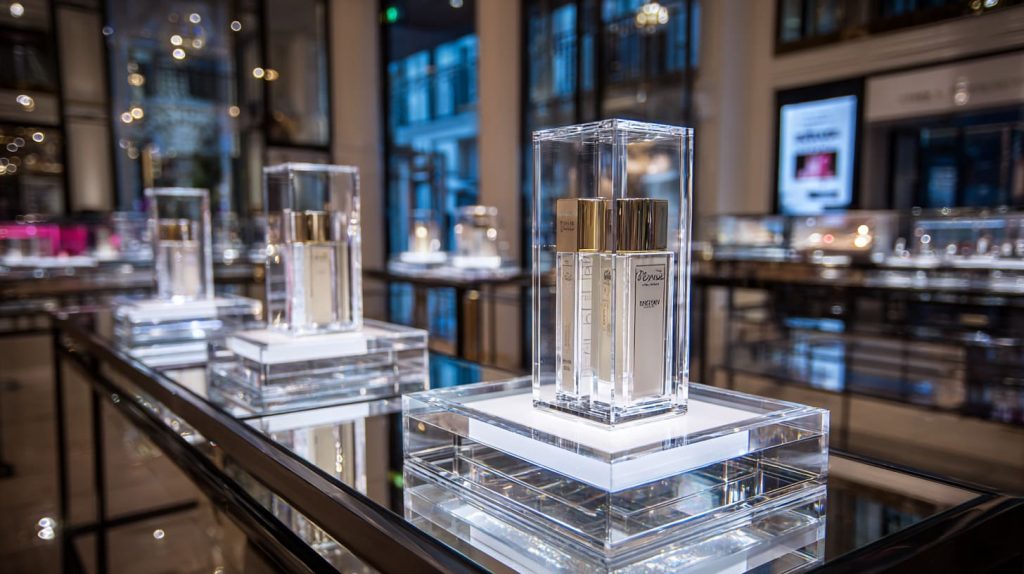
Yes, thickness changes the edge stress problem a lot.
Thin acrylic and thick acrylic do not behave the same way. A 2 mm sheet and a 20 mm block may both be acrylic, but they live in different worlds.
Thin sheets cool faster. They need less heavy machining. They may not hold as much heat during processing. Thick acrylic stores heat more easily. It also puts more visual pressure on the edge because people can see deeper into the material.
The mistake I try to avoid is using one material rule for every thickness, because a material that works fine for a thin sign panel may become risky when the same buyer asks for a thick polished display block.
Thin acrylic sheets behave differently
Extruded acrylic can work well for thin, simple products.
For example:
- Thin flat sign panels
- Simple protective covers
- Lightweight display fronts
- Low-cost retail dividers
- Short-term promotional panels
If the product does not need heavy polishing, solvent bonding, or thick clear edges, extruded acrylic may be acceptable.
This is especially true when price matters and the product life is short.
But I still check the edge process.
Thin does not mean no risk. Laser cutting, sharp corners, and cleaning chemicals can still create problems.
Thick acrylic amplifies stress issues
Thick acrylic is less forgiving.
When we cut thick acrylic, the edge holds more heat. When we polish thick acrylic, the worker needs more time. When we bond thick acrylic, the joint carries more stress. When we ship thick acrylic, the weight adds pressure.
This is why thick acrylic often reveals material quality faster.
| Thickness Situation | Main Risk | Safer Choice |
|---|---|---|
| 1–3 mm simple flat panels | Low to medium stress | Extruded may be acceptable |
| 4–8 mm display parts | Moderate stress | Cast is safer if edges are polished |
| 10–20 mm clear blocks | High stress | Cast is strongly preferred |
| 20 mm+ luxury structures | Very high stress | Cast plus careful processing |
| Thick bonded boxes | High edge and joint stress | Cast plus stress control |
A thick extruded acrylic edge may look fine after cutting. But after flame polishing or bonding, the risk increases.
Heat accumulation becomes more dangerous
Heat has nowhere to disappear quickly in thick material.
During laser cutting or polishing, thick acrylic can trap heat near the edge. This can create stress zones. These zones may not be visible at first.
Then the product is cleaned or bonded.
Crack.
That one small sound is expensive.
Judgment from fabrication experience
For thick luxury displays, I almost always favor cast acrylic.
Not because I enjoy raising material cost. Nobody enjoys that conversation. I favor it because the risk is easier to control.
A thick acrylic product is usually not bought only for function. It is bought for presence. It sits under lights. It supports a product. It reflects the brand.
If the edge cracks, the whole product feels cheap.
So yes, thickness changes the decision. The thicker the acrylic, the more I care about cast material and controlled edge finishing.
And once thickness enters the picture, the next question becomes even more important: which process creates the most stress?
Which Manufacturing Processes Create the Most Edge Stress?
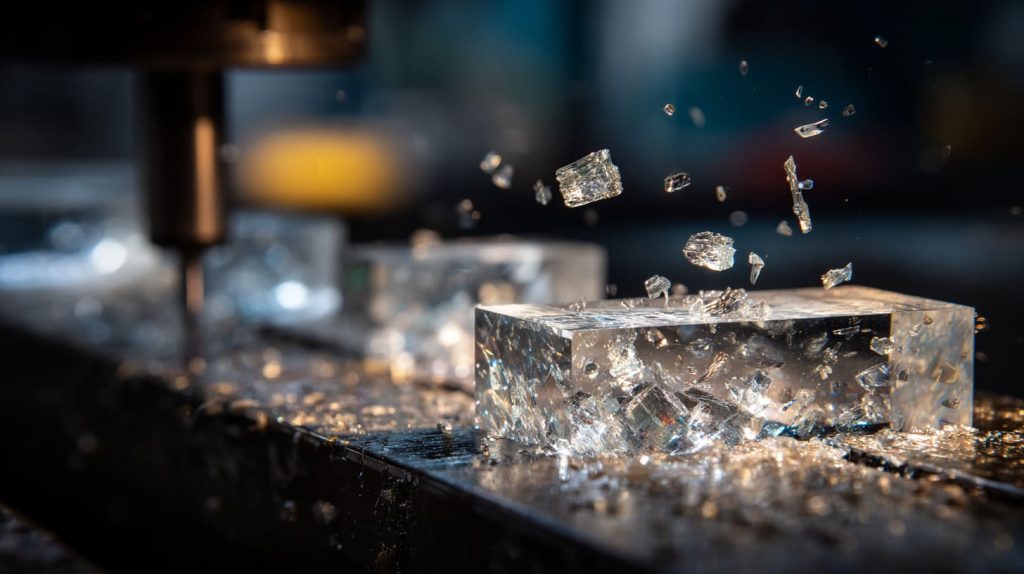
Some acrylic processes are gentle. Some are not.
The edge stress problem is not only about material. It is also about what we do to the material.
A good cast acrylic sheet can be damaged by bad processing. A simple extruded acrylic part can survive if the process is mild and well controlled.
So I never judge the material alone. I judge the full route from sheet to finished product.
My first concern is the most aggressive process in the production chain, because the weakest edge is usually created by the harshest step, not by the prettiest step.
Laser cutting
Laser cutting is fast and accurate. It is widely used in acrylic fabrication.
It also creates a heat-affected zone.
This heat-affected zone is the area near the cut edge that has been changed by heat. The edge may look smooth, but it can hold stress.
Cast vs extruded during laser cutting
| Material | Laser Cutting Behavior | Edge Stress Risk |
|---|---|---|
| Cast acrylic | Usually cuts cleaner with better stability | Lower |
| Extruded acrylic | Can melt more easily and carry more stress | Higher |
| Thick cast acrylic | Needs careful speed and power | Medium |
| Thick extruded acrylic | Risky for polished or bonded edges | High |
Laser cutting is not bad. It is useful. But it should be controlled.
The wrong laser settings can turn a good sheet into a risky part.
Important details include:
- Laser power
- Cutting speed
- Air assist
- Sheet thickness
- Part design
- Corner radius
- Cooling time
- Later polishing method
Sharp inner corners are especially dangerous. They concentrate stress. A small radius can help reduce cracking risk.
Flame polishing
Flame polishing is probably the most misunderstood edge process.
People love it because it is fast and gives a clear edge. But it can also create stress if the flame is too hot or too slow.
A flame-polished edge can look like glass. That is the charm.
But the charm can lie.
Why flame polishing creates risk
- It heats only the surface quickly
- It can overheat thin edge zones
- It may seal stress into the edge
- It can trigger crazing later
- It depends heavily on worker skill
For cast acrylic, flame polishing can work if done carefully.
For extruded acrylic, I am more cautious. The risk is higher, especially when the product will be solvent bonded later.
Diamond polishing and CNC finishing
Diamond polishing is often safer for premium acrylic edges.
It uses a cutting tool to create a smooth, clear edge. It does not rely on direct flame heat. The result can be very clean and more stable.
CNC finishing can also help when the tool, speed, and cooling are controlled.
| Edge Finish Method | Appearance | Stress Risk | Cost | Best Fit |
|---|---|---|---|---|
| Flame polishing | Bright and glossy | Higher | Lower | Simple parts, lower budget |
| Diamond polishing | Clear and refined | Lower | Higher | Premium displays |
| Sanding + buffing | Good if done well | Medium | Medium | Custom shapes |
| CNC finishing | Accurate and controlled | Low to medium | Medium to high | Precision parts |
For luxury acrylic products, I often prefer paying more for a safer edge. The customer may not know the polishing method, but they will notice if the edge cracks.
Solvent bonding
Solvent bonding can create beautiful joints. It can also expose stress fast.
When solvent touches stressed acrylic, crazing can appear. This happens more often near polished edges and corners.
Acrylic bonding is not only about applying glue. It is about:
- Surface preparation
- Material type
- Edge stress level
- Joint design
- Solvent amount
- Drying time
- Fixture pressure
- Worker skill
If a worker uses too much solvent, the joint may look wet and clear at first. Later, white lines may appear. If the part is extruded acrylic, the risk becomes higher.
Why cracks often appear weeks later
Delayed cracks are common because stress needs a trigger.
The trigger may be:
- Cleaning liquid
- Packaging pressure
- Temperature change
- Shipping vibration
- Product load
- Solvent drying shrinkage
- UV exposure
- Humidity change
This is why I do not like judging acrylic only by first-day appearance.
Acrylic is like a quiet employee. It may not complain during the meeting. It complains later when the pressure builds.
That is why process control matters as much as material choice.
How Can Factories Reduce Edge Stress?
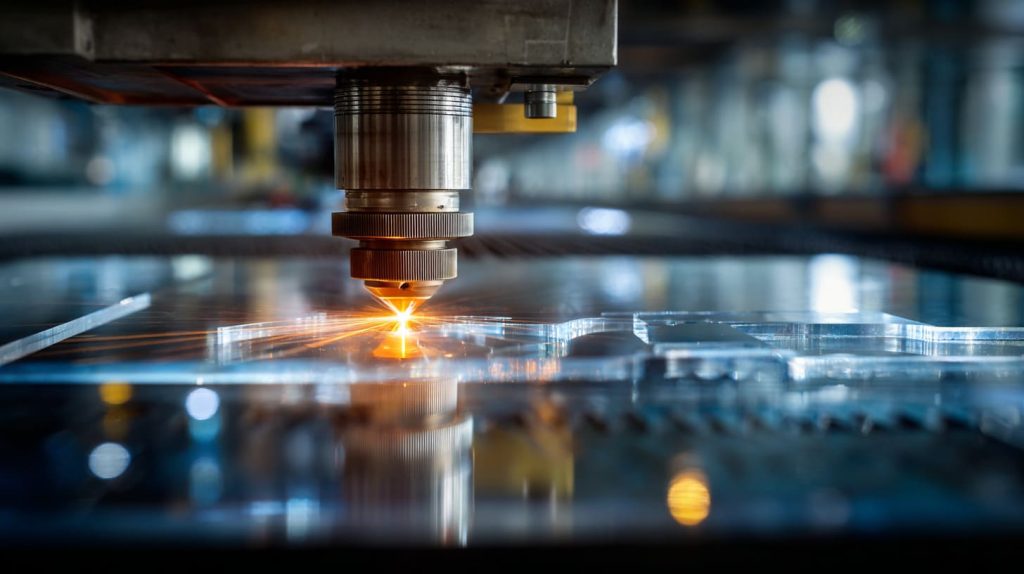
Factories can reduce edge stress, but they need to treat it as a process problem, not a complaint afterthought.
The best time to reduce edge stress is before production starts. The second-best time is during cutting and finishing. The worst time is after the product has already cracked.
Once acrylic cracks, the repair options are ugly. We can polish, remake, or replace. But we cannot truly erase lost trust.
I usually spend more time checking the process plan than arguing about the cheapest sheet, because stress control is cheaper before production and very expensive after goods are packed.
Annealing after fabrication
Annealing means controlled heating and cooling.
It helps reduce internal stress in acrylic parts. The idea is simple: warm the material in a controlled way, hold it, then cool it slowly.
This can help after machining, laser cutting, or bonding preparation.
But annealing is not a magic eraser.
If the edge is badly burned, annealing will not make it perfect. If the design has sharp stress points, annealing cannot fix all design risks. If the wrong material is chosen, annealing may only reduce part of the problem.
Still, for high-risk projects, annealing is worth considering.
When annealing makes sense
| Project Type | Annealing Need |
|---|---|
| Thick acrylic blocks | High |
| Solvent-bonded boxes | Medium to high |
| Precision machined parts | Medium |
| Premium polished displays | Medium |
| Simple thin flat panels | Low |
Using proper cutting parameters
Cutting settings matter.
Acrylic is sensitive to heat and pressure. If the process is rushed, stress builds up.
For laser cutting, the factory should control:
- Power
- Speed
- Airflow
- Focus
- Cutting path
- Cooling time
- Sheet protection film condition
For CNC machining, the factory should control:
- Tool sharpness
- Feed rate
- Spindle speed
- Clamping pressure
- Chip removal
- Cooling method
A dull tool is like a bad knife in the kitchen. It does not cut cleanly. It pushes, burns, and damages the material.
Choosing the correct polishing method
Not every edge needs the same finish.
Some buyers ask for “clear polished edges” without knowing how the edge will be polished. This is where problems start.
A better request would be:
- What material will be used?
- What thickness is the acrylic?
- Will the edge be flame polished or diamond polished?
- Will the edge be bonded later?
- Will the product be cleaned with alcohol?
- Will the product ship assembled?
These questions sound small, but they save headaches.
Simple edge finishing guide
| Product Requirement | Suggested Edge Method |
|---|---|
| Low-cost simple display | Laser cut or light flame polish |
| Premium retail fixture | Diamond polish or controlled buffing |
| Thick clear block | CNC + diamond polish |
| Solvent-bonded box | Avoid overheated flame-polished bonding edges |
| High-clarity luxury display | Cast acrylic + mechanical polishing |
Material selection at the beginning
Material choice is the first stress-control decision.
If a buyer chooses extruded acrylic for a thick bonded product, the factory already starts from a risky position. Later process control can help, but the safety margin is smaller.
If the buyer chooses cast acrylic, the project starts with better stability.
That does not mean every product needs cast acrylic. It means the material must match the product risk.
Basic decision table
| Product Situation | Material Choice I Prefer |
|---|---|
| Thin simple panel, low budget | Extruded may work |
| Polished thick edge | Cast acrylic |
| Solvent-bonded display box | Cast acrylic |
| Premium cosmetic display | Cast acrylic |
| Temporary retail promotion | Extruded may work |
| Long-term store fixture | Cast acrylic |
| Heavy CNC machining | Cast acrylic |
The smarter factory does not only ask, “What price do you want?”
It asks, “What will this product experience after it leaves the factory?”
That question changes everything.
Now, with all this said, we should not turn extruded acrylic into the villain of the story. It is not always a bad choice.
Is Extruded Acrylic Always a Bad Choice?
No, extruded acrylic is not always a bad choice.
It becomes a bad choice when people use it in the wrong product and expect cast acrylic performance.
That is the real issue.
Extruded acrylic can be useful. It can save cost. It can support large-volume orders. It can be a practical option for simple parts. The problem starts when a buyer wants low cost, polished edges, solvent bonding, thick clear structure, long service life, and zero cracking risk at the same time.
That is asking too much from the material.
The way I see it, extruded acrylic is acceptable when the project risk is low, but it becomes dangerous when the buyer saves a little on material while adding many stress-heavy processes later.
Situations where extruded acrylic makes sense
Extruded acrylic can make sense for:
- Budget-sensitive projects
- Simple flat panels
- Temporary display parts
- Thin sign covers
- Basic protective sheets
- Large-volume simple items
- Projects without heavy polishing
- Products without solvent-bonded corners
For these jobs, the cost saving may be real.
If the product is simple and the buyer understands the limits, extruded acrylic can be a practical choice.
Budget-sensitive projects
Some buyers do not need a premium edge. They need a functional acrylic part at a competitive price.
That is okay.
For example, a short-term promotional display may only need to last through one season. A simple sign cover may not face much stress. A flat divider panel may not need a polished edge.
Using cast acrylic for everything can also be wasteful.
A smart material choice is not always the most expensive choice. It is the choice that matches the job.
Disposable retail displays
Some retail displays are made for short campaigns.
Maybe the brand runs a two-month promotion. Maybe the display will be replaced after the holiday season. Maybe the product sits in a low-touch area.
In those cases, extruded acrylic may be enough.
But I still avoid risky combinations.
For example, I would be careful with:
- Thick extruded acrylic
- Flame-polished edges
- Solvent-bonded corners
- Alcohol cleaning
- Tight assembly pressure
- Long-distance shipping in assembled form
One risk may pass. Many risks together may not.
Simple flat panels without heavy fabrication
Extruded acrylic performs best when the design stays simple.
Flat shape. Clean cut. No heavy polishing. No deep machining. No difficult bonding.
The more we ask the material to do, the more we expose its weakness.
This is why I often separate projects into two groups:
| Project Type | Extruded Acrylic Suitability |
|---|---|
| Thin flat panel | Good |
| Simple sign cover | Good |
| Temporary display | Good |
| Thick polished block | Poor |
| Solvent-bonded box | Risky |
| Luxury retail fixture | Usually not ideal |
| CNC-machined precision part | Risky |
When cast acrylic becomes worth the extra cost
Cast acrylic becomes worth it when failure is expensive.
And failure is not only material cost.
Failure includes:
- Replacement cost
- Air freight cost
- Delayed launch
- Brand damage
- Customer complaints
- Lost buyer trust
- Internal company blame
That last one is real. Nobody enjoys sitting in a meeting explaining why the “cheaper” material became more expensive.
Real-world buyer judgment
I have seen buyers save a few dollars per sheet and then lose much more through cracking problems.
This does not mean they made a foolish choice. Many buyers are under pressure. They need to hit target cost. They need to satisfy their boss. They need to keep the project moving.
I understand that.
But acrylic does not care about the spreadsheet.
If the product design is high-risk, the material must match the risk. Otherwise, the cost saving is only a nice story before production.
The better way is to choose material through questions, not guesses.
How Should Designers Choose Between Cast and Extruded Acrylic?
Designers should choose between cast and extruded acrylic by looking at the full product life, not only the sheet price.
Acrylic selection should include fabrication, shipping, cleaning, display environment, product weight, and brand expectation.
A product designer like Jacky may already know this feeling. The drawing looks simple. The sample looks clean. But one small detail in production can change the final result. Acrylic edge stress is exactly that kind of detail.
Before I recommend material, I like to imagine the product after six months of real use, because a material that only survives the sample stage is not really the right material for a serious B2B project.
Questions designers should ask before sourcing
Before choosing cast or extruded acrylic, I would ask these questions.
| Question | Why It Matters |
|---|---|
| Will the edges be polished? | Polishing can add heat stress |
| Will solvent bonding be used? | Solvent can expose hidden stress |
| Is the acrylic thick? | Thick acrylic holds more heat |
| Will the product be cleaned often? | Cleaners can trigger crazing |
| Is it a premium display product? | Edge failure damages brand image |
| Will it ship assembled? | Packaging pressure can add stress |
| Are there sharp inner corners? | Corners concentrate stress |
| Is long-term durability important? | Delayed cracking becomes more costly |
If the answer is “yes” to several of these questions, I usually move toward cast acrylic.
Will edges be polished?
If edges must be polished, I become more careful.
Polishing is not just decoration. It changes the edge condition.
For simple products, flame polishing may work. For premium products, diamond polishing or mechanical polishing may be safer.
If the buyer wants a thick glass-like edge, cast acrylic is usually the better choice.
Will solvent bonding be used?
If the product needs bonding, material choice becomes more important.
Solvent bonding and stressed acrylic do not like each other.
A bonded acrylic box has many risk points:
- Corners
- Joints
- Polished edges
- Glue lines
- Assembly pressure
- Cleaning exposure
For bonded structures, I prefer cast acrylic unless the project is very simple and low-risk.
Is long-term durability important?
Some acrylic products need to last.
They sit in stores. They hold cosmetic bottles. They display jewelry. They support electronics. They may be cleaned every day.
For these products, I care less about saving the last small amount on sheet price. I care more about whether the edge will stay clear.
A long-term display should not be designed like a disposable sign.
Comparing the two materials for edge performance
Here is the simple comparison I would use when talking with a buyer.
| Factor | Cast Acrylic | Extruded Acrylic |
|---|---|---|
| Internal edge stress | Lower | Higher |
| Laser cutting stability | Better | More sensitive |
| Flame polishing risk | Lower if controlled | Higher |
| Solvent bonding safety | Better | More risky |
| Thick part performance | Better | Not ideal |
| Cost | Higher | Lower |
| Thickness consistency | Good, but may vary more | Often very consistent |
| Premium display use | Strong choice | Limited use |
| Budget flat panel use | Sometimes over-specified | Good choice |
Cast Acrylic
Cast acrylic is my usual choice when the product needs:
- Lower internal stress
- Better edge polishing
- Higher machining reliability
- Better chemical resistance
- Premium appearance
- Long-term stability
I use it when the edge is part of the product value.
Acrylic displays are often judged by their edges. If the edge looks deep, clear, and stable, the whole product feels better.
Extruded Acrylic
Extruded acrylic is my practical choice when the product needs:
- Lower material cost
- Fast production
- Simple shape
- Thin flat panel use
- Large-volume basic display parts
- Consistent thickness
But I avoid pushing extruded acrylic too far.
If the project needs thick polished edges, solvent bonding, and premium long-term appearance, extruded acrylic starts to feel like wearing thin shoes on a rocky road. You may still move forward, but every step carries risk.
A practical selection guide
| Product Requirement | My Material Choice |
|---|---|
| Premium cosmetic display | Cast acrylic |
| Thick clear acrylic block | Cast acrylic |
| Museum-style cover | Cast acrylic |
| Solvent-bonded acrylic box | Cast acrylic |
| Low-cost flat sign panel | Extruded acrylic |
| Temporary retail display | Extruded acrylic may work |
| CNC-machined custom part | Cast acrylic |
| Thin protective cover | Extruded acrylic may work |
| High-end polished edge product | Cast acrylic |
The best choice is not based on material name alone.
It is based on use, process, and risk.
A designer who understands edge stress can prevent problems before they become emails with photos attached. And nobody likes those emails.
Conclusion
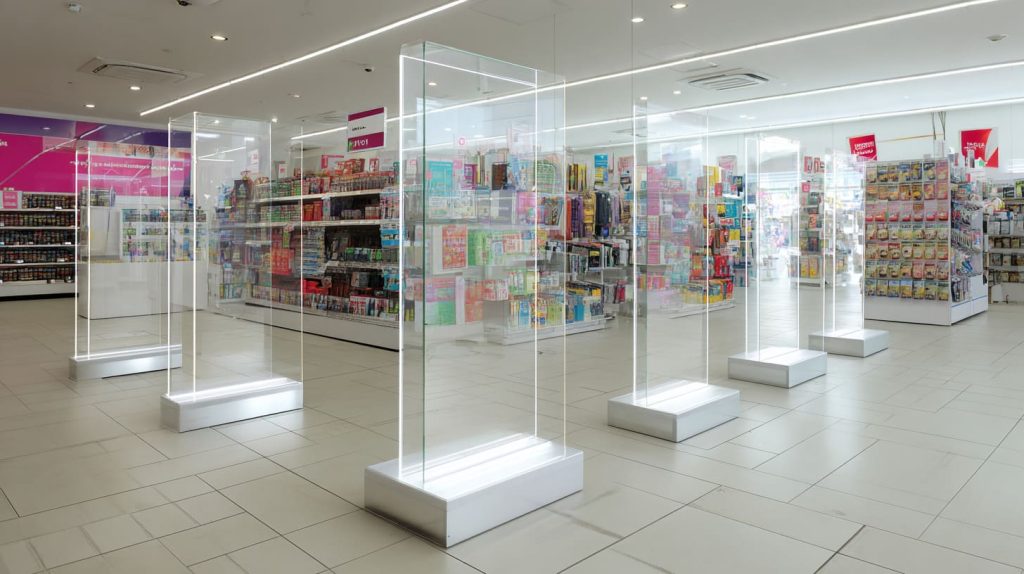
Cast acrylic generally creates less edge stress than extruded acrylic.
That is the main point.
But I do not believe in saying “cast is always good” and “extruded is always bad.” Real manufacturing is not that clean. Real projects have budgets, deadlines, design limits, polishing needs, bonding details, and customers who expect the product to look perfect after shipping.
I prefer cast acrylic for demanding edge work because I have seen what happens when edge stress is ignored. The product may pass the first inspection. The photos may look fine. The buyer may approve the sample. But acrylic has a memory. If the edge was overheated, over-stressed, or exposed to the wrong solvent, the crack may come later.
That is why I usually choose cast acrylic for:
- Premium acrylic displays
- Thick clear blocks
- Polished edges
- Solvent-bonded structures
- Long-term retail fixtures
- Products where edge appearance affects brand image
Extruded acrylic still has a place. I use it carefully for simple, thin, flat, budget-sensitive projects. It can be a good choice when the design does not push the material too hard.
My final judgment is this: I do not choose acrylic only by sheet cost; I choose it by the cost of failure.
A cheaper sheet may save money at the start. But if it cracks after polishing, bonding, shipping, or cleaning, it becomes expensive very quickly.
At Feilong Acrylic, we handle custom acrylic products every day, from display stands and boxes to thick blocks and retail fixtures. If you are designing an acrylic product and you are not sure whether cast or extruded acrylic is safer for your edge design, send us your drawing, thickness, edge finish requirement, and usage environment.
I can help you look at the small details before they become big problems.
Because in acrylic work, the edge is not just the edge.
Very often, the edge is where the whole product tells the truth.