Skip to content
When a customer starts a new acrylic display project, one of the first questions I usually hear is simple: "Which plastic material should we use?"
Many designers compare acrylic, polycarbonate, ABS, and other plastics by looking at basic properties like strength, transparency, or price. This seems reasonable because material selection is often the first step in product development.
But I have found that this approach can create problems later.
A material name alone does not tell the full story. Two products made from the same type of plastic can have very different outdoor performance because the formulation and grade can be completely different.
For example, a standard plastic with proper UV stabilization can sometimes perform better outdoors than a more expensive plastic without UV protection.
When I evaluate acrylic projects, I do not only ask, "What plastic is this?" I also ask, "How will this product live after it leaves the factory?"
A product sitting under sunlight every day has a completely different challenge compared with a product displayed inside a shopping mall.
The real performance comes from three things:
- Material type
- Material formulation
- The environment where the product will be used
This is why UV-stabilized grades often matter more than the plastic type itself.
Why UV Resistance Should Be Considered Before Choosing Plastic Type
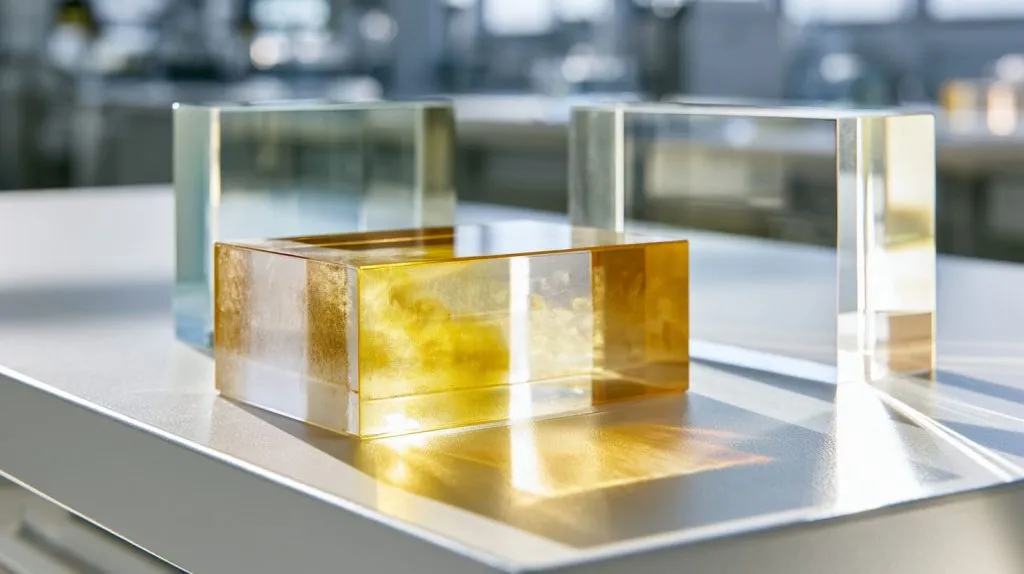
Many people think UV resistance is simply a natural feature of a plastic material. They may think acrylic is good outdoors, polycarbonate is strong, and ABS is cheap.
But sunlight does not care about marketing descriptions. It only reacts with the chemical structure of the material.
A product that looks perfect when it leaves the factory can slowly lose its quality after months or years under UV exposure.
UV Damage Is a Material Problem, Not Just a Plastic Problem
How UV radiation damages plastic materials
Sunlight contains ultraviolet radiation. When UV energy reaches plastic materials, it can slowly break down the polymer structure.
The damage usually does not happen immediately. This is why many problems are discovered too late.
At the beginning, the product may look normal. After long exposure, the material starts showing visible changes.
| Damage Type | What Happens | Customer Impact |
|---|---|---|
| Yellowing | Transparent plastic loses clarity | Product looks old and low quality |
| Loss of transparency | Material becomes cloudy | Display effect becomes worse |
| Surface cracking | Small cracks appear on the surface | Product may fail earlier |
| Brittleness | Material becomes easier to break | Safety and durability problems |
| Color fading | Original color changes | Brand image is affected |
Acrylic display products are especially sensitive because customers often buy them for appearance. A small change in transparency or color can directly affect how people view the product.
Why indoor and outdoor applications require different material decisions
An indoor cosmetic organizer and an outdoor product display may look similar, but their material requirements are completely different.
An indoor product usually faces:
- Controlled temperature
- Limited sunlight
- Shorter UV exposure
An outdoor product usually faces:
- Direct sunlight
- Temperature changes
- Rain and humidity
- Long-term UV exposure
| Application | Recommended Consideration |
|---|---|
| Cosmetic organizer | Standard acrylic may be enough |
| Retail display inside store | Standard or premium acrylic depending on lifespan |
| Window display near sunlight | UV-stabilized acrylic is safer |
| Outdoor signage | UV-stabilized grade is strongly recommended |
What I usually check first is not the material price. I check where the product will spend most of its life because a cheap material choice can become an expensive replacement problem later.
What Does UV-Stabilized Plastic Actually Mean?
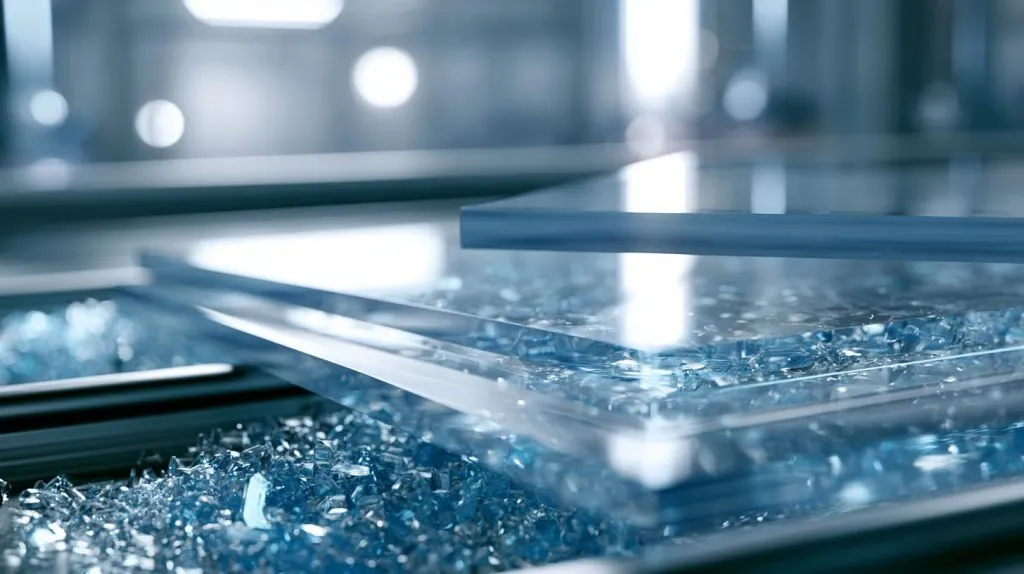
Many buyers hear "UV stabilized" but do not always know what happens inside the material.
It is not simply a surface treatment. It is a protection system added during material production.
UV Stabilizers Work Like Protection Inside the Material
How UV absorbers protect plastics
UV absorbers work by reducing the amount of harmful UV energy that reaches the polymer structure.
They help protect important properties such as:
| Protected Property | Why It Matters |
|---|---|
| Optical clarity | Keeps transparent products looking premium |
| Mechanical strength | Reduces early cracking and weakness |
| Surface appearance | Maintains smooth and clean appearance |
For acrylic displays, transparency is usually the first thing customers notice. A material can still physically exist after years outdoors, but if it becomes yellow or cloudy, it has already failed the purpose of a display product.
How HALS additives improve long-term durability
Another common UV protection method uses HALS (Hindered Amine Light Stabilizers).
HALS works differently from UV absorbers.
Instead of mainly blocking UV energy, HALS helps control chemical reactions caused by UV exposure.
The simple explanation is:
- UV absorbers reduce the damage coming in
- HALS reduces the damage after it starts
Together, they help extend outdoor service life.
Why UV stabilization is not the same as UV coating
This is a common misunderstanding.
Some products use a UV coating on the surface. This can provide protection, but it is different from UV stabilization.
| Method | Protection Location | Limitation |
|---|---|---|
| UV coating | Surface layer | Can wear or scratch over time |
| UV stabilization | Inside material structure | Protection exists throughout the material |
For products with long outdoor exposure, I usually prefer protection that is built into the material instead of relying only on a surface layer.
Why Plastic Type Alone Cannot Predict Outdoor Performance
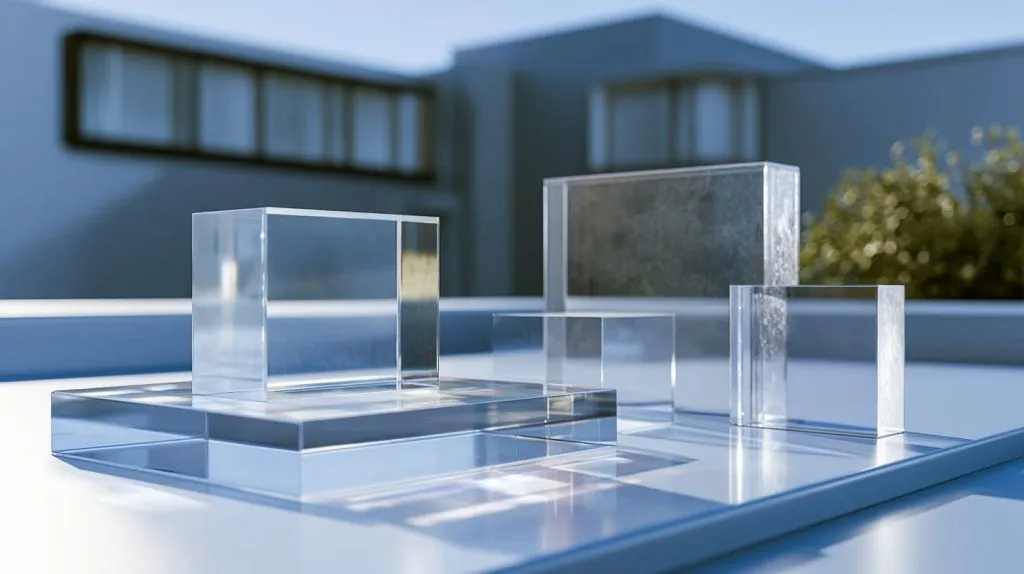
Choosing a plastic type is important, but it is only the first decision.
I have seen customers choose materials based on general reputation:
"Polycarbonate is stronger."
"ABS is cheaper."
"Acrylic is naturally UV resistant."
These statements are not wrong, but they are incomplete.
The final performance depends on the exact grade.
The Same Plastic Can Have Completely Different Lifetimes
Standard acrylic vs UV-stabilized acrylic
Acrylic already has better natural UV resistance compared with many other plastics.
This is one reason acrylic is widely used for:
- Outdoor signs
- Display panels
- Light boxes
- Protective covers
However, standard acrylic and UV-stabilized acrylic are not identical.
| Acrylic Type | Typical Use |
|---|---|
| Standard acrylic | Indoor displays, organizers, decorative products |
| UV-stabilized acrylic | Outdoor displays, long-term sunlight exposure |
UV-stabilized acrylic provides better color stability and longer appearance retention.
Standard polycarbonate vs UV-protected polycarbonate
Polycarbonate is famous for impact resistance.
It is often selected for applications where strength is important.
However, standard polycarbonate can experience:
- Yellowing
- Surface degradation
- Reduced appearance
Outdoor polycarbonate products usually require UV protection.
Standard ABS vs UV-stabilized ABS
ABS is popular because it is affordable and easy to process.
But outdoor sunlight can make standard ABS become brittle.
UV-stabilized ABS improves:
- Weather resistance
- Surface durability
- Long-term reliability
This is why I do not judge materials only by their basic category.
A material choice that works in a factory sample room may not work after three years outside.
Why UV-Stabilized Acrylic Is Often the Better Choice for Display Products
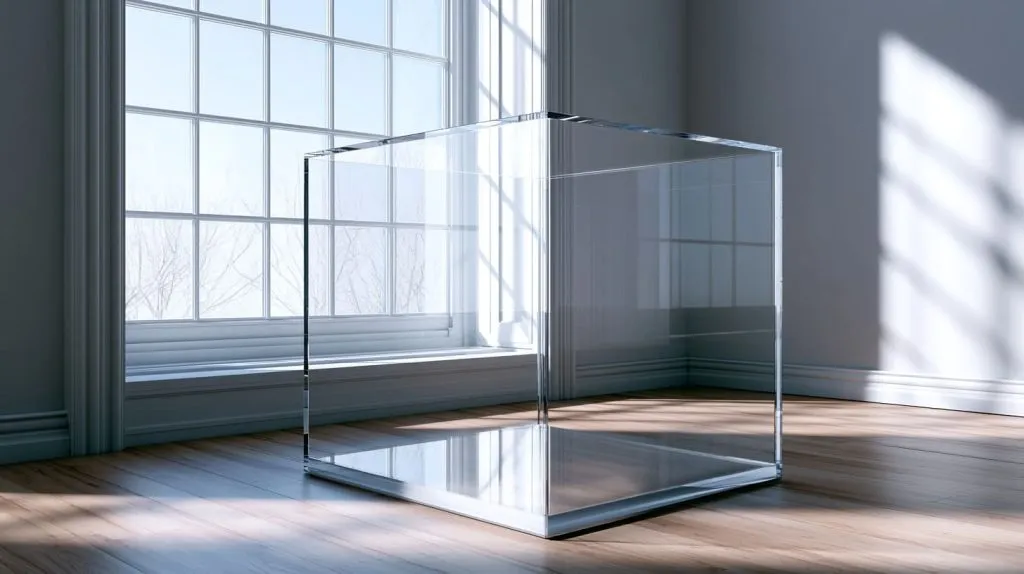
When the main purpose of a product is to display something, appearance becomes part of the product function.
A strong material is not always the best material if it cannot maintain visual quality.
Acrylic Has Natural Advantages for Visual Applications
Superior optical clarity compared with many plastics
Acrylic has several advantages for display products:
- High transparency
- Glass-like appearance
- Excellent light transmission
This makes it suitable for:
- Cosmetic displays
- Retail showcases
- Product stands
- Premium packaging displays
Customers often touch and look closely at these products. Small surface defects can quickly reduce the perceived quality.
Better weather resistance compared with many common plastics
Compared with many common plastics, acrylic naturally performs well outdoors.
It can maintain:
- Transparency
- Surface smoothness
- Appearance quality
However, natural UV resistance does not mean every acrylic product is suitable for every outdoor environment.
Why UV-stabilized acrylic provides better lifecycle value
Some buyers focus only on initial material cost.
I understand this because every project has a budget.
But the cheaper option is not always the lower-cost option.
| Choice | Short-Term Cost | Long-Term Result |
|---|---|---|
| Standard acrylic outdoors | Lower | Higher replacement risk |
| UV-stabilized acrylic outdoors | Higher | Better durability |
The small extra material cost can protect the whole product investment.
The decision is not only about buying plastic. It is about buying years of reliable appearance.
How to Choose Between Standard Grade and UV-Stabilized Grade
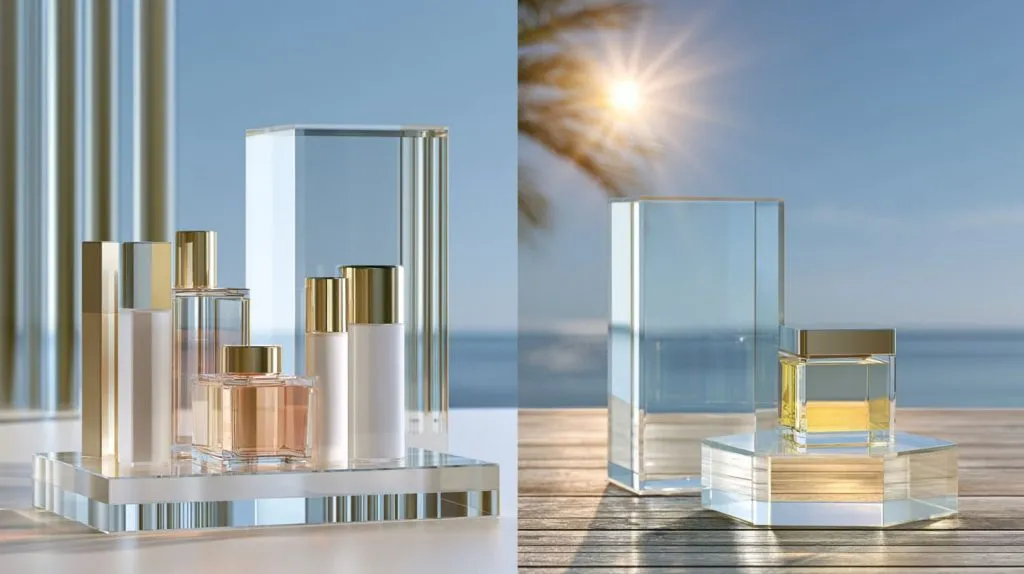
Not every acrylic project needs UV stabilization.
Using premium material everywhere can also increase unnecessary costs.
The correct approach is matching the material with the real application.
Not Every Product Needs UV Protection
Standard acrylic is suitable when
Standard acrylic is often suitable for:
- Indoor retail displays
- Cosmetic organizers
- Office products
- Short-term exhibition displays
These products usually do not face strong UV exposure.
UV-stabilized acrylic is recommended when
UV-stabilized acrylic is better for:
- Outdoor signage
- Window displays with direct sunlight
- Outdoor product showcases
- Long-term decorative installations
| Product Environment | Material Consideration |
|---|---|
| Indoor with artificial lighting | Standard acrylic |
| Indoor near large windows | Consider UV grade |
| Outdoor shaded area | Depends on exposure time |
| Outdoor direct sunlight | UV-stabilized grade |
I do not automatically recommend the most expensive material. I first look at exposure conditions because over-specifying materials can increase cost without adding real value.
What Buyers Should Ask Acrylic Manufacturers Before Ordering
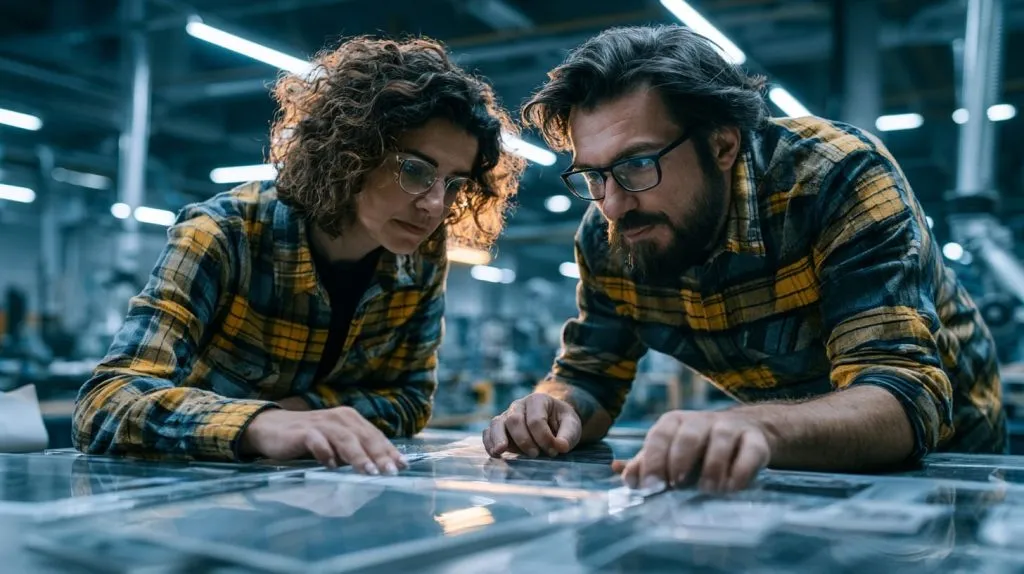
Many purchasing teams ask one simple question:
"What material do you use?"
This is a good starting point, but it is not enough.
A professional supplier should understand more than just the material name.
Do Not Only Ask "What Material Do You Use?"
Ask about the acrylic grade
Important questions include:
- Is it cast acrylic or extruded acrylic?
- Is it standard grade or UV-stabilized grade?
- Does the material include UV protection during production?
These details can affect:
- Appearance
- Processing quality
- Outdoor performance
Ask about expected service environment
A supplier needs to know:
- Indoor or outdoor application?
- Direct sunlight exposure?
- Expected product lifetime?
Without this information, even an experienced manufacturer cannot recommend the best material.
Ask about testing and material certification
For important projects, buyers can ask about:
- Weather resistance information
- Material supplier details
- Quality control process
At Feilong Acrylic, we usually review the product application first because the same acrylic sheet can have completely different recommendations depending on where the final product will be installed.
Common Mistakes When Selecting Acrylic Materials
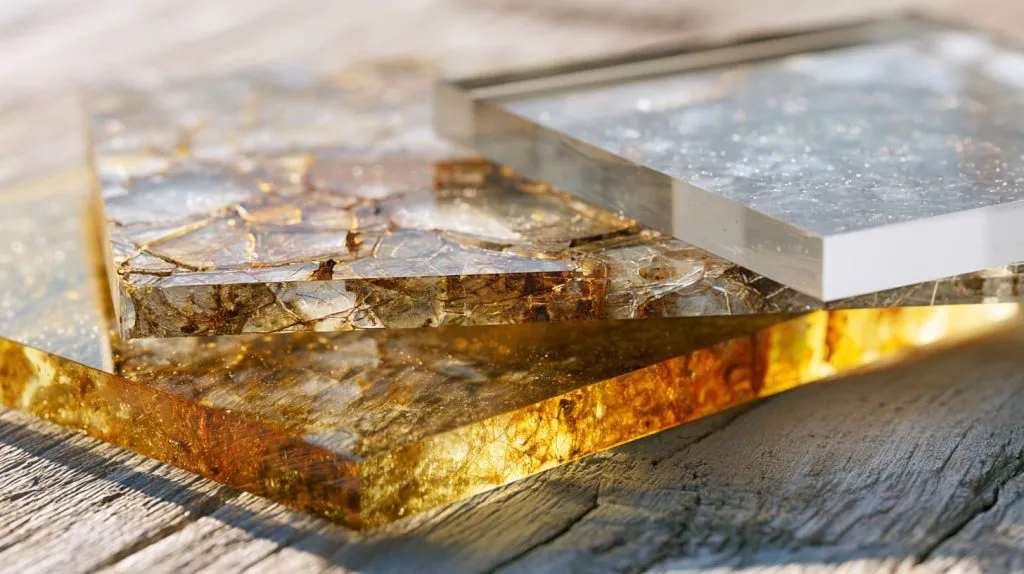
Material mistakes usually do not happen because buyers lack knowledge.
They happen because small details are ignored during the early stage.
Choosing The Cheapest Material For Outdoor Products
Why lower material cost can create higher long-term costs
A cheaper material may save money during purchasing.
But later it can create:
- Yellowing complaints
- Customer dissatisfaction
- Replacement expenses
The material decision affects the entire product lifecycle.
Assuming "Acrylic Is UV Resistant" Means Every Acrylic Grade Works Outdoors
Natural UV resistance vs engineered UV protection
Acrylic is naturally better than many plastics for outdoor use.
But natural performance and engineered protection are different things.
A long-term outdoor project still needs the correct grade.
Ignoring Application Environment
Different environments create different UV risks
A product installed in Canada and a product installed in a tropical coastal area may need different considerations.
Environmental factors include:
| Factor | Impact |
|---|---|
| Direct sunlight | Faster UV degradation |
| Coastal environment | More stress from weather conditions |
| High temperature | Accelerates aging |
| Long exposure time | Increases risk |
A good material choice starts with understanding the product's real life, not only the drawing.
How Feilong Acrylic Helps Customers Select The Right Acrylic Grade
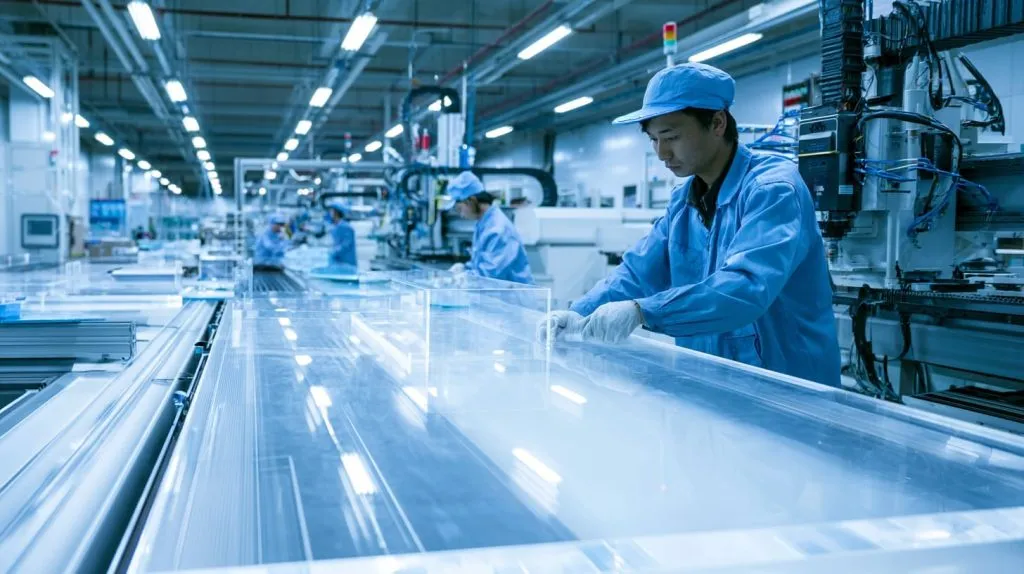
Material selection is one of the first discussions we have with customers.
We do not simply produce the acrylic product according to drawings. We also help customers think about how the product will be used.
Material Selection Based on Real Application Requirements
We evaluate
We usually consider:
- Product usage environment
- Expected service life
- Transparency requirements
- Production method
A cosmetic display, outdoor sign, and protective cover may all use acrylic, but they do not need the same material solution.
Our manufacturing capability
Feilong Acrylic has more than 13 years of experience in custom acrylic manufacturing.
Our capabilities include:
- Custom acrylic displays
- Acrylic boxes
- Acrylic cabinets
- Acrylic organizers
- Acrylic components
We use:
- CNC processing
- Laser cutting
- Custom fabrication methods
We support OEM projects and bulk production for customers who need consistent quality.
Conclusion
After years working with acrylic products, I have learned that choosing plastic is not only about selecting a material name.
Acrylic, polycarbonate, and ABS all have their own advantages. But the grade behind the material often decides whether the product can survive real-world conditions.
This is why I always consider UV stabilization before making a final recommendation.
I look at the environment, expected lifetime, appearance requirements, and replacement risk.
A slightly higher material cost today can protect the customer's brand image and reduce problems years later.
For indoor applications, standard grades can often be a smart choice.
For outdoor and long-term display products, UV-stabilized grades are usually the safer investment.
If you are developing a custom acrylic product and are unsure which grade fits your application, share your product details and usage environment. I can help you evaluate the right acrylic solution before production starts.