Skip to content
Acrylic is one of those materials that makes buyers feel safe at first glance.
It is clear. It is light. It looks clean. It can be cut, bent, polished, printed, glued, drilled, and shaped into almost anything. For outdoor signs, retail displays, protective covers, transparent boxes, and custom display parts, acrylic often feels like the “easy yes.”
I understand that feeling very well.
In our factory work, I have seen many buyers come to us with one simple request: “We need acrylic for outdoor use.” The sentence sounds clear. But the real question is usually hiding behind it.
Outdoor where?
Under the sun in Canada? Near the sea? Beside a road? Inside a public park? On a machine? Near fuel? On a building wall? In a place where people may hit it, clean it badly, or never clean it at all?
Those details matter more than the word “outdoor.”
I do believe acrylic is a strong and useful material for many outdoor projects. But I also believe something else: a good supplier should know when not to recommend acrylic. That is not weakness. That is responsibility.
The first thing I try to understand is not whether acrylic can survive outdoors, but whether the buyer expects it to survive the wrong kind of outdoor environment.
This article is my honest view on when you should not use acrylic outdoors. Not because acrylic is bad. It is not. But because every material has a personality. Acrylic has a beautiful one, but it also has limits.
And limits, when ignored, become complaints, replacements, and lost profit.
So let’s talk about the cases where acrylic may not be the best choice.
What Makes Acrylic Popular for Outdoor Applications?
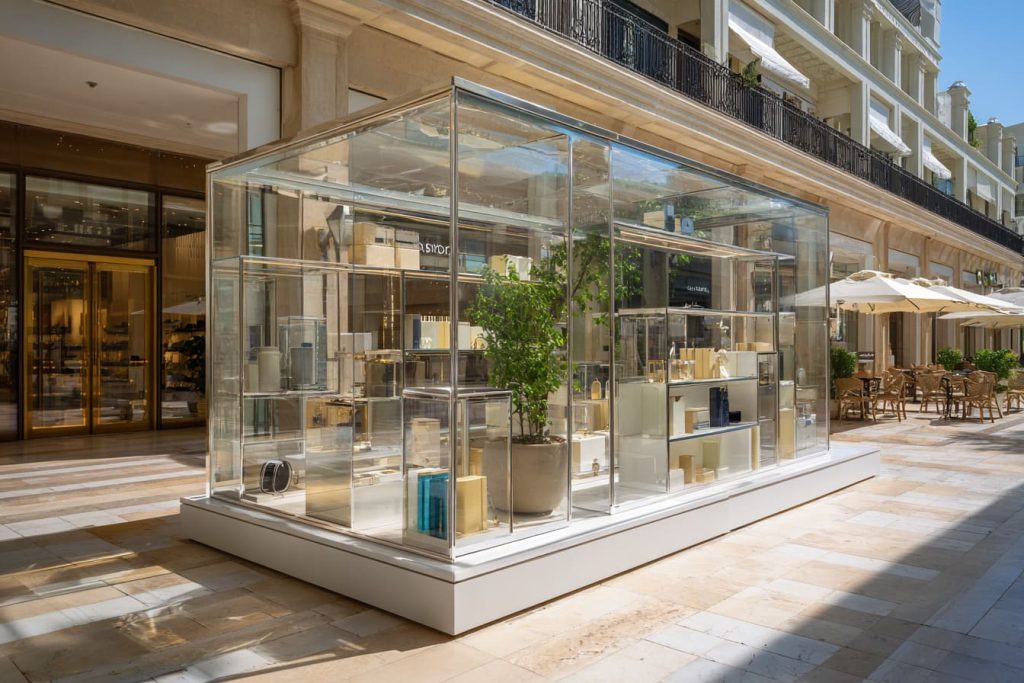
Before I talk about when not to use acrylic outdoors, I want to give acrylic some respect.
Acrylic is popular for good reasons. I have worked with it for years, and I still like it. When it is used in the right place, it gives a clean, bright, professional look that many materials cannot match.
It is especially good when the buyer needs visibility, beauty, and custom shape at the same time.
Excellent Optical Clarity
Acrylic has very high transparency. It can look close to glass, but it is lighter and easier to process.
This is why many outdoor signs, display covers, menu boards, donation boxes, and product display windows use acrylic. A clear acrylic panel can make a product look more expensive. It can make a logo look sharper. It can make a display feel more open.
For retail and branding, this matters.
A customer may not say, “Wow, the optical clarity is excellent.” But they will feel it. They will see the product better. They will trust the display more.
| Feature | Why Buyers Like It | Where It Works Well |
|---|---|---|
| High transparency | Products and graphics look clear | Storefront displays, signs, covers |
| Smooth surface | Looks modern and clean | Retail counters, brand displays |
| Easy polishing | Edges can look premium | Custom signs, display boxes |
| Color options | Supports brand design | Decorative panels, logos |
Weather Resistance
Acrylic usually performs better outdoors than many common plastics. It can resist sunlight better than some materials that turn yellow or brittle too quickly.
This is one reason many buyers choose acrylic for outdoor signage and display panels.
But I need to be careful here.
Weather resistance does not mean all-weather magic.
Acrylic may perform well under normal outdoor exposure, but it still needs the right thickness, structure, installation method, and maintenance. A small indoor sign and a large outdoor wall panel are not the same project.
Lightweight and Easy Fabrication
Acrylic is much lighter than glass. This makes shipping easier. It also makes installation less stressful.
For custom orders, acrylic is friendly. We can cut it by laser or CNC. We can bend it. We can glue it. We can print logos. We can make boxes, stands, covers, frames, and shaped parts.
That is why many designers like it. It gives room for creativity.
| Requirement | Acrylic Advantage |
|---|---|
| Custom shape | Easy to cut and form |
| Brand logo | Supports printing and engraving |
| Lightweight design | Easier to ship and install |
| Clear appearance | Good for display and signage |
| Small to medium production | Flexible for OEM projects |
The Common Misconception
The problem begins when people hear “outdoor grade acrylic” and think it means “safe for every outdoor job.”
It does not.
Acrylic can be outdoor suitable, but it is not always impact suitable. It is not always chemical suitable. It is not always fire suitable. It is not always load suitable. These are different questions.
I often judge acrylic projects by asking one simple thing first: What will attack this product after installation? Sunlight, impact, heat, chemicals, people, or time?
That small question changes everything.
Acrylic may win in beauty. But beauty alone should not choose the material.
And this is where the real discussion begins.
When Impact Resistance Is the Top Priority
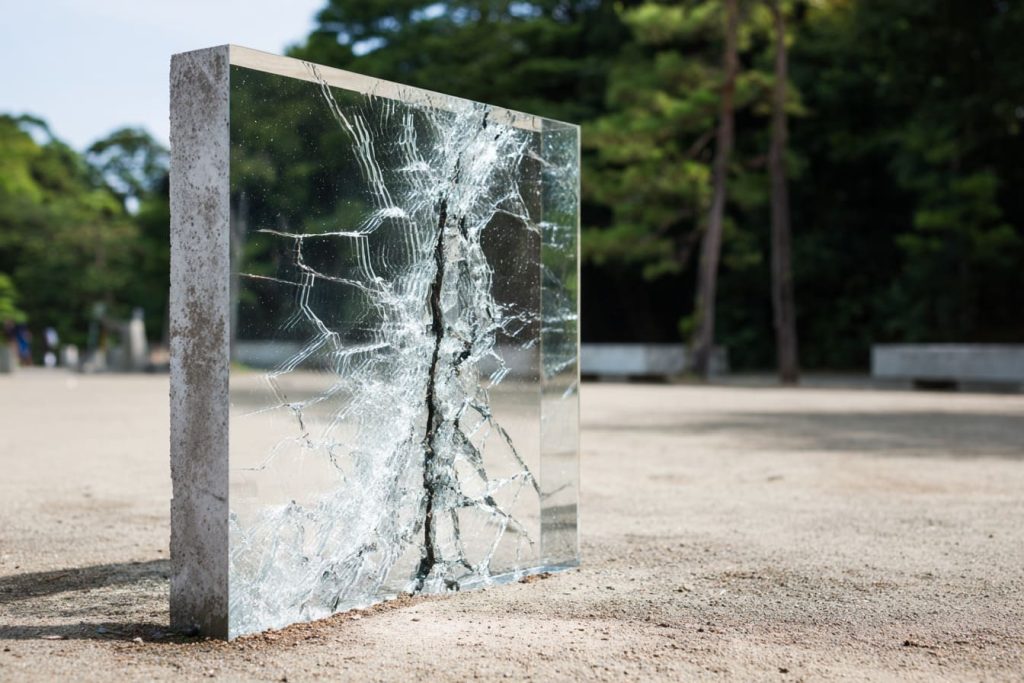
Acrylic looks strong because it looks solid. But impact resistance is not only about how thick or hard a material looks.
It is about how the material behaves when something hits it.
And this is one of the first cases where I become careful with outdoor acrylic.
Acrylic's Brittleness Compared to Polycarbonate
Acrylic is harder than many plastics, but it can be more brittle under impact. When it receives a strong hit, it may crack. Polycarbonate, by comparison, usually bends more before breaking.
This difference matters a lot outdoors.
A panel beside a quiet boutique entrance may be fine in acrylic. A transparent guard in a sports field? That is a different story.
| Material | Impact Behavior | Common Outdoor Use |
|---|---|---|
| Acrylic | Can crack under strong impact | Signs, display covers, decorative panels |
| Polycarbonate | More impact resistant and flexible | Guards, shields, public protection panels |
| Tempered glass | Hard surface but can shatter | Architectural panels, windows |
| Metal | Strong but not transparent | Frames, covers, structural parts |
High-Risk Outdoor Environments
Some outdoor places are not gentle.
People may bump into the product. Balls may hit it. Tools may fall on it. Delivery carts may knock it. In public areas, users may not treat the product carefully.
I would avoid acrylic as the main protective material in places like:
- Sports facilities
- Public parks
- Outdoor school areas
- Transport stations
- Industrial workshops
- Construction zones
- Areas with vandalism risk
- Outdoor machine guards
The hidden risk is not always the first day. The product may look perfect after installation. Then one strong hit creates a crack. After that, the crack grows. The buyer may blame the material, but the real issue was material selection.
Better Alternatives
If impact resistance is the most important factor, I usually consider polycarbonate first.
Polycarbonate is not perfect. It can scratch more easily. It may cost more. It may need UV coating for some outdoor uses. But when safety and impact matter, it is often the better choice.
Sometimes a hybrid structure works better:
| Design Need | Better Option |
|---|---|
| Clear protective shield | Polycarbonate |
| Decorative clear display | Acrylic |
| Strong outdoor sign | Acrylic with metal frame |
| Public safety cover | Polycarbonate or laminated glass |
| Outdoor display with low impact risk | Acrylic |
A buyer once asked me for a large acrylic protection cover for a public outdoor display. The drawing looked clean. The price target was reasonable. But the location was near a school playground. That changed my view quickly. Kids do not read material datasheets. They run, kick, push, and test everything with their bodies.
For that kind of place, I would rather lose an acrylic order than send the wrong material.
When Extreme Temperature Fluctuations Are Expected
Outdoor temperature is not just “hot” or “cold.”
It moves. It expands materials. It shrinks materials. It creates stress in corners, screw holes, glue joints, and large panels.
Acrylic can handle many normal outdoor conditions, but extreme temperature changes need careful design.
How Temperature Affects Acrylic
Acrylic expands and contracts when temperature changes. This is normal. Every material moves. Metal moves. Plastic moves. Glass moves.
But acrylic can show stress when the design does not allow movement.
This often happens around:
- Tight screw holes
- Sharp inside corners
- Long flat panels
- Glued joints
- Poorly supported edges
- Panels fixed too tightly into frames
The product may look perfect in the factory. It may also look perfect during installation. But after repeated hot and cold cycles, small stress marks may appear.
Then cracks may start.
Common Failure Scenarios
Large outdoor acrylic panels are more sensitive than small parts. The bigger the panel, the more it can expand and contract.
Cold regions can also create trouble. If acrylic becomes stressed and then receives impact in cold weather, cracking risk increases.
| Outdoor Situation | Main Risk | Why It Matters |
|---|---|---|
| Hot days and cold nights | Repeated movement | Fasteners may create stress |
| Large clear panels | More expansion | Panel may warp or crack |
| Tight screw fixing | No movement space | Cracks may start around holes |
| Cold impact | More brittle behavior | Breakage risk rises |
| Poor frame design | Uneven pressure | Corners may fail |
Design Considerations
Acrylic can still be used in many outdoor temperature conditions. But it needs respect.
Good design can reduce risk.
I usually check whether the drawing allows the material to “breathe,” because a beautiful acrylic panel fixed too tightly is like a person wearing shoes one size too small. It may look fine for five minutes, but it will hurt later.
Here are the details I care about:
| Design Detail | Better Practice |
|---|---|
| Screw holes | Make holes slightly larger than screws |
| Corners | Avoid sharp inside corners |
| Large panels | Add support or frame |
| Frame fit | Leave expansion space |
| Installation | Avoid over-tightening |
| Adhesive joints | Avoid stress-heavy locations |
Acrylic does not fail only because of material quality. It can fail because the design treats it like metal or glass.
And that is a quiet but expensive mistake.
When Scratch Resistance Is Critical
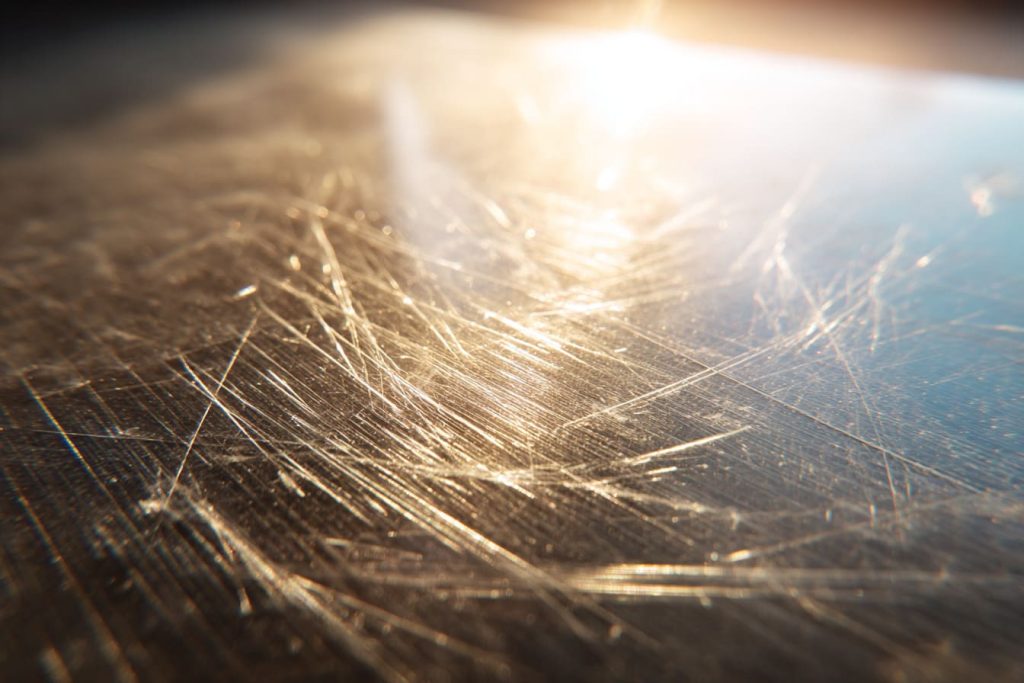
Acrylic has a clean and glossy surface. That is one reason people love it.
But that same surface can be scratched.
This is a serious point for outdoor projects because the outdoors is not a showroom. Dust, sand, wind, cleaning cloths, and human hands all become part of the product’s life.
Why Acrylic Scratches Easily
Acrylic is not as hard as glass. It can be scratched by rough cleaning, dry wiping, dust particles, or sharp objects.
For small scratches, polishing may help. But polishing costs time. It also needs skill. A buyer may not want that work after installation.
This is why I do not only ask, “Will acrylic look good when new?” I ask, “Who will clean it six months later, and how careful will that person be?”
That is often where the real answer appears.
Outdoor Sources of Scratches
Outdoor scratches do not always come from careless people. Sometimes they come from the environment.
Common sources include:
- Wind-blown sand
- Dust on the surface
- Dry cloth wiping
- Rough paper towels
- Tree branches
- Cleaning tools
- Public touching
- Rain mixed with dirt
Acrylic used in a calm indoor store can stay beautiful for a long time. Acrylic used beside a busy road may face dust every day.
Different life. Different result.
| Scratch Source | Risk Level | Example |
|---|---|---|
| Soft cloth cleaning | Low | Proper maintenance |
| Dry wiping with dust | High | Outdoor sign cleaning |
| Sand and wind | High | Coastal or roadside areas |
| Public touching | Medium | Display windows |
| Rough tools | Very high | Maintenance staff cleaning too fast |
Alternative Materials
If scratch resistance is the top priority, acrylic may not be the best option.
Tempered glass has better surface hardness. Hard-coated plastics may also help. For some transparent protective covers, polycarbonate with hard coating can be a better choice, though it usually costs more.
| Need | Possible Material |
|---|---|
| Highest scratch resistance | Glass |
| Impact plus scratch balance | Hard-coated polycarbonate |
| Clear display with moderate care | Acrylic |
| Low-cost decorative panel | Acrylic |
| Harsh dusty outdoor use | Glass or coated material |
Acrylic still has one advantage. It can be polished.
Glass scratches are harder to repair. Acrylic scratches may be restored if they are not too deep. But this only helps when maintenance is possible.
If the product will be installed and forgotten, I become cautious.
A shiny material that needs careful cleaning can become a headache if nobody wants to clean it carefully.

Acrylic does not like many chemicals.
This sounds simple, but buyers often miss it because chemical exposure is not always obvious. Sometimes the acrylic is not dipped in chemicals. It is only near them. That may still matter.
Vapors, cleaning sprays, fuel, oils, and solvents can attack acrylic over time.
Chemicals That Can Damage Acrylic
Certain chemicals can cause crazing, cracking, whitening, or surface damage. Solvents are especially risky.
Problem chemicals may include:
- Acetone
- Alcohol-based cleaners used too often
- Strong solvents
- Fuel vapors
- Some adhesives
- Harsh industrial cleaners
- Paint thinners
- Some oil and chemical mixtures
Not every exposure causes instant failure. That is the tricky part.
Sometimes the acrylic looks fine at first. Then small lines appear. They look like tiny cracks inside the surface. That is often crazing.
Signs of Chemical Attack
Chemical attack can look different from normal scratches.
| Sign | What It May Mean |
|---|---|
| Fine spider-web lines | Crazing from stress or chemicals |
| White cloudy areas | Surface damage |
| Cracks near edges | Stress plus chemical exposure |
| Loss of gloss | Surface attack |
| Sudden breakage | Hidden stress damage |
The dangerous thing is the combination of stress and chemicals.
A bent acrylic part under pressure may survive in clean air. The same part may crack faster if exposed to solvent vapor. A screw hole under stress may also fail faster after chemical cleaning.
Industries Most at Risk
Some outdoor environments should make buyers pause before choosing acrylic.
| Industry or Location | Chemical Risk |
|---|---|
| Gas stations | Fuel vapor and cleaners |
| Industrial plants | Solvents and chemical mist |
| Transportation areas | Oils, exhaust, cleaning agents |
| Workshops | Degreasers and sprays |
| Chemical storage areas | Vapor exposure |
| Marine service areas | Salt, cleaners, fuel |
On one quotation, I saw a clear cover design that looked suitable for acrylic at first. The shape was simple. The size was fine. The price target was normal. Then the buyer mentioned it would be used near fuel handling equipment. That one sentence changed the material discussion.
At that point, I would rather slow down the quotation than pretend the risk is small.
A wrong material near chemicals does not fail politely. It fails in a way that makes everyone uncomfortable.
When Large Structural Loads Are Involved

Acrylic can be strong as a panel or display material. But it should not be treated like a structural material for heavy outdoor loads.
This is where some drawings become risky.
Acrylic looks thick. So people assume it can hold weight. Sometimes it can. But outdoor structural loads are not only about weight. They include wind, vibration, pressure, bending, fixing stress, and long-term creep.
Acrylic Is Not a Structural Material
Acrylic can support certain loads if the design is correct. But it is not my first choice for major outdoor structural support.
It may bend over time under constant load. It may crack around stress points. It may fail if used as a large unsupported panel.
Acrylic is best used for:
- Visual panels
- Display windows
- Covers
- Signs
- Decorative parts
- Protective but non-heavy-duty panels
It is less suitable as the main load-bearing part in harsh outdoor structures.
Common Design Mistakes
Some mistakes repeat again and again.
| Mistake | Possible Result |
|---|---|
| Large unsupported span | Bending or sagging |
| Thin sheet for big panel | Warping |
| Tight screw fixing | Cracks around holes |
| No frame support | Wind pressure damage |
| Acrylic used as bracket | Breakage under load |
| Heavy items placed on acrylic shelf outdoors | Long-term bending |
Acrylic can look strong in a sample size. A small sample on a desk does not tell the full story of a large outdoor installation.
I pay special attention when the acrylic part is expected to hold weight, because customers often notice beauty before they notice load path.
A pretty structure is still a poor structure if the force has nowhere safe to go.
Better Structural Solutions
For outdoor load-bearing applications, I prefer to use a support system.
Acrylic can still be part of the design, but not the hero doing all the heavy lifting.
| Design Goal | Better Structure |
|---|---|
| Transparent outdoor sign | Acrylic panel with metal frame |
| Large display cover | Acrylic with reinforced support |
| Outdoor shelf | Metal frame with acrylic insert |
| Wind-exposed panel | Framed system with expansion space |
| Heavy-duty equipment cover | Metal or composite enclosure |
Metal framing is often a smart partner for acrylic. It carries the load. Acrylic provides the visual value.
That balance is usually better than forcing acrylic to do a job it was never meant to do.
A material should not be punished for being used in the wrong role.
When Fire Safety Requirements Are Strict
Fire safety is not the most exciting topic in product design.
But it is one of the most important.
Acrylic is combustible. This does not mean acrylic is unsafe for every outdoor product. But it does mean buyers should be careful when the project has strict fire rules.
Understanding Acrylic's Flammability
Acrylic can burn. It can also be affected by heat sources.
For many normal display or signage projects, this may not be a major concern. But in public spaces, transportation areas, industrial sites, and building-related projects, fire requirements may be strict.
The wrong material choice can delay approval. It can create compliance problems. It can also create safety risks.
Applications Requiring Special Attention
Buyers should be extra careful when acrylic is used in or near:
- Public buildings
- Train stations
- Airports
- Shopping malls
- Industrial facilities
- Electrical equipment areas
- Escape routes
- Areas near open flame or high heat
- Transportation interiors or stations
| Application | Why Fire Requirement Matters |
|---|---|
| Public building signage | May need approved material |
| Industrial covers | Heat and electrical risk |
| Transport facilities | Strict safety rules |
| Electrical areas | Fire and heat concern |
| High-traffic areas | Liability risk |
Alternative Material Choices
If fire performance is a strict requirement, acrylic may not be the right choice.
Better options may include:
- Metal panels
- Fire-rated plastics
- Glass
- Mineral-based boards
- Special certified materials
The exact material depends on local rules and project use.
Before I accept acrylic for a public or regulated project, I want to know whether the buyer has checked the fire standard, because a beautiful sample means very little if the project fails approval later.
That is the painful part of fire-related mistakes. The product may be well made, but still unusable.
And nobody wants to discover that after production.
When Long-Term Maintenance Must Be Minimal

Some outdoor products are cleaned often. Some are cleaned badly. Some are almost never cleaned.
This matters.
Acrylic can stay beautiful when it is cared for properly. But if the buyer wants a product that needs almost no maintenance, acrylic may not always be the best choice.
The Reality of Outdoor Aging
Outdoor acrylic faces sun, rain, dust, dirt, hands, cleaning tools, and sometimes pollution.
Good acrylic can resist yellowing better than many plastics. But the surface can still get dirty, scratched, or dull over time.
Acrylic does not age only by itself. It ages with the behavior around it.
Who cleans it? What cloth do they use? Do they spray the right cleaner? Do they wipe dust away first? Do they polish scratches? Do they care?
These small details decide the real life of the product.
Maintenance Costs Often Overlooked
Many buyers compare only unit price.
That is understandable. But outdoor products should also be compared by maintenance cost.
| Cost Type | Often Forgotten? | Example |
|---|---|---|
| Cleaning labor | Yes | Monthly outdoor sign cleaning |
| Scratch repair | Yes | Polishing clear display panel |
| Replacement | Yes | Cracked or cloudy panel |
| Complaint handling | Yes | Retail buyer unhappy with appearance |
| Downtime | Yes | Removing and reinstalling parts |
Acrylic may be cheaper than some alternatives at the start. But if the product needs frequent cleaning or repair, the total cost may rise.
A cheaper panel is not always a cheaper project.
Comparing Lifetime Ownership Costs
Here is a simple way I look at it.
| Material | Initial Appearance | Maintenance Need | Long-Term Concern |
|---|---|---|---|
| Acrylic | Very clear and premium | Medium | Scratches and cleaning |
| Glass | Very clear | Low to medium | Breakage and weight |
| Polycarbonate | Clear but softer look | Medium to high | Scratches unless coated |
| Metal | Strong | Low | No transparency |
| Coated plastics | Good | Medium | Higher cost |
Acrylic is often a good choice when the buyer accepts normal maintenance.
But if the product will be placed in a dusty outdoor area and nobody wants to clean it with care, I become more conservative.
One thing I learned from real orders is this: maintenance is not a small after-sales topic. It is part of the material decision from day one.
That point sounds boring. But boring details save money.
How to Decide Whether Acrylic Is the Right Outdoor Material

Choosing acrylic for outdoor use should not be emotional.
I know acrylic looks nice. I know it is easy to like. But outdoor products need more than a good first impression.
They need a clear match between material, environment, design, installation, and user behavior.
Questions Buyers Should Ask
Before choosing acrylic, I would ask these questions:
| Question | Why It Matters |
|---|---|
| Where will the product be installed? | Sun, wind, dust, impact, and chemicals differ by location |
| How long should it last? | A temporary display and a long-term sign need different thinking |
| Will people touch or hit it? | Impact and scratch risk may rise |
| Will it face chemicals? | Acrylic may craze or crack |
| Is fire rating required? | Acrylic may not pass strict needs |
| Who will clean it? | Poor cleaning can damage the surface |
| Is the panel large? | Expansion, wind, and support become important |
| Does it carry load? | Acrylic should not be used like metal |
These questions are simple. But they are powerful.
They stop the buyer from choosing material based only on appearance.
Decision Matrix
Here is a practical decision matrix.
| Situation | Acrylic Choice |
|---|---|
| Outdoor sign in normal weather | Good choice |
| Clear retail display under covered outdoor area | Good choice |
| Decorative outdoor panel with proper frame | Good choice |
| Large panel with high wind load | Use caution |
| Public area with impact risk | Avoid or use polycarbonate |
| Chemical exposure area | Avoid |
| Strict fire safety project | Avoid unless approved |
| Low-maintenance dusty location | Use caution |
| Load-bearing outdoor structure | Avoid as main structure |
| High scratch-risk area | Consider glass or coated material |
Expert Recommendation
I do not like one-word answers in material selection.
“Yes” and “no” are sometimes too lazy.
For acrylic outdoors, the better answer is often: “Yes, if the environment is suitable and the design is correct.”
Or: “No, if impact, chemicals, fire, load, or maintenance are the main concerns.”
The way I make the final call is by ranking the real risks. If appearance is the top need and the environment is controlled, acrylic is often excellent. If safety, impact, or chemicals are the top need, I step back and compare other materials first.
That is how I avoid forcing acrylic into the wrong job.
Acrylic should win because it fits.
Not because it is familiar.
Conclusion

I like acrylic. I work with acrylic. I have seen it turn simple ideas into beautiful products many times.
But I do not think every outdoor product should use acrylic.
That opinion comes from factory reality, not from a material chart. A chart can tell you transparency, strength, and temperature data. But real projects also include wind, bad cleaning, rushed installation, sharp screw holes, public impact, chemical vapors, and buyers who only discover the problem after the goods arrive.
That is why I think acrylic is excellent outdoors only when the application respects its limits.
I would avoid acrylic outdoors when impact resistance is the top priority. I would be careful with extreme temperature changes, especially for large panels. I would avoid it near harsh chemicals. I would not use it as the main structure for heavy loads. I would not choose it blindly for strict fire safety projects. And I would think twice when the buyer expects almost no maintenance.
My reason is simple.
Acrylic is not the “best” material for every outdoor job. It is the best material for the right outdoor job.
At Feilong Acrylic, we focus on custom acrylic products, but I still believe honest material judgment comes before production. A good custom product is not only about cutting and polishing. It is about helping the buyer avoid the wrong decision before the first sheet is even processed.
If you are planning an outdoor acrylic display, box, sign, cover, or custom part, you can send us your drawing, size, usage location, and quantity. I can help you check whether acrylic is suitable, where the design may need adjustment, and whether another material should be considered before production starts.
Because the goal is not just to make acrylic.
The goal is to make the product work.