Skip to content
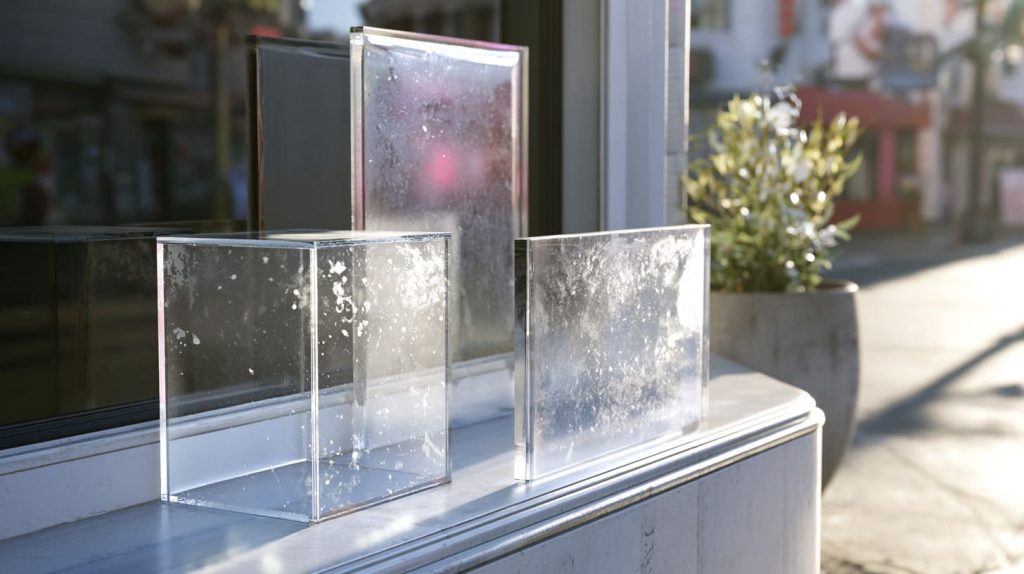
A plastic product can look perfect on my factory table.
The edges are polished. The color is clean. The sample feels strong in the hand. The buyer checks the dimensions and says, “Yes, this looks good.”
Then the real test starts.
Not in the factory.
Not in the showroom.
Outside.
Under sun. Under rain. Near dust. Near heat. Near screws that are a little too tight. Near cleaners that were never mentioned during the RFQ stage.
That is where many outdoor plastic products begin to fail.
I have seen this many times with acrylic displays, outdoor covers, sign panels, transparent boxes, protective shields, and custom plastic parts. Some failures happen after months. Some happen after one hot season. Some happen soon after installation because the design looked simple on the drawing, but the real outdoor environment was not simple at all.
For me, outdoor plastic failure is rarely caused by one single mistake. It is usually a chain.
A buyer chooses a cheaper material.
A designer makes the mounting hole too tight.
The installer tightens the screw like he is fixing a steel bracket.
The product sits under strong UV light every day.
Then one small crack becomes a big problem.
This is why I like to talk about outdoor plastic products before production starts. Not after failure. After failure, everyone pays more.
The buyer pays for replacement.
The brand pays for reputation.
The supplier pays for remake.
The end user loses trust.
For outdoor plastic products, I do not only ask, “Can we make it?” I ask, “Where will it be used, how will it be installed, and what will attack it every day?”
In this article, I want to share the most common outdoor plastic failures I see after installation. I will talk about UV degradation, cracking, warping, yellowing, moisture damage, mounting failure, scratches, and material selection mistakes.
This is not a scary article. It is a practical one.
Because most failures can be reduced if we make better decisions before production.
UV Degradation: The Most Frequent Cause of Outdoor Plastic Failure
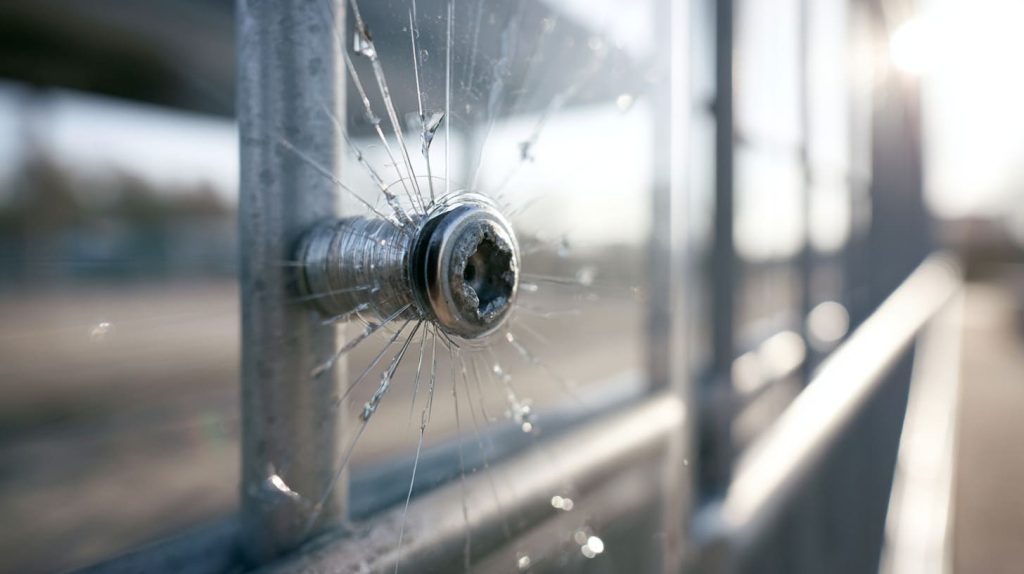
UV damage is usually the first outdoor plastic problem I think about.
The sun does not look aggressive. It does not shout. It does not hit the product like a hammer. But it works every day. Quietly. Patiently. Like a slow worker who never takes a holiday.
This is where many outdoor plastic projects go wrong: the sample is tested indoors, but the product is judged outdoors.
How UV Radiation Breaks Down Plastic Materials
UV radiation can break down the structure of plastic over time. I do not need to make this sound complicated. The simple idea is this:
Plastic is made of long molecular chains. UV light can damage those chains. When the chains become weaker, the surface changes first. Then the whole part slowly loses strength.
For outdoor acrylic or plastic products, UV damage may show in several ways:
| UV Damage Type | What You See | What It Means |
|---|---|---|
| Surface chalking | White powder-like surface | The top layer is degrading |
| Fading | Color becomes lighter | Pigments or plastic structure are affected |
| Brittleness | Product breaks more easily | Material strength is dropping |
| Loss of gloss | Surface looks dull | Weathering has started |
| Small surface cracks | Fine lines appear | Stress and UV damage may be working together |
Some customers only notice UV damage when the color changes. I pay attention earlier. A small loss of gloss can already tell me the surface is not as stable as before.
For acrylic products, this matters a lot because many customers buy acrylic for appearance. They want clean edges, high transparency, and a premium look. If the surface becomes dull, the product may still “function,” but it no longer feels high quality.
Early Signs of UV Damage
UV failure often starts quietly.
A display panel may still stand straight. A box may still close well. A cover may still protect the product inside. But the surface begins to change.
The first signs are often:
- Color fading
- Surface whitening
- Loss of gloss
- Small rough areas
- Slight brittleness near edges
- Weakness around exposed corners
I sometimes compare this to a white shirt left under the sun for too long. It may still be a shirt. But it does not look fresh anymore.
Outdoor plastic has the same problem. The product can still be there, but the commercial value drops.
Which Plastics Are Most Vulnerable?
Not all plastics age the same way outdoors.
Some plastics handle UV better. Some need additives. Some should not be used outdoors unless the buyer accepts a shorter service life.
| Plastic Material | Outdoor UV Risk | My Practical View |
|---|---|---|
| Standard acrylic | Medium | Better than many plastics, but grade matters |
| UV-resistant acrylic | Lower | Good choice for outdoor display and signage |
| ABS | High | Needs UV protection for outdoor use |
| Polystyrene | High | Not my first choice for long outdoor life |
| PVC | Medium to high | Depends heavily on formulation |
| Polycarbonate | Medium | Strong impact resistance, but may need UV coating |
| HDPE | Lower to medium | Good for some outdoor utility uses, not premium clear display use |
Standard acrylic often performs better outdoors than many low-cost plastics, especially when transparency matters. But I still do not treat all acrylic as the same.
Acrylic grade matters. Sheet quality matters. Additives matter. Color also matters. Dark colors can absorb more heat. Clear products need better long-term clarity.
How to Improve UV Resistance
There are several ways to reduce UV failure.
The best way is not to wait until the product fails and then add a coating. The best way is to design for UV from the beginning.
| Prevention Method | Benefit | Limitation |
|---|---|---|
| UV-stabilized material | Better outdoor life | Higher material cost |
| UV-resistant coating | Protects surface | Coating can scratch or wear |
| Proper color selection | Reduces fading risk | Not all colors are equal |
| Thicker material | More structure | Does not fully solve surface aging |
| Better installation location | Less sun exposure | Not always possible |
| Regular cleaning | Slows dirt buildup | Wrong cleaner can cause damage |
For custom outdoor acrylic projects, I usually ask about the installation environment before I suggest material. Is it under direct sun all day? Is it near the sea? Is it in Canada with snow and freeze-thaw cycles? Is it in the Middle East with high heat? These answers change the material decision.
A buyer may ask me, “Can you make it cheaper?”
Yes, sometimes I can.
But I also need to ask, “Cheaper for the first order, or cheaper for the full product life?”
That question changes the whole discussion.
A product that fades after one season is not cheap. It is just a delayed cost.
And UV is only the first enemy. The next one is more dramatic because it often appears as a visible crack.
Cracking and Stress Fractures After Installation
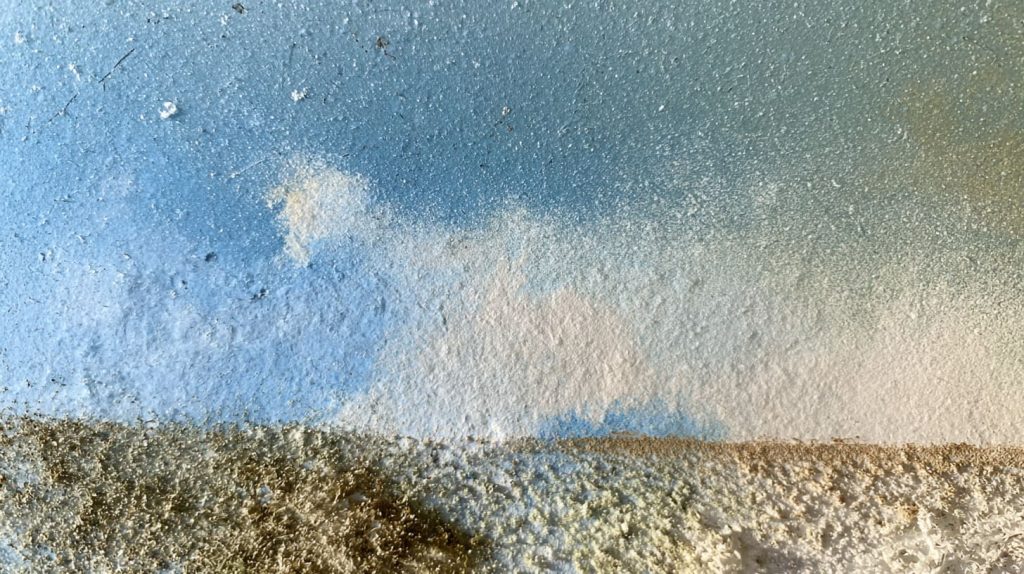
Cracking is the outdoor plastic failure that makes everyone nervous.
A faded panel looks bad. A warped cover looks careless. But a crack looks like failure. It feels final. It also makes the customer ask a painful question: “Was the material bad?”
Sometimes the material is bad. But many times, the full answer is more complex.
A crack may come from material, design, machining, installation, chemical exposure, or all of them together.
What Causes Plastic Cracking Outdoors?
Plastic cracking can start before the product even leaves the factory.
That sounds strange, but it is true.
Acrylic sheets and plastic parts can hold internal stress from cutting, bending, bonding, polishing, or machining. If the design has sharp corners or tight holes, stress becomes more concentrated. Then outdoor temperature changes add more movement. Then someone tightens a screw too hard.
The crack starts.
| Cause | How It Happens | Typical Result |
|---|---|---|
| Internal stress | Heat bending, polishing, or machining leaves stress inside | Fine cracks or crazing later |
| Sharp inside corners | Stress gathers at the corner | Cracks begin at cutouts |
| Tight screw holes | Plastic cannot move with temperature | Cracks around fasteners |
| Over-tightening | Screw pressure crushes material | Star cracks near holes |
| Poor installation | Product is forced into position | Long stress fractures |
| Chemical exposure | Cleaner or solvent attacks plastic | Crazing or sudden cracks |
The detail I always watch is whether the plastic part has room to move after installation; if the drawing treats acrylic like metal, I already expect trouble around the holes.
Plastic needs some freedom. Outdoor plastic needs even more.
Environmental Stress Cracking (ESC)
Environmental stress cracking is one of those problems that sounds technical, but the real-world story is simple.
A plastic part is already under stress. Then it touches a chemical that weakens it. The chemical may not melt the plastic. It may not leave a stain. But it helps cracks grow.
This can happen with:
- Alcohol-based cleaners
- Strong detergents
- Solvents
- Fuel or oil exposure
- Some adhesives
- Polluted air in industrial areas
- Certain disinfectants
I have seen buyers blame material quality when the real reason was cleaning method. A clear acrylic cover looked fine after production. Then the end user cleaned it with a strong chemical spray every week. Small cracks appeared near the bent area.
The product did not fail alone. The maintenance habit helped it fail.
Common Areas Where Cracks First Appear
Cracks do not appear randomly most of the time.
They usually start where stress is highest.
| Crack Location | Why It Happens | What I Check |
|---|---|---|
| Corners | Sharp corners concentrate stress | Is there enough radius? |
| Mounting holes | Screw pressure and thermal movement | Is the hole oversized? |
| Cutouts | Material is weakened around opening | Is the shape smooth? |
| Bonded joints | Solvent bonding can create stress | Was bonding controlled? |
| Bent edges | Heat bending may leave stress | Was annealing needed? |
| Thin sections | Less strength under load | Is thickness enough? |
Corners are especially important. A sharp inside corner may look clean on a CAD drawing, but it is often a crack starter in real life.
For outdoor plastic, a small radius can save a big headache.
Prevention Strategies
Crack prevention starts with design.
Many people try to solve cracks only by choosing thicker material. Thickness helps, but it does not solve everything. A thick acrylic part with sharp corners and tight screws can still crack.
I usually think about cracking prevention in layers.
| Prevention Layer | Practical Action | Why It Helps |
|---|---|---|
| Design | Add radius to inside corners | Reduces stress concentration |
| Machining | Use smooth cutting and polishing | Reduces micro cracks |
| Heat process | Anneal when needed | Reduces internal stress |
| Installation | Avoid over-tightening | Prevents pressure cracks |
| Hole design | Use oversized holes | Allows thermal movement |
| Cleaning guide | Avoid harsh chemicals | Reduces chemical attack |
For custom acrylic products, I like to confirm mounting details early. I do not only want the product size. I want to know how it will be fixed.
Will it hang on a wall?
Will it be screwed to a frame?
Will it sit outside a store?
Will people open and close it every day?
Will the installer use power tools?
These questions may sound small. They are not small.
A beautiful plastic product can be destroyed by one screw.
Cracking also connects closely with heat. When outdoor temperature changes, plastic expands and contracts. If it cannot move, it fights back. And sometimes, it bends instead of cracks.
Warping and Deformation Due to Heat Exposure
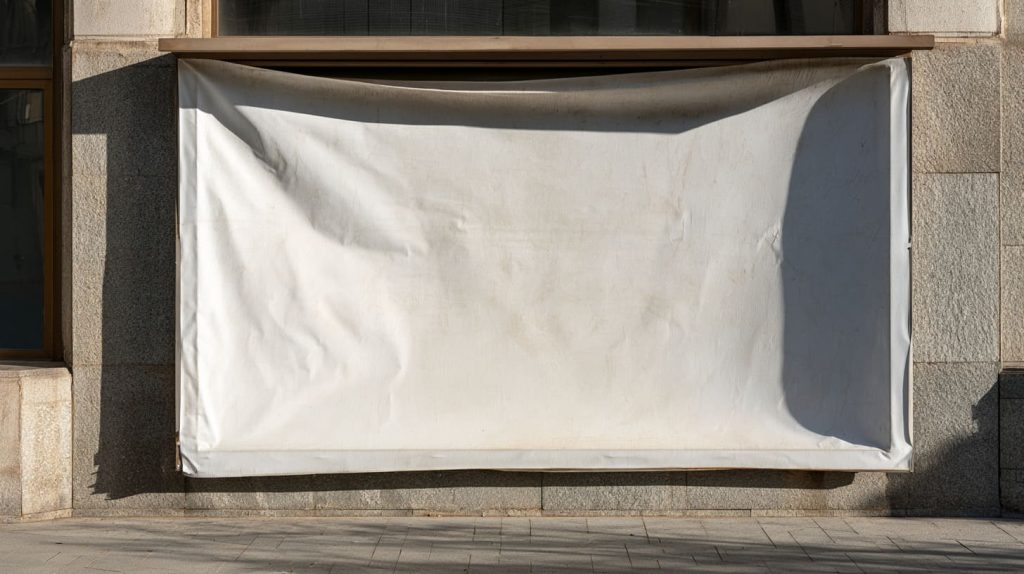
Heat does not always break plastic. Sometimes it does something more annoying.
It bends it.
A panel that was flat in the factory becomes slightly curved after installation. A cover that closed well before now leaves a gap. A display box that looked premium begins to look cheap.
Warping is not always a material defect. Many times, it is a design and environment problem.
Why Outdoor Temperatures Affect Plastic Shapes
Plastic expands when it gets hot. It contracts when it gets cold. This is normal.
The problem starts when the product cannot expand evenly.
One side may receive direct sun. The other side may stay cooler. One area may be fixed tightly with screws. Another area may be free. One panel may be too thin for its size.
Then the plastic moves unevenly.
| Heat Factor | What It Does | Possible Failure |
|---|---|---|
| Direct sunlight | Raises surface temperature | Bending or bowing |
| Dark color | Absorbs more heat | Faster deformation |
| Thin sheet | Less stiffness | Panel warping |
| Tight mounting | Blocks expansion | Stress or bending |
| Uneven exposure | One side hotter than the other | Twisting |
| Poor ventilation | Heat builds inside | Cover distortion |
Before I approve a large outdoor panel, I care less about how flat it looks on the table and more about how it will behave when one side gets hot and the other side stays cool.
That is a real project question. A factory table is friendly. Outdoor sun is not.
Typical Signs of Warping
Warping can show in different ways.
Some are easy to see. Some only become obvious when the product is assembled.
Common signs include:
- Bowed panels
- Distorted covers
- Misaligned doors
- Uneven gaps
- Loose or tight-fitting lids
- Curved display surfaces
- Panels pulling away from fasteners
The most frustrating part is that warping may not appear during inspection. The product may pass QC before shipment. It may arrive safely. It may install well. Then after several weeks outdoors, the shape changes.
This is why outdoor design cannot only depend on factory inspection. It needs environment thinking.
Materials Most Affected by Heat
Different plastics react differently to heat.
| Material | Heat Concern | Better Use Case |
|---|---|---|
| Thin acrylic sheet | Can bow in large flat areas | Displays, covers, signs with support |
| PVC panel | Can deform under heat depending on grade | Low-cost outdoor panels with limits |
| ABS | Can warp under sun without protection | Indoor or protected outdoor use |
| Polycarbonate | Better impact strength, but still expands | Protective covers, guards |
| HDPE | Good toughness, but can move a lot | Outdoor utility parts |
Acrylic has good visual quality, but large flat acrylic panels need careful design. The bigger the panel, the more support and expansion planning matters.
I often see buyers focus only on thickness.
“Can we use 3 mm?”
Maybe.
But 3 mm for what size? What shape? What mounting method? What sun exposure? What color? What use life?
Thickness is not a lonely number. It lives inside a full design.
Design Solutions to Reduce Warping
Warping prevention usually needs structure.
A flat sheet looks simple, but simple shapes can be weak under outdoor heat. Sometimes adding a small bend, rib, frame, or support changes the whole performance.
| Design Solution | How It Helps | Trade-Off |
|---|---|---|
| Increase thickness | Adds stiffness | Higher cost and weight |
| Add frame support | Keeps panel stable | More parts and assembly |
| Add bends or returns | Improves structure | More processing needed |
| Use expansion gaps | Allows movement | Needs careful installation |
| Choose lighter colors | Reduces heat absorption | May not match brand design |
| Add ventilation | Reduces heat buildup | May affect waterproof needs |
| Use suitable material grade | Improves heat performance | Higher material cost |
For custom acrylic boxes or outdoor display covers, I often suggest small structural changes. A customer may think the change is not important because it is not visible in the product photo. But that small hidden support can decide whether the product stays straight after installation.
Warping is a quiet warning. It tells us the product is fighting the environment.
And if the product is transparent, another problem may follow. It may not bend first. It may turn yellow.
Yellowing and Loss of Transparency
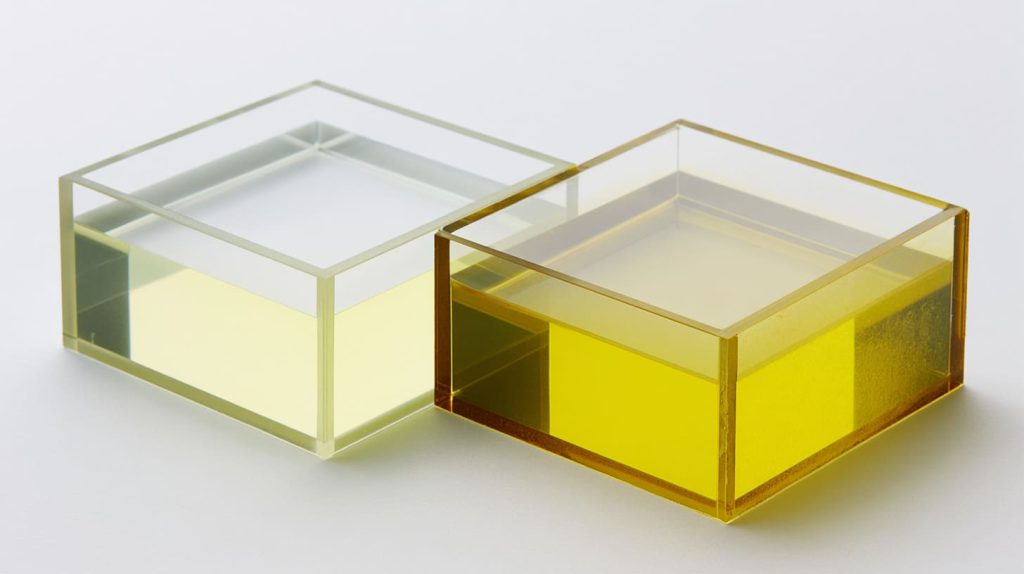
Clear plastic has a special promise.
It says, “Look through me.”
That is why clear acrylic is used for display boxes, sign covers, product guards, frames, showcases, and many outdoor protective parts. When it is new, it looks clean and almost invisible.
But when clear plastic turns yellow, the customer notices quickly.
Yellowing is not only a technical issue. It is a trust issue. It makes the product look old, dirty, and cheap.
Why Clear Plastics Turn Yellow Outdoors
Yellowing usually comes from UV exposure and oxidation. Heat can make it worse. Poor material quality can make it faster.
Some clear plastics are more stable than others. Some need UV protection. Some look good at first but age poorly outdoors.
| Cause of Yellowing | What Happens | What the Customer Sees |
|---|---|---|
| UV exposure | Material structure changes | Yellow or brown tint |
| Oxidation | Surface and internal changes | Dull appearance |
| Heat | Speeds aging | Uneven color change |
| Low-grade material | Poor weather stability | Early yellowing |
| Wrong cleaner | Surface attack | Haze and yellow look |
The first thing I check with clear outdoor parts is not only transparency today; I ask what the part needs to look like after one summer, one winter, and one cleaning cycle.
A clear product is judged over time, not only on day one.
Acrylic vs Polycarbonate: Which Lasts Longer?
Acrylic and polycarbonate are often compared for outdoor clear products.
The choice is not always simple.
Acrylic usually has excellent clarity and good outdoor weather resistance. Polycarbonate has stronger impact resistance, but it often needs UV coating for long outdoor clarity.
| Feature | Acrylic | Polycarbonate |
|---|---|---|
| Optical clarity | Very high | High, but slightly different look |
| Scratch resistance | Better than polycarbonate | Easier to scratch |
| Impact resistance | Good, but can crack | Very strong |
| UV stability | Good, especially with suitable grade | Needs UV protection for outdoor use |
| Cost | Often more cost-effective | Usually higher |
| Common use | Displays, covers, signage, boxes | Guards, shields, impact areas |
If the product needs premium display quality, I often lean toward acrylic. If the product needs high impact resistance, polycarbonate may be better. But I do not choose based on one feature only.
For outdoor use, I ask:
- Does it need to stay crystal clear?
- Will people touch or clean it often?
- Is impact risk high?
- Is UV exposure strong?
- Is scratch resistance important?
- What is the expected service life?
A good material choice is not about winning a debate. It is about matching the real use.
Industries Most Impacted by Yellowing
Yellowing hurts some industries more than others.
For example, a utility cover may still be accepted if it turns slightly yellow. But a cosmetic display cover cannot hide it. A jewelry showcase cannot hide it. A retail sign cover cannot hide it.
| Application | Why Yellowing Matters |
|---|---|
| Cosmetic displays | Product color must look clean and true |
| Jewelry displays | Yellow tint lowers premium feel |
| Store signage | Brand image looks old |
| Protective covers | Visibility becomes worse |
| Museum or display cases | Items inside look less clear |
| Outdoor menu holders | Text and images look dirty |
For Feilong Acrylic projects, many customers care about visual quality. They are not only buying a plastic part. They are buying presentation.
That means clarity is part of the product function.
How to Maintain Long-Term Clarity
There are several ways to protect clear outdoor plastic products.
| Method | Benefit | Comment |
|---|---|---|
| Use outdoor-grade acrylic | Better long-term clarity | Good for many display uses |
| Use UV-resistant sheet | Slower yellowing | Important for direct sun |
| Add protective coating | Extra surface protection | Needs cost review |
| Avoid harsh cleaners | Prevents haze and crazing | Must be told to end user |
| Design shade or cover | Reduces UV exposure | Not always possible |
| Use correct thickness | Reduces stress and distortion | Must match product size |
I like to include cleaning advice when the product is likely to be handled often. Many failures happen after delivery because the end user treats acrylic like glass. But acrylic is not glass. It needs softer cleaning.
Use a soft cloth.
Use mild soap.
Avoid alcohol and strong solvents.
Do not dry wipe dusty surfaces.
Simple advice. Big difference.
Yellowing is about appearance. Moisture damage is more sneaky. Water can enter small gaps and create trouble from inside.
Moisture Damage and Water-Related Failures
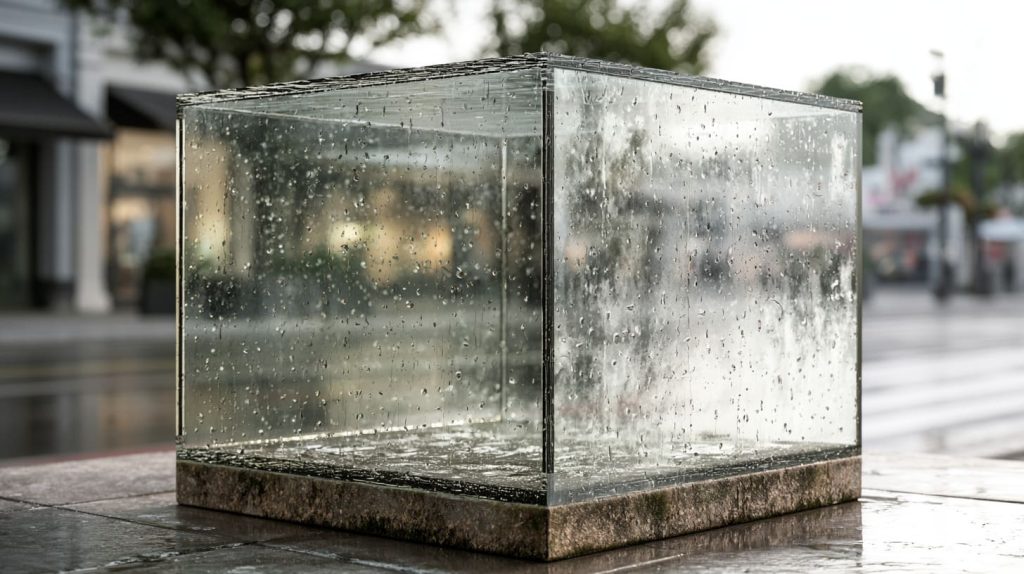
Water is patient.
It finds holes. It finds gaps. It sits inside corners. It carries dirt. In cold climates, it freezes and expands. In humid climates, it stays around long enough to create surface issues and assembly problems.
Many plastic products are called “outdoor,” but outdoor does not always mean waterproof.
That difference matters.
How Moisture Affects Outdoor Plastics
Some plastics absorb more moisture than others. Some do not absorb much water, but water can still affect the product through joints, screws, adhesives, labels, metal parts, or trapped dirt.
Moisture damage can show as:
- Surface haze
- Dirt trapped inside seams
- Mold or stains
- Adhesive failure
- Swollen labels or printed layers
- Corrosion of metal fasteners
- Cracks caused by freeze-thaw cycles
- Reduced visual quality
The mistake I see often is that people ask whether the plastic sheet is waterproof, but they forget to ask whether the full assembled product can drain, breathe, and survive real rain.
A sheet and a product are not the same thing.
Freeze-Thaw Cycle Damage
Freeze-thaw damage is a real concern in colder regions, including many parts of Canada, Europe, and the northern United States.
Water enters a gap.
Temperature drops.
Water freezes and expands.
Small stress becomes larger.
Microcracks appear.
This cycle repeats.
| Freeze-Thaw Risk Area | Why It Fails |
|---|---|
| Bonded seams | Water enters small gaps |
| Screw holes | Water sits around fasteners |
| Bottom channels | Poor drainage traps water |
| Hinges | Moving parts hold moisture |
| Layered structures | Water enters between layers |
For buyers like Jacky in Canada, this is not a small detail. A product that works in a dry indoor showroom may fail outdoors after a few freeze-thaw cycles.
Cold weather does not forgive lazy design.
Common Applications at Risk
Moisture problems are common in products that have seams, covers, or cavities.
| Product Type | Moisture Risk |
|---|---|
| Outdoor display cases | Water enters door gaps |
| Acrylic boxes | Poor sealing traps moisture |
| Equipment enclosures | Condensation forms inside |
| Protective shields | Dirt and water collect at bottom |
| Sign covers | Moisture enters edges |
| Frames | Water sits inside channels |
A fully sealed product sounds good, but it is not always the best answer. If moisture gets inside and cannot escape, the problem becomes worse.
Sometimes the smarter design is controlled drainage, not blind sealing.
Prevention Methods
Good outdoor plastic design handles water in three ways:
It blocks water where needed.
It drains water where water may enter.
It avoids trapping water in hidden areas.
| Prevention Method | Why It Helps | Practical Note |
|---|---|---|
| Drainage holes | Let water escape | Must be placed at low points |
| Overlap design | Reduces direct rain entry | Better than flat butt joints |
| Proper sealing | Protects key areas | Sealant must match material |
| Raised base | Avoids sitting water | Useful for display boxes |
| Corrosion-resistant hardware | Reduces rust marks | Stainless steel is often better |
| Avoid deep dirt traps | Easier cleaning | Important for retail display |
| Material selection | Reduces water-related aging | Depends on use environment |
I often ask customers to show me the installation direction. A product can be good in one position and bad in another. If the opening faces rain, the design must change.
Outdoor design is not only about the product. It is also about gravity.
Water goes down. Designers should remember that.
Now let us talk about something even more common than rain: screws.
Fastener and Mounting Failures
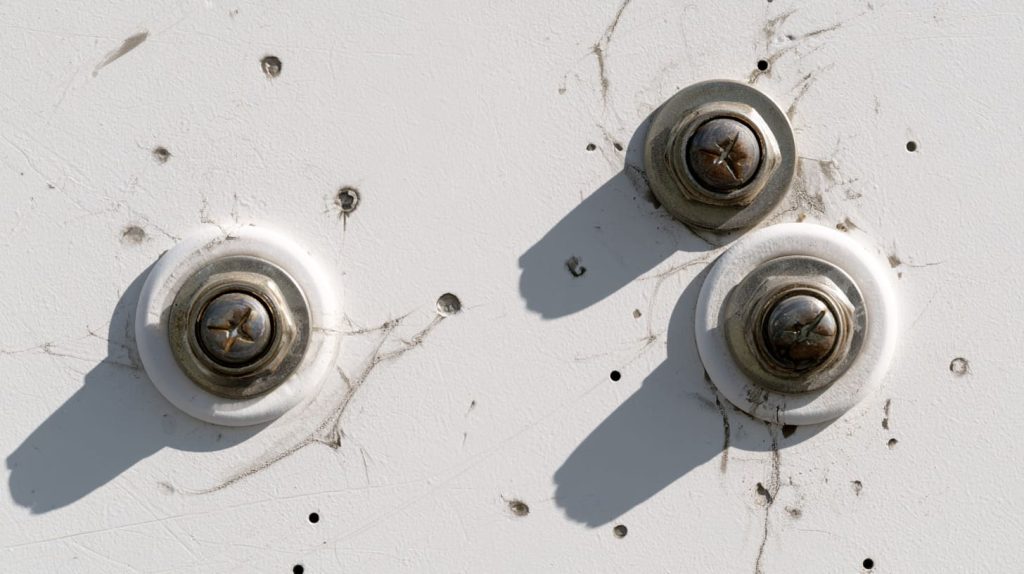
If outdoor plastic products had a small enemy, I would choose the screw.
Not because screws are bad. Screws are useful. The problem is that plastic is often installed with the mindset of metal.
People tighten the screw until it feels “secure.” Then the plastic has no space to move. Temperature changes arrive. Stress builds. Cracks appear.
A screw can look small, but it can control the life of the whole product.
Installation Mistakes That Lead to Failure
The most common installation mistakes are simple:
- Screws are over-tightened
- Holes are too small
- No washer is used
- The product is forced into position
- The surface is not flat
- Expansion gap is ignored
- Installer uses high torque power tools
- Product is mounted too close to heat source
The point I try to confirm before production is who will install the product, because a careful installer and a rushed installer can create two completely different product lives from the same acrylic part.
This is not a material problem. It is a field behavior problem.
Thermal Expansion Problems Around Fasteners
Plastic expands and contracts more than metal in many cases. If the fastener locks the plastic too tightly, the plastic cannot move.
Then stress gathers around the hole.
| Mounting Problem | Result |
|---|---|
| Tight hole around screw | Crack starts at hole edge |
| No washer | Pressure focuses on small area |
| No expansion gap | Panel bows or cracks |
| Fixed at all points | Product cannot move naturally |
| Uneven wall surface | Plastic bends under pressure |
For outdoor acrylic signs, covers, and panels, I usually prefer mounting methods that allow a little movement.
This does not mean the product should be loose. It means the product should be secure without being trapped.
There is a difference.
Best Practices for Outdoor Mounting
Good mounting design is not fancy. It is thoughtful.
| Best Practice | Why It Works |
|---|---|
| Oversized holes | Allows thermal expansion |
| Rubber washers | Reduces pressure points |
| Nylon washers | Protects surface from metal contact |
| Slot holes | Allows movement in one direction |
| Floating mount | Holds panel without locking it too tightly |
| Lower torque installation | Prevents crushing |
| Flat mounting surface | Avoids forced bending |
Acrylic should not be squeezed like a steel plate.
When I prepare custom acrylic products for outdoor installation, I like to include mounting suggestions if the customer gives me enough information. It can prevent many after-sales problems.
For example:
- Use holes slightly larger than screw diameter
- Avoid tightening until the acrylic cannot move at all
- Use washers
- Do not mount large panels without expansion allowance
- Avoid drilling on site unless the installer has experience with acrylic
This sounds basic. But basic details often decide success.
The next failure is less dramatic than cracking, but it damages the product every day: surface scratching.
Surface Scratches and Abrasion Damage
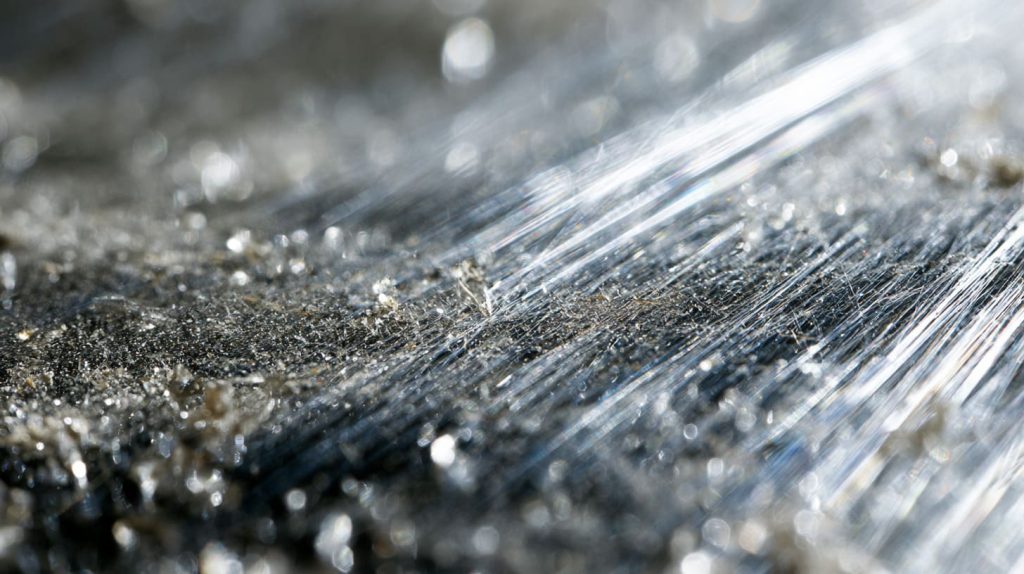
Outdoor plastic products live in a rough world.
Dust lands on them. Wind pushes small particles across the surface. People wipe them with dry cloth. Workers clean them quickly. Customers touch them. Sometimes they get rubbed by packaging, tools, or nearby objects.
Scratches happen.
For acrylic products, scratches are especially important because acrylic is often chosen for its clear and glossy surface. Once the surface is scratched, the product may still work, but it loses the clean look.
Why Outdoor Plastics Scratch More Easily
Outdoor scratching usually comes from daily use, not one big accident.
| Scratch Source | Common Example |
|---|---|
| Wind-blown dust | Fine particles rub surface |
| Dry wiping | Dust acts like sandpaper |
| Harsh cleaning cloth | Rough fabric scratches acrylic |
| Human contact | Touching, moving, opening |
| Nearby branches or objects | Repeated rubbing |
| Poor packaging before installation | Surface damaged before use |
Here is where I slow down during a project: if the product must stay visually clean in a public area, I treat cleaning behavior as part of the design, not as an afterthought.
People do not always clean gently. We should design with that in mind.
How Scratches Accelerate Aging
Scratches are not only cosmetic.
They can make aging faster because scratched surfaces hold dirt more easily. They can also scatter light and make clear plastic look cloudy.
For transparent products, scratches may create:
- Hazy appearance
- Lower visibility
- Dirt buildup
- Reduced premium feel
- More obvious UV aging
- Customer complaints about “old-looking” products
A small scratch on an industrial cover may be acceptable. A small scratch on a cosmetic display case may not be acceptable.
This is why I always connect material choice to product use. A display for luxury skincare needs a different surface standard from a warehouse guard.
Scratch-Resistant Material Options
Not every project needs the most expensive surface solution. But some projects need better scratch resistance.
| Option | Benefit | When I Consider It |
|---|---|---|
| Standard acrylic | Good clarity, normal scratch resistance | General display use |
| Hard-coated acrylic | Better surface protection | High-touch areas |
| Polycarbonate with coating | Strong impact + better surface | Protective guards |
| Textured plastic | Hides small scratches | Utility products |
| Replaceable protective film | Protects during installation | Products installed on site |
Hard-coated acrylic can help, but it costs more. It may also affect processing options. So I do not suggest it blindly.
I ask:
- Will people touch it daily?
- Will it be cleaned often?
- Is scratch visibility a big concern?
- Is the product near dust or sand?
- Is the buyer willing to pay for longer visual life?
The best answer depends on the product’s job.
Maintenance Practices That Reduce Damage
Maintenance is often ignored during product design. But for outdoor plastic, it matters a lot.
I like to give simple cleaning advice:
| Cleaning Practice | Good or Bad? | Reason |
|---|---|---|
| Soft microfiber cloth | Good | Reduces surface scratches |
| Mild soap and water | Good | Safe for many acrylic surfaces |
| Dry wiping dusty surface | Bad | Dust can scratch |
| Alcohol cleaner | Risky | May cause crazing on some plastics |
| Strong solvent | Bad | Can attack material |
| Paper towel | Not ideal | Can be rough |
| High-pressure cleaning | Risky | May damage seams or coatings |
Acrylic is strong in many ways, but it does not enjoy rough cleaning.
I sometimes tell customers: “The product can be well made and still be badly treated.”
That may sound direct, but it is true.
A good outdoor product needs the right material, the right design, and the right maintenance habit.
And this brings us to the biggest root problem: choosing the wrong material before installation even starts.
Material Selection Mistakes Made Before Installation
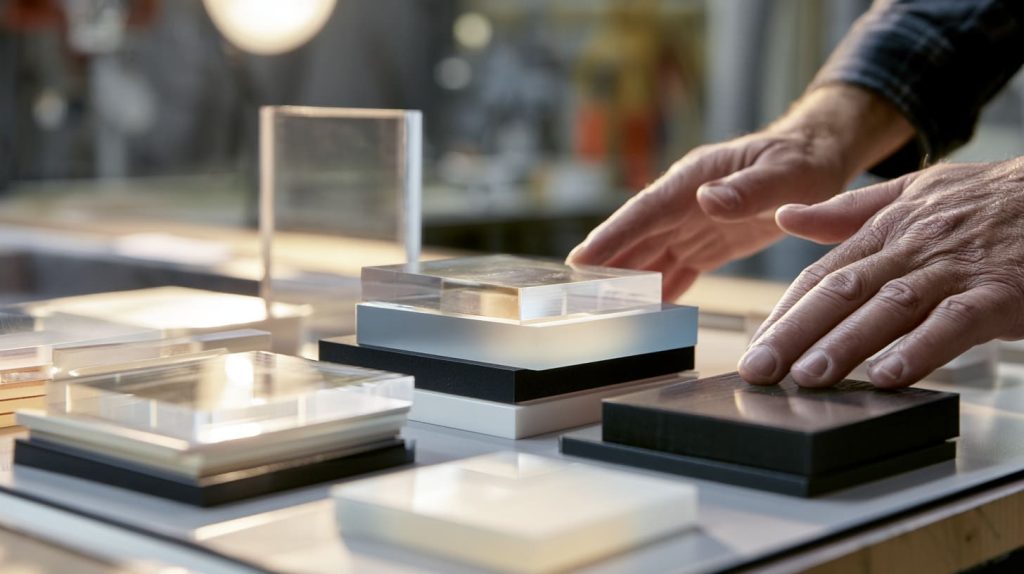
Many outdoor plastic failures are born during the quotation stage.
Not during production.
Not during shipping.
Not during installation.
During quotation.
That is when someone says, “Can we use a cheaper plastic?” or “The customer only needs it for outdoor use, nothing special.” This sounds harmless. But outdoor use is not one condition. Outdoor use can mean many different worlds.
Outdoor in Canada is not outdoor in Dubai.
Outdoor under shade is not outdoor under direct sun.
Outdoor near the sea is not outdoor inside a covered mall entrance.
Outdoor for one promotion season is not outdoor for five years.
Choosing Plastic Based Only on Price
Price matters. I understand that very well. Many B2B buyers work with budgets. Many projects have target prices. A factory must respect that.
But price alone is a dangerous guide for outdoor plastic.
The number I care about is not only unit price; I also care about replacement cost, complaint risk, installation cost, and whether the buyer can afford a failure after the product is already in the field.
Cheap material can become expensive after installation.
| Low-Cost Decision | Possible Hidden Cost |
|---|---|
| Use indoor-grade plastic outdoors | Early fading or cracking |
| Reduce thickness too much | Warping or weak structure |
| Skip UV-resistant material | Shorter service life |
| Use tight hole design | Cracks after temperature change |
| Avoid protective coating | Faster scratching or yellowing |
| Ignore installation method | Field failure and remake |
A buyer may save 8% on material but lose much more on replacement. That is not good purchasing. That is moving the cost into the future.
Matching Materials to Environmental Conditions
Before I suggest material, I like to understand the environment.
The same product may need a different material or design depending on where it will be used.
| Environment Question | Why I Ask |
|---|---|
| Is it under direct sunlight? | UV and heat risk |
| Is it near the sea? | Salt, moisture, hardware corrosion |
| Is it in a cold area? | Freeze-thaw risk |
| Is it touched by users? | Scratch and cleaning risk |
| Is it near chemicals? | Stress cracking risk |
| Is it fixed tightly? | Expansion and crack risk |
| How long should it last? | Material grade decision |
For example, a clear acrylic display case for outdoor cosmetics needs high clarity and UV resistance. A plastic equipment cover near a machine may need impact resistance and chemical resistance. A simple outdoor sign holder may need cost balance and weather stability.
One material cannot win every project.
That is why custom work needs conversation. A catalog cannot ask questions. A good supplier should.
Comparing Common Outdoor Plastics
Here is a simple comparison I often keep in mind.
| Material | Strength | Weakness | Good Fit |
|---|---|---|---|
| Acrylic | Clear, glossy, good weather resistance | Can crack under stress, can scratch | Displays, boxes, signs, covers |
| Polycarbonate | Very strong impact resistance | Scratches easier, may need UV coating | Guards, shields, protective covers |
| PVC | Cost-effective, easy to process | UV and heat performance depends on grade | Panels, signs, utility parts |
| HDPE | Tough, moisture resistant | Not clear, harder for premium display look | Outdoor utility parts |
| ABS | Easy to process, strong for indoor use | Poor UV resistance without protection | Protected outdoor or indoor products |
For Feilong Acrylic, our main strength is custom acrylic manufacturing. But I still believe a good supplier should not push acrylic into every situation blindly.
Acrylic is excellent for many display and visual products. It is not magic. It needs the right grade, thickness, design, and installation method.
That honest view helps both sides.
Questions Buyers Should Ask Before Ordering
Before placing an outdoor plastic order, I suggest buyers ask these questions:
| Question | Why It Matters |
|---|---|
| Where will the product be installed? | Environment decides risk |
| Will it face direct sunlight? | UV and heat planning |
| What temperature range will it face? | Expansion and deformation |
| How will it be mounted? | Crack prevention |
| Who will clean it? | Scratch and chemical risk |
| What cleaner will be used? | Stress cracking risk |
| How long should it last? | Material grade and cost |
| Is appearance critical? | Yellowing and scratch control |
| Is impact resistance needed? | Material choice |
| Is waterproofing or drainage needed? | Moisture control |
These questions make the project slower at the beginning, but smoother later.
I prefer a slower RFQ and a better product over a fast quote and a painful complaint.
For custom outdoor acrylic products, the best results usually come from buyers and factories talking early. The drawing tells me the shape. The use environment tells me the risk.
Both matter.
Conclusion
Outdoor plastic failure is usually not a surprise if we look closely enough before production.
UV degradation, cracking, warping, yellowing, moisture damage, fastener failure, scratches, and wrong material choice all have warning signs. They also have prevention methods.
I care about these details because I have seen what happens when people ignore them. A product can pass factory inspection and still fail after installation. A buyer can approve a sample and still face complaints months later. A factory can make the part correctly and still get blamed because nobody discussed the real use environment clearly.
That is why I do not treat outdoor acrylic and plastic products as simple “cut and polish” jobs.
I ask about sunlight.
I ask about mounting.
I ask about cleaning.
I ask about temperature.
I ask about the expected service life.
I ask where the product will sit and who will touch it.
I do this because outdoor products do not live in a drawing. They live in weather.
At Feilong Acrylic, we focus on custom acrylic products, including displays, boxes, frames, stands, racks, cabinets, blocks, organizers, and many other made-to-order items. We support OEM orders and custom designs for B2B buyers who need practical production support, not just a pretty sample.
My view is simple: a good outdoor plastic product starts before production. It starts with the right questions.
If you are planning a custom outdoor acrylic or plastic product, you can send us your drawing, size, quantity, material idea, installation method, and use environment. We can help you review the design and suggest a more practical production solution.
A better product is not always more complicated.
Sometimes it is just a better material, a larger mounting hole, a small radius, a drainage gap, or one honest conversation before the order starts.