Skip to content
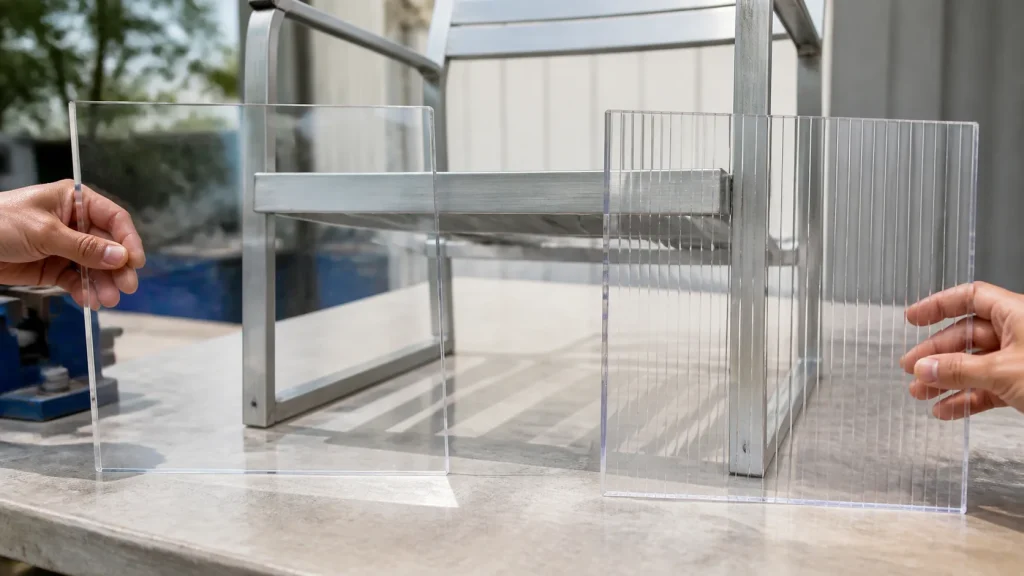
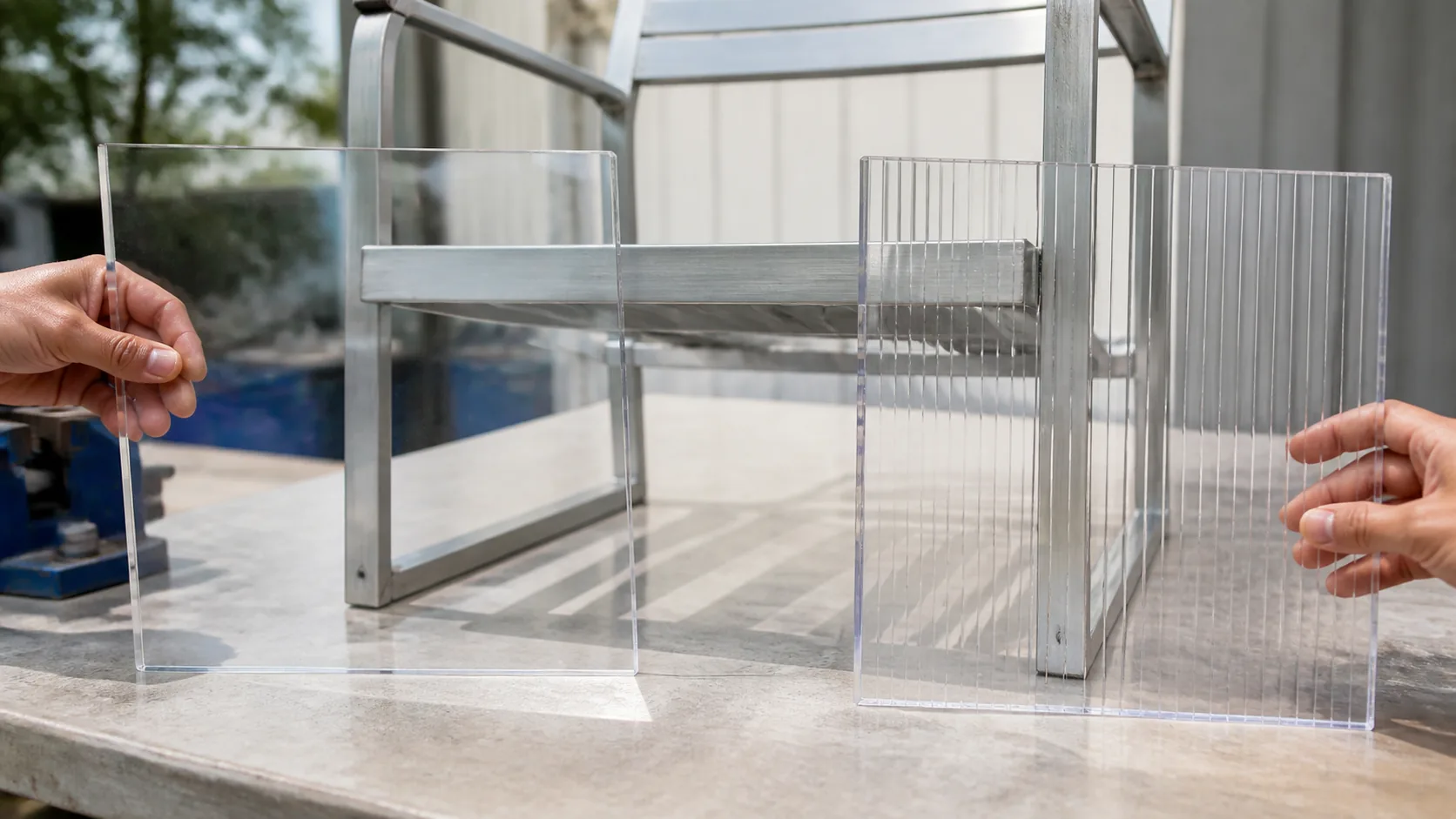
Two clear panels can look almost identical across a workbench. Put them into an outdoor furniture detail, however, and the decision becomes less about transparency and more about impact, weathering, surface appearance, fastening, and what the user will do to the part.
For a custom outdoor furniture feature, I do not begin by asking which clear plastic is “stronger.” I first ask whether the part is a polished visual accent, a table surface with controlled support, a wind screen, or a panel likely to be knocked, flexed, or used in a public setting. That distinction is where acrylic and polycarbonate separate.
Acrylic (PMMA) is often the better visual material. It is a natural fit when optical clarity, crisp machined shapes, polished edges, and long-term appearance matter. Polycarbonate (PC) earns attention when impact resistance is the primary risk. Feilong Acrylic focuses on custom acrylic fabrication, so this comparison explains when acrylic is the better manufacturing fit—and when an impact-focused PC specification deserves a separate material conversation.
The Short Answer: Choose by the Failure You Cannot Accept
| Clear, polished, premium visual appearance | Acrylic | Support spacing, hole design, cleaning, and edge finish |
| A transparent part exposed to hard knocks or vandalism risk | UV-protected polycarbonate | Grade, coating, impact scenario, and scratch expectation |
| A small supported decorative or display-style component | Acrylic | Material thickness, fixing points, and packaging |
| A clear panel in sustained direct sun | Acrylic or UV-protected PC | Exact grade, UV treatment, location, and appearance criteria |
I choose from the likely failure mode, not from a generic property chart. A polished acrylic panel can look excellent in a hospitality setting, but it should not be quietly promoted into a high-impact safety barrier. A polycarbonate panel may tolerate abuse better, but a buyer should not assume the surface will keep the same pristine appearance without considering the correct grade and coating.
The useful next question is how the panel is supported and handled—not which name appears first on a material quotation.
Where Acrylic Brings More Value
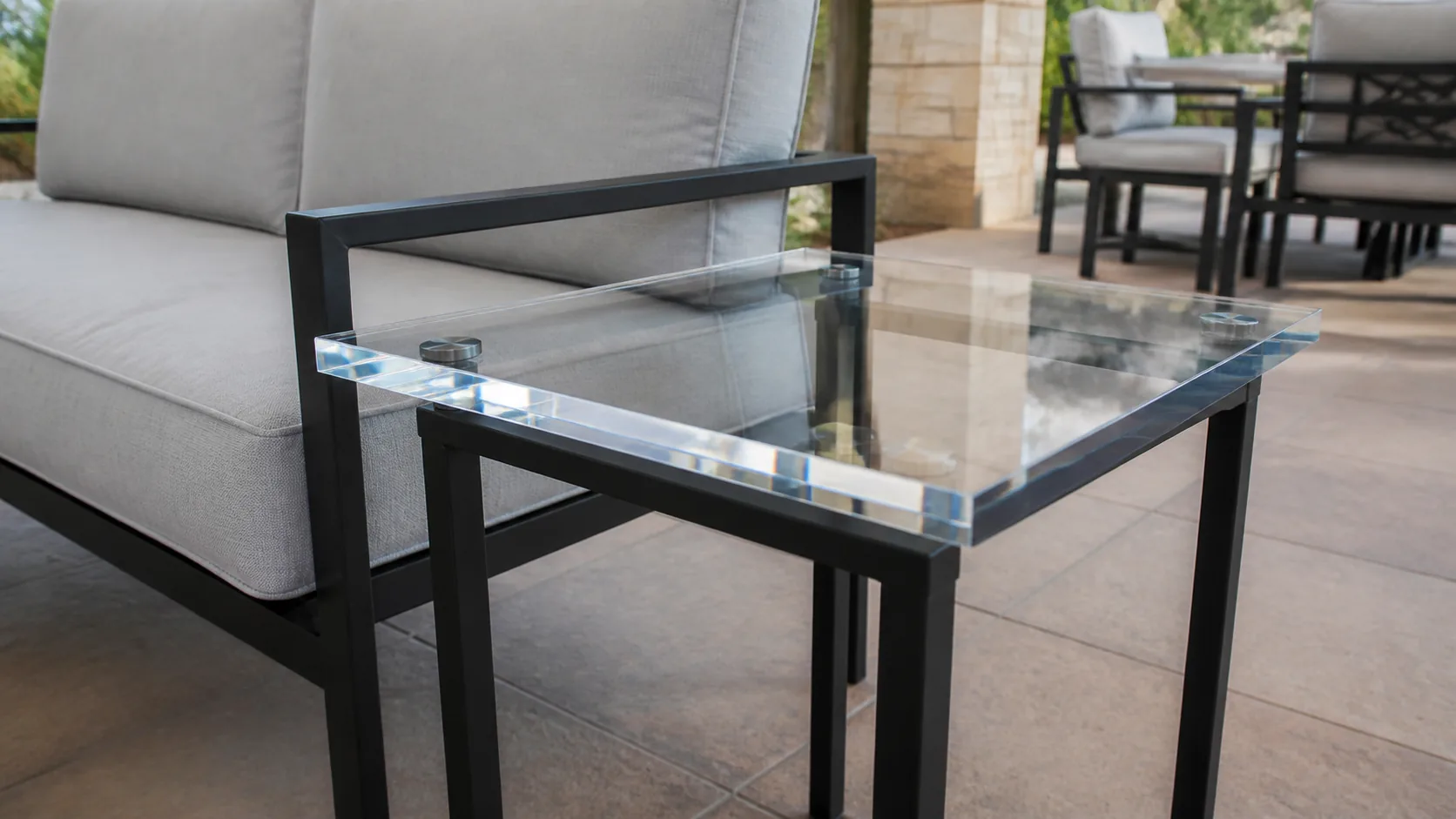
Acrylic is usually the stronger choice when the outdoor furniture component is expected to look deliberate at close range: a clear side-table top on a supported frame, a display-style panel, an illuminated accent, a privacy detail, or a transparent feature where polished edges are part of the design.
When I review an acrylic concept, I focus on the visual standard before selecting a finish. Under bright outdoor light, fine scratches, a cloudy edge, an uneven glue line, and a rough hole can become more visible than they were in a sample room. Acrylic gives us useful fabrication options—CNC machining, laser cutting, polishing, drilling, bonding, bending, and assembly—but each one should serve the design rather than become decoration.
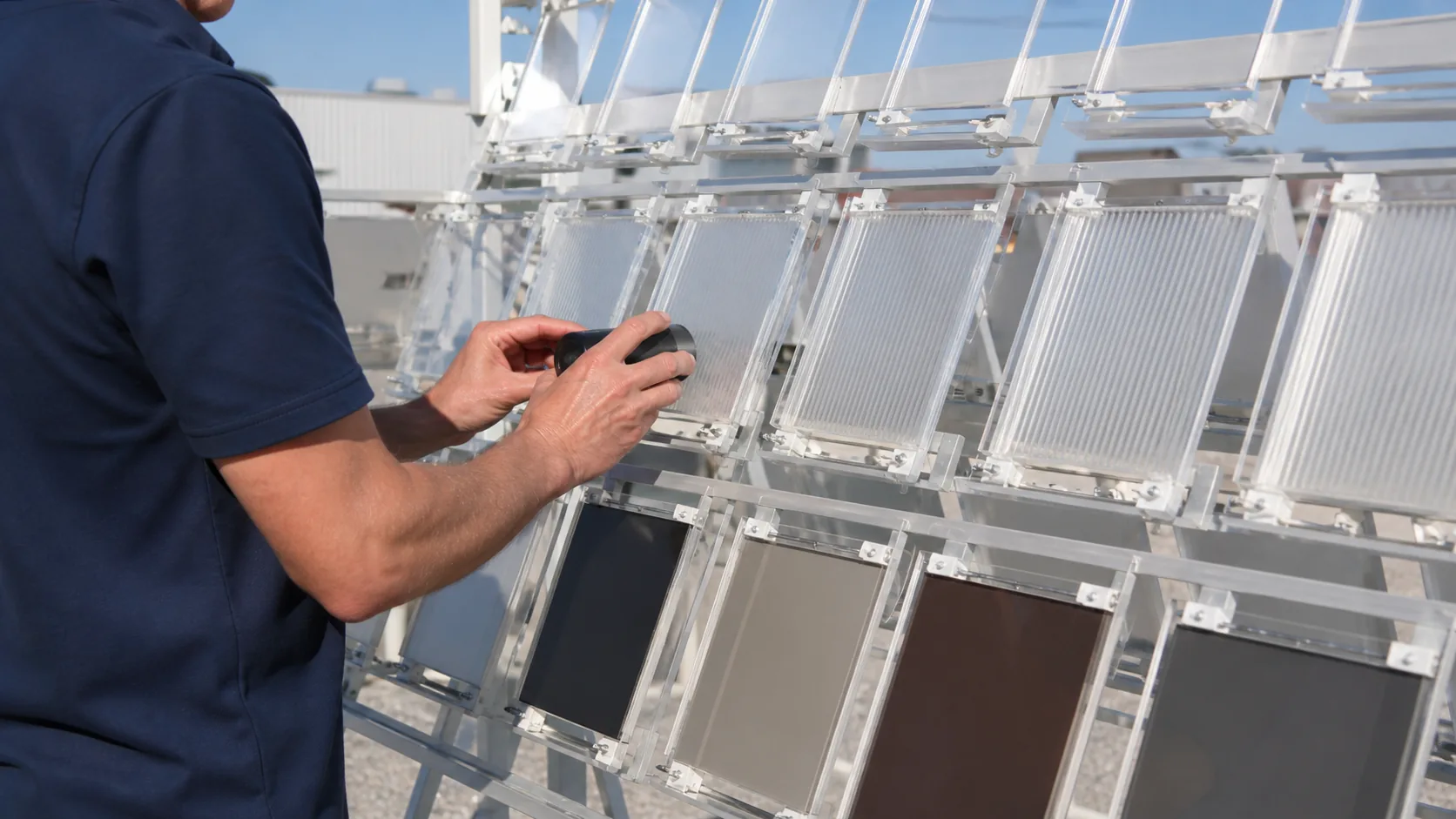
For weathering, I would specify the sheet grade and actual exposure rather than promise a universal outdoor life. The National Research Council Canada record on long-term PMMA weathering is useful context for optical performance, but it does not replace a decision about thickness, support, fasteners, cleaning, or a buyer’s local climate.
Where Polycarbonate Is the Safer Material Direction
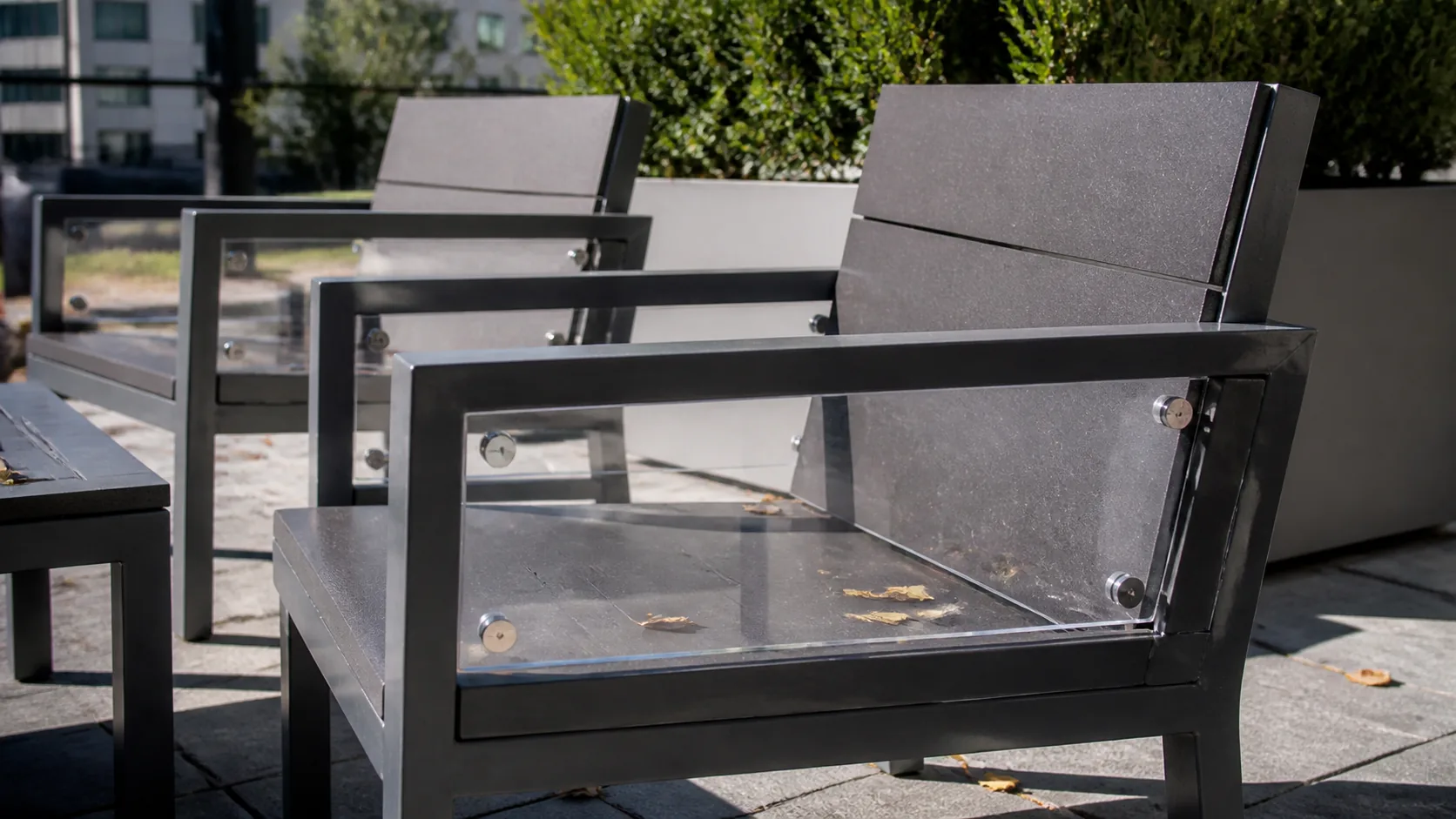
Polycarbonate becomes the more sensible direction when the clear part is likely to take a hard impact: public seating near busy traffic, a protective panel, a low-level feature exposed to misuse, or an application where a crack would create a larger safety or replacement problem.
My judgment is simple here: if the design’s main risk is a sudden impact rather than a cosmetic flaw, I would ask for a polycarbonate option before trying to over-engineer an acrylic panel. That does not make PC a universal outdoor answer. It changes the questions. Surface scratching, clarity, coatings, heat, drilling, and the exact UV-protected grade must be reviewed as part of the material specification.
For long-term outdoor PC, the UV-protected surface is not a minor detail. SABIC’s LEXAN outdoor-weathering technical manual describes the role of UV-protected surfaces in maintaining weathering performance. Treat that as a grade-selection requirement, not a reason to assume every PC sheet behaves the same outdoors.
Outdoor Exposure Changes the Material Conversation
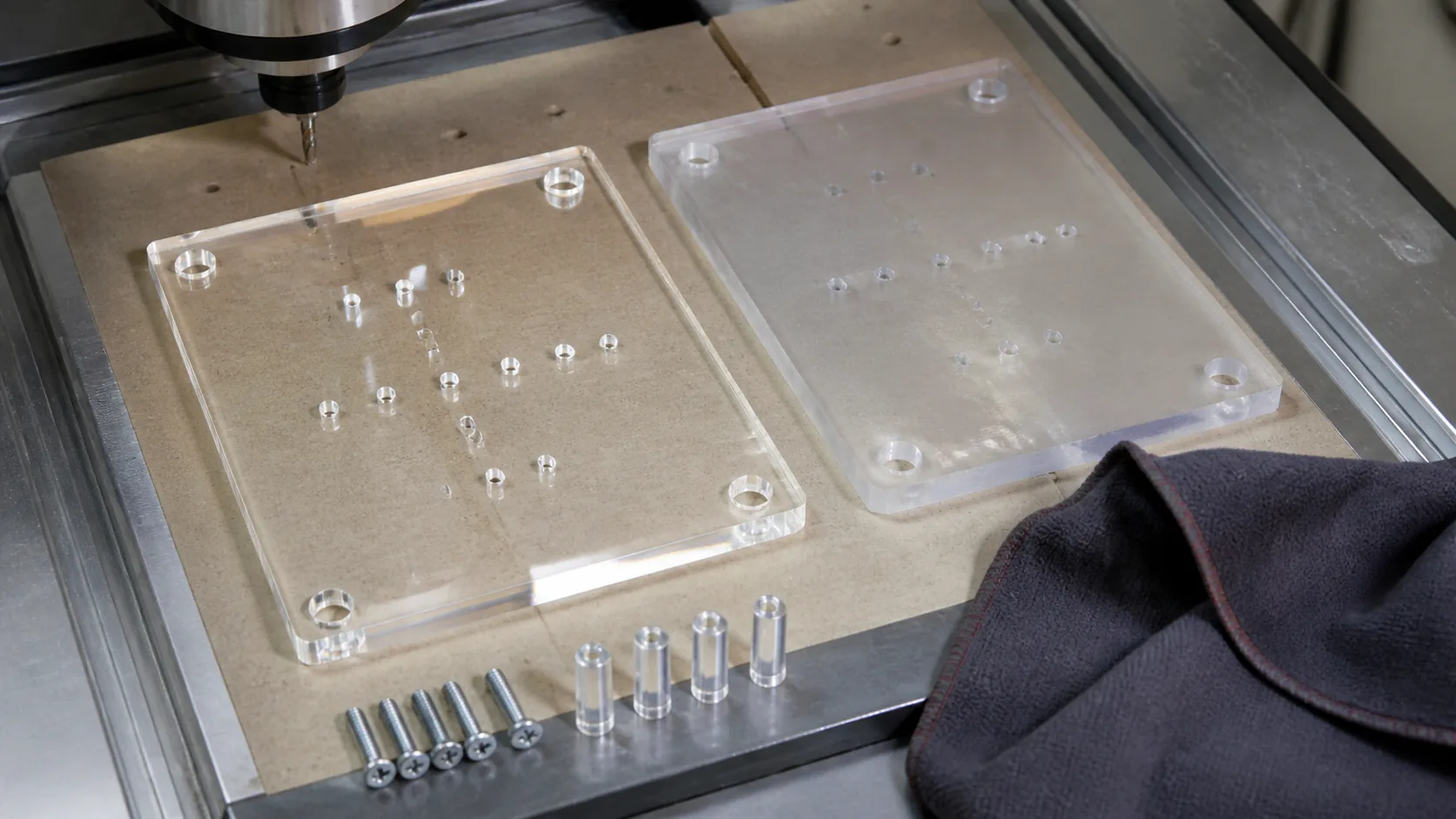
Sun, heat, wind-blown dust, rain, cleaning habits, salt exposure, and storage conditions all influence a transparent outdoor feature. A covered terrace in a mild climate is not the same job as an exposed rooftop or public poolside area.
I would put the exposure location directly on the drawing or brief, because “outdoor use” is too vague to guide a good material choice. For acrylic, check the visual acceptance standard after fabrication and the risk of stress around holes or sharp internal corners. For PC, name the UV-protected grade and whether a surface treatment is needed for the expected handling and appearance.
Do not use a single accelerated-weathering number as a blanket promise. Material grade, thickness, panel geometry, pigment or coating, cleaning chemicals, and installation all change what the buyer will see in service.
Fabrication, Fastening, and Cleaning Matter as Much as Resin
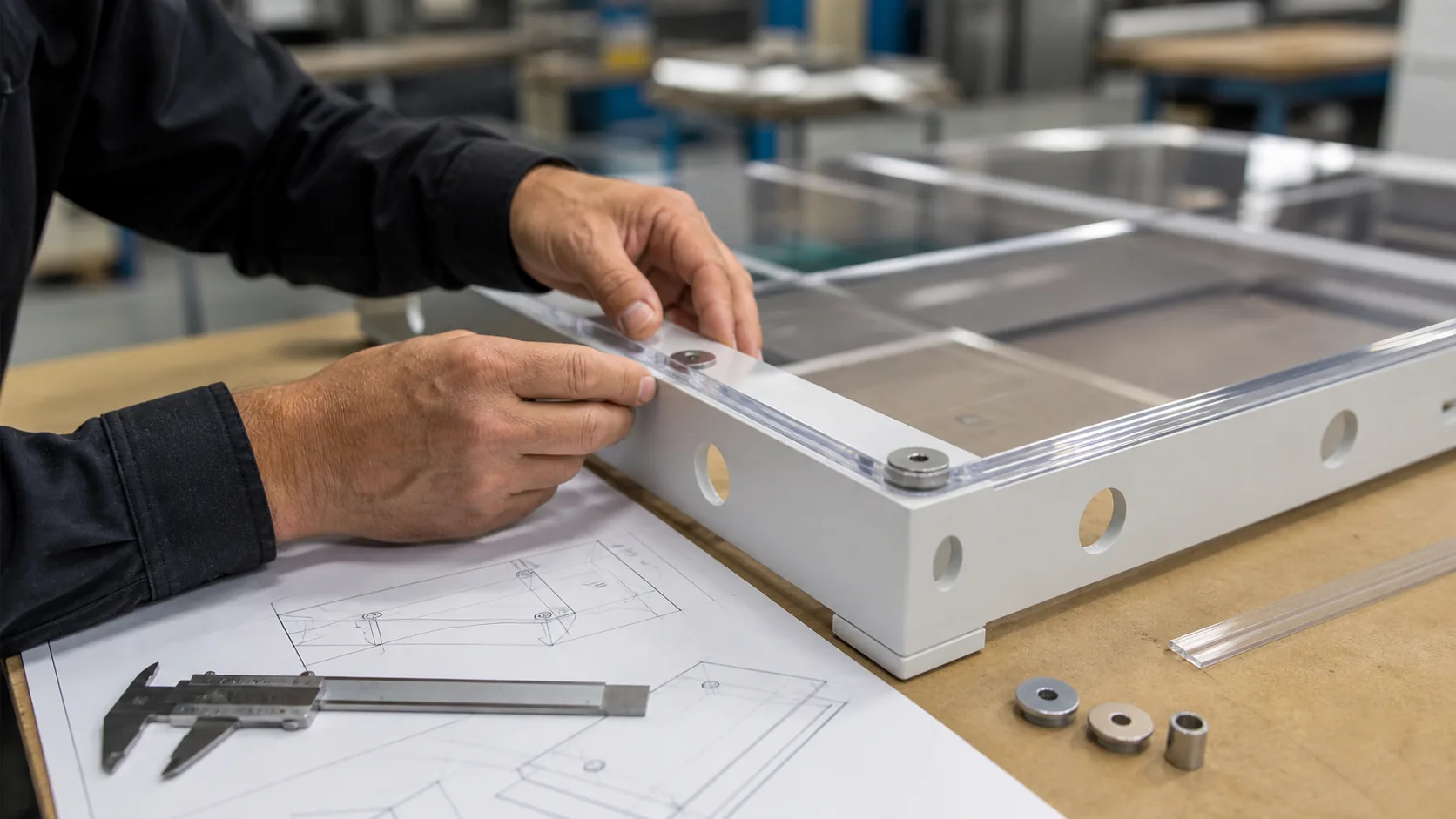
For an acrylic furniture component, the drawing should show more than the outside shape. It should make the support frame, fixing points, hole positions, edge treatment, and assembly order visible. A clear panel may be stable when properly supported yet develop problems if a screw is over-tightened or a tight hole leaves no allowance for normal movement.
I check hole-edge distance, corner radii, washers, standoffs, and contact surfaces before approving a transparent part for production. Those details often decide whether the product feels carefully engineered or becomes a return risk after installation. They also determine whether acrylic fabrication is a good fit for the project.
Cleaning should be specified with the same care. The buyer should confirm the cleaning products and frequency, especially for parts that will be touched often or wiped after outdoor use. Surface appearance is a design requirement, not a final-stage polishing problem.
Build the Sample Around the Real Outdoor Use
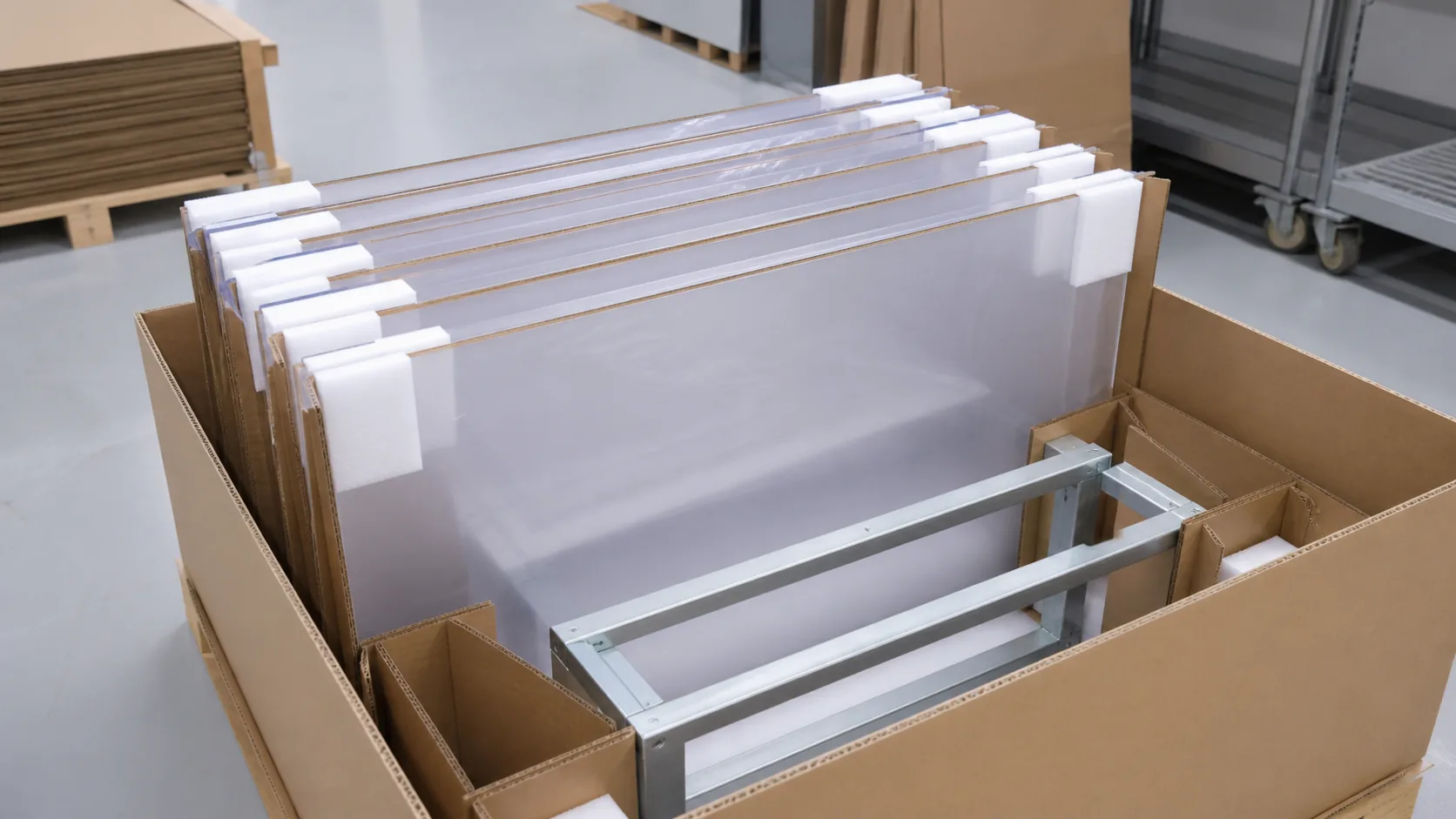
The most productive sample is not always a full furniture set. Often it is a representative transparent component with the real frame, hardware, edge finish, and packing method. That lets the team review fit, appearance, handling, and installation before a larger production commitment.
For quotation, I would request a drawing or reference image, overall dimensions, material preference, thickness expectation, clear or colored finish, outdoor exposure, hardware, expected load or impact conditions, quantity, and packaging requirements. Not every project needs every field, but an incomplete brief creates guesses precisely where transparent parts are least forgiving.
Packaging also deserves an early decision. Protective film, foam corners, separators, and carton layout should match the cosmetic standard. A well-made panel that reaches the buyer scratched has not completed its job.
Conclusion
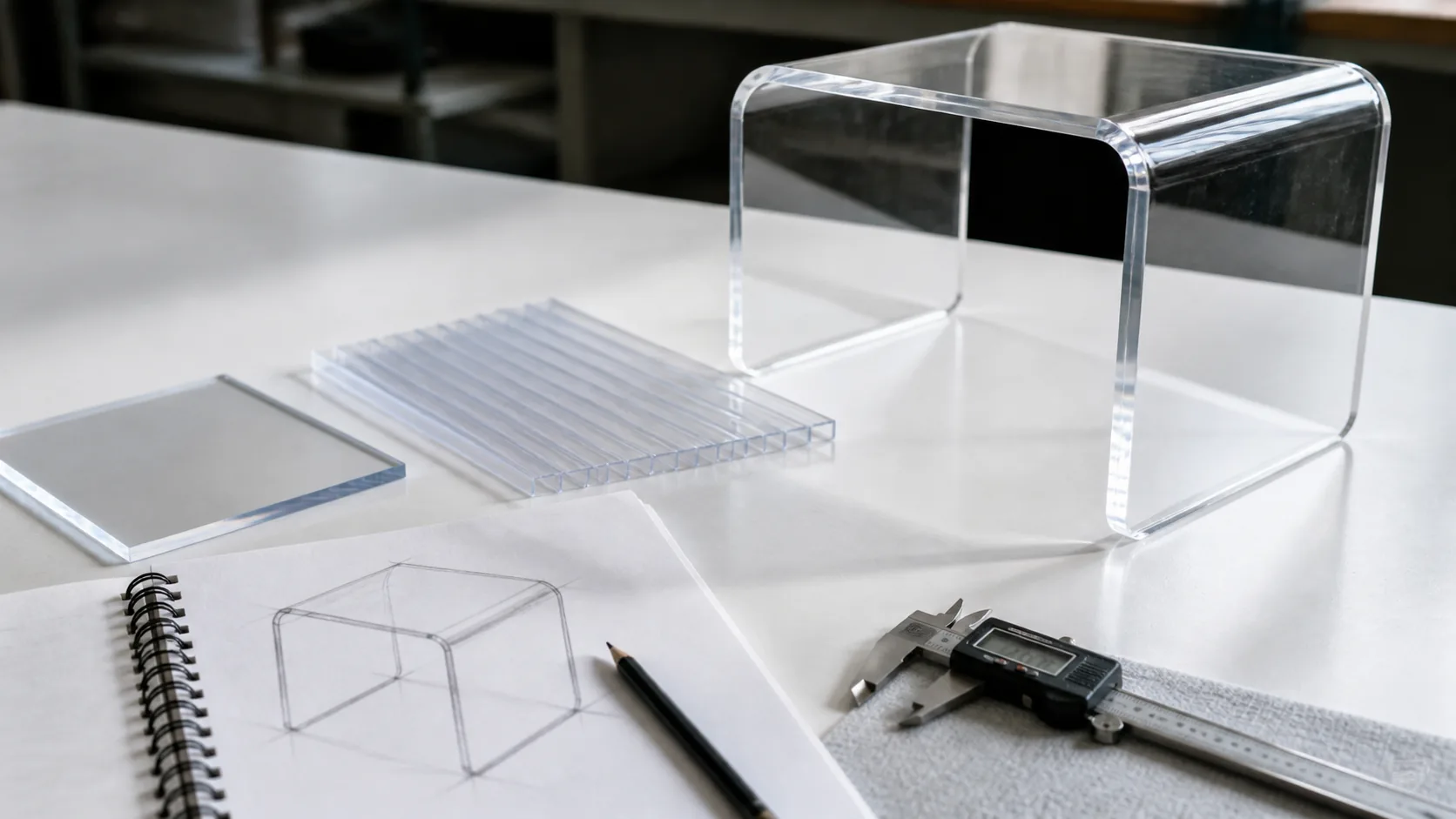
For outdoor furniture details where clarity, polished appearance, and custom acrylic fabrication matter most, I would begin with acrylic and design the support, holes, hardware, and packaging around it. For a clear feature where hard impact is the defining risk, UV-protected polycarbonate should be evaluated instead.
I reach that view because material selection works best when it starts with the failure the buyer cannot accept: an obvious scratch, a cracked hole, a cloudy surface, a damaged shipment, or a panel that cannot tolerate its real environment. Send us a drawing or reference photo with the support points, dimensions, intended exposure, and visual standard. We can review whether a custom acrylic component is the right fabrication direction before quoting.