Skip to content

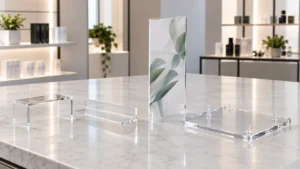
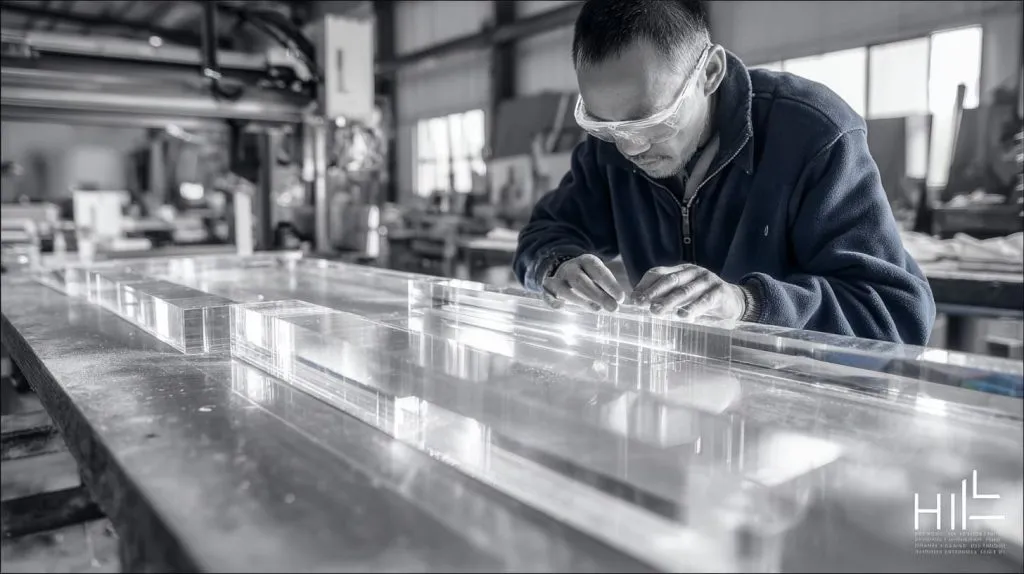
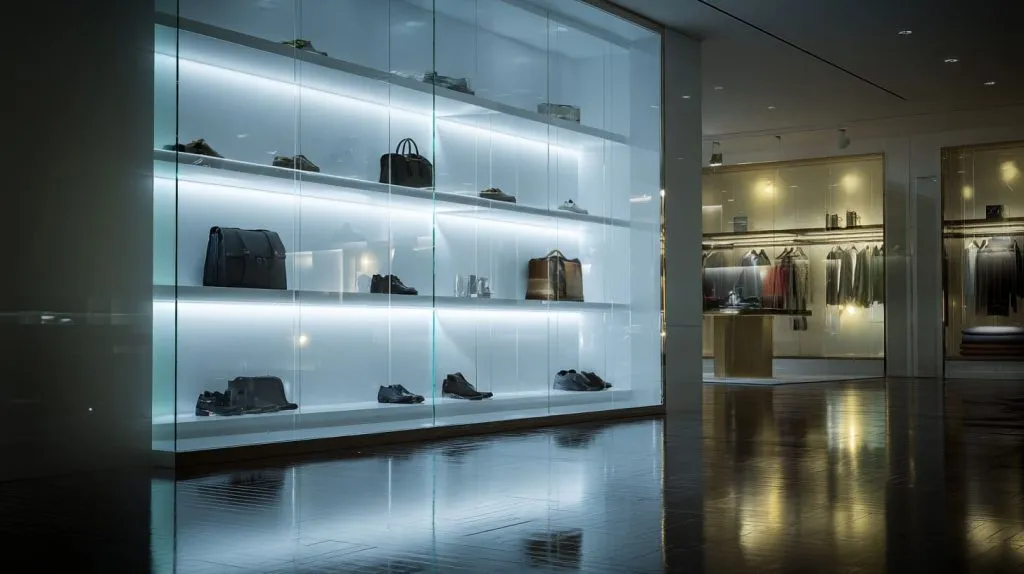
Acrylic looks simple when it is standing inside a shop window.
A clear panel.
A polished edge.
A clean sign.
A display box holding a product quietly under the light.
But I have learned one thing after working with custom acrylic displays for many years: the simple-looking parts often hide the hardest decisions.
A window display is not just decoration. It is a small stage. It has to catch attention from people walking by. It has to protect the product. It has to match the brand style. It has to survive cleaning, sunlight, lighting heat, shipping, and daily touch.
That is why I never look at acrylic as “just plastic.”
For window displays and signage, acrylic is popular because it is clear, light, easy to shape, and easier to fabricate than glass. It can be laser cut, CNC machined, bent, polished, bonded, printed, engraved, and made into many custom shapes. For B2B display projects, this flexibility matters a lot.
But the wrong acrylic choice can also create trouble.
A sign may look too shiny under strong light.
A window display may scratch after a few weeks.
A panel near sunlight may slowly turn yellow.
A thin hanging sign may bend or vibrate.
A beautiful sample may become risky in bulk production.
When I review a window display project, I do not only ask, “Does it look good?” I ask, “Where will it stand, how will people see it, who will clean it, and what will happen after six months?”
That small question changes the whole material decision.
What makes acrylic different from glass in displays and signage?
Glass has a special feeling. It feels hard, cold, and premium. Many luxury stores still use glass for display cabinets and windows. I understand why.
But acrylic has its own strong place.
Acrylic is lighter than glass. It is easier to machine. It is safer when handled in large panels. It can be formed into shapes that are harder or more expensive to make with glass. For custom display work, that freedom is valuable.
Here is how I usually compare them in real projects:
| Factor | Acrylic | Glass |
|---|---|---|
| Weight | Lighter | Heavier |
| Impact safety | Better resistance to breakage | Can shatter |
| Fabrication | Easier to cut, bend, polish, bond | More limited and costly |
| Optical clarity | Very clear when good material is used | Very clear |
| Scratch resistance | Easier to scratch | Better scratch resistance |
| Shipping risk | Lower breakage risk | Higher breakage risk |
| Custom display use | Very flexible | More limited |
Acrylic is not always better than glass. That would be too simple. Glass wins when scratch resistance and a heavy premium feel are the top priorities. Acrylic wins when the project needs custom shapes, lighter weight, safer handling, and better production flexibility.
This is where many buyers make the first mistake. They compare acrylic and glass only by appearance. But the better question is not “Which one looks better?” The better question is “Which one fits the real use better?”
Why material choice affects customer attention and brand image
A display material speaks before the salesperson speaks.
If the acrylic is too thin, the display may look cheap.
If the surface has glare, customers may not read the sign.
If the edge is rough, the product feels less premium.
If the color does not match the brand, the whole window feels wrong.
I once saw a buyer choose a very bright colored acrylic for a cosmetics display. The color looked exciting in the sample photo. But when the display was placed near warm store lighting, it fought with the product packaging. The display became louder than the product.
That is a quiet failure.
A display should help the product. It should not steal attention in the wrong way.
For window signage, this is even more important. People do not stop for long. They see the sign in two or three seconds. If the material reflects too much light or the contrast is weak, the message disappears.
Common mistakes buyers make when selecting acrylic sheets
The most common mistake is choosing acrylic only by price and thickness.
I understand the pressure. Buyers have budgets. Designers have deadlines. Store teams want something beautiful. Sales teams want something fast. Everybody pushes the project in a different direction.
But acrylic selection needs more thinking.
Here are the mistakes I see often:
| Mistake | What can happen later |
|---|---|
| Choosing only by low price | Poor clarity, easier yellowing, weak surface quality |
| Ignoring sunlight exposure | Yellowing, brittleness, fading |
| Using wrong thickness | Bending, weak support, poor premium feel |
| Not checking finish under real light | Glare, poor readability |
| Approving only a small sample | Bulk production may look different |
| Forgetting cleaning habits | Surface scratches and cloudy marks |
| Poor packaging planning | Cracks, chipped edges, damaged corners |
Acrylic is forgiving in some ways. But it is also honest. If the material, thickness, finish, and fabrication method are wrong, the final display will show it.
And that brings us to the first real choice: what type of acrylic should you use?
What Type of Acrylic Is Best for Window Displays?

The best acrylic for window displays depends on what the display must do.
That sounds simple. But many projects get into trouble because the buyer asks for “clear acrylic” before thinking about the store environment, product type, lighting, and viewing distance.
For window displays, I usually think about four common choices:
- Clear acrylic
- Frosted acrylic
- Mirrored acrylic
- Colored acrylic
Each one has a different job. Each one creates a different feeling.
A clear display can make the product feel open and clean. A frosted display can make the scene softer. A mirrored display can add drama. A colored display can support branding or seasonal campaigns.
The risk is not choosing the “wrong” material in general. The risk is choosing the wrong material for the specific scene.
When I judge acrylic type for a window display, I first imagine the customer standing outside the store, because the material must work from their angle, not from my sample table.
When clear acrylic works best for storefront visibility
Clear acrylic is the most common choice for window displays. It works well when the product itself should be the main focus.
I like clear acrylic for:
- Jewelry display risers
- Watch stands
- Cosmetic organizers
- Shoe platforms
- Electronics display boxes
- Product protection covers
- Transparent sign holders
Clear acrylic does not compete too much with the product. It lets light pass through. It makes the display feel lighter and more open.
But clear acrylic also shows problems easily.
Dust is visible.
Fingerprints are visible.
Glue marks are visible.
Scratches are visible.
Bad polishing is visible.
That is the funny thing about transparent material. It hides nothing.
| Best use for clear acrylic | Risk to check |
|---|---|
| Premium product display | Scratches and fingerprints |
| Small display stands | Edge polish quality |
| Transparent covers | Reflection and glare |
| Window product risers | UV exposure near sunlight |
| Sign holders | Readability under lighting |
For clear acrylic, edge quality matters a lot. A clean polished edge makes the display feel expensive. A rough edge makes even a good design feel unfinished.
Frosted acrylic is useful when the display needs a softer look.
It does not show everything clearly. It diffuses light. It gives the surface a quiet feeling. Many brands use frosted acrylic when they want a calm, premium, or modern look.
I often like frosted acrylic for beauty products, skincare displays, perfume stands, and soft luxury signage.
But frosted acrylic has one trade-off. It reduces transparency.
That can be good or bad.
If the product must be seen clearly from behind the panel, frosted acrylic may block too much detail. If the display needs to hide screws, wires, LED strips, or structural parts, frosted acrylic can be very helpful.
| Frosted acrylic advantage | Possible problem |
|---|---|
| Softer visual effect | Lower product visibility |
| Better light diffusion | Less sharp detail |
| Hides small marks better | Can look too plain if overused |
| Good for premium branding | Color may shift under warm light |
I always suggest checking frosted acrylic under the real store lighting. A frosted sheet can look clean in daylight but dull under weak indoor light.
How mirrored acrylic increases visual attraction in luxury displays
Mirrored acrylic is bold.
It catches light. It creates reflection. It can make a small display feel bigger. It can make jewelry, perfume, cosmetics, or fashion items look more dramatic.
But mirrored acrylic is not quiet. It has a strong personality.
That is why I treat it carefully.
A mirrored base can make a product look attractive. A full mirrored background can sometimes become too busy. Customers may see reflections, movement, and store lights instead of the product.
Mirrored acrylic works best when it supports the product, not when it becomes the star.
Good uses include:
- Cosmetic display back panels
- Jewelry display bases
- Small luxury product risers
- Window props for seasonal campaigns
- Decorative signage elements
The key is balance.
| Mirrored acrylic use | My concern |
|---|---|
| Display base | Fingerprints and dust |
| Back panel | Too much reflection |
| Luxury signage | Scratches on surface |
| Window prop | Strong sunlight reflection |
| Decorative insert | Color matching with brand |
Mirrored acrylic can look expensive, but it can also look messy if the store lighting is not controlled.
Choosing colored acrylic for branding and seasonal promotions
Colored acrylic is useful when a brand wants emotion.
Red feels energetic.
Black feels strong.
White feels clean.
Gold feels warm.
Blue feels calm.
Green feels fresh.
For window displays, color can help a campaign stand out. But color can also create problems if it fights with the product packaging.
I once worked on a colored display where the buyer loved the sheet color by itself. It looked beautiful. But when the product was placed on it, the color made the product label look weak. We changed the color tone, and the display suddenly felt more balanced.
That taught me something simple: a material sample is not the final display.
| Colored acrylic decision | What I check |
|---|---|
| Brand color match | Does it match packaging? |
| Seasonal display | Will it still work after the campaign? |
| Luxury product | Does the color look cheap or rich? |
| Window sunlight | Will the color fade faster? |
| Bulk order | Is color batch consistency stable? |
Colored acrylic should be chosen with the product next to it. Not alone.
And once the acrylic type is decided, the next question comes fast: how thick should it be?
How Does Acrylic Thickness Affect Display Quality?

Thickness is not only a strength issue.
Thickness changes the feeling of the whole display.
A 2 mm acrylic sign may feel light and simple. A 5 mm sign may feel stronger. A 10 mm clear acrylic block can feel premium, almost like glass. The same design can look cheap or expensive only because of thickness.
But thicker is not always better.
Thicker acrylic costs more. It is heavier. It may need more careful machining. It may create more stress during bending. It may also increase shipping cost.
When I choose thickness, I do not start with “the thickest looks better.” I start with the load, size, fixing method, and how close the customer will stand to the display.
Best acrylic thickness for small countertop displays
Small countertop displays usually do not need very thick acrylic. But they still need enough strength to stand straight, hold the product, and survive daily handling.
For small display stands, I often see these thickness ranges:
| Display type | Common acrylic thickness |
|---|---|
| Small sign holder | 2 mm to 3 mm |
| Cosmetic tray | 3 mm to 5 mm |
| Small product riser | 3 mm to 6 mm |
| Countertop display box | 3 mm to 5 mm |
| Premium small block display | 8 mm to 15 mm |
The choice depends on size and use.
If a small display only holds a light card, 2 mm or 3 mm may work. If it holds cosmetics, bottles, or small electronics, 4 mm or 5 mm feels safer. If it is a premium display block, thicker acrylic can create a strong visual effect.
But I also check the edge.
Thin acrylic can look practical. Thick acrylic with polished edges can look premium. The edge becomes part of the design.
Recommended thickness for large window signage
Large window signage needs more care.
A larger sheet can bend more easily. It may vibrate when installed near doors or air flow. If it hangs from cables or is fixed only at corners, thickness becomes even more important.
For large signage, I usually think about:
- Panel size
- Hanging method
- Distance between fixing points
- Indoor or outdoor use
- Wind or door movement
- Lighting and readability
- Edge appearance
Here is a simple reference:
| Sign type | Common thickness |
|---|---|
| Small hanging sign | 3 mm to 5 mm |
| Medium window sign | 5 mm to 8 mm |
| Large flat signage | 8 mm to 10 mm |
| Premium thick letter signage | 10 mm or more |
| Outdoor exposed sign | Depends on structure and fixing method |
For large signs, the fixing method may matter as much as thickness. A thin panel with good support can work better than a thick panel with poor support.
This is where buyers sometimes overspend. They choose a thick sheet to solve a structure problem. But the real issue may be poor mounting design.
Thicker clear acrylic has a special visual effect.
The polished edge catches light. The material feels heavier. The display feels more stable. For luxury retail, that feeling can matter.
A thick acrylic block under a perfume bottle can make the product feel more valuable. A thick clear base under jewelry can create depth. A thick sign with polished edges can feel more serious than a thin printed panel.
But there is a limit.
Too much thickness can make the display heavy, expensive, and hard to handle. It can also increase the risk of scratches during transport because heavy parts rub harder if packaging is weak.
| Thick acrylic benefit | Trade-off |
|---|---|
| Premium edge appearance | Higher material cost |
| Better stiffness | More weight |
| Stronger visual depth | Higher shipping cost |
| Better stability | More careful packaging needed |
| Luxury feeling | Longer production time sometimes |
Thick acrylic should earn its place. It should improve the design, not just increase the price.
Common thickness mistakes in custom display projects
The most common thickness mistake is copying another display without checking size and load.
A buyer may say, “We used 3 mm before, so use 3 mm again.” But the new display may be taller, wider, or loaded differently. That small change can create bending.
Another mistake is choosing thick acrylic for parts that need bending. Heat bending thick acrylic needs more control. The bend radius, temperature, and stress all matter.
Here are some thickness mistakes I often watch for:
| Mistake | Result |
|---|---|
| Too thin for large panels | Bending or vibration |
| Too thick for bent parts | Stress marks or high cost |
| Thin base with heavy products | Weak support |
| Thick parts without good packaging | Scratched or chipped edges |
| Ignoring tolerance | Assembly problems |
Thickness is like the bones of the display. If the bones are wrong, the beauty does not last.
Now thickness brings us to another question buyers often ask: should the acrylic be cast or extruded?
Should You Use Cast Acrylic or Extruded Acrylic?

Cast acrylic and extruded acrylic can look similar at first glance.
Both can be clear.
Both can be cut.
Both can be used for signs and displays.
But they do not behave the same during fabrication.
For custom display projects, this difference matters. A sample may pass because the design is simple. But when the project needs laser cutting, engraving, polishing, bending, printing, or repeated bulk production, the material type can affect the final result.
I usually do not ask whether cast acrylic or extruded acrylic is “better.” I ask which one behaves better for the process we are going to use.
What is cast acrylic and how is it made?
Cast acrylic is made by pouring liquid acrylic material into molds or between glass sheets, then letting it cure.
In simple words, it is formed in a slower way. This often gives it good optical quality and better performance for many custom processes.
Cast acrylic is often preferred for:
- Laser engraving
- Thick acrylic blocks
- Premium displays
- Polished edges
- Custom cut shapes
- High-end signage
- Display parts where clarity matters
Cast acrylic usually has better resistance to some fabrication stress. It can engrave with a cleaner white mark. It can also polish well.
But cast acrylic can have thickness tolerance variation. That means the sheet thickness may not be exactly the same across every batch or every part. For some designs, this is not a big issue. For tight assembly projects, it must be checked.
| Cast acrylic advantage | Point to check |
|---|---|
| Good optical clarity | Thickness tolerance |
| Better laser engraving | Higher cost sometimes |
| Good polishing result | Batch consistency |
| Good for premium displays | Needs correct processing |
| Suitable for thick parts | Longer material planning sometimes |
Cast acrylic is often my first thought when the project needs a premium look.
What is extruded acrylic and where is it commonly used?
Extruded acrylic is made by pushing acrylic material through a machine to form continuous sheets.
It usually has better thickness consistency than cast acrylic. It is often more cost-friendly for large flat sheet use. It can be a good choice for simple signs, flat panels, and cost-sensitive display parts.
But extruded acrylic can react differently to heat and laser processing. It may melt more easily during laser cutting. It may not engrave as beautifully as cast acrylic. It can also be more sensitive during some fabrication steps.
| Extruded acrylic advantage | Point to check |
|---|---|
| Better thickness consistency | Laser edge may be softer |
| Often lower cost | Less ideal for engraving |
| Good for flat panels | Heat sensitivity |
| Useful for mass flat parts | Surface and stress control |
| Easy sheet availability | Not always best for premium edges |
Extruded acrylic is not “cheap and bad.” That is too lazy. It can be the right material when the project needs stable flat sheets and cost control.
Which acrylic is better for laser cutting and CNC machining?
For laser cutting, cast acrylic often gives better results, especially for clear edges and engraving.
Laser cutting cast acrylic can create clean edges. Laser engraving can create a nice white effect. That is why many premium signs and awards use cast acrylic.
For CNC machining, both cast and extruded acrylic can be used. But tooling, speed, cooling, and edge finishing must be controlled.
Here is a simple comparison:
| Process | Cast acrylic | Extruded acrylic |
|---|---|---|
| Laser cutting | Usually cleaner | Can melt more easily |
| Laser engraving | Better white engraving | Less ideal |
| CNC cutting | Good with correct tools | Good but stress must be watched |
| Edge polishing | Often better | Can work, but needs care |
| Heat bending | Usable, but depends on thickness | Often easier in thin sheets |
The process should guide the material. Not the other way around.
If the drawing has many sharp inner corners, slots, holes, and polished edges, I become more careful. The material may look fine before cutting, but the stress appears after machining.
Which option offers better consistency for mass production?
Mass production is not the same as making one beautiful sample.
This is something many buyers know, but it is still easy to forget.
A sample can be adjusted by hand. A large order needs repeatable material, repeatable cutting, repeatable polishing, repeatable bonding, and repeatable packaging.
Extruded acrylic can be helpful when thickness consistency is very important. Cast acrylic can be helpful when premium optical quality and engraving quality are more important.
So the choice depends on the project.
| Production priority | Better starting choice |
|---|---|
| Premium engraving | Cast acrylic |
| Thick display blocks | Cast acrylic |
| Flat cost-sensitive panels | Extruded acrylic |
| Very consistent sheet thickness | Extruded acrylic |
| Luxury polished edges | Cast acrylic |
| Simple printed signs | Either, depending on budget |
When I review a bulk display order, I always ask which detail must stay consistent: thickness, clarity, edge quality, color, or cost. The answer decides the material path.
Material type is one part of the story. But for window displays, sunlight can quietly change everything.
How Important Is UV Resistance for Window Displays?
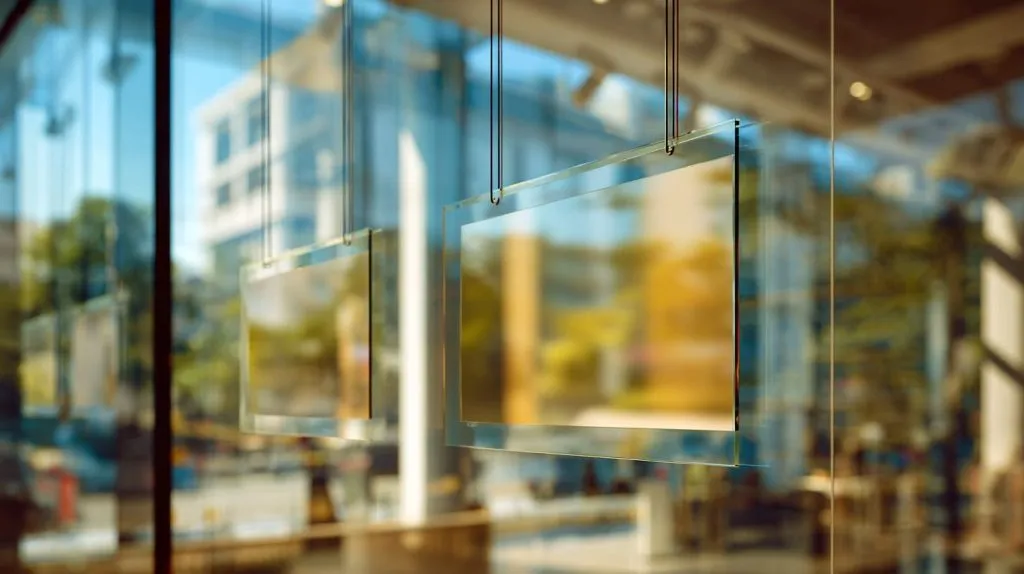
Sunlight is patient.
It does not damage acrylic in one loud moment. It works slowly. Day by day. Morning by morning. Window by window.
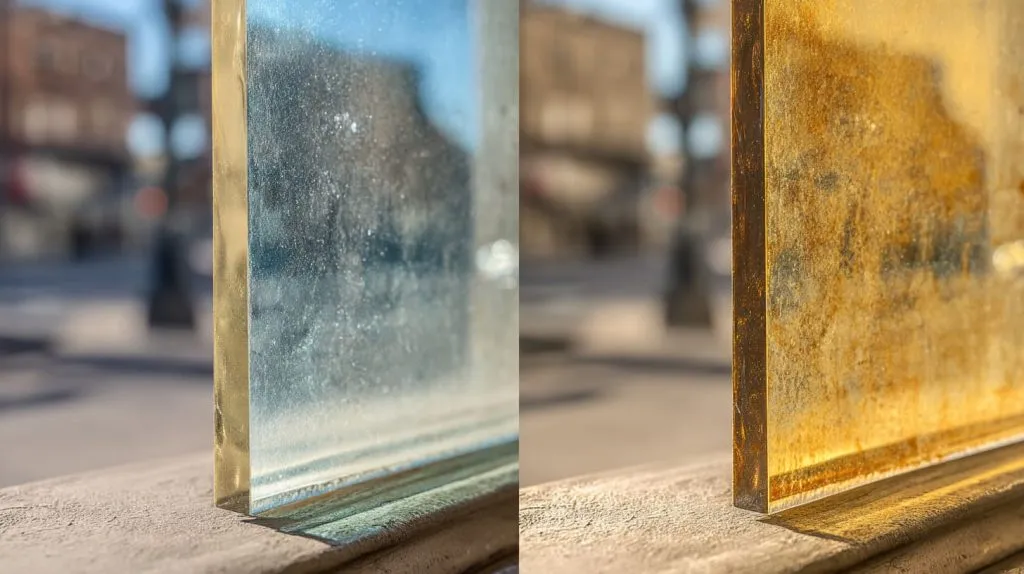
A display can look perfect when it leaves the factory. Then after months near strong sunlight, the buyer may start to see yellowing, surface change, brittleness, or color fading.
For window displays, UV resistance matters more than many people expect.
Even if the display is indoors, it may still sit near glass windows. Sunlight can pass through. Heat can build up. If the product needs to look clean for a long time, UV resistance should not be ignored.
My warning sign is simple: if the display will stand near a storefront window for months, I treat it like a sunlight project, not a normal indoor project.
How sunlight damages low-quality acrylic over time
Low-quality acrylic can change when exposed to UV light for a long time.
The changes may include:
- Yellowing
- Loss of clarity
- Surface dullness
- Brittleness
- Small cracks
- Color fading
- Weak bonding areas
The scary part is that the sample may not show these problems.
A sample is new. It looks clean. It shines under office light. Everybody feels comfortable. But a real window display may face sunlight every day.
| Sunlight problem | What the buyer may notice |
|---|---|
| Yellowing | Clear acrylic looks old |
| Brittleness | Parts crack more easily |
| Fading | Colored acrylic loses strength |
| Surface dullness | Display looks dusty even after cleaning |
| Heat stress | Bent or bonded areas become risky |
This is why I do not judge outdoor or window acrylic only by first appearance.
Why UV-resistant acrylic lasts longer in storefront applications
UV-resistant acrylic is designed to handle sunlight better.
It helps the display keep its appearance longer. It helps reduce yellowing. It is a safer choice for storefronts, bright windows, outdoor-facing signs, and long-term retail installations.
But UV-resistant acrylic may cost more.
So the decision depends on the display life.
If the display is for a short seasonal campaign, standard acrylic may be enough. If the display will stay in the same window for one year or more, UV-resistant material becomes more important.
| Display life | UV resistance need |
|---|---|
| 1-month promotion | Low to medium |
| 3-month seasonal campaign | Medium |
| 6-month retail display | Medium to high |
| 1-year storefront display | High |
| Outdoor signage | Very high |
UV resistance is like insurance. You do not always notice it on day one. But you feel its value when the display still looks clean later.
Indoor vs outdoor UV exposure differences
Indoor and outdoor exposure are not the same.
Outdoor signage faces direct sunlight, rain, dust, heat, cold, and wind. Indoor window displays may face sunlight through glass, store lighting, air conditioning, cleaning chemicals, and customer touch.
Both can damage acrylic, but in different ways.
| Environment | Main risks |
|---|---|
| Indoor, away from windows | Scratches, dust, cleaning marks |
| Indoor, near windows | UV exposure, heat, fading |
| Store entrance | Touch, dust, sunlight, vibration |
| Outdoor covered area | UV, humidity, temperature change |
| Fully outdoor | UV, rain, wind, dirt, impact |
A display near a sunny window is not “safe indoor use” in my mind. It is a mixed environment.
This is where many buyers underestimate risk. They say, “It is indoor.” But the sun does not care about that word.
When UV-coated acrylic is worth the higher cost
UV-coated acrylic or UV-resistant acrylic is worth considering when:
- The display sits near strong sunlight
- The sign must stay clear for a long time
- The brand cannot accept yellowing
- The acrylic is colored and must keep its color
- The product is premium
- Replacement cost is high
- Store locations are hard to service
Cost should not be judged only by sheet price.
If a cheaper material needs replacement after a few months, it may become more expensive than using better material from the start.
| When to pay more | Why it may be worth it |
|---|---|
| Luxury storefront display | Brand image matters |
| Long-term signage | Replacement is costly |
| Bright window area | Yellowing risk is higher |
| Chain store rollout | Consistency matters |
| Export project | After-sales correction is difficult |
UV resistance is one of those details that does not shout during sampling. But it can save a project later.
After sunlight, the next quiet troublemaker is surface finish.
What Acrylic Finish Works Best for Signage?
 !
!
A sign must be seen before it can do anything else.
That sounds obvious. But many signs fail because the finish looks good in a photo and performs badly in real lighting.
Glossy acrylic can look bright and clean. Matte acrylic can reduce reflection. Textured acrylic can add character. Anti-glare acrylic can help readability under strong light.
There is no perfect finish for every sign.
The best finish depends on viewing distance, lighting direction, background color, sign size, and how people move past it.
When I check signage finish, I like to stand at the same angle as the real viewer, because a sign that looks good straight on may disappear when seen from the side.
Why glossy acrylic creates stronger visual impact
Glossy acrylic has shine. It reflects light. It can make colors look rich and strong.
For retail signage, glossy acrylic can work well when the sign needs to feel bright, clean, and modern. It is common for brand logos, wall signs, window signs, and display back panels.
But glossy surfaces also reflect the environment.
They may show lights, windows, people, cameras, and ceiling shapes. In some spaces, that reflection makes the sign look alive. In other spaces, it makes the sign hard to read.
| Glossy acrylic works well when | Be careful when |
|---|---|
| Lighting is controlled | Strong glare is present |
| Logo needs strong color | Sign has small text |
| Viewing distance is short | Background is busy |
| Surface is cleaned often | Fingerprints are likely |
| Premium shine is needed | Customers view from angles |
Glossy acrylic is beautiful, but it needs discipline. It should not be used only because it looks nice in a sample photo.
When matte acrylic improves readability
Matte acrylic has less reflection.
It can make signage easier to read in bright spaces. It can also give the sign a softer, more modern look. I often like matte acrylic for informational signs, wayfinding signs, menu boards, and display panels under strong light.
But matte surfaces can reduce color punch.
A matte black sign may look elegant. A matte colored sign may look softer than expected. If the brand needs bright, sharp color, matte finish should be tested first.
| Matte acrylic advantage | Trade-off |
|---|---|
| Less glare | Softer color |
| Easier readability | Less shine |
| Modern appearance | Can show oily marks |
| Good under strong light | May look flat in dim spaces |
| Better for text | Needs cleaning care |
Matte is not boring. Matte is calm. But calm can become dull if the design already lacks contrast.
How anti-glare acrylic helps under strong lighting
Anti-glare acrylic is useful when reflection becomes a serious problem.
It can help when signage sits under spotlights, near windows, inside malls, or in trade show booths. It reduces the harsh reflection that makes text hard to read.
But anti-glare material also affects clarity.
If the sign needs sharp detail behind the sheet, anti-glare may soften the view. That is why it should be tested with the real printed graphics or product background.
| Anti-glare acrylic is useful for | Possible concern |
|---|---|
| Bright retail stores | Slight visual softness |
| Window signage | Reduced sharpness |
| Menu or information signs | Surface cleaning |
| Museum-style displays | Cost |
| Trade show panels | Batch consistency |
The question is not “Do we need anti-glare?” The question is “Will glare stop people from reading the sign?”
If yes, anti-glare is not a luxury. It is a practical fix.
Choosing finishes for illuminated signage
Illuminated signage needs extra care.
Light changes everything. A material that looks good without light may show hotspots when lit. A glossy finish may create reflection. A matte finish may diffuse light but reduce sharpness. A colored sheet may shift color when LEDs turn on.
For illuminated signage, I usually check:
- LED color temperature
- Acrylic transparency
- Diffusion effect
- Surface reflection
- Sign distance from viewer
- Back panel color
- Printed graphics
- Heat from lighting
| Sign type | Finish suggestion |
|---|---|
| Edge-lit sign | Clear or specially designed light-guide acrylic |
| Backlit logo | Diffusion acrylic or frosted acrylic |
| Bright window sign | Matte or anti-glare finish |
| Decorative illuminated panel | Colored or frosted acrylic |
| Premium logo sign | Glossy front with controlled lighting |
Lighting makes small mistakes bigger. A tiny hotspot can pull attention away from the message.
And that leads to the next part: how acrylic and lighting work together.
How Does Lighting Affect Acrylic Display Performance?
Acrylic and lighting can be good friends.
But they can also argue.
Light can make acrylic look clean, deep, and premium. It can also reveal scratches, dust, glue marks, uneven edges, and poor diffusion. When LED lighting is involved, material choice becomes more important.
A display that looks normal in daylight may look very different when LEDs turn on.
My habit is to test acrylic with the actual light source whenever possible, because guessing lighting performance from a sheet sample is like judging soup by looking at the bowl.
Best acrylic for LED edge-lit signage
Edge-lit signage uses light entering from the acrylic edge.
This can create a clean glowing effect. It is often used for logos, menu boards, decorative panels, and promotional signs.
For edge-lit signage, the acrylic must guide light well. The edge must be clean. The engraving or printing must be planned correctly. If the edge is poor, the light effect becomes weak or uneven.
Important details include:
- Acrylic clarity
- Edge polish quality
- LED position
- Engraving depth
- Panel size
- Graphic density
- Light leakage control
| Detail | Why it matters |
|---|---|
| Polished edge | Helps light enter cleanly |
| Correct engraving | Controls where light appears |
| LED spacing | Reduces dark zones |
| Panel thickness | Affects light movement |
| Back reflector | Improves brightness |
For edge-lit signs, fabrication quality can be as important as the acrylic sheet itself.
How diffusion acrylic reduces lighting hotspots
Hotspots are bright spots that appear when LEDs are too visible.
They can make a sign look cheap. They can also make customers focus on the light problem instead of the message.
Diffusion acrylic helps spread light more evenly. It is useful for backlit signs, light boxes, illuminated displays, and display panels with hidden LEDs.
But diffusion acrylic reduces transparency. That is the trade-off.
| Diffusion acrylic benefit | Trade-off |
|---|---|
| Reduces hotspots | Less clear view |
| Softer light | Lower brightness sometimes |
| Better light uniformity | May need stronger LEDs |
| Hides LED dots | Can reduce sharp detail |
| Premium glow | Material cost may be higher |
A good light box is not only about bright LEDs. It is about controlled light.
Too bright can feel harsh. Too weak can feel cheap. Uneven light feels careless.
Why transparency levels matter in illuminated displays
Acrylic transparency affects how light passes through the material.
Clear acrylic passes light strongly. Frosted or diffusion acrylic spreads it. Colored acrylic changes the tone. Mirrored acrylic reflects it.
For illuminated displays, transparency should match the design goal.
| Acrylic type | Lighting effect |
|---|---|
| Clear acrylic | Sharp, bright, transparent |
| Frosted acrylic | Soft, diffused |
| Diffusion acrylic | Even light spread |
| Colored acrylic | Tinted light effect |
| Mirrored acrylic | Reflective and dramatic |
One small detail matters here: the product color.
If a display uses colored light near product packaging, it can change how the product looks. A skincare bottle may look warmer. A jewelry piece may look colder. A food package may look less natural.
Light does not just show the product. It changes the product.
Common lighting problems in acrylic signage projects
Lighting problems often appear late.
The sign is produced. The acrylic is polished. The display is installed. Then someone turns on the light and sees the problem.
Common problems include:
| Problem | Possible cause |
|---|---|
| Hotspots | LED too close, wrong acrylic |
| Dark corners | Poor LED layout |
| Uneven brightness | Bad diffusion or spacing |
| Visible wires | Poor structure design |
| Color shift | Wrong LED temperature |
| Light leakage | Poor edge control |
| Glare | Wrong surface finish |
This is why I like to discuss lighting before production, not after.
Acrylic, LEDs, structure, printing, and finish should be planned together. If each part is chosen separately, the final result can feel disconnected.
Lighting shows the truth. Fabrication decides whether that truth looks beautiful.
What Fabrication Methods Matter for Custom Acrylic Displays?

Acrylic sheet is only the beginning.
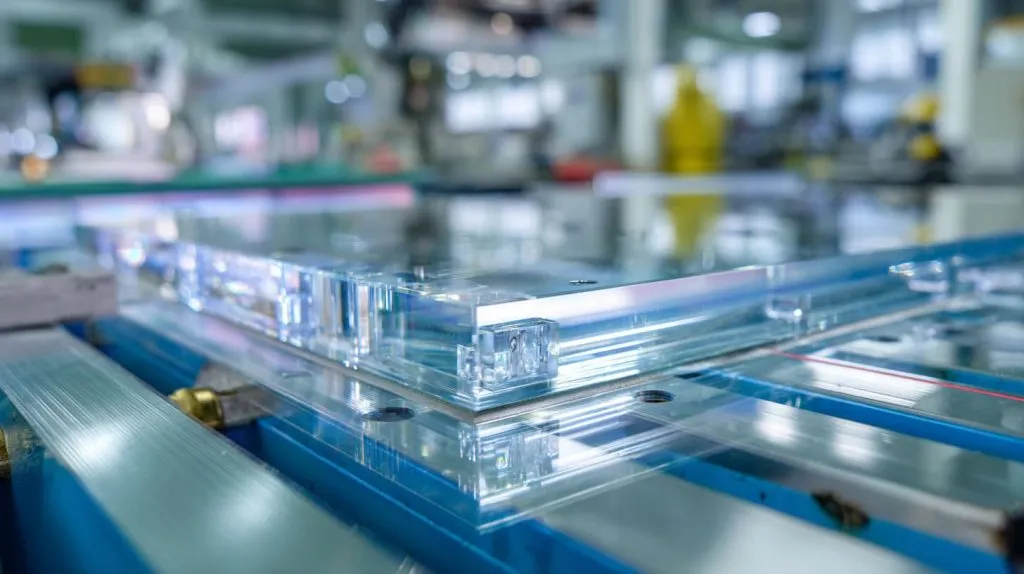
The final display depends on how the acrylic is cut, polished, bent, bonded, printed, packed, and assembled. A good material can still look bad if the fabrication is poor.
This is why custom acrylic manufacturing is not only about buying sheets. It is about controlling the process.
When I look at a custom display drawing, I pay close attention to corners, holes, bends, glue areas, and visible edges, because these small details usually decide whether the display feels premium or ordinary.
Laser cutting vs CNC cutting for acrylic signage
Laser cutting and CNC cutting both have value.
Laser cutting is often fast and clean for many flat acrylic parts. It can create smooth edges, especially on thin and medium sheets. It is good for letters, logos, small signs, and many display parts.
CNC cutting uses tools to cut the acrylic. It is useful for thicker parts, grooves, holes, special shapes, and parts that need more controlled machining.
| Cutting method | Best for | Watch for |
|---|---|---|
| Laser cutting | Letters, flat signs, thin panels | Heat marks, melted edges |
| CNC cutting | Thick parts, grooves, precise holes | Tool marks, polishing need |
| Laser engraving | Logos, patterns, light effects | Material choice |
| CNC engraving | Deeper cuts, functional details | Tool path quality |
Laser cutting looks clean, but it is not always better. CNC cutting looks more industrial, but it can give better control for thick or functional parts.
The drawing decides the process.
Flame polishing vs diamond polishing differences
Polishing changes the edge appearance.
Acrylic edges can look rough after cutting. Polishing makes them clear and bright.
Flame polishing uses heat to smooth the edge. It can be fast and beautiful when done well. But too much heat can create stress, especially near glue areas or bent parts.
Diamond polishing uses a machine to cut the edge cleanly with a diamond tool. It can create a very clear, flat edge. It is often used for premium acrylic displays.
| Polishing method | Advantage | Risk |
|---|---|---|
| Flame polishing | Fast, shiny edge | Heat stress |
| Diamond polishing | Clear, flat premium edge | Higher cost |
| Manual polishing | Flexible for small areas | Labor consistency |
| No polishing | Lower cost | Rough look |
For high-end window displays, edge polishing is not a small detail. The edge catches light. Customers may not know why the display looks premium, but they feel it.
How heat bending changes display design possibilities
Heat bending allows acrylic to become stands, holders, trays, covers, and shaped display parts.
It is one of the reasons acrylic is so useful.
A flat sheet can become a sign holder. A clear panel can become a product stand. A simple strip can become a divider. This flexibility helps custom display design a lot.
But bending also creates stress.
If the bend radius is too tight, the acrylic may crack later. If the temperature is not controlled, the bend may look cloudy or uneven. If the design has holes too close to the bend, the part may become weak.
| Bending detail | Why it matters |
|---|---|
| Bend radius | Reduces stress |
| Material thickness | Affects heating time |
| Hole position | Prevents cracks |
| Bend angle | Controls fit and appearance |
| Cooling method | Helps shape stability |
Heat bending looks simple from the outside. But good bending needs experience.
Bonding is where many acrylic displays win or lose.
A clear acrylic display often needs glue joints. If the bonding is clean, the display looks almost seamless. If the bonding is poor, bubbles, white marks, overflow, and weak joints appear.
Bad bonding is easy to see on clear acrylic.
It is like a stain on a white shirt.
For premium displays, I check:
- Glue line clarity
- Bubble control
- Joint strength
- Alignment
- Overflow marks
- Curing time
- Packaging after bonding
| Bonding issue | Final problem |
|---|---|
| Air bubbles | Cheap appearance |
| Too much glue | Visible overflow |
| Weak bonding | Cracks during use |
| Poor alignment | Assembly looks crooked |
| Short curing time | Higher shipping risk |
Bonding is not only a production step. It is part of the visual design.
And after fabrication, the display still has to survive real retail use.
How Do You Choose Acrylic for Long-Term Retail Use?
Retail is not gentle.
Customers touch displays. Staff clean them quickly. Products are moved. Dust settles. Lights stay on for long hours. Sometimes displays are packed, shipped, unpacked, installed, moved again, and cleaned with the wrong cloth.
So long-term retail use is different from showroom approval.
Acrylic must look good on day one, but it also needs to stay acceptable after daily use.
The detail I worry about most is not the first scratch; it is what happens after many small scratches, because that is when a clear display slowly loses its clean feeling.
How scratches affect storefront displays over time
Acrylic can scratch more easily than glass.
This does not mean acrylic is weak. It means the surface needs care.
Small scratches may not matter on a frosted or colored part. But on clear acrylic, scratches can catch light and become visible. In a window display, strong light can make these marks even easier to see.
Scratch risk is higher when:
- Products are moved often
- Staff clean with dry cloth
- Dust is wiped without rinsing
- Displays are stacked during storage
- Packaging is not protective enough
- Customers touch the surface often
| Display type | Scratch concern |
|---|---|
| Clear product cover | High |
| Countertop tray | Medium to high |
| Frosted sign panel | Medium |
| Colored display base | Medium |
| Mirrored acrylic | Very high |
| Hanging sign | Low to medium |
For high-touch areas, surface choice and cleaning instructions matter.
Best cleaning methods for acrylic signage
Acrylic should not be cleaned like glass.
Harsh cleaners can damage the surface. Dry wiping can drag dust across the acrylic and create fine scratches. Strong chemicals can cause cloudiness or cracking in stressed areas.
Simple cleaning is usually better.
I suggest:
- Use a soft microfiber cloth
- Remove dust gently before wiping
- Use mild soap and water when needed
- Avoid ammonia-based cleaners
- Avoid rough paper towels
- Avoid strong solvents
- Do not scrub dry dust
| Cleaning method | Result |
|---|---|
| Soft microfiber cloth | Safer surface cleaning |
| Mild soap and water | Good for normal dirt |
| Dry rough cloth | Scratch risk |
| Strong solvent | Surface damage risk |
| Paper towel | Fine scratch risk |
| Gentle air dusting | Helpful before wiping |
Cleaning habits decide how long acrylic looks new.
A good display can become old quickly if the wrong cleaning method is used every morning.
Why some acrylic displays crack during shipping
Cracking during shipping is painful because the product may leave the factory in good condition.
Acrylic can crack from impact, pressure, poor packing, sharp corners, weak bonding, or stress from fabrication.
Long, thin parts are risky. Sharp corners are risky. Large panels without support are risky. Bonded parts shipped too soon are risky.
| Shipping risk | Prevention |
|---|---|
| Corner impact | Corner protection |
| Surface scratches | Protective film |
| Panel bending | Rigid support |
| Bonded joint stress | Enough curing time |
| Heavy stacking | Strong carton design |
| Vibration | Foam separation |
Packaging is not decoration. It is part of the product.
For export orders, I care about packaging almost as much as the display itself. A beautiful acrylic display is useless if it arrives cracked.
How to balance durability and budget in bulk orders
Every buyer has a budget.
I respect that.
But the cheapest option is not always the most economical option. If the material is too thin, the surface scratches too fast, or the packaging is too weak, the project may cost more later.
The better approach is to decide where quality matters most.
For example:
| Project priority | Spend more on |
|---|---|
| Premium window display | Clear material and edge polishing |
| Outdoor-facing sign | UV-resistant acrylic |
| Chain store rollout | Production consistency and packaging |
| Low-cost short campaign | Simple structure and standard material |
| Heavy product display | Thickness and support design |
| High-touch counter display | Scratch control and cleaning plan |
Cost control is not only cutting cost. It is putting money in the right place.
A smart buyer does not buy the most expensive acrylic every time. A smart buyer buys the acrylic that fits the risk.
And before placing the order, the buyer should ask the manufacturer the right questions.
What Should B2B Buyers Ask Acrylic Manufacturers Before Ordering?
Acrylic displays are easy to quote badly.
A buyer sends a drawing. A supplier gives a price. The number looks attractive. But many details may be missing.
Material grade.
Thickness tolerance.
Edge finish.
Printing method.
Packaging.
Sample approval.
Bulk consistency.
Lead time.
Quality control.
These details decide the real result.
When I talk with a serious B2B buyer, I feel more confident when they ask specific questions, because clear questions usually lead to fewer mistakes later.
Questions to ask before approving acrylic samples
A sample is important, but it should not be approved only by looking at the front.
I suggest checking:
- Material clarity
- Thickness
- Dimensions
- Edge finish
- Corner quality
- Bonding quality
- Printing or engraving position
- Surface protection
- Packaging method
- Assembly fit
- Color consistency
- Light performance if LED is used
Here is a useful sample approval table:
| Check point | What to ask |
|---|---|
| Material | Is this cast or extruded acrylic? |
| Thickness | What is the tolerance? |
| Edge | Is it laser cut, CNC cut, or polished? |
| Surface | Is protective film included? |
| Bonding | Are there bubbles or glue marks? |
| Color | Will bulk color match this sample? |
| Printing | Will logo position stay consistent? |
| Packaging | Is this the final export packaging method? |
A sample should represent bulk production as closely as possible. If the sample is handmade in a special way, the buyer should know.
How to evaluate acrylic material quality from suppliers
Material quality is not always visible at first glance.
Good acrylic should have clean clarity, stable thickness, good surface quality, and suitable performance for the environment.
For clear acrylic, I check whether the sheet looks clean from the side. I also check edge color. Some lower-quality sheets may have a slight color cast. For display projects, that can matter.
For colored acrylic, I check consistency. The color should match the design and brand requirement. If the project needs repeat orders, color stability becomes even more important.
| Quality factor | Why it matters |
|---|---|
| Optical clarity | Affects product visibility |
| Surface quality | Affects premium appearance |
| Thickness consistency | Affects assembly |
| UV resistance | Affects long-term use |
| Color consistency | Affects brand image |
| Fabrication behavior | Affects edge and bonding |
| Certification | Supports buyer confidence |
Certifications are helpful, but they do not replace real sample checking. A good buyer uses both documents and eyes.
Why production consistency matters in chain store projects
Chain store projects are different from one-off displays.
One display can be adjusted by hand. One hundred displays need a system. One thousand displays need strong production control.
For chain stores, consistency matters because every location should look the same. If the acrylic color changes from batch to batch, or the logo position shifts, the brand image becomes uneven.
Important production consistency points include:
- Same material source
- Same thickness standard
- Same cutting program
- Same polishing method
- Same bending fixture
- Same bonding process
- Same packaging method
- Same inspection checklist
| Chain store risk | What to control |
|---|---|
| Different color tone | Material batch control |
| Uneven logo position | Printing fixture |
| Size variation | Cutting tolerance |
| Weak joints | Bonding process |
| Shipping damage | Packaging test |
| Different edge quality | Polishing standard |
Consistency is not exciting, but it is powerful. It is what makes a display program feel professional.
Packaging details that reduce shipping damage risks
Packaging should be discussed before mass production.
Not after damage happens.
Acrylic needs surface protection, corner protection, separation between parts, and cartons strong enough for export shipping. If displays are large or assembled, inner support becomes more important.
For export acrylic displays, I usually care about:
- Protective film
- Foam or EPE separation
- Corner guards
- Strong cartons
- Wooden crate if needed
- Drop and vibration risk
- Clear packing layout
- Labeling for easy unpacking
- Avoiding acrylic-to-acrylic rubbing
| Packaging detail | Purpose |
|---|---|
| Protective film | Prevents surface scratches |
| Foam separation | Prevents rubbing |
| Corner protection | Reduces impact cracks |
| Strong carton | Prevents crushing |
| Inner support | Protects shape |
| Wooden crate | Helps large or heavy orders |
| Clear packing method | Makes unpacking safer |
Good packaging does not make the display more beautiful in the store. But it makes sure the display reaches the store alive.
That is why supplier communication matters. A custom acrylic project is not only about the design file. It is about the full path from drawing to storefront.
Conclusion
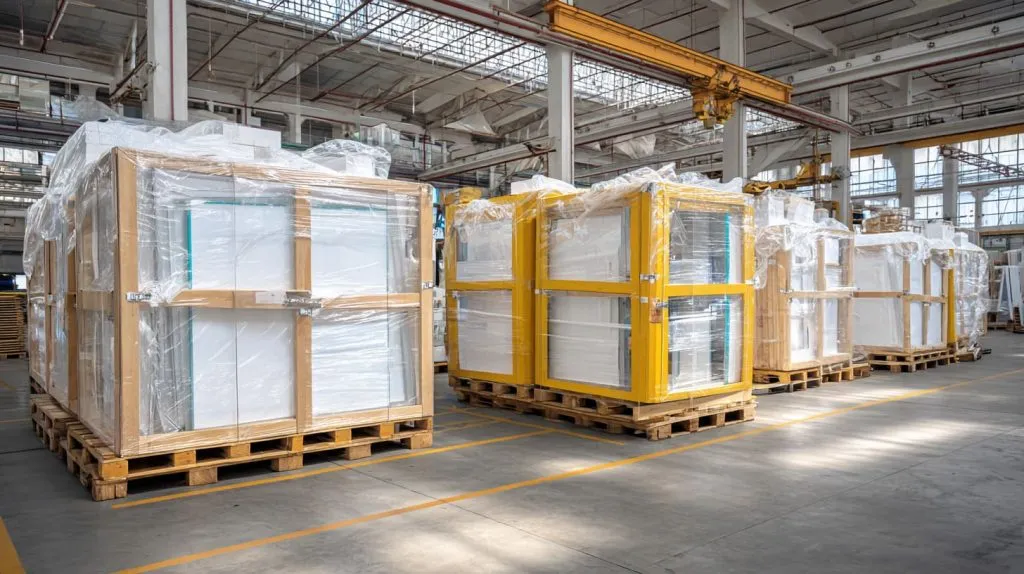
Choosing acrylic for window displays and signage is not only an appearance decision.
It is a practical decision.
The right acrylic depends on the product, the store lighting, the sunlight exposure, the finish, the thickness, the fabrication method, and the real life of the display. A clear sheet may work beautifully for one project and fail in another. A frosted panel may look premium in a cosmetics display but too soft for a bold logo sign. A thick acrylic base may feel luxury, but it may also increase cost and shipping risk.
I try to judge acrylic the same way I judge a real retail project: I look at where it will stand, how people will see it, how staff will clean it, how long it must last, and what small detail may become a big problem later.
That kind of thinking saves money.
It also saves time, emails, damaged samples, and uncomfortable conversations after delivery.
For B2B buyers like Jacky, the best result does not come from choosing the most expensive acrylic. It comes from choosing the right acrylic for the real use.
Before ordering, I would always check these points:
| Decision point | Why it matters |
|---|---|
| Acrylic type | Controls visual style and function |
| Thickness | Affects strength and premium feeling |
| Cast or extruded | Affects fabrication and consistency |
| UV resistance | Protects long-term appearance |
| Surface finish | Affects readability and lighting |
| Lighting design | Controls glow, hotspots, and visibility |
| Fabrication method | Decides final quality |
| Packaging | Protects the product during shipping |
| Supplier communication | Reduces mistakes before bulk production |
Acrylic can be simple. But good acrylic displays are never careless.
If you are planning a custom acrylic window display, signage project, store fixture, or branded display part, the safest first step is to share the use environment, size, quantity, drawing, material preference, and display goal with your manufacturer.
At Feilong Acrylic, I always prefer to understand the real use before suggesting the material. A good display should not only look nice in a sample photo. It should still make the product look good when it stands under real store light, in front of real customers, on a real business day.