Skip to content
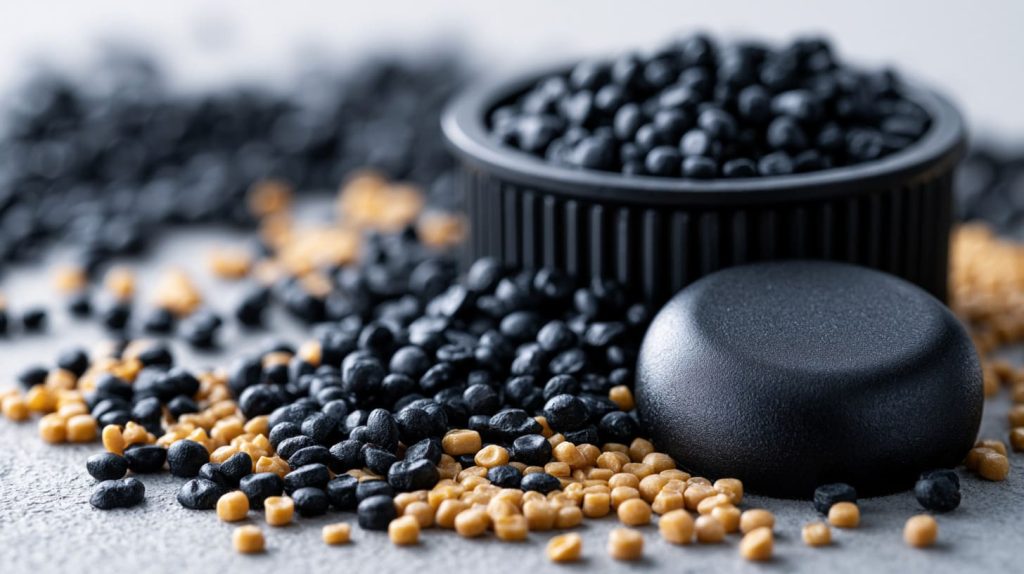
A buyer can choose the wrong plastic very easily. The sample may look fine, but later it cracks, fades, or feels cheaper than expected.
ABS material is a tough thermoplastic made from acrylonitrile, butadiene, and styrene. It is widely used for product housings, enclosures, parts, and molded products because it offers good impact strength, easy processing, and a smooth surface.
I often see buyers compare ABS with acrylic because both can become custom products. But they solve different problems. One is more about toughness and molding. The other is more about clarity and display value.
What Is ABS Material Made Of?
ABS sounds like one material, but it is actually a blend of three different parts working together.
ABS material is made of acrylonitrile, butadiene, and styrene. Acrylonitrile adds chemical resistance, butadiene adds toughness, and styrene gives ABS a smooth surface, easy processing, and good shape stability.
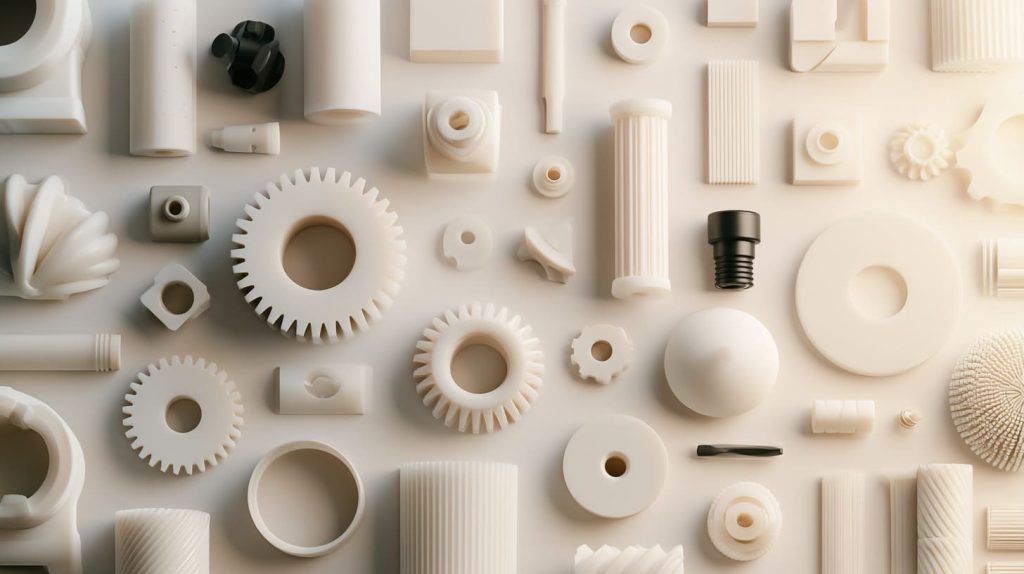
ABS is popular because it balances several useful qualities in one plastic. It is not the hardest plastic. It is not the clearest plastic. It is not the most UV-resistant plastic. But it is very practical.
The Three Parts Inside ABS
| Component | What It Adds | Simple Explanation |
|---|---|---|
| Acrylonitrile | Chemical resistance and heat stability | Helps ABS handle oils, cleaners, and moderate heat better |
| Butadiene | Impact strength | Helps ABS absorb shock without cracking easily |
| Styrene | Smooth surface and easy processing | Makes ABS easier to mold, cut, machine, and finish |
The small detail I care about is not just the name “ABS.” I want to know the grade, the thickness, and the final use, because two ABS materials can behave very differently after molding or fabrication.
Why This Blend Matters
ABS became common because it gives factories a good middle point.
It can be:
- Injection molded
- CNC machined
- Thermoformed
- Painted
- Textured
- Glued or bonded in some designs
- Used for housings and covers
I see ABS as a “workhorse plastic.” It does not try to be beautiful like polished acrylic. It tries to be useful, stable, and cost-friendly.
What Does ABS Stand For in Plastic Materials?
Many buyers hear “ABS” from suppliers, but they may not know what the letters mean.
ABS stands for acrylonitrile butadiene styrene. It is a thermoplastic polymer made by combining these three parts to create a plastic with toughness, moldability, and a smooth surface finish.
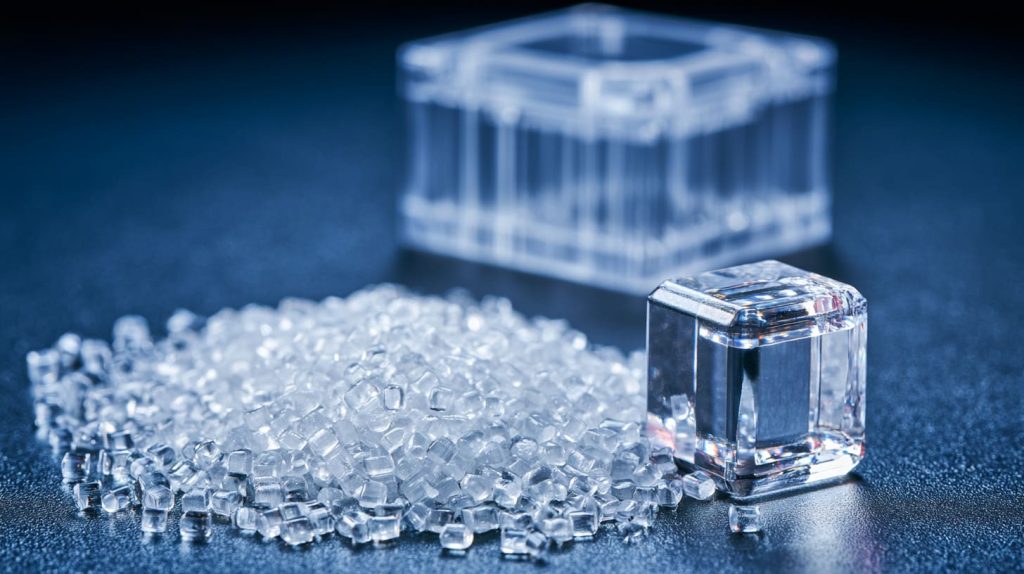
The full name is long, so people usually say ABS. In factories, this is normal. Engineers say ABS. Buyers say ABS. Suppliers say ABS. Everyone understands the short name.
What Each Letter Means
| Letter | Full Word | Main Role |
|---|---|---|
| A | Acrylonitrile | Adds chemical and heat resistance |
| B | Butadiene | Adds impact strength |
| S | Styrene | Adds surface quality and processability |
When I talk with a buyer, I do not stop at the full name. I ask what the part must do every day, because the real question is not “what does ABS mean?” but “can this ABS grade survive the actual working environment?”
Why the Name Can Mislead Buyers
Some buyers think ABS is one fixed material. That is not always true.
ABS can have different:
- Impact levels
- Heat resistance
- Surface textures
- Flame-retardant grades
- UV-stabilized grades
- Color options
- Recycling content
- Mold shrinkage rates
So, the name tells us the material family. It does not tell us the full performance.
Is ABS Material a Plastic or Resin?
This question comes up because suppliers use both words in different ways.
ABS is a plastic material, and it is also sold as resin pellets before processing. In simple terms, ABS resin becomes ABS plastic products after molding, extrusion, forming, or machining.
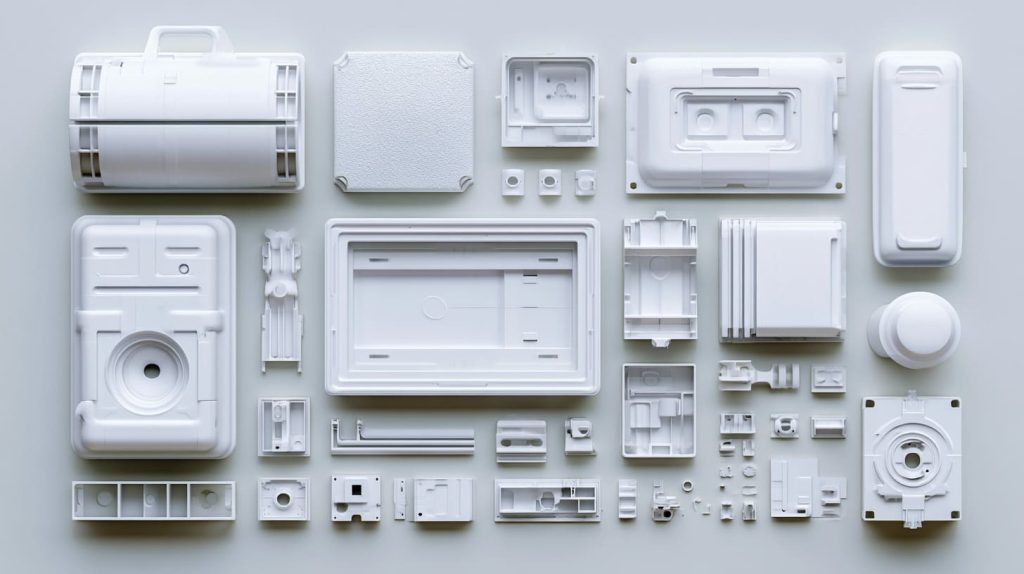
In daily business, people often use “ABS plastic” when they talk about the finished product. They use “ABS resin” when they talk about the raw material.
ABS Resin vs ABS Plastic
| Term | Meaning | Example |
|---|---|---|
| ABS resin | Raw material before production | Small pellets used for injection molding |
| ABS plastic | Finished or semi-finished material | A housing, cover, sheet, or molded part |
| ABS sheet | Flat ABS material | Used for forming, cutting, or fabrication |
| ABS part | Finished component | Enclosure, panel, cover, bracket |
This is where communication can go wrong: I always check whether the buyer is asking about raw resin, ABS sheet, or a finished ABS part, because pricing and production methods are completely different.
Why This Matters for Custom Projects
For custom products, the material form affects cost and lead time.
For example:
- ABS resin is used for injection molding.
- ABS sheet is used for vacuum forming or fabrication.
- ABS blocks or plates may be CNC machined.
- ABS parts can be painted or post-processed.
A buyer may ask, “Can you make this in ABS?” That is only the start. I still need to understand the design, quantity, tolerance, surface, color, and use environment.
What Are the Main Properties of ABS Material?
ABS is chosen because it gives a useful mix of strength, surface quality, and processing flexibility.
ABS material has good impact resistance, moderate heat resistance, light weight, easy molding, good surface finish, and fair chemical resistance. Its weak points are poor UV resistance and limited outdoor aging performance without protection.
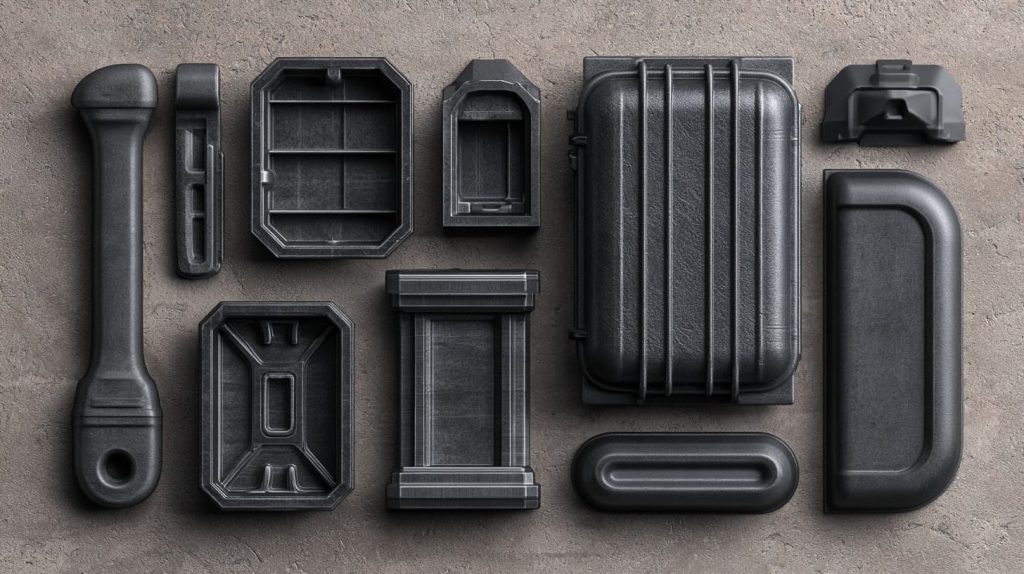
ABS is not perfect. No plastic is. But it is very balanced, and that is why factories use it so often.
Key ABS Properties
| Property | ABS Performance | What It Means in Real Products |
|---|---|---|
| Impact resistance | Good | It can handle drops and knocks better than brittle plastics |
| Weight | Light | Good for handheld products and covers |
| Surface finish | Good | Can be smooth, textured, painted, or plated |
| Machinability | Good | Can be CNC cut or drilled in many cases |
| Heat resistance | Moderate | Fine for many indoor products, not high-heat use |
| Chemical resistance | Fair to good | Handles some cleaners and oils, but not all solvents |
| UV resistance | Weak | Can yellow or become brittle outdoors |
| Transparency | Poor | Standard ABS is opaque |
For real projects, I usually care less about the material chart and more about the weak point. If one weak point matches the customer’s use condition, that weak point becomes the project risk.
Where ABS Performs Well
ABS performs well when the product needs:
- A solid feel
- A molded shape
- A smooth finish
- A light body
- Good impact resistance
- A lower cost than some engineering plastics
Where ABS May Not Be Enough
ABS may not be the best choice when the product needs:
- Long outdoor exposure
- High transparency
- Strong scratch resistance
- High heat resistance
- Premium display appearance
- Strong resistance to harsh solvents
That is why ABS and acrylic are not direct replacements in every case.
What Is ABS Plastic Commonly Used For?
ABS appears in many daily products because it is easy to shape and strong enough for practical use.
ABS plastic is commonly used for product housings, electronic enclosures, appliance parts, automotive trim, toys, tool handles, protective covers, luggage parts, and many molded consumer products.
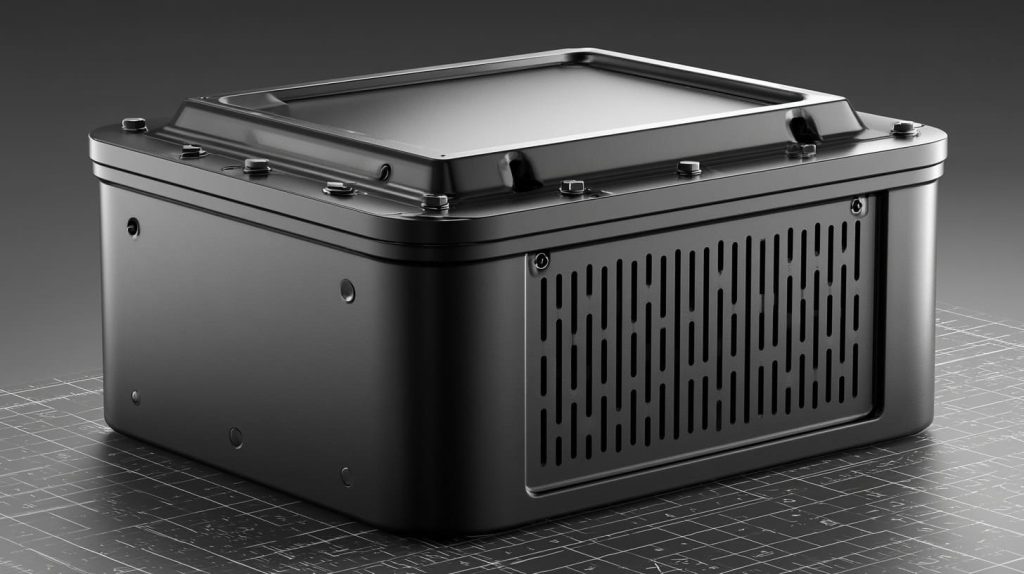
Many people have touched ABS without knowing it. It is the plastic behind many tough everyday items.
Common ABS Applications
| Application | Why ABS Is Used |
|---|---|
| Electronic housings | Good impact strength and moldability |
| Appliance covers | Smooth surface and stable shape |
| Automotive interior parts | Tough, light, and easy to texture |
| Toys | Durable and easy to mold |
| Tool handles | Good grip feel and impact resistance |
| Protective covers | Tough and cost-effective |
| Luggage parts | Light and shock-resistant |
| Prototype shells | Easy to CNC machine or 3D print in some cases |
One thing I check early is whether the product must look “premium” or simply work well. ABS can look neat, but it does not give the same high-end transparent look that acrylic gives for display products.
Why ABS Is So Common
ABS is common because factories like it. Buyers also like it.
It has several business advantages:
- The material cost is usually reasonable.
- The production process is mature.
- The surface can be painted or textured.
- The product can feel strong without being heavy.
- It supports many custom shapes through molding.
For high-volume projects, these points matter. A material is not only chosen by performance. It is also chosen by production reality.
Why Is ABS Material Used for Product Housings and Enclosures?
ABS is one of the most common materials for housings because it protects internal parts while keeping cost under control.
ABS is used for product housings and enclosures because it is impact resistant, lightweight, easy to mold, easy to finish, and cost-effective for custom shapes, covers, panels, and protective shells.
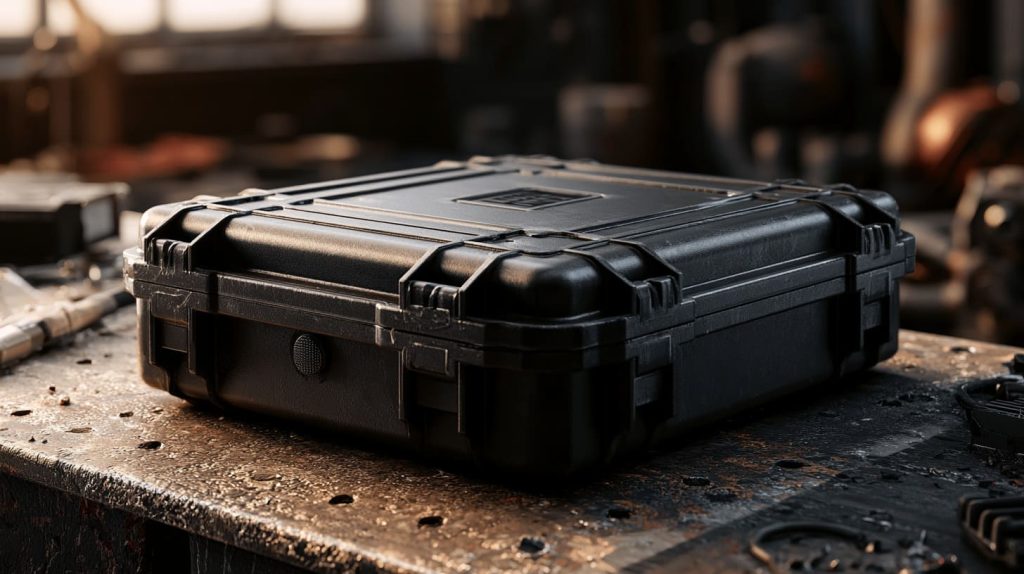
A housing has a hard job. It must protect what is inside. It must also look acceptable from the outside. ABS handles both jobs reasonably well.
Why ABS Works for Enclosures
| Requirement | How ABS Helps |
|---|---|
| Protection | Absorbs knocks and light impact |
| Shape design | Supports ribs, bosses, clips, and curves |
| Surface finish | Can be textured, painted, or printed |
| Weight control | Keeps the enclosure light |
| Cost control | Suitable for many volume production projects |
| Electrical use | Often used in electronic product shells |
The part I often focus on is wall thickness. A weak ABS enclosure is not always caused by bad material. Sometimes the design is too thin, the ribs are poor, or the screw boss is placed badly.
ABS for Molded Housing Design
ABS is useful for injection-molded housings because it can form complex shapes.
Common design features include:
- Snap-fit clips
- Screw posts
- Internal ribs
- Cable openings
- Vent holes
- Mounting bosses
- Textured outer surfaces
- Removable covers
A good ABS housing does not depend only on material. It depends on design. If the structure is wrong, even a good material can fail.
Is ABS Material Strong and Durable?
ABS is strong enough for many products, but it is not indestructible.
ABS material is strong and durable for many indoor products. It offers good impact strength and shape stability, but it can weaken under long sunlight exposure, high heat, heavy load, or harsh chemicals.
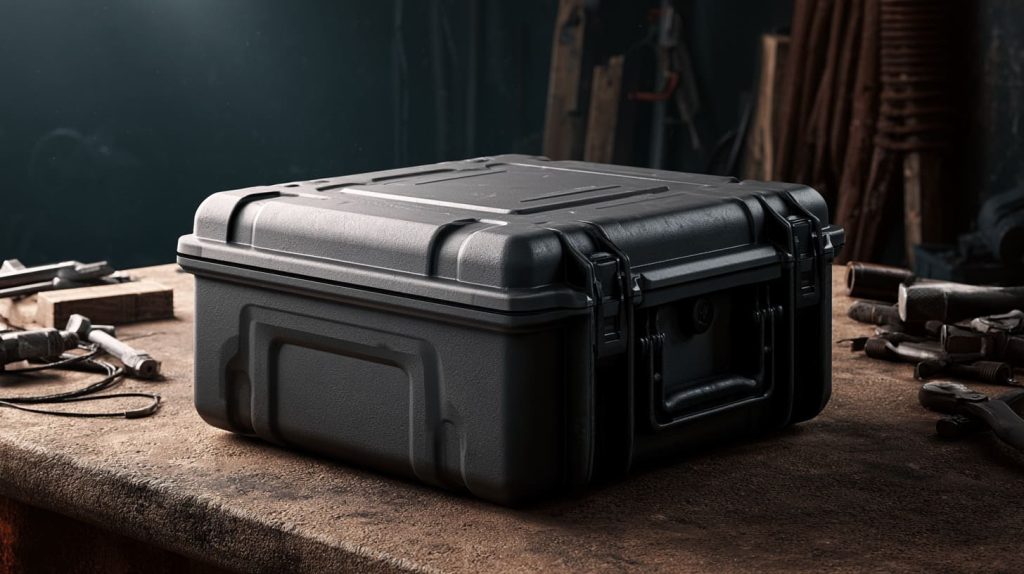
Strength is not one single thing. A product can be strong against impact but weak against UV. It can be strong in short use but poor after years outdoors.
ABS Strength in Real Use
| Type of Strength | ABS Performance | Notes |
|---|---|---|
| Impact strength | Good | One of ABS’s biggest advantages |
| Tensile strength | Moderate to good | Enough for many housings and covers |
| Scratch resistance | Moderate | Surface can mark with rough use |
| Heat durability | Moderate | Not for very hot environments |
| Outdoor aging | Weak to moderate | Needs UV protection for outdoor use |
| Chemical durability | Fair | Avoid strong solvents |
I do not judge durability by a supplier’s word only. I ask where the product will sit, who will touch it, how often it will be moved, and what might hit it during use.
When ABS Feels Durable
ABS feels durable when it is used for:
- Indoor housings
- Handheld product shells
- Equipment covers
- Tool parts
- Automotive interior trim
- Consumer product casings
When ABS May Fail Faster
ABS may fail faster when it faces:
- Strong sunlight
- High temperature
- Outdoor rain and UV cycles
- Heavy bending stress
- Strong solvents
- Very thin wall design
So, yes, ABS is durable. But the word “durable” needs a real use case behind it.
Is ABS Plastic Impact Resistant?
Impact resistance is one of the main reasons ABS is selected.
ABS plastic is impact resistant because the butadiene part inside the material helps absorb shock. This makes ABS suitable for covers, housings, handles, toys, and parts that may face drops or knocks.
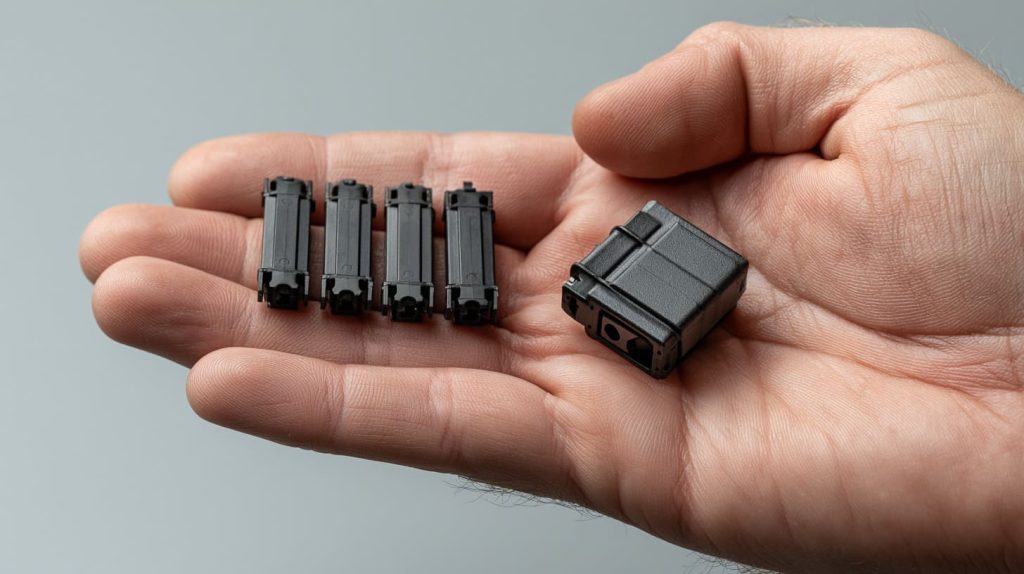
ABS is better at handling impact than many brittle plastics. That is why it is often used for protective products.
Impact Resistance Compared With Other Materials
| Material | Impact Resistance | Simple Note |
|---|---|---|
| ABS | Good | Strong choice for housings and covers |
| Acrylic | Lower | More rigid, but can crack under sharp impact |
| Polycarbonate | Very high | Better for high-impact safety needs |
| PVC | Moderate | Depends on grade and formulation |
| PP | Good flexibility | Less rigid, more bendable |
A small drop test can tell me more than a beautiful product photo. If a housing cracks near the screw post after one drop, I know the design needs work, not just nicer marketing words.
Why ABS Handles Impact Better
ABS has a rubber-like part from butadiene. This helps the material absorb energy.
That means ABS can often handle:
- Light drops
- Normal shipping bumps
- Product handling
- Assembly pressure
- Daily use impact
But impact resistance also depends on thickness, shape, temperature, and material grade. Cold conditions can make many plastics more brittle, including ABS.
Is ABS Material Lightweight?
ABS is a lightweight material compared with metal and glass.
ABS material is lightweight, which makes it useful for handheld products, covers, portable devices, appliance parts, and enclosures. It gives a solid plastic feel without adding too much weight.
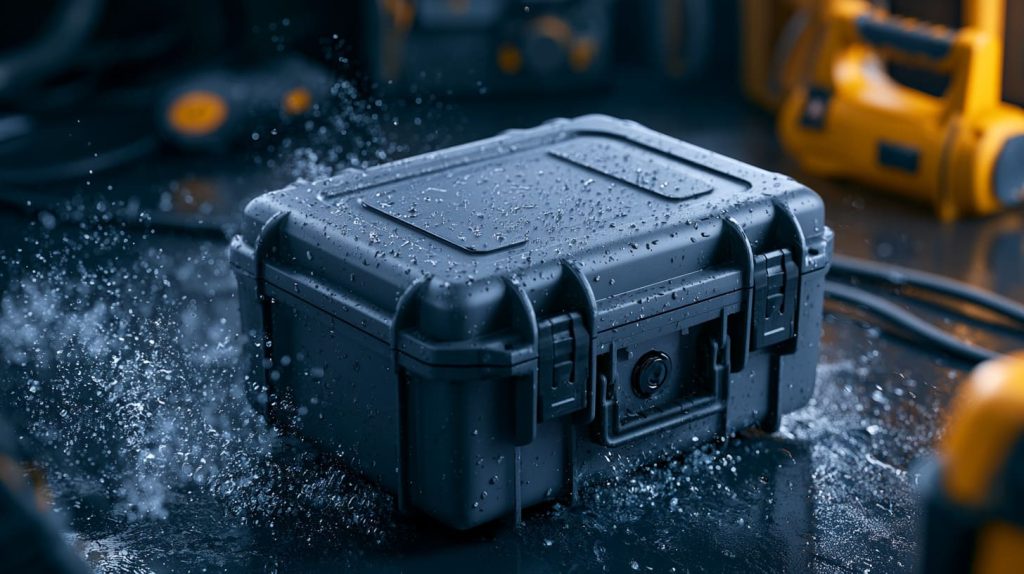
Weight matters more than many buyers expect. A product can look strong but become annoying if it is too heavy.
Why Lightweight Materials Matter
| Product Type | Why ABS Weight Helps |
|---|---|
| Handheld tools | Easier to hold for long periods |
| Portable devices | Better user comfort |
| Covers and panels | Easier assembly and shipping |
| Consumer products | Lower shipping weight |
| Enclosures | Easier mounting and handling |
I often think about the person who will carry or install the product. A buyer may focus on strength, but the end user may complain first about weight, not strength.
ABS vs Heavier Materials
ABS is lighter than:
- Aluminum
- Steel
- Glass
- Many filled engineering plastics
This makes ABS attractive when the product must be easy to ship, hold, or mount.
But lightweight does not mean weak. With good wall thickness and rib design, ABS can feel firm and reliable.
Is ABS Material Waterproof?
ABS itself does not dissolve in water, but a finished ABS product is not automatically waterproof.
ABS material has good water resistance, but waterproof performance depends on the product design. For an enclosure, sealing, gaskets, joints, screws, openings, and assembly quality decide whether water can enter.
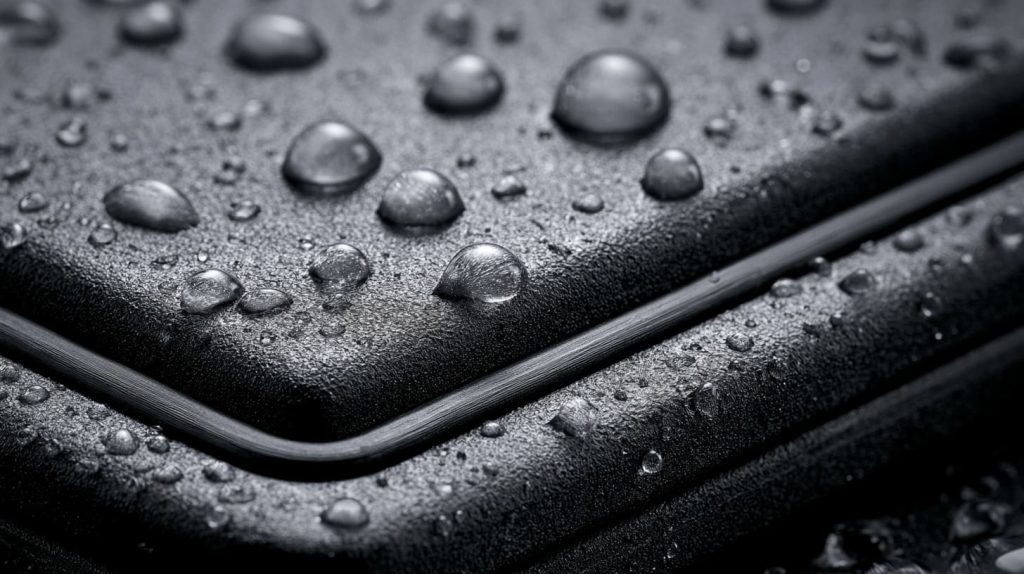
This is an important point. The material can resist water, but the product can still leak.
ABS Material vs Waterproof Product
| Question | Answer |
|---|---|
| Does ABS absorb a lot of water? | No, ABS has low water absorption |
| Can ABS be used near moisture? | Yes, in many normal conditions |
| Is every ABS enclosure waterproof? | No |
| What makes an enclosure waterproof? | Design, gasket, sealing, screw structure, and testing |
One mistake I see is that buyers ask only “Is the plastic waterproof?” I usually look at the seam line first, because water does not care about the material name. It finds the smallest gap.
What Decides Waterproof Performance?
For ABS enclosures, waterproof performance depends on:
- Wall structure
- Joint design
- Rubber gasket
- Screw pressure
- Cable gland
- Vent design
- Ultrasonic welding
- Glue sealing
- IP rating test
If the product needs IP65 or IP66 performance, ABS can be part of the solution. But the sealing design must be serious.
Is ABS Material Suitable for Outdoor Use?
ABS can be used outdoors in some cases, but standard ABS is not ideal for long outdoor exposure.
Standard ABS is not the best material for long-term outdoor use because sunlight can cause yellowing, fading, and brittleness. Outdoor ABS products usually need UV-stabilized material, coating, painting, or a better material choice.
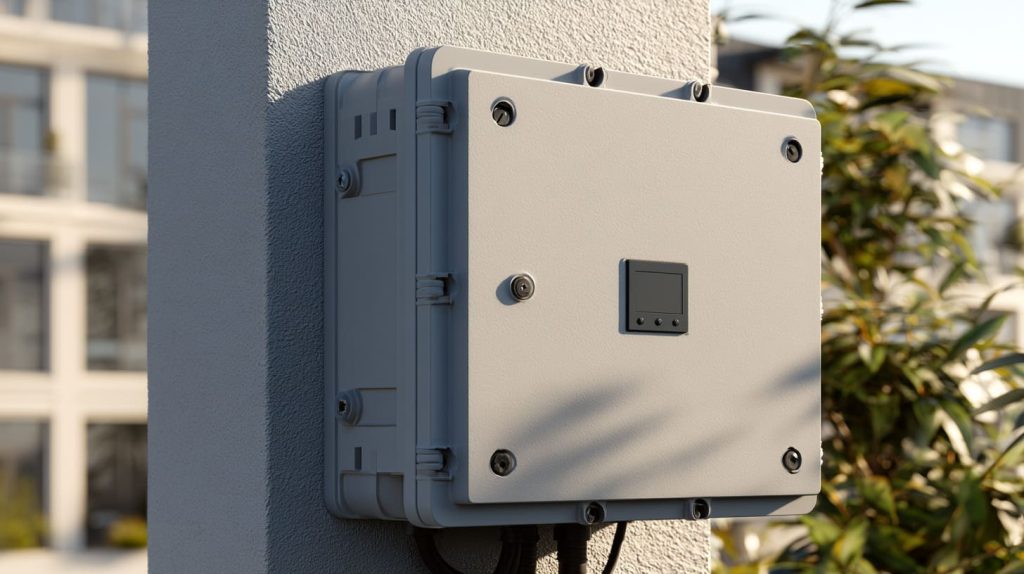
This is where ABS often gets misunderstood. It can survive water better than many people think, but sunlight is another story.
Outdoor Risks for ABS
| Outdoor Factor | Effect on ABS |
|---|---|
| UV sunlight | Yellowing and surface aging |
| Heat | Warping or strength loss in high temperature |
| Rain | Usually not the main issue |
| Temperature cycles | May stress joints and fasteners |
| Dust and pollution | Can stain or dull the surface |
| Long exposure | Can make ABS brittle over time |
For outdoor projects, I do not approve ABS too quickly. I first ask how many years the customer expects it to last outside, because “outdoor use for one event” and “outdoor use for five years” are two different projects.
How to Improve Outdoor ABS Performance
ABS can be improved for outdoor use with:
- UV-stabilized ABS grade
- Protective paint
- Surface coating
- Lighter color selection
- Better wall thickness
- Reduced stress points
- Weather testing
- Better material choice when needed
For long outdoor display products, I usually compare ABS with acrylic, polycarbonate, aluminum, or other plastics before deciding.
Does ABS Plastic Turn Yellow in Sunlight?
Yes, ABS can turn yellow when exposed to sunlight for a long time.
ABS plastic can turn yellow in sunlight because UV rays break down the material surface. Standard ABS is more likely to fade, yellow, or become brittle outdoors without UV protection or coating.
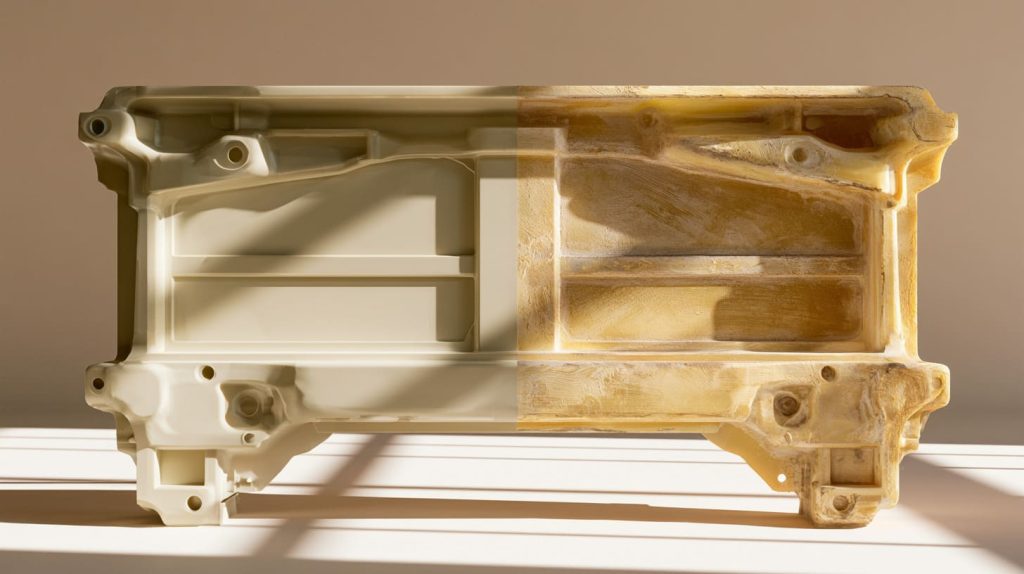
Yellowing does not always happen overnight. It can happen slowly. That makes it dangerous for buyers because the sample may look fine at first.
Why ABS Yellows
ABS yellows because UV light attacks the surface. Heat, oxygen, and pollution can make the process faster.
Common signs include:
- Color fading
- Yellow surface tone
- Dull finish
- Brittle edges
- Small cracks
- Rough surface feel
The question I ask myself is simple: will the customer judge the product after one week, or after one summer under sunlight? The answer changes the material decision.
How to Reduce Yellowing
| Method | How It Helps |
|---|---|
| UV-stabilized ABS | Slows UV damage |
| Painting | Adds a protective layer |
| Coating | Helps protect the surface |
| Indoor use | Avoids direct sunlight |
| Material change | Solves the issue more directly |
| Light colors | May show less heat buildup, but yellowing can still happen |
If the product must stay clean and bright under sunlight, standard ABS is usually not my first choice.
What Are the Advantages and Disadvantages of ABS Material?
ABS is useful because it is balanced, but its limits must be respected.
ABS has advantages such as impact resistance, light weight, easy molding, good surface finish, and reasonable cost. Its disadvantages include poor UV resistance, limited heat resistance, weak transparency, and possible yellowing outdoors.
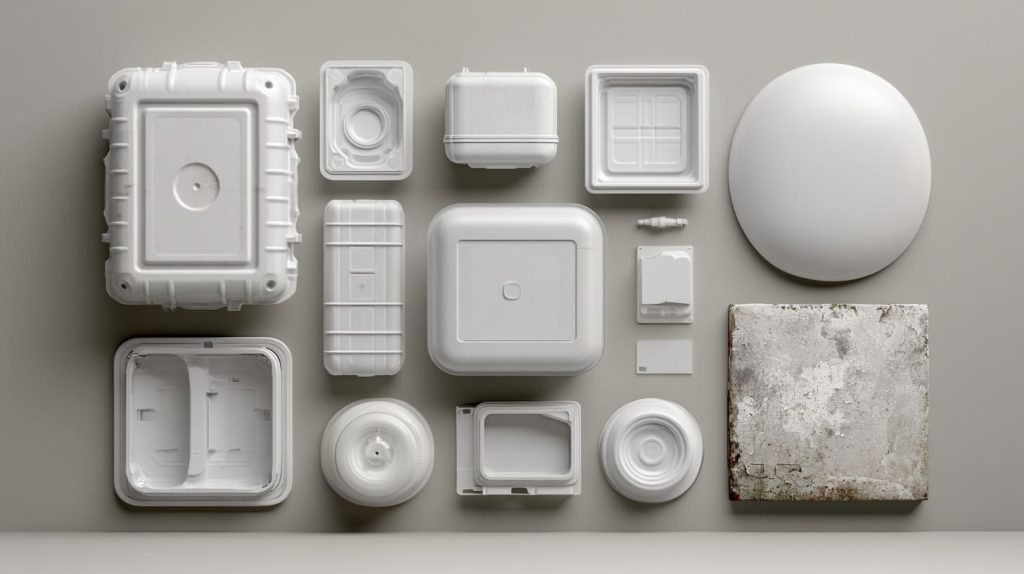
I like ABS when the project needs a strong practical shell. I avoid it when the project needs high clarity, luxury display value, or long outdoor beauty.
ABS Advantages
| Advantage | Why It Matters |
|---|---|
| Good impact resistance | Helps products survive handling and drops |
| Lightweight | Good for portable products |
| Easy to mold | Suitable for custom shapes |
| Good surface finish | Can be textured, painted, or printed |
| Reasonable cost | Useful for volume production |
| Good machinability | Works for some prototypes and custom parts |
| Solid hand feel | Makes products feel less flimsy |
ABS Disadvantages
| Disadvantage | Why It Matters |
|---|---|
| Poor UV resistance | Can yellow and weaken outdoors |
| Not transparent | Not suitable for clear display products |
| Moderate heat resistance | Not ideal near high heat |
| Can scratch | Surface may mark during rough use |
| Solvent sensitivity | Some chemicals can damage it |
| Mold cost for high-volume shapes | Injection molds require investment |
The trade-off I watch is cost versus appearance. ABS can save money and improve toughness, but if the product must look crystal-clear on a retail counter, saving money on the wrong material can hurt the whole project.
When ABS Is a Good Choice
ABS is a good choice when the product needs:
- A molded housing
- A protective cover
- A durable shell
- A painted surface
- A textured surface
- A light but solid body
- A practical industrial look
When ABS Is Not a Good Choice
ABS is not ideal when the product needs:
- High transparency
- Long outdoor exposure
- High scratch resistance
- Premium glossy display value
- Strong chemical resistance
- High heat performance
This is why material choice should follow product use, not just material popularity.
What Is the Difference Between ABS and Acrylic?
ABS and acrylic are both plastics, but they are used for different reasons.
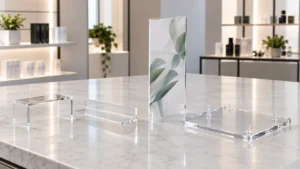
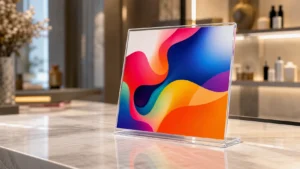
ABS is opaque, tough, and good for housings or molded parts. Acrylic is clear, glossy, rigid, and better for display products, boxes, signs, frames, and visual presentation where transparency matters.
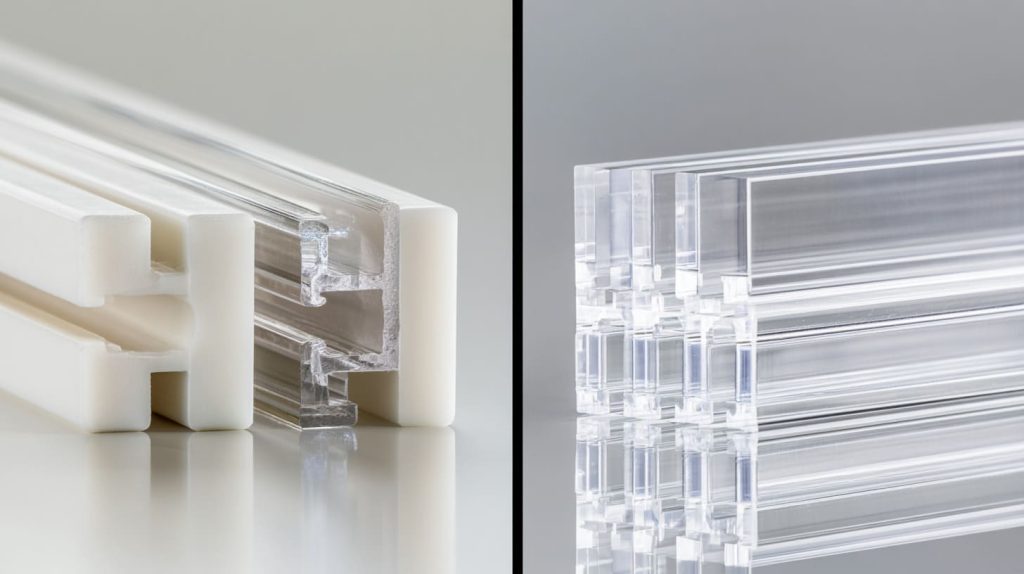
This comparison matters a lot in my work because Feilong Acrylic focuses on custom acrylic products. Buyers sometimes ask whether ABS can replace acrylic. Sometimes it can. Many times, it cannot.
ABS vs Acrylic Comparison
| Feature | ABS | Acrylic |
|---|---|---|
| Appearance | Opaque, solid plastic look | Clear, glossy, glass-like look |
| Impact resistance | Better than acrylic | More brittle under sharp impact |
| Transparency | Poor | Excellent |
| Outdoor clarity | Poor without protection | Better than ABS, but grade matters |
| Scratch resistance | Moderate | Better surface hardness, but still can scratch |
| Processing | Good for molding and housings | Good for laser cutting, CNC, bonding, polishing |
| Best use | Enclosures, covers, shells | Displays, boxes, stands, frames, signs |
| Premium visual effect | Limited | Strong |
| Surface finish | Textured, painted, plated | Polished, clear, frosted, colored |
The first thing I look at is what the customer wants people to see. If the product must show cosmetics, jewelry, packaging, or branding clearly, acrylic usually wins before we even talk about price.
Different Materials, Different Jobs
ABS is more like a protective jacket.
Acrylic is more like a display window.
That simple idea helps many buyers understand the difference.
ABS protects. Acrylic presents.
ABS hides internal structure. Acrylic shows the product.
ABS feels practical. Acrylic feels clean and visual.
Example: Cosmetic Display
For a cosmetic display, acrylic is usually better because:
- It looks clean
- It shows the product clearly
- It can be polished beautifully
- It works well with transparent or colored designs
- It fits retail counters and brand displays
ABS may work for a hidden base, back panel, or structural support. But for the part customers see first, acrylic often gives better value.
Is ABS Better Than Acrylic for Custom Display Products?
ABS is not usually better than acrylic for custom display products, especially when appearance matters.
ABS is better for hidden structural parts, molded housings, and protective covers. Acrylic is usually better for custom display products because it offers transparency, gloss, clean edges, and stronger visual presentation for retail products.
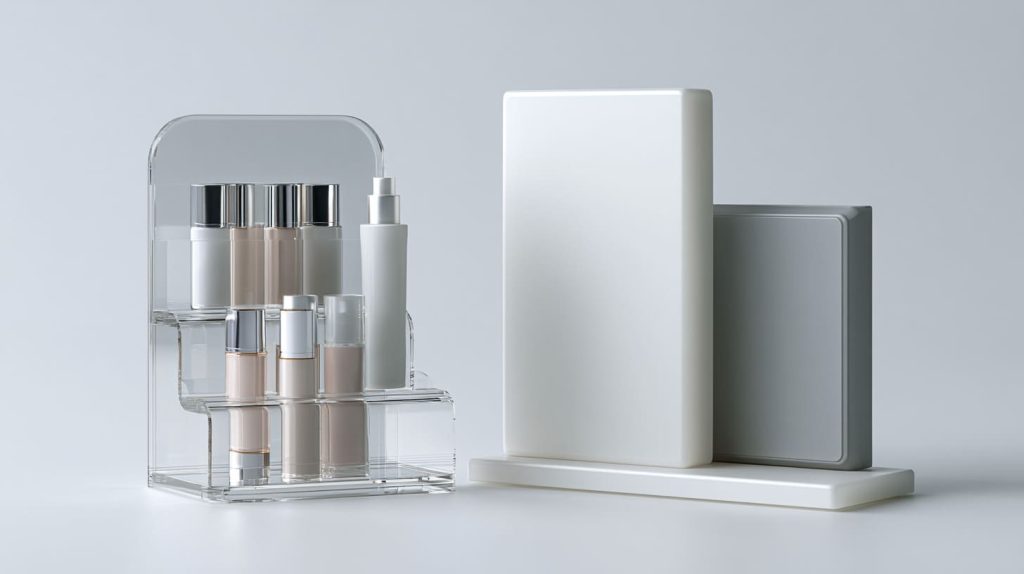
This is one of the most important questions for my customers. A display product is not only a plastic part. It is part of the selling space.
When Acrylic Is Better for Displays
| Display Requirement | Why Acrylic Works Better |
|---|---|
| Product visibility | Clear acrylic lets customers see the product |
| Premium look | Polished edges look clean and high-end |
| Brand presentation | Acrylic fits cosmetic, jewelry, and retail displays |
| Custom shapes | Can be laser cut, CNC routed, bent, bonded, and polished |
| Color options | Clear, frosted, tinted, black, white, and more |
| Small to medium custom orders | No mold needed in many cases |
In my own work, I do not push acrylic just because we make acrylic products. I choose it when the buyer needs the display to help sell the product, not just hold the product.
When ABS May Be Better
ABS may be better when the product needs:
- Stronger impact resistance
- A molded shell
- A hidden support part
- A textured plastic surface
- A lower-cost housing in large volume
- A part that does not need transparency
For example, if a display has an internal base that no customer sees, ABS may be fine. But if the front panel must look clean and premium, acrylic is usually the stronger choice.
ABS vs Acrylic for B2B Buyers
| Buyer Need | Better Choice | Reason |
|---|---|---|
| Clear cosmetic organizer | Acrylic | Better transparency and display value |
| Retail countertop display | Acrylic | Better visual presentation |
| Protective equipment shell | ABS | Better impact resistance |
| Molded plastic housing | ABS | Easier for complex molded shapes |
| Premium gift box display | Acrylic | Cleaner and more elegant |
| Outdoor long-term housing | Depends | Need UV, sealing, and strength review |
| Custom small batch display | Acrylic | No injection mold needed in many cases |
For Feilong Acrylic customers, the decision is usually simple: if the product must attract the eye, acrylic is hard to replace. If the product must absorb impact and hide internal parts, ABS deserves a closer look.
Conclusion
I see ABS as a strong, practical plastic, but not a universal answer. I choose materials by use, not by name. For clear custom displays, acrylic usually gives better selling value. If you need a custom acrylic display, box, stand, rack, or organizer, you can contact Feilong Acrylic at info@xflacrylic.com.