Skip to content
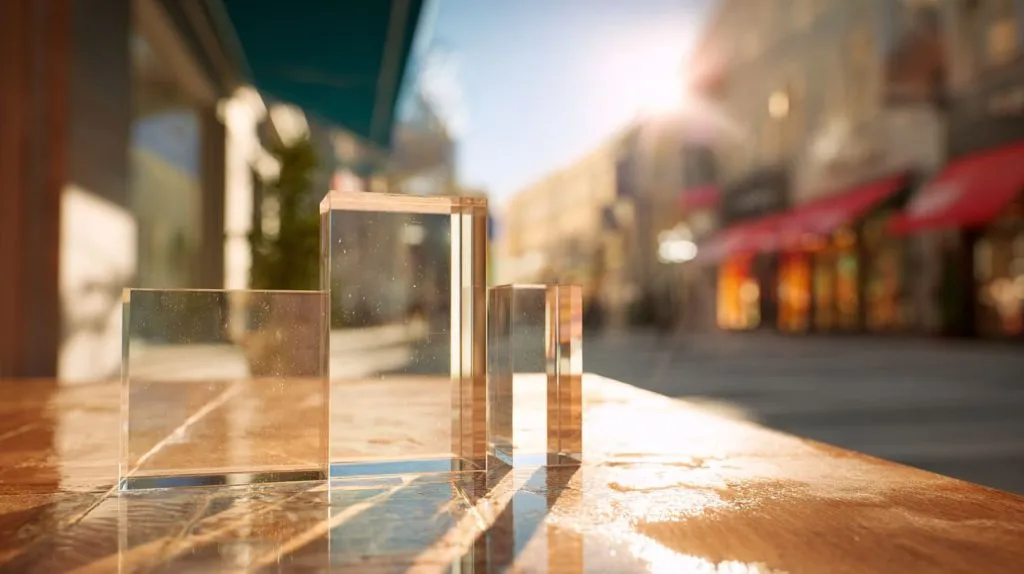
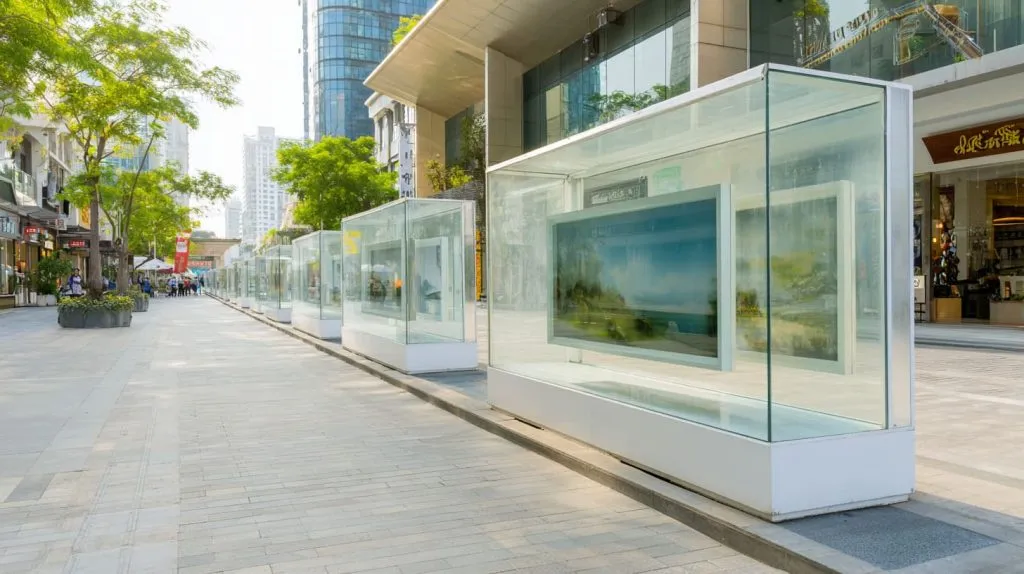
Outdoor acrylic displays are quiet workers.
They stand under sunlight.
They face rain.
They catch dust.
They get cleaned by busy shop staff.
They support a brand image without saying one word.
That sounds simple, but I know it is not simple at all.
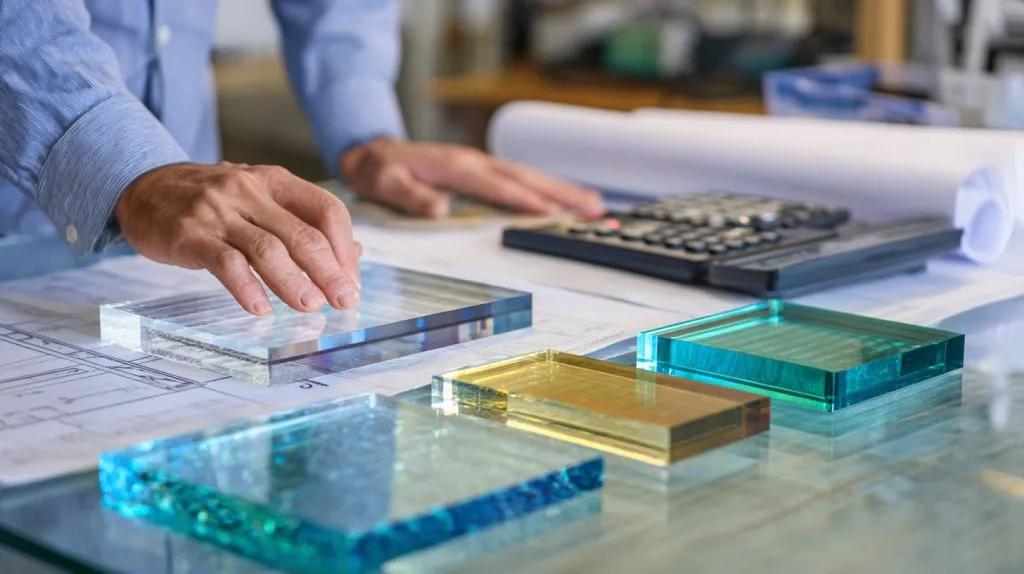
In our factory, I often see buyers compare two acrylic samples on a table. One is cast acrylic. One is extruded acrylic. Under indoor light, both may look clear. Both may feel smooth. Both may seem strong enough. If the buyer only looks for ten seconds, the choice can feel easy.
Then the real outdoor world joins the project.
Sunlight starts to test the material. Temperature changes start to pull and push the panel. Screws create stress around holes. Cleaning liquid touches the surface again and again. A nice sample can become a real problem if the wrong acrylic is used for the wrong display.
Cast acrylic is usually the safer choice for long-term outdoor displays because it has better stability, better machining behavior, and better resistance to stress. Extruded acrylic can still be useful for short-term or cost-sensitive outdoor displays, but the design and environment must be checked carefully.
I do not like to say one material is always good and the other is always bad. That is too easy. Real projects are not that clean. A small sign near a shaded shop entrance is not the same as a large outdoor display facing the summer sun. A short-term promotion board is not the same as a luxury cosmetic display expected to look beautiful for years.
The detail I always watch first is not only the acrylic name, but the full working condition: where it will stand, how long it must last, how it will be fixed, and who will clean it after installation.
This guide is for buyers, designers, and sourcing managers like Jacky, who already know that custom acrylic products are not chosen only by price. They are chosen by risk. They are chosen by use. They are chosen by the small details that decide whether the product still looks good after the sales team has already moved on to the next campaign.
Before we talk about outdoor life, we need to start with the basic question: why do cast and extruded acrylic behave differently in the first place?
What Is the Difference Between Cast and Extruded Acrylic?
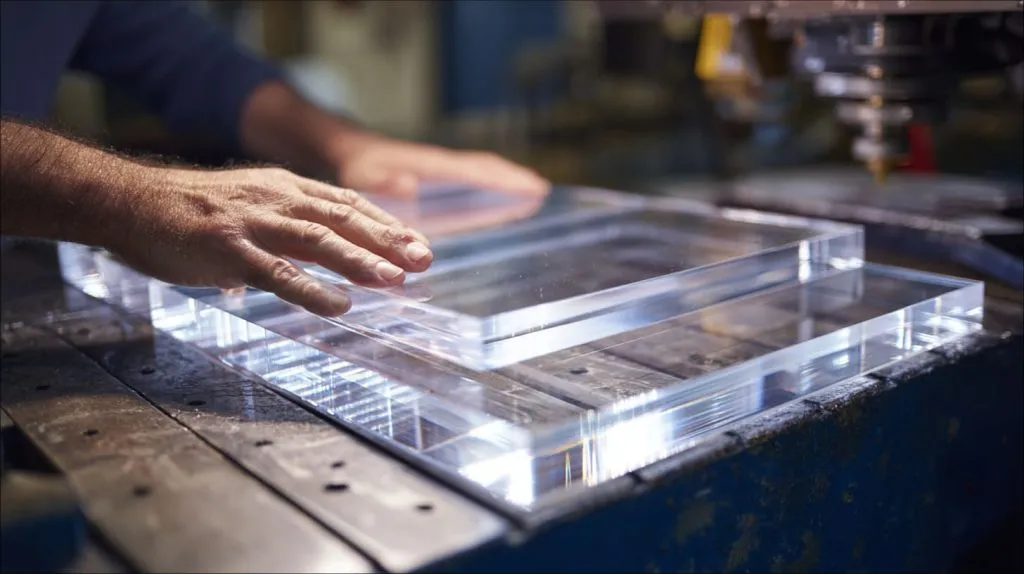
Cast acrylic and extruded acrylic are both acrylic. They can both be clear. They can both be cut, polished, glued, and used for displays.
But they are not born the same way.
I sometimes explain it to buyers like this: two people can wear the same white shirt, but one works in an office and one works on a construction site. After one month, you will see the difference. Acrylic is similar. The sheet may look similar at the beginning, but the production method decides many hidden behaviors.
The point I check early is whether the buyer is choosing acrylic by sheet appearance or by the stress the finished product will face after cutting, drilling, bonding, shipping, and outdoor installation.
How Cast Acrylic Is Manufactured
Cast acrylic is made by pouring liquid acrylic material into a mold, often between glass plates. The material then hardens into a sheet.
This process is slower. It also needs more control. But it gives cast acrylic some useful advantages.
In many custom display projects, cast acrylic feels more stable when we cut it, drill it, polish it, and bond it. It often gives better edge quality. It also tends to handle fabrication stress better than extruded acrylic.
For outdoor displays, this matters a lot.
A raw sheet is not the final product. A display may need:
- Laser cutting
- CNC routing
- Drilling
- Edge polishing
- Bending
- Gluing
- Printing
- Metal screw mounting
- Packaging and shipping
Each step adds a small amount of stress. Cast acrylic usually tolerates these steps better, especially when the project needs a clean, high-end finish.
How Extruded Acrylic Is Manufactured
Extruded acrylic is made by pushing softened acrylic material through rollers or a die to form a continuous sheet.
This process is faster. It is more efficient. It is also easier for large-volume production.
That is why extruded acrylic is often cheaper than cast acrylic. For many indoor products, this can be very useful. If a project needs simple flat panels, large quantity, and tight cost control, extruded acrylic may help.
But there is a trade-off.
Extruded acrylic usually has more internal stress. It may react more during cutting, drilling, bonding, or heating. It can also be more sensitive to solvents and stress cracking.
For indoor simple applications, this may not be a big issue. For outdoor displays, the same weakness can become more serious.
Why Manufacturing Method Changes Material Behavior
The difference between cast and extruded acrylic is not only a factory story. It affects real use.
| Factor | Cast Acrylic | Extruded Acrylic | Why It Matters Outdoors |
|---|---|---|---|
| Production method | Poured and cured in mold | Pushed through extrusion process | This affects internal stress |
| Internal stress | Usually lower | Usually higher | Stress can cause cracks near holes or glued joints |
| Thickness tolerance | May vary more by sheet | Usually more consistent | Important for fitting and assembly |
| Machining behavior | Usually better | More sensitive | Outdoor displays often need drilling and mounting |
| Cost | Higher | Lower | Budget may guide material choice |
| Long-term stability | Usually stronger | Depends on grade and use | Outdoor sunlight and heat expose weakness |
I do not choose cast acrylic only because it sounds more premium. I choose it when the project has enough risk that a cheaper sheet could cost more later.
A buyer may ask, “If extruded acrylic is cheaper and clearer enough, why not use it?” That is a fair question.
The answer starts to appear when the display leaves the factory and meets sunlight.
Which Acrylic Performs Better Outdoors?
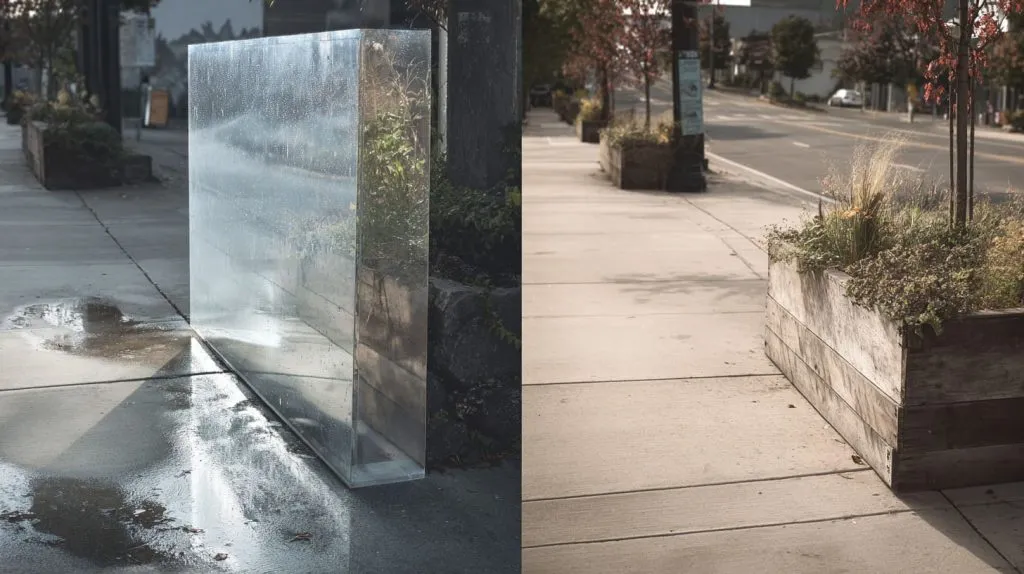
Outdoor performance is not one single test.
It is not only about whether the acrylic can stand rain. It is not only about whether the sheet can stay clear. It is about many small attacks happening together.
Sunlight attacks the surface.
Heat expands the sheet.
Cold shrinks it.
Rain enters gaps.
Wind shakes the structure.
Cleaning cloths scratch the surface.
Mounting screws keep pressure around holes.
This is why outdoor displays are harder than they look.
The thing I care about most here is not how nice the display looks on day one, but how the material behaves after sunlight, cleaning, and mounting stress have worked on it for months.
UV Resistance Comparison
Acrylic generally has good weather resistance compared with many plastics. That is one reason it is popular for signage and displays.
But cast acrylic is usually the better choice when long-term outdoor clarity matters. It has better stability and often resists yellowing better over time, especially when a proper UV-resistant grade is selected.
Extruded acrylic can also be used outdoors, but I become more careful. I want to know the outdoor exposure level. I want to know if it is direct sunlight or partial shade. I also want to know whether the buyer expects one season, one year, or several years of service.
Here is how I usually compare the two:
| Outdoor Factor | Cast Acrylic | Extruded Acrylic | My Practical View |
|---|---|---|---|
| Direct sunlight | Better long-term choice | Can work, but depends on grade | Use cast for premium or long-term displays |
| Yellowing risk | Lower when quality grade is used | Higher risk in demanding use | Ask for clear service-life expectations |
| Surface aging | More stable | More sensitive | Important for brand-facing displays |
| Color display parts | Better color stability | May be acceptable short term | Test color samples if the display is exposed |
Yellowing is not just a technical problem. It is a brand problem.
A clear cosmetic display that turns slightly yellow will still be “usable.” But will it still look clean? Will it still make the product look expensive? Maybe not.
Weather Resistance in Rain and Temperature Changes
Rain itself usually does not destroy acrylic. The bigger issue is how the whole display is designed.
Outdoor acrylic displays expand and contract with temperature changes. If the designer leaves no space for movement, the sheet may build stress. If the holes are too tight around screws, cracks may appear from the mounting points. If water stays in joints, dust and stains can collect.
Cast acrylic usually handles this situation better because it is more stable during fabrication and use. But even cast acrylic can fail if the design is careless.
Extruded acrylic needs more care because it can be more sensitive to stress. A tight screw hole, sharp inside corner, or poor solvent bonding can become a weak point.
Long-Term Appearance Stability
Outdoor displays are often judged by appearance before strength.
A sign may still stand, but if the edges look cloudy, the surface looks dull, or the panel starts to warp, the buyer will not feel happy.
For long-term appearance, I usually prefer cast acrylic for:
- Storefront displays
- Premium brand signs
- Cosmetic displays near windows
- Clear protective display covers
- Outdoor product presentation boxes
- Lighted acrylic display structures
Extruded acrylic may still be fine for:
- Short-term promotion boards
- Temporary advertising panels
- Simple flat display parts
- Low-risk shaded outdoor use
- Projects where replacement is expected
| Application | Better Choice | Reason |
|---|---|---|
| Long-term outdoor sign | Cast acrylic | Better stability and appearance |
| Temporary sale display | Extruded acrylic | Lower cost may be acceptable |
| Luxury storefront display | Cast acrylic | Cleaner edges and better long-term look |
| Shaded outdoor panel | Extruded or cast | Depends on budget and lifespan |
| Large outdoor structure | Usually cast acrylic | Better performance under stress |
I once saw a buyer focus only on whether the panel was “waterproof.” I understood why he asked that. But the real question was not water alone. The real question was: after the sun heats the panel every afternoon, will the mounting holes still stay safe?
That brings us to durability.
Is Cast Acrylic More Durable Than Extruded Acrylic?
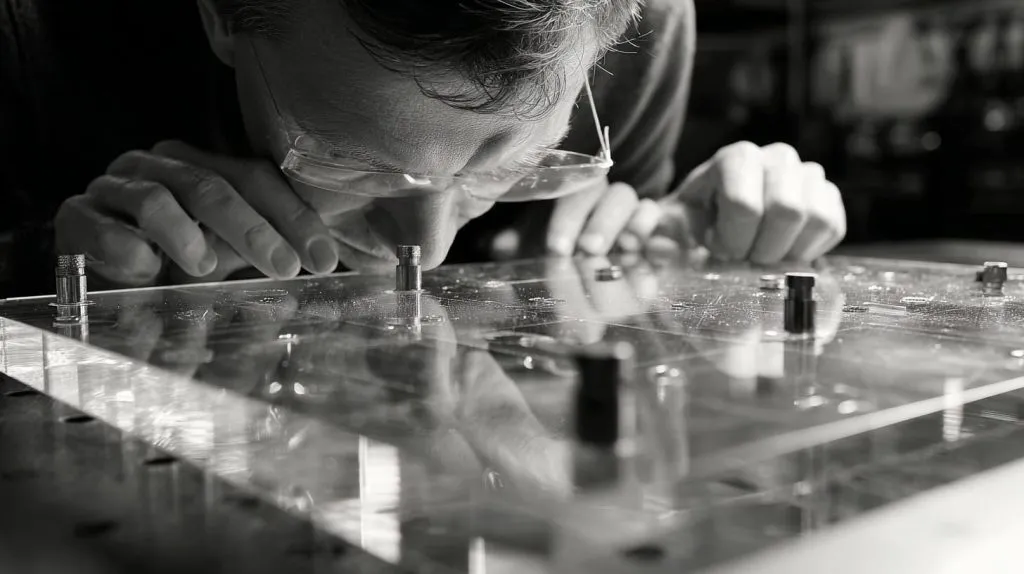
Durability sounds like a simple word.
But in real acrylic work, durability has many faces.
A display can be durable against impact but weak against scratches. It can resist rain but crack around screw holes. It can look strong in the sample room but fail after bonding because the wrong glue was used.
This is where many people get trapped.
Acrylic durability is not only about the sheet. It is about the sheet plus design, fabrication, installation, and daily use.
When I judge durability, I do not only press the sample with my hand; I look at the holes, edges, corners, glue joints, and the way the display will be touched or cleaned after installation.
Impact Resistance Comparison
Acrylic is not the toughest plastic in the world. Polycarbonate is usually much stronger in impact resistance. But acrylic has better clarity and a cleaner display look, so it remains popular for outdoor retail and signage.
Between cast and extruded acrylic, cast acrylic usually gives me more confidence in fabricated display parts. It handles cutting and drilling better. This is important because impact does not always happen in the middle of a flat sheet.
Many failures start from weak points:
- Screw holes
- Sharp inside corners
- Thin tabs
- Glued joints
- Narrow hooks
- Unsupported edges
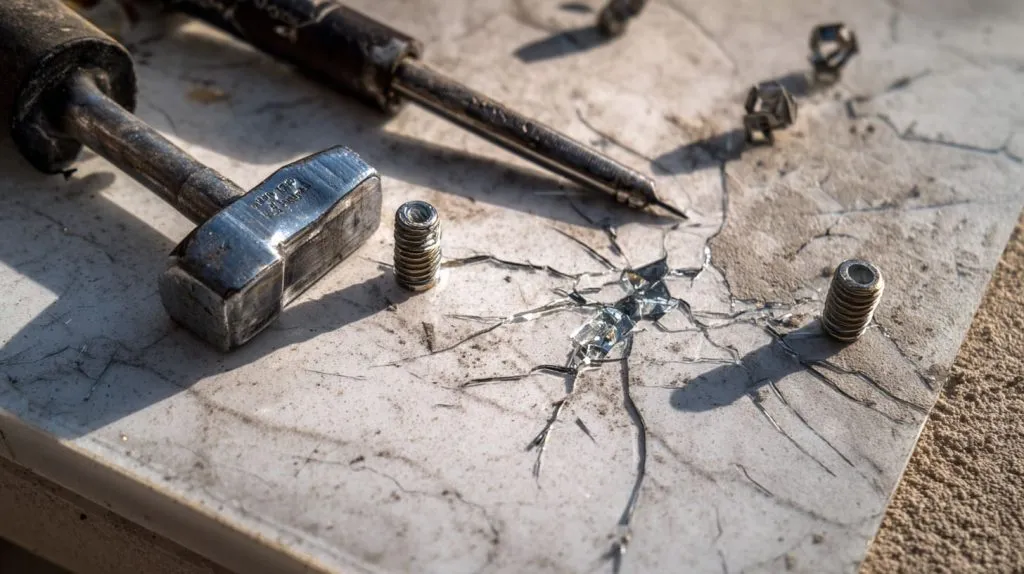
A display may not break because someone hits the center. It may crack because a worker tightens a screw too hard, then wind vibration makes that stress worse.
Scratch Resistance and Surface Hardness
Acrylic can scratch. That is true for both cast and extruded acrylic.
Outdoor displays get cleaned often. In retail spaces, staff may not use the perfect cloth. Sometimes they use paper towels. Sometimes they use strong cleaners. Sometimes they wipe dust directly across the surface.
That is when small scratches appear.
Cast acrylic often has a harder surface feel and may perform better in long-term display use. But I still remind buyers that material choice is only one part of scratch control.
Better scratch control comes from:
| Detail | Why It Matters |
|---|---|
| Proper cleaning cloth | Rough cloth can scratch clear acrylic |
| Mild cleaner | Strong solvent can damage surface or joints |
| Protective film during installation | Prevents early handling scratches |
| Good packaging | Prevents rubbing during shipping |
| Smart display position | Reduces customer contact in public spaces |
I have seen beautiful displays damaged not by manufacturing, but by cleaning. That is a little painful because it is preventable.
Resistance to Stress Cracking
Stress cracking is one of the most important reasons I become careful with extruded acrylic outdoors.
Stress cracking can happen when acrylic has internal stress and then faces solvent, pressure, drilling stress, or temperature changes. It often appears around holes, bends, edges, or glue joints.
Extruded acrylic usually has higher internal stress than cast acrylic. So it can be more sensitive in these areas.
Common causes include:
- Holes drilled too close to the edge
- Screws tightened too hard
- Sharp corners in CNC design
- Solvent cement used too heavily
- No space for thermal expansion
- Outdoor heat and cold cycles
- Chemical cleaners touching joints
Simple Durability Comparison
| Durability Area | Cast Acrylic | Extruded Acrylic |
|---|---|---|
| Fabricated part stability | Better | More sensitive |
| Stress cracking resistance | Better | Higher risk |
| Outdoor mounting safety | Better | Needs more careful design |
| Scratch resistance | Usually better | Acceptable, but varies |
| Impact resistance | Good but not like PC | Good but not like PC |
| Long-term display quality | Better | Depends on use |
This is why I often say: if the display is only a flat sheet, the discussion is simple. If the display has holes, glue, bends, polished edges, and outdoor mounting, the discussion becomes more serious.
And once fabrication begins, material behavior becomes even more visible.
Which Acrylic Is Better for CNC Cutting and Fabrication?
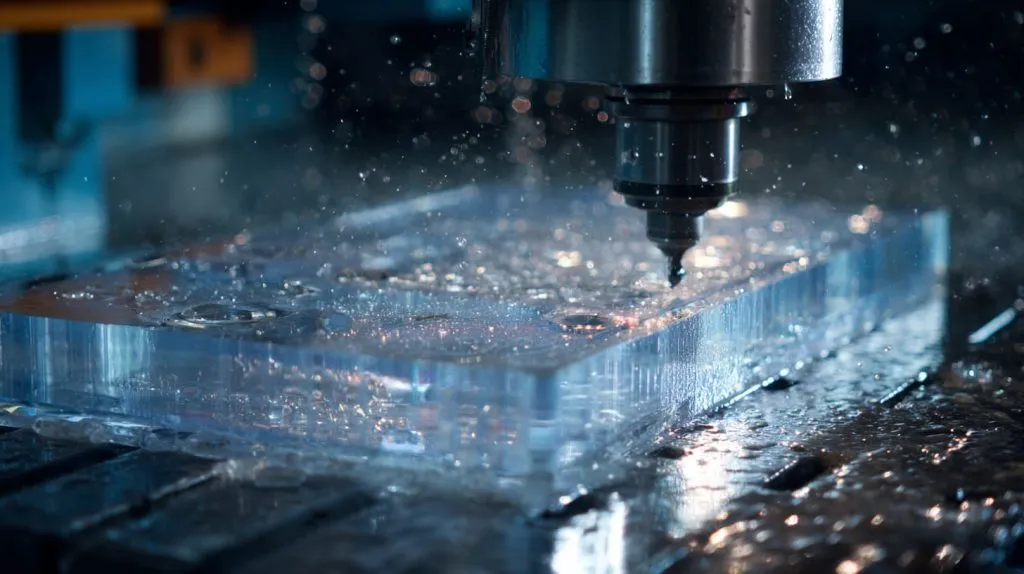
Acrylic does not become a display by itself.
It must pass through machines and hands. It must be cut, routed, drilled, polished, glued, bent, packed, and checked. This is where many material differences finally show up.
A buyer may only see the finished product. We see the journey.
We see whether the sheet chips during routing.
We see whether the drilled hole stays clean.
We see whether the edge polishes like glass.
We see whether the glue joint forms bubbles.
We see whether a part stays flat after processing.
The small warning sign I watch during fabrication is not one big break; it is a pattern of tiny problems that tells me the material is fighting the process.
Laser Cutting Differences
Laser cutting is common for acrylic displays because it creates clean shapes and polished-looking edges.
Cast acrylic usually gives a beautiful laser-cut edge. The edge can look clear, clean, and premium. This is one reason cast acrylic is popular for high-end display products.
Extruded acrylic can also be laser cut. But it may melt more easily. The edge may look different. It can sometimes form a more rounded or slightly less crisp edge.
For simple parts, that may be acceptable. For premium outdoor displays, edge quality matters more.
| Laser Cutting Factor | Cast Acrylic | Extruded Acrylic |
|---|---|---|
| Edge appearance | Clear and premium | Can be clean but may melt more |
| Cutting control | Usually stable | More sensitive to heat |
| Premium display use | Strong choice | Use with caution |
| Simple flat panels | Good | Often acceptable |
If the edge will be visible from the front of a store, I do not treat it as a small detail. A bad edge is like a wrinkled collar on a nice suit. People may not name the problem, but they feel it.
CNC Machining Performance
CNC machining is often needed for thicker acrylic, shaped parts, grooves, slots, holes, and more precise structures.
Cast acrylic usually machines better. It tends to give cleaner cuts and better edge control. It is also less likely to show stress problems when drilled or routed properly.
Extruded acrylic can be machined too, but it may be more sensitive. Tool speed, feed rate, cooling, and cutting direction matter more. If the part has small details or tight corners, I become careful.
CNC Design Details That Matter
| Design Detail | Risk If Ignored | Better Practice |
|---|---|---|
| Sharp inside corner | Crack may start there | Use small radius corners |
| Hole too close to edge | Edge cracking | Leave enough distance |
| Tight screw hole | Stress cracking | Use slightly larger hole |
| Thin acrylic tab | Breakage during handling | Increase width or support |
| Deep narrow groove | Chipping or stress | Adjust tool path and depth |
Acrylic is not metal. It does not forgive every design mistake.
When a drawing comes in, I do not only ask, “Can we make it?” I ask, “Can this design survive after installation?”
Bonding and Gluing Performance
Bonding is another place where cast acrylic usually performs better.
Clear acrylic displays often need glue joints that look clean. For cosmetic displays, jewelry displays, and premium product stands, bubbles and white marks can ruin the whole feeling.
Cast acrylic usually gives better bonding results because it has lower internal stress and more stable behavior.
Extruded acrylic can be bonded, but it is more sensitive to solvent. If the glue is too strong, too much, or applied under stress, cracks or white marks can appear later.
Bonding Problems Buyers May Not See at First
| Problem | What It Looks Like | Why It Happens |
|---|---|---|
| Bubbles | Small trapped air in joint | Poor glue control or uneven edge |
| Whitening | Cloudy glue line | Solvent reaction or stress |
| Cracking near joint | Fine lines spreading | Internal stress plus solvent |
| Weak bond | Part separates later | Wrong glue or bad surface prep |
| Outdoor joint failure | Joint opens or stains | Heat, water, and stress together |
For outdoor displays, bonding must be treated more carefully because sunlight and temperature changes keep testing the joint.
A nice bond on day one is not enough. It must stay clean after the display goes outside.
That is why lifespan becomes the next big question.
Does Cast Acrylic Last Longer in Outdoor Displays?

In most long-term outdoor display projects, I expect cast acrylic to last longer and look better than extruded acrylic.
But I want to be careful here.
No acrylic sheet lives in a perfect world. A display in a shaded shopping street in Canada is not the same as a display near strong coastal sunlight. A vertical sign is not the same as a flat cover collecting heat and water. A well-supported panel is not the same as a large sheet held by four tight screws.
The way I judge service life is simple: I do not ask only how many years the material can last; I ask what condition the buyer still considers acceptable after those years.
Expected Outdoor Lifespan
Cast acrylic is usually used when the buyer expects long-term outdoor performance. It has strong weather resistance and good clarity retention when the proper grade is used.
Extruded acrylic may be suitable for shorter-term outdoor displays or lower-risk applications. It may still perform well in mild environments, but I do not like using it blindly for demanding outdoor projects.
The expected lifespan depends on:
- Sunlight strength
- Temperature range
- Rain and humidity
- Wind load
- Sheet thickness
- Mounting design
- Cleaning method
- Material grade
- Fabrication quality
- Whether the display is shaded or fully exposed
Practical Lifespan View
| Outdoor Display Situation | Cast Acrylic | Extruded Acrylic |
|---|---|---|
| Long-term storefront display | Strong choice | Higher risk |
| Short-term promotional display | Good but may be over budget | Often suitable |
| Shaded outdoor display | Good | Can be suitable |
| Full sun exposure | Better choice | Use carefully |
| Large structure with holes | Better choice | Higher stress risk |
| Premium retail branding | Strong choice | Usually not my first choice |
Acrylic lifespan is not only about “not breaking.” Sometimes the sheet still stands, but it no longer looks clean enough for the brand.
That is the difference between technical survival and commercial survival.
Maintenance Requirements
Outdoor displays need maintenance. I know buyers do not always want to talk about this. They prefer to talk about material, price, and delivery time. But maintenance decides many real outcomes.
For acrylic displays, I usually suggest:
- Use soft microfiber cloth
- Use mild soap and water
- Avoid alcohol-heavy or solvent cleaners
- Do not wipe dry dust directly
- Remove sand or particles with water first
- Keep protective film before final installation
- Avoid strong pressure around glued areas
- Inspect mounting screws after installation
Maintenance Risk Table
| Maintenance Mistake | Possible Result |
|---|---|
| Wiping with rough cloth | Fine scratches |
| Using strong solvent | Cracks or cloudy marks |
| Tightening screws after weather changes | Stress cracking |
| Leaving water in joints | Stains or dirt marks |
| Removing protective film too early | Handling damage |
This is why I often explain to customers that a good outdoor display is a small system. Material is one part. Care is another part.
Real Outdoor Display Examples
Let me make this more practical.
For a storefront sign, I usually prefer cast acrylic, especially if the sign has polished edges, printed brand color, or lighting. The sign is part of the shop’s face. If it yellows or cracks, the problem is very visible.
For cosmetic displays near large windows, I also prefer cast acrylic. Sunlight may not be full outdoor exposure, but it can still affect clarity, color, and bonding. Beauty products need clean presentation. A cloudy display can make the product feel cheaper.
For temporary retail branding structures, extruded acrylic can make sense if the project is short-term and cost-sensitive. But I would still check the design carefully. Short-term does not mean careless.
| Example | My Material Preference | Reason |
|---|---|---|
| Outdoor luxury logo sign | Cast acrylic | Appearance and long-term stability |
| Window-facing cosmetic display | Cast acrylic | Clarity and bonding quality |
| Short-term outdoor sale board | Extruded acrylic | Cost control |
| Large freestanding display | Cast acrylic | Strength and stress stability |
| Simple shaded information panel | Either | Depends on budget and service life |
A buyer once told me, “The customer only needs it for six months.” That changed everything. We did not need to build a product like it would stand for five years. But we still needed to avoid obvious warping and cracking during those six months.
That is the real art of material choice.
And for display products, this art is not only about lifespan. It is also about how the product looks.
Which Acrylic Has Better Optical Clarity for Displays?

Acrylic is loved because it looks clean.
It can make a product feel lighter. Brighter. More expensive. A clear acrylic display does not shout. It lets the product speak.
But optical clarity is not only about transparency. It includes surface quality, edge quality, distortion, color tone, lighting effect, and how the display looks after fabrication.
The first thing I check for optical display work is whether the acrylic is only acting as a support, or whether it is part of the brand image itself.
Transparency and Light Transmission
Both cast and extruded acrylic can have excellent clarity. For many simple displays, the difference may not be obvious at first glance.
But for premium display work, cast acrylic often gives better overall visual quality, especially after laser cutting, polishing, bonding, and edge finishing.
The difference becomes more visible when:
- The edge is exposed
- The display uses LED lighting
- The acrylic is thick
- The product is luxury or cosmetic
- The part has complex shapes
- The display is viewed up close
Light and Edge Effects
Clear acrylic is often used with lighting. Light can enter from the edge and create a glowing effect. It can also pass through the sheet and highlight the product.
Cast acrylic usually gives better edge quality and cleaner light effects. Extruded acrylic can still work, but the final look depends on sheet quality and processing.
| Optical Factor | Cast Acrylic | Extruded Acrylic |
|---|---|---|
| Clear appearance | Excellent | Excellent for many uses |
| Edge glow | Usually cleaner | Can be good but varies |
| Thick sheet clarity | Strong | May show more distortion |
| Polished edge quality | Better | Acceptable for simple use |
| Premium display feeling | Stronger | Depends on design |
Surface Quality Comparison
Surface quality matters more than many buyers expect.
A display may have perfect dimensions, but if the surface has small waves, scratches, or distortion under store lighting, the buyer may feel disappointed.
Extruded acrylic often has better thickness consistency, which can help in some fitting applications. But cast acrylic usually provides a more premium visual feel after fabrication.
That is why I do not judge optical quality only by the raw sheet.
I judge it after processing.
Acrylic can look good before cutting. The real question is whether it still looks good after cutting, gluing, polishing, packing, and shipping.
Why Optical Performance Matters in Premium Displays
For premium displays, acrylic is not just a material. It is part of the customer experience.
Think about a jewelry display. The acrylic must almost disappear. If the edge looks rough, the product loses some shine.
Think about a cosmetic display. The bottles may have soft colors, gold caps, and fine labels. If the acrylic looks cloudy, the whole display feels less clean.
Think about a storefront sign. The acrylic may carry the brand logo. If it warps or yellows, it quietly damages the brand every day.
| Display Type | Optical Requirement | Better Choice |
|---|---|---|
| Jewelry display | Very clear, clean edges | Cast acrylic |
| Cosmetic display | High clarity and clean bonding | Cast acrylic |
| Simple advertising panel | Clear enough and low cost | Extruded acrylic |
| LED edge-lit sign | Clean edge and stable light | Cast acrylic |
| Temporary display board | Basic visual clarity | Extruded acrylic |
I sometimes tell buyers that acrylic is like glass with a softer personality. It can look elegant, but it needs care. If the display is part of a premium buying experience, I do not want to save a small amount on material and lose a larger amount in appearance.
But cost is real. Every buyer has a budget. So we need to talk about price honestly.
Is Extruded Acrylic Cheaper Than Cast Acrylic?
Yes, extruded acrylic is usually cheaper than cast acrylic.
That is the main reason many buyers consider it.
And I understand this very well. In B2B custom manufacturing, cost is never a small topic. A buyer may need to hit a target price. A brand may want better margin. A purchasing manager may compare five suppliers and ask why one quote is higher than another.
Price pressure is real.
The mistake I try to avoid is treating the lower sheet price as the same thing as lower project cost.
Raw Material Cost Differences
Extruded acrylic is made through a faster continuous process. This helps reduce cost. It is often a good choice for high-volume, simple, flat, or indoor products.
Cast acrylic costs more because the production process is slower and often gives better material stability and fabrication performance.
Here is the simple view:
| Cost Factor | Cast Acrylic | Extruded Acrylic |
|---|---|---|
| Sheet price | Higher | Lower |
| Production speed | Slower | Faster |
| Large volume cost | Higher | Better |
| Fabrication risk | Lower | Higher in complex work |
| Outdoor long-term value | Better | Depends on use |
If the display is simple and short-term, extruded acrylic may be the smart choice. If the display is complex and long-term, cast acrylic may be cheaper in the full life of the product.
Hidden Long-Term Costs
This is where I ask buyers to slow down.
The cheapest material may not be the cheapest decision.
Hidden costs can include:
- More rejected parts during fabrication
- More cracks around holes
- More visible glue marks
- More replacement requests
- More customer complaints
- More shipping loss if parts are fragile
- More brand damage if the display looks poor outdoors
A replacement display is not only a sheet cost. It includes production time, packaging, shipping, communication, installation, and sometimes damage to trust.
Cost Comparison by Project Type
| Project Type | Best Cost Logic | My Usual Suggestion |
|---|---|---|
| 3-month outdoor campaign | Save material cost | Extruded may work |
| 3-year storefront sign | Avoid replacement | Cast is safer |
| Indoor display near window | Balance cost and sunlight | Cast for premium use |
| Large outdoor panel | Reduce failure risk | Cast or stronger design |
| Simple flat price board | Keep budget low | Extruded can be acceptable |
When Lower Material Cost Makes Sense
I do not reject extruded acrylic. That would be too simple.
Extruded acrylic makes sense when:
- The display is temporary
- The design is simple
- The sheet is not under strong stress
- The display is shaded
- The buyer accepts a shorter service life
- The part does not need premium polished edges
- The project needs strong cost control
But I become careful when the buyer says:
- “It will stay outside for years.”
- “It has many drilled holes.”
- “It needs perfect clear glue joints.”
- “It will face direct sun.”
- “It is for a premium retail brand.”
- “The customer cannot accept yellowing.”
- “Replacement would be expensive.”
That is when saving a little on sheet cost can become a bad bargain.
A low quote can feel good for one day. A failed display can hurt for months.
Now, even if we choose the right material, one more question remains: how thick should the acrylic be?
Which Acrylic Thickness Works Best for Outdoor Displays?
Thickness is not only about strength.
It affects weight, cost, edge appearance, bending risk, screw design, shipping safety, and installation method.
I have seen buyers choose thicker acrylic because it “feels stronger.” I have also seen buyers choose thinner acrylic because it saves cost. Both decisions can be right. Both can be wrong.
The number I check is not only the sheet thickness; I also check span, support distance, wind exposure, fixing method, and whether the acrylic is expected to stay flat under heat.
Thin Acrylic vs Thick Acrylic Outdoors
Thin acrylic can flex more easily. If the display is large and exposed to wind or heat, a thin panel may bend or vibrate.
Thick acrylic feels stronger and looks more premium. It can give a heavy, clear, glass-like feeling. But it costs more. It also adds weight. If the support structure is weak, thicker acrylic can create its own problem.
Basic Thickness Thinking
| Acrylic Thickness | Common Use | Outdoor Concern |
|---|---|---|
| 2mm-3mm | Small signs, light covers, simple inserts | May flex or warp outdoors |
| 4mm-5mm | Small to medium displays | Good for many controlled uses |
| 6mm-8mm | Stronger signs, display panels, boxes | Better stability but higher weight |
| 10mm+ | Premium blocks, thick panels, structural display parts | Heavy and more expensive |
This table is only a starting point. A 5mm sheet may be fine for a small display but weak for a large unsupported panel. A 10mm sheet may look strong but still crack if the holes are badly designed.
Recommended Thickness by Display Type
For small countertop outdoor displays, 3mm to 5mm may work if the design has enough support and the display is not exposed to heavy wind.
For wall-mounted signage, 5mm to 8mm is often safer, depending on size and fixing method.
For large freestanding outdoor displays, I usually want thicker acrylic, stronger support, or a mixed structure with metal frames. Acrylic alone should not be asked to do every job.
| Display Type | Typical Thickness Range | Design Note |
|---|---|---|
| Small outdoor label holder | 2mm-3mm | Use protected or shaded areas |
| Small product display | 3mm-5mm | Add support ribs if needed |
| Wall-mounted sign | 5mm-8mm | Check hole spacing and expansion |
| Outdoor display box | 4mm-8mm | Depends on size and load |
| Large freestanding display | 8mm+ or supported structure | Use metal support when needed |
Why Structural Design Matters Together With Material Choice
Thickness cannot fix every design problem.
A poorly supported thick sheet can still bow. A tightly mounted sheet can still crack. A beautiful acrylic panel can still fail if the installer treats it like steel.
For outdoor displays, I like to check these details:
- Are the screw holes larger than the screw body?
- Is there room for expansion?
- Are the edges too close to holes?
- Are the corners rounded?
- Is the sheet supported evenly?
- Will water collect in the structure?
- Will wind push the panel repeatedly?
- Is the display easy to clean?
Mounting Details That Reduce Risk
| Design Detail | Better Practice |
|---|---|
| Screw holes | Make holes slightly larger to allow movement |
| Corners | Use rounded internal corners |
| Large panels | Add support frame or ribs |
| Outdoor boxes | Avoid water traps |
| Wall signs | Use spacers and proper fixing |
| Thick acrylic | Check weight and bracket strength |
I like to think of acrylic thickness like shoe size. Bigger is not always better. The right size depends on the person, the road, and how far they need to walk.
And this is exactly where many buyers make mistakes. They check one detail and forget the full environment.
What Problems Do Buyers Commonly Ignore When Choosing Acrylic?
Most acrylic problems do not begin with a bad intention.
They begin with one missing question.
The buyer asks about price but not lifespan.
The designer draws holes but does not allow expansion.
The supplier sends a nice sample but does not explain outdoor limits.
The installer tightens screws like the panel is metal.
The shop staff cleans the surface with the wrong cloth.
Nobody tries to create a problem. But the problem still comes.
The hidden risk I pay attention to is the gap between the sample condition and the real use condition, because that gap is where many outdoor display failures are born.
Focusing Only on Sample Appearance
A sample can lie without meaning to.
It sits indoors. It avoids rain. It avoids strong sunlight. It avoids wind. It avoids careless cleaning. It is touched gently because everyone knows it is a sample.
A real display has a harder life.
That is why I do not like making material decisions only by looking at a small clean sample on a table.
A better sample review should include:
- Material grade
- Thickness
- Edge quality
- Bonding quality
- Hole design
- Outdoor exposure level
- Expected service life
- Cleaning method
- Installation method
- Packaging strength
Sample vs Real Outdoor Use
| Sample Room Condition | Real Outdoor Condition |
|---|---|
| Stable temperature | Heat and cold cycles |
| Gentle handling | Transport and installation pressure |
| Clean surface | Dust, rain, and cleaning |
| No sunlight stress | UV exposure every day |
| No mounting load | Screws, brackets, and wind |
| Short viewing time | Long-term brand display |
A sample is useful. But it is not the whole truth.
Ignoring Installation Environment
Outdoor does not mean one thing.
A display under a covered mall entrance is different from one facing direct afternoon sun. A sign in a dry city is different from one near the coast. A display in Canada is different from one in the Middle East. A shaded window display is different from a rooftop sign.
Before choosing material, I like to ask:
- Will the display face direct sunlight?
- Is the location coastal?
- Will it face snow or freezing weather?
- Will it face strong wind?
- Will it touch cleaning chemicals?
- Will customers touch it?
- Will the display be moved often?
- Will it be installed by trained workers?
Environment Risk Table
| Environment | Main Risk | Safer Thinking |
|---|---|---|
| Direct sun | Yellowing, heat expansion | Use cast acrylic and UV-resistant grade |
| Coastal area | Salt, humidity, corrosion of hardware | Use better hardware and sealed design |
| Cold weather | Stress from contraction | Allow expansion and avoid tight holes |
| Hot weather | Warping and stress | Use enough thickness and support |
| Public area | Scratches and impact | Protect surface and improve structure |
| Chemical cleaning | Cracks or cloudy marks | Give cleaning guidance |
Choosing Price Instead of Lifecycle Value
I understand price pressure. I deal with it every day.
But outdoor display projects must consider lifecycle value.
A lower material price may look attractive in the quote. But if the display needs replacement, the real cost becomes much higher.
Lifecycle value includes:
- Material cost
- Fabrication cost
- Reject rate
- Packaging cost
- Shipping cost
- Installation cost
- Maintenance cost
- Replacement risk
- Brand image
Price vs Lifecycle View
| Buyer Focus | Possible Problem | Better Question |
|---|---|---|
| Lowest sheet price | Higher failure risk | What is the expected service life? |
| Fast sample approval | Hidden outdoor weakness | Did we test real use conditions? |
| Thin material | Warping or vibration | What support does the display need? |
| Tight screw fixing | Stress cracks | Is there expansion space? |
| Clear surface only | Scratches after cleaning | How will staff maintain it? |
Sometimes the most expensive mistake is not choosing the wrong material. It is choosing the right-looking material for the wrong reason.
So how should a buyer choose? Let us turn this into a practical decision path.
How Do I Choose the Right Acrylic for My Outdoor Display Project?

Choosing between cast and extruded acrylic should not feel like guessing.
I like to turn the decision into a simple project conversation. Not a textbook conversation. A real one.
Where will it be used?
How long should it last?
How clear should it look?
How will it be mounted?
How much risk can the buyer accept?
The decision becomes easier when the material is matched to the display’s real job, not only to the buyer’s target price.
Before I suggest material, I try to understand what would hurt the buyer more: a higher unit price now, or a possible replacement problem later.
Questions Buyers Should Ask Before Ordering
A good acrylic choice starts with good questions.
Here are the questions I like to ask before quoting an outdoor display:
| Question | Why It Matters |
|---|---|
| Is it fully outdoor or semi-outdoor? | Full sun and rain need stronger material thinking |
| How many months or years should it last? | Short-term and long-term displays need different choices |
| Will it face direct sunlight? | UV exposure affects yellowing and surface aging |
| What size is the display? | Larger panels need more support |
| Will it have drilled holes? | Holes create stress points |
| Will it be glued or assembled mechanically? | Bonding and screws have different risks |
| Will it be cleaned often? | Cleaning affects scratches and cracking |
| Is it for a premium brand? | Optical quality becomes more important |
| Is replacement difficult? | Higher replacement cost means lower risk tolerance |
A buyer like Jacky may already understand many of these questions. But even experienced buyers can miss one small detail when the schedule is tight.
Best Choice for Different Applications
Here is my practical material view for common outdoor display types.
| Application | My Usual Choice | Why |
|---|---|---|
| Premium outdoor retail display | Cast acrylic | Better appearance and stability |
| Long-term storefront sign | Cast acrylic | Lower risk of yellowing and cracking |
| Cosmetic display near window | Cast acrylic | Better clarity and bonding quality |
| Short-term promotion board | Extruded acrylic | Lower cost can make sense |
| Simple shaded panel | Extruded or cast | Depends on lifespan and budget |
| Large outdoor freestanding display | Cast acrylic with support | Material and structure both matter |
| LED edge-lit outdoor display | Cast acrylic | Cleaner edge and better light effect |
Simple Decision Guide
| If Your Project Needs... | Choose... |
|---|---|
| Long outdoor life | Cast acrylic |
| Premium visual quality | Cast acrylic |
| Complex CNC or bonding | Cast acrylic |
| Many holes or mounting points | Cast acrylic |
| Lower price for short-term use | Extruded acrylic |
| Simple flat panel | Extruded acrylic may work |
| Temporary promotion | Extruded acrylic may work |
| Outdoor use with high risk | Cast acrylic or redesign |
Why Communication With the Manufacturer Matters
Acrylic choice should not happen in silence.
A buyer may send a drawing and ask for the best price. But if the supplier does not know the use environment, the quote may be technically correct and practically wrong.
For outdoor displays, I want the buyer to share:
- Product size
- Display photos or sketches
- Installation location
- Expected service life
- Outdoor exposure level
- Quantity
- Packaging needs
- Brand quality expectations
- Surface finish requirements
- Whether samples are needed
Then the factory can suggest:
- Cast or extruded acrylic
- Proper thickness
- Better hole design
- Edge finishing method
- Bonding method
- Packing solution
- UV-resistant material option
- Hardware suggestion
This is where a custom acrylic factory can add real value. We are not only cutting sheets. We are helping buyers reduce risk before the product leaves the factory.
A drawing tells me the shape. The use condition tells me the truth.
And after all these details, the final answer becomes much clearer.
Conclusion

I usually prefer cast acrylic for long-term outdoor displays.
I do not say this because cast acrylic sounds better. I say it because I have seen what happens after acrylic is cut, drilled, glued, polished, packed, shipped, installed, cleaned, and left under sunlight.
A raw sheet is only the beginning.
In real work, cast acrylic gives me more confidence when the display needs good optical quality, clean edges, stable bonding, and better long-term outdoor performance. It is usually a safer choice for storefront displays, cosmetic displays, premium signs, LED display parts, and outdoor products where brand image matters.
Extruded acrylic still has its place. I use it when the display is simple, short-term, cost-sensitive, and not exposed to heavy outdoor stress. It can be a smart choice when the buyer understands the limits and accepts the trade-off.
The reason I think this way is simple: outdoor display failure is rarely caused by one big thing. It is usually caused by many small things working together.
A little sunlight.
A little heat.
A tight screw.
A sharp corner.
A strong cleaner.
A thin sheet.
A rushed material choice.
Then one day, the display no longer looks like the sample.
So my real advice is this: do not choose acrylic only by the sheet name or the lowest price. Choose it by the job it must do.
If your outdoor display needs long service life, premium clarity, strong fabrication quality, and lower replacement risk, cast acrylic is usually the better direction. If your project is temporary, simple, and budget-driven, extruded acrylic may be enough.
At Feilong Acrylic, we work with custom acrylic displays, boxes, stands, frames, racks, cabinets, and many other acrylic products for B2B buyers. If you have an outdoor display drawing, idea, or sample, you can send us the size, quantity, use environment, and quality expectations.
I can help you look at the project from a factory point of view before production starts.
That is always better than finding the problem after the display is already standing outside.