Skip to content
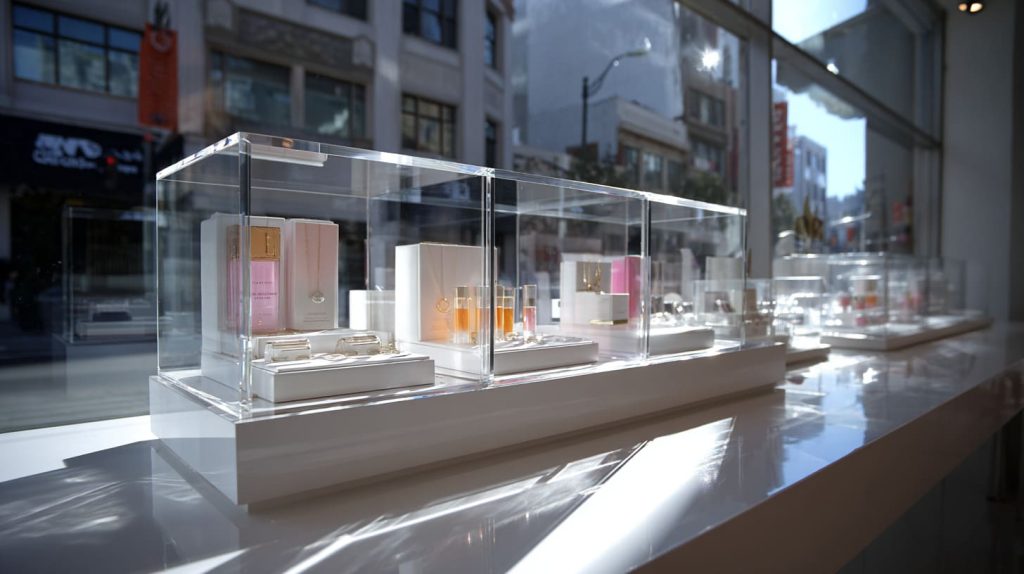
A storefront display has a strange job.
It must stay quiet, but it must also speak.
It does not shake hands with the customer. It does not explain the product. It does not say, “Please come inside.” But somehow, it still needs to catch the eye, protect the product, support the brand, survive cleaning, handle light, and look good every day.
That is not a small job.
When a buyer sends me a drawing for a storefront display, I do not only look at the size. I also think about where the display will stand. Will it sit near a bright window? Will it hold cosmetics, jewelry, shoes, watches, or electronics? Will customers touch it every day? Will a shop worker clean it quickly with the wrong cloth? Will the acrylic edge be visible from the front door?
These small details can change the material choice.
The best acrylic for storefront displays is not always one single type. Clear acrylic is often the first choice for visibility, but frosted acrylic, colored acrylic, mirrored acrylic, UV-resistant acrylic, and light-diffusing acrylic can all be better in the right retail situation.
This is where many projects become interesting.
A display can look perfect in a sample room and still fail in a real store. A clear acrylic box may look clean under soft office light, but it may reflect too much in a bright window. A thin display may save cost, but it may bend when the store places heavier products on it. A beautiful backlit sign may look cheap if the LED dots show through the panel.
I have seen these things happen.
So in this article, I want to talk about acrylic for storefront displays in a practical way. Not like a textbook. More like a real conversation between a factory and a careful buyer like Jacky, who already knows how custom acrylic projects work and wants fewer surprises before mass production.
Why Is Acrylic Popular for Storefront Displays?
Acrylic is popular for storefront displays because it gives a clean, modern, and glass-like look without many of the problems that come with glass.
That is the simple answer.
But the deeper answer is more useful.
Retail displays live in a public space. People walk past them. Staff move them. Products sit on them. Light hits them from different angles. Customers judge them very quickly.
Acrylic handles many of these needs well.
It is clear.
It is light.
It is easy to cut, bend, polish, engrave, print, and glue.
It can be made into simple trays or complex display structures.
It can support both luxury and everyday retail designs.
When I check a storefront display project, I never ask only, “Can acrylic be used?” I ask, “Can this acrylic still look good after shipping, installation, cleaning, and daily customer contact?”
That is the real test.
What Makes Acrylic Suitable for Retail Environments?
Acrylic has high transparency, so it can show the product clearly. This is very important for storefront displays because the product should stay as the hero.
A good acrylic display should not fight with the product.
It should support it.
For example, if a cosmetic brand wants to display lipstick, perfume, or skincare bottles, clear acrylic can make the items look clean and organized. If a jewelry store wants to show small shiny items, acrylic risers can add height without stealing attention. If a toy shop wants colorful window displays, acrylic boxes can protect items but still keep them visible.
Here is how I usually think about acrylic in retail projects:
| Retail Need | Why Acrylic Helps | Real Project Concern |
|---|---|---|
| Product visibility | Clear acrylic has a glass-like look | Surface scratches can reduce clarity |
| Easy installation | Acrylic is lighter than glass | Large panels still need proper support |
| Custom branding | Acrylic can be printed, engraved, or colored | Logo position must match real viewing angle |
| Safety | Acrylic is less fragile than glass | Edges still need proper polishing |
| Fast design changes | Acrylic is easier to fabricate | Complex shapes need stable drawings |
Acrylic also gives designers more freedom. It can be laser-cut into clean shapes. It can be CNC-machined for holes, slots, grooves, and special structures. It can be heat-bent into product holders or display stands. It can also be bonded into clear boxes.
This flexibility matters in storefront work because retail brands often do not want “standard.” They want something that fits their product, space, and brand feeling.
Why Do Retailers Prefer Acrylic Over Glass?
Retailers often choose acrylic over glass because acrylic is lighter and safer.
Glass can look beautiful. I do not deny that. It has a hard surface and a premium feel. But glass also brings risk. It can break during shipping. It can crack during installation. It can create sharp pieces if it falls.
Acrylic is not unbreakable, but it is much more forgiving in many storefront situations.
I once discussed a display box project with a buyer who wanted glass at first. The design looked simple. A clear box. A polished edge. A nice retail product inside. But the box needed to ship in bulk, and each unit had several glued panels. I told him the product would look elegant in glass, but the packaging cost and breakage risk would become a headache.
He paused for a moment and said, “So the display cost is not only the display.”
Exactly.
The display cost includes the damage risk, the packaging design, the shipping weight, the replacement cost, and the customer complaint risk.
That is why acrylic often wins in retail.
| Factor | Acrylic | Glass |
|---|---|---|
| Weight | Lighter | Heavier |
| Shipping risk | Lower | Higher |
| Impact resistance | Better | Lower |
| Scratch resistance | Lower | Better |
| Custom fabrication | Easier | More limited |
| Safety in public areas | Better | Riskier if broken |
| Premium hard surface feel | Good | Very strong |
The best choice depends on the display use. If the store needs scratch resistance above all else, glass may still make sense. But for many custom storefront displays, acrylic gives a better balance.
Common Storefront Display Applications
Acrylic is used in many storefront display products.
Some are simple.
Some are beautiful.
Some look simple but are actually difficult to make well.
Common applications include:
- Window display boxes
- Product risers
- Countertop stands
- Backlit logo signs
- Cosmetic organizers
- Jewelry display blocks
- Menu holders
- Promotional sign holders
- Acrylic shelves
- Acrylic trays
- Brand display walls
- LED light boxes
- Retail display covers
The important thing is that each application has a different stress point.
A product riser must support weight.
A sign holder must stay readable.
A light box must diffuse light evenly.
A window display must fight sunlight.
A luxury display must look expensive from close range.
This is where acrylic selection becomes more than “clear or not clear.”
It becomes a working decision.
A display may look like a small object, but it can carry the whole first impression of a store. And first impressions, as we all know, do not wait politely.
What Are the Main Types of Acrylic Used for Storefront Displays?
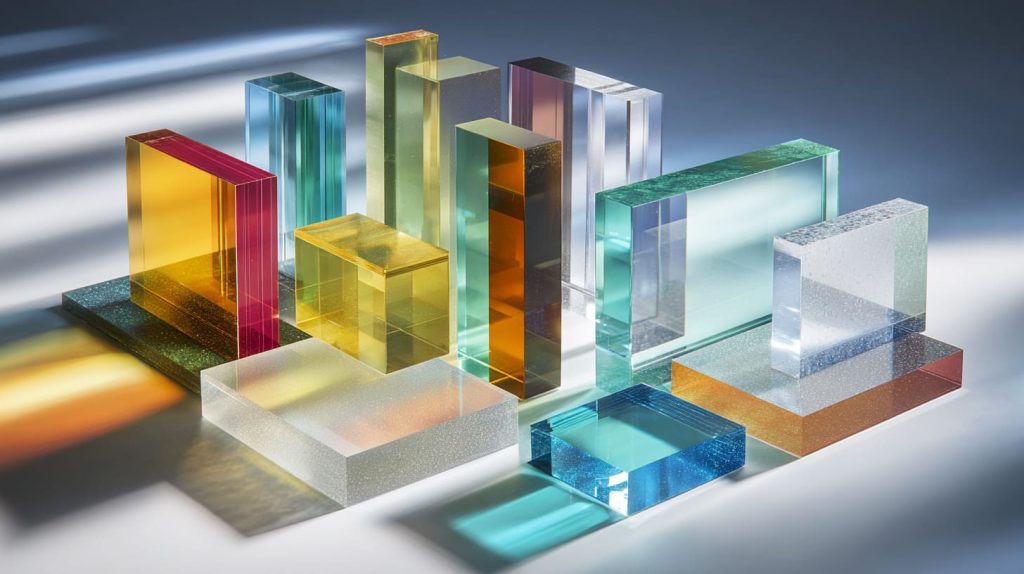
When people say “acrylic,” they often mean clear acrylic.
I understand why. Clear acrylic is the most common type. It is also the easiest to imagine.
But in storefront display projects, acrylic has many faces.
Clear acrylic can make products look open and visible. Frosted acrylic can soften strong light. Colored acrylic can support brand identity. Mirrored acrylic can create a luxury or decorative feeling. UV-resistant acrylic can help when sunlight is strong.
Acrylic is like clothing for a product display. A white shirt, black suit, winter coat, and rain jacket are all “clothes,” but they do very different jobs.
When I review material options, I try to match the acrylic type to the store environment first, not to the buyer’s first visual preference, because the nicest-looking sample is not always the best-working display.
What Is Clear Acrylic?
Clear acrylic is the standard choice for many storefront displays.
It gives a clean and transparent look. It lets customers see the product without a heavy visual barrier. It works well for display boxes, product risers, shelves, sign holders, and protection covers.
For many buyers, clear acrylic feels safe because it does not change the product color. A red lipstick still looks red. A gold watch still looks gold. A printed package still looks like the brand intended.
This is why clear acrylic is often the first option for retail displays.
But clear acrylic is not perfect.
It reflects light. It can show fingerprints. It can scratch if it is cleaned roughly. It may look cheap if the edge is not polished well. And if the sheet is too thin, it may bend and reduce the premium feeling.
| Clear Acrylic Use | Good For | Watch Out For |
|---|---|---|
| Product risers | Showing products clearly | Load and bending |
| Display boxes | Protecting items | Glue marks and dust |
| Sign holders | Clean retail messaging | Reflection and glare |
| Shelves | Light product display | Thickness and support |
| Covers | Safety and protection | Scratch marks |
For a storefront display, I usually see clear acrylic as the “default start,” not the final answer. It is a good base, but the real choice depends on lighting, size, use, and brand style.
What Is Frosted Acrylic?
Frosted acrylic has a soft, matte-like appearance.
It does not show everything clearly like transparent acrylic. Instead, it diffuses light and creates a calmer look. Many luxury stores like this feeling because it feels less sharp and less “plastic.”
Frosted acrylic works well when the display needs privacy, softness, or light diffusion. It can be used for panels, brand backdrops, sign parts, shelves, and decorative layers.
I like frosted acrylic when the goal is not only to show the product, but also to create mood.
A clear display says, “Look at the product.”
A frosted display says, “Feel the brand.”
That small difference matters.
| Frosted Acrylic Feature | Retail Benefit |
|---|---|
| Soft surface look | Creates a premium mood |
| Light diffusion | Helps with LED displays |
| Reduced direct visibility | Good for background panels |
| Lower reflection than clear acrylic | Better under some store lights |
| Modern appearance | Works well for fashion, beauty, and lifestyle stores |
But frosted acrylic can also reduce product visibility. If the display needs maximum clarity, frosted acrylic should not sit in front of the product. It may work better as a background, side panel, base layer, or lighting surface.
What Is Colored Acrylic?
Colored acrylic can be transparent, translucent, or opaque.
This makes it useful for brand design.
A cosmetics brand may use soft pink acrylic. A tech brand may use black or smoke acrylic. A children’s product store may use bright colors. A luxury shop may use deep brown, champagne, black, or smoky gray.
Colored acrylic can help a storefront look more planned and less generic.
But color is tricky.
A color that looks beautiful on a small sample may feel too strong on a large display. A color that looks good under factory light may change under warm retail lighting. A transparent colored sheet may also change how the product behind it appears.
This is why color matching should not be rushed.
| Colored Acrylic Type | Best Use | Possible Risk |
|---|---|---|
| Transparent color | Decorative covers, visual layers | May change product color |
| Translucent color | Backlit effects, soft branding | Light may not be even |
| Opaque color | Bases, panels, brand blocks | Can look heavy if overused |
| Smoke acrylic | Luxury and tech displays | May reduce product visibility |
| Bright color | Seasonal retail displays | May feel cheap if not controlled |
When a buyer asks for colored acrylic, I like to check the final store lighting and product color together. Color does not live alone. It lives with light, surface, packaging, and distance.
What Is Mirrored Acrylic?
Mirrored acrylic looks like a mirror, but it is lighter than glass.
It is often used for decorative retail displays, luxury backgrounds, beauty displays, jewelry displays, and fashion-related spaces. It can make a small display feel bigger and brighter.
Mirrored acrylic can create a strong visual effect.
But it needs careful handling.
The surface can scratch. The reflection can distort if the sheet is too thin or not supported well. The mirror coating may need protection during cutting, packing, and installation.
A mirrored acrylic display can look expensive when it is done well. It can also look messy very quickly if fingerprints, scratches, or bending appear.
| Mirrored Acrylic Use | Why It Works | What Can Go Wrong |
|---|---|---|
| Jewelry displays | Adds shine and depth | Scratches show clearly |
| Cosmetic displays | Reflects product and light | Fingerprints are obvious |
| Luxury back panels | Creates premium feeling | Distortion if sheet is thin |
| Decorative inserts | Lightweight and easy to cut | Edge finishing needs care |
I do not treat mirrored acrylic as a normal display material. I treat it more like a decorative surface that needs respect. It rewards careful design, but it punishes careless cleaning and packaging.
What Is UV-Resistant Acrylic?
UV-resistant acrylic is designed to handle sunlight better than standard acrylic.
This matters a lot for storefront displays near windows.
Sunlight does not damage a display like a hammer. It works slowly. It fades colors. It heats surfaces. It can make some plastics yellow or lose clarity over time.
Acrylic already has better outdoor performance than many plastics, but UV-resistant grades can give extra protection for long-term storefront use.
This is especially important when displays are used:
- Near large glass windows
- In outdoor shopping streets
- In store entrances
- In sunny cities
- For long-term brand fixtures
- For backlit or exposed signage
| Storefront Condition | Better Acrylic Choice |
|---|---|
| Indoor, away from sunlight | Standard clear acrylic may be enough |
| Near window with sunlight | UV-resistant clear acrylic |
| Outdoor signage | UV-resistant and weather-suitable acrylic |
| Long-term brand display | Higher-grade acrylic with stable clarity |
| Colored display near sunlight | UV-resistant colored or coated solution |
For short-term seasonal displays, standard acrylic may be acceptable. For long-term storefront fixtures, UV resistance can save money later.
Acrylic choice is rarely about one beautiful sample. It is about how that sample behaves after the store has cleaned it, lit it, moved it, and lived with it for months.
Which Acrylic Type Is Best for Different Storefront Display Applications?
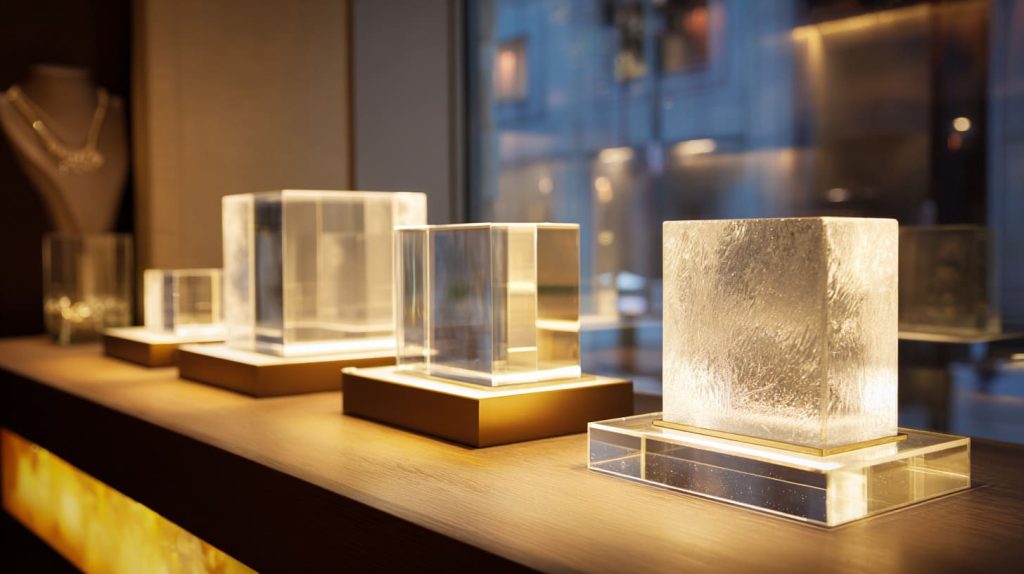
Acrylic selection becomes much easier when we connect it to real applications.
A luxury watch display does not need the same acrylic as a fast-food menu holder. A cosmetic shelf does not need the same material as an outdoor sign. A backlit logo panel does not need the same sheet as a clear product box.
The question is not, “Which acrylic is best?”
The better question is, “Best for what?”
Before I suggest acrylic type, I like to imagine the display already sitting in the store, because that mental picture often reveals problems that the drawing does not show.
Which Acrylic Works Best for Luxury Retail Displays?
Luxury retail displays need control.
They need clean edges, stable structure, nice light, and a surface that does not feel cheap. In this area, small details become big details.
A rough edge can ruin the whole feeling.
A visible glue mark can make the display look low-end.
A thin sheet can make a premium product feel unsupported.
A bad reflection can make the product hard to see.
For luxury retail, I often consider these options:
| Display Need | Acrylic Choice | Reason |
|---|---|---|
| Maximum product clarity | High-transparency clear acrylic | Keeps product as the focus |
| Soft premium mood | Frosted acrylic | Reduces harshness |
| Elegant base or background | Smoke or colored acrylic | Adds brand feeling |
| Decorative depth | Mirrored acrylic | Creates visual richness |
| Strong edge appearance | Thick clear acrylic with polished edges | Feels more premium |
Premium Visual Clarity Requirements
For luxury displays, clarity is not only about transparency. It is about clean presentation.
The acrylic should not have visible impurities. The edges should be polished well. The bonding should be clean. The product should look like it is floating or sitting naturally, not trapped inside plastic.
This is where high-transparency acrylic works well.
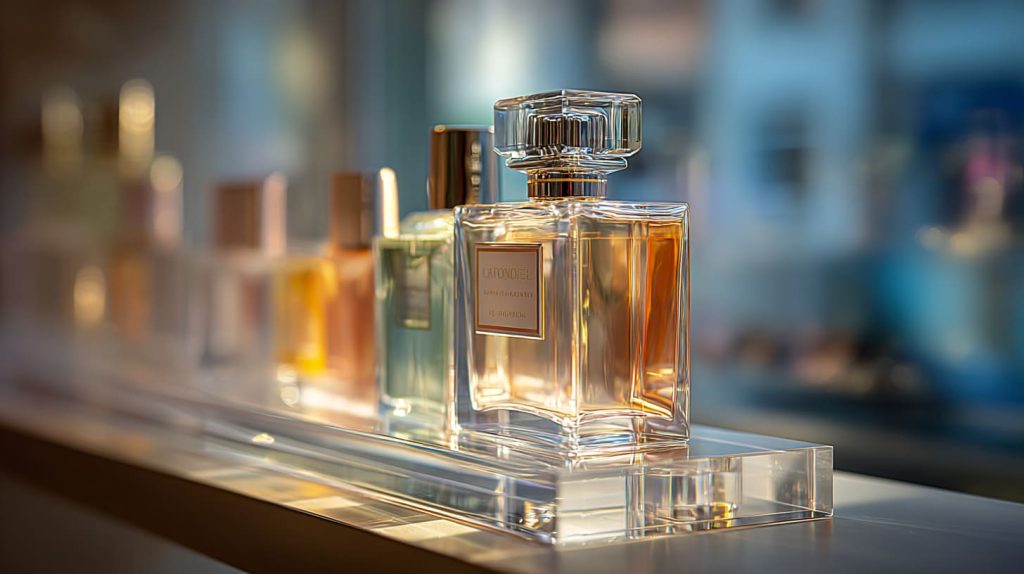
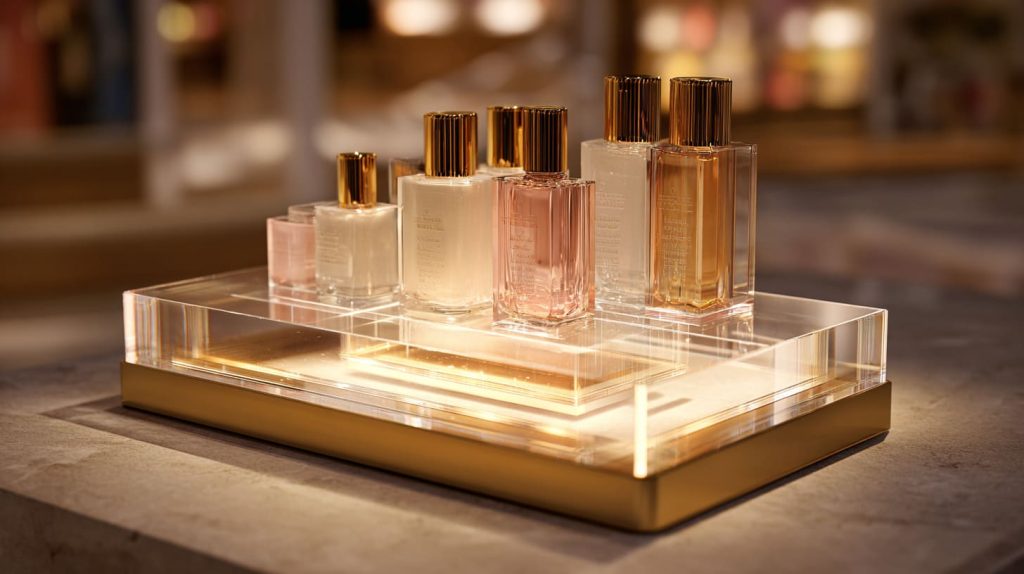
For example, a perfume display may use thick clear acrylic blocks with polished edges. The blocks lift the bottle and catch light from the side. The product feels more valuable because the base feels stable.
But if the acrylic edge has tool marks, the effect disappears.
Frosted and Edge-Polished Acrylic Options
Frosted acrylic can work well for luxury displays when it is used in the right place.
I do not usually place frosted acrylic directly in front of the product if the product needs full visibility. I prefer to use it as:
- A background panel
- A side accent
- A base layer
- A light-diffusing panel
- A privacy or soft-shadow element
Edge polishing also matters.
Acrylic edges can be diamond polished, flame polished, or manually finished depending on the design and budget. A polished edge can make a simple display look much more expensive.
Combining Lighting With Acrylic Displays
Lighting can make acrylic look beautiful.
It can also expose every mistake.
If the LED position is wrong, the acrylic may show bright dots. If the edge is not clean, the light may highlight tool marks. If the acrylic is too thin, the display may not catch light well.
| Lighting Design | Acrylic Concern | Better Approach |
|---|---|---|
| Edge lighting | Edge quality | Use polished edges |
| Backlighting | Hotspots | Use diffusion acrylic |
| Product spotlight | Reflection | Test viewing angle |
| Warm store light | Color shift | Check material sample under same light |
| Strong window light | Glare | Consider matte or anti-glare surface |
In luxury retail, the display does not need to shout. It needs to breathe. Good acrylic helps it do that.
Which Acrylic Is Ideal for Cosmetic and Jewelry Stores?
Cosmetic and jewelry stores are very demanding for acrylic displays.
The products are often small. The surfaces are shiny. The customer looks closely. Staff clean the display often. Lighting is strong. Fingerprints appear easily.
This is why material and finish need careful planning.
High-Transparency Acrylic for Product Visibility
Clear acrylic is usually a strong choice for cosmetics and jewelry because it keeps the product visible.
For cosmetics, customers need to see color, packaging, bottle shape, and label direction. For jewelry, customers need to see shine, size, and detail.
Acrylic should not make the product look cloudy.
Common acrylic display products for this area include:
- Lipstick holders
- Perfume risers
- Skincare bottle displays
- Jewelry trays
- Ring and bracelet stands
- Watch display blocks
- Makeup organizer displays
| Product Type | Acrylic Display Style | Key Concern |
|---|---|---|
| Lipstick | Clear stepped holder | Hole size and spacing |
| Perfume | Thick riser block | Weight and edge polish |
| Jewelry | Clear tray or stand | Scratch visibility |
| Watch | Clear or smoke stand | Stability and premium feel |
| Skincare bottle | Shelf or tiered display | Load and cleaning |
Scratch Resistance Considerations
Cosmetic and jewelry displays often get touched and cleaned many times.
This creates scratches.
Acrylic is not as scratch-resistant as glass. That is a fact. But proper design, packing, cleaning instructions, and protective coatings can reduce the problem.
For displays that face daily cleaning, buyers may consider:
- Hard-coated acrylic
- Replaceable clear covers
- Matte areas that hide light scratches better
- Designs with fewer exposed flat surfaces
- Better packaging film during shipping
I often tell buyers not to judge scratch risk only by material. User behavior matters too. If store staff clean with rough paper towels every day, even a good material will suffer.
LED-Compatible Acrylic Solutions
Cosmetics and jewelry displays often use LED lighting.
This can look beautiful.
But LED and acrylic need to be matched.
Clear acrylic may show light lines. Frosted or opal acrylic can diffuse light. Thick acrylic can carry edge light well. The design must consider LED distance, heat, brightness, and viewing angle.
| LED Display Goal | Recommended Acrylic |
|---|---|
| Glowing logo | Opal or frosted acrylic |
| Edge-lit base | Clear acrylic with polished edges |
| Soft product background | Frosted acrylic |
| Bright product shelf | Clear acrylic with hidden LED |
| No visible LED dots | Diffusion acrylic |
A cosmetic display should feel clean and fresh. A jewelry display should feel precise and trusted. Acrylic can help both, but only when the material is chosen with the lighting and cleaning reality in mind.
Which Acrylic Is Best for Outdoor Storefront Signage?
Outdoor signage is a different world.
The display faces sunlight, rain, dust, temperature changes, and wind. It may also face careless cleaning and public contact.
For outdoor storefront signage, I usually start with UV-resistant acrylic and proper thickness. I also check the mounting method, because even a good sheet can fail if it is fixed badly.
Weather-Resistant Acrylic Materials
Acrylic can perform well outdoors, especially compared with some other plastics. But not every acrylic sheet is suitable for every outdoor use.
Outdoor signs need material that can handle:
- Sunlight
- Rain
- Heat
- Cold
- Expansion and contraction
- Cleaning
- Wind pressure
- Long-term color stability
The design also matters. A large flat acrylic panel may expand under heat. If the screw holes are too tight, the sheet may crack. If the edges are exposed, water and dirt may build up.
UV-Protected Acrylic Sheets
UV-protected acrylic helps reduce yellowing and clarity loss.
This is important for storefronts that face strong direct sunlight.
For example, a clear sign cover near a sunny window may look fine in the first month. But after a long time, the difference between standard and UV-resistant material can become more obvious.
| Outdoor Situation | Recommended Material Thinking |
|---|---|
| Short-term promotion | Standard acrylic may work |
| Long-term outdoor sign | UV-resistant acrylic |
| Strong sun exposure | UV-resistant or coated acrylic |
| Backlit outdoor sign | Opal UV-resistant acrylic |
| Brand logo panel | UV-stable colored acrylic |
Thickness Selection for Outdoor Durability
Outdoor acrylic should not be too thin.
Thin acrylic may bend, vibrate, or crack more easily under stress. Large panels need enough thickness and proper fixing.
Here is a simple reference:
| Outdoor Sign Size | Common Thickness Range | Notes |
|---|---|---|
| Small sign plate | 3mm–5mm | Good for small panels |
| Medium storefront sign | 5mm–8mm | Better stiffness |
| Large sign cover | 8mm–12mm | Needs support structure |
| Big outdoor panel | 10mm+ | Depends on frame and wind load |
Thickness is not only about strength. It also affects how the sign feels. A thicker panel often looks more premium and stable.
Which Acrylic Works Best for Illuminated Storefront Displays?
Illuminated displays need acrylic that controls light well.
Clear acrylic is not always the best choice here. If the goal is even light, frosted or opal acrylic often works better.
Light Diffusion Acrylic Sheets
Light diffusion acrylic spreads LED light more evenly.
This is useful for:
- Backlit signs
- Light boxes
- Logo panels
- Glowing shelves
- Decorative retail walls
Without diffusion, LED dots may show through the panel. This can make a display look cheap even if the design is expensive.
Opal Acrylic for Backlit Signs
Opal acrylic is a common choice for backlit signs because it hides the light source and creates a smooth glowing surface.
But the right opal acrylic depends on brightness, LED spacing, panel size, and display depth.
If the acrylic is too transparent, hotspots may appear.
If it is too opaque, the sign may look dim.
If the LED space is too shallow, even good diffusion may not save the design.
Avoiding Hotspots in LED Signage
Hotspots are one of the most common problems in illuminated acrylic displays.
They happen when the viewer can see bright LED points or uneven light areas.
To avoid this, the design can use:
- Proper distance between LED and acrylic
- Diffusion acrylic
- Frosted surface treatment
- More even LED layout
- Internal reflective backing
- Proper light box depth
| Problem | Likely Cause | Possible Fix |
|---|---|---|
| LED dots visible | LEDs too close to panel | Increase depth or use diffusion acrylic |
| Sign too dim | Acrylic too opaque | Adjust material or LED brightness |
| Uneven brightness | Poor LED layout | Improve LED spacing |
| Edge light too harsh | Unpolished or uneven edge | Improve edge finishing |
| Color looks wrong | Light temperature mismatch | Test with real LED source |
Lighting is honest. It reveals everything. That is why I never treat illuminated acrylic as “just a sheet.” It is a small system.
And once light enters the story, thickness becomes the next quiet troublemaker.
How Does Acrylic Thickness Affect Storefront Displays?
Acrylic thickness is one of those details buyers sometimes try to reduce first.
I understand why.
Material cost is real. Shipping cost is real. A few millimeters can change the price, especially in bulk orders.
But thickness affects more than cost. It affects strength, appearance, weight, bending, installation, and customer perception.
When a customer asks me to make a sheet thinner, I first check where the load sits and how the display will be handled, because a weak display does not announce itself in the quotation. It announces itself later in the store.
Why Does Thickness Matter?
Thickness matters because storefront displays are not only decorative objects.
They carry products.
They stand under light.
They get moved.
They face cleaning.
They may sit in a window.
They may be touched by customers.
A thin acrylic display may look okay in a photo. But when it holds real products, it may bend. When staff move it, it may feel weak. When customers see it from close range, it may look less premium.
Thicker acrylic can give a stronger and more expensive feeling. But it also increases cost and weight.
So the goal is not always “thicker is better.”
The goal is “thick enough for the job.”
| Thickness Factor | What It Affects |
|---|---|
| Structural stability | Bending, shaking, load-bearing |
| Visual quality | Premium feel and edge appearance |
| Weight | Shipping and handling |
| Cost | Material and production cost |
| Fabrication | Cutting, bending, bonding difficulty |
Acrylic thickness should match the display size, load, and design structure.
Common Acrylic Thickness Options for Displays
Here is a practical thickness reference for storefront displays:
| Application | Recommended Thickness | Common Reason |
|---|---|---|
| Small sign holders | 2mm–3mm | Light, simple, low load |
| Counter displays | 3mm–5mm | Better strength and clean look |
| Product risers | 5mm–8mm | Supports product weight |
| Window display boxes | 5mm–8mm | Better stability and protection |
| Large signage panels | 8mm–12mm | Reduces bending and improves appearance |
| Luxury display blocks | 10mm–20mm+ | Premium visual weight |
| Shelves for products | 6mm–12mm | Depends on span and load |
| Outdoor panels | 8mm–12mm+ | Depends on frame and wind |
These numbers are not fixed rules. They are starting points.
A small jewelry riser can use thinner acrylic if the structure is short and well supported. A wide cosmetic shelf may need thicker acrylic even if the product weight looks light. A long clear shelf can bend simply because the span is too large.
That is why drawings matter.
How to Balance Appearance and Cost
Cost control is important in every B2B project.
Acrylic thickness can be adjusted, but it should not be adjusted blindly.
Here is how I think about it:
| Buyer Goal | Possible Choice | Risk |
|---|---|---|
| Lowest cost | Thinner acrylic | Bending, weak feeling |
| Premium appearance | Thicker acrylic | Higher material and shipping cost |
| Strong structure | Thicker sheet or added supports | More complex fabrication |
| Lightweight display | Moderate thickness | May need smart design |
| Better packaging | Stronger but optimized design | Requires testing |
Sometimes, we can reduce cost without making the display weak. We can adjust structure instead.
For example:
- Add support ribs
- Reduce unsupported span
- Change from one large panel to smaller parts
- Use thicker acrylic only in key areas
- Use clear acrylic for visible parts and colored base panels for support
- Improve bending structure instead of increasing full sheet thickness
A Simple Thickness Decision Table
| Question I Ask | Why It Matters |
|---|---|
| What product will sit on the display? | Load affects bending |
| How wide is the unsupported area? | Long spans need more thickness |
| Will customers touch it? | Public contact needs stronger structure |
| Will it ship assembled or flat-packed? | Packaging risk changes |
| Is the edge visible? | Thicker polished edges look more premium |
| Is it near heat or sunlight? | Expansion and stability matter |
Thickness is not just a number on a drawing. It is the difference between “nice sample” and “stable retail display.”
I have seen buyers save a little material cost and lose much more in returns, repacking, or complaints. That is a painful trade.
And after thickness, the next thing customers see is the surface.
What Surface Finishes Work Best for Storefront Acrylic Displays?

Surface finish changes how acrylic feels.
The same acrylic shape can look cheap, clean, soft, luxury, modern, or practical just because the surface and edge finish changed.
This is why I pay close attention to finish in storefront display work.
Acrylic is not only seen from far away. Many displays are touched, cleaned, and judged from a very close distance. A customer may lean in. A staff member may wipe it every day. A buyer may inspect the edge under light.
One rough edge can speak louder than a beautiful design.
The finish I choose depends on where the customer’s eye goes first, because the most visible surface should get the most care, not always the whole product equally.
What Is Polished Acrylic?
Polished acrylic has clean, smooth edges or surfaces that look more refined.
For storefront displays, edge polishing is often more important than people think. Acrylic sheets are cut first. After cutting, the edge may look rough, white, or marked. Polishing makes it clear and shiny.
Common edge finishing methods include:
- Diamond polishing
- Flame polishing
- Manual polishing
- CNC finishing
- Buffing
Each method has its place.
| Polishing Method | Best For | Notes |
|---|---|---|
| Diamond polishing | Straight edges, premium displays | Clean and consistent |
| Flame polishing | Simple clear edges | Fast but needs skill |
| Manual polishing | Special shapes or repair | Labor-heavy |
| CNC finishing | Precise machined parts | Good for technical structures |
| Buffing | Final shine | Depends on shape |
A polished edge can make a thick acrylic block look like glass. This works very well for luxury retail, cosmetics, jewelry, awards, and product risers.
But polishing is not free. It adds labor and cost. It also needs good quality control. If the edge is overheated or uneven, it can create stress or distortion.
What Is Matte or Anti-Glare Acrylic?
Matte acrylic and anti-glare acrylic help reduce reflection.
This is useful in storefronts with strong light, large windows, or bright LED systems.
Clear glossy acrylic can reflect the street, lights, people, and ceiling. Sometimes this makes the display hard to read. A sign holder near a window may look clean from one angle and unreadable from another.
Matte or anti-glare acrylic can help.
| Finish Type | Good For | Trade-Off |
|---|---|---|
| Glossy clear | Maximum clarity | More reflection |
| Matte acrylic | Softer look | Less sharp visibility |
| Anti-glare acrylic | Better readability | May slightly reduce clarity |
| Frosted finish | Light diffusion | Not for full product visibility |
| Textured acrylic | Decorative effect | Harder to clean |
For signage, anti-glare can be very useful. For product display covers, it must be tested carefully because it can reduce sharpness.
This is a classic retail trade-off.
You can reduce glare, but you may also reduce pure clarity.
Scratch-Resistant Coatings and Their Benefits
Scratch resistance matters because storefront displays are used in real life.
Acrylic scratches more easily than glass. This does not mean acrylic is a bad material. It means buyers need to plan for cleaning, handling, and use.
Scratch-resistant coating can help, especially for displays that face frequent cleaning or customer touch.
Good uses include:
- Counter displays
- Product covers
- Menu holders
- Protective panels
- High-touch retail areas
- Cosmetic display surfaces
But coating also has limits.
It may increase cost. It may affect fabrication. Some coated sheets cannot be bent or bonded the same way as normal acrylic. Cutting and machining must be planned carefully.
| Situation | Coating Worth Considering? | Reason |
|---|---|---|
| Daily cleaning | Yes | Reduces visible scratches |
| Short-term promotion | Maybe not | Cost may not be needed |
| Luxury retail fixture | Yes | Long-term appearance matters |
| Complex bending design | Check first | Coating may limit processing |
| Low-budget display | Depends | Cost may be too high |
I often ask how long the display should stay in use. A one-month promotion and a three-year retail fixture should not use the same decision logic.
Cleaning and Finish Should Be Planned Together
Surface finish is not only a factory issue.
It is also a maintenance issue.
If a store cleans glossy acrylic with a rough cloth, scratches may appear. If it uses strong chemicals, the surface may become cloudy or damaged. If dust stays on the display, wiping can create fine marks.
Simple cleaning rules help:
- Use a soft microfiber cloth
- Avoid dry wiping when dust is heavy
- Use mild soap and water when needed
- Avoid strong solvents
- Do not use rough paper towels
- Keep protective film on until installation
| Cleaning Mistake | Possible Result |
|---|---|
| Dry wiping dusty acrylic | Fine scratches |
| Using alcohol or harsh chemicals | Clouding or cracking risk |
| Using rough cloth | Visible surface marks |
| Removing film too early | Damage during installation |
| Stacking parts without protection | Scratches in transit |
Acrylic finish can make a display look beautiful, but daily cleaning decides how long that beauty lasts.
And if the display sits near sunlight, maintenance is only half of the story.
How Important Is UV Resistance for Storefront Displays?
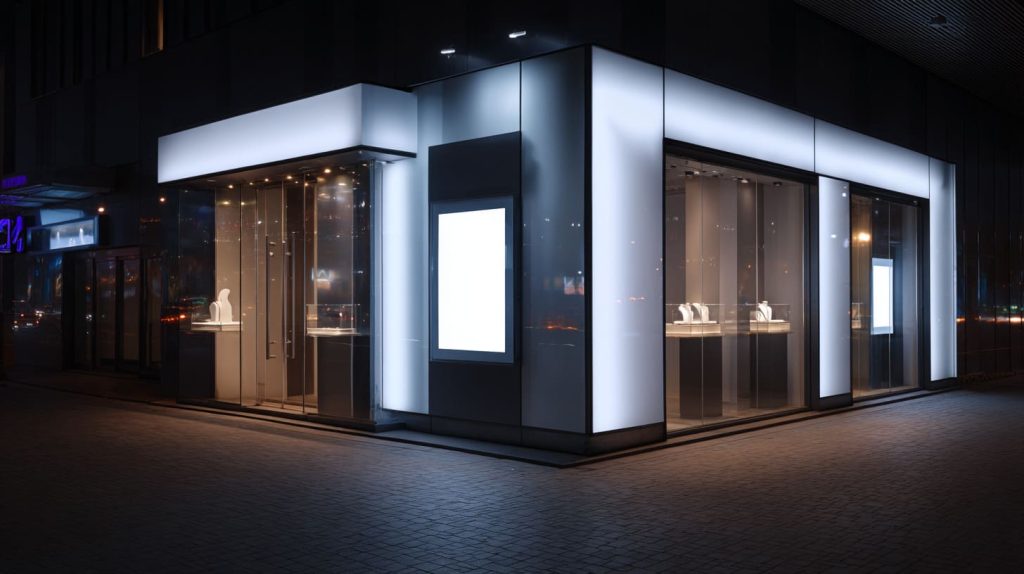
UV resistance can be very important for storefront displays, especially when the display sits near windows or outside.
Sunlight is patient.
It does not ruin acrylic in one dramatic moment. It works slowly. It adds heat. It adds UV exposure. It tests color, clarity, glue, printing, and surface quality.
A display that looks perfect in the factory may look different after months of direct sun.
When I hear that a display will stand near a storefront window, I immediately treat sunlight as a design condition, not as a small environmental note.
Why Can Sunlight Damage Acrylic?
Sunlight can affect many materials over time.
For acrylic displays, the main concerns are:
- Yellowing
- Loss of clarity
- Surface aging
- Color fading
- Printed logo fading
- Adhesive weakening
- Heat-related bending or stress
Acrylic usually has better UV resistance than many plastics, but the grade still matters. Outdoor use, direct sunlight, and long-term display life need better material choices.
| Sunlight Issue | What It Can Affect |
|---|---|
| UV exposure | Yellowing and aging |
| Heat buildup | Bending or stress |
| Strong light | Glare and poor visibility |
| Long exposure | Color fading |
| Window placement | Uneven aging on one side |
A storefront window can be beautiful, but it is also a material test room.
The display may face sunlight every day. If the acrylic is standard clear acrylic and the store expects long-term use, UV-resistant acrylic may be a better choice.
Which Storefronts Need UV-Resistant Acrylic Most?
Not every store needs UV-resistant acrylic.
If the display sits deep inside the store, away from sunlight, standard clear acrylic may be enough. If the display is for a short promotion, the risk may be small.
But some storefronts should take UV resistance seriously.
| Storefront Situation | UV Risk Level | Suggested Thinking |
|---|---|---|
| Indoor counter display | Low | Standard acrylic may work |
| Window display with weak sunlight | Medium | Check display duration |
| South-facing window | High | Consider UV-resistant acrylic |
| Outdoor shopping street | High | Use outdoor-suitable acrylic |
| Long-term sign panel | High | UV-resistant material is safer |
| Colored acrylic near sunlight | Medium to high | Test color stability |
Retailers in sunny areas should be more careful. The same display may age differently in Canada, California, the Middle East, or Japan depending on sunlight, window direction, and store layout.
A small material upgrade may protect the brand look for much longer.
How to Extend Acrylic Display Lifespan
Material choice matters, but it is not the only factor.
Design, installation, cleaning, and packaging also affect lifespan.
Proper Cleaning Methods
Cleaning is a hidden part of display life.
Acrylic can stay beautiful if it is cleaned correctly. It can also get scratched quickly if staff treat it like glass.
Good cleaning habits include:
- Clean with soft cloth
- Remove dust gently
- Use mild cleaning liquid
- Avoid harsh chemicals
- Avoid abrasive pads
- Train store staff if the display is premium
Protective Coatings
Protective coatings can help with scratch resistance, UV resistance, or anti-glare performance.
But coatings should be chosen early. Some coatings affect cutting, bending, bonding, and printing.
| Coating Type | Main Benefit | Check Before Use |
|---|---|---|
| Hard coating | Better scratch resistance | Can it be cut or bent? |
| UV coating | Better sunlight performance | Is it needed for the location? |
| Anti-glare coating | Better readability | Does it reduce clarity too much? |
| Anti-static coating | Less dust attraction | Is it worth the cost? |
Indoor vs Outdoor Maintenance Differences
Outdoor acrylic needs more maintenance planning.
Dust, rain, sun, and temperature changes make the display work harder.
| Use Environment | Maintenance Focus |
|---|---|
| Indoor display | Cleaning and scratches |
| Window display | UV, glare, heat |
| Outdoor display | Weather, mounting, dust, expansion |
| Backlit display | Heat and light evenness |
| High-touch display | Coating and cleaning method |
I always prefer to know the real use environment before quoting the final material. A display does not fail because the buyer asked for acrylic. It fails because the environment was not taken seriously.
Sunlight is slow, but it is honest. It will show whether the material decision was careful or rushed.
And the same is true for supplier selection.
How Do Retail Buyers Choose the Right Acrylic Supplier?
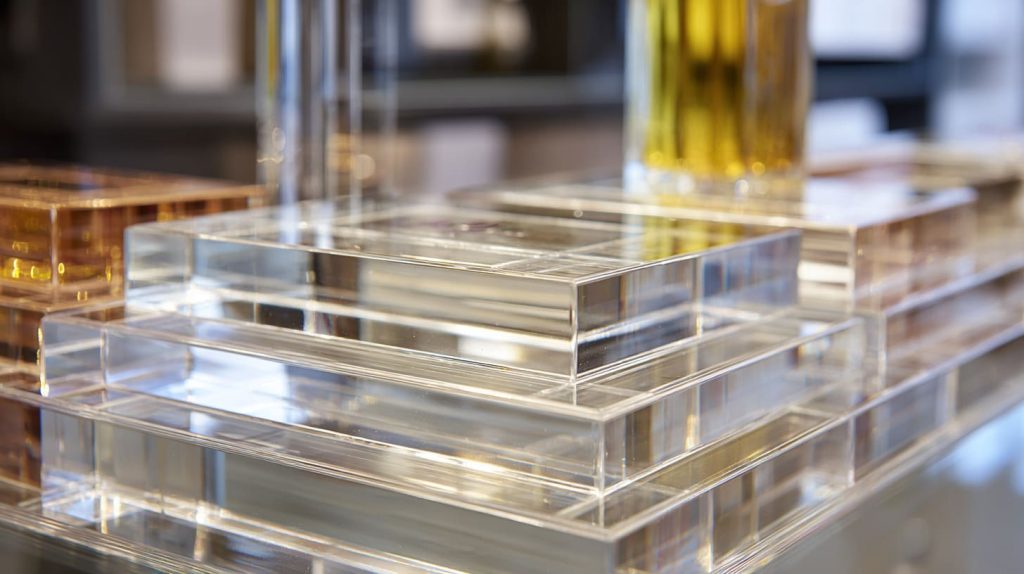
Choosing the right acrylic supplier is not only about finding someone who can cut a sheet.
A storefront display project needs material knowledge, fabrication skill, packaging control, stable production, and clear communication.
A nice sample is important. But mass production is where the real test begins.
The supplier should understand the display’s purpose, not just its dimensions.
When I work with experienced buyers, I pay close attention to the questions they ask, because serious buyers usually worry about problems before they become expensive.
What Quality Standards Should Buyers Check?
Quality standards help reduce risk.
They do not guarantee perfection, but they show whether a factory has a system.
For acrylic storefront displays, buyers may check:
- ISO9001 certification
- Material source
- Acrylic transparency
- Sheet thickness tolerance
- Surface protection
- Edge quality
- Bonding quality
- Packaging method
- Inspection process
- Production consistency
At Feilong Acrylic, we work with custom acrylic displays, boxes, frames, stands, racks, cabinets, blocks, organizers, and furniture parts. In these projects, quality is not one big thing. It is many small things done correctly.
| Quality Point | Why It Matters |
|---|---|
| Material clarity | Affects product visibility |
| Thickness tolerance | Affects assembly and strength |
| Edge polish | Affects premium feeling |
| Glue quality | Affects appearance and durability |
| Surface protection | Reduces scratches |
| Packing method | Reduces shipping damage |
| Inspection | Catches problems before export |
A buyer like Jacky may already know this from factory visits. The sample table can look clean, but the real question is whether the factory can keep the same quality for 500, 1,000, or 5,000 pieces.
Why Fabrication Capability Matters
Acrylic fabrication is not just cutting.
A custom storefront display may need several processes:
- Laser cutting
- CNC machining
- Heat bending
- Diamond polishing
- Flame polishing
- UV printing
- Screen printing
- Laser engraving
- Bonding
- Assembly
- Packaging
Each process affects the final look.
For example, a laser-cut edge may be fine for some designs, but a luxury display may need diamond polishing. A bent acrylic part may look simple, but if the bending angle is not stable, the display may not stand correctly. A printed logo may look beautiful, but if the surface is not prepared well, the print may not last.
| Fabrication Need | What to Check |
|---|---|
| CNC cutting | Hole position and tolerance |
| Laser cutting | Edge burn and accuracy |
| Heat bending | Angle consistency |
| Polishing | Clear and smooth edges |
| Bonding | No bubbles or ugly glue marks |
| Printing | Color accuracy and durability |
| Assembly | Fit and stability |
This is why factory equipment and worker experience matter.
Acrylic is a material that looks simple from far away. But close work needs hands, eyes, and patience.
Questions Experienced Buyers Often Ask Suppliers
Good buyers ask better questions.
They do not only ask, “How much?”
They ask about risk.
Lead Time Stability
Lead time matters because retail launches often have fixed dates.
A delay can affect store opening, campaign timing, or product release.
Useful questions include:
- What is the sample lead time?
- What is the mass production lead time?
- What happens if the design changes?
- Can the factory handle urgent orders?
- How many production lines are available?
Packaging Protection Methods
Packaging is critical for acrylic.
A beautiful display can be ruined by scratches, cracks, or pressure marks during shipping.
Important packaging points include:
- Protective film
- Individual wrapping
- Foam protection
- Strong cartons
- Corner protection
- Pallet packaging for bulk orders
- Drop test if needed
OEM Customization Support
Many retail brands need custom shape, logo, size, color, or packaging.
OEM support should include drawing review, sample making, and production advice.
A supplier should be able to say, “This design may have a problem,” not only, “Yes, we can make it.”
Sample Consistency vs Mass Production
This is a big one.
A sample is made slowly. Mass production is made repeatedly.
The supplier must control:
- Color consistency
- Edge quality
- Glue marks
- Size tolerance
- Packaging method
- Printing position
- Assembly quality
| Buyer Question | What It Reveals |
|---|---|
| Can you keep the same edge finish in mass production? | Process stability |
| How do you protect the surface during shipping? | Packaging experience |
| Can you make a pre-production sample? | Risk control |
| What tolerance can you hold? | Manufacturing ability |
| How do you inspect before shipment? | Quality system |
| Can you suggest material changes? | Real project experience |
A good supplier does not only follow the drawing. A good supplier helps the buyer avoid regret.
And regret often starts with very common mistakes.
What Common Mistakes Should Buyers Avoid When Choosing Acrylic for Storefront Displays?
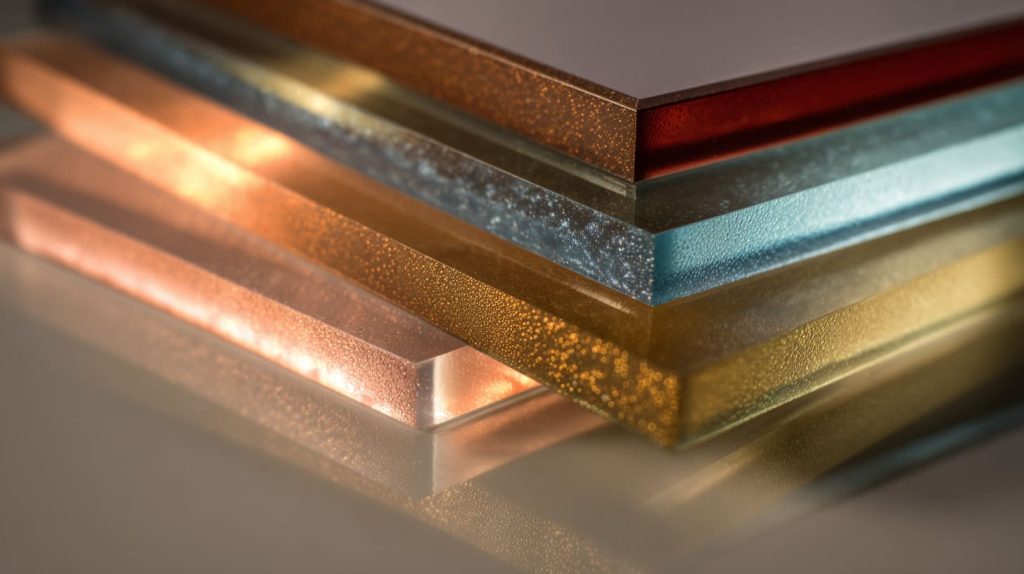
Most acrylic display problems do not start with bad intentions.
They start with small assumptions.
The buyer assumes clear acrylic is always enough.
The designer assumes the store light will be soft.
The supplier assumes the thickness is fine.
The shop assumes cleaning is simple.
Everyone assumes the sample tells the whole story.
Then the real store says, “No.”
This is where things often go wrong: the display is judged in a meeting room, but it must perform in a busy store with light, dust, hands, pressure, and time.
Choosing Acrylic Only Based on Price
Price matters.
I never pretend it does not.
In B2B custom manufacturing, every buyer has a budget. Every project has a target cost. Every quotation gets compared.
But choosing acrylic only based on price can create hidden cost.
Cheap acrylic may have lower clarity, weaker UV stability, poor thickness control, or more surface defects. Thin material may reduce cost but cause bending. Poor packaging may save a little money but increase damage risk.
| Low-Cost Choice | Possible Hidden Cost |
|---|---|
| Thinner sheet | Bending or weak feeling |
| Low-grade acrylic | Yellowing or lower clarity |
| No polishing | Cheap appearance |
| Weak packaging | Shipping damage |
| No sample testing | Mass production surprise |
| No UV protection | Shorter storefront lifespan |
Sometimes the cheapest quote is not cheaper. It is only quieter at the beginning.
I prefer to reduce cost through smart design, not weak material.
Ignoring Lighting Conditions
Lighting changes everything.
Acrylic looks different under warm light, cold light, LED light, sunlight, and shadow. A clear sign holder may reflect the street. A backlit panel may show hotspots. A colored acrylic part may look different under the actual store light.
This mistake is common because most samples are checked under office or factory lighting.
But storefronts are not offices.
They may have:
- Strong window sunlight
- LED spotlights
- Warm retail light
- Reflections from glass doors
- Night lighting
- Mixed indoor and outdoor light
| Lighting Condition | Acrylic Risk |
|---|---|
| Strong sunlight | Glare and UV aging |
| LED backlight | Hotspots |
| Warm light | Color shift |
| Window reflection | Poor readability |
| Dark store interior | Display may look too heavy |
| Bright white light | Scratches more visible |
If lighting matters, test the material under similar light before mass production. A small test can prevent a big disappointment.
Using the Wrong Thickness
Wrong thickness is another common problem.
A thin sheet can bend. A thick sheet can cost too much. A large panel may need support. A small display may not need heavy material.
The mistake is not choosing thin acrylic. The mistake is choosing thin acrylic without checking load and span.
| Display Issue | Possible Thickness Problem |
|---|---|
| Shelf bends | Sheet too thin or span too long |
| Display feels cheap | Thickness too low |
| Panel shakes | Not enough support |
| Cost too high | Overbuilt structure |
| Cracking near screws | Poor hole design or stress |
| Heavy shipping cost | Thickness not optimized |
Acrylic thickness should be chosen with structure. Sometimes adding a support is better than making the whole sheet thicker.
Forgetting Maintenance and Cleaning Factors
Maintenance is not exciting.
But it matters.
Storefront displays are cleaned often. Dust settles. Customers touch surfaces. Staff may use whatever cloth is nearby. Over time, small scratches and marks build up.
Acrylic needs care.
If the display will be used for a long time, cleaning should be part of the design thinking.
| Maintenance Issue | Design or Material Response |
|---|---|
| Frequent fingerprints | Avoid large glossy touch areas |
| Daily cleaning | Consider hard coating |
| Dust buildup | Use simple shapes and easy access |
| Scratch visibility | Use matte or replaceable panels |
| Chemical cleaning risk | Provide cleaning instructions |
| Public touch | Use stronger design and protected surfaces |
I have learned that a display can fail slowly. Not from one big mistake, but from many small daily contacts.
A scratch today.
A harsh cleaner tomorrow.
A small bend next month.
A cloudy surface after six months.
That is why practical design must respect real store behavior.
Once the common mistakes are controlled, acrylic displays can do more than hold products. They can carry a brand.
How Can Custom Acrylic Displays Improve Store Branding?
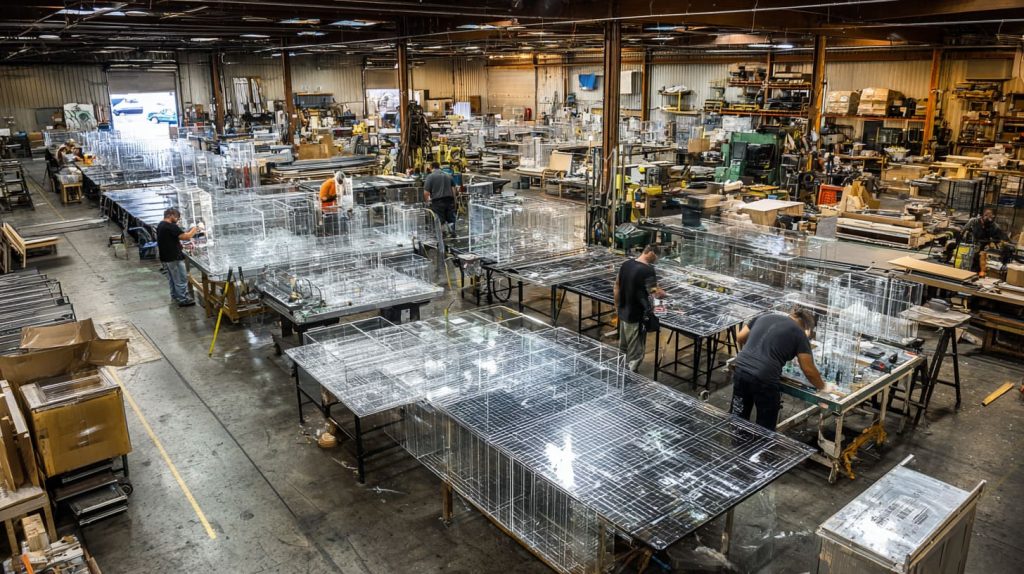
A custom acrylic display can make a store feel more organized, more trusted, and more memorable.
This does not mean every display needs to be complex.
Sometimes the best custom display is simple.
A clean clear riser.
A color-matched base.
A small engraved logo.
A soft LED glow.
A polished edge that catches light just enough.
Branding is often built from these quiet details.
I judge custom display value by whether it helps the product sell better in the real store, not by whether the design looks impressive on a screen.
Why Custom Displays Create Stronger Visual Identity
A custom acrylic display helps a brand control how products appear.
Without custom display, products may sit on generic shelves. They may look crowded. They may lose the brand feeling. They may compete with other items nearby.
With a custom display, the brand can guide the customer’s eye.
It can decide:
- Which product sits higher
- Which item gets the most attention
- Where the logo appears
- How light touches the product
- What color supports the brand
- How the display fits the store layout
| Branding Goal | Custom Acrylic Solution |
|---|---|
| Premium feeling | Thick clear acrylic with polished edges |
| Soft beauty style | Frosted or opal acrylic |
| Strong brand color | Colored acrylic base or side panel |
| Clean product focus | Transparent display structure |
| Modern tech feeling | Smoke acrylic or black acrylic |
| Strong logo memory | Engraving, printing, or backlit logo |
A good display should not look like decoration only. It should help the customer understand the product faster.
Popular Customization Options
Acrylic gives many customization choices.
This is one of the reasons it works so well for retail.
UV Printing
UV printing can add logos, patterns, product information, or brand graphics directly onto acrylic.
It is useful for:
- Promotional displays
- Logo panels
- Counter displays
- Retail signs
- Product launch displays
The key concern is print durability and color accuracy. The print should match the brand standard and survive normal handling.
Laser Engraving
Laser engraving creates a subtle and clean branding effect.
It works well for luxury displays, awards, logo blocks, and edge-lit designs.
Engraving can look beautiful when light passes through the acrylic. But it should be used carefully. Too much engraving can make a display feel busy.
Custom Colors and Shapes
Custom color is useful when a brand needs stronger visual identity.
The shape also matters.
A small curve, a special step, or a unique holder can make a product easier to notice.
| Custom Option | Best Use | Watch Out For |
|---|---|---|
| UV printing | Color logo and graphics | Color accuracy |
| Laser engraving | Premium subtle logo | Visibility under light |
| Custom color | Brand identity | Color shift under lighting |
| Heat bending | Holders and stands | Angle consistency |
| CNC machining | Precise slots and holes | Tolerance control |
| LED integration | Backlit logos and shelves | Heat and hotspots |
LED Integration
LED lighting can make acrylic displays more eye-catching.
But it must be designed carefully.
Light should support the product, not blind the customer. The LED should not create ugly dots. The wiring should be hidden. Heat should be controlled. Maintenance should be possible.
Acrylic and LED can make a very nice team, but only if the design respects both material and light.
Why OEM Acrylic Manufacturing Helps Retail Brands
OEM acrylic manufacturing helps retail brands because it turns an idea into a repeatable product.
A brand may start with a sketch, a photo, a rough size, or a retail problem. The factory helps turn that into a sample, then into mass production.
This process matters because storefront displays need both creativity and control.
A display must look good.
It must also be produced consistently.
It must be packed safely.
It must arrive on time.
It must fit the store.
At Feilong Acrylic, our work often starts with a buyer’s idea. Sometimes the buyer already has drawings. Sometimes the buyer only has a product and a display goal. In both cases, we need to think through the same things: material, thickness, finish, structure, logo, lighting, packing, and lead time.
| OEM Need | Why It Helps Retail Brands |
|---|---|
| Custom size | Fits product and store space |
| Custom logo | Builds brand memory |
| Custom structure | Improves product display |
| Sample making | Reduces risk before mass production |
| Bulk production | Keeps retail rollout consistent |
| Packaging design | Reduces damage during shipping |
A custom acrylic display is not only an object. It is a small brand stage.
And every product placed on that stage either looks more valuable or more ordinary.
Conclusion
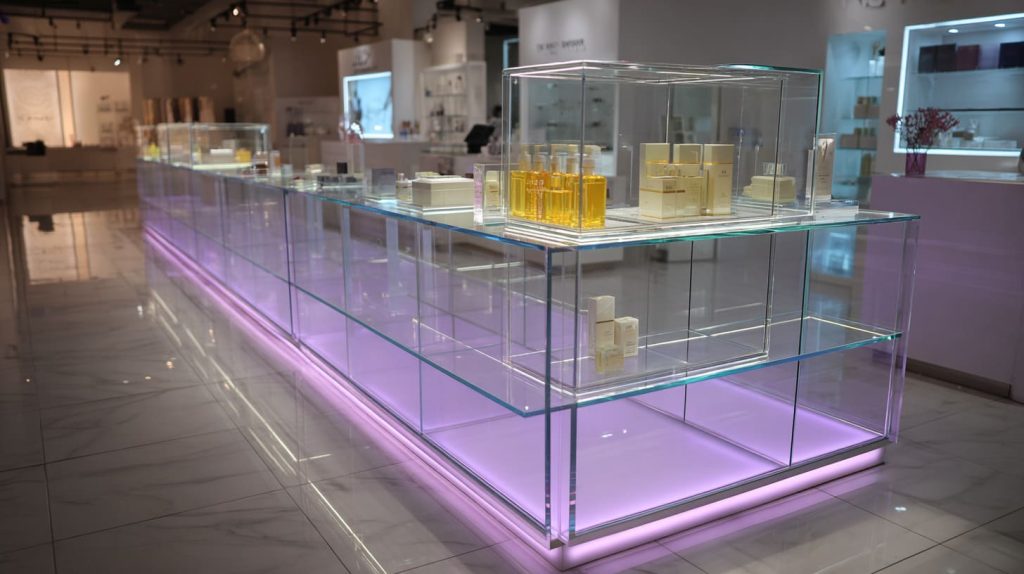
The best acrylic for storefront displays depends on the real use environment.
Clear acrylic is often the best starting point when product visibility is the main goal. It works well for display boxes, risers, shelves, covers, and sign holders. Frosted acrylic is better when the display needs a softer, more private, or more premium feeling. Colored acrylic helps brands create stronger visual identity. Mirrored acrylic can add a decorative and luxury effect. UV-resistant acrylic is important for storefronts facing sunlight. Light-diffusing or opal acrylic is often the better choice for illuminated signs and LED display panels.
I do not believe one acrylic type is always best.
That sounds simple, but real retail projects are not simple.
A good storefront display must balance many things:
| Decision Factor | What Buyers Should Think About |
|---|---|
| Visibility | Does the customer need to see the product clearly? |
| Lighting | Will sunlight, LED, or reflection affect the display? |
| Durability | Will the display face touch, cleaning, or outdoor exposure? |
| Thickness | Does the display need strength or premium visual weight? |
| Finish | Should the surface be glossy, matte, polished, or anti-glare? |
| Branding | Does the display need color, logo, engraving, or lighting? |
| Maintenance | Can store staff clean it safely and easily? |
| Shipping | Can the product survive bulk export packaging? |
For experienced buyers and product designers, the right acrylic choice is not only about appearance. It is also about long-term performance, safety, cost, cleaning, lighting, and customer experience.
If you are planning a custom storefront display project, I would suggest starting with a few simple questions:
- Where will the display be used?
- What product will it hold?
- Will it face sunlight?
- Will customers touch it?
- Will it need LED lighting?
- How long should it stay in use?
- What kind of brand feeling should it create?
- What quantity will be produced?
- How should it be packed for shipping?
These questions can save time, money, and many small headaches later.
At Feilong Acrylic, we focus on custom acrylic products for B2B buyers, including store displays, acrylic boxes, frames, stands, racks, cabinets, blocks, organizers, and custom retail parts. If you have a storefront display idea, drawing, or sample, you can share the details with us. We can help review the material, thickness, finish, structure, branding options, and production method before the project moves into bulk order.
A storefront display may look like a quiet object.
But when it is made well, it can do something powerful.
It can make the product easier to see.
It can make the store feel more trusted.
It can make the brand feel more complete.
And sometimes, that quiet display is the reason a customer stops, looks, and finally steps inside.