Skip to content
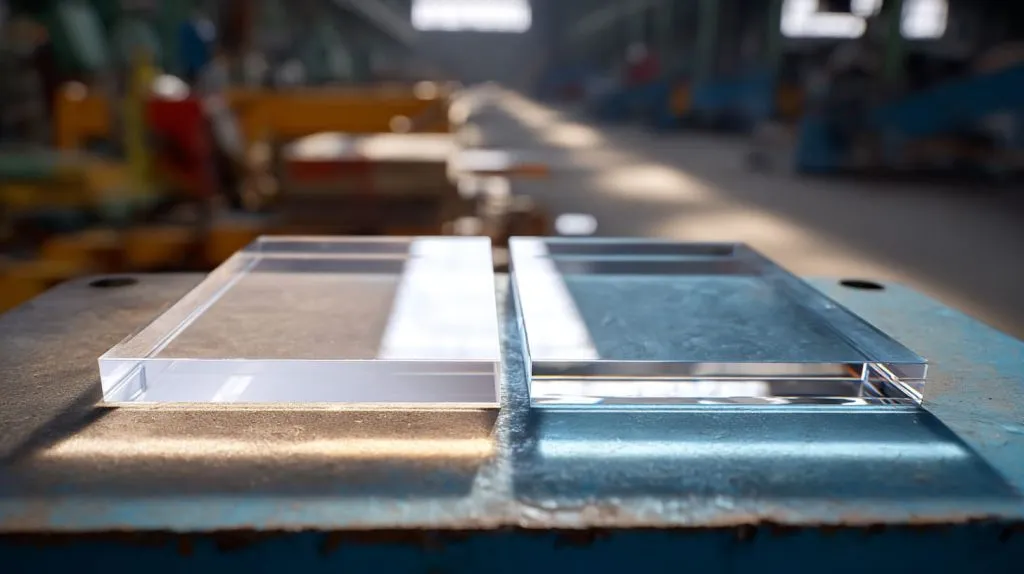
Choosing acrylic sounds simple until the sample cracks, the laser edge looks wrong, or the finished display does not feel premium enough. That small material choice can quietly change the whole project.
Cast acrylic is usually better for high-end custom fabrication, laser engraving, polishing, and premium display products. Extruded acrylic is often better when cost, flatness, simple cutting, and large-volume basic parts matter more.
I have seen buyers compare acrylic sheets like they compare apples in a market. Clear is clear, right? Not really. In acrylic work, two sheets can look similar on the table but behave very differently once we cut, glue, polish, bend, ship, and install them.
What Is the Difference Between Cast and Extruded Acrylic?
Cast and extruded acrylic are both PMMA sheets, but they are made in different ways. That difference affects cutting, engraving, thickness tolerance, strength, cost, and final appearance.
Cast acrylic is made by pouring liquid acrylic between molds. Extruded acrylic is made by pushing melted acrylic through rollers. Cast acrylic is more suitable for premium custom work, while extruded acrylic is more cost-friendly for simple volume jobs.
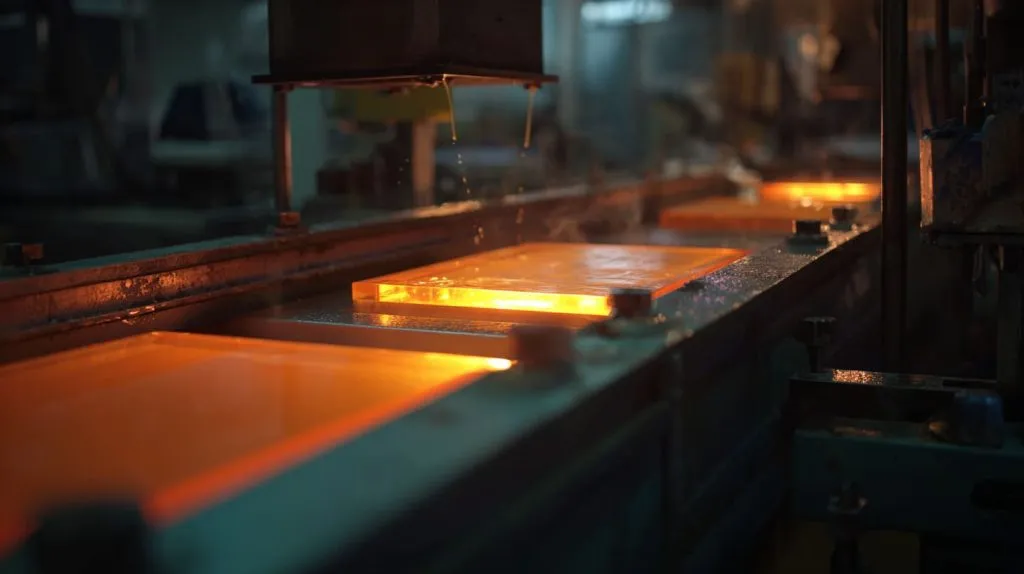
The simple manufacturing difference
The biggest difference starts before the sheet reaches the workshop.
| Item | Cast Acrylic | Extruded Acrylic |
|---|---|---|
| Production method | Liquid acrylic is cast between molds | Acrylic is pushed through a die and rollers |
| Internal stress | Usually lower | Usually higher |
| Thickness tolerance | Less consistent | More consistent |
| Laser engraving | Frosty white effect | Less frosty, often clearer |
| Cost | Higher | Lower |
| Common use | Premium displays, awards, boxes, engraved parts | Signage, simple panels, guards, low-cost displays |
Cast acrylic feels more “forgiving” in many custom jobs. It handles engraving better. It polishes beautifully. It often gives a richer edge after flame polishing.
Extruded acrylic feels more controlled in thickness. That is useful when the design depends on tight sheet thickness and cost control.
This is where buyers often get surprised. Acrylic does not only fail because it is “weak.” It often fails because stress is trapped inside the sheet.
Extruded acrylic usually has more internal stress because of the production process. When we cut, drill, glue, or bend it, that stress can show up as cracking or crazing.
The first thing I think about is not only the sheet price. I think about what we will do to the sheet later, because a cheap sheet can become expensive if it cracks during machining or gluing.
Which Acrylic Type Is Better for Laser Cutting?
Cast acrylic is usually better for laser engraving and premium laser-cut parts. Extruded acrylic can be laser cut too, but it may not give the same engraved look or edge quality.
Cast acrylic is better for laser engraving because it creates a clean frosted mark. Extruded acrylic is better for simple laser cutting when cost and thickness consistency matter more than engraving beauty.
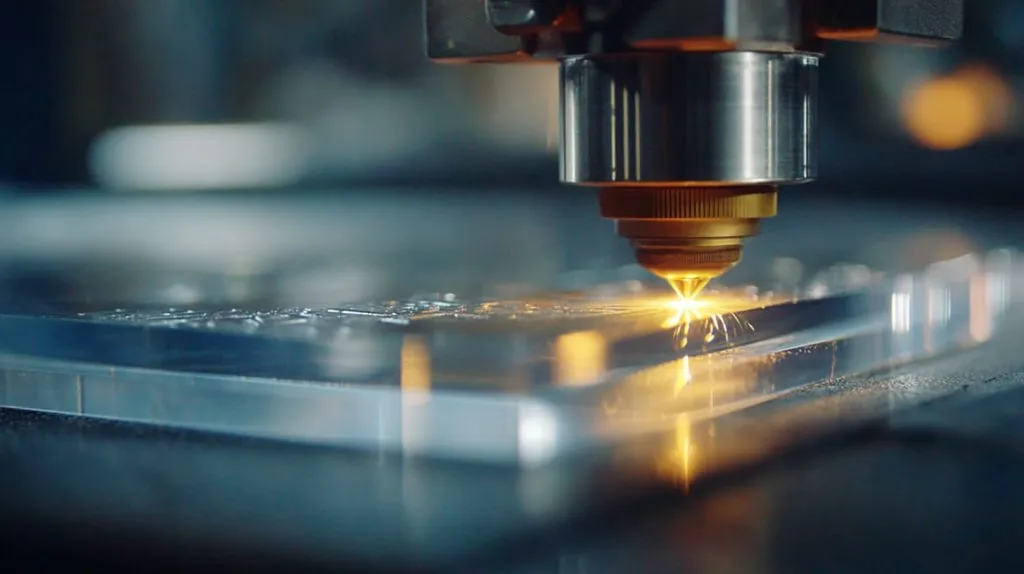
Laser cutting performance comparison
| Laser Process | Cast Acrylic | Extruded Acrylic |
|---|---|---|
| Cutting | Good | Good |
| Engraving | Excellent frosted effect | Clearer, less white effect |
| Edge finish | Smooth, premium | Smooth but may melt more easily |
| Detail work | Better for logos and fine engraving | Better for simple shapes |
| Risk during cutting | Lower stress risk | Higher stress risk if settings are poor |
If the project includes logos, patterns, text, or decorative marks, I usually recommend cast acrylic. The engraved surface looks more elegant. It has that white, frosted effect many buyers expect.
Extruded acrylic is not bad. I use it when the part only needs simple cutting, such as a flat cover, protective panel, or low-cost sign component.
When extruded acrylic still makes sense
Extruded acrylic can save money in large orders. It also has better thickness consistency. That can help when parts need to fit into slots or frames.
But laser settings matter. Too much heat can cause melted edges or small cracks later.
When I review a laser-cut project, I always ask one quiet question: is the laser only cutting shape, or is it also creating the final visual value? If the laser mark is part of the product’s beauty, cast acrylic is usually safer.
Is Cast Acrylic Stronger Than Extruded Acrylic?
Cast acrylic is often stronger in practical custom fabrication because it has lower internal stress and handles machining better. But both materials can break if the design is wrong.
Cast acrylic usually has better impact behavior and stress resistance during fabrication. Extruded acrylic can still work well for simple flat parts, but it is more sensitive to drilling, gluing, bending, and stress cracks.
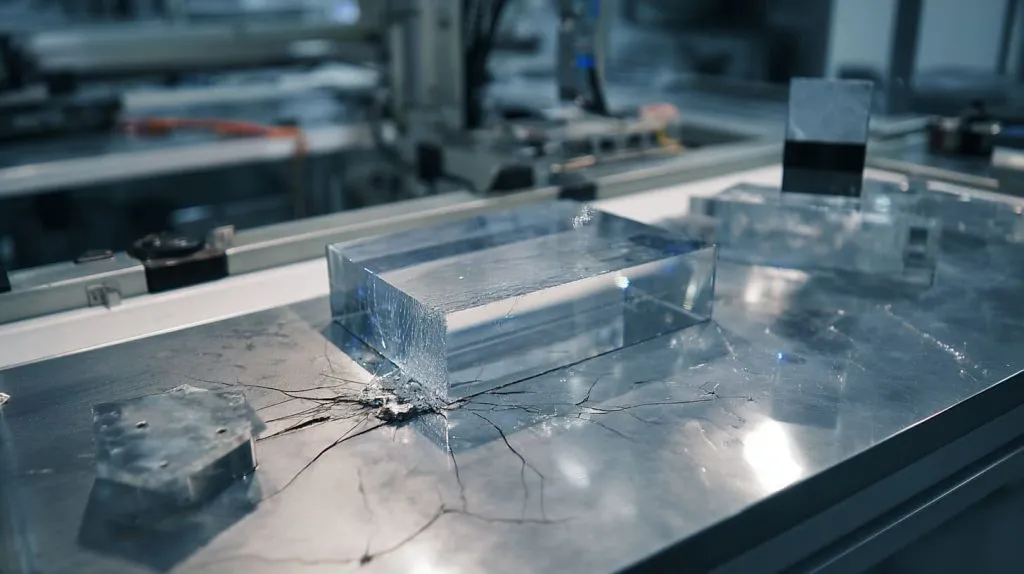
Strength is not only impact strength
Many people ask, “Which one is stronger?” I understand the question. But in real factory work, strength is not one number.
I look at several things:
| Strength Factor | Why It Matters |
|---|---|
| Impact resistance | Helps during shipping and use |
| Crack resistance | Helps after drilling, gluing, and assembly |
| Stress tolerance | Helps prevent crazing later |
| Edge strength | Helps when parts are polished or joined |
| Design support | Helps reduce bending and pressure points |
Cast acrylic often performs better when the part is complex. For example, an acrylic box with glued corners, holes, polished edges, and custom slots has many stress points.
Extruded acrylic may work well for a simple rectangular panel. But once the design becomes more detailed, the risk increases.
The design still matters more than the sheet
A bad design can break even good cast acrylic. Sharp inside corners, small screw holes near edges, and forced assembly can all create failure points.
This is where things often go wrong: the buyer asks for stronger material, but the real problem is a weak corner design or a screw hole placed too close to the edge.
For custom acrylic products, I care about the material and the structure together. One without the other is like a strong door with a weak hinge.
Which Acrylic Is Easier to Machine and CNC Cut?
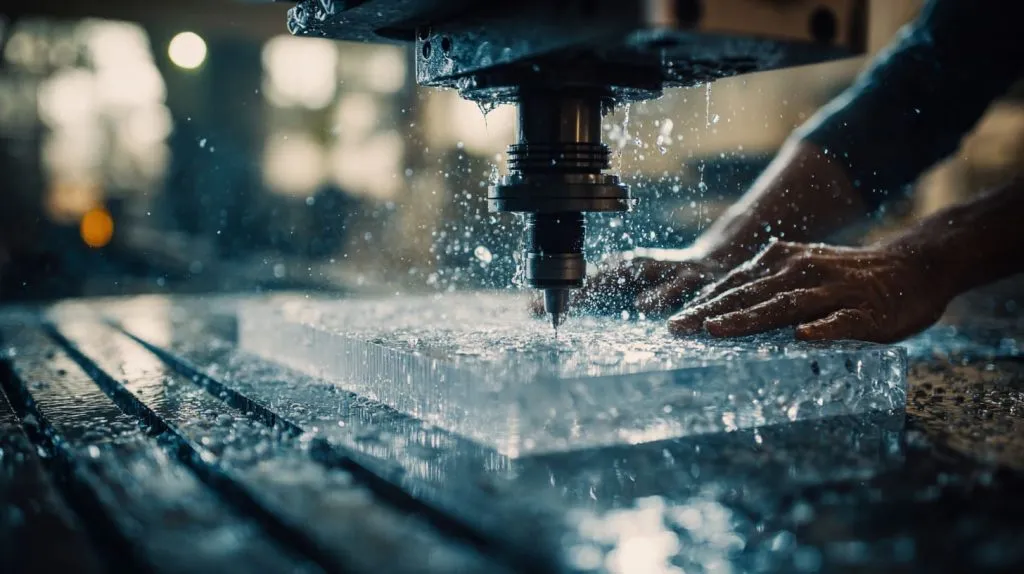
Cast acrylic is usually easier and safer to CNC machine because it has lower internal stress and chips more cleanly. Extruded acrylic can be machined, but it needs sharper tools and better heat control.
Cast acrylic is better for CNC cutting, drilling, routing, and detailed machining. Extruded acrylic is possible for simple machining, but it can melt, gum up, or crack more easily if the tool setup is not right.
CNC behavior in real production
| CNC Factor | Cast Acrylic | Extruded Acrylic |
|---|---|---|
| Cutting feel | Cleaner chips | More melting risk |
| Drilling | More stable | Higher cracking risk |
| Routing | Better for details | Needs careful speed control |
| Heat sensitivity | Lower | Higher |
| Tool wear impact | More forgiving | Less forgiving |
Cast acrylic machines nicely when the tool is sharp and the feed rate is right. It makes cleaner chips. It also handles drilling better.
Extruded acrylic may soften faster because of heat. When the cutter gets hot, the material can melt and stick to the tool. That makes the edge rough and can create hidden stress.
Why CNC details change the material choice
A flat acrylic sneeze guard and a CNC-machined acrylic display block are not the same problem.
For CNC work, I check:
- Are there many holes?
- Are there inner corners?
- Is the edge visible?
- Does the part need polishing after cutting?
- Will the part be glued later?
- Is the tolerance more important than appearance?
For detailed CNC work, I usually prefer cast acrylic because it gives the factory more room to work. A difficult material does not forgive small mistakes, and factory life already has enough little traps.
Does Cast or Extruded Acrylic Scratch More Easily?
Cast and extruded acrylic can both scratch because acrylic is softer than glass. The difference is not huge, but cast acrylic often performs better in premium products because it can be polished and restored more easily.
Both cast and extruded acrylic can scratch during handling, cleaning, and shipping. Cast acrylic is often preferred for premium products because scratches can be polished more cleanly and the surface feels better after finishing.
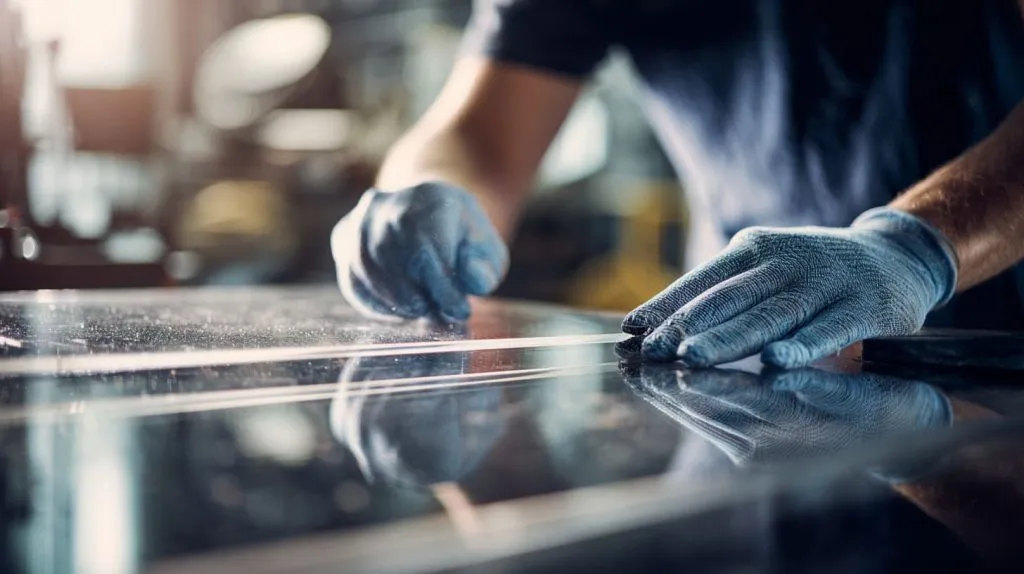
Scratch resistance is also about handling
Acrylic scratches easily if workers handle it carelessly. This is true for both types.
The material matters. But packaging, film protection, cleaning method, and assembly process matter too.
| Scratch Factor | Better Practice |
|---|---|
| Cutting stage | Keep protective film on |
| CNC stage | Avoid chips rubbing the surface |
| Assembly stage | Use clean gloves and soft pads |
| Cleaning stage | Use soft cloth, not rough paper |
| Packing stage | Separate parts with film or foam |
I have seen beautiful acrylic products ruined not by cutting, but by wiping dust with the wrong cloth. It is a small thing. It hurts more than it should.
Which one feels better after polishing?
Cast acrylic usually responds better to polishing. If the edge or surface needs restoration, cast acrylic gives a nicer result.
Extruded acrylic can also be polished, but heat control must be careful. Too much heat can create stress marks.
For display products, I do not judge scratch risk only by the sheet. I judge the full journey from cutting table to customer shelf, because most scratches happen in the boring parts of production, not in the exciting parts.
Which Acrylic Is Better for Display Cases and Retail Displays?
Cast acrylic is usually better for premium display cases, luxury retail displays, awards, and products where edge quality and clarity matter. Extruded acrylic can work for simple, cost-sensitive retail displays.
Cast acrylic is better for high-end display cases and retail displays because it gives better polishing, engraving, and visual quality. Extruded acrylic is better for basic displays when budget and large quantity matter more.
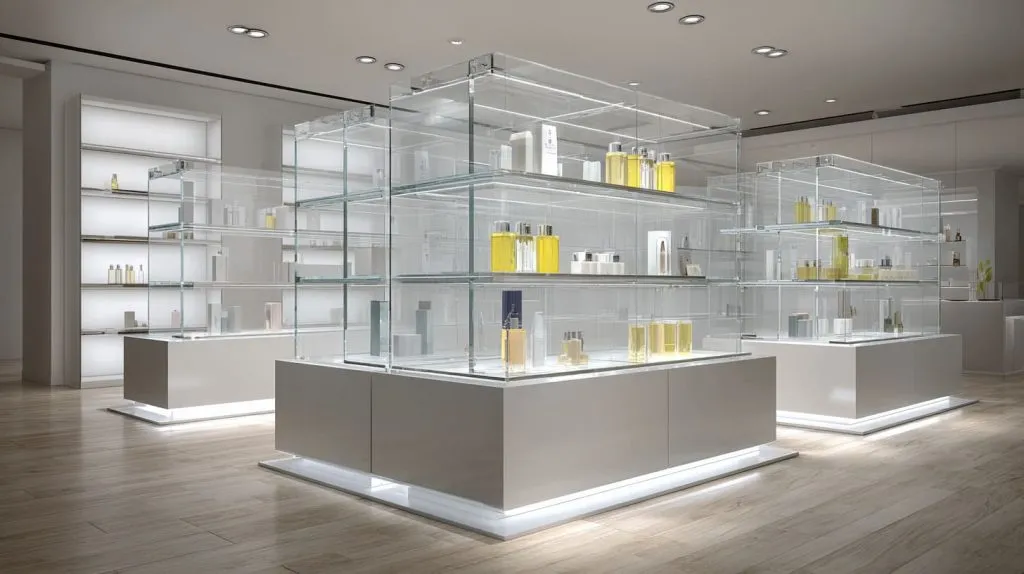
Display cases need more than clear plastic
A display case is not just a box. It is a stage.
It must protect the item inside. It must stay clear. It must not distract the eye. The edge must look clean. The glue line should not scream, “Look at me!”
| Display Requirement | Better Acrylic Choice |
|---|---|
| Museum-style cover | Cast acrylic |
| Cosmetic display rack | Cast acrylic or extruded acrylic |
| Low-cost retail shelf divider | Extruded acrylic |
| Engraved brand display | Cast acrylic |
| Large simple POS display | Extruded acrylic |
| Premium collectible case | Cast acrylic |
For cosmetic displays and collectible covers, I often lean toward cast acrylic. The finish feels more premium.
For simple retail separators or flat sign holders, extruded acrylic may be enough.
Retail products are touched every day
Retail displays live a hard life. Staff clean them. Customers touch them. Products hit them. Lights heat them. Shipping boxes squeeze them.
My real concern is not only how the display looks on day one. I care about how it looks after three months in a store, because that is when the buyer knows whether the material choice was smart.
For high-visibility products, cast acrylic is usually the safer choice. For high-volume basic displays, extruded acrylic can keep the price under control.
Why Is Cast Acrylic More Expensive Than Extruded Acrylic?
Cast acrylic is more expensive because the production process is slower, the sheet quality is more suitable for premium work, and the material usually performs better in engraving, polishing, and complex fabrication.
Cast acrylic costs more because it takes longer to produce and offers better performance for custom fabrication. Extruded acrylic is cheaper because it is made faster and more continuously, which lowers production cost.
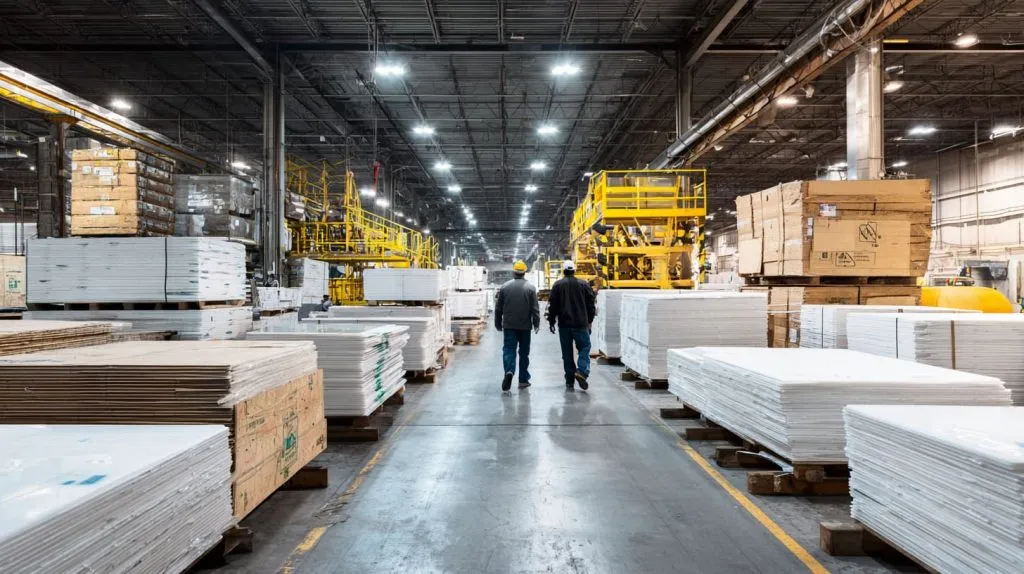
Cost difference in simple words
Extruded acrylic is made in a continuous process. That makes production faster and more efficient.
Cast acrylic is made in batches. It takes more time and care.
| Cost Factor | Cast Acrylic | Extruded Acrylic |
|---|---|---|
| Production speed | Slower | Faster |
| Labor and control | Higher | Lower |
| Sheet consistency | Less consistent thickness | More consistent thickness |
| Premium finish | Better | Good for basic use |
| Price level | Higher | Lower |
The price difference is not only about material. It is also about risk.
If a product needs polishing, gluing, engraving, and detailed CNC work, cast acrylic may reduce defects. Fewer defects can mean lower total project cost.
Cheap material can be expensive later
This is a lesson every factory learns. A lower sheet price looks nice in the quotation. But if production has more cracking, polishing problems, or rejected parts, the real cost goes up.
When I compare cost, I do not stop at sheet price. I also count defect risk, labor time, polishing difficulty, packing pressure, and whether the customer will accept the final look.
A buyer may save money with extruded acrylic. That is fine. But the product must match the material.
Which Acrylic Has Better Optical Clarity?
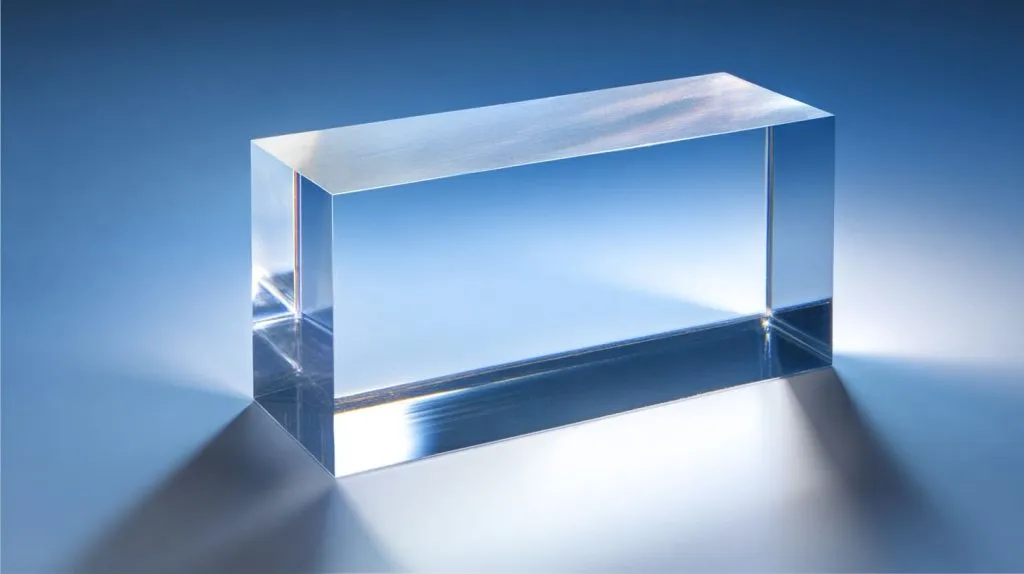
Both cast and extruded acrylic can have excellent clarity. Cast acrylic is often preferred for premium optical appearance, thicker parts, display covers, and polished edges. Extruded acrylic is clear enough for many basic flat applications.
Cast acrylic is often better for premium optical clarity, especially in thick parts and polished display products. Extruded acrylic is also very clear, but it may show more stress or distortion in some fabricated parts.
Clarity is not only transparency
Acrylic can look clear as a sheet. But once we cut, bend, glue, and polish it, the result can change.
| Optical Factor | Why It Matters |
|---|---|
| Surface clarity | Affects first impression |
| Edge clarity | Matters for premium displays |
| Thickness clarity | Matters for blocks and covers |
| Glue line | Affects box and case quality |
| Stress marks | Can show near bends or holes |
| Distortion | Matters for display windows |
Cast acrylic usually gives a more premium look after polishing. It is often used for acrylic blocks, display covers, awards, and luxury displays.
Extruded acrylic is also clear. For simple flat panels, many buyers may not notice a big difference.
The edge tells the truth
A clear face is easy. A beautiful edge is harder.
For high-end products, I often check the edge first. If the edge looks clean, bright, and calm, the whole product feels better. If the edge looks cloudy or stressed, even a clear panel feels cheap.
This is why cast acrylic is often used when the edge is visible and part of the product design.
Does Extruded Acrylic Crack More Easily Than Cast Acrylic?
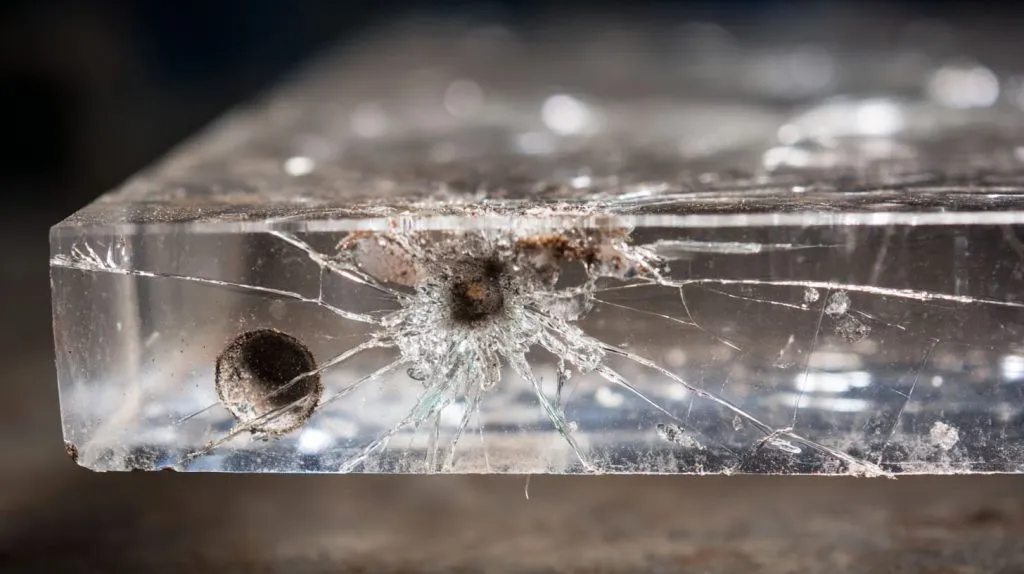
Extruded acrylic can crack more easily in some fabrication processes because it usually has higher internal stress. This is especially true during drilling, gluing, bending, and machining.
Extruded acrylic is more likely to crack or craze when it is drilled, glued, bent, or exposed to stress. Cast acrylic usually handles these processes better, especially in complex custom acrylic products.
Why cracks happen
Cracks do not always appear immediately. That is the scary part.
Sometimes a part looks fine after production. Then small cracks appear near glue lines, screw holes, or bent corners after days or weeks.
Common causes include:
- Too much internal stress
- Poor drilling method
- Strong solvent glue
- Tight screws
- Sharp inside corners
- Heat during cutting
- Forced assembly
- Poor packing pressure
Extruded acrylic is more sensitive to these issues.
Crazing is the quiet enemy
Crazing looks like tiny white cracks or cloudy lines. It often appears near glued edges or stressed holes.
The mistake I try to avoid is blaming only the glue. Many times, the glue only reveals stress that was already inside the material or design.
If the product has many holes, bends, glue joints, or tight fit areas, cast acrylic gives me more confidence.
Which Acrylic Is Better for Gluing and Polishing?
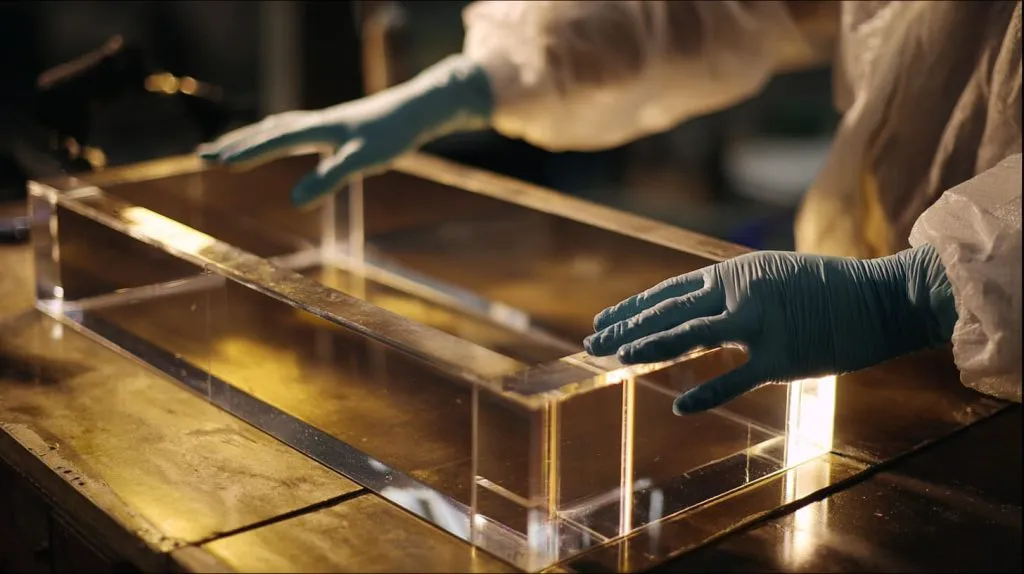
Cast acrylic is usually better for gluing and polishing because it handles solvent bonding and edge finishing more smoothly. Extruded acrylic can be glued and polished, but it needs more careful control.
Cast acrylic is better for polished edges and clean glue joints in premium custom products. Extruded acrylic can work, but it is more sensitive to solvent stress, heat marks, and cracking near bonded areas.
Gluing is where material quality shows
Acrylic gluing looks easy in videos. In real production, it is a small battlefield.
A little too much glue can leave bubbles. Too much pressure can squeeze the joint. Too much stress can create crazing.
| Process | Cast Acrylic | Extruded Acrylic |
|---|---|---|
| Solvent bonding | More stable | More sensitive |
| Bubble control | Easier with good process | Needs more care |
| Flame polishing | Better result | More heat risk |
| Buff polishing | Better finish | Possible stress marks |
| Thick edge polishing | Strong advantage | Less ideal |
For clear acrylic boxes, glue quality matters a lot. A clean joint makes the box feel expensive. A cloudy joint makes it feel careless.
Polishing changes the final value
Many custom acrylic products are sold by appearance. The customer may not know the material name. But they can feel the difference.
They see the edge. They see the corner. They see the light passing through.
When I choose acrylic for a polished product, I ask whether the edge is hidden or exposed. If the edge is part of the beauty, cast acrylic usually earns its higher price.
Can You Bend Cast and Extruded Acrylic the Same Way?
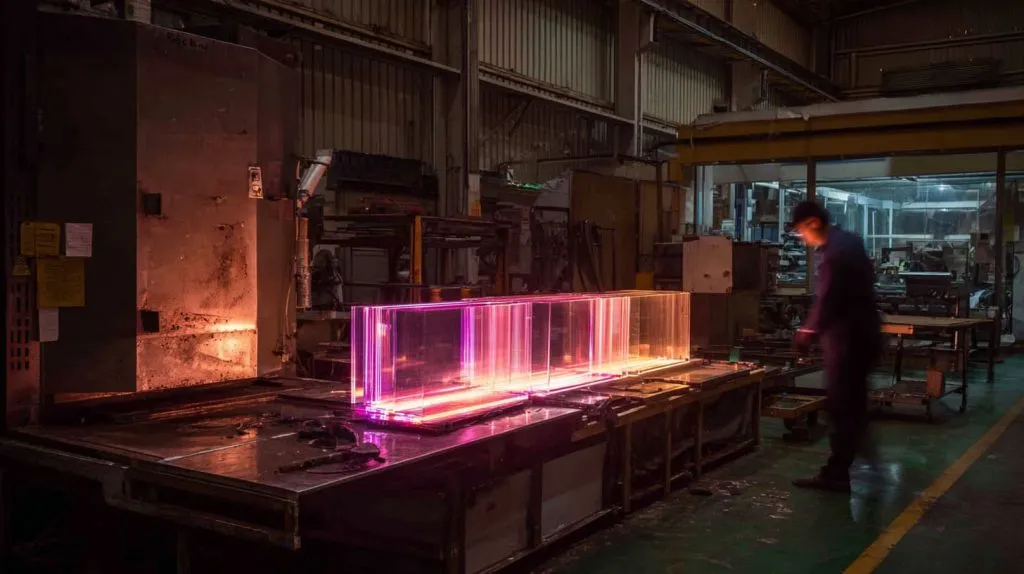
Both cast and extruded acrylic can be heat bent, but they do not behave the same. Extruded acrylic usually bends more easily and consistently, while cast acrylic may need more careful heat control.
Extruded acrylic is often easier to heat bend because it softens more predictably. Cast acrylic can also be bent, but it may need more controlled heating to avoid bubbles, stress, or uneven bending.
Bending behavior comparison
| Bending Factor | Cast Acrylic | Extruded Acrylic |
|---|---|---|
| Heating response | Needs careful control | Softer and more predictable |
| Bend consistency | Good with experience | Usually easier |
| Bubble risk | Higher if overheated | Lower but still possible |
| Stress after bending | Lower if done properly | Can hold more stress |
| Best use | Premium formed parts | Simple bent parts |
Extruded acrylic often works well for simple bent display stands, brochure holders, and price tag holders.
Cast acrylic can also bend, but the process must be slower and more controlled.
Bending is not only a heat problem
A bend line creates stress. If the design has sharp bends, short flanges, or heavy load, the material may fail later.
For bent parts, I always look at the bend radius and the load direction before I think about price. A nice bend on the sample means little if the part slowly opens, cracks, or warps after real use.
For simple bent retail displays, extruded acrylic can be a smart choice. For premium formed parts with polished edges or extra machining, cast acrylic may still be better.
Which Acrylic Is Better for Outdoor Use and UV Resistance?
Cast acrylic is usually better for outdoor use because it often has better weather resistance and performs well in long-term exposure. Extruded acrylic can also be used outdoors if the grade is suitable.
Cast acrylic is often preferred for outdoor signs, covers, and displays because it has strong weather resistance. Extruded acrylic can work outdoors, but the exact sheet grade and project design must be checked first.
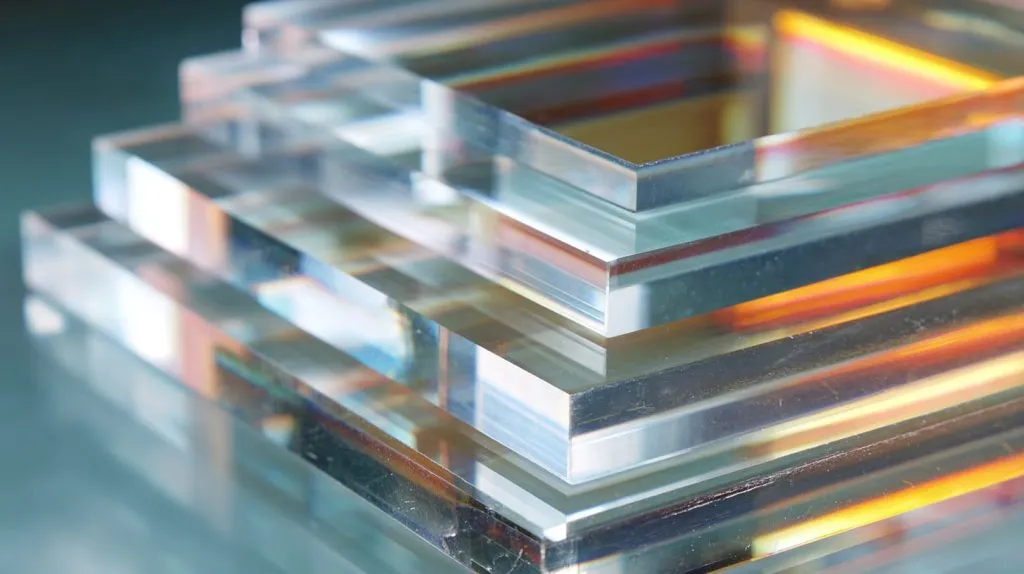
Outdoor projects are rougher than they look
Outdoor acrylic faces sunlight, heat, cold, dust, rain, cleaning chemicals, and wind. It is not just sitting there looking pretty.
| Outdoor Factor | Why It Matters |
|---|---|
| UV exposure | Can cause yellowing over time |
| Temperature change | Can cause expansion and contraction |
| Wind pressure | Can stress screw holes and edges |
| Rain and dust | Can affect cleaning and surface life |
| Installation method | Can create cracks if too tight |
Cast acrylic is commonly chosen for outdoor signs, covers, and premium panels.
Extruded acrylic may work if the product is simple, properly installed, and made from a suitable grade.
Installation can ruin a good material
Acrylic expands and contracts. If the installer fixes it too tightly, cracks can appear around screw holes.
The small detail I always watch is the mounting method. Outdoor acrylic needs room to move, because even the best sheet cannot fight bad installation forever.
For outdoor custom work, I prefer to review the whole structure, not only the acrylic type.
What Thickness Options Are Available for Cast vs Extruded Acrylic?
Cast acrylic is often available in a wider range of thicker sheets. Extruded acrylic usually has more consistent thickness and is common in thinner sheet sizes for volume production.
Cast acrylic is better when projects need thick blocks, premium covers, or custom thickness options. Extruded acrylic is better when consistent sheet thickness is important for thin panels, frames, slots, and large-volume parts.
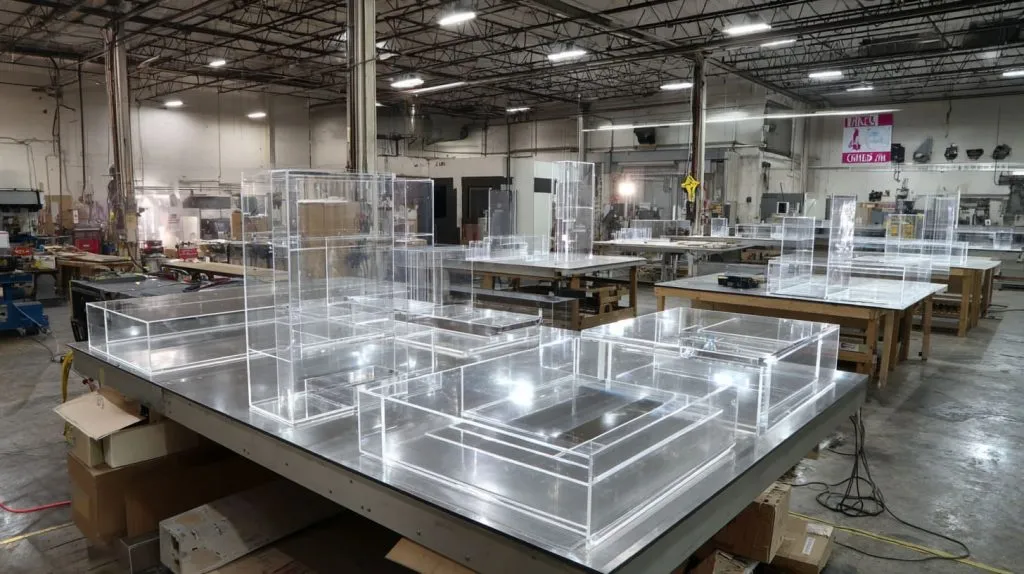
Thickness affects more than strength
Thickness changes cost, weight, bending behavior, edge appearance, and shipping risk.
| Thickness Need | Better Choice |
|---|---|
| Thin flat panel | Extruded acrylic |
| Thick acrylic block | Cast acrylic |
| Premium display cover | Cast acrylic |
| Slot-fit retail part | Extruded acrylic |
| CNC-machined thick part | Cast acrylic |
| Large simple sheet | Extruded acrylic |
Cast acrylic is often used for thick pieces because it machines and polishes better.
Extruded acrylic is useful when thickness consistency matters. For example, if a display rack uses slots, the sheet must fit properly.
Tolerance can decide the material
Some buyers think thicker means better. Not always.
If the part must slide into a metal frame or fit into a groove, thickness tolerance can be more important than “premium” material feel.
Before I choose the sheet, I check how the acrylic connects with other parts. A beautiful sheet that does not fit the assembly is still a problem.
Which Acrylic Is Better for Custom Acrylic Fabrication Projects?
Cast acrylic is usually better for complex custom acrylic fabrication because it performs better in CNC cutting, polishing, gluing, engraving, and premium finishing. Extruded acrylic works well for simple and cost-sensitive custom parts.
Cast acrylic is better for complex custom acrylic fabrication projects. Extruded acrylic is better for simple flat or bent parts when cost control and thickness consistency are more important than premium finishing.
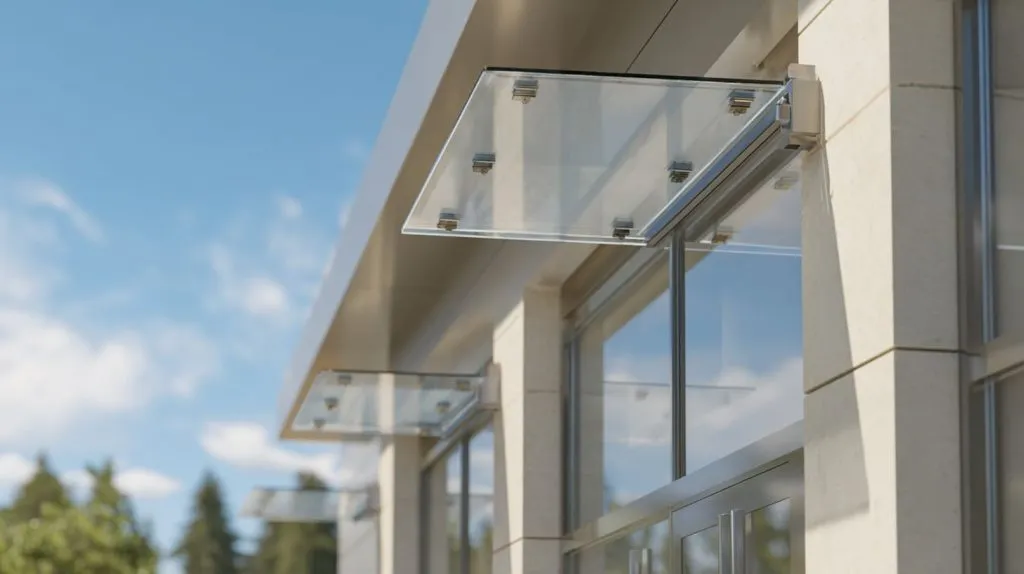
Custom projects need process thinking
A custom acrylic project is not one process. It is many small steps stacked together.
A typical project may include:
- Sheet cutting
- CNC routing
- Laser engraving
- Drilling
- Heat bending
- Gluing
- Polishing
- Assembly
- Inspection
- Packing
Each step adds risk. Cast acrylic usually gives more safety across multiple steps.
| Project Type | Recommended Acrylic |
|---|---|
| Custom acrylic box | Cast acrylic |
| Premium display case | Cast acrylic |
| Simple flat protector | Extruded acrylic |
| Brochure holder | Extruded acrylic or cast acrylic |
| Acrylic award | Cast acrylic |
| Cosmetic organizer | Cast acrylic for premium, extruded for budget |
| Large retail divider | Extruded acrylic |
The product’s “face” matters
Some parts are hidden. Some parts are the face of the product.
If the acrylic is the main visual surface, I treat it carefully. A small edge defect can make the full product feel cheap, even if the structure is correct.
For custom fabrication, I do not ask, “Which acrylic is better?” first. I ask, “Where will the customer’s eye go first?” That answer often decides the right material faster than a data sheet.
How Do You Choose Between Cast and Extruded Acrylic for OEM Orders?
For OEM orders, the best choice depends on product use, quantity, budget, finishing needs, tolerance, and defect risk. Cast acrylic is safer for premium custom products. Extruded acrylic is better for simple large-volume parts.
Choose cast acrylic for premium OEM products with CNC work, engraving, polishing, gluing, or thick parts. Choose extruded acrylic for simple flat or bent OEM parts where cost, quantity, and thickness consistency are the main concerns.
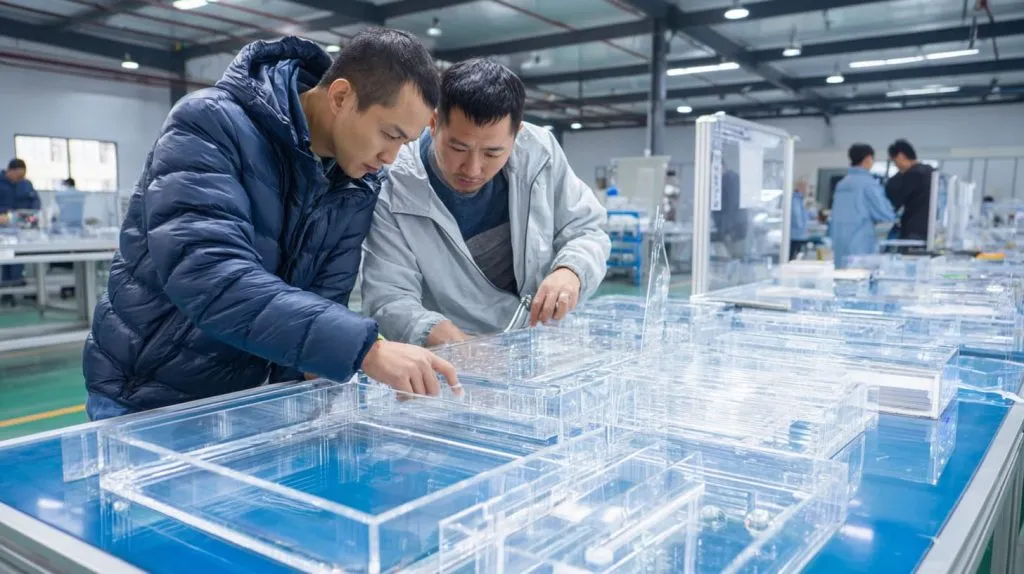
A simple OEM decision table
| OEM Question | If Your Answer Is Yes | Better Choice |
|---|---|---|
| Does the product need laser engraving? | Yes | Cast acrylic |
| Are polished edges visible? | Yes | Cast acrylic |
| Does it need many drilled holes? | Yes | Cast acrylic |
| Is it a simple flat panel? | Yes | Extruded acrylic |
| Is cost the biggest pressure? | Yes | Extruded acrylic |
| Does the part need tight thickness fit? | Yes | Extruded acrylic |
| Is it a luxury display product? | Yes | Cast acrylic |
| Is the order large and simple? | Yes | Extruded acrylic |
How I usually guide buyers
For OEM orders, I like to divide products into two groups.
Premium visual products
These products need to look clean and polished:
- Acrylic display cases
- Cosmetic displays
- Acrylic boxes
- Awards
- Collectible covers
- Brand display stands
- Thick acrylic blocks
For these, cast acrylic is usually my first choice.
Simple functional products
These products need to work well and control cost:
- Flat guards
- Simple signs
- Retail dividers
- Basic bent holders
- Protective covers
- Large quantity sheet parts
For these, extruded acrylic may be enough.
Samples are useful, but they can mislead you
A sample can look perfect because it is made slowly and carefully. Mass production is different. Workers repeat the process. Sheets vary. Packaging pressure changes. Small defects start to appear.
The decision I care about most is whether the material still behaves well when the order becomes real production, not just when one beautiful sample sits on my desk.
For OEM buyers, I suggest testing the real process before confirming the material. Cut it. Drill it. Glue it. Polish it. Pack it. Then check it again.
Conclusion
Cast acrylic is usually better for premium custom acrylic products. Extruded acrylic is better for simple, cost-sensitive, and high-volume parts. If you are planning an OEM acrylic project, Feilong Acrylic can help you compare both options and choose the safer material before production starts.