Skip to content
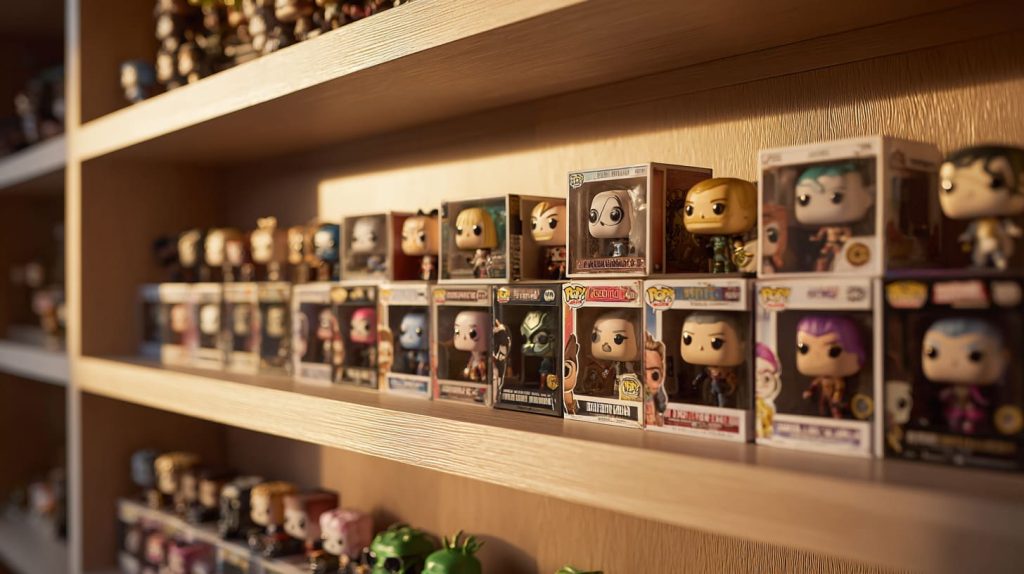
A Funko Pop shelf can look beautiful in a photo and still fail badly in real life.
I learned this the hard way while discussing display ideas with a buyer who loved clean wall shelves. The design looked nice. The color matched the room. The shelf style felt modern. But one small detail quietly ruined the whole plan.
The shelf was not deep enough.
That sounds like a tiny problem, right?
It is not.
For Funko Pop collections, shelf style gets most of the attention. People talk about floating shelves, cube shelves, glass cabinets, wall-mounted displays, and fancy LED setups. I understand why. Style is easy to see. It gives the display a mood. It makes the room feel finished.
But shelf depth does the real work.
Shelf depth decides whether the box sits safely, whether the figure can be seen clearly, whether acrylic protectors fit properly, and whether the collection can grow without turning into a crowded mess.
I have worked with many custom acrylic display projects over the years. I have seen one pattern again and again. Buyers often start with the look. Then they discover the function. Sometimes too late.
A shelf can be stylish but useless.
A shelf can be simple but perfect.
The difference is often depth.
For Funko Pop collectors, especially boxed collectors, shelf depth is not just a measurement. It is protection. It is order. It is future planning. It is the quiet detail that makes a collection feel calm instead of chaotic.
The small decision I always pay attention to first is not the shape of the shelf, but how much real usable space the collector has from the wall to the front edge. That one number tells me more about the success of the display than the style name ever will.
So let’s talk about why shelf depth matters more than shelf style for Funko Pop collections.
Not in a dry furniture way.
In a real collector way.
Because nobody wants their favorite Pop leaning forward like it is preparing to jump.
Why Do Many Collectors Prioritize Shelf Style Over Shelf Depth?
Most collectors notice shelf style first because style speaks loudly.
Depth is quiet.
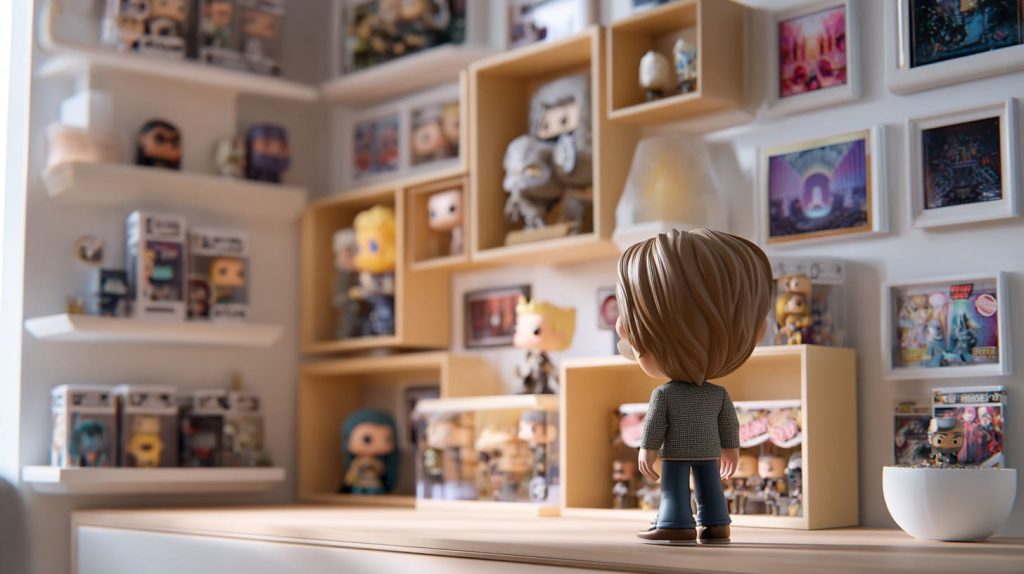
A black floating shelf looks clean. A cube shelf feels organized. A glass cabinet gives a premium feeling. A custom acrylic wall display looks sharp and bright. These things make people stop and look.
Shelf depth does not shout like that.
It only becomes obvious when something goes wrong.
Maybe the box hangs over the edge. Maybe the second row is hidden. Maybe the acrylic protector does not fit. Maybe the shelf looked perfect online, but after installation, the collection feels cramped.
That is the trap.
Collectors often buy with their eyes first. I get it. I do the same thing sometimes. A good-looking display makes the collection feel more valuable. It gives the room personality. But display style is only half the story.
The part I never ignore is how the shelf behaves after the collection grows, because a shelf that looks good with 10 Pops may become a headache with 80 Pops.
Shelf style is immediately visible
Shelf style is easy to judge in one second.
You can look at a picture and say:
- “That looks clean.”
- “That fits my room.”
- “That makes the Pops stand out.”
- “That cabinet looks expensive.”
- “That floating shelf looks light and modern.”
This is why many collectors start with style.
| Shelf Style | Why Collectors Like It | Hidden Question |
|---|---|---|
| Floating shelf | Clean and simple | Is it deep enough for boxed Pops? |
| Cube shelf | Easy to organize | Does each cube waste space? |
| Glass cabinet | Premium appearance | Can large Pops and protectors fit? |
| Wall display | Saves floor space | Is the front edge safe? |
| Acrylic display shelf | Clear and modern | Is the depth customized correctly? |
Style gives emotional satisfaction.
A collector wants the display to say something. Maybe it says, “I love Marvel.” Maybe it says, “I collect carefully.” Maybe it says, “Yes, this wall is basically my small museum, and I regret nothing.”
That emotional part matters.
But style alone does not protect the collection.
A beautiful shelf with poor depth is like a good-looking suitcase that cannot close. Nice from far away. Annoying every day.
Shelf depth is often ignored during purchase
Shelf depth is not as exciting as style.
Nobody brags, “My shelf is 6.5 inches deep,” at dinner.
But they should care.
New collectors often underestimate how much space Funko Pops need. A boxed Pop may look small in your hand, but once you add rows, protectors, spacing, and different figure sizes, the shelf gets full fast.
The mistake often starts like this:
- The collector buys a shelf that looks nice.
- The first few Pops fit well.
- The collection grows.
- Boxes start touching each other.
- Some Pops move to the desk.
- Others go into storage.
- The display loses its clean look.
That last step is painful.
Because the collector did not fail at collecting. The shelf failed at planning.
Display problems appear later
Display problems are sneaky.
They do not always show up on day one.
A shallow shelf can look fine with one row of boxed Pops. Then the collector buys acrylic protectors. Suddenly the shelf feels tight. Then they add oversized Pops. Now the layout breaks. Then they try to create two rows. The back row disappears.
This is where shelf depth becomes real.
| Problem | Usually Caused By | Result |
|---|---|---|
| Boxes hang over the edge | Shelf is too shallow | Higher falling risk |
| Back row is hidden | Poor depth planning | Weak visibility |
| Acrylic protectors do not fit | No extra clearance | Forced layout changes |
| Collection looks crowded | Not enough usable depth | Messy visual effect |
| Frequent rearranging | No growth room | Frustration over time |
I often tell buyers that shelf depth is not only about today’s collection. It is about the collection they will probably have next year.
And Funko collectors know this truth better than anyone.
“One more Pop” is rarely one more Pop.
What Is the Ideal Shelf Depth for Funko Pop Collections?
The ideal shelf depth depends on how the collector displays the Pops.
Boxed Pops need stable support. Out-of-box Pops need room for poses and accessories. Pops in acrylic protectors need a little extra breathing space. Larger figures need more depth again.
So there is no single magic number.
But there is a smart range.
For most boxed Funko Pop displays, I usually prefer shelf depth that gives the box full support with a little extra space at the front. That small extra space feels boring on paper, but it saves a lot of stress in daily use.
Standard Funko Pop box dimensions
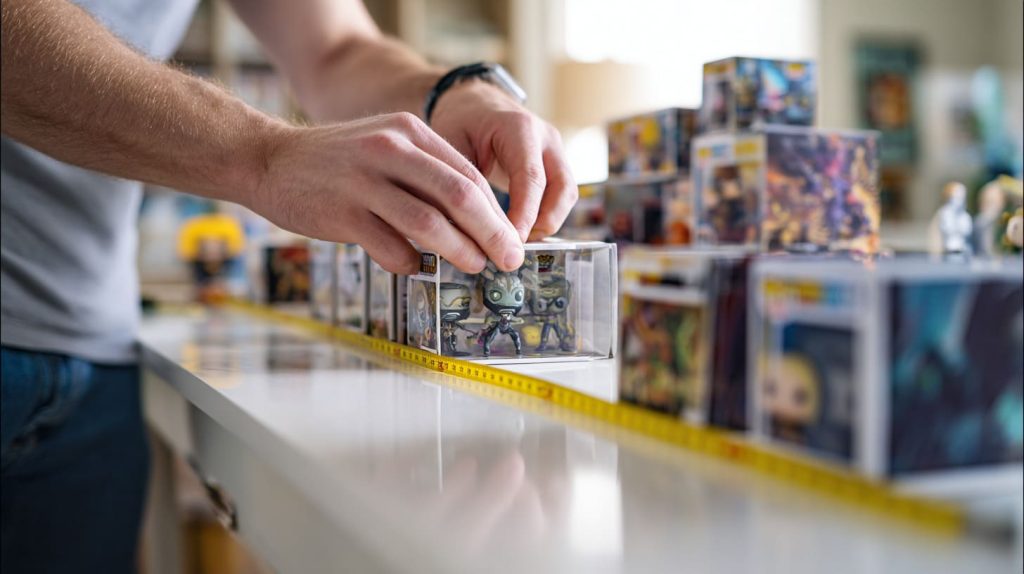
A standard Funko Pop box is often around 3.5 inches wide, 4.5 inches deep, and 6.25 inches tall. Exact sizes can vary by series, packaging type, and figure size.
That means a very shallow shelf may technically “hold” the box, but it may not hold it safely.
There is a big difference between fitting and fitting well.
| Display Type | Approximate Depth Need | Practical Comment |
|---|---|---|
| Standard boxed Pop | Around 4.5 inches minimum | Needs full base support |
| Boxed Pop with soft protector | Around 5 inches or more | Extra thickness matters |
| Boxed Pop with hard stack | Around 5.25 inches or more | Better to allow clearance |
| Out-of-box Pop | 4 to 6 inches | Depends on pose and base |
| Oversized Pop box | 6 inches or more | Measure before buying |
| Multi-row display | 8 inches or more | Needs risers or stepped layout |
A shelf that only matches the exact box depth can feel risky.
Why?
Because real shelves are not perfect. Walls are not always straight. Boxes are not always aligned. People touch the display. Dusting happens. Kids, pets, and clumsy elbows exist.
A little extra depth is cheap insurance.
Recommended shelf depth ranges
Here is how I would think about shelf depth for different Funko Pop display goals.
| Shelf Depth | Best For | My View |
|---|---|---|
| 4 inches or less | Very small out-of-box figures | Risky for boxed Pops |
| 4.5 to 5 inches | Single-row boxed Pops | Acceptable but tight |
| 5.5 to 6 inches | Boxed Pops with protectors | Better daily safety |
| 7 to 8 inches | Flexible mixed display | Good for growth |
| 9 inches or more | Multi-row or premium display | Powerful but needs planning |
For a collector who keeps Pops in boxes, I usually do not like going too shallow. A shallow shelf may look slim and elegant, but the box feels exposed.
For a collector who wants acrylic protectors, I would rather add depth at the start than force them to replace the shelf later.
Common shelf depth mistakes
The first mistake is choosing a shelf that is too shallow.
This creates:
- Front-edge overhang
- Poor balance
- Higher fall risk
- No space for protectors
- No room for future changes
The second mistake is choosing a shelf that is too deep without planning.
This sounds strange, but it happens.
A very deep shelf can create wasted space if the collector only uses one row. It can also make the back area dark or hard to see. If the shelf is too deep and there are no risers, the front row blocks the back row.
So more depth is not always better.
Useful depth is better.
| Mistake | Why It Happens | Better Choice |
|---|---|---|
| Too shallow | Collector wants a slim look | Add safety clearance |
| Too deep | Collector wants maximum capacity | Use risers or stepped design |
| No protector allowance | Collector forgets future protection | Add extra depth early |
| Same depth for all Pops | Collector ignores size variation | Plan zones for different sizes |
This is the funny thing about displays. The best solution is rarely the biggest or the fanciest. It is the one that matches the real collection.
Now, once the depth is chosen, the next question becomes more serious.
What happens to boxed Pops when shelf depth is wrong?
How Does Shelf Depth Affect Boxed Funko Pop Displays?
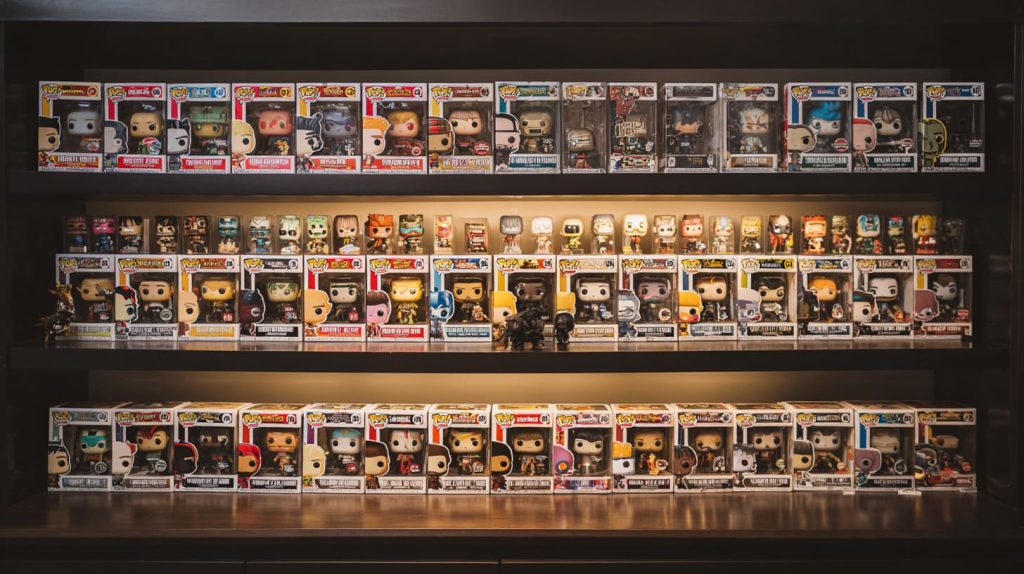
Boxed Funko Pops are not just figures. They are small collectible packages.
The box matters.
For many collectors, the box protects the figure, shows the artwork, keeps resale value, and gives the display a clean grid-like look. A boxed collection can look sharp, almost like a wall of tiny posters.
But boxed Pops are also unforgiving.
If the shelf is too shallow, the problem is easy to see. The box sits near the edge. The front line looks uneven. Some boxes lean. Acrylic protectors may not fit. The whole display feels less stable.
The thing I check before approving a boxed Pop display is whether the entire bottom of the box is supported, because even a few millimeters of overhang can turn into daily worry when the shelf is full.
Front-edge overhang risks
Front-edge overhang is one of the most common problems with shallow shelves.
The box may not fall immediately. That is why people ignore it.
But it is still a risk.
A box that sits beyond the shelf edge is easier to knock down. It also creates pressure on the box bottom. Over time, the display looks nervous. That may sound funny, but it is true. A good display should feel calm.
| Shelf Condition | What Happens | Risk Level |
|---|---|---|
| Box fully supported | Stable and clean | Low |
| Slight overhang | Still usable but risky | Medium |
| Large overhang | Easy to bump or fall | High |
| Overhang with protector | Heavier front pressure | Higher |
The danger becomes worse when the shelf is high on the wall.
A Pop falling from a desk is annoying.
A Pop falling from a high wall shelf feels like betrayal.
Especially if the corner of the box gets crushed.
Maintaining a clean visual line
Shelf depth also affects the visual line.
A boxed Funko Pop display looks best when the front faces are aligned. The boxes create a clean, repeated pattern. That pattern is part of the charm.
When the shelf is too shallow, collectors often push some boxes back and leave others forward. Different box sizes make the line uneven. Protectors add more variation.
The result feels messy even when the collection is valuable.
| Visual Issue | Cause | Display Effect |
|---|---|---|
| Uneven front line | Different box depths | Messy appearance |
| Leaning boxes | Weak support | Cheap feeling |
| Tight spacing | No clearance | Hard to handle |
| Mixed protector fit | Depth not planned | Broken layout |
A clean visual line is not only about beauty. It also makes the collection easier to manage.
You can see what you own. You can remove one box without knocking three others. You can sort by series, color, or character.
That is where function starts to look like style.
Supporting protective display cases
Many serious collectors use soft protectors or hard acrylic cases.
This changes the shelf depth requirement.
A protector adds thickness. A hard stack adds more structure. Some cases have a lip, edge, or small tolerance difference. If the shelf depth is already tight, the protector may push the box too far forward.
This is why I always ask whether the collector plans to use protectors before deciding shelf depth.
Not after.
Before.
| Protection Type | Why It Matters | Depth Planning Tip |
|---|---|---|
| No protector | Box size is the main guide | Still leave front clearance |
| Soft protector | Adds slight thickness | Add extra depth |
| Hard stack | Adds more bulk and weight | Use deeper and stronger shelf |
| Acrylic display box | Needs exact fit | Custom depth is helpful |
A boxed collection with protectors can look very clean. It can also feel premium. But if the shelf depth is wrong, protectors become a problem instead of a solution.
That is a painful waste.
Good protection should not create new risk.
And this brings us to another group of collectors.
The out-of-box collectors.
They have a different problem, and shelf depth matters even more than many people expect.
Why Is Shelf Depth Even More Important for Out-of-Box Displays?
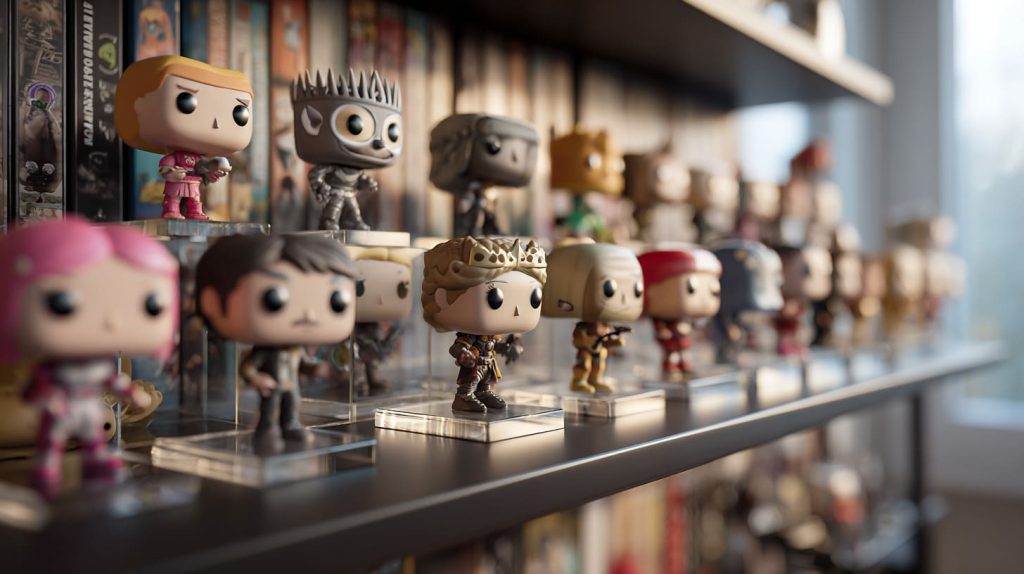
Out-of-box Funko Pop displays look free.
The figures can breathe. You can see the sculpt, the pose, the little details, and the personality. Some collectors love that feeling. I understand it. A figure outside the box feels more like a character and less like inventory.
But out-of-box displays need space.
They are not as simple as lining up boxes.
Figures have heads, bases, accessories, weapons, hats, wings, capes, and strange poses. Some stand straight. Some lean. Some take more room than expected. Some look tiny until you place them beside ten others.
For out-of-box displays, I judge depth by the figure’s visual space, not only its physical footprint, because a Pop can technically fit and still look crowded.
Character poses require additional space
A boxed Pop has a fixed shape.
An out-of-box Pop does not.
One figure may stand neatly. Another may hold a sword. Another may have a large base. Another may come with a small accessory. Some oversized figures break the whole spacing plan.
This is why shelf depth must allow more freedom.
| Figure Type | Depth Concern | Display Tip |
|---|---|---|
| Standard standing figure | Basic footprint | Keep front clearance |
| Figure with accessory | Extra side or front space | Avoid tight rows |
| Figure with large head or hat | Visual crowding | Use more spacing |
| Oversized figure | Larger base and height | Give separate area |
| Figure with platform | More depth needed | Measure base first |
Out-of-box displays should not feel like a queue at a crowded train station.
They should feel like a small stage.
Each character needs space to perform.
Creating layered visual effects
Shelf depth allows layering.
Layering is one of the best ways to make an out-of-box collection look alive. A flat row can be nice, but a layered display creates depth, movement, and better storytelling.
You can use:
- Acrylic risers
- Step platforms
- Small display blocks
- Clear stands
- Background figures
- Front hero characters
A deeper shelf makes these tools useful.
| Shelf Depth | Layering Possibility | Visual Result |
|---|---|---|
| 4 inches | Single row only | Simple but limited |
| 6 inches | Small riser possible | Better height variation |
| 8 inches | Two layers possible | Stronger display effect |
| 10 inches or more | Multi-level setup | Museum-like arrangement |
Acrylic risers are especially helpful because they lift the back row without making the display feel heavy. Clear material also keeps attention on the figures.
That is why acrylic works so well for collectibles.
It supports the story without stealing the scene.
Improving viewing angles
Depth affects how people see the collection.
If figures are too close to the front edge, the display feels exposed. If figures are too far back without lighting or risers, they disappear into shadow. If the shelf is crowded, the front row blocks the back row.
Good depth gives the collector control.
It helps decide:
- Which figures should stand in front
- Which figures should be raised
- Which figures should be grouped
- Which figures need more air
- Which figures deserve a hero position
| Layout Choice | Depth Needed | Best Use |
|---|---|---|
| Single clean row | Low to medium | Small collection |
| Front and back rows | Medium | Large collection |
| Risers with spacing | Medium to deep | Better visibility |
| Scene-style display | Deep | Storytelling setup |
I like out-of-box displays because they show personality. But personality needs room. Without enough depth, even a fun collection can look tired.
A shelf should not only hold the figures.
It should let them speak.
And as every collector knows, once the display starts to speak, the collection usually starts to grow.
How Does Shelf Depth Impact Collection Growth?
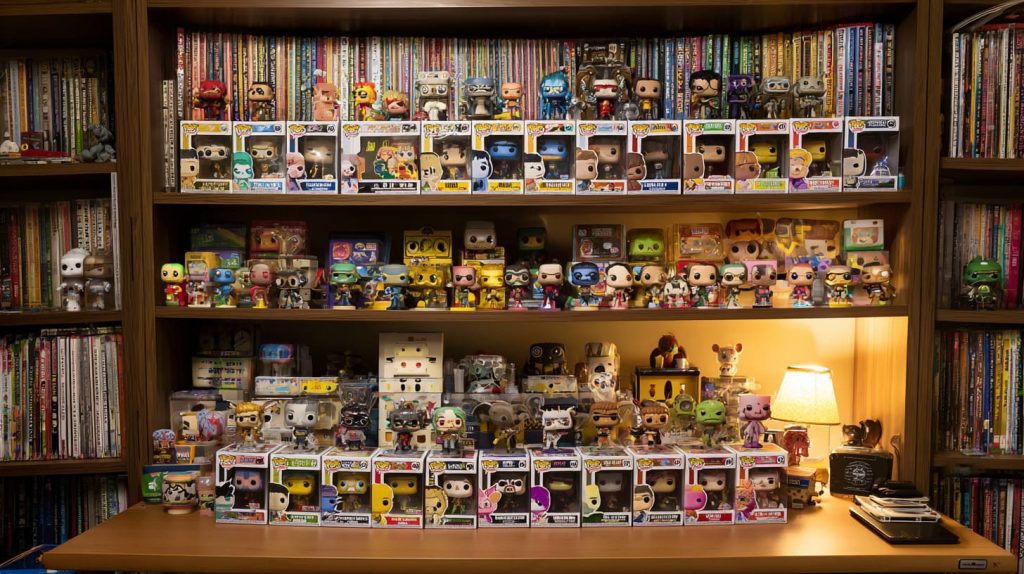
Funko Pop collections grow in a very innocent way.
At first, someone buys one favorite character. Then one more. Then a limited edition. Then a matching villain. Then a whole series. Then the collector says, “I should probably stop.”
That sentence usually lasts about two weeks.
Shelf depth matters because collections rarely stay the same size. A display that works today may become too small very quickly.
The question I ask myself is not “How many Pops fit now?” but “How painful will this display become when the collector adds 30 percent more?” That question often changes the whole design.
Most collections expand faster than expected
Collectors often underestimate future growth.
This is not a personal failure. It is just how collecting works. Once a person builds a display, the display itself encourages more collecting. Empty space feels like an invitation.
But if the shelf depth is too limited, growth becomes difficult.
The collector may face problems like:
- Buying more shelves too soon
- Splitting one collection across different rooms
- Hiding part of the collection in storage
- Mixing boxed and unboxed Pops without a plan
- Losing the clean visual style
| Collection Stage | Common Feeling | Shelf Depth Need |
|---|---|---|
| 5 to 20 Pops | Easy and fun | Basic depth may work |
| 20 to 60 Pops | Needs organization | Better depth matters |
| 60 to 150 Pops | Space pressure starts | Deeper planning needed |
| 150+ Pops | Serious display system | Custom layout helps |
A shallow shelf may save space at first. But it may create more cost later.
That is the part many people miss.
Cheap first choices can become expensive second choices.
Maximizing display density
Display density means how many Pops can be shown without making the shelf look crowded.
Depth plays a big role here.
A deeper shelf can support two rows, but only if the back row remains visible. This may need risers or stepped shelves. Without that, the extra depth becomes hidden storage, not display space.
| Display Method | Density | Visibility | Best For |
|---|---|---|---|
| Single row | Low | High | Premium clean display |
| Double row flat | Medium | Low | Storage-focused display |
| Double row with riser | Medium to high | Good | Balanced display |
| Stepped acrylic shelf | High | Strong | Serious collections |
| Deep shelf without plan | High storage | Poor display | Not ideal |
I often prefer a slightly deeper shelf with a smart riser system over a very deep plain shelf.
Why?
Because the goal is not only to fit more.
The goal is to see more.
That is a big difference.
Future-proofing the display system
Future-proofing sounds like a big business word, but for collectors it means something simple.
Can this shelf still work later?
A good shelf depth gives room for:
- New Funko releases
- Larger Pop boxes
- Acrylic protectors
- Seasonal rearranging
- Theme changes
- New display risers
- Better lighting
- Mixed boxed and unboxed layouts
| Future Change | Why Depth Helps |
|---|---|
| Adding protectors | Extra front and side space |
| Adding risers | More usable layers |
| Adding oversized Pops | More flexible placement |
| Changing layout | Less need to replace shelves |
| Grouping by franchise | More room for categories |
A collection is not frozen.
It moves.
It grows.
It changes with the collector’s taste.
So the shelf should not be designed like a final answer. It should be designed like a flexible system.
That is also where visibility becomes important.
Because adding more Pops is fun only if you can still find the one you want.
How Does Shelf Depth Affect Visibility and Organization?
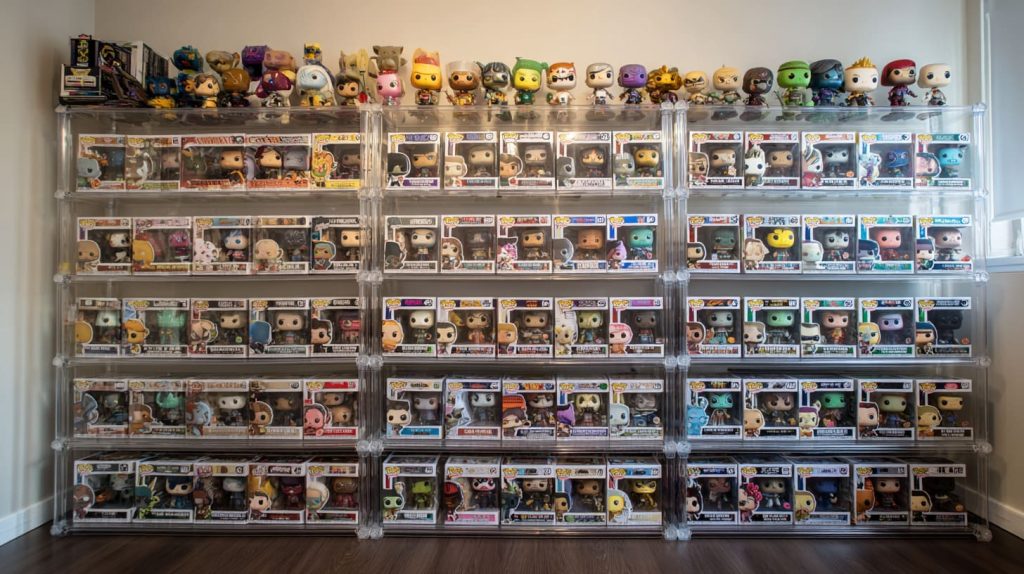
A Funko Pop display can hold many items and still feel useless if visibility is poor.
I have seen displays where the front row looks great, but the back row is almost invisible. At that point, the shelf is not really displaying the collection. It is storing it.
That may be fine for some collectors.
But if the goal is enjoyment, visibility matters.
The small detail I look for is whether the collector can recognize each Pop without moving another one, because a display that needs constant handling will slowly become messy.
Hidden collectibles are common in deep shelves.
This sounds strange because depth should help, right?
It does help if the layout is planned. It hurts if the shelf is just deep and flat.
When Pops sit in flat rows, the front row blocks the back row. The deeper the shelf, the more likely this becomes.
| Layout Problem | What It Feels Like | Better Fix |
|---|---|---|
| Back row blocked | Collection feels smaller | Use risers |
| Boxes too close | Hard to read front art | Add spacing |
| Figures crowded | Details disappear | Create groups |
| Deep dark shelf | Back area feels hidden | Add lighting or clear risers |
Acrylic risers solve many of these problems. They lift the back row and keep the display light. Since the material is transparent, it does not add visual weight.
This is why I like acrylic for collectible displays.
It helps without interrupting.
Improving category organization
Shelf depth also affects how collectors organize.
A shallow shelf often forces a single row. This can look clean, but it limits grouping. A deeper shelf allows more structure.
For example, a collector can organize by:
- Movie series
- Game series
- Character type
- Color theme
- Box size
- Value level
- Favorite characters
- New arrivals
| Organization Method | Shelf Depth Impact |
|---|---|
| By franchise | Deeper shelves allow full groups together |
| By value | Protectors and spacing need extra depth |
| By color | Clean front lines improve visual balance |
| By character set | Multi-row display keeps sets complete |
| By box size | Different depths need flexible zones |
Good organization is not only about being tidy.
It helps collectors enjoy the collection.
It also helps them avoid buying duplicates by accident. Yes, that happens. More often than people admit.
A clear display saves money in a quiet way.
Creating museum-style displays
A museum-style display does not mean expensive.
It means thoughtful.
It means each item has space, order, and a clear viewing angle. It means the display does not feel like a pile.
Shelf depth helps create that feeling.
| Museum-Style Detail | Why It Matters |
|---|---|
| Equal front spacing | Gives a calm visual line |
| Clear risers | Shows back-row items |
| Grouped layout | Helps the eye move naturally |
| Proper depth | Avoids crowded edges |
| Soft lighting | Makes details easier to see |
A Funko Pop collection may be playful, but the display can still be careful.
That mix is powerful.
Fun on the surface.
Smart underneath.
And different collectors need different levels of depth. A casual collector and a serious collector should not use the same rules.
What Shelf Depth Works Best for Different Types of Collectors?
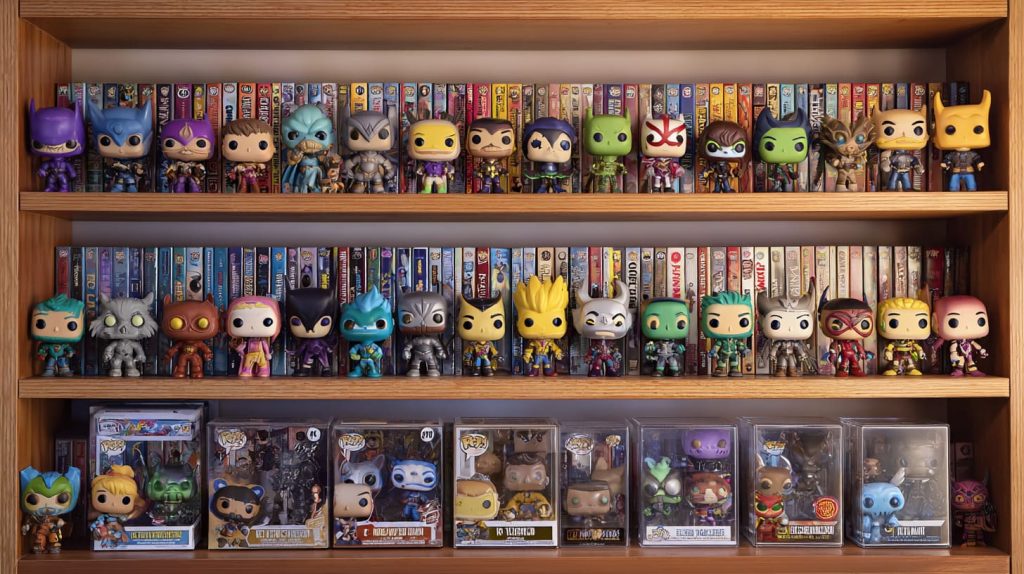
Not every collector needs the same shelf.
This is where many display guides become too simple. They suggest one shelf size as if every collector has the same room, the same budget, the same habits, and the same future plan.
Real life is messier.
Some collectors own 12 Pops and love each one deeply. Some own 300 and still say they are “just getting started.” Some care about resale value. Some only care about joy. Some display everything. Some rotate collections.
The decision I make depends on the collector’s behavior, not only the product size, because a neat casual display and a serious value-focused display have very different risks.
Casual collectors
Casual collectors usually need simple, clean display space.
They may have:
- A small shelf near a desk
- A bedroom wall display
- A few favorite characters
- A mix of boxed and unboxed Pops
- Limited room space
For them, shelf depth should be practical but not excessive.
| Casual Collector Need | Recommended Thinking |
|---|---|
| Small number of Pops | Single-row depth is enough |
| Clean room look | Avoid very deep shelves |
| Favorite characters | Give each Pop enough space |
| Low maintenance | Easy dusting matters |
| Flexible use | Leave room for a few additions |
A shelf depth around 5 to 6 inches can often work well for boxed Pops. If the collector displays out-of-box figures, 6 inches gives more comfort.
The main goal is balance.
A casual collector does not need a huge display system. They need a shelf that looks good and does not create daily annoyance.
Serious collectors
Serious collectors need more planning.
They may collect full series, exclusives, convention releases, or multiple franchises. Their display must support growth and organization.
For them, depth becomes a system decision.
| Serious Collector Need | Shelf Depth Role |
|---|---|
| Large collection | Supports more rows |
| Series grouping | Keeps sets together |
| Protectors | Needs added clearance |
| Frequent rearranging | Needs handling space |
| Long-term use | Reduces future replacement |
A serious collector may benefit from 7 to 10 inches of depth, depending on layout.
But again, deeper shelves need planning.
A deep flat shelf may hide items. A deep shelf with risers can look excellent.
The difference is structure.
Investors and value-focused collectors
Some collectors care deeply about box condition and resale value.
For them, shelf depth is partly about protection.
They may use:
- Soft protectors
- Hard stacks
- Acrylic cases
- Dust covers
- Lockable cabinets
- UV-conscious placement
| Value-Focused Concern | Display Requirement |
|---|---|
| Box corner protection | Full shelf support |
| Dust control | Enclosed or covered design |
| Sunlight exposure | UV-aware placement |
| Handling reduction | Easy access layout |
| High-value Pops | Extra space and stronger shelves |
For this type of collector, I would never design the shelf based only on the bare Funko box size.
That would be too narrow.
The protector is part of the real size. The handling space is part of the real size. The risk of damage is part of the real cost.
This is where custom acrylic display design starts to make a lot of sense.
Because once the collection has real value, guessing shelf depth feels a bit careless.
Should Shelf Depth Influence Custom Acrylic Display Design?
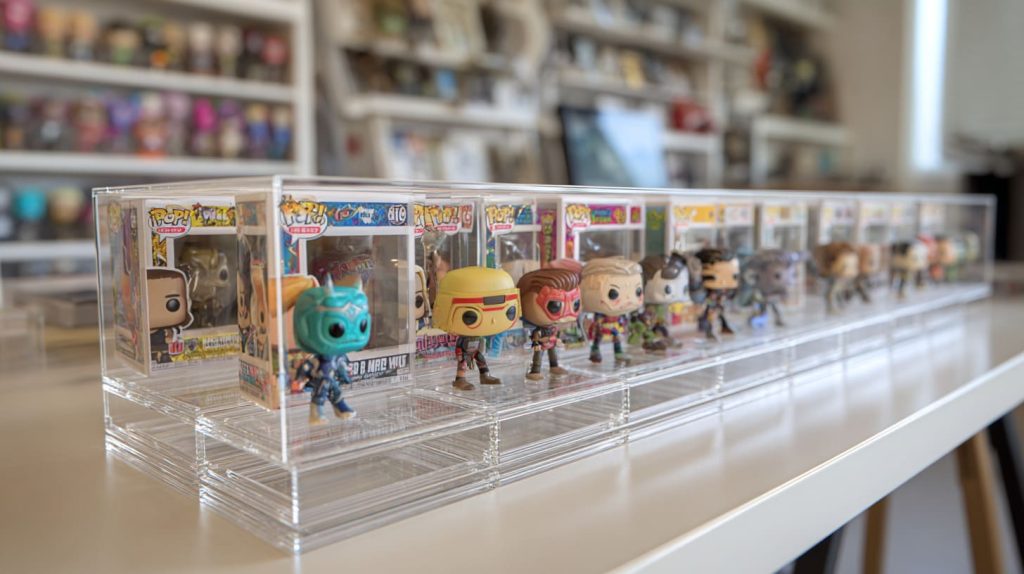
Yes, shelf depth should strongly influence custom acrylic display design.
In fact, shelf depth should be one of the first details discussed.
At Feilong Acrylic, we are not a retail catalog business. We work with custom acrylic products. That means we do not simply say, “Here is a standard shelf, take it or leave it.” A good custom display should match the actual object, the display goal, and the buyer’s real use.
For Funko Pop collections, that means depth cannot be guessed.
One thing I pay close attention to in custom work is whether the customer is designing for the box alone or for the whole display habit, because those two answers can create very different acrylic structures.
Custom displays can optimize shelf depth
A custom acrylic display can be made around the real dimensions of the collection.
That is the main advantage.
Instead of forcing Pops into an existing shelf, the shelf can be built around the Pops.
This helps with:
- Exact box support
- Protector clearance
- Better row spacing
- Better wall fit
- Cleaner display lines
- Reduced wasted space
- More stable structure
| Custom Design Point | Why It Matters |
|---|---|
| Shelf depth | Supports box and protector |
| Shelf height | Fits standard and oversized Pops |
| Row spacing | Improves visibility |
| Material thickness | Supports weight |
| Edge polishing | Improves finished look |
| Wall or desktop use | Changes structure needs |
Custom depth is especially useful when the collection has a clear pattern.
For example, if most Pops are boxed and protected, the shelf can be designed for that exact setup. If the collector uses risers, the shelf can be deeper. If the display is for a store, the depth can support both product visibility and customer handling.
That is real design.
Not decoration.
Acrylic shelves offer flexibility
Acrylic works well for collectibles because it feels visually light.
It does not block the view like heavy wood can. It does not make the display feel dark. Clear acrylic can almost disappear, which allows the Pops to stay as the focus.
That matters more than people think.
| Acrylic Display Benefit | Practical Value |
|---|---|
| High transparency | Keeps attention on the collection |
| Custom size | Matches exact shelf depth needs |
| Smooth edges | Safer and cleaner appearance |
| Modular structure | Easier to expand |
| Easy branding options | Useful for shops or display businesses |
| Dust cover options | Better protection |
Acrylic can also be used in many structures:
- Wall-mounted shelves
- Desktop display racks
- Tiered risers
- Enclosed display boxes
- Lockable display cabinets
- Step display stands
- Custom collector cases
The key is not just choosing acrylic.
The key is designing the acrylic correctly.
A poorly sized acrylic shelf is still a poor shelf.
Material does not save bad measurement.
Factors to discuss with a manufacturer
When discussing a custom acrylic Funko Pop display, I would want clear answers before production starts.
| Question | Why I Ask It |
|---|---|
| Are the Pops boxed or out of box? | Depth needs are different |
| Will protectors be used? | Extra space is required |
| How many Pops are displayed now? | Current capacity matters |
| How many may be added later? | Growth planning matters |
| Is the display wall-mounted or desktop? | Structure and strength change |
| Are there oversized Pops? | Height and depth must adjust |
| Is dust protection needed? | Enclosed design may be better |
| Is lighting planned? | Space and heat need consideration |
For B2B buyers like Jacky, these questions are not small details. They are the difference between a display that works in production and a display that causes complaints later.
Acrylic manufacturing is not only about cutting clear sheets.
It is about understanding use.
And once depth is planned, other shelf factors still matter. Depth is the first big decision, but it is not the only one.
What Other Shelf Factors Matter Besides Depth?
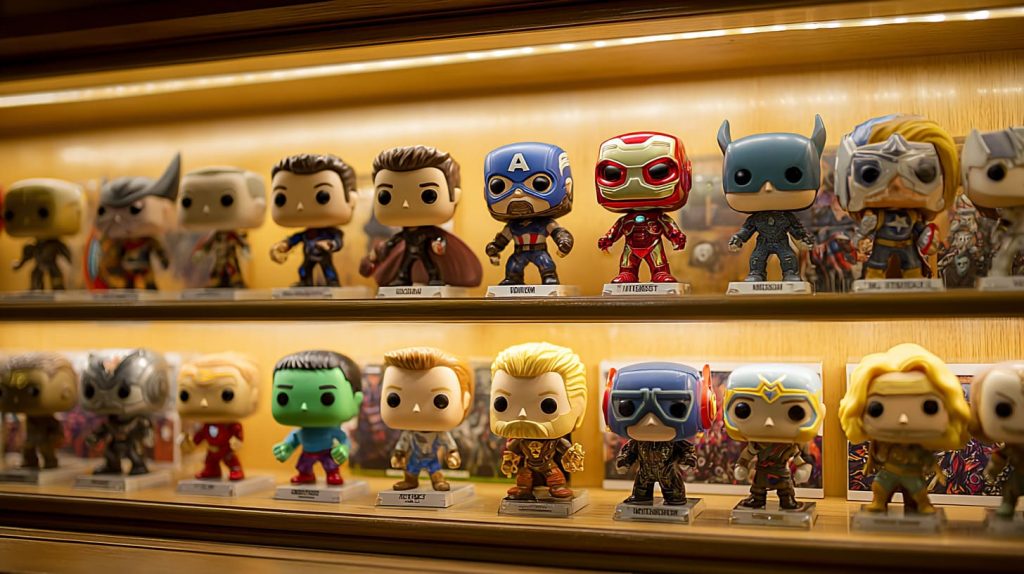
Shelf depth matters a lot, but I do not want to pretend it works alone.
A good Funko Pop display needs balance. Depth, height, strength, lighting, material, and room placement all work together.
If one factor is ignored, the display can still fail.
For example, a shelf can have perfect depth but poor strength. Then it sags. A shelf can have enough depth but poor height. Then oversized Pops do not fit. A shelf can look beautiful under strong light, but the boxes may fade over time.
The detail that often decides the final design is not one single measurement, but how all measurements behave together after the shelf is loaded.
Shelf height
Shelf height is the vertical space between shelves.
This matters because Funko Pops do not all have the same height. Standard boxes are one thing. Oversized Pops, special editions, and display protectors can change the requirement.
| Shelf Height Situation | Result |
|---|---|
| Too low | Boxes scrape or do not fit |
| Exact height only | Hard to remove Pops |
| Slight extra height | Easier handling |
| Adjustable height | More future flexibility |
| Too much height | Wasted vertical space |
A tight shelf height may look efficient, but it can become annoying when the collector tries to remove one Pop.
I prefer leaving enough hand clearance.
A display should not feel like a puzzle trap.
Shelf strength
Shelf strength matters more as the collection grows.
One Funko Pop is light. Many Funko Pops are not so light. Add acrylic protectors, hard stacks, or enclosed structures, and the weight increases.
| Strength Factor | Why It Matters |
|---|---|
| Material thickness | Prevents bending |
| Shelf span | Longer shelves need more support |
| Wall mounting | Must match wall condition |
| Load distribution | Prevents sagging |
| Support brackets | Improve safety |
For acrylic displays, material thickness and structure design are important. A thin shelf may look elegant, but it may not support a heavy collection across a long span.
This is a classic trade-off.
Thin looks light.
Thicker feels safer.
The right answer depends on shelf length, loading, and installation method.
Lighting integration
Lighting can make a Funko Pop display look fantastic.
But lighting must be planned carefully.
Strong sunlight can damage boxes. Poor LED placement can create glare. Too much light can make a clear acrylic shelf reflect in strange ways. Too little light can hide the back row.
| Lighting Issue | Practical Concern |
|---|---|
| Direct sunlight | Box fading risk |
| Harsh front light | Glare on protectors |
| No back-row light | Hidden figures |
| Hot lighting | Material and safety concern |
| Soft LED lighting | Better display mood |
I like soft lighting when it supports the collection. I do not like lighting that turns the display into a shiny mess.
The Pop should be the hero.
The shelf and lighting should be the quiet stage crew.
That is usually the best display design.
Conclusion
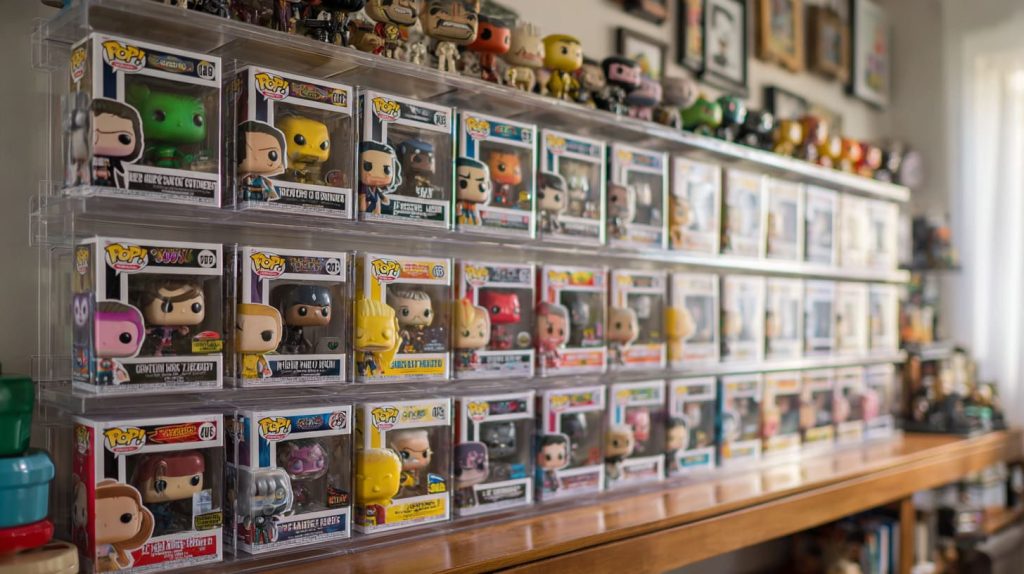
Shelf style matters.
I will never say it does not.
A beautiful shelf can change the whole feeling of a Funko Pop collection. It can make a room feel warmer, cleaner, and more personal. It can turn small vinyl figures into a real display wall.
But shelf depth decides whether that beauty can survive daily use.
That is why I believe shelf depth matters more than shelf style for Funko Pop collections.
A shallow shelf may look elegant at first. But if the box hangs over the edge, the display feels unsafe. If protectors do not fit, the collector has to compromise. If the back row disappears, the display becomes storage. If the collection grows and the shelf cannot adapt, the buyer has to start again.
That is not good design.
I care about shelf depth because I have seen how small measurement mistakes create big frustration later. I have seen buyers focus on the front look and forget the real use. I have seen displays that looked perfect in a drawing but became awkward once real products were placed on them.
So my thinking is simple.
Style attracts attention. Depth protects the collection.
For boxed Pops, depth gives full support and room for protectors.
For out-of-box Pops, depth gives space for poses, risers, and better viewing angles.
For growing collections, depth gives flexibility.
For custom acrylic displays, depth is one of the first details that should be confirmed, not an afterthought.
At Feilong Acrylic, we build custom acrylic displays for real product use, not just pretty photos. If a buyer wants a Funko Pop display, a collectible shelf, a clear acrylic riser, or a custom display case, I would rather spend more time checking the depth before production than fix problems after delivery.
That is not overthinking.
That is how good custom work should feel.
Careful at the start.
Calm at the end.
If you are planning a Funko Pop display for a personal collection, a retail shop, or a custom product project, start with one simple question:
How much depth does the collection really need?
Once that answer is clear, shelf style becomes much easier to choose.
And the display has a much better chance of looking good not only on the first day, but also after the collection grows, shifts, and becomes even more personal.