Skip to content

Acrylic thickness gets treated like a small detail far too often.
I have seen this happen in very normal product discussions. A buyer asks for quotation options. A supplier gives 2 mm, 3 mm, and 5 mm. Everyone looks at the price first. That reaction is understandable. Cost sits right there on the page. Thickness feels like a technical line item. So people rush past it.
But thickness is rarely just a technical line item.
It affects how a panel feels in the hand. It affects whether a shelf stays flat or starts to sag. It affects whether a box looks clean and solid or thin and cheap. It also affects shipping damage, machining time, edge finish, and how the final product is judged by the customer.
I learned this lesson the boring way, not the clever way. A project looked easy on paper. The thinner sheet saved money. The drawings looked fine. Then the finished parts told a different story. The front panel flexed more than expected. The product did not fail in a dramatic way. It just felt wrong. And in custom acrylic work, that feeling matters a lot.
When I compare 2 mm, 3 mm, and 5 mm acrylic, I do not treat them like three prices on a chart. I treat them like three different behaviors. Each one solves a different kind of problem. Each one creates a different kind of risk too.
The real mistake many buyers make is simple. They choose based on price before they decide what the acrylic actually needs to do. That sounds small. It is not small at all.
I do not judge thickness by the quotation alone. I judge it by what the product must survive after cutting, polishing, assembly, packing, shipping, and daily use.
In this article, I want to break that down in a practical way. I will compare 2 mm, 3 mm, and 5 mm acrylic from the angles that actually matter in real work, not just in neat product specs.
A lot of problems start when a number looks harmless. Thickness is one of those numbers, so it deserves a much closer look.
What Does Acrylic Thickness Actually Affect?
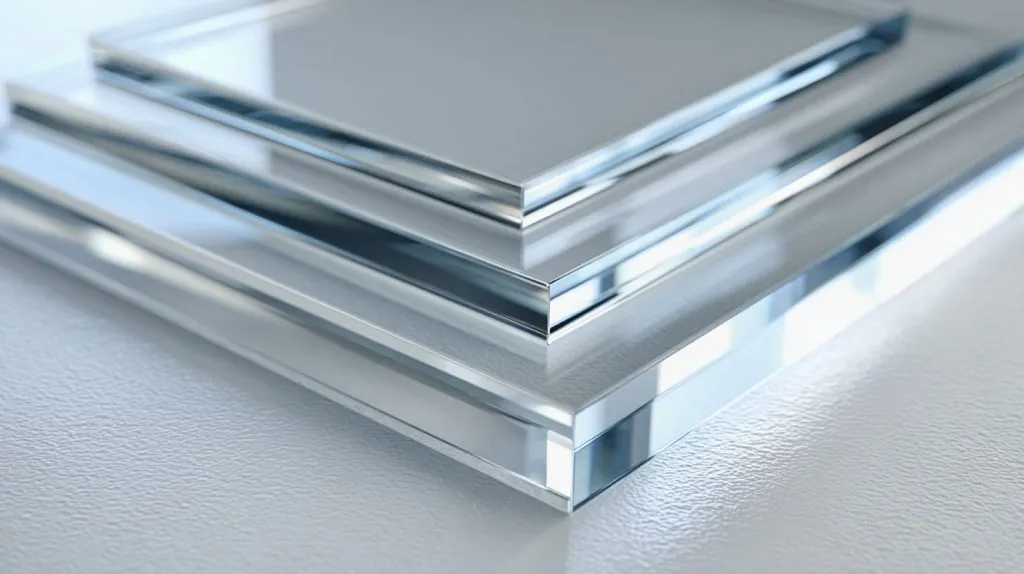
When people talk about acrylic thickness, they often talk as if it changes only one thing. That is not how real projects work. Thickness changes several things at the same time. Some of them are obvious. Some of them only show up later, when changing them becomes expensive.
The first thing most people notice is strength. That makes sense. A thicker sheet usually feels stronger. But strength is only part of the story. Thickness also changes rigidity, appearance, edge presence, weight, handling feel, and customer perception.
I usually pay attention to thickness early because once the structure, joints, slots, bends, and packaging are based on the wrong sheet, the whole project starts leaning in the wrong direction.
Structural strength and load capacity
Thickness has a direct effect on bending and rigidity. A thin acrylic panel may not crack right away, but it can still flex enough to create trouble. That trouble may show up as wobbling, sagging, bowing, or stress around glued corners and joints.
For example, a small sign insert made from 2 mm acrylic may be totally fine. A shelf made from the same thickness may look weak almost immediately. The acrylic may survive, but the product may still feel unreliable to the customer.
Here is a simple way I think about it:
| Thickness | Rigidity | Best for | Main structural concern |
|---|---|---|---|
| 2 mm | Low | Light inserts, covers, flat small parts | Flexing and bending |
| 3 mm | Medium | Boxes, stands, medium-size display parts | Moderate span limits |
| 5 mm | High | Shelves, larger panels, stronger fixtures | Higher weight and cost |
Acrylic does not only need to avoid breaking. It also needs to hold its shape well enough to keep the product looking intentional.
Real-world examples of structural difference
Acrylic boxes show this clearly. A small box in 2 mm can work if the size is limited and the use is gentle. But once the box gets larger, the side walls start feeling softer. The lid may not sit as nicely. The product may look less premium even if it is technically acceptable.
Display shelves are another good example. A shelf panel in 3 mm may work for light cosmetic products over a short span. The same shelf in 5 mm will often feel far more stable, and that extra stability changes how the whole display is judged.
Panels and covers tell a similar story. Thin panels are easier to use, but they can ripple visually, especially on larger surfaces.
Visual appearance and perceived quality
This part gets overlooked too much.
Thickness changes the visual weight of the product. It changes how edges catch the light. It changes how solid the finished item feels. In many custom acrylic products, the customer is not only buying function. The customer is also buying visual confidence.
A 2 mm part can look neat and clean in the right application. But it can also look a little temporary. A 5 mm part often looks more substantial. It gives more presence. It can make a retail display or organizer feel more deliberate.
This is where I think many decisions quietly go wrong, because a product can be structurally acceptable and still feel visually underbuilt.
Edge clarity and light refraction
Polished acrylic edges can be beautiful. Thickness affects that effect.
A thicker edge gives more visible clarity and more light play. That matters a lot in premium displays, branded retail fixtures, and decorative applications where the edge is part of the look.
| Thickness | Edge presence | Visual impression |
|---|---|---|
| 2 mm | Light | Clean but less premium |
| 3 mm | Balanced | Practical and professional |
| 5 mm | Strong | Solid, premium, more noticeable |
I have seen customers react positively to thicker acrylic even before they understand why. They just feel that the product looks better made.
Weight and handling considerations
Thicker acrylic is stronger, yes. But it is also heavier. That matters.
A heavier part may feel better in the hand. It may also increase shipping cost, make wall mounting harder, or slow down handling during assembly. In small tabletop products, a little extra weight can improve quality perception. In large hanging signs or portable fixtures, too much weight can become a problem.
I never look at durability by itself. I also check how the product will be lifted, packed, installed, and moved, because the strongest option is not always the smartest one.
Here is a quick view:
| Factor | Thin acrylic | Thick acrylic |
|---|---|---|
| Portability | Better | Worse |
| Perceived sturdiness | Lower | Higher |
| Shipping efficiency | Better | Worse |
| Resistance to flex | Worse | Better |
So when someone asks what thickness affects, my answer is simple: almost everything people care about after the quotation stage.
And once that becomes clear, the next question becomes more useful. Where does 2 mm actually work well, and where does it start to become a trap?
2 mm Acrylic: Where Does It Work Best?

I do not dislike 2 mm acrylic at all. In fact, I think it is very useful when people use it for the right job. The trouble starts when buyers expect it to behave like a stronger sheet just because the cost looks attractive.
2 mm acrylic works best when the product is light-duty, flat, small, or mostly decorative. In those cases, it can be efficient and sensible. It can save money. It can reduce weight. It can also simplify processing.
The key is honesty. If the part needs real stiffness, 2 mm is often not the right answer.
When I see 2 mm on a drawing, I immediately ask myself one thing: is this sheet only there to cover, divide, display, or protect, or is somebody quietly expecting it to support, resist, or hold shape under stress?
Typical applications
2 mm acrylic is often a good fit for products like:
- Photo frames
- Signage inserts
- Dust covers
- Protective flat covers
- Small divider panels
- Lightweight display elements
These applications usually do not ask the sheet to carry much load. They ask it to stay clear, look neat, and do a simple job.
Here is a useful way to think about it:
| Application | Is 2 mm suitable? | Why |
|---|---|---|
| Small photo frame cover | Yes | Light use, low load |
| Sign insert | Yes | Mostly visual role |
| Cosmetic display shelf | Maybe | Depends on span and load |
| Large box side wall | Risky | Flex may be too visible |
| Structural stand panel | Usually no | Too much movement |
Advantages of 2 mm acrylic
The biggest advantage is cost. That part is obvious. Less material usually means a lower sheet cost. For projects with tight budget pressure, that matters.
Another benefit is easier processing. Thin acrylic is easier to cut, easier to handle in some cases, and sometimes easier to bend for certain designs. It also keeps finished products lighter, which can help in packaging and transport.
Why buyers still choose 2 mm
There are some very practical reasons:
- It keeps quotation numbers lower
- It works well for inserts and flat panels
- It reduces total product weight
- It may improve shipping efficiency
- It can suit simple, high-volume items
These are not bad reasons. They just become bad decisions when the design asks for more than 2 mm can comfortably give.
Limitations and risks
This is where 2 mm gets misused.
Its main weakness is flexibility. Even if it does not crack, it can bend enough to weaken the product experience. A display can wobble. A box can feel too soft. A vertical panel can lean or bow slightly. Those small movements affect how buyers and end users judge quality.
And once adhesives, cutouts, notches, or assembly stress enter the picture, the risks grow.
The point that often gets missed is simple: a part can survive and still feel disappointing.
Flexibility and bending issues
Here is where I see problems most often:
| Risk area | What can happen with 2 mm |
|---|---|
| Large flat surfaces | Visible bending |
| Shelves | Sagging under light load |
| Boxes | Side wall flex |
| Transport | Greater chance of cracking under stress |
| Assembly | More sensitive around holes and joints |
I get cautious with 2 mm as soon as panel size starts increasing. A small increase in dimension can make the part feel much less stable than expected.
Not suitable for structural or load-bearing designs
If the acrylic needs to hold weight, resist repeated handling, or look firm over a larger area, 2 mm usually stops being the smart choice. It may still look okay in the sample stage. But daily use tends to expose the weakness.
That is why I do not call 2 mm bad. I call it narrow in its comfort zone.
A lot of projects live in the middle ground, though. Not flimsy, not heavy-duty. That is exactly where 3 mm becomes the default choice for so many buyers.
3 mm Acrylic: The Most Common Choice?

Yes, I think 3 mm is the most common choice in many acrylic projects, and I understand why. It sits in a very comfortable middle position. It is not too thin for many standard uses, and it is not as heavy or costly as 5 mm.
That balance makes it popular.
If I had to guess the default thickness for many custom acrylic boxes, display stands, holders, and retail fixtures, I would point to 3 mm first. It often gives enough rigidity for medium-duty work without pushing cost too high.
Still, I do not treat 3 mm like a magic answer. It is a good general option, not a universal one.
My instinct with 3 mm is to trust it for standard display work, but not to assume it will stay convincing once size, span, or heavy handling starts growing.
Why 3 mm is considered the “standard”
3 mm often feels like the safest general recommendation because it balances cost and performance in a practical way. It has more stiffness than 2 mm. It is easier to live with in typical display structures. It gives a cleaner sense of quality. And it does not jump as hard in cost and weight as 5 mm.
For many B2B buyers, that makes 3 mm the easiest thickness to approve.
| Factor | 3 mm performance |
|---|---|
| Cost control | Good |
| Structural confidence | Good for medium-duty use |
| Visual quality | Professional |
| Fabrication practicality | Good |
| Weight | Manageable |
This is one reason 3 mm gets used so often. It reduces argument. It feels reasonable to both design teams and purchasing teams.
Common use cases
3 mm acrylic is common in:
- Display stands
- Acrylic boxes
- Cosmetic holders
- Retail fixture panels
- Brochure holders
- Divider structures
- Countertop organizers
These products often need more than a decorative sheet, but less than a heavy structural panel. That is exactly where 3 mm feels comfortable.
Why it fits general display work
Most medium-size custom display products need enough stiffness to feel reliable, enough clarity to look clean, and enough cost control to make the project commercially workable. 3 mm often checks those boxes.
I have seen 3 mm perform very well in countertop displays where the design is smart and the spans stay reasonable. It gives a product enough body without making it bulky.
Performance overview
3 mm offers moderate strength and rigidity. That phrase sounds plain, but it is useful because it describes the truth. It is not weak like a thin insert sheet. It is also not strong enough for every load-bearing job.
That middle character is exactly why it works so often.
Where 3 mm starts to struggle
3 mm can start to look less convincing when:
- Panels become too large
- Shelves need to hold more weight
- The structure gets taller or wider
- The product faces rough transport
- Buyers want a stronger premium feel
| Scenario | 3 mm result |
|---|---|
| Small acrylic box | Very suitable |
| Standard retail stand | Very suitable |
| Large shelf panel | Often not enough |
| Furniture part | Usually too thin |
| Large freestanding display | Depends on structure |
I think this is where a lot of experienced buyers earn their value. They know that 3 mm is usually safe, but they also know when “usually safe” stops being enough.
And that takes us to 5 mm, the thickness people often resist at first, then quietly appreciate later.
5 mm Acrylic: When Do You Need It?

5 mm acrylic enters the conversation when the product needs more confidence. That confidence can come from strength, rigidity, premium feel, or all three at once.
I do not recommend 5 mm just because it is thicker. I recommend it when the design, scale, or use case starts asking the acrylic to behave like a more serious structural part.
A shelf that carries products. A larger panel that must stay flat. A furniture component. A display piece that should look strong the moment someone sees it. These are the kinds of situations where 5 mm starts making sense.
The moment I see a product becoming wide, load-bearing, or visually premium, my attention moves to 5 mm very quickly because this is usually where regret shows up if the sheet stays too thin.
Heavy-duty applications
5 mm acrylic is often used for:
- Shelves
- Furniture parts
- Large display panels
- Premium acrylic blocks
- Stronger risers and stands
- Larger organizers
- Parts that need reduced flex
These applications usually involve either more load, more size, or more visual expectation.
| Application | Is 5 mm suitable? | Main reason |
|---|---|---|
| Shelf | Yes | Better load support |
| Furniture part | Yes | Improved stiffness |
| Large branded display | Yes | Better presence and stability |
| Small flat insert | Usually unnecessary | Overbuilt |
| Light cover panel | Usually unnecessary | Extra cost without need |
Strength and durability advantages
The biggest advantage of 5 mm is not only strength. It is stability. That difference matters.
A 5 mm part usually resists deformation better. It feels more secure in the hand. It often survives real-life handling more comfortably. In displays, that stronger body changes both function and visual confidence.
Higher load capacity
If the product needs to carry weight, 5 mm gives you a much better starting point. That does not mean every 5 mm shelf is perfect. Span, support design, and joint quality still matter. But the extra thickness gives the design much more room to succeed.
I tend to trust 5 mm more when the product will be stocked, touched, cleaned, and moved over and over, because repeated real-world use exposes thin acrylic very quickly.
Better resistance to deformation
This matters more than some buyers expect.
Acrylic products do not always fail by snapping. Sometimes they fail by slowly looking worse. A shelf dips. A panel bows. A stand starts to feel softer than it should. That slow visual decline damages perceived quality.
5 mm helps reduce that.
| Property | 3 mm | 5 mm |
|---|---|---|
| Flex resistance | Medium | High |
| Shelf confidence | Medium | High |
| Premium edge look | Good | Strong |
| Weight | Moderate | Higher |
Cost and processing considerations
Of course, 5 mm costs more. The sheet itself costs more. Machining may take more time. Polishing thicker edges can take more work. The final product also becomes heavier.
That means 5 mm should be chosen with purpose, not emotion.
Higher material and machining cost
Some buyers reject 5 mm too fast because they focus on raw material cost. That is understandable. But they sometimes forget what the thicker sheet may prevent later. Fewer complaints. Better stability. Lower damage risk. Stronger premium feel.
That is why higher sheet cost does not always mean higher project cost in the long run.
More complex fabrication
Thicker acrylic can also require more careful processing, depending on the design. Cutting, polishing, bonding, and assembly all need attention. On some projects, that is a minor issue. On others, it matters.
I do not pick 5 mm casually, because once thickness rises, fabrication details become more unforgiving and every design choice starts carrying more cost with it.
So yes, 5 mm can be the right choice. But the smart question is not “Is it stronger?” The smarter question is “Does the project benefit enough from that strength to justify the extra material, processing, and weight?”
And that leads directly into cost, because thickness affects much more than the sheet price on a quotation.
How Thickness Impacts Cost Beyond Material Price
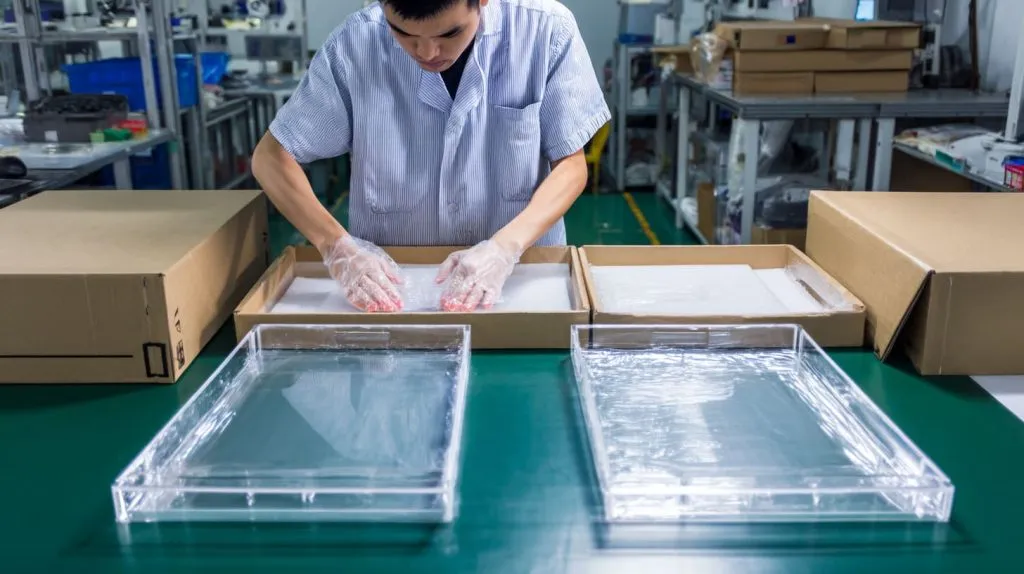
This is where many thickness decisions become misleading.
A lot of buyers compare acrylic thickness by looking at material price first. I understand that. It is measurable. It is fast. It fits neatly into a spreadsheet. But real project cost is rarely that neat.
Thickness changes more than sheet consumption. It changes breakage risk, shipping safety, assembly behavior, customer complaints, return rates, and even how long the product keeps looking acceptable in use.
When I review a quote, I never stop at the sheet price, because the cheapest thickness on day one can become the most annoying thickness by the time the goods reach the customer.
Material cost vs total project cost
Thicker acrylic costs more in raw material. That part is simple. But total project cost includes much more:
- Machining
- Polishing
- Packing
- Shipping
- Damage rate
- Rework
- Replacement
- Customer satisfaction
- Long-term product performance
A 2 mm part may save money at the purchasing stage. But if it bends too easily, cracks in transport, or disappoints the customer, that early saving starts disappearing.
| Cost area | Thin acrylic may save | Thin acrylic may also cause |
|---|---|---|
| Material | Yes | — |
| Shipping weight | Yes | — |
| Product damage | — | Higher risk |
| Rework | — | More likely |
| Returns and complaints | — | More likely |
| Perceived product value | — | Can drop |
That is why “cheaper” and “lower cost” are not always the same thing.
Hidden costs of choosing too thin
The hidden costs are the ones buyers hate most, because they arrive late.
Acrylic that is too thin may not fail in the factory. It may fail after packing, after transport, after installation, or after a few weeks of use. That is when the real costs begin.
Breakage, returns, and replacements
Acrylic does not need to shatter for trouble to start. Sometimes slight bending, edge stress, or a softer-than-expected feel is enough to trigger complaints.
I have seen projects where the saved material cost looked smart at first, then turned into extra packaging cost, more careful handling, and replacement discussions nobody wanted to have.
| Hidden issue | Likely impact |
|---|---|
| Flexing in use | Product feels cheap |
| Cracking in transit | Replacement cost |
| Warping over time | Customer dissatisfaction |
| Weak shelf feel | Reduced trust in product |
Shipping and packaging implications
Shipping is another area where thickness changes the math.
Thicker acrylic is heavier. That can raise freight cost. But thicker acrylic can also reduce damage risk, which may lower the need for overprotective packing in some cases or reduce breakage claims later.
The right answer depends on the product shape, size, and shipment route.
I always weigh shipping cost against damage risk, because a light package that arrives broken is not really efficient at all.
Weight vs damage risk
Here is the trade-off:
| Thickness tendency | Shipping upside | Shipping downside |
|---|---|---|
| Thinner sheet | Lighter | More vulnerable |
| Thicker sheet | More durable | Heavier |
So when someone says thicker acrylic is too expensive, I usually want to ask one more question: expensive compared to what stage of the project?
Because once a product leaves the factory, thickness starts showing its value in ways the quotation never fully explains.
And that makes comparison easier, because sometimes the smartest decision is easier to see when all three thicknesses sit side by side.
Comparing 2 mm vs 3 mm vs 5 mm Acrylic

Side-by-side comparison helps because it strips away a lot of vague thinking. When people stop talking in general terms and start comparing actual behaviors, the right thickness often becomes much easier to spot.
Here is the quick comparison first.
Quick comparison table
| Thickness | Strength | Cost | Typical Use | Risk Level |
|---|---|---|---|---|
| 2 mm | Low | Low | Light-duty | High |
| 3 mm | Medium | Medium | General use | Medium |
| 5 mm | High | High | Heavy-duty | Low |
That table is useful, but it still needs context. “High risk” does not mean bad material. It means the margin for misuse is higher. “High cost” does not mean bad value. It means the project needs to benefit enough from the extra thickness.
I find comparison works best when I ask not which sheet is better, but which sheet is hardest to regret after the product has been built and used.
Key decision factors
The right thickness depends on three core things:
- Load requirements
- Product size
- End-use environment
These sound simple, but they carry most of the decision.
Load requirements
If the acrylic carries almost no load, 2 mm may work. If it needs moderate support and standard display performance, 3 mm is often a safe middle choice. If it must carry noticeable load or stay rigid over time, 5 mm usually deserves serious attention.
Product size
Size changes everything. A small part can perform well in a thinner sheet. A large panel in the same thickness can become weak, flexible, or visually disappointing.
End-use environment
Acrylic used in a calm indoor setting behaves differently from acrylic used in a busy retail area, shipping-heavy project, or frequently handled display environment.
| Decision factor | 2 mm | 3 mm | 5 mm |
|---|---|---|---|
| Small decorative part | Strong fit | Also possible | Often unnecessary |
| Standard display item | Risky in some cases | Best general fit | Good but heavier |
| Shelf or load-bearing part | Poor fit | Sometimes limited | Best fit |
| Premium visual effect | Limited | Good | Strong |
| Repeated rough handling | Weak | Moderate | Better |
Simple comparison by project type
| Project type | Best starting thickness |
|---|---|
| Photo frame insert | 2 mm |
| Cosmetic display box | 3 mm |
| Acrylic shelf | 5 mm |
| Retail countertop stand | 3 mm |
| Large rigid panel | 5 mm |
This comparison does not remove judgment. It sharpens judgment. That is the point.
And once the differences become clear, the next step is not just comparing thicknesses. It is choosing the right one for the actual project in front of you.
How to Choose the Right Thickness for Your Project

Choosing acrylic thickness should feel practical, not dramatic. But I think it works best when the decision starts with function, not preference.
A lot of buyers ask, “Which thickness do you recommend?” I understand the question, but I usually think the better question is, “What does this product need to do, and what kind of experience should it create?”
That one question clears up a lot.
I do not begin with thickness. I begin with use, size, and expectation, because thickness only makes sense after those three things are honest.
Based on application type
The first thing I separate is decorative use from structural use.
Acrylic that mainly covers, divides, or presents can often be thinner. Acrylic that supports, spans, or resists force usually needs more body.
| Application type | What I look for | Likely thickness direction |
|---|---|---|
| Decorative / visual | Clarity, neatness, low weight | 2 mm or 3 mm |
| Standard display | Balance of look and stability | 3 mm |
| Structural / support role | Rigidity, strength, long-term shape | 5 mm |
Decorative vs structural use
This sounds basic, but people mix these up all the time. A panel may look decorative in the drawing but act like a structural part in real life. That is where thickness decisions go bad.
For example, a sign backer may seem decorative, but if it is large and must stay flat on a wall, thickness suddenly matters much more.
Based on size and span
Bigger panels need more caution. That is one of the most useful rules in acrylic design.
A small 3 mm part can feel sturdy. A wide 3 mm shelf can feel disappointing. Same material. Same thickness. Different size. Completely different behavior.
The first warning sign for me is not always the load. Sometimes it is simply the width of the unsupported area, because large spans expose weakness faster than small samples ever do.
Why larger panels need thicker sheets
Acrylic becomes less convincing as unsupported size increases. More width means more visible movement. More movement means less confidence in the product.
| Panel or part size | Safer thickness trend |
|---|---|
| Small | 2 mm or 3 mm |
| Medium | 3 mm |
| Large | 5 mm or more support needed |
Based on customer expectations
This part is very important in B2B work.
Sometimes the product does not need maximum strength. It needs the right impression. A retail display for a premium brand often needs a cleaner, stronger, more substantial feel. The acrylic should not only function. It should look worth the price.
A simple utility item and a premium branded display are judged differently, even if they use the same acrylic. That is why customer expectation belongs in the thickness decision.
I often ask myself how the buyer wants the product to feel in the hand and look on the shelf, because a technically acceptable thickness can still miss the emotional quality target.
| Customer expectation | Thickness tendency |
|---|---|
| Budget basic | 2 mm or 3 mm |
| Professional standard | 3 mm |
| Premium visual and tactile feel | 5 mm |
In the end, thickness choice is not a guessing game. It becomes much easier when the project gets defined honestly.
And that honesty matters even more when we look at the mistakes buyers keep making over and over.
Common Mistakes Buyers Make When Choosing Thickness

I think most thickness mistakes are not caused by carelessness. They are caused by incomplete thinking. A buyer looks at one variable too closely and misses the rest.
That happens all the time. Price gets too much attention. A clean sample creates false confidence. Real usage conditions get simplified. The manufacturer gets involved too late. None of these mistakes sound dramatic. But together, they create expensive little problems.
The most dangerous part is this: the wrong thickness often looks fine early on.
The easiest time to make a bad thickness decision is when the sample is small, the quotation is fresh, and nobody has imagined the product being packed, dropped, stocked, cleaned, and touched for six months.
Over-prioritizing cost
This is the most common mistake.
People see 2 mm saving money and feel relief. I understand that feeling. Purchasing teams live under pressure. But focusing too hard on raw sheet price can block better judgment.
Short-term savings vs long-term losses
Thin acrylic may lower the first number on the quote. It may also increase the chance of flexing, damage, weaker product feel, and replacement issues later.
| Decision style | What it saves | What it may cost later |
|---|---|---|
| Choosing thinner only for price | Material cost | Rework, complaints, product weakness |
| Choosing by total use case | May cost more upfront | Better long-term control |
I get suspicious when the thickness decision becomes too easy, because easy usually means somebody is looking at only one kind of cost.
Ignoring real usage conditions
This mistake is very common in office discussions.
A product may look fine on a table. But that is not where most products live. They get handled, packed, stacked, moved, wiped, pushed, and sometimes misused.
Transport, handling, and daily wear
Acrylic thickness needs to match not just the design, but the real life around the design.
A countertop organizer in a calm office behaves differently from a display unit shipped internationally and used in a busy retail store. The same drawing does not mean the same risk.
| Real-life condition | Why it matters |
|---|---|
| Long shipping route | Higher chance of damage |
| Frequent handling | More stress on joints and edges |
| Busy retail use | More touching and accidental force |
| Larger product size | Greater flex risk |
Not consulting manufacturers early
This is another expensive habit.
Some teams finalize drawings first, then ask the supplier to produce exactly what is already locked in. That sounds efficient. But it often removes the chance to improve thickness, structure, slot design, supports, and packing strategy early.
Missing design optimization opportunities
An experienced acrylic manufacturer can often spot thickness problems quickly. A supplier may suggest a small change that avoids flex, improves assembly, or reduces damage risk. But that only helps if the conversation happens early enough.
I trust early supplier input most when a design seems visually simple, because acrylic often hides its real trouble in the details people assume are already safe.
A thickness mistake is frustrating. A thickness mistake that could have been avoided with one earlier conversation is even more frustrating.
And that naturally brings us to the last big point: why thickness should be decided early, not after the rest of the project is already frozen.
Custom Acrylic Solutions: Why Thickness Should Be Decided Early

Thickness should not be an afterthought in custom acrylic projects. It should be part of the design logic from the beginning.
That matters because thickness touches almost every part of the product system. It affects dimensions, joints, slots, adhesive area, load performance, polishing style, assembly method, packaging, and final feel. Once those parts are built around the wrong thickness, fixing them later becomes messy.
I think the earlier thickness gets settled, the easier the whole project becomes, because acrylic design behaves like a chain and thickness pulls on almost every link in it.
Role of design and engineering support
Good design support helps match thickness with structure. That sounds obvious, but it is where a lot of waste gets prevented.
Acrylic is not only about cutting shapes. It is about deciding how those shapes will behave once they become a real object.
Matching thickness with structure
A skilled team will look at:
- Part size
- Span
- Load
- Joint style
- Bonding area
- Support points
- End use
- Packing method
All of those affect whether 2 mm, 3 mm, or 5 mm makes sense.
| Design factor | Why it matters for thickness |
|---|---|
| Large unsupported area | Needs more rigidity |
| Bonded corners | Thickness affects strength and look |
| Shelf function | Needs load support |
| Premium display edge | Thicker acrylic may improve appearance |
OEM customization considerations
OEM work adds another layer. The acrylic does not just need to function. It also needs to match the buyer’s brand, assembly plan, and finish standards.
Branding, finishing, and assembly
A thicker sheet may support a more premium visual effect. A standard thickness may keep pricing more competitive. An assembly method may work better with one thickness than another.
These are not small details. They shape whether the final product feels like a rough sample or a finished branded item.
I often look at thickness as part of the brand experience too, because buyers may ask for a premium result while unknowingly choosing a sheet that weakens that impression.
Working with experienced manufacturers
This is where experience pays off quietly.
An experienced manufacturer has usually seen common thickness problems before. They know which display parts tend to flex. They know where transport damage happens. They know when a polished edge will look more convincing in a thicker sheet. They know when 5 mm is overkill too.
Reducing trial-and-error costs
Good supplier support can reduce:
- Failed samples
- Design revisions
- Structural disappointment
- Packaging issues
- Shipment damage
- Misalignment between expectation and result
| Benefit of early thickness decision | Why it matters |
|---|---|
| Better sample accuracy | Fewer surprises later |
| Better structure | Stronger product confidence |
| Smoother production | Less adjustment during manufacturing |
| Better cost control | Fewer hidden corrections |
In custom acrylic work, small choices rarely stay small. Thickness is one of those choices. The earlier it gets real attention, the better the project usually goes.
And once all of that is clear, the answer to the original question becomes much simpler.
Conclusion

2 mm, 3 mm, and 5 mm acrylic do not just represent three thickness options. They represent three different levels of strength, stiffness, visual weight, risk, and cost behavior.
2 mm works best when the part is light, small, and mostly decorative. 3 mm is often the safest general choice for common display and box applications. 5 mm becomes valuable when the project needs stronger support, larger scale, or a more premium and stable feel.
I do not think the best thickness is the thinnest or the thickest one. I think the best thickness is the one that matches what the product really needs to do in the real world.
That is why I always come back to the same idea: thickness should be chosen by function first, size second, and budget third, not the other way around.
If you are developing a custom acrylic display, box, organizer, stand, or furniture part, it helps to review the thickness early before the rest of the design gets locked in. A small change at that stage can save a lot of trouble later.
If you want, you can send me your drawing, product idea, or target use case, and I can help you think through whether 2 mm, 3 mm, or 5 mm makes the most sense for your custom acrylic project.