Skip to content
Plastic does not shock anyone anymore. It is inside hospitals, airports, luxury shops, and public transport. Still, when I talk with architects or product designers, I often hear the same quiet doubt: “Isn’t plastic just the cheap option?”
I understand that question very well. Many people met plastic first as thin packaging or low-cost consumer goods. So they connect it with “disposable,” not with “structural” or “architectural.” But when I sit down with engineers who work on real buildings, we always end up talking about engineered plastics instead of that old image.
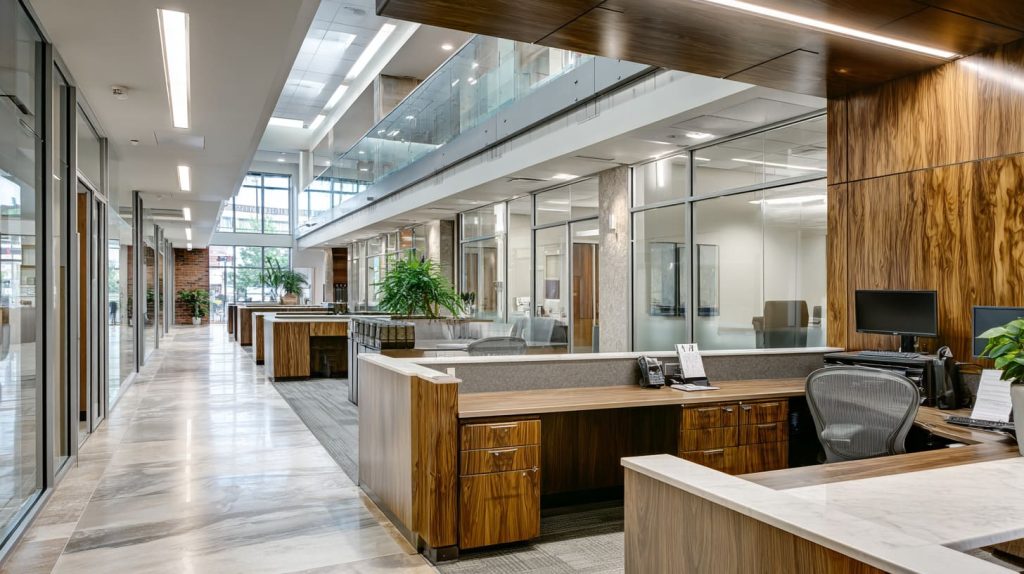
Today, architects, designers, and product engineers specify plastics for facades, interior partitions, light boxes, protective screens, displays, furniture parts, and more. They mix plastics with wood, metal, and glass, instead of treating them as enemies. When the design is thoughtful, the combination works like a small team. Each material covers the weak point of another one.
I work with acrylic every day at Feilong Acrylic, so I stand in the middle of this change. I see drawings from Europe, North America, and Asia. Some people use plastic only when the budget is tight. Others use it as a deliberate design choice. The results are very different.
From my side, I see plastic sitting between three old “kings” of building materials:
- Wood – warm, familiar, easy to cut, but sensitive to moisture.
- Metal – strong, precise, great for structure, but heavy and prone to corrosion.
- Glass – clean, clear, and “premium,” but fragile and hard to handle.
Plastic does not replace these materials. It fills the gaps between them.
From my own work, the most honest way to look at plastic is simple: it is not magic, but it is very useful when we respect both its strengths and its limits. That balance is what I want to share with you here.
When people see this balance clearly, they normally want to know the next thing: “So what exactly makes plastic a serious building material, not just a cheap one?”
What makes plastic a viable building material?
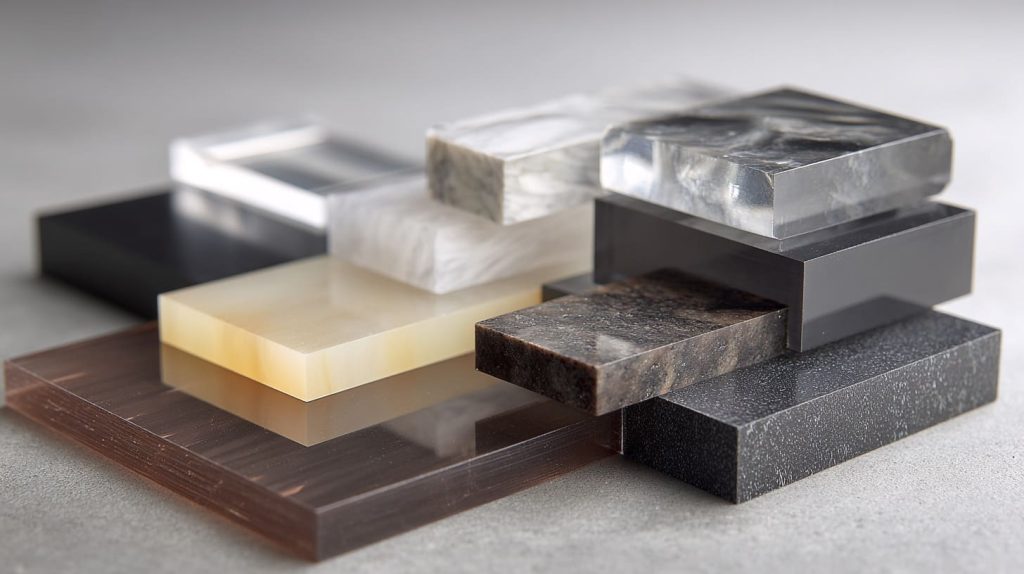
When I read specifications from design teams, I do not look first at the pretty 3D rendering. I look for one basic signal: did they treat plastic as a real engineering material, or only as “transparent stuff”? That one detail tells me how much rework will appear later.
What types of plastics are commonly used in construction?
In building and interior projects, I often see a small family of plastic materials again and again. Each one brings its own personality. If you know them well, the drawing becomes much easier to read.
Here are the main types:
- Acrylic (PMMA)
- Polycarbonate (PC)
- PVC (rigid and flexible)
- ABS
- HDPE and other polyolefins
We can also divide them into two big groups.
Thermoplastics vs thermosetting plastics
Most plastics in building projects are thermoplastics. This means we can heat them, shape them, and in many cases recycle or reprocess them.
| Type | Category | Can be reshaped with heat? | Common use in buildings |
|---|---|---|---|
| Acrylic (PMMA) | Thermoplastic | Yes | Displays, light boxes, panels, guards |
| Polycarbonate | Thermoplastic | Yes | Impact panels, protective covers, skylights |
| PVC | Thermoplastic | Yes | Pipes, window profiles, wall panels |
| ABS | Thermoplastic | Yes | Device housings, trims, switch boxes |
| HDPE | Thermoplastic | Yes | Tanks, cladding, protection panels |
Thermosetting plastics, like some resins and composites, cure once and keep that shape. They are strong and stable but harder to rework or recycle. They show up more in structural composites or specialty panels than in the kind of acrylic work we do.
When I support a new project, I do not start with brand names or marketing materials. I start with one simple question: “Does this environment need clarity, toughness, heat resistance, or chemical resistance?” That answer tells me which family of plastic makes sense.
Where each type is typically applied in buildings
Let me give a simple overview from what I often see:
| Material | Strengths | Typical Applications |
|---|---|---|
| Acrylic (PMMA) | High clarity, surface quality | Signage, display cases, interior panels, lighting |
| Polycarbonate | High impact resistance, good clarity | Safety shields, skylights, machine guards |
| PVC | Chemical resistance, low cost | Pipes, cable trays, wall cladding, window frames |
| ABS | Tough, good for detailed parts | Electrical housings, switches, control panels |
| HDPE | Tough, chemical resistant | Tanks, service areas, protective linings |
Sometimes designers ask for “plastic” first, then try to choose a type later. I always push gently in the other direction: define the risk and environment first, then choose the plastic, not the other way around.
How plastic compares to traditional building materials
Plastic does not live in a vacuum. It competes and cooperates with glass, metal, and wood on every drawing.
Plastic vs glass
| Factor | Plastic (e.g., acrylic) | Glass |
|---|---|---|
| Weight | Much lighter | Heavy |
| Impact resistance | Higher | Brittle |
| Clarity | Very high (acrylic) | High |
| Fabrication | Easier to cut and drill | Needs special tools |
| Safety | No sharp shards when broken | Sharp fragments when broken |
Plastic vs metal
| Factor | Plastic panels | Metal panels |
|---|---|---|
| Weight | Low | Medium to high |
| Corrosion | No rust | Needs coating |
| Stiffness | Lower | Higher |
| Thermal conduct. | Low (less cold to the touch) | High |
| Machining | Easy to cut, route, laser | Needs tools for cutting/bending |
Plastic vs wood
| Factor | Plastic | Wood |
|---|---|---|
| Moisture | Stable if chosen well | Can swell or rot |
| Surface | Smooth, consistent | Natural grain, more variation |
| Maintenance | Easy to clean | Needs coating or oil |
| Shape freedom | High with thermoforming | Limited by joinery |
Most good projects do not force “either plastic or traditional material.” They combine them. For example:
- Metal frame + acrylic infill panels
- Wood cabinet + acrylic display doors
- Glass front + acrylic light box behind
From my side, the key question is always: “What job do we expect this material to do that the others cannot handle well in this specific spot?” If we cannot answer that, we are probably using plastic for the wrong reason.
When this logic is clear, designers usually get more confident and start asking how far they can push the material in terms of shape and form.
Advantages of plastic in terms of design flexibility
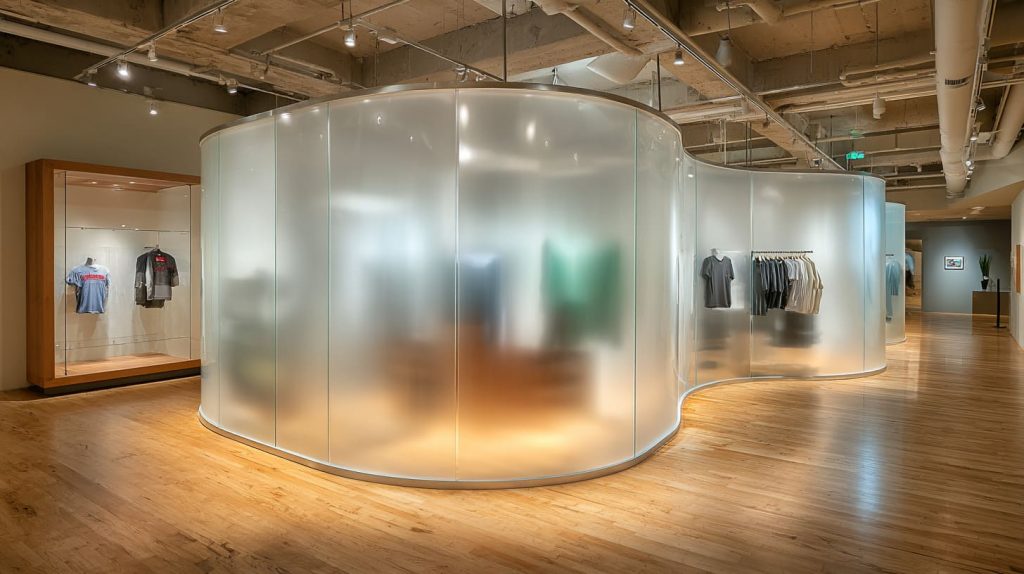
When I walk through a finished store or lobby and see a very smooth curve or a seamless glowing edge, I can often guess one thing before I see the drawings: plastic is hiding there somewhere.
Why plastic enables complex shapes and forms
Because many plastics are thermoplastics, we can heat them and shape them in ways that feel impossible with glass or wood.
Common processes include:
- Thermoforming – heating sheets and forming them over a mold
- Line bending – creating clean, sharp bends in sheets
- Molding and casting – making complex 3D parts
- CNC routing and laser cutting – precise cutting of detailed patterns
Here is how different processes support design goals:
| Process | Design Effect | Typical Use Case |
|---|---|---|
| Thermoforming | Smooth curves, shells, domes | Light diffusers, covers, art panels |
| Line bending | Clean edges, folded shapes | Display stands, brochure holders |
| CNC routing | Precise holes, slots, grooves | Mounting details, cable passes |
| Laser cutting | Sharp edges, fine patterns | Logos, lettering, decorative grills |
With acrylic, I can take a flat sheet and turn it into:
- A box with seamless edges
- A curved front panel
- A light guide with internal reflection design
All from the same base material.
What often surprises buyers is how integrated we can make functions. For example, instead of metal frame + glass + separate brackets, we may create one acrylic structure with built-in supports. This saves assembly time and reduces part count.
Case examples: custom displays, panels, and details
Let me give you a simple pattern I see in real orders:
- A brand wants a custom cosmetic display with curved front edges and logo panels.
- The designer sketches it in 3D software with no visible joints.
- We translate that into bent acrylic pieces, some slots, and hidden screws.
We might use a structure like this:
| Part | Material | Process | Purpose |
|---|---|---|---|
| Main body | Acrylic | CNC + bending | Holds products and defines shape |
| Front logo panel | Acrylic | Laser cut + print | Branding surface |
| Light diffuser plate | Acrylic | Satin finish | Softens LED strip light |
On paper it looks simple; on the factory floor it means careful control of heat, bend angle, and polishing.
When I see a drawing with too many separate parts, I often suggest using the freedom of plastic shapes to merge two or three parts into one. This reduces assembly mistakes and looks cleaner.
Customization and branding advantages
Modern brands want more than structure. They want recognition. Plastic helps a lot here because we can control:
- Color – solid, translucent, transparent, or custom mixed
- Finish – glossy, matte, frosted, textured
- Light behavior – glowing edges, backlit panels, diffused fronts
Some common branding techniques with acrylic and other plastics:
| Technique | What we do | Result for the brand |
|---|---|---|
| Laser engraving | Etch logos or patterns into surface | Subtle, permanent marking |
| UV printing | Print full-color graphics on panels | Strong visuals, flexible for campaigns |
| Inlay or layering | Combine colored layers | Depth and premium feel |
| Edge lighting | Add LEDs along edges | Glowing logo or line of light |
For project-based work, we can tune the same basic design for different markets:
- Change color to match local branding
- Adjust text language on printed parts
- Modify size to suit different store layouts
When I review branding projects, I do not only check if the logo is clear. I also ask: “Will this branding still look good after two years of cleaning, shipping, and re-installation?” That question often leads us to choose better finishes or thicker material, even if the drawing looks “okay” at first glance.
Once teams see how flexible plastic is for form and branding, they usually start thinking about practical side effects like weight and installation.
Lightweight nature and structural efficiency
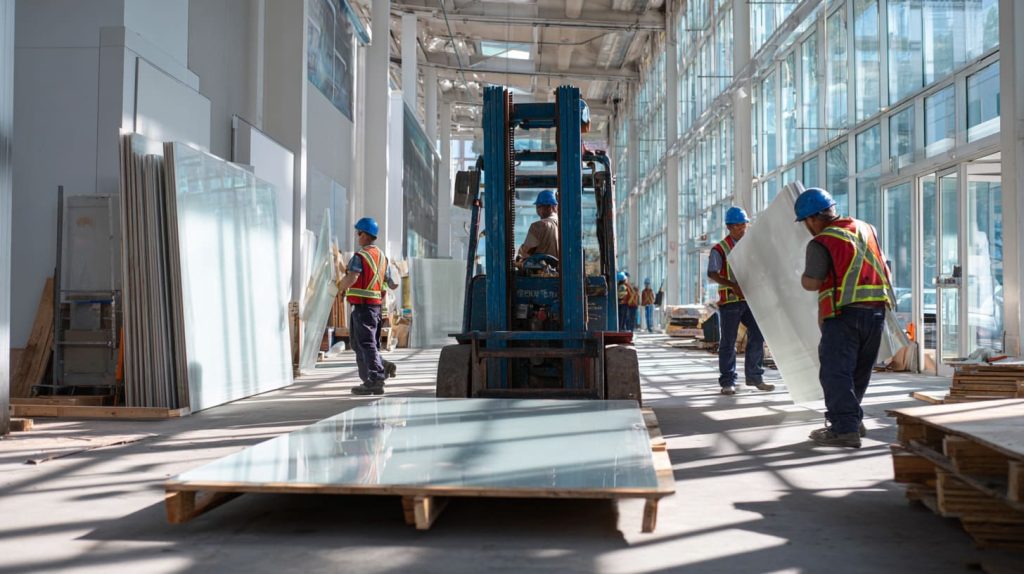
One of the most “boring” numbers on a data sheet is weight per square meter. But that number quietly decides shipping costs, installation pain, and even safety on site.
How weight reduction benefits construction projects
Plastic’s low weight is not just a nice-to-have. It changes how the whole project moves.
Compare typical densities:
| Material | Approx. Density (g/cm³) | Relative Comment |
|---|---|---|
| Acrylic | ~1.18 | About half of glass |
| Polycarbonate | ~1.20 | Similar to acrylic |
| Glass | ~2.50 | Much heavier |
| Aluminum | ~2.70 | Heavier than plastics |
| Steel | ~7.80 | Heavy structural material |
This lower weight means:
- Easier transportation – more panels per shipment, fewer people needed to move them
- Less load on walls and ceilings – important in old buildings or light structures
- Lower risk when handling – especially in tight indoor spaces
For retrofit projects, weight can decide if a design is possible or not. Old walls, existing fixtures, or limit loads on ceilings often do not allow heavy materials.
Advantages for retrofitting and interior applications
Here is how weight plays out in real work:
| Situation | Heavy Material Issue | Plastic Benefit |
|---|---|---|
| Old building interior | Limited load on walls | Acrylic or PC panels reduce load |
| Shopping mall overnight installation | Short time window, small teams | Light panels install faster |
| High displays above people’s heads | Safety and support complexity | Lower weight reduces hardware and risk |
On some interior jobs, installers share something very simple with me: they feel much more relaxed working with plastic panels at height than with glass, because they know if they slip, the damage is smaller.
Impact on labor and installation costs
Labor is often a bigger cost than material. Lightweight plastic helps here in quiet ways:
- Fewer workers needed to lift panels
- Smaller equipment (ladders instead of lifts in some cases)
- Faster alignment and fixing
We can summarize the effect like this:
| Cost Element | Heavy Materials (Glass/Metal) | Plastics (Acrylic/PC) |
|---|---|---|
| Number of installers | Higher | Lower in many cases |
| Time per panel | Longer | Shorter |
| Need for machinery | Frequent | Sometimes reduced or not needed |
Before I quote a job, I often imagine the installer standing on a ladder with a panel in hand. If that picture looks risky or painful with a heavy material, I know a lighter plastic will not only save money but also reduce the chance of mistakes on site.
Once weight and handling feel under control, most teams start asking how long the material will actually last in real environments.
Durability and resistance advantages
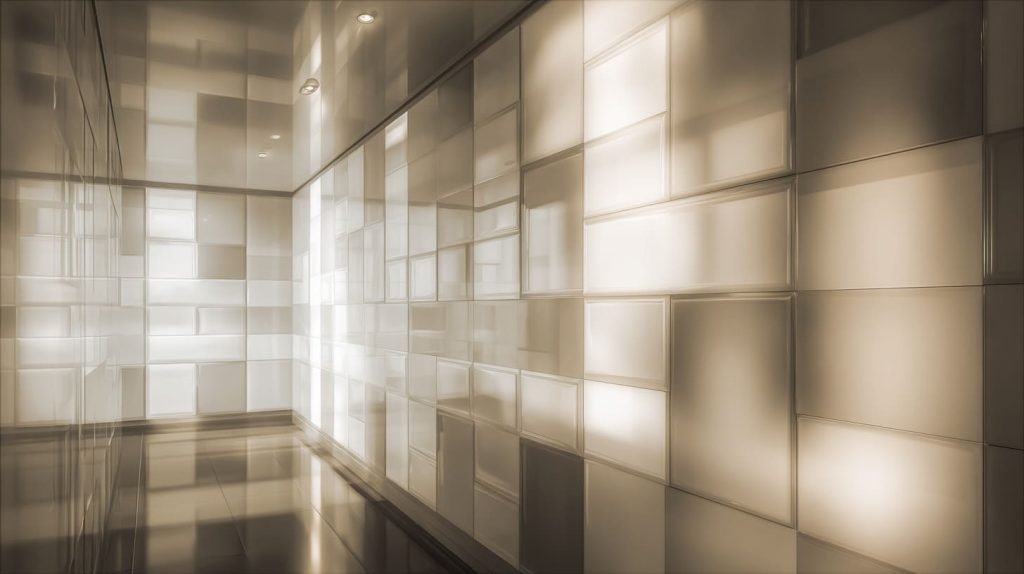
Plastic has a strange reputation. Some people think it is weak because they imagine thin packaging. Others think it is almost indestructible. The reality, as always, sits in between.
Resistance to moisture, corrosion, and chemicals
Compared with wood and many metals, the right plastic has strong resistance to water, many chemicals, and corrosion.
| Material | Moisture Behavior | Corrosion / Rot Risk |
|---|---|---|
| Wood | Swells, warps, may rot | High in wet conditions |
| Carbon steel | Rusts without protection | High without coating |
| Stainless steel | Good but not perfect in all chem. | Medium to low |
| Acrylic | Stable in normal humidity | No rust or rot |
| PVC | Very good in moisture and many chem | No rust |
This is why I see plastics used often in:
- Bathrooms and kitchens – panels, shelves, light covers
- Food retail – display covers, sneeze guards
- Outdoor signage – faces, letters, light boxes
Of course, not every plastic is safe in every chemical environment. Some solvents attack acrylic, for example. So we still need to match material to environment.
Typical applications: bathrooms, kitchens, retail, outdoor signage
A simple mapping looks like this:
| Area | Common Risks | Suitable Plastics (examples) |
|---|---|---|
| Bathroom | Steam, cleaning chemicals | Acrylic panels, PVC trims |
| Kitchen | Grease, cleaning, bumps | Acrylic or PC fronts, ABS parts |
| Retail front | UV, rain, cleaning | Acrylic or PC sign faces |
| Industrial area | Dust, moisture, some chemicals | PC covers, HDPE protective panels |
Weather and UV resistance in modern plastics
Older plastics often turned yellow or brittle under sun. Modern materials can do much better, if we choose and process them correctly.
- UV-stabilized acrylic and polycarbonate keep clarity longer
- Special coatings improve scratch and UV resistance
- Correct thickness helps manage stress from temperature changes
Here is a rough view:
| Material Type | Outdoor UV Performance | Notes |
|---|---|---|
| Standard acrylic | Good, but can yellow over long time | Better with UV grade |
| UV-grade acrylic | Very good | Common for sign faces |
| Standard polycarbonate | Can yellow without UV layer | Needs UV protection for outdoor use |
| Coated polycarbonate | Improved UV and scratch | Used in more demanding conditions |
In my own decisions, I pay close attention to where cleaning staff will spray chemicals and where sunlight will sit for hours every day. These two things quietly destroy many installations that look perfect on day one.
When durability questions are answered, most designers become more interested in the visual side: how the material controls light and mood.
Optical clarity and aesthetic benefits

One reason I love working with acrylic is very simple: it behaves like controlled light. A small change in polish, thickness, or edge treatment can change the whole feeling of a space.
Why transparency and light transmission matter
For many projects, the key isn't just “clear or not clear.” It is:
- How light passes through
- How edges glow or stay quiet
- How reflections behave
Compare basic optical properties:
| Property | Acrylic | Glass | Polycarbonate |
|---|---|---|---|
| Light transmission | ~92% (very high) | ~90% | Slightly lower |
| Edge appearance | Can be high-gloss | Greenish tint edge | Less sharp |
| Weight | Low | High | Low |
With acrylic we can:
- Make edge-lit panels that glow like lines of light
- Create frosted surfaces that hide LED spots and give a soft wash
- Produce clear partitions that feel open but still protect or separate
Light diffusion and edge-polished effects
Different surface treatments give different moods:
| Treatment | Visual Effect | Typical Use Case |
|---|---|---|
| High-gloss clear | Sharp reflections, premium look | Luxury displays, signage faces |
| Satin / frosted | Soft light, less reflection | Light diffusers, privacy panels |
| Edge-polished | Bright glowing edges with light | Edge-lit signs, decorative strips |
| Textured | Broken reflections, interesting depth | Feature walls, decorative panels |
When we work on light boxes for brands, we often combine:
- Clear acrylic for front protection
- Diffuser acrylic behind graphics
- Mirrored or white acrylic inside to manage light
On drawings these layers look like simple rectangles. In real life they control how much attention a customer gives to that display.
Modern and clean visual appeal
Plastic, especially acrylic, fits very naturally into minimalist and modern interiors. It helps create:
- Clean lines
- Light forms
- Floating effects
Typical uses include:
- Clear or tinted guard panels in offices
- Transparent shelves that make products feel like they float
- Acrylic furniture elements combined with metal and wood
Here is a simple comparison of visual roles:
| Material | Visual Role in Design |
|---|---|
| Acrylic | Lightness, clarity, floating feel |
| Glass | Formal, solid, heavy premium feel |
| Metal | Structure, frame, contrast |
| Wood | Warmth, natural texture |
When I review a design, I do not only ask if it “looks beautiful” in the render. I ask: “Will people still enjoy looking at this surface when it is full of fingerprints, dust, and reflections from the real lighting?” That small question often pushes us to choose better finishes or add small details like hand-friendly edges.
Once the look and light feel right, the next question is almost always about money and long-term cost.
Cost efficiency over the project lifecycle

Many people first choose plastic because they think it is “cheaper.” Sometimes that is true. Sometimes it is not. The full picture is in fabrication and lifetime cost, not just in the price per sheet.
Initial material and fabrication cost advantages
At raw material level, acrylic and other plastics often sit between wood and glass/metal in cost, depending on grade. The bigger savings usually come from processing and assembly.
| Stage | Glass/Metal | Plastic (e.g., acrylic) |
|---|---|---|
| Cutting | Slower, special tools | Fast CNC or laser cutting |
| Shaping | Bending, welding, more steps | Heat bending, bonding, simpler |
| Edge finishing | Grinding, polishing | Flame or buff polishing possible |
| Assembly | Often many parts | Can integrate functions in one part |
Plastic is also friendly to small and medium batches, which is important for project-based work with custom designs.
Suitability for small-batch and large-batch production
| Batch Size | Challenge | How Plastic Helps |
|---|---|---|
| 1–50 sets | Tooling cost for other materials | CNC and laser allow direct fabrication |
| 50–500 sets | Need repeatable quality | Stable jigs, repeatable bending steps |
| 500+ sets | Efficiency and speed | Combine CNC, laser, and fixtures |
Because we run 5 production lines at Feilong Acrylic, I see a clear pattern: the more we can standardize a process, the faster each batch runs, and the more stable the cost becomes for OEM and custom project customers.
Long-term maintenance and replacement savings
Cost does not stop after installation. Over years, panels will be:
- Cleaned
- Knocked by carts or people
- Exposed to light and dust
Plastic offers several long-term advantages:
- Lower breakage risk compared to glass
- Polishing and refurbishment for many scratches
- Easier replacement of modular parts
Here’s a basic view:
| Factor | Glass | Acrylic / Plastic |
|---|---|---|
| Breakage rate | Higher in busy areas | Lower, more impact resistant |
| Replacement cost | Higher handling and risk | Lower handling cost |
| Refurbish options | Limited | Polishing, re-finishing possible |
Before I tell a customer that a solution is “cheap,” I quietly ask myself: “Will they still feel it is cheap when they replace parts for the third time?” If the answer is no, then it is not a good solution, even if the first invoice looks friendly.
As more teams care about long-term cost, they also care more about environmental impact and sustainability.
Sustainability and recyclability considerations
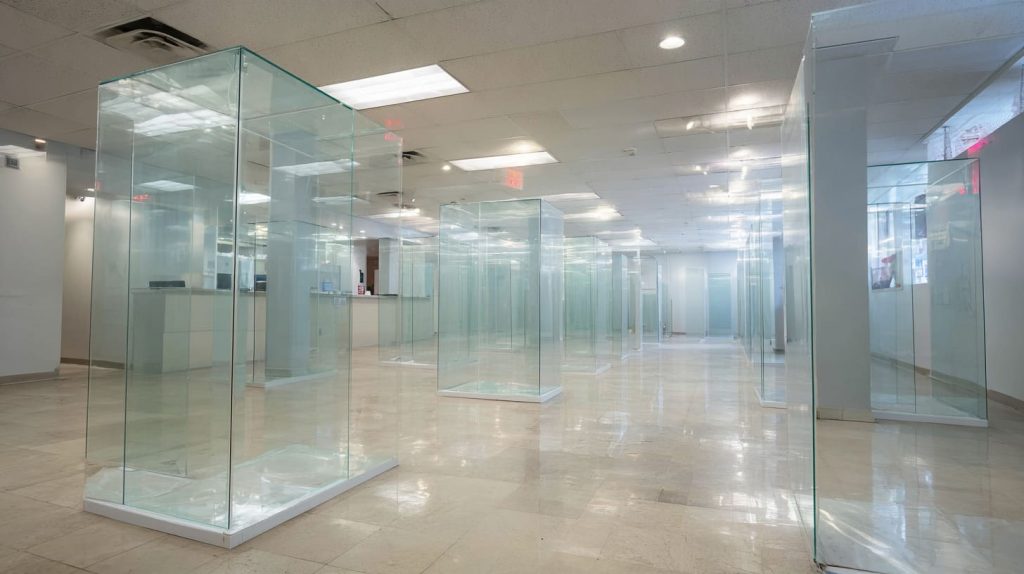
Plastic and sustainability often appear in the same sentence in a negative way. But in building and display projects, the picture is more nuanced. Here, design life, waste rate, and recyclability matter a lot.
Environmental impact of modern plastic materials
Modern thermoplastics like acrylic and polycarbonate can be:
- Reprocessed or recycled under proper systems
- Cut and nested efficiently to reduce offcuts
- Used for many years before replacement
Key factors:
| Aspect | How Plastic Performs |
|---|---|
| Material usage | Sheets can be nested to reduce waste |
| Service life | Long when designed for correct environment |
| Recyclability | Possible for many thermoplastics |
| Transport impact | Lower weight reduces shipping energy |
Of course, if a product is used only for a few days and then thrown away, plastic is a poor environmental choice. But long-life acrylic display structures or building elements are very different from single-use items.
How responsible manufacturing improves sustainability
At Feilong Acrylic we pay close attention to:
- Material selection – high-transparency, certified eco-friendly acrylic
- Cutting optimization – nesting parts to reduce scrap
- Re-use of offcuts where possible for small parts or samples
A simple view:
| Step | Sustainable Action |
|---|---|
| Material selection | Use certified, stable materials |
| Cutting and CNC | Use software to nest parts and reduce offcuts |
| Finishing | Optimize processes to lower rework and rejects |
| Packaging | Fit parts efficiently, avoid unnecessary volume |
When I look at a project from a sustainability angle, I do not ask only “Is this plastic recyclable?” I ask something more direct: “Will this product live long enough, and be used often enough, to justify the material and energy we put into it?” That question usually leads to better designs, not just better labels.
After environmental questions, many engineers move back to basic safety and compliance issues, especially for public projects.
Safety and compliance advantages

When a project involves the public—shopping malls, airports, schools—conversations about plastic change. Now it is not only about look and cost. It is about what happens when someone pushes too hard, or when something goes wrong.
Impact resistance and safety performance
Compared with glass, many plastics offer much better impact resistance. This has two clear benefits:
- Reduced risk of sharp shards
- Better behavior under small hits or vandalism
| Material | Impact Behavior | Risk When Broken |
|---|---|---|
| Standard glass | Breaks, sharp fragments | High injury risk |
| Tempered glass | Breaks into small pieces | Lower but still sharp |
| Acrylic | Flexes and cracks, often stays in place | Lower risk, no sharp shards |
| Polycarbonate | Very high impact resistance | Hard to break, can dent |
Because of this, we often see acrylic or polycarbonate used for:
- Protective screens and guards
- Balustrade infills in some designs
- Machine guards and covers
Applications where safety is critical
Typical scenarios:
| Location | Safety Requirement | Suggested Material (example) |
|---|---|---|
| Cashier or reception area | Clear view + impact resistance | Acrylic or polycarbonate |
| Public display in corridor | Tough front, low injury risk | Acrylic with right thickness |
| Factory machine area | High impact, high visibility | Polycarbonate |
When I advise on safety, I often think not about the “average” user but about the worst day for that installation. A heavy trolley hits it, a child hangs on it, someone leans their full weight against it. If the material choice still feels safe in that picture, then we are close to the right decision.
Fire performance and regulation considerations
Fire performance is more complex. Different plastics behave differently in fire, and building codes vary by country and project type.
Key points:
- Some plastics are available in fire-rated grades
- Fire additives can change burning behavior and smoke production
- Correct installation (vents, spacing, backing materials) also matters
Basic comparison:
| Material | Fire Behavior (general) | Note |
|---|---|---|
| Standard acrylic | Burns, can drip | Fire-rated grades available |
| Polycarbonate | Burns, can self-extinguish in some grades | Check local code |
| PVC | Burns, produces smoke | Not for all interior uses |
| Metal | Non-combustible | But heats up in fire |
For any serious project, we work with the buyer and sometimes with local partners to:
- Check fire rating requirements for each area
- Select appropriate material grade
- Provide data sheets to support approval
On safety and compliance, I remind myself that the goal is not to “pass the inspection.” The goal is to keep people safe on a bad day, without killing the design. That mindset usually gives better choices than just chasing the minimum requirement.
Once safety is under control, many teams want to zoom back in on one star material: acrylic.
Why acrylic stands out among plastic building materials

In our factory, we touch many types of plastic, but acrylic (PMMA) takes a special place. It is not perfect for every job, but when clarity, surface quality, and clean edges matter, acrylic is often the quiet hero in the background.
Unique advantages of acrylic (PMMA)
Let me put acrylic next to other common plastics:
| Property | Acrylic (PMMA) | Polycarbonate | PVC / ABS |
|---|---|---|---|
| Clarity | Very high, glass-like | Good, slightly less | Lower, more opaque |
| Surface quality | Hard, polishable, very smooth | Softer, can scratch more easily | More “plastic” feel |
| Edge polishing | Excellent, can look like glass | Harder to get same effect | Limited |
| Stiffness | Good for panels | Tough, more flexible | Varies |
This mix of clarity, stiffness, and polishability makes acrylic ideal for:
- Display cases
- Sign faces and light boxes
- Interior panels and furniture details
- Architectural features that rely on light
From a processing point of view, acrylic also behaves well with:
- Laser cutting – clean, glossy edges
- CNC routing – precise shapes and recesses
- Bending – stable bends with the right heat control
Popular use cases in architectural and commercial projects
Some real-world patterns I see often:
| Project Type | Acrylic Role |
|---|---|
| Retail store fixtures | Shelves, risers, product display cases |
| Shopping mall signage | Backlit logos, wayfinding panels |
| Museum and gallery | Protective cases, object stands |
| Office and reception | Logo walls, reception counters, panels |
When a designer shows me a render with “floating product” or “soft glowing edge,” I know acrylic will probably be on the bill of materials.
When acrylic is the best choice—and when it is not
Acrylic shines in many uses, but it is not the answer to everything.
Acrylic is usually the best choice when:
- High clarity and premium surface feel are important
- Panels will be lit from behind or from the edge
- There is moderate impact, not extreme abuse
- Clean, polished edges are part of the design language
Acrylic may not be the best choice when:
- Impact loads are very high (polycarbonate might be better)
- Strong solvents will touch the surface regularly
- Very high working temperatures are involved
Simple comparison:
| Requirement | Better Choice |
|---|---|
| Highest clarity + nice edges | Acrylic |
| Maximum impact resistance | Polycarbonate |
| Harsh chemicals | Special plastics |
| Basic, hidden technical parts | PVC / ABS / HDPE |
When I guide a customer, I do not try to “push acrylic” everywhere, even though we are experts in it. I ask instead: “If this part fails, what will hurt more: the budget, the safety, or the brand image?” If the brand image and visual feel are the core, acrylic often wins. If safety or extreme abuse is the main risk, we may choose something else and use acrylic in less exposed areas.
After walking through all these angles—viability, design, weight, durability, look, cost, sustainability, safety, and acrylic’s special place—the final question becomes very personal: how do I connect all this in my own work and advice?
Conclusion

When I sit with a buyer like Jacky from Canada, and we look at a new building or display project, I do not see “plastic” as a single yes-or-no choice. I see a set of tools that can either solve problems or create them, depending on how wisely we use them.
Plastic is no longer a secondary material that we add only when the budget is tight. It earns its place because it can:
- Shape complex forms that are hard for glass or wood
- Keep weight under control and make installation safer
- Resist moisture and many chemicals better than traditional options
- Guide light and emotion through clarity, diffusion, and edge glow
- Support reasonable cost not just at purchase, but across the full life of the project
- Fit into real sustainability logic when designs are long-lived and production is efficient
- Deliver safety and compliance when we select the right grade and thickness
For me, the real test is simple: does the material help the project survive real life while still matching the design intent? When the answer is yes, plastic—and especially acrylic—usually plays an important role.
At Feilong Acrylic, I choose this way of working because I believe in solid, honest trade-offs. I do not think every problem has a plastic solution. I also do not think wood, metal, or glass are always better. Instead, I look at where each material can carry the load, protect the product, and support the story the designer wants to tell.
If you are planning a new project—maybe a custom display system, an interior feature wall, or branded acrylic components for your own products—and you want a second pair of eyes on material choices, feel free to reach out. I am happy to look at your drawings, ask a few uncomfortable but useful questions, and help you decide where plastic, and especially custom acrylic, really makes sense.
You can find me and my team at flacrylic.com. Bring your ideas, even if they are only sketches or rough thoughts. Together we can turn them into clear, practical, and long-lasting acrylic solutions that work not just on the first day, but for many years after.