Skip to content

This question shows up more often than people admit.
Not in textbooks. Not in meetings with big slides.
It shows up in emails. Short ones. Usually late in a project.
“Is acrylic actually plastic? Or is it more like glass?”
I’ve seen this confusion slow down drawings, pricing, and even tooling decisions. Designers think they agree. Buyers think they agree. Then one word—plastic—starts an argument.
This matters because acrylic looks honest. Clear. Calm. Premium.
And when a material looks that good, people stop questioning it.
Before we go deeper, I want to be clear about one thing. This article is not theory. It’s shaped by years of making acrylic parts that passed samples but failed in real use. That gap is where the truth usually sits.
And that brings us to the first real question.
Is Acrylic Actually a Plastic?

What acrylic is from a material science perspective
Yes. Acrylic is plastic.
But that sentence alone causes problems.
Acrylic is PMMA. Polymethyl Methacrylate.
That puts it firmly inside the plastic family. No debate there.
What makes it tricky is how different it feels compared to most plastics people know.
Here’s a simple way I explain it to buyers:
| Material Group | Common Feeling | Visual Expectation |
|---|---|---|
| ABS / PVC | Soft, dull | Industrial |
| PET / PETG | Flexible, light | Packaging |
| Acrylic (PMMA) | Hard, clear | Glass-like |
Acrylic breaks the mental rule people have about plastics.
It is rigid. It shines. It holds sharp edges.
That’s why people hesitate to call it plastic.
Why acrylic is often mistaken for glass
I’ve seen buyers label acrylic samples as glass in internal systems. More than once.
The reasons are simple:
- Light transmission is very high
- Edges polish like crystal
- Surface feels cold and hard
Here’s the comparison buyers often miss:
| Property | Acrylic | Glass |
|---|---|---|
| Weight | Light | Heavy |
| Impact behavior | Cracks | Shatters |
| Machining | Easy | Difficult |
| Repair | Possible | Almost none |
Acrylic looks like glass. But it behaves like plastic.
That mix is where most mistakes begin.
Acrylic vs glass: where the confusion starts
The term “acrylic glass” does real damage here.
Catalogs use it. Sales teams repeat it.
Then engineers inherit the confusion.
Once glass enters the conversation, expectations shift.
People expect scratch resistance. Heat resistance. Long-term hardness.
Acrylic cannot meet all of those expectations. And it never promised to.
When this misunderstanding shows up early, it’s harmless.
When it shows up after tooling, it gets expensive.
And once people accept acrylic is plastic, the next question always follows.
What Types of Acrylic Exist?

Cast acrylic vs extruded acrylic
This is where experienced buyers start paying attention.
Cast and extruded acrylic look similar.
They are not used the same way.
| Aspect | Cast Acrylic | Extruded Acrylic |
|---|---|---|
| Cost | Higher | Lower |
| Thickness tolerance | Loose | Tight |
| Surface quality | Better | Good |
| Stress resistance | Higher | Lower |
I’ve seen projects fail simply because extruded acrylic was chosen for a design that needed stress resistance.
Not because it was wrong material.
Because it was the wrong type.
Clear acrylic vs colored acrylic
Clear acrylic gets all the attention. Colored acrylic does the real work.
Pigments change behavior. Light moves differently. Heat builds faster.
| Type | Strength Impact | Typical Use |
|---|---|---|
| Clear | Baseline | Displays, covers |
| Translucent | Slight change | Light diffusers |
| Solid color | More stable | Trays, panels |
When buyers ignore this, cracks show up months later. Not during sampling.
Specialty acrylic types
These exist for a reason. But they cost more.
- UV-resistant acrylic for outdoor signs
- Anti-static acrylic for electronics
- Hard-coated acrylic for touch surfaces
The mistake is assuming “standard acrylic” covers all uses.
It doesn’t.
Once types are clear, properties come into focus.
What Are the Key Properties of Acrylic?

Optical properties
This is acrylic’s strength.
Light passes through cleanly.
Edges glow when polished.
| Property | Acrylic |
|---|---|
| Light transmission | ~92% |
| Clarity | Very high |
| Visual distortion | Low |
This is why retail loves it.
This is also why scratches hurt so much.
Mechanical properties
Acrylic is strong for its weight.
But it is not flexible.
| Comparison | Acrylic | Polycarbonate |
|---|---|---|
| Impact resistance | Medium | High |
| Scratch resistance | Medium | Low |
| Flexibility | Low | High |
Designers often overestimate impact strength because acrylic feels solid. That feeling lies.
Thermal and environmental properties
Heat is acrylic’s quiet enemy.
- Softening starts around 80–90°C
- Long heat exposure causes warping
- Outdoor UV without protection leads to yellowing
Acrylic works best when heat is predictable. Not constant.
Machining and fabrication behavior
This is where acrylic wins hearts.
- Laser cutting is clean
- CNC edges polish well
- Bending is controllable
That ease makes designers bold. Sometimes too bold.
I’ve seen designs that could only survive as drawings.
Which brings us to comparison.
How Does Acrylic Compare with Other Plastics?

Acrylic vs polycarbonate
This choice defines the product’s future.
| Factor | Acrylic | Polycarbonate |
|---|---|---|
| Clarity | Better | Good |
| Impact | Lower | Much higher |
| Cost | Lower | Higher |
Acrylic is for seeing.
Polycarbonate is for surviving.
Acrylic vs PET / PETG
PETG is forgiving. Acrylic is strict.
| Factor | Acrylic | PETG |
|---|---|---|
| Scratch resistance | Higher | Lower |
| Flexibility | Low | High |
| Finish quality | Better | Softer |
Many buyers choose PETG for safety, then regret the look.
Acrylic vs PVC and ABS
This is appearance versus function.
PVC and ABS hide scratches better.
Acrylic shows everything.
That honesty is either a strength or a problem.
And honesty leads to use cases.
What Are the Common Uses of Acrylic?

Retail and commercial displays
This is acrylic’s natural home.
- Trays
- Stands
- Showcases
Retail forgives careful handling. Acrylic rewards it.
Home and lifestyle products
Organizers and frames work well.
Furniture parts need caution.
People live harder than showrooms.
Industrial and technical applications
Covers. Guards. Panels.
Only when impact is controlled.
Only when heat is managed.
Branding and visual merchandising
Acrylic sells before words do.
That visual pull explains why buyers keep choosing it—even after problems.
But choice needs limits.
When Is Acrylic a Good Choice — and When Is It Not?

Situations where acrylic performs best
- Indoor environments
- Visual-first products
- Light contact use
This is where acrylic shines.
Situations where acrylic causes problems
- Repeated impact
- High heat
- Rough cleaning
These failures feel sudden. They are not.
Design mistakes buyers often make
| Mistake | Result |
|---|---|
| Too thin | Cracking |
| No edge polish | Stress points |
| Ignoring handling | Scratches |
Acrylic does not forgive shortcuts.
That’s why specification matters.
How Designers and Buyers Should Specify Acrylic Correctly

Choosing the right type of acrylic
Ask one question first:
What will touch this part?
If the answer is “people” or “tools,” choose carefully.
Specifying thickness, tolerance, and finish
Never assume.
Write it down.
Confirm samples match drawings.
Communication tips when working with acrylic factories
Experienced buyers do three things:
- Ask which acrylic type is used
- Request stress tests for bent parts
- Review packaging, not just parts
Most problems come from silence, not mistakes.
And that brings us to the final thought.
Conclusion
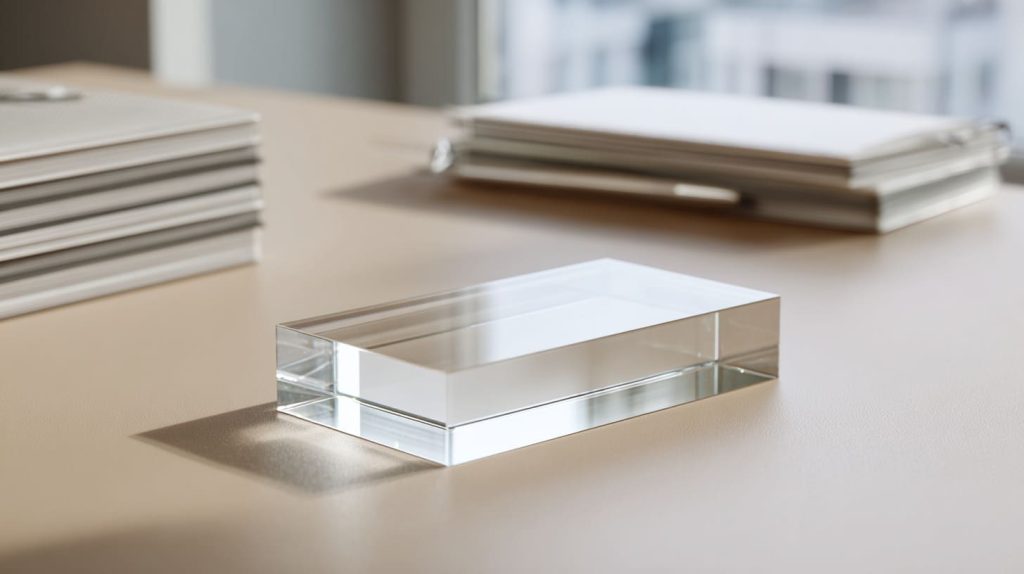
Acrylic is plastic.
But it is not a simple one.
It behaves like glass. It fails like plastic.
That mix creates beauty—and risk.
When designers and buyers understand the types, properties, and limits, acrylic becomes reliable. When they don’t, it becomes confusing and fragile.
If you are planning a custom acrylic product and want a second set of eyes before samples or tooling, I’m always open to that conversation. One clear discussion early can save months later.