Skip to content

Acrylic tolerances can look innocent on a drawing.
A small number sits beside a dimension. Maybe it says ±0.1 mm. Maybe ±0.05 mm. It feels clean. It feels professional. It feels safe.
But in real production, that tiny number can become a loud problem.
I have seen acrylic display projects where the buyer wanted every part to be “as precise as possible.” At first, I understood the thinking. Nobody wants loose panels. Nobody wants crooked boxes. Nobody wants a display stand that looks like it was made in a hurry.
But acrylic is not metal. It does not behave like aluminum. It does not forgive stress like some other materials. It moves with temperature. It reacts during cutting, polishing, bonding, packing, and shipping. And when a drawing asks acrylic to behave like a machined metal part, the factory floor can become a battlefield.
The tricky part is this: tighter tolerance does not always mean better quality.
Sometimes it means higher cost.
Sometimes it means slower production.
Sometimes it means more rejected parts.
Sometimes it even means worse assembly.
When I review an acrylic project, I do not ask, “How tight can we make it?” I ask, “Which dimensions truly control the function, and which ones only look important on paper?”
That one question saves a lot of money, time, and frustration.
For acrylic manufacturing, the best tolerance is not always the tightest tolerance. The best tolerance is the loosest tolerance that still protects the product’s real function, appearance, and assembly.
That sounds simple. But many acrylic projects go wrong because people forget it.
So let’s talk about when tight acrylic tolerances help—and when they quietly become a production liability.
Acrylic can be beautiful, clear, and sharp. But if we force it into the wrong tolerance thinking, even a simple display box can turn into a small monster with polished edges.
Why Do Buyers Often Request Extremely Tight Acrylic Tolerances?

Many buyers request tight acrylic tolerances because tight numbers feel like control.
I understand this very well. If you are a product designer or purchasing manager, you do not want to explain a bad batch to your boss. You do not want parts that fail during assembly. You do not want a supplier to say, “This is normal,” when the product clearly does not look right.
So the drawing becomes stricter.
The tolerance becomes smaller.
The buyer feels safer.
But safety on paper is not always safety in production.
When I look at a tolerance request, I first try to understand the fear behind it, because many tight tolerance requirements are not engineering decisions; they are protection against previous bad experiences.
Precision is often associated with quality
Many engineers and buyers connect precision with quality. I do not blame them. In many industries, this is true.
If you are making metal shafts, precision matters. If you are making injection mold inserts, precision matters. If you are making mechanical parts that must rotate, slide, or lock into another component, precision matters a lot.
But acrylic display products are often different.
Acrylic displays, boxes, frames, organizers, and cabinets are usually a mix of:
- Visual appearance
- Structural stability
- Assembly fit
- Glue bonding
- Edge quality
- Packaging protection
- End-user handling
A dimension may look important on the drawing, but it may not affect the customer experience.
For example, if an acrylic cosmetic display is 300 mm wide, will the user notice if the width is 300.3 mm instead of exactly 300.0 mm? Usually, no.
But if the slot for a product bottle is too tight, the bottle may not fit. That dimension matters.
This is the difference between general precision and functional precision.
| Dimension Type | Example | Does It Usually Need Tight Tolerance? | Why |
|---|---|---|---|
| Overall display width | 300 mm countertop display | Usually no | Small variation is not easy to notice |
| Product slot width | Lipstick or bottle holder opening | Yes | Product must fit smoothly |
| Door gap | Acrylic cabinet with hinged door | Yes | Poor gap affects opening and appearance |
| Shelf height | Multi-layer display shelf | Sometimes | It depends on product clearance |
| Decorative logo position | Printed brand mark | Sometimes | Visual alignment matters more than part size |
A buyer may request tight tolerance on everything because it feels professional. But real professionalism is knowing where precision matters and where it does not.
Drawings frequently inherit unrealistic tolerances
Many acrylic projects start from CAD drawings. CAD is useful, but it can also create trouble.
A designer may use a standard tolerance block from another project. Maybe the old project was metal. Maybe it was CNC aluminum. Maybe nobody checked whether that tolerance made sense for acrylic sheet fabrication.
Then the drawing travels to the acrylic supplier.
The supplier sees ±0.05 mm on many dimensions.
The buyer sees a clean drawing.
The problem begins quietly.
Acrylic sheets already have raw material variation. Cutting creates heat. Polishing removes material. Bonding adds stress. Packing and transport also matter. So when a drawing demands metal-level tolerance from acrylic sheet products, the factory may need extra machining, extra inspection, and extra sorting.
That cost does not disappear.
It enters the quotation.
Or worse, it enters the production delay.
Fear of assembly problems drives tighter specifications
Some buyers use tight tolerances as a shield. They think, “If I make the tolerance strict, the supplier must produce better parts.”
I understand the idea.
But this method is risky.
A tight tolerance does not automatically solve poor design, poor material selection, or poor assembly planning. It may only make the supplier reject more parts. It may also make the price higher without improving the final product.
For example, imagine an acrylic display box with a sliding lid. If the channel is too narrow, the lid sticks. If the channel is too loose, the lid shakes. The solution is not to put tight tolerance on every external dimension. The solution is to control the sliding channel, test the real lid movement, and allow enough clearance for normal acrylic variation.
| Buyer Concern | Common Reaction | Better Response |
|---|---|---|
| Parts may not fit | Tighten all tolerances | Identify only fit-critical dimensions |
| Display may look uneven | Tighten all visible dimensions | Define visual acceptance standards |
| Supplier may cut corners | Add strict tolerance notes | Use samples, inspection, and clear QC photos |
| Assembly may fail | Reduce tolerance everywhere | Review stack-up and bonding process |
| End customer may complain | Demand “perfect size” | Define what the user can actually notice |
This is where acrylic tolerance becomes more than a number. It becomes a conversation about real use.
And once we understand why buyers ask for tight tolerances, we need to look at the material itself. Acrylic has its own personality. A clear one, yes—but still a personality.
Why Does Acrylic Behave Differently from Metal?
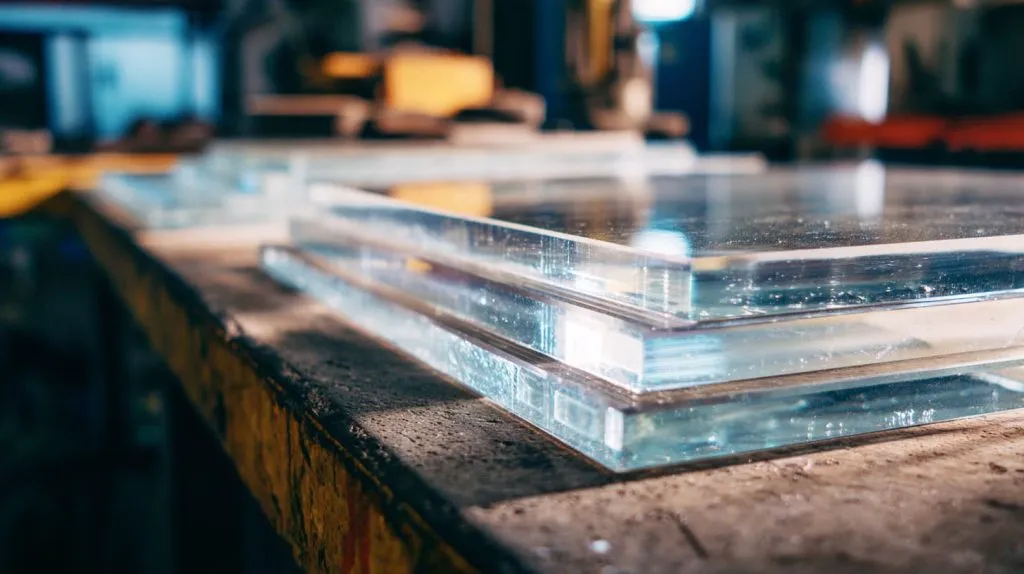
Acrylic is a plastic material. It is clear, strong enough for many display applications, and beautiful when polished well. But it does not behave like metal.
Metal often feels stable and predictable. Acrylic feels more alive. It reacts to heat. It holds stress. It can bend slightly. It can crack if forced. It can change shape in ways that surprise people who only see the final glossy surface.
I usually treat acrylic like a material with memory, because cutting, bending, bonding, and polishing can all leave small signs inside the product, even when the surface looks perfect.
Acrylic expands and contracts with temperature
Acrylic expands and contracts when temperature changes. This matters in production and in real use.
A part cut in a warm workshop may measure slightly differently in a cold warehouse. A display used near strong light may behave differently from one used in a cool retail store. A product shipped from China to Canada may see temperature changes during storage, container transport, and final delivery.
For many display products, this is not a big issue. But when the tolerance is too tight, even normal expansion can create problems.
Imagine a clear acrylic panel that must fit inside a frame. If the fit is too tight, temperature expansion may cause stress. The panel may bow. It may press against the frame. Over time, small cracks may appear near corners or holes.
That is not poor material only. It can be poor tolerance planning.
Material stress affects dimensional stability
Acrylic can carry internal stress.
Laser cutting can create heat along the edge. CNC machining can create local stress. Flame polishing can change the edge condition. Bonding can pull parts slightly during curing.
This is why a freshly cut part may not tell the whole story.
A part may measure correctly after cutting. Then after bonding, it may shift slightly. After assembly, the whole product may no longer sit flat. That is especially common in box structures, cabinets, trays, and display stands with several connected panels.
| Process | Possible Effect on Acrylic | Tolerance Risk |
|---|---|---|
| Laser cutting | Heat-affected edge | Edge stress, slight size change |
| CNC routing | Tool pressure and heat | Small deformation or burrs |
| Diamond polishing | Material removal | Final size may change |
| Flame polishing | Heat on edge | Stress or slight distortion |
| Solvent bonding | Pulling during curing | Assembly shift |
| Bending | Heat forming variation | Angle and size deviation |
Acrylic is not difficult to work with. But it needs respect.
If the drawing ignores process effects, the tolerance becomes a trap.
Sheet manufacturing itself introduces variation
Acrylic sheet is not born perfectly uniform.
Cast acrylic and extruded acrylic can have different thickness behavior. Cast acrylic often has more thickness variation. Extruded acrylic can be more consistent in some ways, but it may have other limits depending on the application.
A buyer may specify 5 mm acrylic. But the real sheet may not be exactly 5.00 mm everywhere. It may be slightly thicker or thinner within normal material tolerance.
This matters when the design depends on sheet thickness.
For example:
- Slots for tab-and-slot assembly
- Layered acrylic structures
- Sliding channels
- Fitted lids
- Inserted panels
- Multi-layer display risers
If the drawing assumes perfect sheet thickness, assembly can become painful.
| Design Feature | Why Sheet Variation Matters | Safer Design Thinking |
|---|---|---|
| Slot connection | Sheet may not fit if slot is too tight | Add reasonable clearance |
| Box lid | Lid may stick or shake | Test real movement with sample |
| Shelf groove | Panel may not insert smoothly | Match groove to actual sheet batch |
| Layered display | Height may change slightly | Allow visible but controlled tolerance |
| Hinged door | Gap may shift | Control hinge position and door clearance |
This is why I never see acrylic tolerance as only a drawing issue. It is a material issue, a process issue, and a real-use issue.
Now here comes the painful part. The problem does not always show up during sampling. Sometimes the sample looks beautiful. Then mass production starts, and the tolerance monster wakes up.
When Do Tight Acrylic Tolerances Start Creating Production Problems?
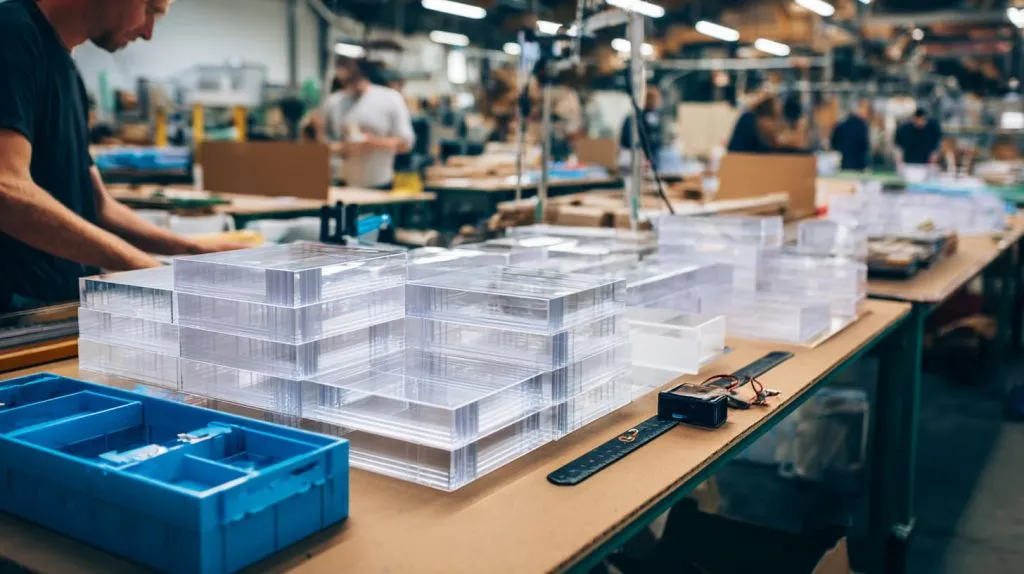
Tight tolerances become a production problem when the factory must spend more time fighting the tolerance than building the product.
This can happen slowly.
At first, the sample is acceptable. The buyer approves it. Everyone feels good. Then the order moves to 500 pieces, 1,000 pieces, or more. Suddenly, small variations appear everywhere.
A few parts are too large.
A few parts are too small.
A few parts need rework.
A few parts get rejected.
Then the production schedule starts to stretch.
The moment I get nervous is when a tolerance is tight but nobody can explain what product failure it prevents.
Higher rejection and scrap rates
Every manufacturing process has variation. This is true for acrylic too.
If the tolerance window is reasonable, most parts pass. If the tolerance window is too narrow, many good-looking and functional parts may fail inspection.
This creates scrap.
Scrap is not just wasted material. It is wasted cutting time, polishing time, machine time, labor time, and packing preparation.
For acrylic products, scrap can hurt more than people expect because the product may already have gone through several steps before the issue is found.
A panel may be cut, polished, printed, and bonded before someone notices the final assembly is slightly outside tolerance. At that point, the cost is already inside the part.
| Problem Stage | What Happens | Cost Impact |
|---|---|---|
| Cutting stage | Part is outside tolerance | Material and machine time wasted |
| Polishing stage | Size changes after edge finishing | Rework or rejection |
| Printing stage | Logo position conflicts with dimension | Printed part may be scrapped |
| Bonding stage | Final assembly shifts | Whole product may be rejected |
| Final inspection | Product looks usable but fails drawing | Cost rises without real value |
This is why I prefer tolerance planning before production, not after rejection.
Longer machining and inspection times
Tighter tolerance needs tighter control.
That often means slower cutting speed, extra CNC work, more fixtures, more measuring, and more inspection records.
For a few prototype pieces, this may be acceptable.
For mass production, it can become expensive.
If one acrylic box has five panels, and each panel has several tight dimensions, inspection work can multiply quickly. A worker may need to check every critical edge, slot, hole, and gap. If the drawing does not separate critical dimensions from normal dimensions, inspection becomes heavy and slow.
That delay may not look dramatic in one piece.
But it becomes painful in 1,000 pieces.
Production bottlenecks during scaling
Many buyers approve a prototype and assume mass production will behave the same way.
I wish it were always that easy.
A prototype is often made slowly. A skilled worker may adjust it by hand. The best material sheet may be selected. More care may be spent on small details.
Mass production is different.
Mass production needs repeatability. It needs stable fixtures. It needs clear acceptance standards. It needs a tolerance range that allows real production to flow.
| Stage | Prototype Reality | Mass Production Reality |
|---|---|---|
| Material selection | Best sheet may be chosen | Normal batch variation appears |
| Worker attention | Senior worker may handle it | Several workers may join production |
| Time per piece | More flexible | Must be controlled |
| Adjustment | Hand fitting may happen | Hand fitting every piece is too costly |
| Inspection | Few parts checked deeply | Many parts need practical QC rules |
If a tolerance only works when one senior worker slowly adjusts every part, it is not a production tolerance. It is a handmade rescue plan.
And acrylic production should not depend on rescue plans.
The next question is even more important. Tight tolerances do not only affect production. They also affect assembly. And assembly is where many beautiful drawings meet real life and lose the argument.
How Do Tight Tolerances Affect Assembly Performance?
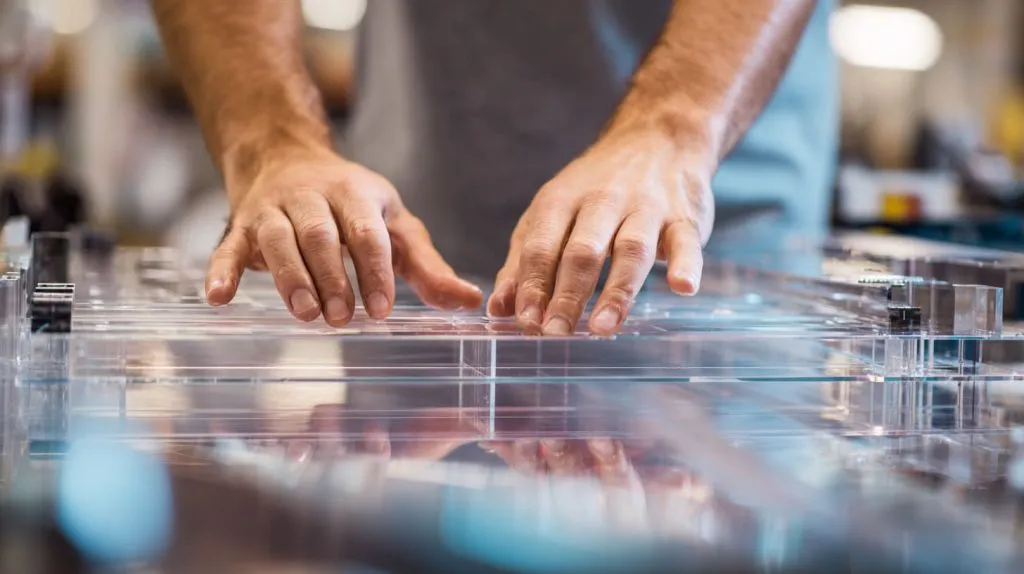
Assembly is where acrylic tolerance becomes physical.
A drawing can say two parts should fit. But a worker must actually put them together. A lid must slide. A shelf must sit level. A door must close. A glued corner must stay clean. A customer must use the product without fighting it.
Tight tolerance can help assembly when used correctly.
But it can also make assembly worse.
For me, the real test is not whether a part measures nicely on the table; the real test is whether the product assembles smoothly without stress, force, or ugly adjustment marks.
Parts may become difficult to assemble
When acrylic parts are too tightly fitted, assembly can become stiff.
This is common in tab-and-slot designs, acrylic boxes, display stands, and fitted covers. If the clearance is too small, the worker may need to push harder. Acrylic does not enjoy being forced. It may crack near corners, holes, or narrow sections.
Acrylic cracking is especially annoying because it can appear late.
A part may survive assembly. Then a small crack appears after packing. Or after shipping. Or when the customer opens the box.
That is the kind of problem nobody wants to discuss on a Monday morning.
| Assembly Situation | Risk When Tolerance Is Too Tight | Better Design Choice |
|---|---|---|
| Tab fits into slot | Hard insertion, cracking | Add practical clearance |
| Lid slides into groove | Sticking or scratching | Test with real material thickness |
| Door closes into frame | Door rubs or does not close | Control gap, not only panel size |
| Shelf inserts into side panel | Stress at connection point | Use tolerance stack-up review |
| Screw hole alignment | Hole mismatch | Add slight clearance where possible |
Tight fit feels strong. But in acrylic, a little breathing room can protect the product.
Adhesive bonding can become less reliable
Many acrylic products use solvent bonding or adhesive bonding.
Some buyers believe perfect contact creates the strongest bond. That is not always true.
Bonding needs suitable contact, clean edges, proper surface condition, and controlled process. If parts are too tight or under stress before bonding, the joint may look clean at first but become weak or cracked later.
Acrylic bonding also needs room for process reality.
A worker must position parts. The adhesive must flow. The parts must stay stable while curing. If the design allows no forgiveness, small shifts can ruin the final appearance.
Acrylic bonding is a bit like cooking with sugar syrup. It looks simple from far away, but timing, pressure, surface, and small movement all matter.
Stack-up tolerance problems increase
Stack-up tolerance means small variations from several parts add together.
This is a big issue in acrylic cabinets, boxes, display cases, and multi-layer organizers.
One panel may be only 0.2 mm off. Another panel may be 0.3 mm off. A shelf groove may shift slightly. A door may have a little extra width. Alone, each variation seems small. Together, they can create a visible gap or assembly problem.
| Product Type | Stack-Up Risk | What Usually Needs Control |
|---|---|---|
| Acrylic cabinet | Door gap becomes uneven | Frame size, hinge position, door clearance |
| Display box | Lid fit becomes too tight | Inner opening and lid movement |
| Cosmetic organizer | Drawers may stick | Drawer width and rail clearance |
| Multi-tier display | Shelves become uneven | Support height and slot position |
| Wall-mounted display | Holes may not align | Mounting hole position |
This is why tight tolerance on one part does not always solve the full assembly. The whole structure must be reviewed.
A single number does not build the product. The relationship between parts builds the product.
Now, I do not want to sound like tight tolerance is always bad. It is not. Some acrylic products really do need high precision. The key is knowing which ones deserve it.
Which Acrylic Products Actually Need Tight Tolerances?

Some acrylic products need tight tolerances because function depends on fit, movement, or alignment.
This is where I support tighter control.
If an acrylic part connects to electronics, fixtures, machines, or modular systems, loose tolerance can create real failure. In that case, precision is not decoration. It is part of the product’s job.
I become much more willing to accept tight tolerance when the dimension controls a real interface, because that is where small errors can turn into real complaints.
Precision mechanical interface components
Acrylic is sometimes used in electronic enclosures, testing fixtures, machine guards, and custom equipment parts.
These parts may need accurate holes, slots, openings, or mounting points. If the hole position is wrong, screws may not fit. If the panel opening is too small, a connector may not pass through. If the part must align with another mechanical component, tolerance matters.
For example, an acrylic enclosure for a small electronic device may need accurate:
- USB port openings
- Button holes
- Mounting holes
- PCB support positions
- Vent patterns
- Display window position
In this type of product, I do not argue against tight tolerance. I only ask which dimensions are critical.
| Component Feature | Why It May Need Tight Tolerance |
|---|---|
| PCB mounting holes | Board must align with screws |
| Connector cutouts | Cable must plug in smoothly |
| Button openings | Button must move without rubbing |
| Display window | Screen must align visually |
| Sensor holes | Sensor must not be blocked |
Precision makes sense when the part must connect to another fixed object.
Parts requiring interchangeability
Some acrylic products are modular.
A display system may use replaceable panels. A retail brand may want the same acrylic shelf to fit many units. A cabinet may need replacement doors. A display kit may be assembled in different stores by different people.
In these cases, interchangeability matters.
If one replacement panel fits only one specific unit, the product becomes hard to manage. The buyer may need tighter control so parts can be replaced or mixed across production batches.
This is common in:
- Modular display systems
- Repeat order display programs
- Retail chain fixtures
- Replaceable acrylic doors
- Removable shelves
- Kit-style acrylic products
Here, tolerance is part of long-term service.
High-end optical applications
Some acrylic projects need optical performance.
Light guide panels, optical covers, museum display covers, and special lighting components may require better control of thickness, flatness, edge quality, and surface condition.
These products are not judged only by size. They are judged by light behavior and visual clarity.
A small thickness change may affect light transmission. A poor edge may affect the glow. A slight surface defect may be unacceptable.
| Acrylic Application | Important Control Point |
|---|---|
| Light guide panel | Thickness, edge finish, surface quality |
| Optical cover | Clarity, flatness, scratch control |
| Museum display cover | Visual distortion and reflection |
| LED display component | Light path and edge quality |
| Engineering fixture | Alignment and repeatability |
For these projects, tighter tolerance can be worth the cost.
But most acrylic products are not optical engineering parts. Many are display products, boxes, and organizers. They need good quality, yes. But they do not always need extreme precision.
That is where many buyers overspend without getting more value.
Which Acrylic Products Usually Do Not Need Extreme Precision?

Many acrylic products need clean workmanship, not extreme tolerance.
This is a big difference.
A retail display should look neat. An acrylic box should close well. A cosmetic organizer should feel stable. A POP display should support the product and show the brand nicely.
But most customers do not use calipers in a store.
They look at clarity, polish, balance, fit, and packaging condition.
I often ask myself whether the end user can see, feel, or use the difference, because if the answer is no, the tighter tolerance may only be feeding the drawing, not the product.
Retail display products
Retail displays usually care about visual impact and product placement.
Acrylic countertop displays, cosmetic displays, and POP displays must look clean and stand firmly. They must hold products in the right position. They must match the brand image.
But the full outside dimension may not need very tight tolerance.
For example, a lipstick display may have an outside width of 400 mm. If the width changes by a small amount, the customer may never notice. But the lipstick holes or slots must fit the actual lipstick tube.
So the smart approach is selective control.
| Retail Display Dimension | Control Level |
|---|---|
| Product holes or slots | Higher control |
| Logo print position | Medium to high control |
| Overall width | Normal control |
| Base thickness | Normal control unless structural |
| Edge polish | Visual quality control |
This saves cost and still protects the user experience.
Acrylic boxes and organizers
Acrylic boxes and organizers often include panels, lids, drawers, compartments, or dividers.
The product must function smoothly. But extreme precision on every panel is rarely needed.
For example, an acrylic donation box needs a clean slot, stable body, good lid fit, and secure lock position. But the side panel height does not need machine-part tolerance if the box still looks straight and assembles well.
A makeup organizer needs drawers that slide well. But the back panel may allow normal tolerance.
| Product | Critical Area | Less Critical Area |
|---|---|---|
| Donation box | Lock, lid, coin slot | Outside body size |
| Makeup organizer | Drawer fit, divider spacing | Back panel size |
| Storage box | Lid fit, corner bonding | Bottom panel hidden edge |
| Display case | Door gap, hinge holes | Rear panel width |
| Photo box | Visible front clarity | Hidden joint overlap |
Good acrylic manufacturing is not about treating every dimension like a life-or-death number.
It is about knowing where the user will notice.
Visual merchandising applications
Visual merchandising products are judged quickly.
A customer sees the display from a distance. Then they see the product. Then they may touch it. The acrylic should disappear into the shopping experience. It should not call attention to defects.
This means appearance matters a lot.
But appearance tolerance is not always the same as dimensional tolerance.
A display can measure perfectly and still look bad if the edges are cloudy, the glue marks are messy, or the printed logo is crooked. Another display can have normal dimensional variation and still look excellent.
| What Buyers Sometimes Over-Control | What Customers Actually Notice |
|---|---|
| Exact outside dimension | Clear surface |
| Tiny panel size variation | Clean glue line |
| Hidden bottom size | Stable standing |
| Back panel tolerance | Front visual symmetry |
| Overly strict thickness | Good edge polish |
This is a useful reminder.
Numbers help, but they do not replace product judgment.
Now the practical question comes up: how should a designer choose the right tolerance? This is where a project can become calmer, cheaper, and easier to produce.
How Should Designers Determine the Right Acrylic Tolerance?
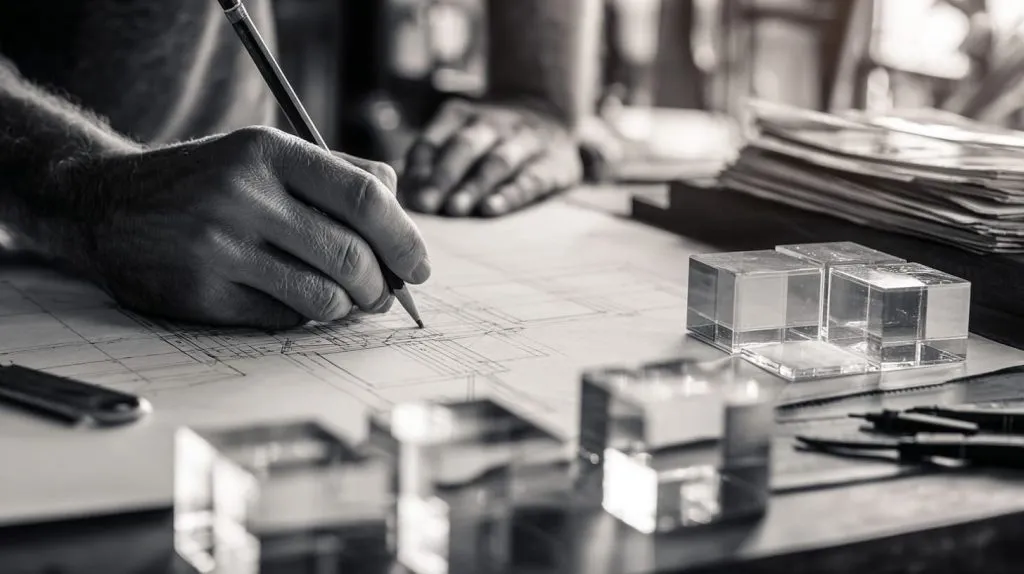
The right acrylic tolerance starts with function.
Not fear.
Not habit.
Not copied notes from another drawing.
A good tolerance plan asks what the product must do, where it must fit, and what the customer will notice.
When I review a new acrylic design, I like to mark the drawing with two mental colors: one color for dimensions that protect function, and another color for dimensions that only describe shape.
Start from functional requirements
The first question should be simple:
What must this dimension control?
If the dimension controls product fit, movement, safety, or assembly, it may need tighter tolerance. If it only controls a general outside size, it may not need strict control.
For example, in an acrylic display cabinet:
- Door gap matters.
- Hinge hole position matters.
- Shelf groove position matters.
- Overall height may matter less unless it fits inside a fixed space.
- Rear panel size may matter less if it is hidden and does not affect assembly.
This type of thinking avoids waste.
| Question | Why It Matters |
|---|---|
| Does this part fit another product? | Fit dimensions need control |
| Does this part move? | Sliding or opening needs clearance |
| Is this dimension visible? | Visual dimensions may need appearance control |
| Is this part hidden? | Normal tolerance may be enough |
| Does this dimension affect bonding? | Joint design needs process thinking |
The goal is not to loosen everything. The goal is to control the right things.
Apply tolerance only where needed
Selective tolerance is one of the best ways to manage acrylic products.
It means the drawing does not demand the same tight tolerance everywhere. Critical dimensions get tighter control. General dimensions get normal production tolerance.
This is fair to the buyer and fair to the factory.
It also helps inspection.
The QC team knows what must be checked carefully. The production team knows where extra care is needed. The quotation becomes more accurate.
| Dimension Category | Suggested Thinking |
|---|---|
| Critical fit dimension | Use tighter tolerance if needed |
| Moving part clearance | Test with sample and define range |
| Visible alignment | Use visual standard plus dimension |
| General outer size | Use normal acrylic tolerance |
| Hidden support part | Avoid unnecessary tight control |
This approach is more mature than writing one strict tolerance block for the whole drawing.
Consider manufacturing capability early
Acrylic tolerance should be discussed before the drawing is frozen.
This is where supplier experience matters.
A factory can tell you which process is suitable. Laser cutting may work for some parts. CNC machining may be better for others. Some edges may need polishing after cutting, which can affect final size. Some structures may need assembly fixtures.
If the buyer talks with the supplier early, many problems can be removed before sampling.
A simple DFM review can answer questions like:
- Is the tolerance realistic for this material thickness?
- Will polishing change the final size?
- Will bonding pull the parts?
- Should this part be redesigned for easier assembly?
- Can we use clearance instead of force fit?
- Which dimensions should be inspected one by one?
This is not just technical talk. It is risk control.
And risk control has a price. If we ignore it, the cost usually comes back later wearing a different hat.
What Is the Real Cost of Over-Specifying Acrylic Tolerances?

Over-specified tolerance has a cost.
Sometimes the cost is visible in the quotation.
Sometimes it hides inside delays, rework, scrap, and supplier hesitation.
Buyers may think they are asking for “better quality,” but the factory may hear “more risk.” That difference affects the price.
The cost I watch most closely is not only the unit price; it is the total project cost after delays, rejected samples, extra communication, and missed launch dates.
Increased product cost
Tight tolerance usually needs more time.
It may require CNC machining instead of laser cutting. It may need extra fixtures. It may need slower production speed. It may need more inspection. It may need more skilled labor.
All of this adds cost.
A buyer may compare two quotations and wonder why one supplier is more expensive. Sometimes the reason is not profit. Sometimes the reason is that the drawing has turned a normal acrylic product into a precision project.
| Cost Driver | Why It Increases |
|---|---|
| CNC machining | More accurate but slower than simple cutting |
| Extra fixtures | Needed for repeatable positioning |
| More inspection | Tight tolerance needs more measurement |
| Higher scrap rate | More parts fail narrow limits |
| Skilled labor | Complex assembly needs careful handling |
| Rework | Small errors require correction |
If the tolerance does not improve product function, this cost is wasted.
Longer lead times
Time is another hidden cost.
Acrylic production already includes several steps: material preparation, cutting, polishing, printing, bonding, inspection, packing, and shipping.
When tolerance is very tight, each step may slow down.
The supplier may need to test more before mass production. Workers may need to measure more parts. Some parts may need to be remade. Assembly may need more careful matching.
This can delay the whole project.
For B2B buyers, delay is not just annoying. It can affect store launches, marketing plans, exhibition deadlines, and seasonal sales.
A display that arrives after the promotion is over is a very expensive decoration.
Greater supplier risk and pricing uncertainty
Some suppliers may refuse very tight acrylic tolerance projects. Others may accept but add a risk premium.
This is normal.
If the supplier knows the tolerance may create high scrap, they must protect themselves. If the buyer demands strict rejection rules, the supplier must include that risk in the price.
Sometimes the worst case is not a higher price. The worst case is when a supplier accepts an unrealistic tolerance just to get the order.
Then production begins.
Then problems appear.
Then both sides become unhappy.
| Supplier Response | What It May Mean |
|---|---|
| Higher price | Supplier expects extra work or risk |
| Longer lead time | Supplier needs slower control process |
| Request for tolerance review | Supplier is trying to reduce failure risk |
| Refusal to quote | Tolerance may be unrealistic |
| Very cheap quote with no questions | Buyer should be careful |
A good supplier should not blindly say yes to every tight tolerance.
Sometimes the honest answer is, “This dimension can be controlled, but this one should be relaxed.”
That kind of answer may not sound exciting, but it can save the project.
So how do buyers balance quality and manufacturability? That is the part where experience matters more than slogans.
How Can Buyers Balance Quality and Manufacturability?

Buyers can balance quality and manufacturability by focusing on real product performance.
This sounds simple, but it takes discipline.
Acrylic products often live in the space between engineering and appearance. They must look good, fit well, ship safely, and stay within budget. If one side dominates too much, the product suffers.
A purely visual product may fail in assembly.
A purely technical product may become too expensive.
A purely cheap product may damage the brand.
Before I accept a tight requirement, I like to ask whether it protects the user, the assembly, or the brand image; if it protects none of them, I try to remove or relax it.
Focus on product function instead of numbers
The buyer should first define how the product will be used.
For example:
- Will it hold cosmetics in a retail store?
- Will it protect a collectible item?
- Will it support electronics?
- Will it be shipped flat-packed?
- Will the customer assemble it?
- Will the display be reused many times?
- Will parts need replacement later?
These questions guide tolerance decisions better than a copied tolerance note.
For a retail cosmetic display, the key concerns may be:
- Product holes fit the bottles.
- Display stands firmly.
- Logo print aligns well.
- Edges are clear and smooth.
- Packaging prevents scratches.
- The display looks premium on the counter.
Not every dimension needs extreme control.
Work closely with experienced acrylic manufacturers
Acrylic suppliers should be involved early.
Not after the drawing becomes a prison.
A good manufacturer can suggest better joint design, better material thickness, better clearance, better bonding method, and better inspection points.
At Feilong Acrylic, many custom projects start with a buyer’s idea, sample, sketch, or drawing. The useful work is often not just “making the product.” It is helping the buyer turn the idea into something that can be produced smoothly.
Acrylic manufacturing is practical work. The drawing matters. But the fixture, material, glue, polish, worker method, and packaging also matter.
| Project Stage | What Buyer Should Discuss With Supplier |
|---|---|
| Early concept | Product use, load, appearance needs |
| Drawing stage | Critical dimensions and normal dimensions |
| Sampling stage | Fit, assembly, surface, packaging |
| Pre-production | QC standard and inspection method |
| Mass production | Batch consistency and packing control |
This kind of communication prevents many tolerance problems.
Validate designs through prototypes
A sample is not just a pretty preview.
A sample is a test.
It should answer real questions:
- Does the product fit the intended item?
- Does the door open smoothly?
- Does the lid slide well?
- Does the box sit flat?
- Does the glue line look acceptable?
- Does the product survive packing?
- Does the user feel the quality?
If the sample is approved only by looking at photos, some issues may be missed.
For important projects, I prefer testing with the actual product that will be displayed or stored. If the acrylic display is for a bottle, test with the bottle. If the box is for electronics, test with the real device. If the cabinet has a lock, test the lock many times.
| Test Item | Why It Matters |
|---|---|
| Real product fit | Confirms functional dimensions |
| Assembly test | Finds stress and clearance problems |
| Opening/closing test | Checks movement and user feel |
| Visual inspection | Confirms appearance standard |
| Packaging test | Prevents scratches and breakage |
| Batch review | Confirms repeatability before scaling |
Prototype testing turns tolerance from theory into evidence.
And evidence is much calmer than guesswork.
Conclusion
Tight acrylic tolerances can be useful. But they are not automatically a sign of better engineering.
In many acrylic projects, excessive precision creates more trouble than value. It can increase cost, slow down production, raise scrap rates, and make assembly harder. It can also push the supplier into a difficult position where the product looks simple but behaves like a precision machine part.
Acrylic is a beautiful material, but it has natural limits. It expands and contracts with temperature. It carries stress from cutting and bonding. It depends on sheet quality, edge finishing, assembly method, and real production control.
That does not mean buyers should accept loose or careless work. Not at all.
It means buyers should ask better questions.
Which dimensions control function?
Which dimensions affect appearance?
Which dimensions affect assembly?
Which dimensions can use normal acrylic production tolerance?
Which dimensions must be controlled tightly because the product truly depends on them?
The decision that usually saves a project is not “make everything tighter.” The better decision is “make the right things tighter, and let the rest be practical.”
At Feilong Acrylic, I like this kind of thinking because it respects both sides of the project. It respects the buyer’s need for quality. It also respects the real manufacturing process behind custom acrylic displays, boxes, frames, stands, cabinets, and other custom products.
If you are developing a custom acrylic product and your drawing has very tight tolerance requirements, it may be worth reviewing them before production starts. Send the drawing, product use, target quantity, and assembly needs to an experienced acrylic manufacturer. A practical tolerance review can often save cost, reduce risk, and make the final product more reliable.
Smart acrylic design is not about chasing the smallest number on the drawing.
It is about choosing the right tolerance for a product that can be made, assembled, shipped, and used without drama.
And honestly, in manufacturing, “without drama” is a very underrated kind of quality.