Skip to content
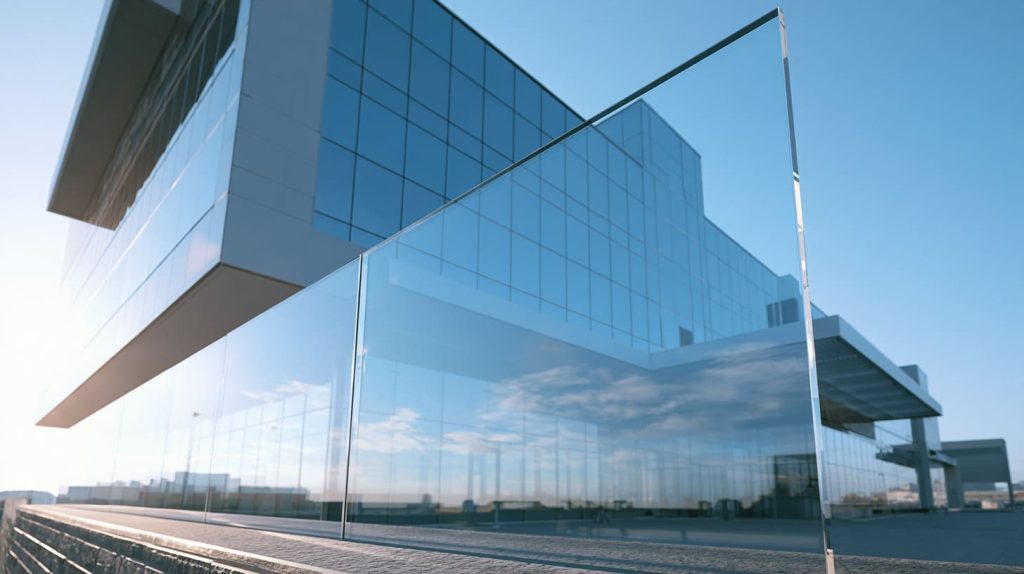
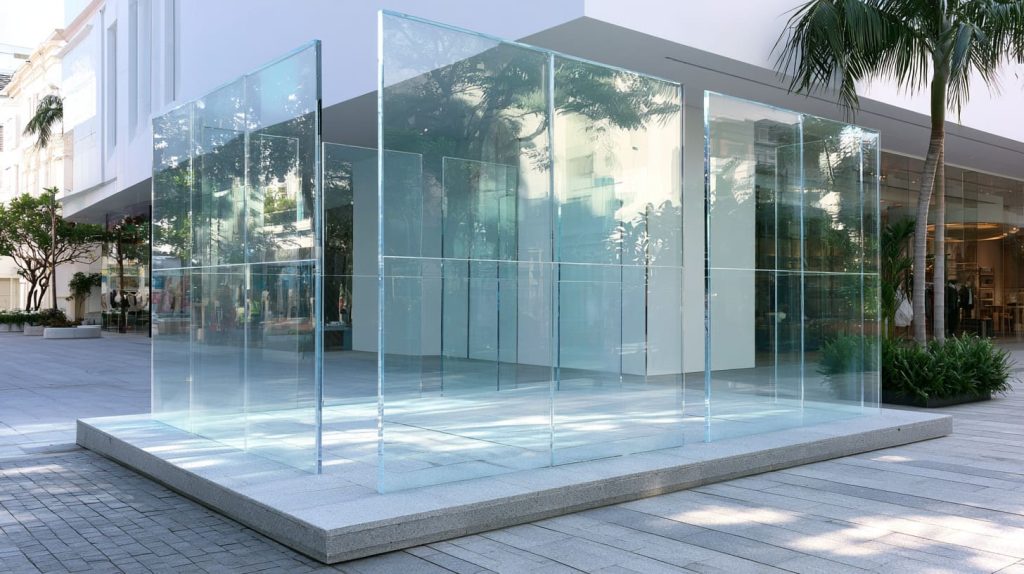
A large frameless acrylic panel always looks beautiful in the drawing.
Clean edges. Clear surface. No heavy frame. No visual noise.
For many buyers, this is the dream look. I understand that feeling very well. When a client sends me a drawing of a big clear acrylic panel for outdoor use, I can almost hear the idea behind it: “We want something modern, simple, and premium.”
I like that idea too.
But the factory floor teaches people to be a little more careful.
Acrylic is a very useful material. I have worked with custom acrylic displays, boxes, frames, stands, cabinets, blocks, organizers, and many other acrylic products for years. In indoor projects, acrylic is often friendly. It is easy to cut. It is easy to polish. It looks clean. It gives brands a premium feel without the weight and cost of glass.
Outdoor projects are different.
Outside, acrylic is not only a display material anymore. It becomes part of a real environment. The sun heats it. Cold weather shrinks it. Wind pushes it. Screws pull it. Corners hold stress. A large panel cannot “hide” these forces. It has to deal with them every day.
This is where large frameless acrylic panels can become a structural problem.
Why This Topic Matters for Outdoor Acrylic Projects
Many people judge acrylic by appearance first.
That is normal.
A large clear acrylic panel can look very close to glass. It can make a display, guard, sign, or outdoor cover look more open and modern. For retail, exhibition, hospitality, and outdoor commercial use, this clean look is attractive.
But outdoor use changes the rules.
A panel that works inside a store may not work on a balcony, building facade, roadside display, or open outdoor area. The main issue is not only whether acrylic is strong. The better question is:
Can this large sheet stay flat, safe, and stable after months of sun, wind, temperature change, and mounting pressure?
That is a very different question.
Here is the simple way I look at it:
| Question | Indoor Acrylic Panel | Outdoor Large Frameless Panel |
|---|---|---|
| Main concern | Appearance and fit | Safety and movement |
| Main load | Light handling | Wind and temperature |
| Mounting stress | Usually lower | Often higher |
| Failure risk | Scratches, poor bonding, poor finish | Cracking, bowing, loosening, deformation |
| Design priority | Clean look | Controlled movement and support |
For me, the first warning sign is not “acrylic.” The first warning sign is usually large + frameless + outdoor in the same request.
That combination deserves a careful review.
Core Argument
The problem is not acrylic itself.
I do not like blaming the material too quickly. Acrylic has many strong points. It is clear. It is lighter than glass. It is easier to process. It can be cut, bent, polished, printed, engraved, and customized in many ways.
The real problem starts when people use large acrylic sheets without enough support.
Acrylic needs space to move. It needs good edge support. It needs correct thickness. It needs the right fixing method. It needs a design that respects wind load and thermal expansion.
If we ignore these details, the panel may look perfect when it leaves the factory. But after installation, the real test begins.
And outdoor weather does not care about beautiful drawings.
Acrylic can work outdoors, but I usually become cautious when the buyer wants a big frameless sheet with only a few screw points, because the cleanest design on paper can become the most expensive complaint later.
Before we talk about cracks, wind, or expansion, we need to clear up one common misunderstanding: strong does not always mean stiff.
Acrylic Is Strong, But It Is Not Structurally Equal to Glass or Metal
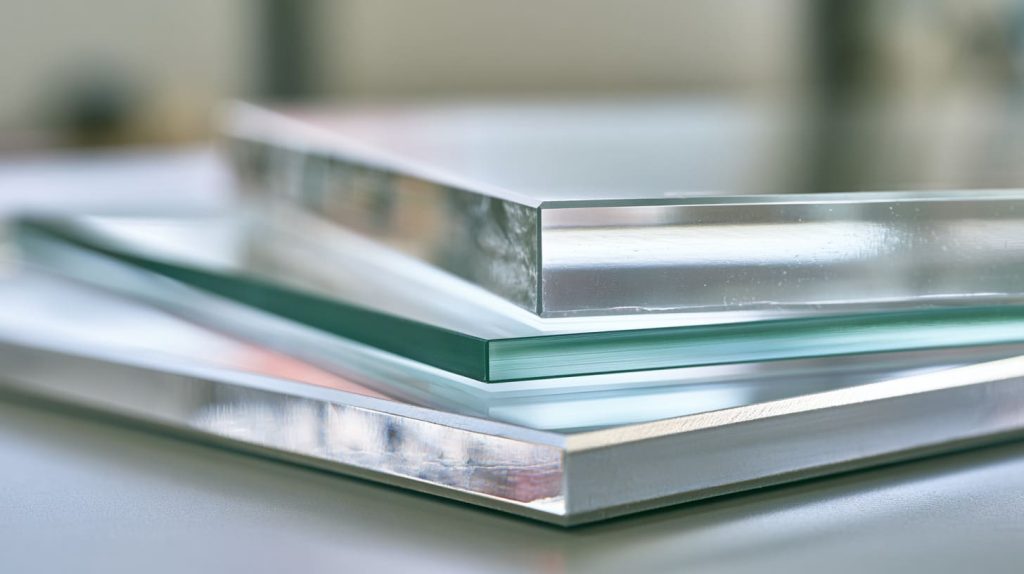
Acrylic is often described as strong.
That is partly true. But it is also too simple.
When buyers compare acrylic with glass, they often talk about impact resistance. Acrylic can take impact better than normal glass in many situations. It is also much lighter. This is one reason acrylic is popular in displays, protective covers, signage, and custom transparent products.
But outdoor structural behavior is not only about impact.
A large panel must also resist bending. It must stay flat enough. It must not vibrate too much. It must not transfer too much stress to the fixing points. This is where acrylic behaves very differently from glass or metal.
Acrylic Has Good Impact Resistance but Lower Rigidity
Acrylic can be tough against sudden impact. But it is more flexible than glass and metal.
That flexibility can be a good thing in some products. For example, a small acrylic cover may survive handling better because it has some give. But on a large outdoor panel, flexibility can become a problem.
A large unsupported acrylic panel may:
- Bow under wind
- Vibrate when air pressure changes
- Pull against screws or clamps
- Create noise
- Look wavy under sunlight
- Slowly deform if the support is poor
This is not always a material defect. Many times, it is a design mismatch.
Here is a practical comparison:
| Material | Strong Point | Weak Point in Large Outdoor Panels |
|---|---|---|
| Acrylic | Clear, light, impact-resistant, easy to process | More flexible, expands more, sensitive to point stress |
| Glass | Rigid, stable, good flatness | Heavy, brittle, higher risk if broken |
| Metal | Strong support, high stiffness | Not transparent, needs surface treatment |
| Polycarbonate | Very high impact resistance | More flexible, scratches easier without coating |
| Laminated glass | Good architectural stability | Heavy and expensive, needs professional installation |
This is why I do not like saying “acrylic is strong” without context.
Strong against what?
Impact? Bending? Heat? Wind? Long-term stress?
Each question gives a different answer.
Strength and Stiffness Are Different
This point matters a lot.
A material can be hard to break, but still bend too much.
For example, a thin plastic ruler is not easy to snap if you bend it gently. But nobody would use it as a straight structural beam. It moves too much. The problem is not only breaking. The problem is control.
Large outdoor acrylic panels face the same issue.
The sheet may not break immediately. But it may bow. It may rattle. It may create stress around holes. It may look unstable. It may scare the final user. And if the panel is installed in a public area, that “almost okay” condition is not good enough.
Why Panel Size Changes Everything
Small acrylic panels are much more forgiving.
A small sign cover, display front, menu holder, cosmetic display shield, or product box lid can often work with simple fixing. The sheet area is small. The movement is limited. The load is usually light.
But when the panel becomes large, every design weakness becomes bigger.
The problem grows with size.
A small amount of bending becomes visible. A small amount of expansion becomes measurable. A small fixing mistake becomes a crack starter. A small wind load becomes a real push.
| Panel Condition | Risk Level | What I Usually Think |
|---|---|---|
| Small indoor acrylic panel | Low | Appearance and tolerance matter most |
| Medium outdoor panel with frame | Medium | Thickness, support, and weather matter |
| Large outdoor frameless panel | High | I need to check movement, fixing, and wind first |
| Large outdoor panel with only corner bolts | Very high | I usually suggest redesign before quoting |
Acrylic is not weak. But acrylic is honest. If the design is too optimistic, the sheet will show the truth later.
The detail that decides the project is often not visible in the product photo. It is hidden in the edge support, fixing clearance, and panel span.
And the first hidden force we need to respect is temperature.
Thermal Expansion Is the First Major Problem Outdoors
Temperature is quiet.
It does not look dangerous in a drawing. It does not shout during production. It does not appear as a big red warning mark on the buyer’s CAD file.
But outdoors, temperature works every day.
Acrylic expands when it gets warm. It contracts when it gets cold. This movement is normal. The material is not doing anything wrong. The problem begins when the design does not allow this movement.
Acrylic Expands and Contracts More Than Glass or Metal
Many outdoor structures use metal frames, screws, brackets, or clamps. These parts do not move the same way acrylic moves.
Acrylic usually expands more than glass or metal under heat. This means a large acrylic panel needs room to move. If the sheet is trapped too tightly, the movement becomes internal stress.
That stress must go somewhere.
It may show up as:
- Cracks near holes
- Crazing near corners
- Warping
- Bowing
- Edge pressure marks
- Loose fasteners
- White stress marks around screws
In a small part, this may not be serious. In a large outdoor panel, it can become the main failure reason.
The small detail I pay attention to is not only the highest temperature, but the full temperature swing, because a panel that moves back and forth every day can punish a tight fixing design slowly.
Frameless Designs Often Restrict Movement
Frameless design looks simple. But many frameless designs depend on bolts, clamps, or direct fixing points.
This creates a problem.
If the acrylic sheet needs to expand, but the bolts hold it tightly, the sheet cannot move freely. The stress concentrates around the fixed points.
Acrylic does not like that.
Especially around drilled holes, the material already has a weak area. If the hole is too tight, or the screw is over-tightened, or the washer is too hard, the risk increases.
A buyer may say, “Can we just make the panel thicker?”
Sometimes yes. But thickness does not solve tight fixing. A thicker panel can still crack around a badly designed hole.
Here is a simple view:
| Design Detail | Better Choice | Risky Choice |
|---|---|---|
| Hole size | Oversized hole with clearance | Tight hole around screw |
| Washer | Soft or suitable washer | Hard metal washer directly pressing acrylic |
| Screw pressure | Light and controlled | Over-tightened |
| Edge gap | Allows movement | No gap |
| Mounting method | Supports and lets sheet move | Locks sheet in place |
Large Panels Multiply the Expansion Problem
Acrylic movement grows with panel length.
This is the part many people underestimate.
If the sheet is small, the total movement may be small. But if the panel is long, even normal expansion becomes important. A long sheet needs more movement space.
This is why large acrylic panels should not be judged the same way as small acrylic parts.
A 300 mm acrylic cover and a 3000 mm outdoor panel are not the same design problem.
One is a product part.
The other is almost a structural surface.
For large outdoor acrylic panels, I prefer designs that include:
- Expansion gaps
- Edge channels
- Rubber gaskets
- Flexible fixing systems
- Proper hole clearance
- Clear installation instructions
- Enough space around the sheet
A clean frameless look may still be possible in some cases. But it needs smart fixing. It cannot rely on “tight screws and hope.”
Acrylic needs freedom to move, but wind does the opposite. Wind keeps pushing, pulling, and shaking the panel. That is where the next problem begins.
Wind Load Turns a Flat Panel Into a Moving Surface
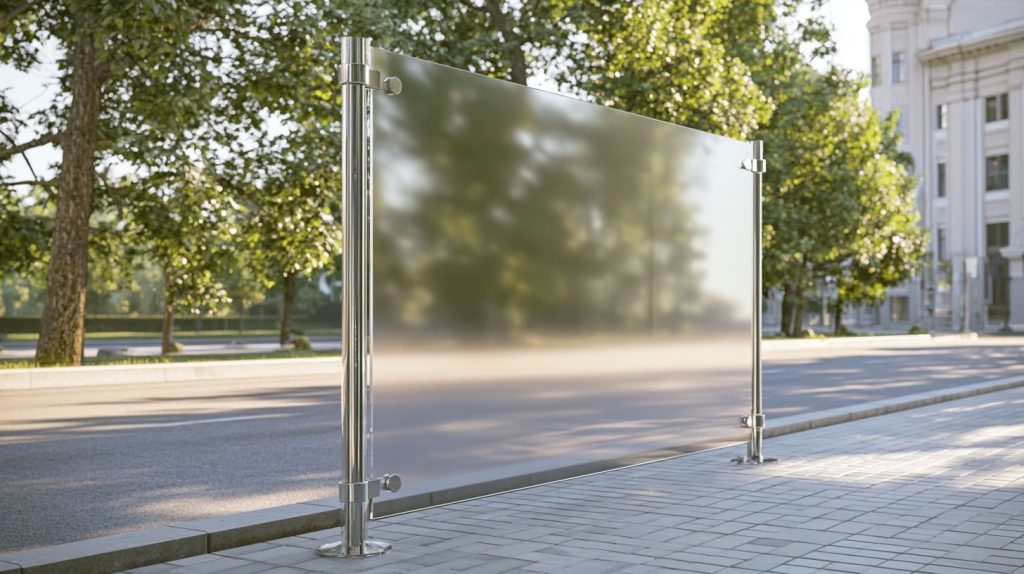
Acrylic panels look flat on a table.
Outdoor wind changes that.
Wind does not treat a large panel as a flat decoration. Wind treats it like a sail. The bigger the panel, the more pressure it receives. This pressure can push the sheet inward, pull it outward, or make it vibrate.
If the panel has a proper frame, the load can spread into the structure. If the panel is frameless, the sheet itself must take more of the movement.
That is where trouble starts.
Wind Pressure Causes Bowing and Deflection
A large acrylic sheet can bow when wind pushes it.
This bowing may not break the sheet at once. But it can create other problems. It may make the panel look cheap. It may pull on fasteners. It may create gaps. It may make noise. It may slowly damage the mounting points.
A buyer may only see the front view. I try to imagine the side view under wind pressure.
That side view tells a different story.
| What Buyer Sees | What I Need to Check |
|---|---|
| Clear and frameless appearance | How much the panel may bow |
| Large smooth surface | How wind pressure transfers |
| Few visible screws | Whether each screw carries too much load |
| Thin elegant edge | Whether the edge can stay stable |
| Low-cost installation | Whether maintenance cost may rise later |
Wind is not polite. It does not push evenly all the time. It changes direction. It comes in gusts. It vibrates the panel.
That repeated movement matters.
Deflection Can Create Secondary Problems
Deflection is not only an appearance issue.
When the panel bends, it changes how the mounting system works. The holes may pull against screws. The edges may lift. The clamps may loosen. The sheet may start to rub against metal parts.
After some time, a project can move from “small movement” to “real failure.”
I have seen many custom product discussions where the buyer focused only on the sheet thickness. I understand why. Thickness is easy to see and easy to quote. But deflection is a system problem. It depends on:
- Sheet size
- Sheet thickness
- Support distance
- Edge condition
- Mounting method
- Wind exposure
- Installation height
- Direction of force
This is why a simple thickness number is not enough.
Wind Load Depends on Location and Installation Height
The same acrylic panel may perform differently in two locations.
A panel installed inside a shopping mall is one thing. A panel installed outside near a road is another. A panel installed on a rooftop, balcony, coastal site, or open field is another story again.
Installation height also matters. Higher locations often face stronger wind. Corners of buildings can also create stronger air movement.
I become more conservative when the panel will be installed in an open or elevated place, because the buyer may remember the normal sunny day, while the product must survive the bad windy day too.
Here is how I would roughly classify risk during early discussion:
| Installation Area | Wind Risk | My Design Attitude |
|---|---|---|
| Indoor retail area | Low | Acrylic can be mostly judged by appearance and function |
| Covered outdoor walkway | Medium | Need weather and movement review |
| Street-facing sign or guard | Medium to high | Need stronger support and fixing plan |
| Rooftop or balcony | High | Frameless design needs careful review |
| Coastal or open field area | Very high | I usually push for frame, smaller modules, or alternative material |
Wind turns a beautiful flat sheet into a moving part.
And once a panel starts moving, point fixing becomes one of the weakest links.
Point Fixing Is Risky for Large Frameless Acrylic Panels
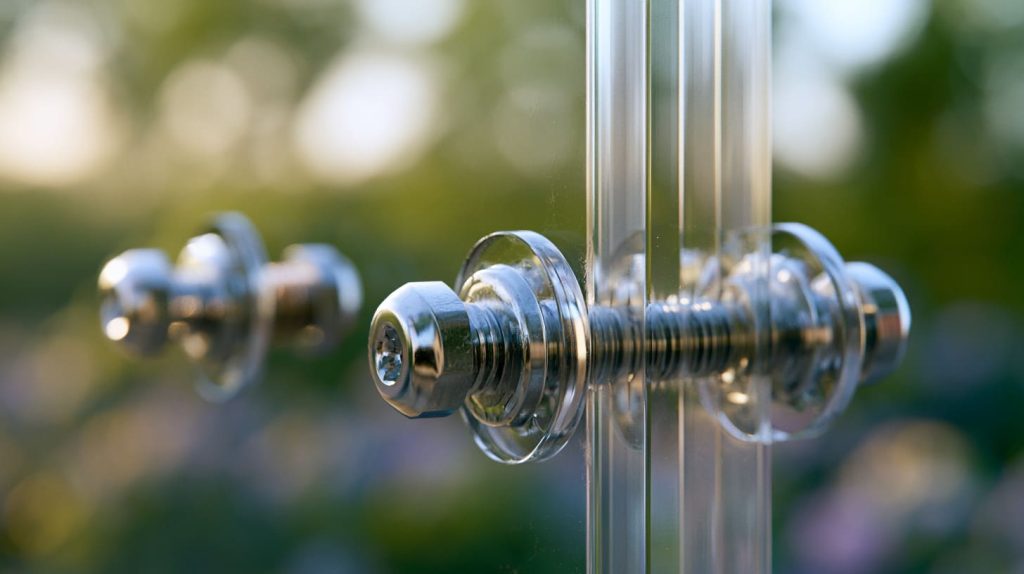
Point fixing looks elegant.
Four bolts. Maybe six bolts. Maybe stainless steel standoffs. The panel floats. The edges look clean. The buyer likes it. The designer likes it. The photo looks good.
But acrylic may not like it.
Large frameless panels often depend on point fixing because there is no full frame. This means the whole load may transfer through several holes or clamp points. That can be risky.
Holes and Bolts Create Stress Concentration
A drilled hole is a local weak point.
This does not mean holes are always bad. Acrylic products often need drilled holes. We make many custom acrylic parts with holes, slots, hinges, locks, magnets, screws, and other hardware.
But outdoor large panels need more care.
A hole in a small acrylic box is different from a hole in a large wind-loaded panel.
Around the hole, stress can gather. If the hole edge is sharp, the risk rises. If the screw is tight, the risk rises. If the panel expands under heat, the risk rises again.
The crack usually does not begin in the middle of the sheet. It often begins where the design gives stress a place to concentrate.
Rigid Fasteners Fight Against Acrylic Movement
Metal hardware is useful. But metal does not move like acrylic.
Acrylic wants to expand. A metal screw holds it. A rigid washer presses it. A tight bracket stops it. The result is a quiet fight between materials.
The acrylic sheet may lose that fight over time.
For large outdoor panels, I do not trust a clean standoff design until I see the hole clearance, washer type, screw pressure, and edge distance, because one beautiful detail can become the exact place where the crack starts.
Here is a practical comparison:
| Fixing Method | Benefit | Risk |
|---|---|---|
| Tight screw through acrylic | Simple and low cost | High stress around hole |
| Metal standoff | Clean appearance | Point load and movement restriction |
| Clamp fixing | No hole in panel sometimes | Pressure may be uneven |
| Oversized hole with washer | Allows movement | Needs good installation control |
| Full frame with gasket | Better load spread | More visible frame |
| Channel support | Stronger edge support | Needs accurate design |
Better Fixing Methods Distribute Load
The best fixing method is not always the most invisible one.
It is the one that controls stress.
For large outdoor acrylic panels, I prefer designs that spread load over a larger area. Edge support is usually better than only point support. A frame or channel can hold the panel more evenly. A gasket can reduce hard contact. An oversized hole can give the sheet room to move.
Better options may include:
- Aluminum channel frames
- Stainless or aluminum frames with gaskets
- Rubber-supported edge fixing
- Oversized holes with soft washers
- Slotted holes for movement direction
- Semi-frameless systems with hidden support
- Modular panel design with smaller pieces
This is not only about preventing cracks. It is also about making installation easier.
A design that depends on perfect screw pressure at every point is risky. On site, workers may over-tighten screws. They may use wrong washers. They may not leave enough clearance. A more forgiving design is usually safer.
Point fixing asks a few small areas to carry a big job. But even if fixing is improved, another hidden issue remains: unsupported span.
Unsupported Span Is the Hidden Structural Issue
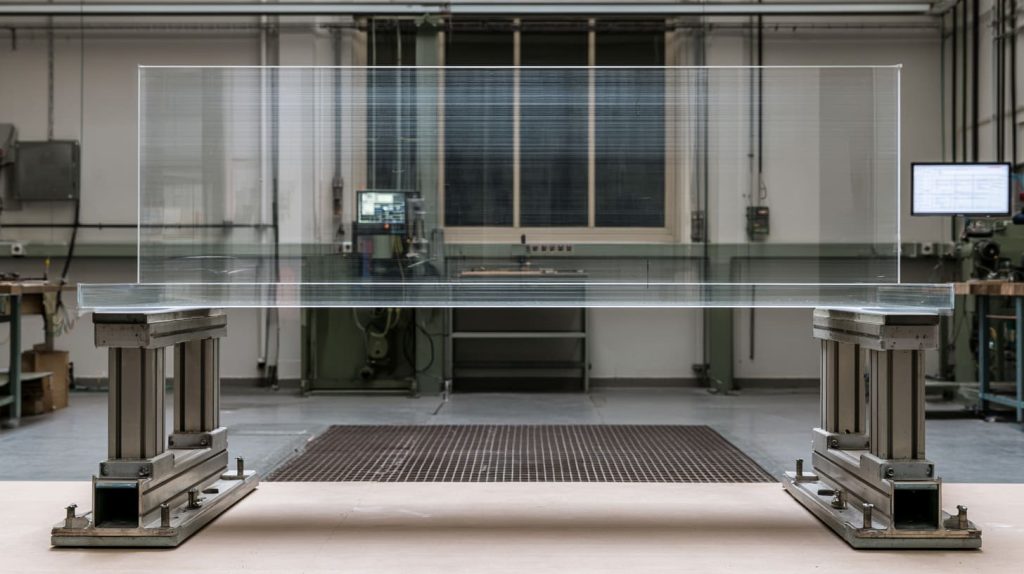
Unsupported span is one of those quiet words that sounds boring.
But in real projects, it is often the real problem.
Acrylic sheet thickness is easy to discuss. Buyers ask, “Should we use 5 mm, 8 mm, 10 mm, or 15 mm?” That is a normal question.
But I also need to ask, “How far does the panel need to span without support?”
That distance can change everything.
Large Frameless Panels Need More Than Thickness
Many people think a thicker acrylic sheet will solve the outdoor problem.
Sometimes it helps. But it is not magic.
A thicker sheet can reduce bending. It can feel stronger. It can improve handling. But if the panel is very large and has poor support, it may still bow. It may still expand. It may still crack around holes. It may still become difficult to install safely.
Thickness is only one tool.
It is not the whole solution.
| Problem | Can Thickness Help? | Is Thickness Enough? |
|---|---|---|
| Wind bowing | Yes | Not always |
| Thermal expansion | No, not really | No |
| Stress around holes | Sometimes | No |
| Poor edge support | A little | No |
| Installation error | No | No |
| Long unsupported span | Yes | Only to a point |
This is why I do not like quoting only by thickness. It gives the buyer a number, but it may not give the buyer a safe design.
Frame Support Reduces Deflection
A frame does more than make the product look finished.
A good frame transfers load. It holds the edge. It reduces movement. It controls flatness. It protects the panel during installation. It also gives the panel a more stable working condition outdoors.
Some buyers worry that a frame will make the design less beautiful. That concern is fair.
But a frame does not have to be ugly. It can be slim. It can be color-matched. It can be hidden behind the structure. It can be designed as part of the look.
A good frame is not just decoration. It is the difference between a panel that only looks good on day one and a panel that still behaves well after weather has tested it.
When Frameless Design Becomes Unsafe
Frameless design becomes more risky when several bad conditions appear together.
One risk alone may be manageable. But risks stack.
For example, a large panel is one risk. Outdoor use is another. High wind is another. Direct sun is another. Corner-only fixing is another. No expansion gap is another.
Put them together, and the design becomes fragile.
| Risk Factor | Why It Matters |
|---|---|
| Very large size | More bending and more expansion |
| High wind exposure | More repeated movement |
| Direct sun | Higher heat and more expansion |
| Only corner fixing | Load concentrates at a few points |
| No expansion clearance | Sheet cannot move freely |
| Thin material | More bowing and vibration |
| Poor edge finishing | Higher crack risk |
| Tight metal hardware | More stress around holes |
I become especially careful when a buyer wants a thin sheet, large size, outdoor use, and no frame at the same time, because that usually means the design goal and the material behavior are not aligned.
Unsupported span does not always fail loudly. Sometimes it fails slowly. The panel starts to wave. Then the screws loosen. Then small cracks appear. Then the project becomes a complaint.
And outdoor sunlight adds more pressure to this slow process.
Sunlight, Heat, and Weather Add Long-Term Stress
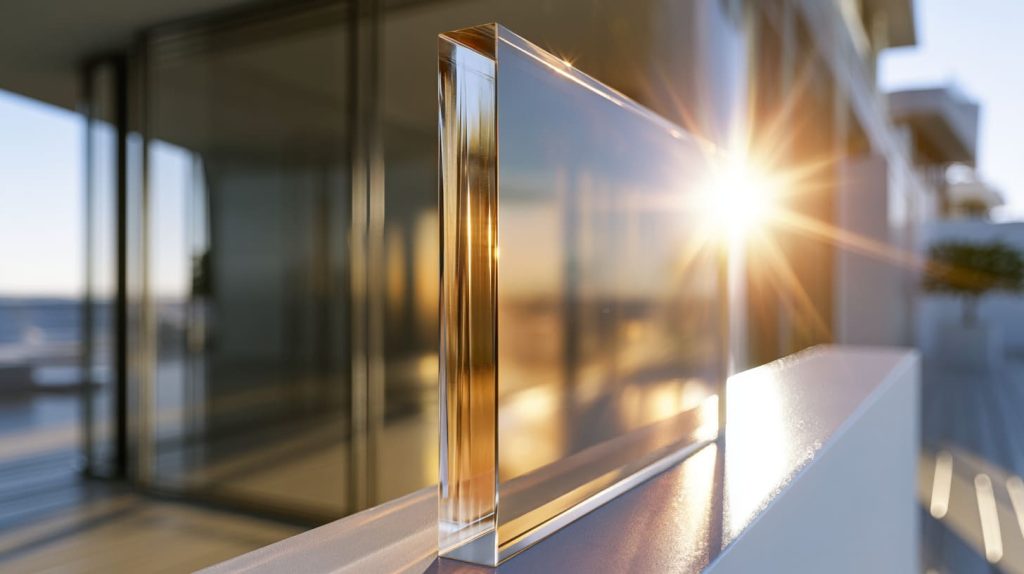
Outdoor weather is patient.
It does not need to destroy a panel in one day. It only needs to repeat small stress again and again.
Sunlight heats the sheet. Night air cools it. Rain wets it. Wind shakes it. Dust scratches it. Cleaning chemicals touch it. This cycle keeps going.
Acrylic can perform well outdoors if the material grade and design are correct. But large frameless panels have less room for mistakes.
Direct Sunlight Increases Surface Temperature
Acrylic panels exposed to direct sun can become much hotter than the air around them.
This is especially true for dark-colored, tinted, smoked, or printed panels. Clear acrylic may also heat up, but darker panels usually absorb more heat.
More heat means more expansion.
More expansion means more movement.
More movement means more stress if the panel is fixed too tightly.
This is why color and position matter. A clear panel under shade is not the same as a dark tinted panel facing afternoon sun.
| Panel Condition | Heat Risk | Design Concern |
|---|---|---|
| Clear acrylic under shade | Lower | Still need expansion gap |
| Clear acrylic in direct sun | Medium | Watch size and fixing |
| Tinted acrylic in direct sun | Higher | More heat absorption |
| Dark printed acrylic | Higher | More expansion and possible warping |
| Panel behind glass or in enclosed heat | High | Heat may build up |
A buyer may choose the material color for branding. I respect that. But I also need to think about heat.
Daily Thermal Cycling Creates Repeated Stress
Daily temperature change is often more important than one hot day.
The panel expands during the day. It contracts at night. It does this again tomorrow. And the next day. And the next season.
If the fixing system allows movement, this cycle is manageable.
If the fixing system locks the sheet, stress repeats in the same weak areas.
This repeated stress can slowly create:
- Cracks around holes
- Crazing near edges
- Warped surfaces
- Loose fasteners
- Pressure marks
- Gasket movement
- Sealant failure
This is one reason outdoor acrylic design should not only pass a quick sample check. A sample may look fine on the table. The real question is how the product behaves after installation.
The part I worry about is not the perfect sample in our factory, but the installed panel after one summer and one winter, because that is when weak design details start to tell the truth.
Moisture and Weathering Affect Long-Term Stability
Moisture itself may not be the biggest enemy of acrylic, but outdoor weather still affects the full system.
Edges, holes, hardware, gaskets, sealants, and support structures all matter.
Acrylic may be fine, but the metal fasteners may corrode. The gasket may harden. The sealant may fail. The edge may collect dirt. Cleaning staff may use the wrong chemical. The panel may be wiped with a rough cloth.
Acrylic projects fail as systems, not only as sheets.
Here is a simple maintenance view:
| Area | Possible Issue | Better Practice |
|---|---|---|
| Edges | Micro cracks, rough finish | Smooth edge finishing |
| Holes | Stress cracks | Proper drilling and clearance |
| Surface | Scratches, haze | Soft cloth and mild cleaner |
| Hardware | Rust or looseness | Suitable outdoor hardware |
| Gasket | Aging or movement | Weather-resistant gasket |
| Sealant | Poor bonding or cracking | Compatible sealant |
| Packaging | Transport scratches | Protective film and careful packing |
Outdoor success depends on both design and maintenance.
But before a full failure happens, the panel often gives warning signs. A good buyer should know how to read them.
Common Failure Signs in Large Frameless Acrylic Panels
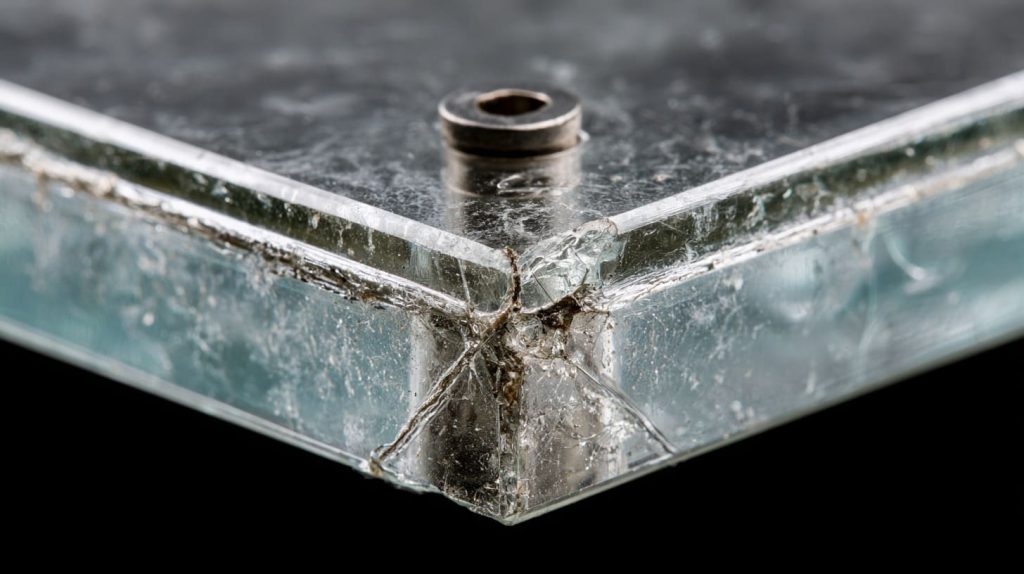
Acrylic usually gives clues before a serious problem becomes obvious.
The issue is that many people ignore the early clues. They think a small wave, a tiny crack, or a loose screw is only a small defect. Sometimes it is. But on a large outdoor frameless panel, these signs can be the beginning of a bigger structural problem.
This is why inspection matters.
Visible Bowing or Waviness
Visible bowing is one of the easiest signs to notice.
The panel no longer looks flat. Reflections become distorted. Straight lines look bent. The surface may move under wind. In some cases, the panel may still be safe for the moment, but it is telling us something important.
It is saying the sheet is not being controlled well.
Bowing may come from:
- Thin sheet selection
- Large unsupported span
- Heat exposure
- Wind pressure
- Poor frame support
- Uneven fixing
- Long-term stress
Some buyers accept slight bowing if the panel is decorative. But if the panel is used as a guard, cover, outdoor barrier, or public-facing installation, bowing should be taken seriously.
Cracks Around Holes or Corners
Cracks around holes are a classic warning sign.
They often mean the fixing detail is wrong. The screw may be too tight. The hole may be too small. The washer may be too hard. The edge distance may be too short. The drilling may be poor. The panel may not have enough movement space.
Corner cracks can also appear when the panel has sharp inside corners or poor finishing. Acrylic likes smooth transitions. Sharp corners create stress points.
When I see a crack around a hole, I do not only ask who damaged the panel. I ask why the design allowed that hole to become the weakest point.
This mindset matters.
If we blame only handling, we may repeat the same failure in the next batch.
Crazing or White Stress Marks
Crazing looks like many fine lines or small cracks on the surface.
It can happen when acrylic is under stress and then exposed to certain chemicals, poor cleaning agents, or unsuitable solvents. It may also appear near holes, bends, bonded areas, or stressed edges.
White stress marks are also a warning.
They can show that the material has been forced, bent, tightened, or pressed too much.
| Failure Sign | Possible Cause | What I Would Check |
|---|---|---|
| Bowing | Wind, heat, large span | Thickness, frame support, panel size |
| Crack near hole | Tight screw, poor clearance | Hole size, washer, screw pressure |
| Corner crack | Sharp corner or stress | Radius, edge polish, fixing position |
| Crazing | Stress plus chemical exposure | Cleaning method, material stress |
| White mark | Overpressure or bending | Clamp pressure, transport, assembly |
| Loose screw | Movement and vibration | Fixing design and wind load |
Loose Fasteners or Noisy Movement
A rattling panel is not just annoying.
It means the system is moving.
Movement may come from wind, expansion, poor installation, or loose hardware. If the panel keeps moving, the fixing points may wear down. Holes may enlarge. Screws may loosen more. Cracks may start.
Noise is often the product asking for attention.
Acrylic should not sound like a loose window in the wind.
I take rattling seriously because the end user may not know material science, but they can feel fear when a large clear panel moves above their head or beside a walkway.
Failure signs are useful because they help us improve the design. The better question is not only “Why did it fail?” It is also “How could we make it work?”
When Acrylic Panels Can Still Work Outdoors
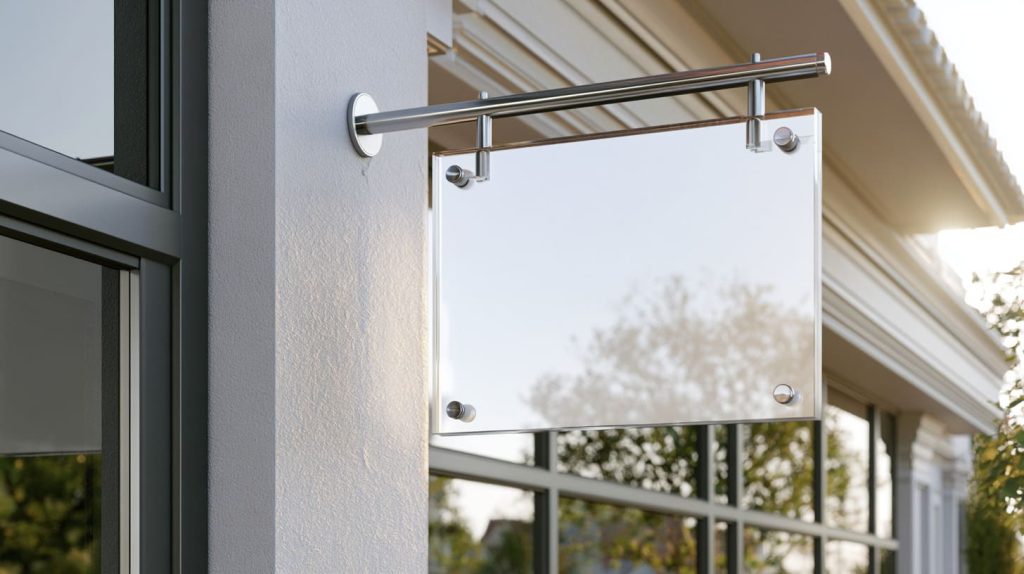
I do not want this article to sound like acrylic should never be used outdoors.
That would be wrong.
Acrylic can work very well outdoors when the design is realistic. It can be used for signs, covers, display protection, guards, panels, windows, decorative features, and many custom commercial products.
The key is to stop treating acrylic like a fixed glass wall and start treating it like a material that needs movement control.
Use Smaller Panel Sections
One simple way to reduce risk is to divide a large surface into smaller panels.
This may sound less exciting than one huge frameless sheet. But it often works better.
Smaller panels have less total expansion. They bow less. They are easier to pack. They are easier to ship. They are easier to install. If one panel is damaged, the buyer can replace one section instead of the whole large piece.
This matters in B2B projects.
A beautiful design is good. A maintainable design is better.
| Design Choice | Benefit | Trade-Off |
|---|---|---|
| One large frameless panel | Cleanest appearance | Highest movement and fixing risk |
| Smaller modular panels | Lower risk and easier replacement | More joints visible |
| Framed large panel | Better support | Frame affects appearance |
| Semi-framed panel | Balance between look and support | More design work needed |
I often prefer modular design when the project is large and exposed, because the small visible joints are usually cheaper than replacing one cracked oversized panel later.
Use Proper Frame or Channel Support
A frame gives the panel a safer working condition.
It can support the edges. It can spread wind load. It can hide gaps. It can hold gaskets. It can also make the installation more repeatable.
A good frame does not need to be bulky. It can be slim, neat, and matched to the product design.
For acrylic, the frame should usually allow movement. If the frame squeezes the sheet too tightly, it creates a new problem. The goal is support, not punishment.
Good frame design may include:
- Expansion space inside the channel
- Rubber or soft gasket
- Drainage if rainwater may collect
- Smooth contact surface
- Enough depth to hold the sheet safely
- No sharp pressure on the edge
- Material suitable for outdoor use
Choose the Right Thickness Based on Size and Load
Thickness still matters.
A thin sheet may be fine for small indoor products. It may not be fine for a large outdoor panel. But thickness should be chosen together with size, support, and wind exposure.
A simple “thicker is better” mindset can also waste money. Very thick acrylic is heavier, more expensive, harder to process, harder to pack, and harder to install.
So the real question is balance.
| Factor | Why It Affects Thickness |
|---|---|
| Panel size | Larger panels usually need more stiffness |
| Support distance | Wider span needs more thickness or more support |
| Wind exposure | Stronger wind needs safer design |
| Mounting method | Point fixing may need more careful design |
| Appearance need | Flatness may require more stiffness |
| Budget | Over-thick material can waste cost |
| Shipping | Large thick panels need better packing |
For large outdoor panels, I prefer checking the whole structure before suggesting thickness. A wrong support design with thick acrylic is still a wrong design.
Allow Movement in the Design
Movement allowance is one of the most important details.
This means the panel must have space to expand and contract. It may need larger holes. It may need slots. It may need soft washers. It may need gaskets. It may need clearance inside a frame.
Acrylic does not ask for much. It only asks not to be trapped.
Good design details include:
- Oversized holes where screws pass through the sheet
- Soft washers between metal and acrylic
- Avoiding over-tightening
- Leaving edge gaps
- Using compatible sealants
- Avoiding hard point pressure
- Giving long panels more movement space
- Using frames or channels that do not lock the sheet too tightly
Acrylic can be reliable outdoors, but only if the design gives it a little freedom.
Still, there are times when another structure or another material may be the smarter choice.
Better Alternatives to Large Frameless Acrylic Panels
A good supplier should not force acrylic into every job.
I say this as someone who makes custom acrylic products.
Sometimes acrylic is the right answer. Sometimes acrylic is only part of the answer. Sometimes the buyer needs a framed system, modular design, polycarbonate, glass, or metal support.
This is not weakness. This is professional judgment.
Framed Acrylic Panels
Framed acrylic panels are often the best balance.
They keep many benefits of acrylic. The panel can still be clear, light, clean, and custom-made. But the frame helps control movement and load.
For outdoor signs, display covers, protective panels, and commercial installations, framed acrylic is often safer than fully frameless acrylic.
The frame can be:
- Aluminum
- Stainless steel
- Powder-coated metal
- Hidden behind a structure
- Color-matched to the brand
- Designed as a slim border
- Combined with rubber gaskets
The trade-off is appearance. Some buyers want zero frame. But a narrow frame may save the project from future complaints.
The decision I make here is simple: if a small frame can prevent a big failure, I do not treat the frame as a design compromise; I treat it as insurance.
Smaller Modular Acrylic Panels
Modular panels are useful for large visual areas.
Instead of one giant sheet, the project uses several smaller sheets. This reduces expansion and bending. It also makes production, polishing, packing, shipping, and installation easier.
Some buyers worry about visible joints. That is fair. But joints can be designed neatly.
For example:
| Project Need | Modular Solution |
|---|---|
| Large outdoor display wall | Use several panels with small equal gaps |
| Long protective cover | Divide into sections with overlap or joint strips |
| Retail outdoor sign | Use framed modules with hidden connectors |
| Large transparent guard | Use vertical supports between panels |
| Easy replacement | Make each panel removable |
Modular design is not always less premium. If it is designed well, it can look intentional and professional.
Polycarbonate for Higher Impact or Harsh Outdoor Use
Polycarbonate is another option for outdoor use, especially when impact resistance is very important.
It is tougher than acrylic in many impact situations. It is often used for guards, machine covers, security glazing, and other demanding uses.
But polycarbonate also has trade-offs.
It can scratch more easily if there is no hard coating. It can be more expensive. It may not have the same optical beauty as acrylic in some display applications. It also needs UV-stabilized grades for outdoor use.
| Material | Better For | Watch Out For |
|---|---|---|
| Acrylic | Clear display, clean edges, premium look | Expansion and point stress |
| Polycarbonate | High impact use, harsh environments | Scratching and UV grade |
| Glass | Flatness and architectural stability | Weight and breakage risk |
| Laminated glass | Safety glazing and facades | Cost and installation |
| Metal support + acrylic insert | Custom outdoor display structures | Design coordination |
Glass or Laminated Glass for Architectural Facades
If the project is truly architectural, glass may be the better choice.
Large building facades, safety barriers, high-rise panels, and public structural glazing usually need professional engineering. In these cases, acrylic may not be the best material.
Glass is heavier. It is harder to process. It can be more expensive to ship and install. But it offers better rigidity and long-term dimensional stability.
For a buyer, this can be frustrating because acrylic may look like a cheaper and lighter alternative. But the cheaper material is not cheaper if the application is wrong.
I prefer to be honest early. A factory may win one order by saying yes too fast, but it can lose a client forever if the installed product fails.
Before we quote, we need to ask better questions.
Practical Design Checklist Before Quoting

A good quotation is not only a price.
For custom acrylic projects, a good quotation also reflects risk. It shows that the supplier understands the product, not just the material.
When a buyer asks for a large outdoor frameless acrylic panel, I do not like quoting immediately with only length, width, thickness, and quantity. That is too thin. It misses the real project.
I need to know how the panel will live after it leaves our factory.
Confirm the Outdoor Environment
The first thing to confirm is the installation environment.
Outdoor does not mean one standard condition. Outdoor can mean under a roof, beside a road, near the sea, on a building, on a balcony, or in a hot open area.
Each condition changes the risk.
| Question | Why I Ask |
|---|---|
| Where will the panel be installed? | Location affects wind, sun, and safety risk |
| Is it under shade or direct sun? | Heat affects expansion |
| Is the site near the sea? | Hardware and maintenance matter more |
| What temperature range will it face? | Movement allowance depends on temperature swing |
| Is it public-facing? | Safety expectation is higher |
| Is it temporary or long-term? | Design life affects material choice |
A buyer may not know all details at first. That is okay. But if the project is large, we need enough information before final design.
Confirm Panel Size and Support Method
Panel size and support method are the heart of the design.
Acrylic size alone is not enough. I need to know how the sheet is held.
Is it fixed at four corners? Is it clamped at the top and bottom? Is it inside a frame? Is it supported along all edges? Is the frame metal, wood, or another structure? How many holes are there? How close are the holes to the edge?
These details decide whether the panel is safe.
I do not feel comfortable quoting large outdoor frameless panels from size alone, because the same acrylic sheet can be safe in one support system and risky in another.
Confirm Performance Expectations
Some panels are decorative. Some panels protect people. Some panels protect products. Some panels need high optical quality. Some panels only need to block dust or wind.
The performance expectation changes the design.
| Performance Need | Design Priority |
|---|---|
| Decorative panel | Appearance and weather resistance |
| Safety guard | Strength, fixing, and inspection |
| Product display cover | Transparency and scratch control |
| Outdoor sign face | UV resistance and flatness |
| Protective shield | Impact and fixing strength |
| Architectural feature | Engineering review and long-term stability |
If the buyer only says “outdoor acrylic panel,” I still need to understand the real use.
A large transparent panel for a small garden display and a large transparent panel beside a busy public walkway are not the same project.
Confirm Manufacturing Details
Manufacturing details matter more than many people think.
Acrylic grade, edge finishing, hole quality, polishing method, packaging, and installation instructions can all affect the final result.
For example, a rough drilled hole may start a crack. A sharp corner may hold stress. Poor packaging may create scratches before installation. Wrong cleaning instructions may cause crazing later.
Important manufacturing details include:
- Cast or extruded acrylic
- Thickness tolerance
- Edge polishing requirement
- Hole diameter and tolerance
- Hole-to-edge distance
- Corner radius
- UV resistance requirement
- Protective film
- Packaging method
- Hardware compatibility
- Installation instructions
For B2B buyers, these details are not small. They are the difference between a smooth project and a painful after-sales problem.
This is where Feilong Acrylic should act less like a simple supplier and more like a project partner.
How Feilong Acrylic Would Guide a B2B Buyer

I believe a custom acrylic factory should do more than accept drawings.
Of course, drawings are important. Dimensions are important. Tolerances are important. Price and lead time are also important.
But for outdoor large acrylic panels, the supplier should also ask questions. Sometimes we need to slow the buyer down a little. Not to make the process harder. But to protect the project.
This is especially true when the buyer is experienced, like Jacky.
An experienced buyer does not need empty sales talk. He needs useful judgment.
We Should Not Simply Say “Yes” to Every Frameless Design
It is tempting to say yes.
The buyer sends the drawing. The supplier quotes. The order moves forward. Everyone feels fast.
But fast is not always professional.
If I see a large frameless acrylic outdoor panel with only a few fixing points, I need to raise the risk. I may suggest a frame. I may suggest smaller sections. I may suggest thicker material. I may suggest a different fixing method. I may even suggest another material if the application needs it.
This is not rejecting the buyer’s idea. It is protecting the buyer’s result.
The moment I see a design that looks beautiful but gives the acrylic no space to move, I know the cheapest answer is probably not the best answer.
Recommended Communication With Buyers
Clear communication can prevent many problems.
I would not explain the issue with too many technical words. Most buyers do not need a lecture. They need a clear reason and a safer option.
For example, I may say:
“For this panel size and outdoor use, full frameless fixing may create stress around the holes because acrylic expands under heat and bends under wind. We suggest adding edge support or changing to a semi-framed design to improve long-term stability.”
That is simple. It is direct. It respects the buyer.
A useful reply should include:
- What risk we see
- Why the risk matters
- What information we need
- What design we suggest
- How the suggestion affects appearance, cost, and safety
| Buyer Request | Supplier Response Should Include |
|---|---|
| “Can you make it frameless?” | Yes, but first check size, wind, fixing, and expansion |
| “Can we use thinner acrylic?” | Explain bowing and support distance |
| “Can we use only corner holes?” | Explain point stress and movement |
| “Can you quote quickly?” | Give rough price if possible, but ask key risk questions |
| “Can it be used outdoors?” | Explain material grade, design, and installation limits |
Value for Experienced Buyers Like Jacky
Jacky has experience with acrylic custom products. He has worked with China manufacturers. He has visited factories. He understands that low price is not the only thing that matters.
For this kind of buyer, I should not write like I am teaching a beginner. I should write like I am discussing a real project with a professional.
Jacky wants to know:
- Will this design create complaints?
- Will the panel stay flat?
- Will the fixing method survive outdoor use?
- Will the supplier warn me before production?
- Will the factory only follow drawings, or will they think with me?
This is where a supplier can stand out.
At Feilong Acrylic, we focus on custom acrylic products. We do not sell from a catalog. We work based on the buyer’s idea, drawing, sample, or project requirement. That means our job is not only production. Our job is also to help the buyer avoid wrong assumptions before production starts.
Acrylic is flexible in design. But outdoor projects require discipline.
That balance is where good custom work happens.
Conclusion

Large frameless acrylic panels become a structural problem outdoors because the design often ignores how acrylic behaves in real life.
The sheet is not the enemy.
The outdoor environment is not the enemy either.
The real problem is a design that asks acrylic to do too much without enough support.
Acrylic expands under heat. It contracts in cold weather. It bends under wind. It concentrates stress around tight holes and hard fasteners. It becomes more difficult to control as the panel gets larger. If the design is frameless, thin, tightly fixed, and exposed to strong outdoor conditions, the risk becomes easy to predict.
This is why I do not judge outdoor acrylic panels only by appearance.
I judge them by movement.
I ask where the panel will be installed. I ask how large it is. I ask how it is fixed. I ask whether it has room to expand. I ask whether the wind load can transfer into a frame or structure. I ask whether the buyer wants a decorative panel or a safety-related product.
I do this because I have seen how small design details can become big after-sales problems.
A tight screw looks small. A missing expansion gap looks small. A sharp hole edge looks small. A large unsupported span may not look scary in a drawing. But outdoors, these small details have time to grow into real failures.
My recommendation is simple.
For large outdoor acrylic applications, do not chase a fully frameless look too quickly.
Use frames when needed. Use channels when needed. Use smaller modules when the panel is too large. Allow movement. Choose thickness based on panel size and support method. Use proper washers, gaskets, hole clearance, and edge finishing. If the application is highly structural or exposed, consider polycarbonate, laminated glass, or a metal-supported system.
Acrylic can still be a very good outdoor material.
But it needs a smart design.
At Feilong Acrylic, we help B2B buyers turn custom acrylic ideas into real products. We support displays, boxes, frames, stands, racks, cabinets, blocks, organizers, and many other custom acrylic items. For outdoor large panels, we prefer to review the design early instead of saying yes too fast.
If you have a large acrylic panel project for outdoor use, send us the drawing, panel size, installation location, fixing method, and quantity.
We can help you check whether frameless acrylic is suitable, or whether a framed, semi-framed, modular, or alternative solution will be safer for long-term use.
The cleanest design is not always the best design.
The best design is the one that still works after the weather has tested it.