Skip to content

A buyer once asked me a very simple question during a custom acrylic sign project.
“Can you make sure this material has strong UV resistance?”
I looked at the drawing first. Then I looked at the installation plan. The material was not my biggest worry.
The sign was going to be installed outdoors, under a small roof edge, with direct sun only for a few hours each day. That part looked fine. But the mounting holes were too close to the acrylic edge. The panel was fixed too tightly. There was no space for thermal expansion. The lower edge had no drainage path.
So I told him something that may sound strange at first:
UV resistance matters, but it cannot save a bad installation design.
That sentence is not just theory. I have seen many acrylic displays, outdoor signs, protective panels, and clear boxes fail early. The buyer often blames the material. The factory may blame the weather. The installer may blame the supplier.
But many times, the real problem is quieter.
It is the screw that is too tight.
It is the hole that is too small.
It is the water that cannot escape.
It is the panel that has no room to move.
It is the beautiful design that forgot the real world.
For custom acrylic products, I do not judge outdoor durability by material grade alone. I first ask how the product will be installed, supported, cleaned, exposed, and used, because a strong material can still fail when the design traps stress in the wrong place.
Why Do Many Outdoor Projects Overestimate UV Resistance?
Many outdoor projects overestimate UV resistance because UV is easy to understand.
Sunlight is visible. Yellowing is visible. Cracking looks dramatic. So buyers often think, “If I choose UV-resistant material, the product will last longer.”
That is partly true.
UV-resistant acrylic or plastic can reduce yellowing, surface aging, and loss of clarity. It can help a product keep its appearance under sunlight. For signs, outdoor displays, glazing panels, and covers, this matters.
But UV resistance is only one part of outdoor durability.
Outdoor products also face:
- Heat
- Rain
- Wind
- Dust
- Pressure
- Vibration
- Cleaning chemicals
- Human handling
- Installation stress
If the design ignores these things, UV resistance becomes like a good umbrella with broken shoes. It protects one part of the problem, but the whole person still gets wet.
Is Material Degradation Always the Biggest Risk?
No, material degradation is not always the biggest risk.
Sometimes the material is still good, but the product already fails.
I have seen acrylic panels crack around screw holes while the sheet itself still looks clear. I have seen outdoor boxes collect water inside while the acrylic material has no yellowing at all. I have seen display covers bend because the support distance was too wide, not because the material was weak.
This is the part many buyers miss.
Acrylic failure is often not a “material only” problem. It is usually a system problem.
| Failure Type | Looks Like Material Failure? | Real Cause May Be |
|---|---|---|
| Cracks near holes | Yes | Tight screws or small holes |
| Warped panel | Yes | Heat plus poor support |
| Yellowing | Yes | UV exposure or wrong material |
| Water stains | Sometimes | Poor drainage |
| Loose display | No | Weak mounting design |
| Edge cracks | Yes | Stress, impact, or bad polishing |
| Foggy surface | Yes | Cleaning chemicals or abrasion |
This is why I do not like to answer outdoor material questions too quickly.
A buyer may ask, “Can this acrylic resist UV?”
I usually want to ask, “Where will it be installed? How will it be fixed? Can water leave? Can the panel expand?”
Those questions sound less exciting. But they often decide the real lifespan.
What Can Installation Design Prevent That UV Resistance Cannot?
UV resistance can slow down sunlight damage.
But installation design can prevent many other problems that UV resistance cannot touch.
Good installation design can reduce:
- Stress cracks
- Warping
- Water trapping
- Loose parts
- Wind damage
- Heat expansion problems
- Edge chipping
- Fastener failure
- Maintenance trouble
A material can be excellent on paper. But the product lives in a real place, not inside a data sheet.
This is why I like to say:
The material gives the product potential. The installation decides how much of that potential survives.
That idea will guide this whole article.
Now let’s start with the most basic question first: what does UV resistance actually protect against?
What Does UV Resistance Actually Protect Against?
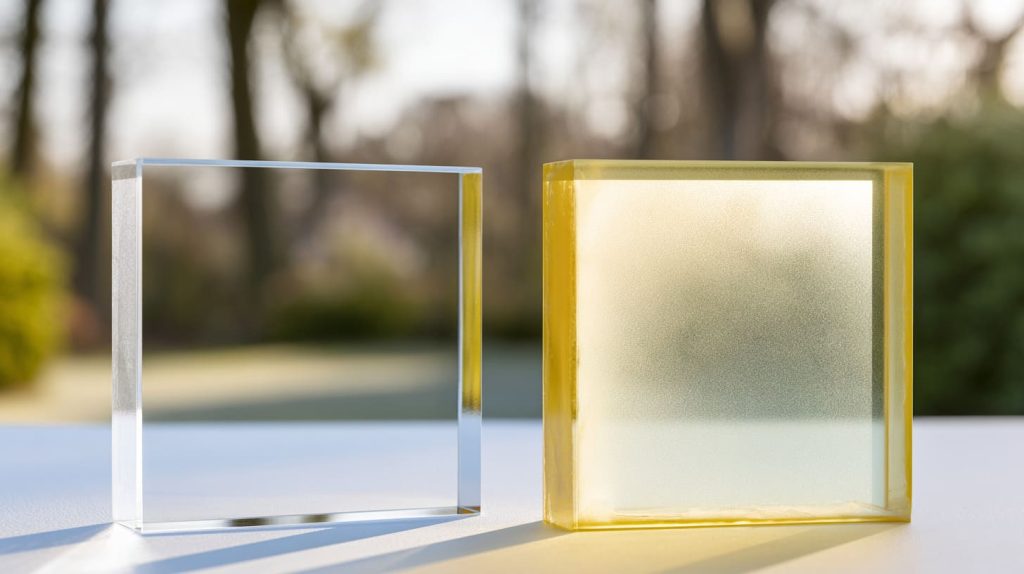
UV resistance protects the product against damage caused by ultraviolet light from the sun. It helps the material keep its color, clarity, surface quality, and strength for a longer time.
That sounds simple.
But in real buying work, simple words can hide big misunderstandings.
A customer may say, “I need outdoor acrylic.” Another customer may say, “I need anti-UV acrylic.” A third customer may say, “I need the product to last five years outdoors.”
These three requests are not always the same.
When I review an outdoor acrylic project, I do not treat “UV resistance” as a magic label; I treat it as one tool, and I check whether sunlight is truly the main enemy or just the easiest enemy to name.
How UV Light Affects Acrylic, Polycarbonate, and Plastics
UV light can slowly break down some plastics. It can change the surface and reduce performance over time.
Different materials react differently.
Acrylic usually has good natural weather resistance. This is one reason acrylic is widely used for signs, displays, skylights, and clear panels. It keeps clarity better than many common plastics when the material is chosen well.
Polycarbonate is very strong against impact, but it often needs UV coating for outdoor use. Without proper protection, it can yellow or lose surface quality faster in strong sunlight.
Some plastics, like standard ABS or low-grade PVC, may not be ideal for long outdoor exposure unless they have special additives or coatings.
| Material | Outdoor Strength | Main Risk Under UV | Common Use |
|---|---|---|---|
| Acrylic / PMMA | Good clarity and weather resistance | Surface aging over long exposure | Signs, display covers, panels |
| Polycarbonate | Very high impact resistance | Yellowing without UV coating | Guards, roofs, safety covers |
| ABS | Good for indoor parts | Color fading, brittleness | Housings, covers, prototypes |
| PVC | Depends on grade | Surface aging, discoloration | Boards, signs, construction parts |
| PETG | Easy to fabricate | May need care outdoors | Covers, display parts |
The table is not a final answer. It is only a starting point.
The real decision depends on the environment.
A clear acrylic menu holder used near a window is different from an outdoor sign facing the desert sun. A small display cover under a shop awning is different from a large panel fixed to a building wall in winter and summer.
Same material name. Very different life.
Common Signs of UV Damage
UV damage is not always sudden. It often comes slowly.
At first, the product may only lose its fresh look. Then the surface may become dull. Then the color may fade. In worse cases, the material may become brittle.
Common signs include:
- Yellowing
- Fading
- Cloudy surface
- Loss of gloss
- Small surface cracks
- Brittle edges
- Reduced strength
- Color difference between exposed and covered areas
For clear acrylic products, yellowing and haze are usually the biggest worries. Buyers want the product to stay clean and bright. Nobody wants a cosmetic display that looks tired after a few months.
For colored acrylic, fading can be the bigger concern. A red sign that becomes pink does not feel premium anymore. A black panel that turns gray can make the whole store front look old.
This is where UV resistance matters a lot.
But I always remind myself of one thing: if a panel cracks around every screw hole after three months, the buyer will not care that the sheet still has good clarity.
The product has already failed in the buyer’s eyes.
Industries Where UV Resistance Is Truly Critical
UV resistance becomes very important when the product faces long direct sunlight and appearance matters.
These industries often care about UV resistance:
| Industry | Why UV Resistance Matters |
|---|---|
| Outdoor signage | Color and clarity affect brand image |
| Retail storefronts | Displays must look fresh to attract buyers |
| Outdoor advertising | Large panels face daily sun exposure |
| Marine display parts | Sunlight, water, and salt make aging faster |
| Greenhouse and garden products | Constant outdoor exposure |
| Transportation covers | Heat and sunlight are strong |
| Building glazing | Long service life is expected |
For these projects, I would not treat UV resistance as optional.
If a customer asks for an outdoor sign in a hot climate, I will not suggest only indoor-grade material to save a little cost. That is not smart saving. That is just moving the cost into the future.
But if the product is installed indoors near a window, or under a covered walkway, or used for a short seasonal display, then the judgment becomes more interesting.
Maybe standard acrylic is enough.
Maybe the installation design deserves more attention than premium material grade.
That is where many real projects live. Not in extreme cases. Not in perfect textbook conditions. Right in the middle, where buyers must choose wisely.
And this leads to the next question: when does installation design become more important than UV resistance?
When Does Installation Design Matter More Than UV Resistance?
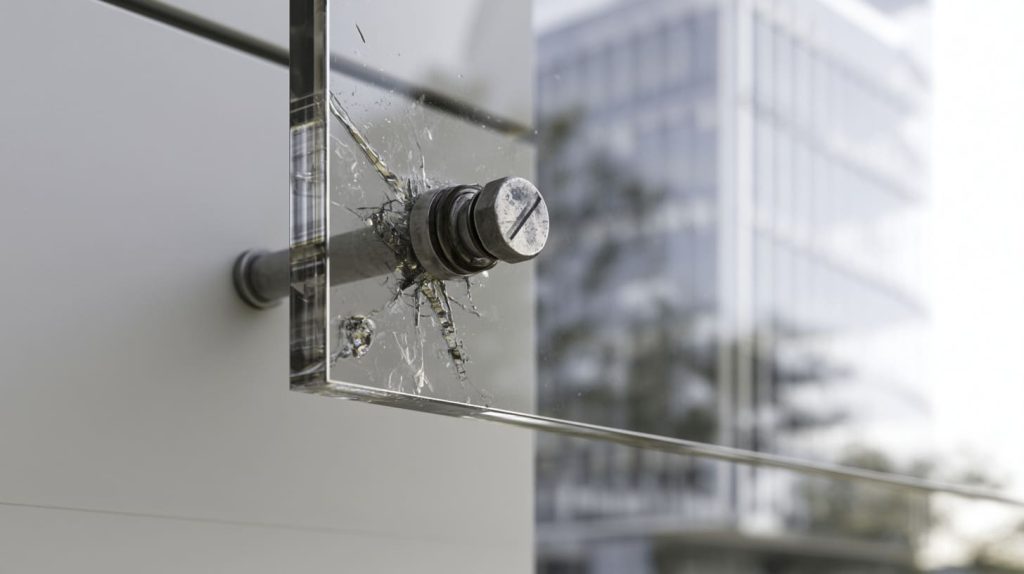
Installation design matters more than UV resistance when the product fails because of stress, movement, water, wind, or poor support before UV damage becomes serious.
This happens more often than many buyers expect.
Acrylic is strong in many ways. It is clear, beautiful, easy to fabricate, and stable when used correctly. But it does not like hidden stress. It does not like being forced into a shape. It does not like tight holes with no movement space. It does not like sharp corners that collect pressure.
The risky part is that poor installation can look fine on day one.
Everything is straight. The screws are tight. The panel looks clean. The buyer is happy.
Then summer comes.
Then winter comes.
Then rain comes.
Then the product starts talking back.
One detail I watch closely is whether the design lets the acrylic “breathe” under real conditions, because a product that is locked too tightly may look safer at first but fail faster after temperature and load start working on it.
Can Poor Installation Destroy a UV-Stable Product?
Yes, poor installation can destroy a UV-stable product.
This is one of the most common mistakes in outdoor acrylic work.
A buyer may choose a high-quality UV-resistant acrylic sheet. The sheet itself may be correct. The production may be clean. The edges may be polished. But if the installer drills holes too close to the edge, uses small holes, and tightens screws like they are fixing steel, cracks can appear.
The material did not fail because it lacked UV resistance.
It failed because the installation created stress.
| Design Detail | Poor Choice | Better Choice |
|---|---|---|
| Mounting hole size | Same size as screw | Slightly oversized hole |
| Screw pressure | Tightened hard | Tight but not crushing |
| Edge distance | Hole near edge | Enough distance from edge |
| Washer | Small metal washer only | Wider washer or soft gasket |
| Movement space | No gap | Expansion gap included |
Acrylic needs support, but it also needs respect.
It is not metal. It is not wood. It is not glass.
If we force acrylic to behave like another material, it may punish us later.
Why Mechanical Stress Often Causes Earlier Failures
Mechanical stress often causes earlier failures because it works every day.
UV exposure may take months or years to create visible damage. But stress can start on the first day.
Stress can come from:
- Tight fasteners
- Poor drilling
- Sharp inside corners
- Uneven surfaces
- Forced bending
- Heavy load
- Vibration
- Impact
- Wrong adhesive use
The worst part is that stress can hide inside the product.
A crack may not show up during inspection. The product may pass packing. It may arrive safely. Then, after installation, a small crack starts from a hole or corner.
At first, it looks like a hairline. Then it grows.
Acrylic is honest in this way. It often shows where we made it uncomfortable.
For custom projects, I like to review stress points before production, not after complaints. It is much cheaper to adjust a hole size or corner radius in the drawing than to replace finished products after installation.
Examples of Well-Designed Systems Using Standard Materials
Sometimes standard material performs very well because the design is good.
For example, a standard acrylic display cover under a shopping mall entrance may last a long time if:
- It has no direct full-day sun
- It has a roof above it
- It has proper drainage
- It has enough support
- It has soft contact points
- It is cleaned with the right method
- It can be replaced easily if needed
In this case, paying extra for stronger UV resistance may not be the smartest first move.
Another example is a retail display panel near a window. The buyer may worry about UV. That is fair. But if the panel is small, supported well, and not under direct heat for long hours, standard acrylic may work well enough.
The decision should not be emotional.
It should be based on exposure, structure, lifespan, and budget.
| Situation | UV Upgrade Needed? | Installation Design Priority |
|---|---|---|
| Full outdoor sun, long-term sign | High | High |
| Covered outdoor display | Medium | Very high |
| Indoor near window | Low to medium | Medium |
| Short-term seasonal promotion | Low | Medium |
| Large outdoor panel | High | Very high |
I like this kind of thinking because it protects both sides.
The buyer avoids wasting money.
The supplier avoids promising the wrong thing.
The product gets a better chance to survive.
But once we talk about outdoor survival, sunlight is only one enemy. Water is often the quiet one that causes more trouble.
Is Water Management More Important Than UV Protection?
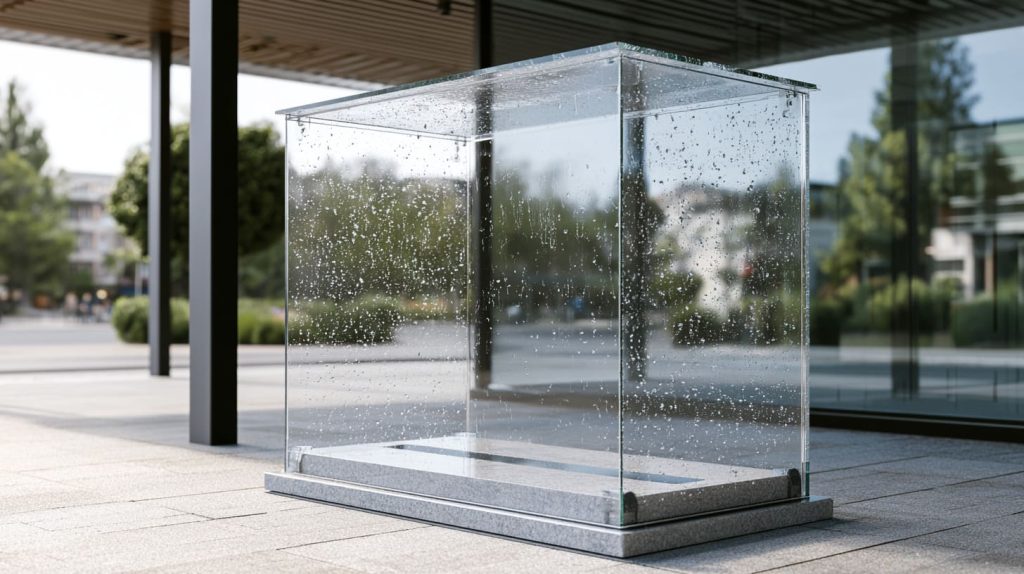
Water management can be more important than UV protection when the product is exposed to rain, cleaning, humidity, or condensation.
Water does not always break acrylic directly. Acrylic has good water resistance. But trapped water can create other problems.
It can leave stains.
It can carry dirt.
It can enter joints.
It can weaken adhesives.
It can corrode metal parts.
It can freeze in cold areas and push parts apart.
It can make a clear product look cheap.
For outdoor acrylic displays and signage, I care less about whether rain touches the product and more about whether rain can leave the product, because water that has no exit becomes a slow and patient troublemaker.
How Trapped Moisture Accelerates Product Failure
Trapped moisture can sit inside corners, joints, and closed spaces.
At first, it may only look like fog or water drops. Then dust sticks to it. Then the product becomes hard to clean. If the product includes metal screws, hinges, locks, or brackets, corrosion may start.
For clear acrylic boxes, trapped moisture is especially ugly. The buyer does not only see water. The buyer sees poor design.
Common moisture problems include:
| Problem | What It Looks Like | Why It Happens |
|---|---|---|
| Fogging | Cloudy inside surface | Condensation trapped inside |
| Water stains | White or dirty marks | Water dries slowly |
| Mold or dirt | Dark spots in corners | Moisture plus dust |
| Rust marks | Brown stains near screws | Wrong metal parts |
| Adhesive failure | Joint opens slowly | Water enters seam |
| Freezing damage | Cracks or gaps | Water expands when frozen |
Acrylic itself may still be fine.
But the product looks failed.
This is important for B2B custom products. A store display does not need to break into pieces to become unacceptable. It only needs to look dirty, cheap, or hard to maintain.
Why Drainage and Ventilation Matter
Drainage and ventilation sound boring. But they are often the difference between a clean product and a complaint.
Drainage means water has a path to leave.
Ventilation means air can move enough to reduce trapped moisture and heat.
For outdoor acrylic boxes, cabinets, covers, and signs, small design choices can help a lot:
- Add small drainage holes at the lowest point
- Avoid flat bottom areas where water can sit
- Use sloped surfaces when possible
- Keep enough gap behind wall-mounted signs
- Avoid sealing every space unless true waterproofing is designed
- Use gaskets carefully, not blindly
- Choose stainless steel or coated metal parts
- Make cleaning access easier
Many buyers think sealed means safe.
But sealed is only safe when it is designed and tested as a sealed system.
A badly sealed box can be worse than a ventilated one. It lets water enter but does not let water leave. That is the worst combination.
It is like inviting a bad guest into your house and then locking the door from the outside.
Real-World Outdoor Display and Signage Examples
Outdoor signs and displays fail in many ways.
Acrylic letters may collect water behind them. Menu boxes may fog inside. Clear display covers may turn dirty at the lower edge. Wall-mounted panels may stain the building surface if water runs in the wrong direction.
Here is how I usually think about it:
| Product Type | Common Water Risk | Better Design Thinking |
|---|---|---|
| Acrylic sign letters | Water trapped behind letters | Use spacers and drainage gaps |
| Outdoor menu box | Condensation inside | Add ventilation path and gasket control |
| Display cover | Water stains on bottom edge | Add slope or drainage holes |
| Wall panel | Dirt streaks | Plan water flow direction |
| Acrylic cabinet | Rust at hardware | Use better hardware and drainage |
| Light box cover | Fogging near edges | Balance sealing and venting |
Water is not dramatic. It does not shout.
It just stays.
That is why I treat water paths as part of the design, not an afterthought for the installer.
And water is not the only thing that moves. Acrylic itself also moves when temperature changes, and that is where many outdoor projects get into trouble.
Can Thermal Expansion Cause More Problems Than UV Exposure?
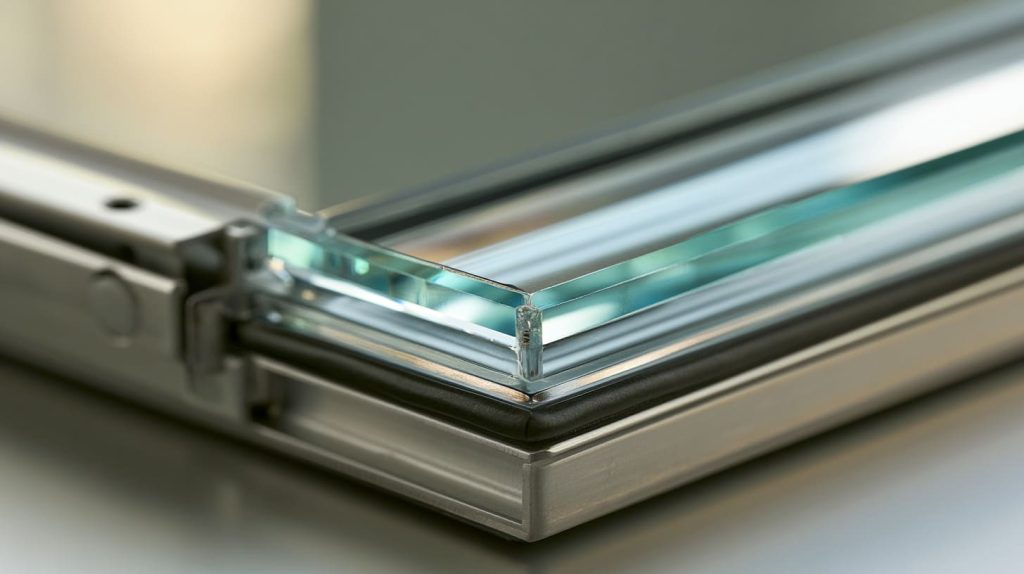
Yes, thermal expansion can cause more problems than UV exposure, especially for large acrylic panels or tightly fixed parts.
Acrylic expands when it gets hot. It contracts when it gets cold. This movement may be small on a tiny product. But on a large panel, it becomes important.
If the design allows movement, everything is calm.
If the design blocks movement, the material pushes back.
It may bow. It may crack. It may pull against screws. It may create gaps. It may make noise. It may slowly damage the mounting points.
For large panels, I always check expansion space before I get excited about material grade, because a premium sheet with no room to move can behave worse than a standard sheet installed with good clearance.
How Temperature Changes Affect Acrylic Panels
Temperature changes affect acrylic because plastic materials expand more than metals like steel or aluminum.
This becomes important when acrylic is mounted onto a metal frame.
The metal frame may expand less.
The acrylic panel may expand more.
If both are fixed tightly together, stress appears.
Imagine wearing shoes that are one size too small. You can stand for a photo. You may even smile. But walking all day? That becomes painful.
Acrylic feels something similar when it is locked in place under heat.
Typical effects include:
- Bowing
- Edge pressure
- Cracks near holes
- Loosened fasteners
- Warped panels
- Rattling after cooling
- Gaps in joints
This is why outdoor design should not only ask, “Will the sun damage the material?”
It should also ask, “What happens when the product heats up at noon and cools down at night?”
Common Installation Mistakes That Restrict Movement
Many installation mistakes come from trying to make the product look neat and tight.
A tight fit feels safe. It feels precise. It feels professional.
But for acrylic, too tight can be dangerous.
Common mistakes include:
| Mistake | Why It Is Risky |
|---|---|
| Holes drilled too small | Screws block panel movement |
| No expansion gap | Panel pushes against frame |
| Hard contact with metal | Stress builds at contact points |
| Long panel fixed at all points | No place for movement |
| Strong adhesive across wide area | Movement is locked |
| Sharp inner corners | Cracks start more easily |
Sometimes a buyer wants zero visible gap. I understand that. Clean appearance matters.
But I also explain the trade-off.
A tiny gap may look less perfect on the drawing, but it may protect the product in real use. In outdoor acrylic work, beauty and movement need to shake hands. If they fight, movement usually wins.
Designing Expansion Gaps Correctly
Expansion gap design depends on the material, panel size, temperature range, and mounting method.
I do not like giving one fixed number for all projects because that can mislead people. A small display tag and a large outdoor panel cannot follow the same rule.
But the design idea is simple:
- Leave room around the panel
- Use oversized holes where needed
- Use washers or gaskets to spread pressure
- Avoid hard clamping
- Let one side or one point act as the reference
- Allow the other points to move slightly
- Avoid bonding large panels fully to rigid frames
A practical design may look like this:
| Design Area | Safer Choice |
|---|---|
| Screw holes | Larger than screw diameter |
| Frame slot | Slight clearance around panel |
| Contact surface | Soft gasket or rubber strip |
| Long panel support | Allow sliding movement |
| Adhesive use | Use only where movement is controlled |
| Corner design | Add radius, avoid sharp inside corners |
For product and mold designers like Jacky, this is not new thinking. It is close to what happens in many manufactured products. Real parts need tolerance. Real materials move. Real assembly needs space.
Outdoor acrylic is no different.
And once a panel can move properly, the next question becomes: is it supported properly?
Does Structural Support Have a Bigger Impact on Service Life?
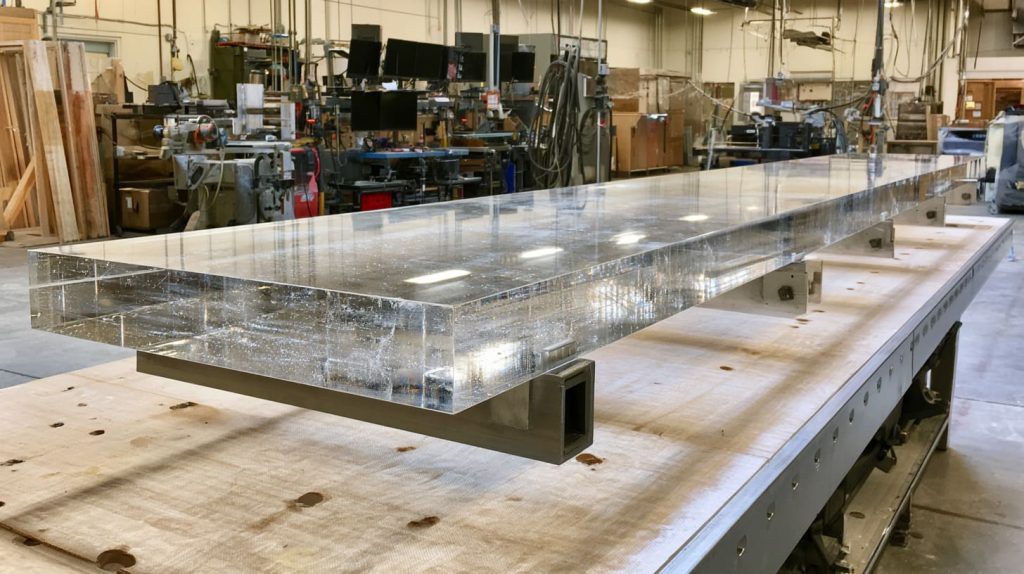
Structural support can have a bigger impact on service life when the product is large, thin, loaded, or exposed to wind and handling.
Support is not only about holding the product in place.
Support decides how stress spreads through the product.
Acrylic can perform very well when it has good support. But if the span is too large or the load is uneven, even a good sheet can sag, bend, or crack.
This matters a lot for:
- Large acrylic panels
- Shelves
- Display racks
- Outdoor signs
- Protective covers
- Acrylic boxes with heavy contents
- Wall-mounted displays
When I see a large acrylic part, my first concern is not only thickness; I also look at where the load travels, because a thicker sheet can still fail if the support points are badly placed.
Why Sagging and Bending Occur
Sagging and bending occur when the acrylic panel does not have enough support for its size, thickness, load, or environment.
A thin acrylic shelf may look fine when empty. Then products are placed on it. Slowly, it bends. The buyer may think the material is poor. But maybe the shelf needed more thickness, shorter span, or extra support.
A large vertical panel may also bend if it is only fixed at a few points. Wind can push it. Heat can soften its stiffness a little. Time can make the problem more visible.
Common reasons include:
- Sheet too thin for span
- Load too heavy
- Support distance too wide
- Uneven load placement
- Heat exposure
- Poor frame design
- Mounting points too few
Here is a simple way to think about it:
| Product | Main Support Risk | Design Response |
|---|---|---|
| Acrylic shelf | Sagging under weight | Increase thickness or add brackets |
| Large sign panel | Bowing under wind | Add frame or more fixing points |
| Display riser | Cracking at joints | Improve bonding area and support |
| Acrylic cover | Deformation from heat | Add ribs or support edges |
| Wall display | Pulling from wall | Use proper anchors and load spread |
The support system is like the skeleton of the product.
If the skeleton is weak, the skin cannot save it.
Proper Mounting Distance and Support Placement
Proper support placement depends on size, thickness, and load.
I often see buyers focus only on thickness. They ask, “Is 5 mm enough?” or “Should we use 8 mm?”
That question is useful, but incomplete.
A 5 mm panel with good frame support may perform better than an 8 mm panel with poor support. A thick material is not a replacement for smart load design.
Support should be placed where stress naturally appears:
- Near edges
- Near heavy load areas
- Near long unsupported spans
- Near openings or cutouts
- Near joints
- Near areas exposed to pushing or pulling
Acrylic parts with cutouts need extra care. A hole, slot, or notch can weaken the area around it. If a mounting point is placed near a cutout, the design may need more radius, more distance, or more thickness.
This is where custom manufacturing becomes important.
Standard products often force the buyer to accept a fixed support layout. Custom acrylic products can adjust the design around the real use.
Comparing Material Failure vs Installation Failure
Material failure and installation failure can look similar.
This causes many arguments.
The buyer says the material cracked.
The supplier says the installation was wrong.
The installer says the drawing was unclear.
Nobody enjoys this conversation.
So I prefer preventing it at the drawing stage.
| Visible Problem | Possible Material Issue | Possible Installation Issue |
|---|---|---|
| Yellowing | Low UV resistance | Harsh chemicals, wrong cleaning |
| Crack near screw | Brittle material | Over-tightened fastener |
| Bowing | Sheet too thin | Support too far apart |
| Loose panel | Weak material | Wrong anchor or bracket |
| Edge crack | Poor edge finishing | Impact or bad handling |
| Joint opening | Adhesive issue | Load too high or water trapped |
The best project does not depend on one perfect material.
It depends on matching material, thickness, support, hardware, and installation method.
That sounds like more work. It is. But it is cheaper than fixing a failed outdoor project later.
And speaking of fixing, the next small detail often causes big damage: fasteners.
How Do Fasteners and Mounting Methods Influence Durability?
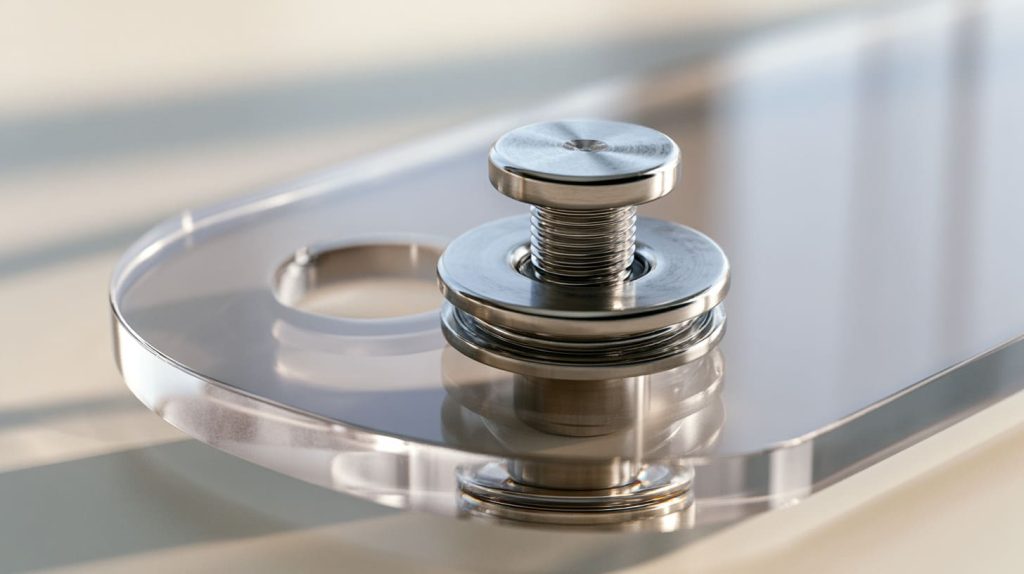
Fasteners and mounting methods influence durability because they create direct contact between the product and the structure.
A screw is small. A bracket is small. A washer is small.
But these small parts decide where force enters the acrylic.
This is why I never treat hardware as a minor detail. In many failed products, the main sheet is fine. The problem starts from one small hole, one tight screw, or one wrong metal part.
The smallest hardware choice can become the loudest failure point, so I often spend more time checking mounting details than buyers expect.
Choosing the Right Screws, Standoffs, and Adhesives
The right mounting method depends on the product.
Acrylic signs may use standoffs.
Acrylic boxes may use hinges, locks, and screws.
Acrylic panels may use frames.
Acrylic displays may use bonding and mechanical support together.
Each method has benefits and risks.
| Mounting Method | Good For | Main Risk |
|---|---|---|
| Screws | Strong mechanical fixing | Stress cracks if too tight |
| Standoffs | Clean sign appearance | Point load at holes |
| Adhesive bonding | Clean look, no visible hardware | Poor performance if wrong adhesive |
| Frame mounting | Large panels | Expansion restriction if too tight |
| Brackets | Shelves and displays | Load concentration |
| Gaskets | Outdoor sealing | Water trapping if badly designed |
Adhesive is also not magic.
Acrylic bonding can be very clean and strong when done correctly. But outdoor use adds temperature, moisture, and movement. A joint that works indoors may not work the same outdoors.
For load-bearing or outdoor products, I prefer not to rely only on adhesive unless the structure is designed for it.
Avoiding Stress Cracks Around Mounting Holes
Stress cracks around mounting holes are common because holes interrupt the material.
A hole creates a weak point. If pressure concentrates there, the crack starts there.
To reduce this risk, I usually consider:
- Larger hole size
- Good edge distance
- Smooth drilling
- No sharp burrs
- Proper washer size
- Soft gasket or spacer
- Controlled screw pressure
- Enough distance from corners
- Rounded cutout corners
Acrylic does not forgive rough holes.
A small chip from drilling can become a crack later. A sharp inside corner can become a starting point. A screw that looks tight and secure can be too tight.
This is why production quality and installation behavior both matter.
A factory can make perfect holes, but an installer can still crack the panel with too much force. A good drawing should guide both sides.
Why Oversized Holes Are Often Recommended
Oversized holes are often recommended because they allow movement.
This is especially useful for outdoor or large acrylic panels.
If the screw hole is exactly the same size as the screw, the acrylic cannot move. When temperature changes, the material pushes against the screw. Stress collects around the hole.
If the hole is slightly larger, the panel has room to expand and contract.
This does not mean the panel should be loose and shaking. It means the fixing system should hold the panel while allowing small movement.
A good mounting setup may include:
| Part | Function |
|---|---|
| Oversized hole | Allows expansion |
| Washer | Spreads pressure |
| Rubber gasket | Reduces hard contact |
| Spacer | Controls tightening distance |
| Screw | Holds position |
| Frame or support | Carries load |
This is a more complete system.
The screw alone should not do all the work.
And once a product is mounted outdoors, another force joins the conversation: wind.
Are Wind Loads and Environmental Forces More Dangerous Than UV Rays?
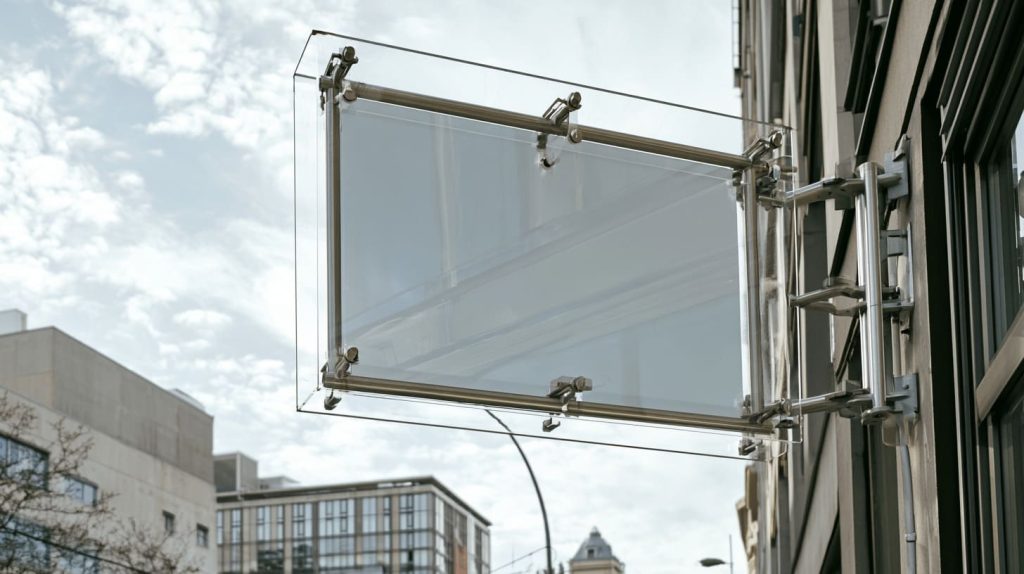
Wind loads and environmental forces can be more dangerous than UV rays when the product has a large surface area, weak support, or exposed location.
Wind is not gentle.
It pushes, pulls, vibrates, and repeats. It can turn a flat acrylic panel into a sail. It can loosen screws. It can shake signs. It can test every weak point in the design.
UV damage often comes slowly.
Wind damage can come in one bad afternoon.
For outdoor signs or large display panels, I do not ask only how much sun the product sees; I ask what happens on a windy day when nobody is standing there to protect it.
Outdoor Signs and Display Structures Under Wind Stress
Outdoor signs face wind stress because they often have broad flat surfaces.
A larger surface catches more wind. A taller sign creates more leverage. A weak frame allows more movement. A small mounting point carries too much force.
This is not only about the acrylic sheet.
It is about the whole structure.
| Sign Design Detail | Wind Risk |
|---|---|
| Large flat panel | Acts like a sail |
| Few mounting points | High load per point |
| Thin sheet | More bending |
| Weak frame | Vibration and movement |
| Long standoffs | More leverage |
| Poor wall anchors | Whole sign may loosen |
Acrylic may be strong enough for the sign face. But the mounting system may not be strong enough for the environment.
That difference matters.
A beautiful sign in a showroom is easy.
A beautiful sign on a building corner in bad weather is a different job.
Impact Loads, Vibration, and Daily Wear
Outdoor products also face impact and daily wear.
People touch them. Workers clean them. Delivery carts hit them. Doors swing near them. Wind shakes them. Dust scratches them.
For display products, daily use can be more damaging than sunlight.
Acrylic is clear and elegant, but it can scratch if handled roughly. It can chip if hit at an exposed edge. It can crack if stress and impact meet at the same point.
This is why I like to think about the user, not only the weather.
Who will touch the product?
Who will clean it?
Will customers lean on it?
Will staff move it often?
Will it sit near a door, road, counter, or walkway?
A product used by real people needs more than a nice material description.
It needs a design that expects human behavior.
And human behavior is not always gentle.
Designing for Local Environmental Conditions
Local environment changes everything.
A covered outdoor display in Canada is not the same as one in Dubai. A coastal sign is not the same as an indoor mall display. A street-facing menu box is not the same as a display under a hotel entrance.
Design should consider:
- Sunlight direction
- Daily temperature range
- Wind exposure
- Rain direction
- Humidity
- Snow or freezing
- Salt air
- Dust
- Cleaning habits
- Public contact
A simple decision table can help:
| Environment | Main Risk | Design Priority |
|---|---|---|
| Hot sunny area | UV and heat | UV material, expansion gap |
| Rainy area | Water trapping | Drainage, sealing, ventilation |
| Windy street | Wind load | Strong frame, better anchors |
| Coastal area | Salt and corrosion | Stainless hardware |
| Cold area | Freeze-thaw stress | Drainage, movement space |
| Indoor near window | Moderate UV | Material clarity, cleaning |
This is why I do not like one-size-fits-all answers.
“Outdoor use” is not one condition.
It is a whole family of conditions.
And in some of those conditions, standard acrylic may work better than buyers expect.
When Can Standard Acrylic Perform Just as Well as UV-Enhanced Materials?
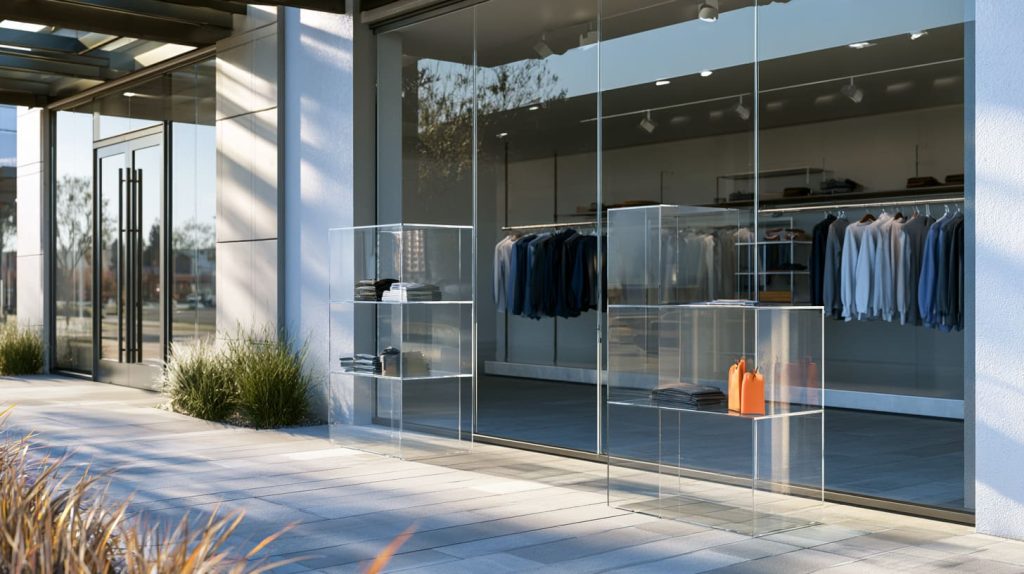
Standard acrylic can perform very well when exposure is limited, the design is smart, and the buyer does not need a very long outdoor service life.
This does not mean UV-enhanced materials are useless.
They are useful in the right place.
But using premium material everywhere is not always a smart business decision. In B2B custom projects, the goal is not to buy the most expensive material. The goal is to match the material to the real use.
I become careful when a buyer asks for the “best” material without explaining the real environment, because the best choice is often not the highest grade but the best balance between risk, cost, appearance, and service life.
Indoor Applications Near Windows
Indoor applications near windows often create confusion.
The product gets sunlight, but it is not fully outdoors.
Acrylic display stands, product holders, cosmetic organizers, and sign panels may sit near shop windows. They may receive sunlight for part of the day. The buyer may worry about yellowing.
That worry is reasonable.
But the product may not need the same material as a sign installed outdoors for five years.
For indoor near-window use, I usually check:
- How many hours of direct sun per day?
- Is the window glass already reducing UV?
- What is the expected product lifespan?
- Is the product clear or colored?
- Will it be replaced with new campaigns?
- Is appearance more important than load strength?
- How often will staff clean it?
A short-term retail campaign may not need premium UV material. A high-end permanent store display may deserve better material.
The use case decides.
Semi-Outdoor Covered Installations
Semi-outdoor covered installations are very common.
These include:
- Displays under awnings
- Sign panels under building entrances
- Menu boards under canopies
- Acrylic covers in covered walkways
- Retail displays near open storefronts
These products may face humidity, dust, heat, and some sunlight. But they may not face full direct sun all day.
In many of these cases, installation design becomes very important.
The product still needs:
- Drainage
- Ventilation
- Good support
- Safe fasteners
- Expansion space
- Easy cleaning access
- Correct hardware
Premium UV material alone will not solve these problems.
| Semi-Outdoor Risk | Better Design Response |
|---|---|
| Rain splash | Raised base or drainage gap |
| Humidity | Ventilation path |
| Heat under roof | Expansion clearance |
| Dust | Easy-to-clean surfaces |
| Occasional wind | Strong mounting |
| Public contact | Rounded edges and stable support |
This is where buyers can often save money in the right way.
Not by choosing cheap material blindly.
But by spending budget where the risk really is.
Short-to-Medium Service Life Projects
Some projects are not meant to last ten years.
Retail displays change. Promotions change. Seasonal decorations change. Exhibition parts move from one place to another. Temporary signs get replaced.
For these projects, standard acrylic can be a very practical choice.
If the expected use is six months, one year, or two years, the buyer may not need the strongest outdoor material. The design should still be safe and clean, but the material choice can match the expected life.
Here is a simple way I think about it:
| Expected Use Time | Material Priority | Design Priority |
|---|---|---|
| 1–3 months | Appearance and cost | Easy installation |
| 3–12 months | Clarity and stability | Handling and cleaning |
| 1–3 years | Better weather resistance | Support and expansion |
| 3–5+ years | UV/weather grade | Full system design |
| 5+ years full outdoor | High-grade material | Engineering-level installation |
This is not about lowering quality.
It is about avoiding over-design.
A buyer does not need a heavy winter jacket for a short walk in spring. The same idea applies to acrylic material selection.
But to make this decision well, buyers need a balanced way to think.
How Should Buyers Balance UV Resistance and Installation Design?
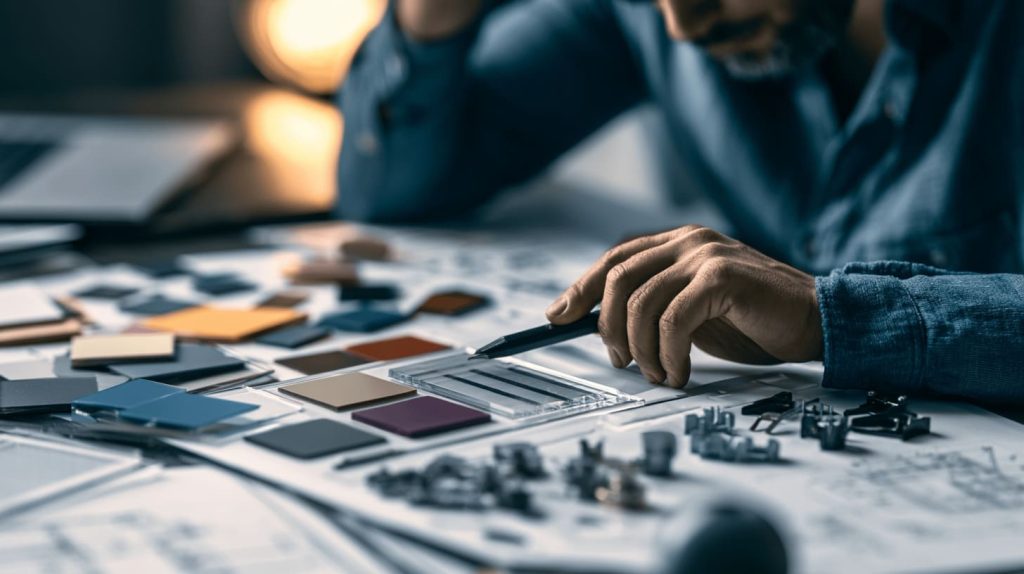
Buyers should balance UV resistance and installation design by looking at the real environment, expected service life, product structure, and total cost.
This sounds obvious.
But many projects start from the wrong question.
The buyer asks, “What material is best?”
A better question is, “What problem must this product survive?”
That small change leads to better decisions.
When I help a customer choose material, I try to slow down the decision for a moment, because a quick material upgrade may feel safe but still leave the biggest failure risk untouched.
Evaluating Project Environment First
The project environment should come before material selection.
I like to ask practical questions.
Not fancy questions. Practical ones.
- Is the product fully outdoor or covered?
- How many hours of direct sunlight will it receive?
- Will rain hit it directly?
- Can water collect inside?
- Is the area windy?
- Will people touch or move the product?
- Is the product near heat sources?
- What is the temperature range?
- How long should the product last?
- What failure is unacceptable?
These questions help separate real risk from guessed risk.
For example:
| Project Condition | Main Concern |
|---|---|
| Full sun all day | UV resistance and heat |
| Covered outdoor area | Water, dust, and support |
| Large panel | Expansion and wind load |
| Small indoor display | Clarity and scratch resistance |
| Heavy product display | Load support |
| Public-use display | Impact and safety |
Once the environment is clear, material choice becomes much easier.
Without environment details, material choice becomes guessing.
And guessing is expensive.
Calculating Total Cost of Ownership
Total cost is not only the unit price.
It includes:
- Material cost
- Production cost
- Installation cost
- Replacement cost
- Maintenance cost
- Complaint cost
- Brand image cost
A cheaper product may become expensive if it fails early.
A premium material may also become wasteful if the project does not need it.
This is why I like to compare options in a practical way:
| Option | Unit Cost | Installation Risk | Maintenance Risk | Best For |
|---|---|---|---|---|
| Standard acrylic + good design | Medium | Low | Medium | Covered or moderate use |
| UV acrylic + poor design | High | High | High | Not recommended |
| UV acrylic + good design | High | Low | Low | Long-term outdoor use |
| Low-cost plastic + weak design | Low | High | High | Short temporary use only |
The second option is the trap.
Many buyers think premium material makes the whole product safer. But if installation is poor, the product may still fail.
That is why I would rather sell a well-designed standard acrylic product than an expensive UV material used in a bad structure.
Avoiding Over-Specification and Unnecessary Costs
Over-specification happens when buyers pay for performance they do not really need.
This is common in custom projects because buyers want to reduce risk. I understand that. Nobody wants to explain a failed project to a boss or customer.
But over-specification can create problems too.
It may increase cost.
It may slow production.
It may reduce design flexibility.
It may make the product heavier.
It may still fail if the real issue is installation.
A better approach is to divide requirements into three levels:
| Requirement Type | Example | How I Treat It |
|---|---|---|
| Must-have | Outdoor full sun for 5 years | Choose proper UV material |
| Should-have | Easy cleaning and stable mounting | Improve design |
| Nice-to-have | Premium material for short use | Check if cost makes sense |
This helps the buyer make a calm decision.
Not too cheap.
Not too expensive.
Just suitable.
And to make this even clearer, designers should ask the right questions before choosing UV-resistant materials.
What Questions Should Designers Ask Before Selecting UV-Resistant Materials?

Designers should ask questions about exposure, structure, installation, maintenance, and replacement before selecting UV-resistant materials.
This matters because material choice is not separate from product design.
A product designer may think about appearance. A buyer may think about cost. A factory may think about production. An installer may think about speed.
But the final product must satisfy all of them.
Before I recommend UV-resistant acrylic, I try to understand what the product is expected to survive, because a material label without use details is like a map without a destination.
Exposure Duration and Sunlight Intensity
The first question is simple:
How much sun will the product actually receive?
This includes:
- Direct sunlight hours per day
- Sun direction
- Season changes
- Indoor or outdoor location
- Shade from buildings or roofs
- Reflection from glass or metal
- Local climate
Acrylic used in Canada and acrylic used in a hot desert market may face different conditions. Even within the same country, a covered storefront and an open rooftop sign are very different.
Useful questions include:
| Question | Why It Matters |
|---|---|
| Is it under direct sun all day? | UV and heat risk increase |
| Is it behind glass? | UV exposure may be reduced |
| Is it used only seasonally? | Long-term UV grade may not be needed |
| Is the product clear or colored? | Visual aging may appear differently |
| Is appearance critical? | Yellowing or fading tolerance is lower |
This is where buyer honesty matters.
If the buyer says “outdoor,” we still need more detail.
Outdoor where?
Outdoor how long?
Outdoor under what conditions?
The word “outdoor” is too broad to make a serious decision.
Structural and Mounting Requirements
The second question is about structure.
How will the product be mounted?
This question often reveals bigger risks than the material.
Designers should check:
- Number of mounting points
- Hole size and location
- Edge distance
- Panel size
- Thickness
- Frame design
- Load direction
- Wind exposure
- Expansion space
- Hardware material
Acrylic design should avoid stress concentration.
If the drawing has sharp corners, holes near edges, or long unsupported areas, UV material will not fix those weaknesses.
A basic review table can help:
| Design Area | Question to Ask |
|---|---|
| Holes | Are they large enough for screws and movement? |
| Edges | Are holes too close to the edge? |
| Corners | Are inside corners rounded? |
| Support | Is the span too wide? |
| Frame | Can the panel expand? |
| Hardware | Will screws or brackets create point stress? |
| Load | Where does force travel? |
This is the kind of thinking that turns a product from “looks good” into “works well.”
And in B2B custom orders, that difference matters.
Maintenance and Replacement Expectations
The third question is about maintenance.
A product does not live only on installation day.
It will be cleaned. It will collect dust. It may be touched by workers or customers. It may need replacement parts.
Designers should ask:
- Who will clean it?
- What cleaner will they use?
- Can the product be opened?
- Can water drain?
- Can damaged parts be replaced?
- Is the surface easy to wipe?
- Are edges safe for handling?
- Will hardware rust?
- Can the product be removed without damage?
Acrylic can look beautiful, but wrong cleaning can damage the surface.
A harsh chemical may make the surface cloudy. A rough cloth may create scratches. A design with narrow dirty corners may become hard to maintain.
For long-term products, maintenance design is part of durability.
| Maintenance Need | Design Choice |
|---|---|
| Easy cleaning | Smooth surfaces, fewer dirt traps |
| Outdoor washing | Drainage and water path |
| Part replacement | Modular design |
| Public handling | Rounded edges and strong support |
| Hardware life | Stainless or coated parts |
| Clear appearance | Cleaning guide and proper material |
A product that is easy to maintain feels better after one year.
A product that is hard to clean becomes old fast.
Even if the material is still technically fine.
This is why buyers must avoid the common mistakes that make outdoor acrylic products fail early.
What Are the Most Common Mistakes Buyers Make?
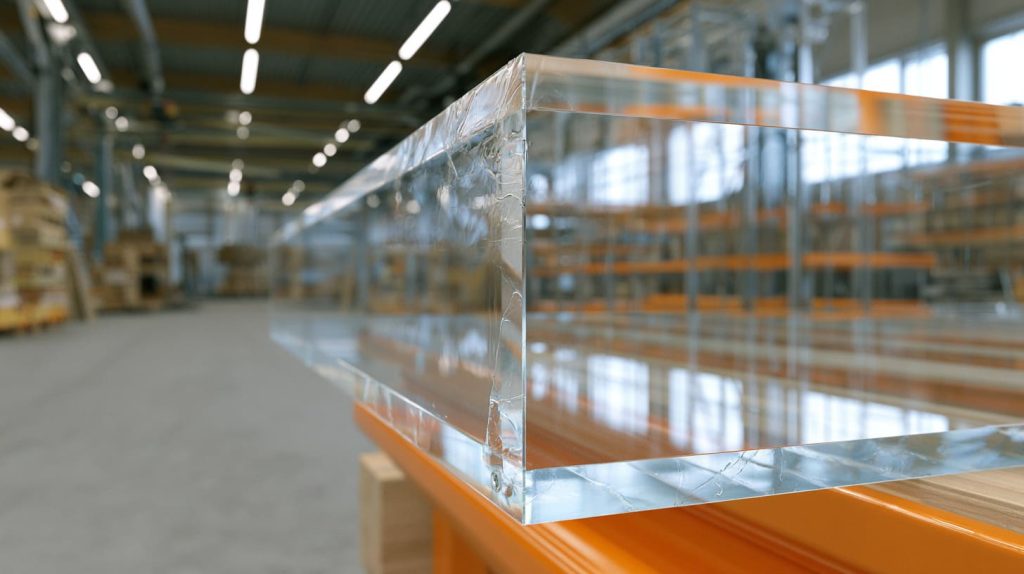
The most common mistake buyers make is focusing too much on material grade and not enough on product design, installation, and real use.
I do not blame buyers for this.
Material is easier to compare. A quote can say “UV-resistant acrylic.” A supplier can say “outdoor grade.” A product page can list thickness, color, and size.
Installation design is harder to see.
It lives in drawings, gaps, holes, support points, and small details.
A mistake I see often is that buyers spend money on visible specifications while ignoring invisible stress points, and the invisible points are usually where failure begins.
Paying for Premium UV Resistance Without Solving Installation Problems
Premium UV resistance can be a good choice.
But it cannot fix a bad design.
If a buyer pays for UV-resistant material but uses poor mounting, the product can still fail early.
This is like buying expensive tires but ignoring the brakes.
The tires matter. But the car is still unsafe.
Common examples include:
| Buyer Choice | Hidden Problem |
|---|---|
| UV acrylic for outdoor sign | Holes too close to edge |
| Thick acrylic panel | No expansion gap |
| Premium clear sheet | Water trapped in frame |
| Strong adhesive | Joint exposed to moisture and heat |
| Large panel | Too few support points |
| Expensive finish | Wrong cleaning method |
The buyer may feel protected because the material sounds strong.
But the product does not care about the quote description. It only responds to real stress.
Ignoring Drainage, Expansion, and Support Design
Drainage, expansion, and support are not exciting.
They do not look impressive in a sales photo.
But they matter.
Acrylic needs drainage when water can collect.
It needs expansion space when temperature changes.
It needs support when size or load increases.
Ignoring these details creates predictable failures.
| Ignored Detail | Likely Result |
|---|---|
| No drainage | Water stains, fogging, dirty corners |
| No expansion gap | Cracking, bowing, pressure marks |
| Weak support | Sagging, bending, loose parts |
| Tight screws | Stress cracks |
| Bad hardware | Rust stains, loose fixing |
| Sharp corners | Crack starting points |
These failures are not mysterious.
They are not bad luck.
They are usually designed into the product by accident.
That may sound harsh. But I think it is useful because it means we can prevent many failures before production.
Focusing on Material Specifications Instead of System Design
Material specifications are important.
But they are not the whole story.
Acrylic thickness, UV grade, color, and surface finish all matter. Still, the product works as a system.
The system includes:
- Material
- Thickness
- Shape
- Cutouts
- Edges
- Hardware
- Mounting
- Drainage
- Support
- Cleaning
- User behavior
If one part is weak, the whole product may suffer.
This is why a good custom acrylic supplier should not only ask, “What size do you need?”
The supplier should also ask:
- Where will you use it?
- How will you install it?
- What will it hold?
- How long should it last?
- What environment will it face?
- What failure would hurt your business most?
Those questions may feel slower at first.
But they make the project faster later because fewer problems come back.
And this is where we at Feilong Acrylic try to add value beyond cutting and polishing acrylic sheets.
How Does Feilong Acrylic Help Customers Design Longer-Lasting Acrylic Products?
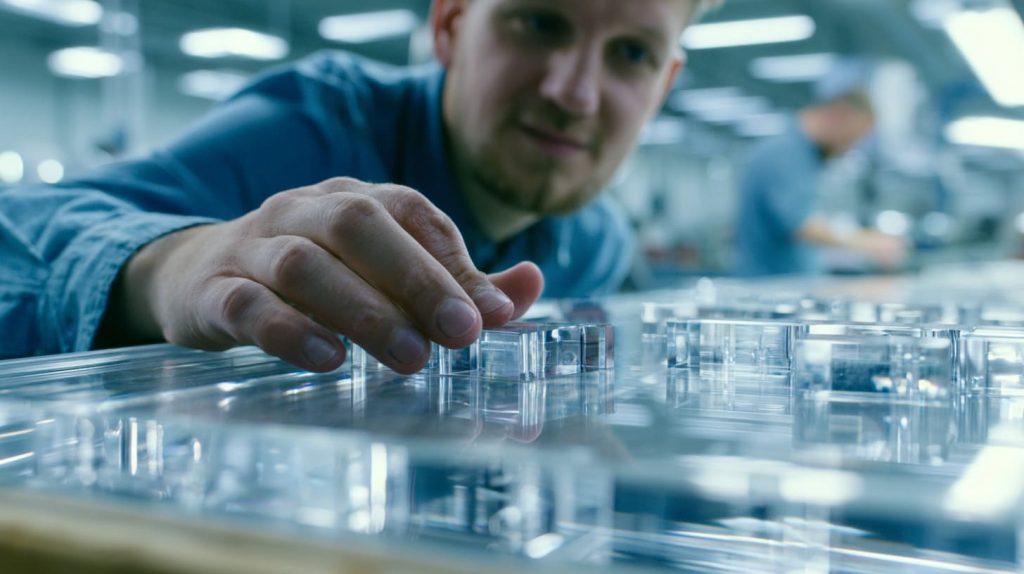
At Feilong Acrylic, we help customers design longer-lasting acrylic products by matching material, structure, production method, and installation needs.
We are not a retail catalog business.
We do custom acrylic manufacturing for B2B buyers. This means every project has its own use, size, risk, and budget.
Some buyers come with complete drawings. Some buyers only have an idea. Some buyers know the product look but not the best structure. That is normal.
My job is not only to say yes to the drawing. My job is to check whether the drawing can survive real use, because a beautiful product that fails after installation will hurt both the buyer and the factory.
Material Selection Based on Real Application Needs
Material selection starts with the application.
For custom acrylic products, we usually look at:
- Indoor or outdoor use
- Direct or indirect sunlight
- Clear or colored acrylic
- Required thickness
- Expected lifespan
- Load and support
- Cleaning needs
- Budget
- Packaging and shipping risk
We can support custom acrylic items such as:
- Display stands
- Acrylic boxes
- Frames
- Sign holders
- Racks
- Cabinets
- Blocks
- Organizers
- Furniture parts
- Store display tools
For outdoor or semi-outdoor projects, we help customers think through the real exposure.
Sometimes UV-resistant material is the right choice.
Sometimes standard high-quality acrylic with better design is more practical.
Sometimes the product needs thicker material.
Sometimes it needs more support, not more thickness.
The goal is not to push the most expensive option.
The goal is to make the product suitable.
Custom Engineering Support for Mounting and Assembly
Custom engineering support is important because many acrylic product problems begin in mounting and assembly.
We can help review details such as:
- Hole position
- Hole size
- Edge distance
- Joint design
- Bonding area
- Support structure
- Display stability
- Packaging protection
- Hardware choice
- Assembly method
This is especially useful for buyers like Jacky.
He may already understand acrylic products very well. He may have visited China factories many times. He may know pricing, samples, and purchasing process.
But each new custom product still has hidden details.
A small change in hole position may reduce cracking risk. A small change in support design may reduce bending. A small change in packaging may reduce shipping damage.
Custom work lives in these details.
| Project Area | What We Help Check |
|---|---|
| Outdoor sign | UV needs, mounting holes, drainage |
| Display rack | Load support, shelf thickness, bonding |
| Acrylic box | Hinges, lid fit, cleaning access |
| Cosmetic organizer | Scratch risk, edge polish, packaging |
| Wall panel | Expansion gap, support points |
| Cabinet | Door movement, hardware, dust control |
I like these conversations because they feel real.
Not every buyer needs a long lecture.
But every serious custom product deserves a careful look.
Manufacturing Precision for Reliable Installation
Manufacturing precision helps installation because custom acrylic parts must fit correctly.
Feilong Acrylic has 13+ years of custom acrylic manufacturing experience. We have advanced laser and CNC machinery, five production lines, and skilled workers. Our production is built for custom orders, not only standard products.
Precision matters for:
- Clean edges
- Accurate holes
- Correct dimensions
- Consistent thickness handling
- Smooth bonding
- Good polishing
- Stable assembly
- Protective packaging
If holes are not accurate, installation becomes harder.
If edges are rough, cracks may start more easily.
If dimensions vary too much, the installer may force parts into place.
That is how stress enters the product.
Good manufacturing cannot replace good design. But it supports good design.
The best result comes when the drawing, material, production, and installation plan all work together.
And that brings us to the final point.
Conclusion
UV resistance matters.
I do not want anyone to misunderstand me.
For many outdoor acrylic products, UV resistance is important. It protects clarity, color, surface quality, and long-term appearance. If a product faces strong direct sunlight for years, I will not ignore UV performance.
But after working with many custom acrylic projects, I do not believe UV resistance should always be the first and only concern.
The real world is rougher than a material data sheet.
Sunlight is only one force. Water, heat, wind, screws, support, cleaning, and human behavior also matter. Sometimes they matter more.
The decision I trust most is not “choose the highest material grade.” The decision I trust is “find the weakest point in the real use scenario, then design around it.”
Why Installation Design Often Determines Actual Product Lifespan
Installation design often determines actual product lifespan because it controls stress.
Acrylic products fail early when stress is trapped in the wrong place.
This can happen around holes, edges, joints, supports, frames, and fasteners.
A well-installed standard acrylic product may last longer than a poorly installed premium acrylic product. That is not a slogan. That is a practical lesson from real work.
I came to this view because I have seen too many projects where the material was blamed first, but the real problem was hidden in the mounting details.
When UV Resistance Should Be Prioritized
UV resistance should be prioritized when the product has:
- Long direct sunlight exposure
- Outdoor use for several years
- Clear appearance requirements
- Strong color stability needs
- Brand-facing display function
- High replacement cost
- Hard-to-maintain installation location
In these cases, better UV performance is worth serious attention.
But even then, UV-resistant material should still be combined with good design.
It still needs drainage.
It still needs support.
It still needs expansion space.
It still needs proper fasteners.
Premium material is not a license to ignore physics.
How to Achieve the Best Balance Between Material Performance and Design
The best balance comes from asking better questions before production.
Not only:
“What material do we use?”
But also:
“Where will this product live?”
“How will it be installed?”
“What will damage it first?”
“What can we prevent now?”
“What cost is worth paying?”
“What risk can we reduce with design instead of material upgrade?”
At Feilong Acrylic, this is the kind of thinking we like to bring into custom acrylic projects. We help B2B buyers turn product ideas into real acrylic items, but we also care about whether those items can survive shipping, installation, cleaning, and daily use.
If you are working on an outdoor acrylic display, sign, box, panel, or custom fixture, you can share your drawing, size, thickness, material request, quantity, and installation environment with us.
I may not always tell you to choose the most expensive material.
But I will help you think through the real risks.
Because in custom acrylic work, the best product is not only the one that looks good on the table.
It is the one that still makes sense after sun, rain, heat, screws, hands, and time have all tested it.